The Courtauld Institute of Art 24th Annual Medieval Postgraduate Student Colloquium
Scaling the Middle Ages: Size and scale in medieval art
10:00–18:00 Friday 8 February 2019 (with registration from 9:30)
Lecture Theatre 1, The Courtauld Institute of Art, Vernon Square, Penton Rise, London WC1X 9EW
Size mattered in medieval art. Whether building a grand gothic cathedral or carving a minute boxwood prayer bead, precisely how big to make it was a principal concern for medieval artists, their patrons, and audiences.
Examples of simple one-upmanship between the castles and palaces of lords and kings and the churches and cathedrals of abbots and bishops are numerous. How big to make it was a principal concern for both patrons and makers of medieval art.
Scale could be manipulated to dramatic effect in the manufacture of manuscripts and the relative disposition of elements within their decorative programmes. Divine proportions – of the Temple of Solomon or the Church of the Holy Sepulchre – were evoked in the specific measurements and configuration of contemporary buildings and decisions were made based on concern with numbers and number sequences.
Left: North elevation (detail), Sainte Chapelle, Paris (1239-1248). Right: Reliquary of Saints Maxien, Lucien, and Julien (Paris, 1261-1262) Musée nationale du Moyen Âge, Paris.
In our age of viewing through digital surrogates, the Courtauld Institute of Art’s 24th Annual Medieval Postgraduate Student Colloquium invites its speakers to consider new approaches to issues of size and relative scale in relation to the making, meanings, and study of medieval art.
The Medieval Postgraduate Colloquium offers the opportunity for research students at all levels from universities across the UK and abroad to present and promote their research.
Organised by Teresa Lane (The Courtauld Institute of Art) and Oliver Mitchell (The Courtauld Institute of Art) with the generous support of Michael Carter and the Consortium for Arts and Humanities in South-East England.
Programme: Scaling the Middle Ages: Size and scale in medieval art
9:30-10:00 Registration – Front hall
10:00-10:10 Welcome – Teresa Lane & Oliver Mitchell (The Courtauld Institute of Art)
SESSION 1: ARCHITECTURAL MINIATURES Chaired by Giosue Fabiano (The Courtauld Institute of Art)
10:10-10:30 Sylvia Alvares-Correa (University of Oxford): The use of architecture in a 15th century panorama of the Passion of Christ in Jerusalem: structuring composition or ideology?
10:30-10:50 Niko Munz (University of York): Architectural ventriloquism in pre-Eyckian panel painting
10:50-11:10 Antonella Ventura (Independent scholar) Playing with scales: Relationships between monumental architectures and reliquary structures in Umbria and Apulia in the fourteenth century
11:10-11:30 Discussion
11:30-12:00 Tea & coffee break (Research Forum Seminar Room, Floor 2)
SESSION 2: SCALE MODELS Chaired by Bella Radenovic (The Courtauld Institute of Art)
12:00-12:20 Angela Websdale (University of Kent): Replication and Reproduction: Evoking the Cult of St Edward the Confessor and the Visual Culture of Westminster Abbey and Palace at St Mary’s Church, Faversham
12:20-12:40 Francesco Capitummino (Independent scholar): The ambo of the Capella Palatina in Palermo, a reduced scale of the Cefalù prototype
12:40-13:00 Discussion
13:00-14:00 Lunch (provided for speakers and chairs – Seminar Room 9, Floor 2)
SESSION 3: THE SCALE OF DEVOTION Chaired by Chloe Kellow (The Courtauld Institute of Art)
14:00-14:20 Sheridan Zabel Rawlings (University of Manchester): Scale matters: The intentional use of size to depict Christ in John Rylands Library’s Latin MS 344
14:20-14:40 Matko Marušić (University of Zagreb): Medieval crosses: Scale, typology, materials
14:40-15:00 Harry Prance (The Courtauld Institute of Art): Miniature materials/ concrete connections: The spaces of Byzantine liturgical objects
15:00-15:20 Discussion
15:20-15:50 Tea & coffee break
SESSION 4: AMPLIFICATION & DISSEMINATION Chaired by Laura Melin (The Courtauld Institute of Art)
15:50-16:10 Charlotte Wytema (The Courtauld Institute of Art), From abstract idea to scaled-up image: The case of the Virgin with fifteen symbols
16:10-16:30 Nicolas Flory (The Courtauld Institute of Art), Scaling Patronage in the Duchy of Burgundy: Isabella of Portugal and her Carthusian donations
16:30-16:50 Discussion
16:50-17:00 Closing remarks by Professor Joanna Cannon (The Courtauld Institute of Art)
17:00 Reception With special thanks to Michael Carter for his generous support




 Deadline: Feb 28, 2019
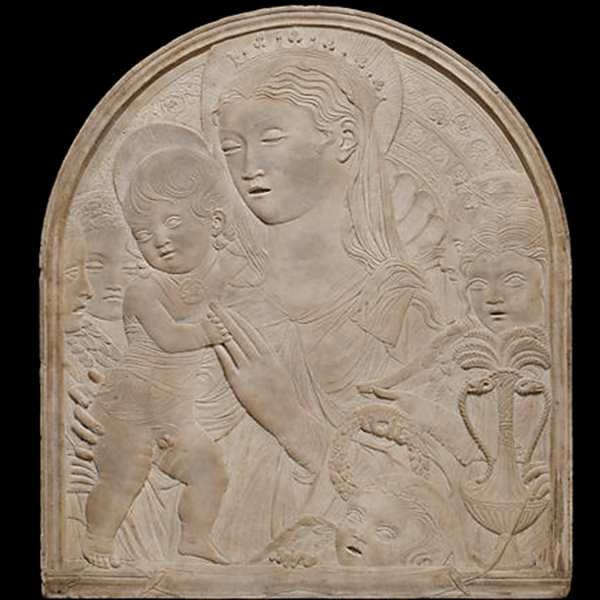 Many statues and works of sculpture made in the late Gothic and Renaissance period are represented with mouth open, as if caught in a mid-utterance. These ‘speaking sculptures’ have received remarkably little comment from art historians. What are these speaking statues meant to be saying? And what, as viewers, are we meant to ‘hear’ and respond? The aim of this paper is to begin to unravel this illusion of speech and the agency it implies.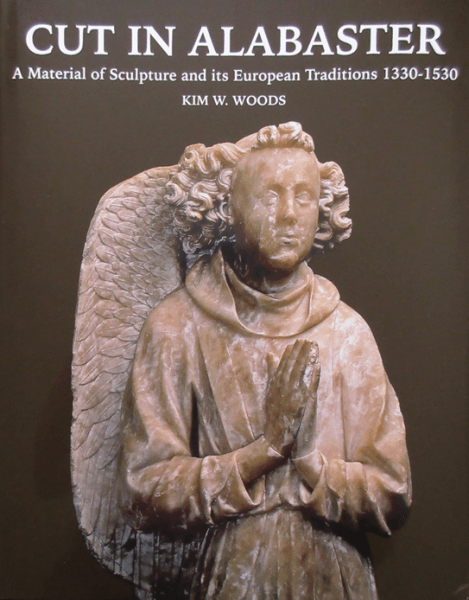
 Click
Click 
 Medieval Art Research