
The Medieval Kingdom of Sicily Image Database seeks proposals for their seminar series “The Outsider’s Eye” from January to April 2027. The series showcases research on how foreign scholars and artists have interpreted medieval southern Italy, proposals due 7 November 2026.
Category Archives: Call for Papers
CFP: Misericordia International 17th Colloquium: Illusion and Imitation in European Choir Stalls (deadline 30 October 2026)
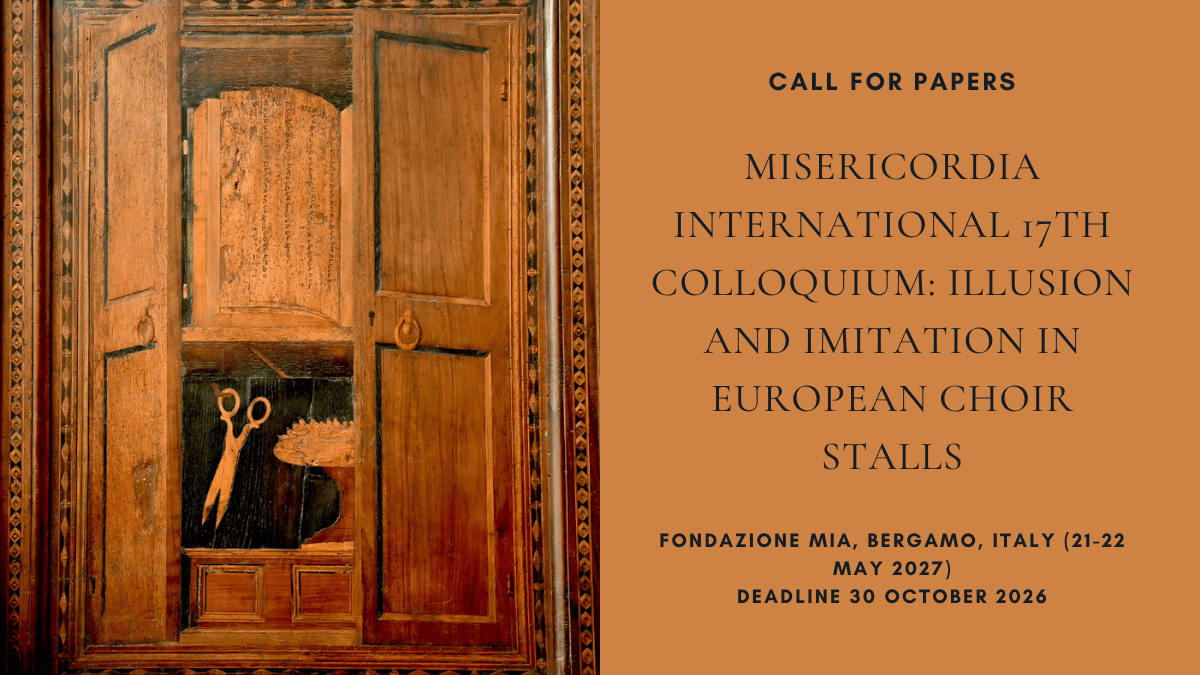
The Misericordia International 17th Colloquium invites interdisciplinary paper proposals on the thematic exploration of visual and sensory dimensions of choir stalls, with a submission deadline of 30 October 2026.
CFP: ‘Transforming the Urban Sacred: Christianization and the Reconfiguration of Public Spaces in Late Antiquity and the Early Middle Ages’, deadline 30 September 2026
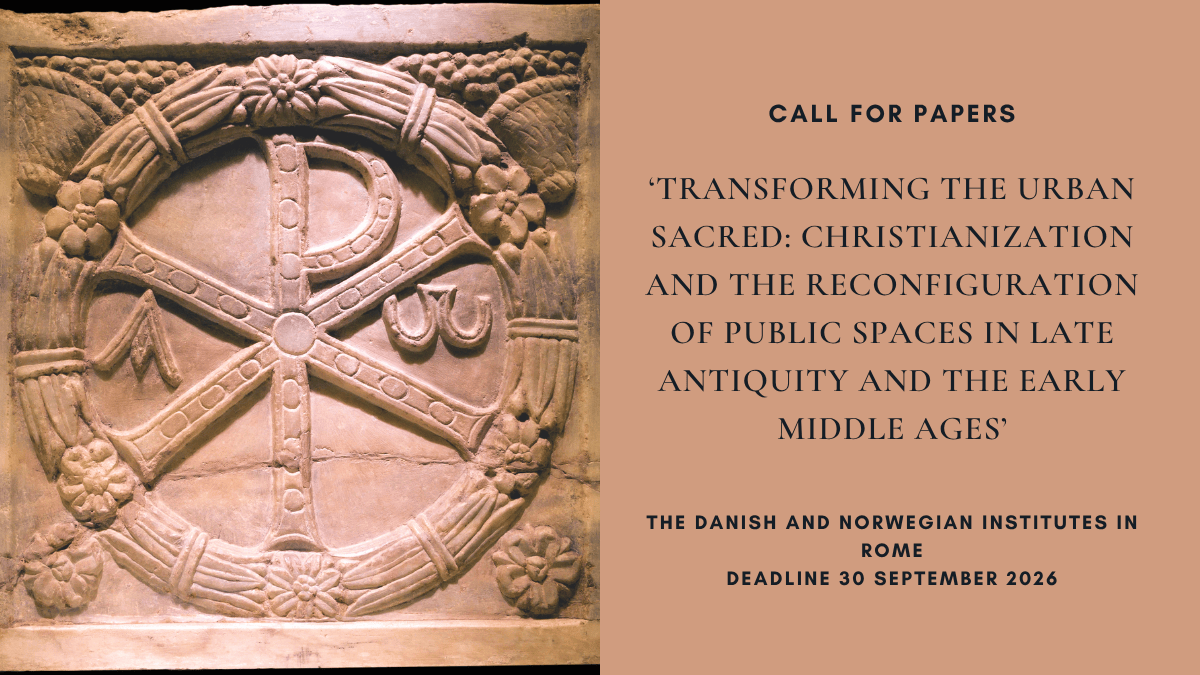
Papers are invited for this interdisciplinary workshop in Rome from January 19-21, 2027, exploring the transformation of traditional Roman public spaces into sacred urban landscapes. Submissions are due by 30 September 2026.
CFP: ‘Visual Cultures of Surveillance in the Medieval World’, ICMA Sponsored panel at IMC Leeds 2027, deadline 23 September 2026
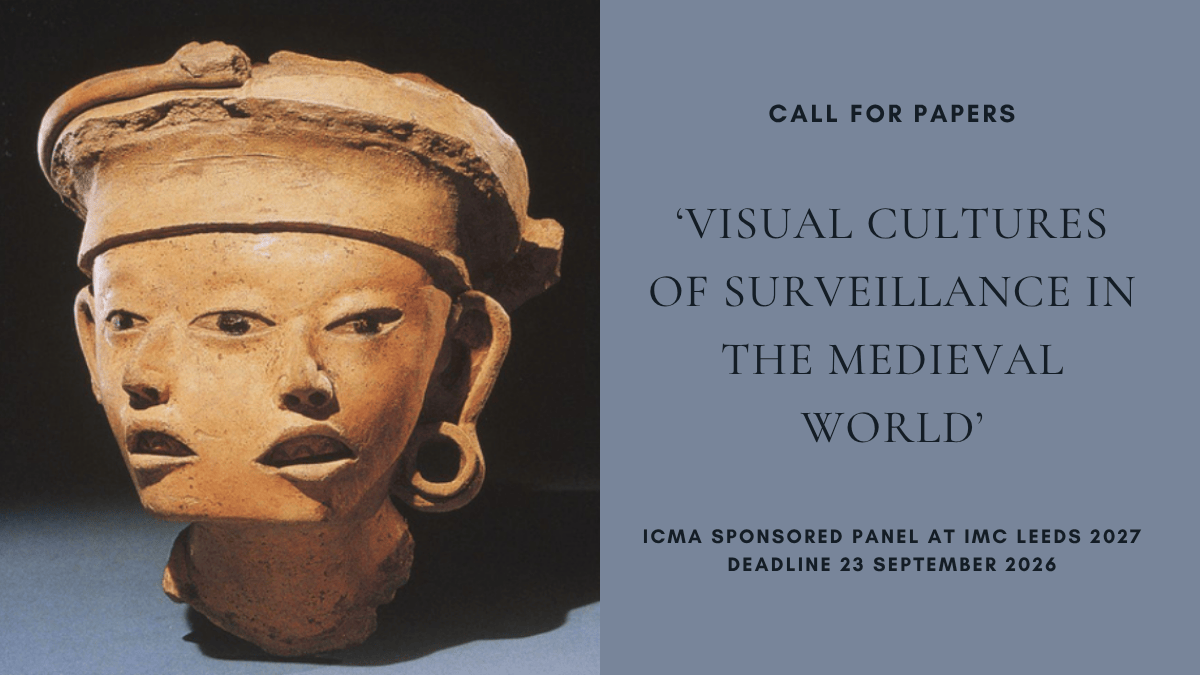
ICMA is inviting paper submissions for its sponsored panel ‘Visual Cultures of Surveillance in the Medieval World’ at IMC Leeds 2027. Deadline is 23 September 2026.
CFP: ‘Unfinished, Damaged, Reimagined: Rethinking the Fragment’, Kalamazoo IMCS 2027, deadline 15 September 2026
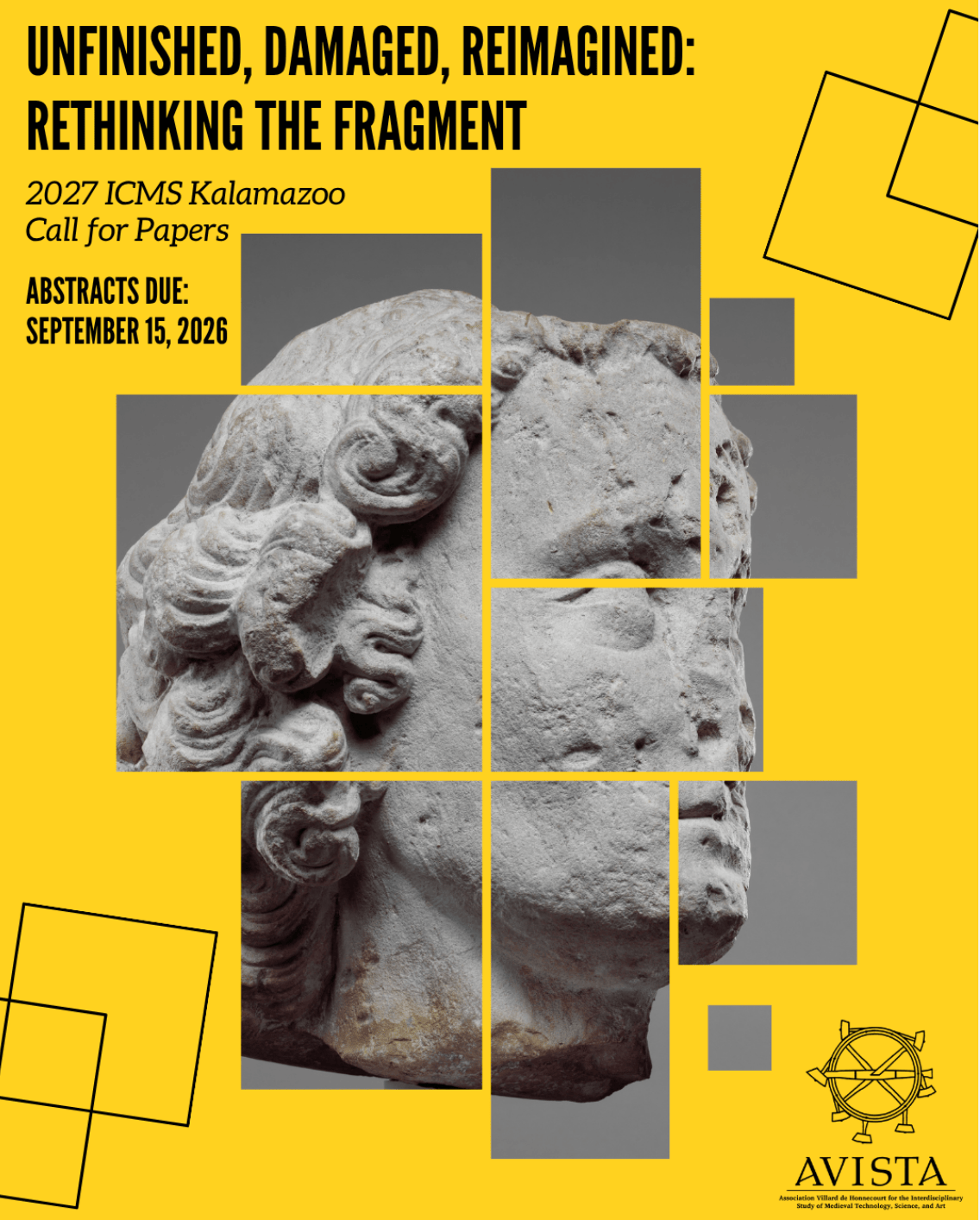
The AVISTA is pleased to invite submissions to its sponsored hybrid session, Unfinished, Damaged, Reimagined: Rethinking the Fragment, at the 2027 International Congress on Medieval Studies (Kalamazoo, MI, 13–15 May 2027)
CFP: ‘Living with the Otherworldly: Feelings, Journeys, and Dialogues in the British Isles, ca. 1300–1550,’ International Medieval Congress, Leeds 2027 (deadline 18 September 2026)
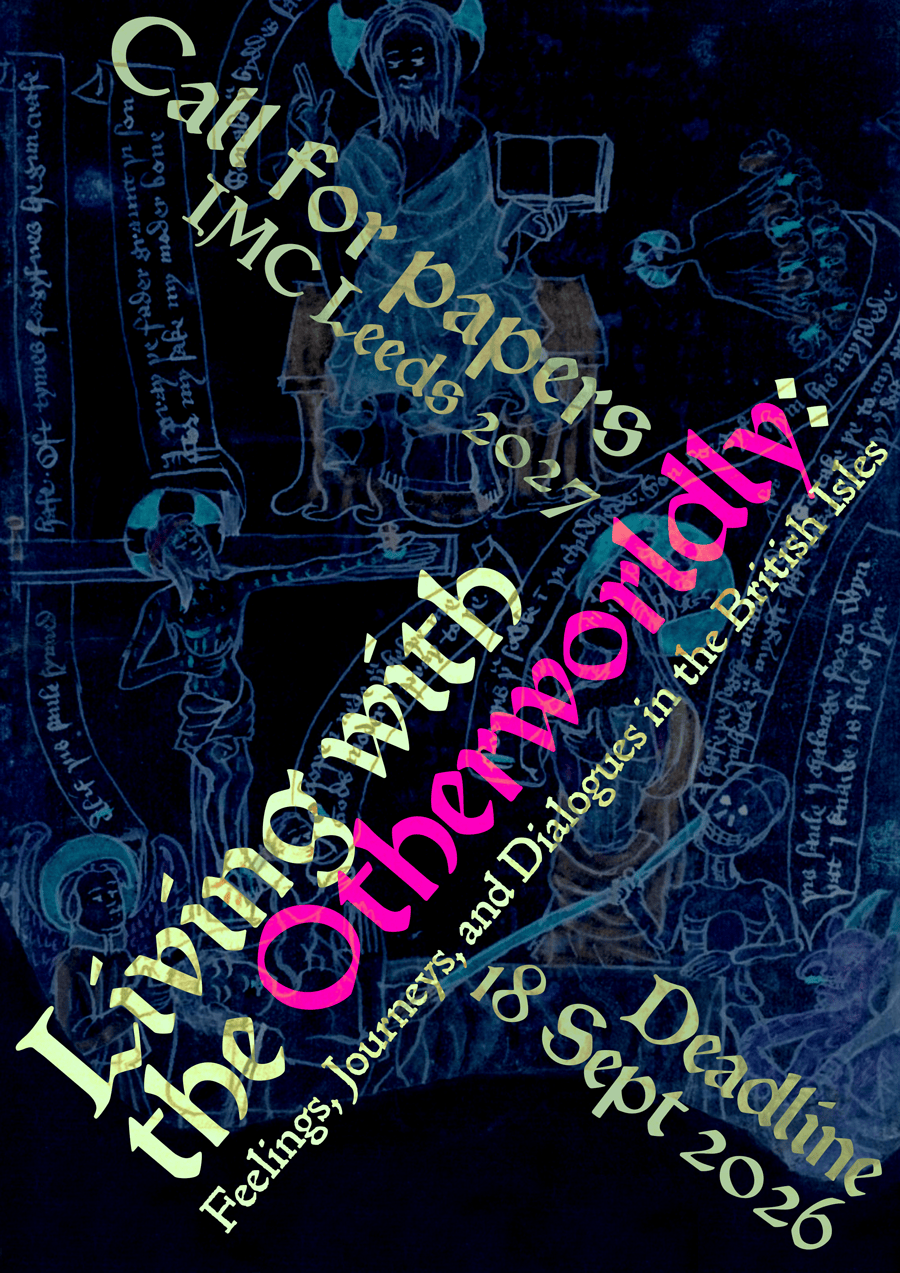
Papers are invited for this IMC Leeds 2027 session that explores the dynamic interactions between otherworldly and earthly communities in the late medieval British Isles, addressing themes of emotion, journeys, and material culture. Deadline is 18 September 2026.
CFP: ‘From the Heavens to the Earth: Honoring Danielle B. Joyner’ ICMS 2027 Session (deadline 15 September 2026)

Papers are invited for the ‘From the Heavens to the Earth: Honoring Danielle B. Joyner’ sessions at ICMS 2027, focusing on her diverse scholarly interests including temporality, eco-criticism, and the study of birds, with a particular encouragement for submissions from her friends and collaborators.
CFP: ‘Going Green: turning an ecological lens on medieval art and architecture’, Leeds IMC, deadline 17 September 2026
Papers are invited for the Leeds IMC 2027 session titled “Going Green: turning an ecological lens on medieval art and architecture,” focusing on the relationship between medieval communities and their environments through art and architecture. Submissions due by September 17, 2026.
CFP: ‘CLAUSTRUM: Art, Iconography and Spirituality in Medieval Franciscan Convents’, 23-24 October 2026 (deadline 4 September 2026)

The International Conference “Claustrum: Art, Iconography and Spirituality in Medieval Franciscan Convents,” scheduled for October 23-24, 2026 in Santarém, Portugal, invites researchers to submit proposals on themes related to medieval Franciscan art, spirituality, and ecology by 4 September 2026.
CFP: ‘Picturing Entanglements: Transcultural Creatures in Medieval Eurasian Art’, CAA 2027 Session (deadline 31 August 2026)
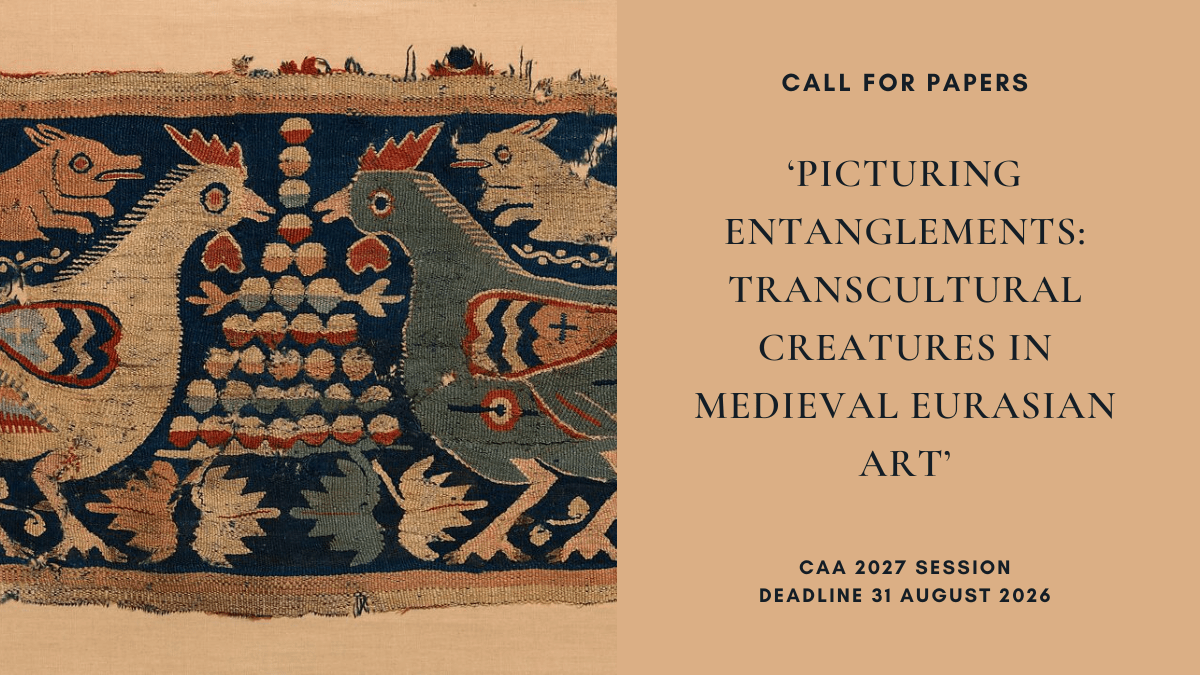
This call for papers invites scholars to explore how zoomorphic imagery in medieval Eurasian art (500-1500 CE) serves as a vehicle for transcultural exchange and artistic innovation, with submissions due by August 31, 2026, for a session at CAA 2027.

