CFP: 15th Annual Conference of the International Medieval Society-Paris (IMS): Truth and Fiction, 28-30 June 2018

25e58865266eadd5bdb9a530a627b0db-medieval-art-middle-agesCall for Papers: 15th Annual Conference of the International Medieval Society-Paris (IMS), Truth and Fiction
Deadline: 24 November 2017.

In the wake of the US presidential election and the Brexit referendum, the Oxford English Dictionary chose the expression “post-truth” as its word of the year. This expression underlines the growing tendency to dismiss objective facts in favor of impulsive—and often prejudicial—feelings, frequently supported by “alternative facts.” The contentious relationship between the truth and lies, or truth and fiction, which is currently playing out in the public arena has, in fact, a long-standing legacy—one which can be traced back to the Middle Ages. For this reason, this year’s IMS conference seeks to investigate the variety of different approaches to truth and fiction that existed in the Middle Ages.

One possible avenue of inquiry concerns new ideas of Truth introduced by the Gregorian reforms. On a philosophical and doctrinal level, the idea of the infallibility of the Pope, the “Doctor of Truth,” was introduced by Gregory VII who, taking up the words of Christ, contended that he was the Truth (via, veritas, et vita). From a liturgical and sacramental point of view, on the other hand, we can study contemporary tenets of Eucharistic doctrine as a challenge to common sense as a mystery of human understanding—albeit articulated in rationalist terms. Papers thus might address the manner by which the Gregorian reforms placed the question of truth at the center of the demands of society: by constructing this “ideology of truth,” but also—and above all—by implementing mechanisms like preaching, which spread Truth to Christians, and confession, which introduced the obligation to speak the truth. We are particularly interested in the place and the role of Fictions in these devices (sermons, exempla, vita, etc.).

A second approach to this theme is through language, discourse and narrative forms that aimed to produce a supposed truth. We could examine the relationships between literature and history and their ambiguity with respect to the truth. For example, fictionalized historical narratives throughout the medieval period were frequently thought to be true because they provided a means of decrypting the social order. As John of Salisbury wrote, “even the lies of poets served the Truth.” Papers might explore relationships between truth and fiction through the lens of historical and literary genres (novels, epics, etc.) and the ‘truths’ they produced, placing special emphasis on the way that it was possible to believe the facts related in these works. The importance of these historico-literary fictions—what Paul Veyne called “doctrine in the face of facts”—might also be taken into account.

Law and rhetoric also construct notions of truth. Rhetoric permits the control of the relationship between the author and the audiences of a text and the establishment of the status of a text as veridic, among other things. It can even create direct links between music and words, using metaphor as a means of approaching the truth. Papers could consider, for instance, the virtuosity of the effects of Truth produced by the dictamen or even the quaestio scholastique as a method for establishing Truth with certitude, as well as the place of fiction within these new political languages.

Images throughout the medieval period play a fundamental role in the construction or undermining of truth(s). According to Augustine, the image is not truth, but rather a means of understanding Truth. For him, the work of art renders abstractions concrete using representations hat are both specific and individualized. What is the art object’s role in dispelling truth or decrying falsehoods? Through what formal and material means does it achieve either? Papers might consider the use and forms of medieval diagrams, the role of the art object in spiritual form, etc.

Finally, the conference aims to examine the origins and development of interrogative procedures in the medieval period, in that they illustrate relationships with the truth maintained by medieval societies. We are especially interested in the uses and status of fictive facts in inquisitorial trials, the manner that fictions were revealed during trials, or even how the participation of individuals in inquisitorial trials was viewed as an instrument of legitimization of power and as a way of acknowledging those individuals’ own truths and interpretations of facts.

This great diversity of themes opens participation to researchers working in a variety of different fields and coming from a variety of backgrounds: historians, art historians, musicologists, philosophers, literary scholars, specialists in auxiliary sciences (paleographers, epigraphists, codicologists, numismatists)… While we focus on medieval France, compelling submissions focused on other geographical areas that also fit the conference theme are welcomed. In bringing together such diverse proposals, the IMS conference seeks to take a new look at the notion of Truth, its articulations, and its relationship with Fiction in the medieval world.

Abstracts of no more than 300 words (in French or English) for a 20-minute paper should be sent to communications.ims.paris@gmail.com. Each proposal should be accompanied by full contact information, a CV, and a list of the audio-visual equipment required for the presentation.

The deadline for abstracts is 24 November 2017.

Paper selections will be made by a scientific committee composed of Catherine Croizy-Naquet (Univ. Paris 3/CERAM), Marie Dejoux (Univ. Paris 1/LAMOP), Lindsey Hansen (IMS), Fanny Madeline (LAMOP/IMS), and Valerie Wilhite (Univ. of the Virgin Islands/IMS), as well as the members of the Board of Directors of the IMS.

Please be aware that the IMS-Paris submissions review process is highly competitive and is carried out on a strictly anonymous basis.

The selection committee will email applicants in mid-December to notify them of its decisions. Titles of accepted papers will be made available on the IMS-Paris website thereafter.

Authors of accepted papers will be responsible for their own travel costs and conference registration fees (35€ per person, 20€ for students, free for members of LAMOP and CERAM; 10€ membership dues for all participants).

The IMS-Paris is an interdisciplinary, bilingual (French/English) organization that fosters exchanges between French and foreign scholars. For more than a decade, the IMS has served as a center for medievalists who travel to France to conduct research, work or study. For more information about the IMS-Paris and for past symposium programs, please visit our websites: www.ims-paris.org and https://imsparis.hypotheses.org.

IMS-Paris Graduate Student Prize:

The IMS-Paris is pleased to offer one prize for the best paper proposal by a graduate student. Applications should consist of:

1) a symposium paper abstract

2) an outline of a current research project (PhD dissertation research)

3) the names and contact information of two academic referees

The prize-winner will be selected by the board and a committee of honorary members, and will be notified upon acceptance to the Symposium. An award of 350€ to support international travel/accommodation (within France, 150€) will be paid at the symposium.

CFP: 2 sessions at the AAH Annual Conference, Courtauld Institute of Art and King’s College London, 5 – 7 April 2018

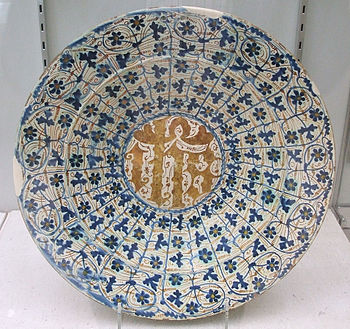
350px-hispanomoresqueCall for Papers: Medieval Eurabia: Religious Crosspollinations in Architecture, Art and Material Culture during the High and Late Middle Ages (1000-1600)
Deadline: November 1, 2017

The coexistence of Christianity and Islam in the Medieval Mediterranean led to a transfer of knowledge in architecture and material culture which went well beyond religious and geographical boundaries. The use of Islamic objects in Christian contexts, the conversion of churches into mosques and the mobility of craftsmen are only some manifestations of this process. Although studies beginning with Avinoam Shalem’s Islam Christianized (1996), have dealt extensively with Islamic influence in the West and European influence in the Islamic Mediterranean, sacred objects, and material culture more generally, have been relatively neglected. From crosses found in Mosques, to European-Christian coins with pseudo/-shahada inscriptions, medieval material culture is rife with visual evidence of the two faiths co-existing in both individual objects and monuments.
This panel invites papers from scholars working on intercultural exchange in art, architecture and material culture. We particularly welcome contributions that focus on sacred objects that have been diverted or ‘converted’ to a new purpose, whether inside or outside an explicitly religious context.
Papers should present original research, which expands the boundaries of knowledge and which the scholars would like to be considered for publication. Abstracts should be no more than 250 words long. Panel organised by Sami De Giosa, Oxford University and Nikolaos Vryzidis, British School at Athens. Email: aahchristianmuslimpanel2018@gmail.com

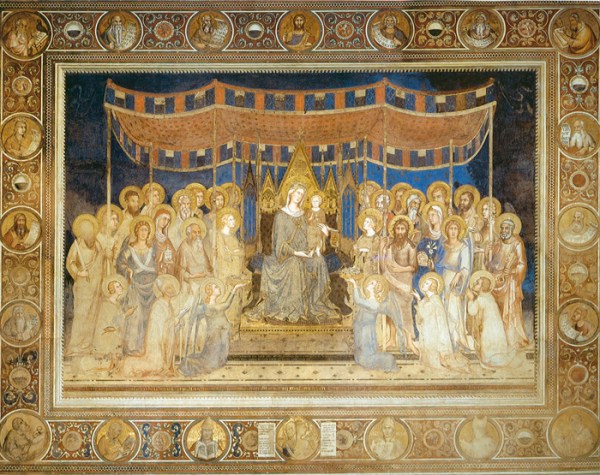
maesta700CFP: Art and Law: Objects and Spaces as Legal Actors
DeadlineNovember 6, 2017

Art history has long investigated the role of the law, from issues of visual evidence and legal aesthetics to ideas of artistic originality and authorship. But recent scholarship has increasingly drawn attention to the ways in which art can participate in the law’s actual operation. This session aims to broaden these investigations by tracing the long history of artistic intrusions into legal life, focusing on moments when the objects and spaces of art and architecture, broadly defined, have functioned as legal actors in their own right.
The session promises to explore these ideas through interdisciplinary and cross-chronological case studies from researchers, artists, and practitioners both in art history and in parallel fields such as law, journalism, and the social sciences. How have aesthetic objects past and present actively shaped the production and execution of the law as witnesses or juridical subjects in themselves? How have artists approached the courtroom as a site of artistic production and intervention? And in what ways has aesthetic production sought to short-circuit legal structures or forward alternative, even utopian, legal systems? Such questions have taken on new urgency in light of recent political and constitutional crises worldwide.

Papers might address, amongst other topics:
– historical and contemporary objects that dispense justice
– signs, emblems, or inscriptions that enforced legal boundaries or enacted legal codes
– artworks framed as legal victims, or which have been tried in absentia of criminals
– objects and theories of legal proof
– architectural actors as part of the fabric of legal drama
– art historical or theoretical texts investigating legal production and evidence-gathering and witnessing as forms of aesthetic production and research

Proposals of 250 words, accompanied by a short academic CV, should be sent to the two session organisers no later than 6 November 2017:
Dr Jack Hartnell (University of East Anglia, UK)
j.hartnell@uea.ac.uk
Dr Kevin Lotery (Sarah Lawrence College, USA)
klotery@sarahlawrence.edu

CFP: The manuscripts of Charlemagne’s Court School – Individual creation and European cultural heritage, Stadtbibliothek Trier, 11 – 13 October 2018

Call for Papers: The manuscripts of Charlemagne’s Court School – Individual creation and European cultural heritage, Stadtbibliothek Trier, 11 – 13 October 2018
Deadline: Dec 31, 2017

1024px-meister_der_hofschule_karls_des_groc39fen_001Internationale Tagung
Die Handschriften der Hofschule Kaiser Karls des Großen – individuelle Gestalt und europäisches Kulturerbe
International Conference
The manuscripts of Charlemagne’s Court School – Individual creation and European cultural heritage”

Informationen zum Thema der Tagung: Zur Zeit gibt es intensive Bemühungen, die Handschriften aus der Hofschule Kaiser Karls des Großen in die Liste des UNESCO-Weltdokumentenerbes (Memory of the World) eintragen zu lassen. Hierbei handelt es sich um ein Korpus von acht vollständigen Handschriften und einem Fragment, ergänzt durch das aus der Palastschule Karls des Großen stammende „Wiener Krönungsevangeliar“. Die Trierer Tagung verfolgt ein doppeltes Ziel: In den Vorträgen von Sektion I soll eine aktuelle Bestandsaufnahme der Hofschul-Handschriften erfolgen und die einzelnen Kodizes sollen, basierend auf dem neuesten Forschungsstand, in handbuchartiger Weise vorgestellt werden. Mit einbezogen sind die kunstvollen Einbände der Handschriften. In den Vorträgen von Sektion II sollen die geistigen und kulturellen Rahmenbedingungen der Hofschulproduktion thematisiert werden. Hierbei geht es u. a. um Fragen nach dem kultur-, literatur- und kunstgeschichtlichen Horizont, nach der Antikenauffa

ssung, der Bibelphilologie, den politischen Implikationen, den Auswirkungen des byzantinischen Bilderstreits und dem zugrundeliegenden Bildungsprogramm der Hofschulhandschriften. Die Herangehensweise der Tagung ist dezidiert transdisziplinär. Es können Vorträge aus den unterschiedlichsten involvierten Fachdisziplinen angeboten werden.

Sektion I: Dier Handschriften der karolingischen Hofschule (Impulsreferat 20 min + 10 min Diskussion)
1. Das Godescalc-Evangelistar (Paris, BN, Nouv. Acq. Lat. 1203)
2. Evangeliar aus St.-Martin des Champs (Paris, Bibl. de l’Arsenal, Ms 599)
3. Das Ada-Evangeliar (Trier, Stadtbibl., Hs 22)
4. Der Dagulf-Psalter (Wien ÖNB, Cod. 1861). Einband: Paris (Louvre, Dép. Des Objects d’Art, Iv. 9/10)
5. Ein Evangelien-Fragment mit der Verkündigung an Zacharias (London, BL, Cotton Claudius B. V.)
6. Das Evangeliar aus Centula [de Saint Riquier] (Abbeville, BM, Ms 4 [1])
7. Ein Evangeliar unbekannter Herkunft (London, BL, Cod. Harl. 2788)
8. Das Evangeliar aus St. Médard in Soissons (Paris, BN, Ms lat. 8850)
9. Das Lorscher Evangeliar (Alba Iulia, Rumänien, Bibl. Batthyáneum, Cod. II. [Matthäus und Markus] und Vatikan, BAV, Cod. Pal. Lat. 50 [Lukas und Johannes]. Elfenbeintafeln und Buchdeckel: Vatikanische Museen, und London, Victoria and Albert Museum)
10. Das Wiener Krönungsevangeliar (Wien, Kunsthistorisches Museum, Welt. Schatzkammer, Inv. XIII 18)

Sektion II: Die geistigen und kulturellen Rahmenbedingungen der karolingischen Hofschule sowie deren Erschließung (Vortrag 30 min + 15 min Diskussion)
1. Literaturgeschichtliche Aspekte der karolingischen Epoche
2. Die Antikenauffassung der karolingischen Kunst
3. Bibelphilologie in der Zeit um 800
4. Der byzantinische Bilderstreit und die Stellung des karolingischen Hofes
5. Die Bedeutung der Abtei Tours für die Produktion der karolingischen Hofschule
6. Das Bildungsprogramm Alkuins
7. Die Stifterhandschriften aus der Zeit Karls des Großen
8. Paratexte in den Handschriften der Hofschule Karls des Großen
9. Die Soziographie der Künstler von Handschriften der Hofschule
10. Die politischen Implikationen der Hofschul-Handschriften
11. Die Handschriften der Hofschule Kaiser Karls des Großen – Digitale Rekonstruktion und Erschließung

How to apply: Einreichung eines schriftlichen Exposees (ca. 400-500 Wörter) sowie eines kurzen Lebenslaufs (max. 150 Wörter). Einsendeschluss ist der 31. Dezember 2017; eine Benachrichtigung der angenommenen Themenvorschläge erfolgt bis zum 01. Februar 2018. Ein Antrag auf Tagungsbeihilfe ist gestellt. Vorbehaltlich der erfolgreichen Bewilligung können die Reisekosten der Teilnehmer und Teilnehmerinnen ganz oder teilweise übernommen werden. Es ist geplant, die Beiträge zu publizieren.
Für weitere Informationen richten Sie sich bitte an: Prof. Dr. Michael Embach, Stadtbibliothek Trier, michael.embach@trier.de
Prof. Dr. Claudine Moulin, Universität Trier, moulin@uni-trier.de

CFP: Collecting (in) the Middle Ages, 23rd Annual Medieval Postgraduate Colloquium, The Courtauld Institute of Art, (16 February 2018), deadline 30 October 2017

HolyofHoliesReliquary

Call for papers: The Courtauld Institute of Art’s 23rd Annual Medieval Postgraduate Colloquium: Collecting (in) the Middle Ages, The Courtauld Institute of Art, 16 February 2017
Deadline: 30 October 2017

The Courtauld Institute of Art’s 23rd Annual Medieval Postgraduate Colloquium invites speakers to consider the nature of medieval collections, the context of their creation and fruition, and their legacy — or disappearance — in the present.

Inspired by objects such as a cedar box chest once kept in the Holy of Holies of the Lateran, this colloquium seeks to explore a diverse set of topics surrounding medieval practices of collecting. This wooden box may seem simple, but once opened it reveals a priceless collection: fragments of rock and wood from the Holy Land, each labelled with its precise place of origin by a sixth-century hand. Here and there, stones have fallen out, leaving imprints in the soil. The wooden relic chest is an object of small size and almost no material value, but has nevertheless been treasured for centuries by one of the largest and most powerful institutions of the medieval world.

The study of medieval collecting raises a variety of questions. How and why were objects collected, practically and conceptually? What was their expected time-span and what enabled their survival? How have medieval collections impacted modern scholarship, and how do modern collecting and display practices influence our interpretation of the past?

Applicants to the colloquium are encouraged to explore these issues from a diverse range of methodologies, analysing objects from the 6th to the 16th century and from a wide-ranging geographical span. Possible areas of discussion might include:

  • Collecting through time: How do we define the medieval collection/collector? How did medieval objects take on new meanings in medieval collections, ie. in the case of spolia? How has scholarship on medieval art been influenced by varying collecting practices and curatorial strategies across time?
  • Collecting in space: can the idea of the ‘collection’ be expanded to include objects, places and spaces spread across different geographical locales? Could objects or spaces communicate their commonality across a distance? How did pilgrimage routes, travel narratives and travel guides conceptualize their surroundings and weave a thread through geographical and historical difference?
  • Collectors, intermediaries, and craftsmen: how did institutions and single collectors acquire and expand their collections? For example, did they rely on a merchant network to acquire foreign objects or new relics? Did they collect newly commissioned objects, and display them in purpose-built spaces?
  • Collections and Legacies: how did inheritance impact the notion of collecting, looking forwards as well backwards? How did the meaning of objects change as they were passed down through families and dynasties? What happened to collections when familial lines ended? How did individuals link themselves to courts or dynasties through collections?
  • Accessibility: When, how and why were collections visible? Were there different levels of accessibility and interaction and who was allowed to ‘access all areas’? How were restricted collections advertised and open collections protected? And did objects themselves interact with each other, for example in specific displays or assemblages?
  • Organising Collections: What were the systems for assembling a collection, and for how they were curated? How did purpose-built spaces impact the growth of collections, and vice-versa? What were the roles of documents in collections, and how have medieval recording practices influenced modern views of the medieval collection?

The Medieval Postgraduate Colloquium offers an opportunity for research students at all levels from universities across the UK and abroad to present, discuss and promote their research. To apply, please send a proposal of up to 250 words for a 20 minute paper, together with a CV, to costanza.beltrami@courtauld.ac.uk and maggie.crosland@courtauld.ac.uk no later than 30 October 2017.

courtauldlogo

Lecture: Very much like the residence of the Muslim kings?, Tom Nickson, SOAS, 11 October 2017, 7pm

Dr Tom Nickson
Wednesday, 11 October 2017
7.00 p.m., Khalili Lecture Theatre, Main Building, SOAS
Chaired by Professor Hugh Kennedy
Enquiries: rosalindhaddon@gmail.com

Conference: “Astronomy Across the Medieval World,” St Cross College, University of Oxford, Saturday 18th November 2017

astonomytodeleteConference: “Astronomy Across the Medieval World,” St Cross College, University of Oxford – Martin Wood Lecture Theatre, Department of Physics, Saturday 18th November 2017

10.30 am – 5.00 pm

The celestial sky has been a source of fascination since ancient times with astronomy being the oldest of the natural sciences. During the medieval period, astronomy flourished in many cultures across the world, some of which followed on from earlier models created by Ptolemy. The motions of the celestial bodies were investigated, early astronomical observatories were built and some cultures constructed remarkable monuments inspired by astronomical insights. This conference will draw together the different strands of medieval astronomy from across the world and will examine how they interfaced and paved the way for the scientific developments later in the Renaissance.

Registration to attend this conference is free, but must be confirmed using the Conference booking form by midday on Friday 10th November 2017.

Confirmed speakers include:

Dr Giles Gasper (Durham University) – `The Service of Astronomy’ – European Star-Gazing and Its Implications in the Middle Ages

Professor Christopher Cullen (University of Cambridge) – Chinese Astronomy in a World Context

Dr Josep Casulleras (University of Barcelona) – From Ancient to Modern: Astronomy in Medieval Islam

Professor Ivan Šprajc (Slovenian Academy of Sciences and Arts) – Mayan and Aztec Astronomy: Skywatching in Prehispanic Mesoamerica

Dr Benno van Dalen (Bavarian Academy of Sciences and Humanities) – Ptolemaic Astronomy and Its Dissemination in the Islamic World, Europe and Asia

There will be a conference dinner at St Cross in the evening following the end of the conference with an after-dinner talk by Dr Valerie Shrimplin (Gresham College) on the influence of astronomy and the cosmos on medieval art. Although the conference itself is free of charge, the dinner carries a cost of £35 to attend – booking a place for dinner can be done here.

For more information see the website: https://www.stx.ox.ac.uk/happ/events/astronomy-across-medieval-world-one-day-conference


European History 1150-1550 Seminars @ IHR: 2017-2018 Programme

800px-1450_c2bf_carta_catalana_jpeg_copy-aEuropean History 1150-1550
Wolfson Room NB02, Basement, IHR, North block, Senate House
Thursdays 17:30

Convenors: David Carpenter (KCL), Matthew Champion (Birkbeck), Johanna Dale (UCL), David d’Avray (UCL), Serena Ferente (KCL), Andrew Jotischky (RHUL), Patrick Lantschner (UCL), Cornelia Linde (German Historical Institute), Sophie Page (UCL), Eyal Poleg (QMUL), Miri Rubin (QMUL), John Sabapathy (UCL), Alex Sapoznik (KCL), Alice Taylor (KCL), Marie Legendre (SOAS)


Autumn Term 2017

Date Seminar details
5 October

17:30

Pretenders and returners: Dynastic imposters in the Middle Ages

Robert Bartlett (University of St Andrews)

IHR Wolfson Room NB02, Basement, IHR

19 October

17:30

Hunting at the court of King John of England

Hugh Thomas (Miami College of Arts and Sciences)

IHR Wolfson Room NB02, Basement, IHR

2 November

17:30

European History 1150-1550 2 paper event

Daisy Livingston (School of Oriental and African Studies), Martin Hall (Royal Holloway University of London)

IHR Wolfson Room NB02, Basement, IHR

16 November

17:30

Trust and authority: Pragmatic literacy and communication in the royal towns of medieval Hungary

Katalin Szende (Central European University)

IHR Wolfson Room NB02, Basement, IHR

30 November

18:00

The Creighton Lecture 2017. Strangers in Medieval Cities

Miri Rubin (Queen Mary University of London)

IHR Wolfson Conference Suite, NB01/NB02, Basement, IHR

14 December

17:30

The rise of administrative lordship in medieval Flanders: New perspectives

Jean-François Nieus (University of Namur)

IHR Wolfson Room NB02, Basement, IHR

Spring Term 2018

Date Seminar details
11 January

17:30

Trustworthy men: How inequality and faith made the medieval church

Ian Forrest (University of Oxford)

IHR Wolfson Room NB02, Basement, IHR

25 January

17:30

Government and inquests from Philip Augustus to the last Capetians

Marie Dejoux (Pantheon-Sorbonne University Paris1)

IHR Wolfson Room NB02, Basement, IHR

8 February

17:30

European History 1150-1550 2 paper event

Anaïs Waag (King’s College London), Cecil Reid (Queen Mary University of London)

Room 243, Second Floor

22 February

17:30

Petrifying wealth: The southern European shift to masonry as collective investment in identity, c. 1050-1300

Ana María Rodríguez López (Consejo Superior de Investigaciones Científicas)

IHR Wolfson Room NB02, Basement, IHR

8 March

17:30

Observing Religion: High medieval religious movements and their polemical vocabularies

Sita Steckel (University of Münster)

IHR Wolfson Room NB02, Basement, IHR

History of Liturgy Seminars @ Institute of Historical Research, London: 2017-2018 Programme

f020_massHistory of Liturgy Seminars 2017-2018


Mondays 17.15-19.15
John S Cohen Room N203, Institute of Historical Research, Senate House, London WC1E 7HU

2 October 2017                   Teresa Webber (University of Cambridge): The Chapter Office and Reading in Chapter: monastic practice c. 1000-1300

13 November  2017          Henry Parkes (Yale University): Matins Responsories and Narratives of Divine Encounter

5 February 2018                 Isabelle Cochelin (University of Toronto): Decrypting Monastic Customaries

5 March 2018                       Iris Shagrir (Open University of Israel): Liturgical Vision and Liturgical Practice in Crusader Jerusalem

This will be a joint session with the Crusades and the Latin East seminar

21 May 2018                         Roundtable discussion: What roles did rubrics play in medieval liturgy?

11 June 2018                        Arthur Westwell (University of Cambridge): Conquering by the Book: Did the Carolingians bring a New Liturgy to the Kingdom of Italy?

AND

David Harrap (QMUL): Consecratio Navis: Maritime Liturgies in Medieval and Early Modern England

Convenors: Nicolas Bell, Matthew Champion, Helen Gittos, Sarah Hamilton, Kati Ihnat, Eyal Poleg, Matthew Cheung Salisbury, Elizabeth Solopova, Teresa Webber

Sponsored by: Henry Bradshaw Society, Institute of Historical Research, Birkbeck and Queen Mary, University of London


For any inquiries please contact Helen Gittos or Eyal Poleg (H.B.Gittos@kent.ac.uk or e.poleg@qmul.ac.uk)

Islamic Art Circle @ SOAS: Lecture Programme, 2017/2018

Sevilla_2015_10_18_1364_(24167803660)

Islamic Art Circle @ SOAS, London: Lecture Programme, 2017/2018
All lectures begin at 7.00 p.m. in the Khalili Lecture Theatre (Main School Lecture Theatre) –  unless indicated otherwise – Philips Building, SOAS, Thornhaugh Street, Russell Square, London, WC1H 0XG


  • 11 October 2017: The Palace of Pedro I in Seville, ‘very much like the residence of the Muslim kings,’ Dr Tom Nickson, Lecturer in Medieval Art and Architecture, The Courtauld Institute of Art, London
  • 15 November 2017: Reviving Islamic Architecture in Khedivial Cairo, and Beyond: a Collector’s Passion, Dr Mercedes Volait, CRNS Research Professor at INHA, Paris
  • 6 December 2017: Takht-e Soleyman/Iran – From Sasanian Fire Temple to Ilkhanid Summer Palace. New Evidence from Old Excavations, Dr Ute Franke,                                       Deputy Director, Museum für Islamische Kunst, Berlin
  • 10 January 2018: The Hadassah and Daniel Khalili Memorial Lecture in Islamic Art and Culture: The Calligrapher, the Painter, and the Patron: A New Perspective on the Freer Khusraw u Shirin, Dr Simon Rettig, Assistant Curator of Islamic Art, Freer Gallery of Art and Arthur M. Sackler Gallery, Smithsonian Institution, Washington, D.C.
  • 21 February 2018: In the service of religion? The display of ‘science from the Islamic world’ in the museum, Dr Silke Ackermann, Director, Museum of the History of Science, Oxford
  • 14 March 2018: The Seventh Bahari Foundation Lecture in Iranian Art and Culture: Decagonal and Quasicrystalline Geometry in the Architecture of Medieval Persia and Its Influence in the Greater Islamic World, Dr Peter J. Lu, Department of Physics and SEAS, Harvard University, USA
  • 25 April 2018: Islamic Textiles from Iberia: Re-evaluating Their Role in the Mediterranean Context, Dr Ana Cabrera-Lafuente, Marie S.-Curie Fellow, Victoria and Albert Museum, London
  • 9 May 2018: Ilse Sturkenboom
  • 13 June 2018: Ahmet Ersoy

For further information please contact Rosalind Wade Haddon: 07714087480 or                 rosalindhaddon@gmail.com