CFP: ‘What does animation mean in the Middle Ages?Theoretical and Historical Approaches’, Bialystok, Poland, deadline 30 April 2020

International conference in Bialystok, Poland from the 17th-20th September 2020

Organised by The A. Zelwerowicz National Academy of Dramatic Art Branch Campus in Bialystok, Poland and University of Bergen, Norway

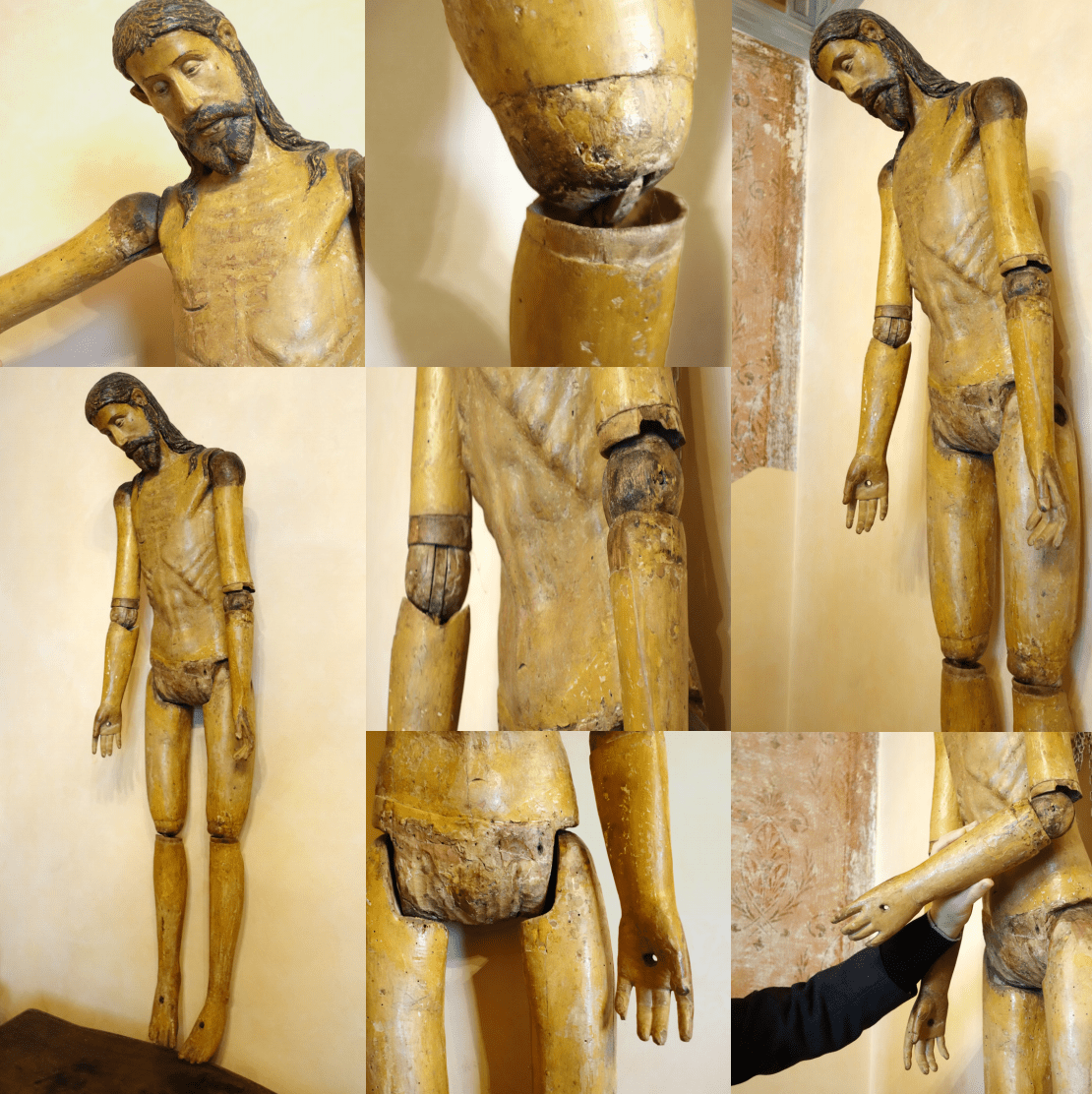
This conference is concerned with the agency and life of material objects and evolves around the investigation of two interlaced objectives. First, the conference will shed light on understudied aspects of medieval visual culture, focusing in particular on the agency of images and material objects. Second, it will provide new cutting-edge theoretical reflections and methodologies concerning the study of material agency and “living images” today. We argue that the cultural use of and interaction with images may be regarded as more than mere historically or culturally specific phenomena. Rather, it concerns the ontology of images and constitutes a fundamental aspect of our life with images, in the premodern as well as in the contemporary. It is our contention that images are embedded in social interaction and that animation is deeply constitutive of the production of meaning. Animation, we argue, is not only located in the mind of the beholder, but in the epistemology, creation, interaction and materiality of images. Furthermore, we will argue that medieval animation may inform contemporary views on animation and provide us with a more precise vocabulary to capture current phenomena for instance in the digital world. The conference aim to be interdisciplinary and transhistorical in its perspective and targets scholars of visual studies, material studies, study of religions, anthropology, medieval studies and theology. It is also relevant more generally for current discussions about the life and agency of seemingly dead matter.

There are four main topics of the conference: – Physical/mechanical animation of artworks and other artefacts (sculptures, reliquaries, paintings etc.) – Mental animations of images and objects (artworks, and other artefacts) – Animation in a theatrical context (mystery plays, liturgical plays and staging’s, puppets and other theatrical use of figures and sculptures) – Medieval and Early Modern animation in the 20th century and contemporary theatrical practices. The conference takes as its point of departure the work of the newly organized international research-project: The Living Image (LIMA): On the ontology, agency and personhood of living images and objects – medieval and modern. This project is coordinated from the University of Bergen, Norway, and consists of a group of researchers from Belgium, Denmark, Ireland, Norway, Poland, United Kingdom, and USA, and the work of the international research network: The European Network on the Instruments of Devotion – ENID: https://enid.w.uib.no/ The conference in Bialystok is designed to be a platform for the exchange of opinions, ideas, and historical documentation, as well as the starting point for a publication. We plan to publish a collection of articles offering an interdisciplinary academic survey of the topic of animation in the Middle Ages, and its reception in the 20th Century.

The language of the conference is English. Each contributor will be given 20 minutes to present his/her paper. Please send abstracts of no longer than 500 words, together with a short CV and personal data at the following email: medievalanimation@gmail.com
Deadline: April 30, 2020

Conference fee: 25 Euros (15 Euros for Ph.D. students)

The conference will take place in Bialystok at the: The A. Zelwerowicz National Academy of Dramatic Art Branch Campus in Białystok (Puppet Theatre Art Department) H. Sienkiewicza 14, 15–092 Białystok, Poland http://www.atb.edu.pl e-mail: sekretariat@atb.edu.pl https://goo.gl/maps/hcfuKHoNqKeqPMSK9

Confirmed key-note speakers are: Peter Dent, Ph.D., University of Bristol, GB; Prof. Cynthia Hahn, The City University of New York, USA; Prof. Hans Henrik Lohfert Jørgensen, University of Aarhus, Denmark; Amy Whitehead, Ph.D., Massey University, New Zealand.

Scientific committee: Henrik von Achen, Professor, Dr. Art., Director of the University Museum, University of Bergen, Norway; Kristin Bliksrud Aavitsland, Professor, Ph.D., MF Norwegian School of Theology, Religion and Society, Norway; Barbara Baert, Professor, Ph.D., Art History, Faculty of Arts, Katholieke Universiteit Leuven, Belgium; Jørgen Bakke, Associate Professor, Dr. Art., Department of Linguistic, Literary and Aesthetic Studies, University of Bergen, Norway; Carla Maria Bino, Professor, Ph.D., Università Cattolica del Sacro Cuore, Brescia, Italy; Christophe Chaguinian, Associate Professor, Ph.D., College of Liberal Arts and Social Sciences, University of North Texas, USA; Peter Dent, Senior Lecturer, Ph.D., Department of History of Art, University of Bristol, Great Britain; Rob Faesen, Professor, Ph.D., Department of History of Church and Theology, Katholieke Universiteit Leuven, Belgium; Cynthia Hahn, Professor, Ph.D., Medieval Art History, Hunter College, The City University of New York, USA; Hans Henrik Lohfert Jørgensen, Associate Professor, School of Communication and Culture – Art History, University of Aarhus, Denmark; Jon P. Mitchell, Professor, Ph.D., Social Anthropology, University of Sussex, Great Britain; David Morgan, Professor, Ph.D., Religious Studies & Art, Art History and Visual Studies, Duke University, USA; Salvador Ryan, Professor, Ph.D., Ecclesiastical History, Pontifical University St Patricks College, Maynooth, Ireland; Zuzanna Sarnecka, Assistant Professor, Ph.D., Institute of Art History, University of Warsaw, Poland; Laura Katrine Skinnebach, Assistant Professor, Ph.D., School of Communication and Culture – Art History, University of Aarhus, Denmark; Allie Terry-Fritsch, Associate Professor, Ph.D., School of Art – Art History, Bowling Green State University, USA

Conference organised by:
Kamil Kopania, Ph.D., The A. Zelwerowicz National Academy of Dramatic Art, Branch Campus in Bialystok, Poland (https://atb.edu.pl/o-wydziale/pedagodzy/dr-kamil-kopania) Henning Laugerud, Associate Professor, Dr. Art., Department of Linguistic, Literary, and Aesthetic Studies, University of Bergen, Norway (https://www.uib.no/en/persons/Henning.Laugerud)
CFP: ‘Relationships’, University of York, Centre for Medieval Studies, Interdisciplinary Graduate Conference, deadline 23 April 2020

Date(s): 23-24 June 2020

Location: King’s Manor, Exhibition Square, York

We welcome paper proposals of 250-300 words for 15-20 minute papers on the theme of Relationships in any area of Medieval Studies from current postgraduate students (MA, PhD, MPhil), early career scholars, and independent researchers.

Topics can include (but are not limited to):

  • Interpersonal relationships (friendships, family, neighbourliness and dispute, patrons, authority, love, gender, and sexuality)
  • Communities, workshops, and networks (religious houses, artisan workshops, intellectual networks, interfaith and global relations)
  • Relationships between texts, images, and audiences (word-image relations, commissioned works, marginalia, authorship, reading and writing practices)
  • Relationships to objects (relics, gifts, object biographies)
  • Intertextual relationships and literary traditions
  • Relationships between people, animals, space, and landscape
  • Relationships with the past (medievalism, romanesque)
  • Interdisciplinary research (scientific methodologies, digital humanities, history of science)
  • Public engagement and collaborations with heritage institutions
We also welcome proposals for academic posters to be displayed during the conference.
Please send all proposals by 23rd April to: yorkcmsconference@gmail.com
Travel grants for unfunded speakers are available. To apply, please include with your proposal a short explanation of your financial circumstances (self-funded student, lack of travel bursary, etc.) and an itemised list of anticipated expenses.

Conference: The social intellectual: experience and thought in the Middle Ages, University of York, 19 March 2020

Thursday, 19 March 2020, 9:00am to 7:00pm
The King’s Manor, Exhibition Square, University of York, York, Y01 7EP

This international conference explores the organic relationship between lived experience and academic/religious thought, beginning from the position that intellectual activity and social experience were closely intertwined in the medieval period. The conference honours the work of Professor Peter Biller FBA in his 75th year, whose attempts to situate practical medieval thinkers in their milieux have inspired many of the speakers.

Continue reading “Conference: The social intellectual: experience and thought in the Middle Ages, University of York, 19 March 2020”

Book Launch: ‘Gothic Architecture in Spain: Invention and Imitation’, 6.30-8pm, Weds 12 February, Courtauld Institute of Art, London

Please join us for the launch of Gothic Architecture in Spain: Invention and Imitation, eds Tom Nickson and Nicola Jennings: https://courtauld.ac.uk/event/gothic-architecture-in-spain-invention-and-imitation-book-launch 

6.30pm, Research Forum South Room, Courtauld Institute of Art, Vernon Square, Penton Rise, London WC1X 9EW

From the dazzling spectacle of Burgos Cathedral to the cavernous nave of Palma Cathedral or the lacy splendour of San Juan de los Reyes, Spain preserves a remarkable variety of inventive but little understood Gothic buildings. Yet Gothic architecture in Spain and the Spanish kingdoms has traditionally been assessed in terms of its imitation of northern European architecture, dismissed for its ‘old-fashioned’ or provincial quality, and condemned for its passive receptivity to ‘Islamic influence’. But did imitation really triumph over invention in the architecture of medieval Iberia? Are the two incompatible? Can inventio and imitatio offer useful or valid analytical tools for understanding Gothic architecture? And to what extent are invention or imitation determined by patrons, architects, materials or technologies? This essay collection brings together leading scholars to examine Gothic architecture from across Iberia from the thirteenth to the sixteenth century, and provides the first significant account of Spanish Gothic architecture to be published in English since 1865.

The launch directly follows a Medieval Work-in-Progress Seminar by Beate Fricke, ‘Colour and Chaos’, starting at 5pm in the same room. Attendance is free and all are welcome to attend. Details here: https://courtauld.ac.uk/event/colour-and-chaos

CFP: ‘Remarkable women’: Female patronage of religious institutions, 1350-1550, The Courtauld Institute of Art, deadline: 10 April 2020

Call for Papers: ‘Remarkable women’: Female patronage of religious institutions, 1350-1550, The Courtauld Institute of Art, 4 June 2020. This conference is organised by Nicholas Flory and hosted by Prof Susie Nash.

Deadline: Friday 10 April 2020

This conference seeks to explore the ways in which women patronised and interacted with monasteries and religious houses during the late Middle Ages, how they commissioned devotional and commemorative art for monastic settings, and the ways in which these donations were received and understood by their intended audiences. The artistic donations of lay patrons to religious institutions has become a fruitful area of study in recent years, but the specific role played by women in these networks of patronage has been subject to less thorough scrutiny. Similarly too, the interests of female patrons have often been considered separately from the contexts of the places to which they made their donations, without a thorough consideration of their very different status from their male counterparts and how this shaped their pursuit for commemoration and memorial after death and their reception as patrons by monastic houses and religious institutions.

Applicants are encouraged to consider these issues and to think about the placement of objects and works of art commissioned by women within religious buildings, the devotional practices and beliefs of various religious orders, the physical materials of donations, and the ways in which female patrons situated themselves within monastic spaces. Was there a dialogue between these benefactors and the religious institutions they patronised? What can such donations tell us about the role and position of women in late medieval society and the ways in which they used religious patronage to articulate their own status? By examining a category of patrons that was clearly highly aware of a variety of devotional and commemorative practices, this conference seeks to gain a better understanding of art commissioned for monasteries by female lay donors, and how this more broadly reflects the position of women in late-medieval Europe.

Proposals are encouraged to address these issues throughout Europe between circa 1350 to 1550. Topics might include, but are not limited to considerations of:

  • Issues of access and entry for women into religious spaces
  • The agency of women in donating to monastic orders
  • The significance of widowhood
  • How women made themselves present, either in images of burial, in spaces often unavailable to them in life.
  • The relationships between a female patron and a male religious institution.
  • The role of materials in articulating identity or expressing specific aims, ideas or associations
  • The differences in donations, and their reception, between male and female patrons
  • The positioning of chapels, memorials or objects within monastic spaces
  • How concepts of death and the afterlife may have been expressed in visual terms, and the ways in which this may have been gendered.
  • The political nature of female patronage, and the ways in which women contributed to dynastic or familial ambitions
  • How different monastic orders may have received and understood female patronage
  • The types of object given by female donors to monastic audiences

Proposals are welcome from postgraduate, early-career and established researchers working in all relevant disciplines. Please send a title and an abstract of no more than 300 words for a 20-minute paper, together with a short CV and 100-word biography, to Nicholas.Flory@courtauld.ac.uk, by Friday 10 April 2020.

We hope to be able to provide some financial support for travel and accommodation for speakers who require it, but applicants are encouraged to first apply to their home institution for any necessary support. This conference is made possible by the kind generosity of Sam Fogg.

Conference: Church, Saints and Seals, 1150-1300, Canterbury Christ Church University, 8 May 2020

As part of Becket 2020, this one-day conference combines presentations by experts on seals with a visit to the Cathedral Archives and Conservation Studio. Speakers will discuss the iconography of seals, including representations of sacred buildings and Becket’s murder, as well as the materiality of seals and sealing practices.

Timetable:

10.00-10.30            Registration and Refreshments

10.30-11.15            Welcome and Session One: Professor Markus Späth

11.15-12.00            Session Two: Dr Lloyd de Beer and Professor Sandy Heslop

12.00-13.00            Lunch

13.00-13.45           Session Three: Dr Philippa Hoskin

13.45-14.30           Session Four: Dr Paul Dryburgh

14.30-15.00            Refreshments

15.00-15.45            Session Five: short presentations and concluding remarks

16.00-17.00            Visit to Cathedral Archives and Conservation Studio

Tickets: Full price (including lunch) £50; CCCU and Kent University students (including lunch) £25

Tickets and more information here: https://www.canterbury.ac.uk/arts-and-humanities/events/arts-and-humanities/ckhh/saints-and-seals.aspx

Postdoc: Postdoc in archaeology of the Mediterranean (200-1000 CE), University of Puget Sound, deadline: March 1, 2020

The University of Puget Sound invites applications for the Lora Bryning Redford Post-Doctoral Fellowship in Archaeology starting in Fall 2020. This is a nonrenewable one-year position.

Responsibilities:

The Redford Fellow will be expected to teach three undergraduate courses over the year: an introduction to archaeology (including archaeological methods) course in the fall and two more specialized courses in the spring, chosen in consultation with the faculty mentor.  The Fellow will also deliver a public lecture and serve as a campus resource for those interested in archaeology; this may include advising students, identifying summer excavations or field schools in which to participate, or finding graduate programs that meet students’ interests.  The Fellow will be assigned to an appropriate department (e.g. Art and Art History, Classics, History, Religious Studies, Sociology and Anthropology), where faculty will assist with professional development.

Qualifications:

We invite applications from scholars who have completed a Ph.D. in archaeology within the last three years. We seek a candidate who has expertise in the archaeology of the Mediterranean, broadly understood, from c. 200 to c. 1000 CE.  Specializations might include the late Roman world, Sassanian Empire, early Islamic civilization, Byzantine Empire, or early medieval western Europe.  Candidates with interests in cross-cultural encounters, gender roles, or religion are especially encouraged to apply.  Scholars who are able to make connections across disciplines and demonstrate the impact of archaeological work on a variety of fields in an undergraduate liberal arts setting are especially encouraged to apply.

Compensation and Benefits:

Rank: Post-Doctoral Fellow

The position offers a salary of $40,000 and comes with health and professional development benefits.  Puget Sound offers a generous benefits package. For more information, visit: http://www.pugetsound.edu/about/offices–services/human-resources/overview-of-university-benefit/.

About Puget Sound:

Puget Sound is a selective national liberal arts college in Tacoma, Washington, drawing 2,600 students from 48 states and 20 countries. Puget Sound graduates include Rhodes and Fulbright scholars, notables in the arts and culture, entrepreneurs and elected officials, and leaders in business and finance locally and throughout the world. A low student-faculty ratio provides Puget Sound students with personal attention from faculty who have a strong commitment to teaching and offer 1,200 courses each year in more than 50 traditional and interdisciplinary fields. Puget Sound is the only nationally ranked independent undergraduate liberal arts college in Western Washington, and one of just five independent colleges in the Pacific Northwest granted a charter by Phi Beta Kappa, the nation’s most prestigious academic honorary society. Visit “About Puget Sound” (http://www.pugetsound.edu/about) to learn more about the college.

Application Deadline: Interested individuals are encouraged to submit application materials no later than March 1, 2020 to ensure consideration.  

Required Documents:

Please submit curriculum vitae (CV) when prompted to submit resume. Additional documents can be attached within the application. Applications submitted without the documents requested below will not be considered:

  • Curriculum vitae
  • Letter of Interest
  • Diversity Statement (see prompt below)
  • Three (3) letters of reference. You will be asked to specify the email addresses of reference providers at the time of application and the system will email these providers on the next business day.

Commitment to Diversity: As a department and university, we are strongly committed to creating an inclusive and effective teaching, learning, and working environment for all. We ask applicants to submit a diversity statement, in which they comment on their ability to contribute meaningfully to our on-going commitment to be informed and competent with regard to issues of diversity, equity, and individual differences. We encourage applicants to reference the University of Puget Sound’s current Diversity Strategic Plan (DSP) at http://www.pugetsound.edu/about/diversity-at-puget-sound/diversity-strategic-plan/ prior to writing this statement. While not an exhaustive list, the following are some ways candidates can express their qualification:

  • Your lived experiences and/or identities that speak to the department and university’s commitment to inclusion and diversity;
  • Demonstration of your awareness of inequities for underrepresented student populations in education, research experience, and other opportunities;
  • Brief insights on why diversity is important at institutions like the University of Puget Sound;
  • Infusion of diversity and diversity-related issues into your research, pedagogy, and/or service;
  • Previous and/or current activities involving mentoring underrepresented student populations;
  • Creative ideas or strategies you could enact as a member of the University of Puget Sound campus community to support the university’s DSP;
  • Brief insights on how cultural competency increases one’s effectiveness as an educator and department/university colleague.

University Diversity Statement

  • We acknowledge the richness of commonalities and differences we share as a university community; the intrinsic worth of all who work and study here; that education is enhanced by investigation of and reflection upon multiple perspectives.
  • We aspire to create respect for and appreciation of all persons as a key characteristic of our campus community; to increase the diversity of all parts of our University community through commitment to diversity in our recruitment and retention efforts; to foster a spirit of openness to active engagement among all members of our campus community.
  • We act to achieve an environment that welcomes and supports diversity; to ensure full educational opportunity for all who teach and learn here; to prepare effectively citizen-leaders for a pluralistic world.

Puget Sound is committed to an environment that welcomes and supports diversity. We seek diversity of identity, thought, perspective, and background in our students, faculty, and staff. To learn more please visit: http://www.pugetsound.edu/about/diversity-at-puget-sound/

All offers of employment are contingent on successful completion of a background inquiry.

The University of Puget Sound is an equal opportunity employer.

Conference: The Intercultural Roots of Early Scholasticism – Greek, Hebrew, Arabic, Latin, 23-24 January 2020

23-24 January 2020, Goodenough College, Mecklenburgh Square, London WC1N 2AB

 Please register here:  https://www.eventbrite.co.uk/e/the-intercultural-roots-early-scholasticism-greek-hebrew-arabic-latin-tickets-80013698125

Please book lunch separately here: https://estore.kcl.ac.uk/product-catalogue/academic-faculties/faculty-of-arts-humanities/theology-religious-studies/lunch-for-the-intercultural-roots-of-early-scholasticism-conference

The late twelfth and early thirteenth centuries represent a dynamic period in Western intellectual history. These were years, before Aristotle’s works were fully digested, during which philosophical works written in Greek, Hebrew, and Arabic were becoming available in Latin for the first time, skewing understanding of Aristotle considerably and introducing themes into Latin thought in their own right. The proposed workshop seeks to better understand the phenomenon of the confluence of Greek, Hebrew, and Arabic sources that influenced early scholastic interpretations of Aristotle as well as Latin authorities like Augustine by investigating more closely those sources and the phenomenon of their transmission into Latin. In this connection, papers will be offered on various aspects of the Greek/Arabic/Hebrew tradition that had an influence on early scholastic thought particularly in the late twelfth and first half of the thirteenth century.

Speakers

  • Amos Bertolacci (Lucca)
  • Charles Burnett (The Warburg Institute)
  • Alexander Fidora (ICREA—Barcelona)/ Nicola Polloni (Berlin)
  • Dag Hasse (Würzburg)
  • John Marenbon (Trinity College, Cambridge)
  • Lydia Schumacher (King’s College London)
  • Lesley Smith (Oxford)
  • Anna-Katharina Strohschneider (King’s College London)
  • Faith Wallis (McGill)

Provisional Schedule

Thursday 23 January

10:00-10:15     Welcome and Introduction

10:15-11:15     Paper 1: Charles Burnett (The Warburg Institute), ‘Arabic and Latin Summae’

11:15-11:45     Tea break

11:45-12:45     Paper 2: Dag Hasse (Würzburg), Translating Double Intentionality from Arabic into Latin

1:00-2:00         Lunch

2:00-3:00         Paper 3: Lesley Smith (Oxford), The Summa Halensis, William of Auvergne, Maimonides, and Avicenna

3:15-4:15         Paper 4: Faith Wallis (McGill), A Twelfth Century Physician Reflects on the Soul, the Spirits, and the Problems of Free Will

4:15-4:45         Tea break

4:45-5:45         Paper 5: José Meirinhos (Porto), Intellectus agens est triplex: Jean of la Rochelle and Petrus Hispanus Portugalensis

6:00-7:00         Opening Reception

Friday 24 January

10:00-10:15     Welcome and Introduction

10:15-11:15     Paper 6: Amos Bertolacci (Lucca), Averroist or Anti-Averroist? On Albert the Great’s Attitude towards Averroes in the Commentary on the Metaphysics

11:15-11:45     Tea break

11:45-12:45     Paper 7: Alexander Fidora (ICREA—Barcelona)/Nicola Polloni (Berlin), Dominicus Gundissalinus and the Reception of Arabic Philosophy in the 13th Century

1:00-2:00         Lunch

2:00-3:00         Paper 8: John Marenbon (Cambridge), The Intercultural Roots of Early Scholasticism: Towards a New Historiography

3:15-4:15         Paper 9: Anna-Katharina Strohschneider (King’s College London)

4:15-4:45         Tea break

4:45-5:45         Paper 10: Lydia Schumacher (King’s College London), Early Franciscan Psychology: A Milestone in the Reception of Islamic and Jewish Philosophy

Seminar Series: Murray Seminars on Medieval and Renaissance Art at Birkbeck, London, Spring Term 2020

3rd February 2020:
James Hall, ‘Embattled Exclusivity: the Aesthetics and Politics of Michelangelo’s Attack on Flemish Painting’.

In a dialogue composed by Francisco de Holanda, Michelangelo launches a diatribe against painting produced in Europe north of the Alps, attacking what he sees as its crowdedness and materialism; its lack of order and discrimination; its sentimentality and its popularity with the ignorant and especially with women. This talk explores Michelangelo’s disparagement of Flemish painting within its rich cultural and political context. His antipathy draws on a historic association between those who lived north of the Alps with the Goths and Vandals who destroyed ancient Rome. Their modern mercenary descendants were still invading Italy, and their artforms – musical as well as visual – had done so too. However, Michelangelo’s main concern was less with Flemish art, than with the fact that it was so influential on Italian artists, including Michelangelo himself. To make matters worse, he was working in the Sistine Chapel, filled with supreme products of Flemish culture, and things were not going well.
25th February 2020:  
Federico Botana, ‘A gift for Giuliano di Lorenzo de’ Medici? The Aritmetica by Filippo Calandri’ 
The Aritmetica (Florence, Biblioteca Riccardiana, MS 2669, c. 1485) is one of the most lavish libri d’abbaco (mathematical treatises) that has come down to us from Renaissance Florence. The Aritmetica is illustrated with sixty-five miniatures, many consisting of lively scenes relating to trade, crafts and games. It has been thought that the manuscript was created for Lorenzo di Piero de’ Medici. The evidence that will be presented in this seminar, however, strongly suggests that a member of the Dell’Antella family commissioned the manuscript, and that it was later given to Lorenzo for use by his son Giuliano, the future Duke of Nemours.  In addition to presenting evidence on the original ownership of the manuscript, the paper discusses the contents and readership of libri d’abbaco, and the personality and intellect of Giuliano de’ Medici, which at a young age made him a worthy recipient for such a gift.


16th March 2020:  

Sarah Ferrari ‘Provenance matters: acquisitions of Venetian Renaissance art in Northern Europe between the First and the Second World War’.


This paper sheds new light on the dynamics of the European art market by investigating a group of paintings that were acquired by the Nationalmuseum in Stockholm, Sweden, between 1917 and 1954. The group includes works attributed to Titian, Tintoretto, Schiavone and Veronese, some of which were once part of the celebrated collection of Queen Christina of Sweden (1626-1689). The paper offers an account of both documentary sources and material aspects, in order to identify the network of collectors and dealers involved, while at the same time analyzing the role of national identity as a driving force in the context of these acquisitions.
Information:
Seminars take place at 5pm in the History of Art Department (43, Gordon Sq., London WC1H 0PD) in The Keynes Library (Room 114), unless stated otherwise.
Talks finish by 5.50pm to allow those with other commitments to leave, and are then followed by discussion and refreshments.
These talks are supported by the Murray Bequest in memory of the Department’s founder Peter Murray, and are open to all.

Conference: ‘Our Aelred’: Friendship, Leadership and Sainthood at Rievaulx Abbey, 3-4th July 2020

Join English Heritage at this major conference focused on Aelred, abbot of Rievaulx between 1147 and 1167.

Called ‘our Aelred’ by his monks, the abbot was one of the most important monastic leaders of the Middle Ages and remains an inspirational figure to this day.

Bringing together leading academics and heritage professionals, this conference provides a unique opportunity to examine Aelred’s impact on the architectural development of Rievaulx, his role in the Cistercian settlement of northern England and his activities as an author. Speakers will address the abbot’s impact in the wider monastic world and Aelred’s legacy, including his veneration as a saint and how his extraordinary life and achievements can be interpreted for 21st-century visitors to Rievaulx.

The event also features a round-table discussion focused on debates about Aelred’s sexuality.

The international panel of speakers includes Professor Janet Burton, Dr Michael Carter, Professor Marsha Dutton, Professor Peter Fergusson, Dr Elizabeth Freeman, Dr Alexandra Gajewski, Professor Brian Golding, Dr Katherine Harvey and Professor Emilia Jamroziak.

The registration fee includes entry to all the conference sessions, an evening drinks reception on 3 July and refreshments and lunch on 4 July.

The conference is timed to coincide with the Leeds International Medieval Conference (6-9 July), registration for which is separate.

A full programme will be available in early spring 2020.

Tickets and more information here: https://www.eventbrite.co.uk/e/our-aelred-friendship-leadership-and-sainthood-at-rievaulx-abbey-tickets-90598335059