CFP: Conquest and Construction: Architecture and Landscapes in the Medieval Mediterranean, Architecture Space and Society Research Centre, Birkbeck (University of London), March 1, 2019

CFP deadline: Monday 3 December 2018

Much recent scholarship on the medieval Mediterranean focuses on shifting borders and cultural identities. Conquest is one of the causes of such shifts. This one-day symposium will examine how the consequences of conquests were manifested in conquered cities and landscapes, asking how conquerors responded to their new environments and how conquered communities were built and re-built.

Papers might touch on any of the following in relation to conquest, conquerors or conquered territories in the Mediterranean world, in the period 500 – 1500.

  • Architecture
  • Space, landscape, urbanism, topographies
  • Architectural sculpture and decoration
  • Sacred and liturgical spaces
  • Destruction of architecture and urbanism
  • Spoliation and re-use of building materials
  • Cross-cultural exchanges through buildings, cities and landscapes
  • Conquerors as builders and patrons of architecture
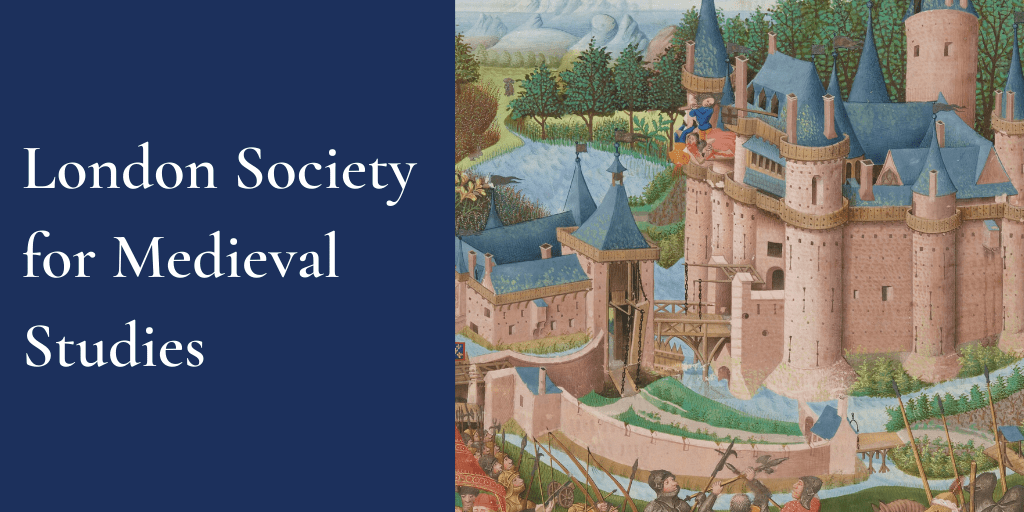
  • Castles and defensive architecture
  • Written descriptions of conquered landscapes

Papers are welcome on all areas of the Mediterranean world (including the Islamic, Byzantine and Latin areas, Jewish communities, the crusades and border zones).

Please send proposals for 20-minute papers to Clare Vernon (c.vernon@bbk.ac.uk), by Monday 3 December 2018, including a paper title, an abstract (max 300 words) and contact details.


CFP: Illustrating Love: From Myth to Manual, Athens, GA, March 22–23, 2019

Apollonio di Giovanni di Tomaso and Workshop. Panel from a Marriage Chest with Story of an Assault on a Maritime City, ca. 1460. Museo Stibbert, Florence

Deadline: Nov 30, 2018

Call For Papers
Illustrating Love: From Myth to Manual
UGA Emerging Scholars Symposium—March 22-23rd, 2019
Keynote Speaker: Dr. Paul Barolsky

Submissions Due: November 30, 2018

The Association of Graduate Art Students (AGAS) at the University of Georgia, in partnership with the Georgia Museum of Art, invites emerging scholars to submit proposals for papers that contribute to a discussion of love in the visual arts. The symposium will be held in conjunction with the exhibition Life, Love, and Marriage Chests in Renaissance Florence, on view at the Georgia Museum of Art March 9—May 26, 2019.

Our symposium will expand the scope of the exhibition by addressing attempts to articulate love throughout the history of visual and material culture. Expressing the many facets of this complex emotion has been a preoccupation in the arts for generations, with artists across genres and media vying to capture the elusive sentiment. Through myth, allegory, and even religion, depictions of love mark cultures’ interpersonal values, both in public and in private. The arts of love reveal society’s most intimate desires, depicting narratives that codify their ideals. From beauty, sexuality, and family to status, agency, and identity, our symposium seeks submissions that exemplify the myriad archetypes related to love.

Submissions that discuss specific works of art or themes related to Life, Love, and Marriage Chests in Renaissance Florence are encouraged. Other relevant topics include but are not limited to:

•    Courtly love
•    Allegories of love and marriage
•    Gender roles in the domestic space
•    Eroticism and the nude
•    Love poetry and the visual arts

Current graduate students and other emerging scholars should submit abstracts (maximum 300 words) and an up-to-date CV to uga.symposium@gmail.com by November 30, 2018. Applicants will be notified of the committee’s decision by December 31, 2018.

Life, Love, and Marriage Chests in Renaissance Florence and related educational programs are made possible by the W. Newton Morris Charitable Foundation and the Friends of the Georgia Museum of Art.

Call for Articles: MEMO – Medieval and Early Modern Material Culture Online


Deadline
: Oct 31, 2018

Theme: Objekte der Erinnerung

Im kommenden Jahr 2019 jährt sich zum 500. Mal der Todestag Kaiser Maximilians I. Dieses Gedenken wird vielerorts genutzt, um die Person des habsburgischen Herrschers, seine Wirkung und Bedeutung für seine Zeit im musealen Rahmen in Szene zu setzen. Eine zentrale Rolle hierbei spielen Objekte: Objekte, die Maximilians Person, Vorstellungswelt, Politik, Handeln, seine Zeit und sein Fortleben in in der veranschaulichen, repräsentieren, wiederspiegeln. Als Herrscher, der zu seinen Lebzeiten sehr um sein ‚Gedechtnus‘ bemüht war und sein Andenken für künftige Generationen in materieller Form zu bewahren trachtete, hat Maximilian seinerseits Objekte bewusst für seine Memoria instrumentalisiert. Ein halbes Millennium später erscheinen sie möglicherweise in anderen Kontexten, sind neue Verbindungen eingegangen und haben für geänderte Akteure eine neue Signifikanz.
Die vierte Ausgabe von MEMO – Medieval and Early Modern Material Culture Online wird dieses Gedenkjahr zum Anlass nehmen, sich der Frage zu widmen, wie einzelne Objekte und Artefakte zu Zeichen für bestimmte Bedeutungen und Bedeutungszuschreibungen und insbesondere zu Objekten der Erinnerung werden. Wie entstehen solche Zuschreibungen und wie verändern sie sich im Laufe von Objektbiografien? Was leistet ein Objekt, wenn es zum Erinnerungsobjekt wird? Wie verhalten sich Objekte im Spannungsfeld zwischen individueller und kollektiver Erinnerung, wie und wann konstituieren sich durch sie Erinnerungskulturen? Und welche Rolle nehmen dabei Sammlungen und die an ihnen beteiligten Akteure im Laufe der Zeit ein?

Willkommen sind sowohl Arbeiten zu Maximilian als auch Beiträge, die sich allgemein mit den genannten Fragestellungen beschäftigen und das Thema „Objekte der Erinnerung“ entweder in theoretisch-methodischer Hinsicht aufrollen oder anhand konkreter Fallbeispiele und Untersuchungsgegenstände aus Mittelalter und früher Neuzeit behandeln.

Für unsere Vorauswahl erbitten wir Abstracts bis zum 31. Oktober 2018.
gabriele.schichta@sbg.ac.at oder elisabeth.gruber2@sbg.ac.at

Ausgabe 4 wird im Juni 2019 erscheinen, Deadline für die Einreichung der Beiträge
ist der 28. Februar 2019.

Click here for more information

Conference: Bohlentueren und Eisenkunst des Mittelalters, Esslingen am Neckar, November 21–22, 2018

maulbronn_innen_brunnenhausRegistration deadline: Oct 19, 2018

Anlässlich der Restaurierung der mittelalterlichen Bohlentüren in der Welterbestätte Kloster Maulbronn und des davon unabhängigen Projektes der Restaurierung einer frühgotischen Sakristeitüre in der Johanneskircheim Rheinland-Pfälzischen Neustadt-Mußbach veranstalten die beiden Landesdenkmalpflegeämter von Baden-Württemberg und Rheinland-Pfalz ein wissenschaftliches Kolloquium.

Die Idee für die Tagung entstand aus der Einsicht, dass dem Thema der mittelalterlichen Türen bislang nicht die gebührende Aufmerksamkeit zu Teil wurde. Die eher stiefmütterliche Behandlung von Türen im Allgemeinen und Türen dieser Zeitstellung im Besonderen hat nach unserer Ansicht bereits in der älteren, aber leider auch jüngeren Vergangenheit zu großen Substanzverlusten geführt. Die Gründe hierfür sind zum einen Unkenntnis in Bezug auf die genaue Datierung der Objekte, als auch Unkenntnis über die Wertigkeit der Türen in Bezug auf die hohe Kunstfertigkeit ihrer Herstellungstechnik.

Wir möchten mit dieser Tagung einen aktiven Beitrag zur Aufklärung leisten und damit ein höheres Maß der Sensibilisierung für den künftig adäquaten Umgang mit diesen wertvollen und selten gewordenen Zeugnissen der Vergangenheit erreichen.

MITTWOCH 21. NOVEMBER 2018
8:00 Öffnung des Tagungsbüros
Anmeldung
8:45 Begrüßung
Prof. Dr. Claus Wolf
Präsident des Landesamtes für Denkmalpflege
im Regierungspräsidium Stuttgart (LAD)
Dr.-Ing. Roswitha Kaiser
Landeskonservatorin, Direktion Landesdenkmalpflege
Rheinland-Pfalz (LD RLP)
Moderation
Rolf-Dieter Blumer, LAD
Claudia Gerner-Beuerle, Dipl.-Restauratorin, LD RLP
9:15 Mittelalterliche Türen, Schlösser und Beschläge
vom 13. bis zum frühen 16. Jahrhundert – ein
Überblick
Prof. Dr. Achim Hubel, Regensburg
10:00 Zur Restaurierung von Schmiedeeisenobjekten
aus dem Mittelalter – Herangehensweise
und Umsetzung, Beispiele aus der Praxis
Elisabeth Krebs, Mag. Restauratorin, Wien
10:30 Befundung einer mittelalterlichen Bohlentür
aus Neustadt-Mußbach
Claudia Magin, Dipl.-Restauratorin, Wien
11:00 Fragen und Diskussion
11:15 Kaffeepause
11:45 Drei Sakristeitüren – drei Restaurierungskonzepte:
Kiedrich, Klingen-Heuchelheim, Neustadt-Mußbach
Esther Nickel, Dipl.-Restauratorin, Altenkirchen
12:15 Weniger ist mehr – Zur Erhaltung von mittelalterlichen
eisenbeschlagenen Bohlentüren
Manfried Eisbein, Dipl.-Restaurator,
Landesamt für Denkmalpflege Sachsen, Dresden
12:45 Mittelalterliche Bohlentüren in rheinhessischen
Dorfkirchen des Bistums Mainz – Versuch einer
Bestandsaufnahme
Diana Ecker, M.A., Konservatorin,
Kirchliche Denkmalpflege Bistum Mainz
13:15 Fragen und Diskussion
13:30 Mittagspause
14:30 Ornamental und figürlich bemalte Holz- und
Eisentüren vom 13. bis zum 16. Jahrhundert
im heutigen Hessen
Christine Kenner, Dipl.-Restauratorin,
Landesamt für Denkmalpflege Hessen, Wiesbaden
15:00 Sicher verwahrt – mittelalterliche Metalltüren
für gesicherte Räume in Kirchen
Dr. Ulrich Knapp, Freier Bauforscher, Leonberg
15:30 Die mittelalterlichen Türen der Hahnentürme
des Freibuger Münsters
Stefan King, Dipl.-Ing. M.A., Freier Bauforscher, Freiburg
16:00 Fragen und Diskussion
16:15 Kaffeepause
DONNERSTAG 22. NOVEMBER 2018
08:00 Abfahrt des Busses
Fleischmann- / Ecke Kollwitzstraße
73728 Esslingen am Neckar
10:00 Begrüßung im Kloster Maulbronn
Holger Probst, Architekt, Vermögen und Bau
Baden-Württemberg, Amt Pforzheim
Susann Seyfert und Rolf-Dieter Blumer, LAD
10:30 Die Bohlentüren des Klosters Maulbronn
Führung: Elisabeth Krebs, Mag. Restauratorin, Wien
12:30 Mittagspause
14:00 Weiterfahrt nach Knittlingen
14:15 Faust-Museum Knittlingen
Führung: Dr. Denise Roth, Leiterin des Museums
15:00 „Bin doch ein arm unwissend Kind“
Zur Metallurgie und Chemie des Mittelalters
im Kontext des Doktor Faustus
Prof. Bernhard Mai, Fachhochschule Erfurt
16:30 Abfahrt des Busses in Knittlingen
17:15 Stopp am Bahnhof Vaihingen/Enz
18:30 Ankunft in Esslingen
19:00 Gemütlicher Ausklang (Selbstzahler)
Beutaubesen
Mittlere Beutau 49
73728 Esslingen am Neckar
16:45 Die „Karlstür“ – eine karolingische Tür aus
dem Aachener Dom, Geschichte und Untersuchung
Helmut Maintz, Dombaumeister, Domkapitel Aachen
Norbert Engels, Restaurator,
LVR-Amt für Denkmalpflege im Rheinland, Pulheim
17:15 Beispiele mittelalterlicher Bohlentüren in
Vorpommern – ein Überblick
Elke Kuhnert, Dipl.-Restauratorin, Landesamt für Kultur
und Denkmalpflege Mecklenburg-Vorpommern, Schwerin
17:45 Gut verschlossen! Bohlentüren an Kornspeichern
des 17. und 18. Jahrhunderts auf dem Gebiet der
ehemaligen Herrschaft Kißlegg
Philipp Scheitenberger, M.A., Freier Haus- und Bauforscher,
Kißlegg
18:15 Resümée und Abschlussdiskussion
18:45 Vortragsende
19:30 Gemütliches Beisammensein (Selbstzahler)
Brauhaus Wichtel
Mettinger Straße 113
73728 Esslingen am Neckar

Veranstaltungsort: Salemer Pfleghof, Untere Beutau 8-10,73728, Esslingen am Neckar

CFP: ‘Faking it: Forgery and Fabrication in Late Medieval and Early Modern Culture’, University of Gothenburg, 15-17 August 2019 (Deadline: 30 January 2019)

Schermafdruk 2018-10-11 13.54.49Faking it: Forgery and Fabrication in Late Medieval and Early Modern Culture

The University of Gothenburg, Sweden, 15-17th August 2019

What is real and what is fake? And why does it matter? As soon as objects, texts and utterances (be they pragmatic or artistic) become imbued with a sense of authority or authenticity, there is a potential to produce other objects, texts and utterances which mimic and attempt to siphon off that authority and authenticity. In late medieval and early modern European culture (1400–1750), this potential was realized in new and unprecedented ways. Social, technological, and intellectual developments forever altered many activities which fall under the remit of forgery and fabrication, spurring lively debate about truth and falsity. The printing press transformed the production, distribution and marketing of texts and images. Heightened interest in classical antiquity changed how scholars interacted with and assigned value to artefacts originating in past cultures. Legal developments altered how artworks and documents were policed, and how authorship and authenticity were instantiated.

The conference Faking it. Forgery and Fabrication in Late Medieval and Early Modern Culture, held in Gothenburg from the 15th to the 17th of August 2019, seeks to explore the many and varying ways in which legitimate forms of production spawned illegitimate ones in late medieval and early modern culture. The conference is hosted by The Early Modern Seminar at The University of Gothenburg. We welcome proposals on all types of cultural production stemming from all cultural ambits, provided that they are connected with the later medieval and early modern world.

Confirmed keynote speaker: Dr Patricia Pires Boulhosa (Department of Anglo-Saxon, Norse, and Celtic, University of Cambridge)

Topics may include, but are not limited to:

  • The terminology of spuriosity
  • Developments in criticism as a response to forgery
  • The fake as a foil to the authentic
  • Connections between literary forgery and forgery in the visual arts
  • The relationship between lying and forgery
  • Grey areas: where production becomes fabrication
  • Legal and economic perspectives on fabrication
  • Fakes and fabrications in arts and sciences
  • The personality cult of the forger

We invite abstracts of up to 250 words, accompanied by a title and a 50-word biographical statement, to be sent to forgeryconference@lir.gu.se. Note that presentations must last no more than 20 minutes. The deadline for submitting an abstract is the 30th of January, 2019. Enquiries may be sent to the same address or made directly to Matilda Amundsen Bergström (matilda.amundsen.bergstrom@lir.gu.se) or Philip Lavender (philip.lavender@lir.gu.se).

Website: http://lir.gu.se/forskning/forskningssamverkan/tidigmoderna-seminariet


Conference: Gotik global – kolonial – postkolonial, Dresden, October 26–7, 2018

prac3a7a_da_se_03Dresden, Technische Universität, Institut für Kunst und Musikwissenschaft, Raum ABS/E08/H, 26. – 27.10.2018

Gotik global – kolonial – postkolonial: Gotisierende Sakralarchitektur auf der Iberischen Halbinsel und in Lateinamerika vom 19. bis zum 21. Jahrhundert

Tagung der Technischen Universität Dresden, Institut für Kunst- und Musikwissenschaft der Philosophischen Fakultät in Zusammenarbeit mit der Carl Justi-Vereinigung e.V.

Immer wieder werden im iberischen und iberoamerikanischen Raum – wie weltweit –  auch heute noch gotisierende Kirchen errichtet. Einige sind typisch für die Neugotik, andere, wie die Almudena-Kathedrale in Madrid oder diejenige von Vitoria-Gasteiz, scheinen als verspätete Bauten des 20. Jahrhundert aus europäischer Sicht aus der Zeit gefallen zu sein. Doch wird gerade in Lateinamerika bis heute an zahlreichen solcher Projekte weitergebaut.
So scheint es zunächst sinnvoll zu überprüfen, ob die stillschweigende Annahme, „die Gotik“ sei eine abgeschlossene Stilepoche, aus globaler Perspektive überhaupt stimmt. Wie ging die zweifellos zunächst kolonial begründete Gotik-Ausbreitung in den überseeischen Gebieten der ehemals spanischen und portugiesischen Weltreiche in eine eigene postkoloniale Adaption über, welche Gründe gab es hierfür und welche stilistischen Ausprägungen wurden und werden gefunden? Wie begann die Entwicklung in den „Mutterländern“? Ist sie dort und in den ehemaligen Kolonien ähnlich oder unterschiedlich verlaufen, gibt es fortdauernde Verbindungen? Lassen sich Parallelen in anderen Weltregionen beobachten? Sind die Phänomene alleine auf die Gotik beschränkt oder gibt es Parallelen für andere Stile?
Im Workshop der Carl Justi-Vereinigung e.V. soll diese Problematik stichprobenartig untersucht werden. Denn ein systematischer Gesamtüberblick ist zur Zeit kaum möglich, sind doch nicht einmal die potenziell wichtigsten Bauten bekannt.

PROGRAMM:
FREITAG, DEN 26.10.2018

Eröffnung / Begrüßung / Einführung
9.30 Uhr
Grußworte
Prof. Dr. Antonio Hurtado (Dresden), Prorektor der TU Dresden
Prof. Dr. Lutz Hagen (Dresden), Dekan der Philosophischen Fakultät
Prof. Dr. Margit Kern (Hamburg), Vorstand der Carl Justi-Vereinigung e.V.

10.00 Uhr
Bruno Klein (Dresden): Gotische Architektur des 20. und 21. Jahrhunderts –
global – kolonial − postkolonial

10.45 Uhr
Pablo de la Riestra (Nürnberg/Buenos Aires): Einmal Gotik – immer Gotik

11.30 Uhr Pause

Von der Neugotik zur Moderne:
Kastilische und katalanische Beispiele
12.00 Uhr
Henrik Karge (Dresden):
Vicente Lampérez y Romea – Gotik als Idealbild und historisches Phänomen

12.45 Uhr
Judith Urbano (Barcelona): La finalización de la Catedral de Barcelona y otros proyectos neogóticos de Augusto Font y Carreras

13.30 Uhr Pause

15.30
Joan Molet Petit (Barcelona):
Las interpretaciones del gótico en la obra del arquitecto Josep Vilaseca, entre lo arqueologista y lo victoriano

16.15 Uhr
Sergio Fuentes Mila (Barcelona): Revisitar el gótico en la arquitectura civil barcelonesa de finales del siglo XIX. El caso del arquitecto José Doménech y Estapá (1858-1917)

17.00 Uhr
Bettina Marten (Bonn/Dresden): Considerations on the Almudena-Cathedral at Madrid

18.00 Mitgliederversammlung der CJV

20.00 Uhr
Gemeinsames Abendessen

SAMSTAG,  DEN 27.10.2018

Die „moderne“ Neugotik in Lateinamerika
10.00 Uhr
Bruno Klein: Einführung

10.15 Uhr
Martín Checa Artasu (Mexiko-Stadt/Barcelona):
The religious orders as diffusers of the neo-gothic architecture in Latin America

11.00 Uhr
María Aranda Alonso (Madrid/Dresden):
El templo de la Merced de San José de Costa Rica : Punto de partida para estudiar el neogótico en Centroamérica

11.45 Uhr
Paula Vermeersch (São Paulo):
O processo construtivo da Catedral da Sé, São Paulo, 1911-1954

12.30 Uhr
Barbara Borngässer (Dresden):
Neugotik und Moderne im Süden Brasiliens: Die Kirchenbauten Gottfried Böhms

13.15 Uhr
Abschlussdiskussion

16.00 Uhr
Besichtigung aktueller „gotischer“ Architektur in Dresden (Schlosskapelle,  Sophienkirchen-Monument)

Kontakt:
bruno.klein@tu-dresden.de
barbara.borngaesser@online.de
bettina.marten1@tu-dresden.de

Conference: Mobility and Conflict in the Mediterranean, UNED, Madrid, 26 October 2018

Mobility and conflict in the Mediterranean: sociability networks and artistic creation in the Late Medieval and Early Modern periods
UNED, Madrid 26 de octubre de 2018.

9.30. Presentación
SESIÓN 1: Alteridades móviles: La visión del otro en la literatura y el arte
Modera: Juan Carlos Ruiz Souza (UCM)
10:00-10:20: Representando al otro: tejidos y vestidos en los espacios de sociabilidad en el siglo XV castellano. Elena Paulino Montero (UNED)
10:20-10:40: The Fifth Column: rethinking the Morisco’s visual representation. Borja Franco Llopis (UNED).
10:40-11:00: La visión del cristiano como “otro”. Alteridad en el Mediterráneo Otomano. Miguel Ángel de Bunes Ibarra (CSIC).
11:00-11:30: DEBATE
11:30-12:00: PAUSA-CAFÉ

Sesión 2: Redes de saber, redes de poder: Objetos y conocimientos en circulación
Modera: Consuelo Gómez López (UNED)
12:00-12:20: Movilidad, circulación, interacción. La formación de un grupo de presión belicista en la monarquía policéntrica de los Habsburgo (Génova, Madrid, País Vasco – siglo XVI) Bastien Carpentier (Université Littoral Côte d’Opale)
12:20-12:40: No solo inventarios. Bibliotecas en movimiento en el Mediterráneo. Margarita Vázquez Manassero (UNED)
12:40-13:00: Un mar en papeles para los ojos de Felipe II: la ciencia y el dibujo del ingeniero. Alicia Cámara Muñoz (UNED)
13:00-13:30: DEBATE
13:30-15:30: COMIDA

Sesión 3: El Mediterráneo: espacio de conflicto, espacio de intercambio.
Modera: Fernando Rodríguez Mediano (CSIC-CORPI)
15.30-15:50: Los espías del rey. La inteligencia hispano-imperial contra el turco (siglo XVI) Gennaro Varriale (Università degli Studi di Napoli “Federico II”)
15:50-16:10 Caravaggio in Malta and his connection to the Ottoman Art. Filiz Çakir Phillip (Aga Khan Museum Toronto).
16:10-16:30: Between objects and subjects: slaves and religious artifacts in the 17th Mediterranean. Daniel Hershenzon (University of Connecticut)
16:30-17:00 DEBATE
17:00-17:30: PAUSA CAFÉ

Sesión 4: Un Mediterráneo global. Dinámicas transoceánicas  del siglo XVI
Modera: Elena Paulino Montero (UNED)
17:30-17:50 Lepanto in the Americas: Global Storytelling and Mediterranean History. Stefan Hanß (University of Manchester)
17:50-18:10: American objects at the beginning of the sixteenth century Antonio Urquízar Herrera (UNED).
18:10-18:30: DEBATE

18.30 CONCLUSIONES Y CLAUSURA

Evento patrocinado por la Facultad de Geografía e Historia y el Departamento de Historia del Arte de la UNED y organizado dentro del proyecto: HAR2016-80354-P. IMPI. Antes del orientalismo: Las “imágenes” del musulmán en la Península Ibérica (siglos XV-XVII) y sus conexiones mediterráneas (Ministerio de Ciencia, Tecnología y Universidades- Fondos FEDER).
Actividad del Grupo de Investigación: Arte y Pensamiento en la Edad Moderna y Contemporánea

Dirección científica: Elena Paulino Montero
Coordinación científica: Borja Franco Llopis

Click here for more information

Lecture Series: Murray Seminars at Birkbeck, Autumn 2019

16 October, Lisa Monnas

Vestments and Textiles in Hans Memling’s ‘God with Singing and Music-making Angels 

Three large panels in the Royal Museum of Fine Arts in Antwerp, painted by Hans Memling in the 1480’s, represent a heavenly scene framed by clouds, which part to reveal the central figure of God attended by sixteen singing and music-making angels. Thye once formed the top of the high altarpiece of the Benedictine Abbey of Santa Maria la Réal in Nájera, in Spain. In the central panel, God is depicted vested as priest and ruler, and the angels in this and in the flanking scenes wear clerical dress. The work has been interpreted as relating to the Good Friday liturgy and the Exaltation of the Cross, but since the panels originally formed the top of an altarpiece whose main subject was the Assumption of the Virgin, this is open to doubt. This paper will re-examine the vestments and textiles in the newly conserved panels, assessing their ‘realism’ and their contribution to the heavenly scene. It will also consider them in the wider context of some of Memling’s other works.

14 November, Jana Gajdosova

Sculpted Genealogies: The Effigies of Bohemian rulers in Prague Cathedral

With the death of Wenceslas III, the Přemyslid dynasty, which had ruled Bohemia for over four centuries, came to an end. The murder of the young king created chaos in the kingdom for several decades; however, after the marriage of Elizabeth of Přemyslid and John of Luxembourg and the subsequent birth of Charles IV (1316 – 1378), Bohemia reached the height of its political and cultural power in Europe. Charles IV saw himself as a bridge between two Bohemian dynasties – the Přemyslids of the past and the Luxembourgs of his envisioned future. This link was communicated with painted genealogies in at least three of Charles’ castles, and with staged genealogies across Prague. The fascination that Charles had with re-imagining and visualizing his role within the dynastic shift that occurred also found expression in the sculpted genealogies which are the subject of this paper—specifically the effigies of Přemyslids rulers commissioned by Charles IV for Prague Cathedral, which were made to communicate these ideas in sculpture and across real space.

5 December, Marie-Louise Lillywhite 

Blood is Thicker than Water: Artists, Friends and Family Alliances in Seventeenth-Century Venice

How did Venetian artists forge alliances to advance their interests and ensure the continuation of their workshops? Focusing on the painter Palma il Giovane, this paper explores his concerted efforts to continue his family name through strategic marriages, and safeguard his success through advantageous friendships. This study will demonstrate how these potentially positive relationships impacted artistic production in Venice for better, or indeed worse.

All this term’s seminars take place in the History of Art Department at Birkbeck (43, Gordon Sq., London WC1H 0PD) in Room 114 (The Keynes Library) at 5pm.  Talks finish by 5.50pm (allowing those with other commitments to leave) and are then followed by discussion and refreshments.  We hope to see you there.

CFP: The Saint Enshrined: European Tabernacle-altarpieces, c.1150-1400, Valladolid, June 7–8, 2019

unspecified
 Tabernacle-shrine from Mule,
Iceland, now in the Nationalmuseet
in Conpenhagen; c.1250.
Photo: Justin Kroesen

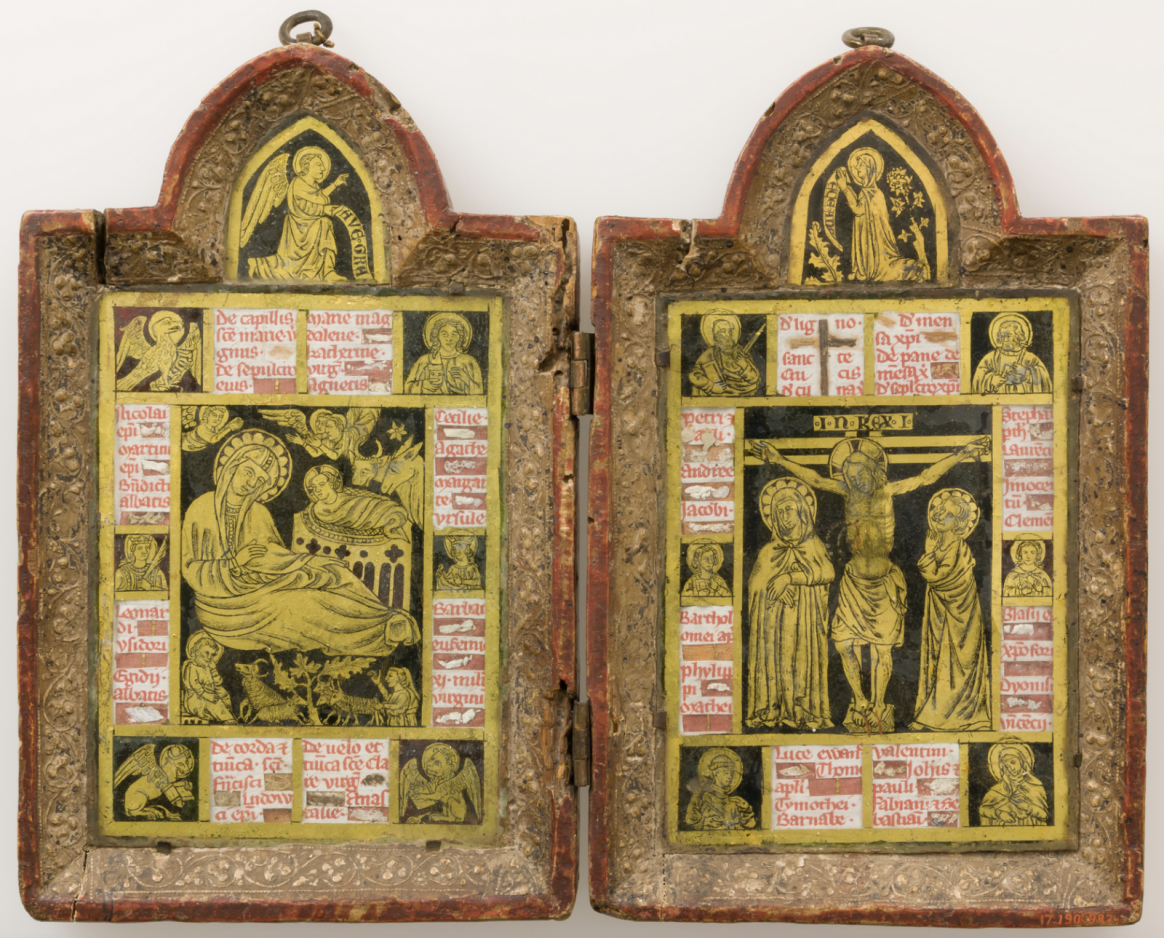
Almost every Medieval church had one or more sculptures of saints, many of which were placed on altars, in wall niches or in so-called tabernacle-altarpieces. This last category refers to three-dimensional, canopied structures, embellished with bright colours and equipped with movable wings that housed cult images of the Virgin and Child or saints. This early type of altarpiece became widespread in Europe between c.1150 and 1400. Nowadays, examples are scarce and often fragmented, overpainted and reconstructed. Most of them come from the geographical periphery of Europe and almost all of them are now without their original context, as they hang on museum walls or in churches as isolated relics.

The purpose of this international symposium is to explore and discuss early tabernacle-altarpieces in different regions of Europe: their provenance, patronage, function, and role in popular piety. We invite speakers to submit proposals for 15-minute papers to be presented during the symposium. Proposals should go beyond case studies and look at such topics as the use and re-use of tabernacle-altarpieces, media involved in their creation, regional differences, etc.

How to Submit: Proposals of c.300 words should be submitted to Fernando Gutiérrez Baños, fbanos@fyl.uva.es.

Deadline: Friday 18th of January 2019.

All proposals will be examined by the Scientific Committee. It is hoped that an edited volume of the symposium proceedings will be published. Successful candidates will be offered free registration.

SCIENTIFIC COMMITTEE: Fernando Gutiérrez Baños, Universidad de Valladolid; Justin Kroesen, Universitetsmuseet i Bergen; Elisabeth Andersen, Norsk institutt for kulturminneforskning.

KEYNOTE SPEAKERS: These will include members of the Scientific Committee; Stephan Kemperdick, Staatliche Museen zu Berlin, Gemäldegalerie; Teresa Laguna Paúl, Universidad de Sevilla; Cristiana Pasqualetti, Università degli Studi dell’Aquila; and Alberto Velasco Gonzàlez, Museu de Lleida: diocesà i comarcal.

PROGRAM (PROVISIONAL): Friday 7th  of June, session held in the Universidad de Valladolid (Facultad de Filosofía y Letras, Sala de Juntas); Saturday 8th  of June, field trip to sites in the Diocese of Vitoria.

Lecture Series: European History, 1150-1550 Seminar Series at the Institute of Historical Research

All are welcome to attend the opening lecture of the 2018 autumn term for IHR’s seminar, European History, 1150-1550. Julien Théry ( University of Lyon) will present his lecture entitled, ‘The French Way. The Rift between The Papacy and Capetian Monarchy under Philip the Fair (1285-1314)’ this Thursday, 27th September.

The complete 2018-19 programme can be found here.