Call for Submissions: Eikón / Imago, deadline 30 April 2020

Researchers at the Complutense University of Madrid are looking for articles for their journal.

Edited by the CAPIRE Research Team, Eikón / Imago Scientific Journal is an annual academic publication whose research interest focuses on iconography and visual culture, from a thematic scope that encompasses the forms and meanings of the images of any era, culture or country, as well as any thematic, typological or disciplinary variant: religious, mythological, political, musical, fantastic, animalistic and other.

Continue reading “Call for Submissions: Eikón / Imago, deadline 30 April 2020”

Seminar: One Year Later: Notre Dame, Luhring Augustine, New York (available online)

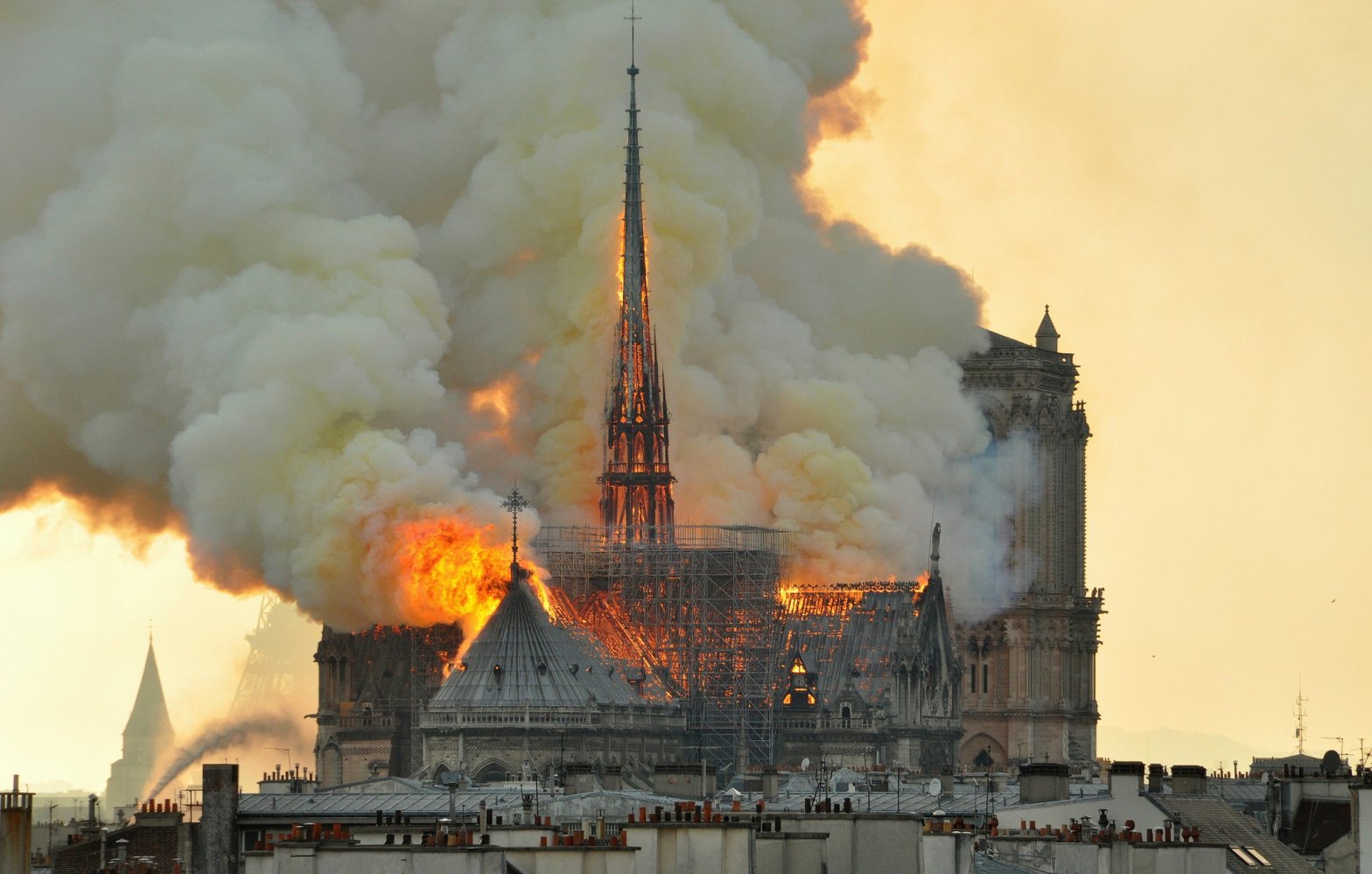
On April 15, 2019, the cathedral of Notre Dame de Paris caught fire. The world watched as one of its most beloved medieval monuments burned. We were all reminded that not only is it a miracle that medieval architecture has survived into the 21st century, but that art and architecture (like all other tangible, material things) can very rapidly be destroyed.

In response to this devastating fire and the questions it raised about conservation and restoration of medieval art and architecture, Sam Fogg and Luhring Augustine hosted Gothic Spirit: Medieval Art from Europe, a one-day conference held in New York City in January 2020. Gothic Spirit brought together academics, curators, art dealers, collectors, and conservators to discuss the delicate issues of conservation and restoration. How far do we go to preserve the past? What is too much restoration? How are these issues addressed and perceived by politicians and society at large? The conference began with a presentation by Dr. Alexandra Gajewski on the current status of restoration at Notre Dame.

The full conference is now available to watch on Luhring Augustine’s website. To watch the conference sessions, click here.

Screen Shot 2020-04-15 at 4.23.54 PM

For more information on Notre Dame, especially how restoration efforts have been affected by the novel coronavirus, you can read these resources:

Wall Street Journal: One Year After Fire, Notre Dame’s Rebuild Is in Limbo

The Guardian: One year after Notre Dame fire, officials struggle to keep restoration on track

The Telegraph: Notre-Dame fire: one year on from the devastating blaze

The New York Times: Marking Notre-Dame Fire in a Locked-Down Paris

Additionally, you can also visit the ICMA’s Notre Dame de Paris page for resources and information from scholars in the field.

CFP: Manufacturing the Past, Deadline 10 June 2020

The Department of Art History of the European University, St. Petersburg
October 8 – 10, 2020
Due June 10, 2020

In 2018 the international conference History and Its Images, organized by the Department of Art History of the European University at St. Petersburg, was dedicated to Francis Haskell’s seminal book of the same title, which greatly influenced the study of the visualization of the past. In 2020 we will host a second conference on the representation of the past in the arts and visual culture.Among the questions to be discussed are: how the visual arts and visual culture produce images of the past, how these images were perceived by the different communities and how they were transformed by the national context of their production.

Continue reading “CFP: Manufacturing the Past, Deadline 10 June 2020”

CFP: On Materiality and the Virtual (a virtual symposium), NYU University, deadline April 15, 2020

Following on last year’s theme Out of Place / Out of Time, the Medieval and Renaissance Graduate Student Interdisciplinary Network (MARGIN) is proud to announce the theme of our 2020 MARGIN Symposium: Materiality and the Virtual. The Symposium will take place virtually via Zoom on May 1. A link for the symposium will be sent out closer to time.

Continue reading “CFP: On Materiality and the Virtual (a virtual symposium), NYU University, deadline April 15, 2020”

CFP: Within and Without the Manuscript

Within and without the manuscript: interactions between illumination and the other arts

Université de Lausanne

October 22nd-23rd, 2020

Due April 19, 2020

Since at least the 1960s, book illumination has been fully recognized as an important sector of the arts and as an integral part of the historical studies of the book. The study of this branch takes place not only in libraries and archives, but also in universities, with dedicated chairs and specific journals, as well as its own research institutes and congresses. However, the increasing specialisation should not make us forget that this field of artistic production has never been isolated from the others.

Continue reading “CFP: Within and Without the Manuscript”

Resources: Medieval Art History Resource Facebook group

As many of us have found during this surreal time we’re currently living in, all those books and articles we wish we had picked up a copy or scanned is now an almost impossible task. With the closing of libraries, I wanted to bring to researcher’s attention to a new Facebook group that has been created to help students and researchers access any material that they may need.

Join the community of medieval art historians/ architectural historians/archaeologists who are happy to help out one another in accessing each other’s libraries (electronic & paper). Need a chapter of a book that you can’t get your hands on? Post in the group and hopefully someone will have that very book sitting on their bookshelf.

Facebook Group: https://www.facebook.com/groups/219211206103525/

In addition to this, The British Archaeological Association has created a request platform where you can also request items (The BAA has a lot of people who don’t use Facebook so this is another great resource!): https://docs.google.com/document/d/1zgD8ProWOc8nrhk7_sm_LXL1eSGfdaOZGL2b50W8ZAY/edit?usp=sharing&fbclid=IwAR3d3rOBpq2ua1ENtScWXhJci1X4g9SgNKTJSMzdmIZO_GetmEwpm-g0UeM

Job: Assistant Professor (fixed term), Christian and Medieval Archaeology, Ca’ Foscari, Venice, deadline 2 March 2020

Ca’ Foscari invites applications for a non-tenured position for an Assistant Professor in the area of Christian and medieval archaeology.

Ca’ Foscari is a research intensive institution committed to competing for international scientific excellence through the recruitment of the best academic talents worldwide. Talented young researchers and experienced senior professors make Ca’ Foscari a stimulating environment for career development and research freedom. Our university is committed to research excellence, funding promising researchers and developing international partnerships. As a leading research university, Ca’ Foscari explores cutting-edge research directions across disciplinary boundaries, setting a new agenda designed around six global challenges.

Ca’ Foscari is looking for a researcher in the area of Christian and medieval archaeology capable of inspiring students to become game-changers in their own fields and to make a genuine difference in the world.

The position will be hosted at the Department of Humanities, a center for the development of innovative and interdisciplinary approaches to history, literature, classics, archeology, art and anthropology. The Department has recently received the “Department of Excellence” Award by the Italian Ministry of Education, Universities and Research. The Excellence Award has allowed the department to receive additional state funding to develop innovative projects on Digital Humanities and Public Humanities, with the aim of setting in motion a cross-contamination process between scientific areas and redefining a new teaching standard.

In the Department of Humanities, Marie Skłodowska-Curie fellows and ERC awardees work together with the permanent faculty, creating a vibrant academic environment.

The Institution

Since its foundation in 1868, Ca’ Foscari University of Venice has been a leader in Economics and Foreign Languages and Cultures. Today, Ca’ Foscari is exploring new frontiers in research, focusing on Climate Change, Digital Humanities, Digital and Social Innovation, and Nanosciences. An intellectual powerhouse of international repute in the heart of the city of Venice, Ca’ Foscari provides a one-of-a-kind blend of scientific research, cultural heritage and history, offering a life-changing experience to its students and researchers, with a transformative impact on the local community.

Ca’ Foscari University of Venice has also obtained the full Human Resources Strategy for Researchers certificate, a set of initiatives to improve work conditions for researchers and to attract talents worldwide. Ca’ Foscari provides applicants with exclusive services and onboarding initiatives. Our Housing office will help you search for a suitable and convenient accommodation, matching your needs and preferences with the available options.

If you are a non-Italian applicant or if you have resided outside of Italy for more than 3 years, you will benefit from a favorable tax treatment for the first 4 years of the contract.

Read the call here: https://jobs.chronicle.com/job/216782/assistant-professor-in-the-area-of-christian-and-medieval-archaeology/

Source : Jobs.ac.uk

CFP: ‘What does animation mean in the Middle Ages?Theoretical and Historical Approaches’, Bialystok, Poland, deadline 30 April 2020

International conference in Bialystok, Poland from the 17th-20th September 2020

Organised by The A. Zelwerowicz National Academy of Dramatic Art Branch Campus in Bialystok, Poland and University of Bergen, Norway

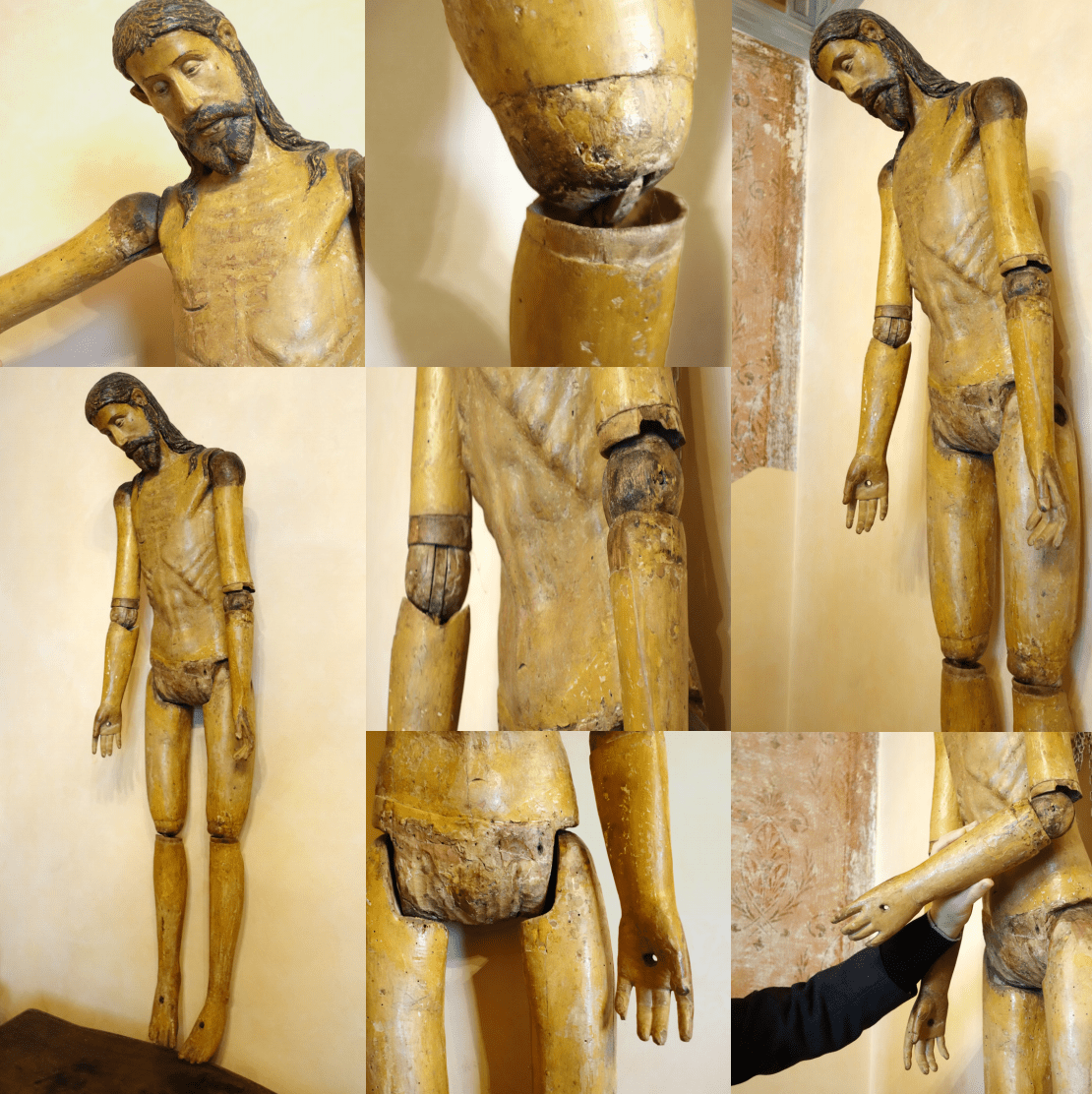
This conference is concerned with the agency and life of material objects and evolves around the investigation of two interlaced objectives. First, the conference will shed light on understudied aspects of medieval visual culture, focusing in particular on the agency of images and material objects. Second, it will provide new cutting-edge theoretical reflections and methodologies concerning the study of material agency and “living images” today. We argue that the cultural use of and interaction with images may be regarded as more than mere historically or culturally specific phenomena. Rather, it concerns the ontology of images and constitutes a fundamental aspect of our life with images, in the premodern as well as in the contemporary. It is our contention that images are embedded in social interaction and that animation is deeply constitutive of the production of meaning. Animation, we argue, is not only located in the mind of the beholder, but in the epistemology, creation, interaction and materiality of images. Furthermore, we will argue that medieval animation may inform contemporary views on animation and provide us with a more precise vocabulary to capture current phenomena for instance in the digital world. The conference aim to be interdisciplinary and transhistorical in its perspective and targets scholars of visual studies, material studies, study of religions, anthropology, medieval studies and theology. It is also relevant more generally for current discussions about the life and agency of seemingly dead matter.

There are four main topics of the conference: – Physical/mechanical animation of artworks and other artefacts (sculptures, reliquaries, paintings etc.) – Mental animations of images and objects (artworks, and other artefacts) – Animation in a theatrical context (mystery plays, liturgical plays and staging’s, puppets and other theatrical use of figures and sculptures) – Medieval and Early Modern animation in the 20th century and contemporary theatrical practices. The conference takes as its point of departure the work of the newly organized international research-project: The Living Image (LIMA): On the ontology, agency and personhood of living images and objects – medieval and modern. This project is coordinated from the University of Bergen, Norway, and consists of a group of researchers from Belgium, Denmark, Ireland, Norway, Poland, United Kingdom, and USA, and the work of the international research network: The European Network on the Instruments of Devotion – ENID: https://enid.w.uib.no/ The conference in Bialystok is designed to be a platform for the exchange of opinions, ideas, and historical documentation, as well as the starting point for a publication. We plan to publish a collection of articles offering an interdisciplinary academic survey of the topic of animation in the Middle Ages, and its reception in the 20th Century.

The language of the conference is English. Each contributor will be given 20 minutes to present his/her paper. Please send abstracts of no longer than 500 words, together with a short CV and personal data at the following email: medievalanimation@gmail.com
Deadline: April 30, 2020

Conference fee: 25 Euros (15 Euros for Ph.D. students)

The conference will take place in Bialystok at the: The A. Zelwerowicz National Academy of Dramatic Art Branch Campus in Białystok (Puppet Theatre Art Department) H. Sienkiewicza 14, 15–092 Białystok, Poland http://www.atb.edu.pl e-mail: sekretariat@atb.edu.pl https://goo.gl/maps/hcfuKHoNqKeqPMSK9

Confirmed key-note speakers are: Peter Dent, Ph.D., University of Bristol, GB; Prof. Cynthia Hahn, The City University of New York, USA; Prof. Hans Henrik Lohfert Jørgensen, University of Aarhus, Denmark; Amy Whitehead, Ph.D., Massey University, New Zealand.

Scientific committee: Henrik von Achen, Professor, Dr. Art., Director of the University Museum, University of Bergen, Norway; Kristin Bliksrud Aavitsland, Professor, Ph.D., MF Norwegian School of Theology, Religion and Society, Norway; Barbara Baert, Professor, Ph.D., Art History, Faculty of Arts, Katholieke Universiteit Leuven, Belgium; Jørgen Bakke, Associate Professor, Dr. Art., Department of Linguistic, Literary and Aesthetic Studies, University of Bergen, Norway; Carla Maria Bino, Professor, Ph.D., Università Cattolica del Sacro Cuore, Brescia, Italy; Christophe Chaguinian, Associate Professor, Ph.D., College of Liberal Arts and Social Sciences, University of North Texas, USA; Peter Dent, Senior Lecturer, Ph.D., Department of History of Art, University of Bristol, Great Britain; Rob Faesen, Professor, Ph.D., Department of History of Church and Theology, Katholieke Universiteit Leuven, Belgium; Cynthia Hahn, Professor, Ph.D., Medieval Art History, Hunter College, The City University of New York, USA; Hans Henrik Lohfert Jørgensen, Associate Professor, School of Communication and Culture – Art History, University of Aarhus, Denmark; Jon P. Mitchell, Professor, Ph.D., Social Anthropology, University of Sussex, Great Britain; David Morgan, Professor, Ph.D., Religious Studies & Art, Art History and Visual Studies, Duke University, USA; Salvador Ryan, Professor, Ph.D., Ecclesiastical History, Pontifical University St Patricks College, Maynooth, Ireland; Zuzanna Sarnecka, Assistant Professor, Ph.D., Institute of Art History, University of Warsaw, Poland; Laura Katrine Skinnebach, Assistant Professor, Ph.D., School of Communication and Culture – Art History, University of Aarhus, Denmark; Allie Terry-Fritsch, Associate Professor, Ph.D., School of Art – Art History, Bowling Green State University, USA

Conference organised by:
Kamil Kopania, Ph.D., The A. Zelwerowicz National Academy of Dramatic Art, Branch Campus in Bialystok, Poland (https://atb.edu.pl/o-wydziale/pedagodzy/dr-kamil-kopania) Henning Laugerud, Associate Professor, Dr. Art., Department of Linguistic, Literary, and Aesthetic Studies, University of Bergen, Norway (https://www.uib.no/en/persons/Henning.Laugerud)
CFP: ‘Relationships’, University of York, Centre for Medieval Studies, Interdisciplinary Graduate Conference, deadline 23 April 2020

Date(s): 23-24 June 2020

Location: King’s Manor, Exhibition Square, York

We welcome paper proposals of 250-300 words for 15-20 minute papers on the theme of Relationships in any area of Medieval Studies from current postgraduate students (MA, PhD, MPhil), early career scholars, and independent researchers.

Topics can include (but are not limited to):

  • Interpersonal relationships (friendships, family, neighbourliness and dispute, patrons, authority, love, gender, and sexuality)
  • Communities, workshops, and networks (religious houses, artisan workshops, intellectual networks, interfaith and global relations)
  • Relationships between texts, images, and audiences (word-image relations, commissioned works, marginalia, authorship, reading and writing practices)
  • Relationships to objects (relics, gifts, object biographies)
  • Intertextual relationships and literary traditions
  • Relationships between people, animals, space, and landscape
  • Relationships with the past (medievalism, romanesque)
  • Interdisciplinary research (scientific methodologies, digital humanities, history of science)
  • Public engagement and collaborations with heritage institutions
We also welcome proposals for academic posters to be displayed during the conference.
Please send all proposals by 23rd April to: yorkcmsconference@gmail.com
Travel grants for unfunded speakers are available. To apply, please include with your proposal a short explanation of your financial circumstances (self-funded student, lack of travel bursary, etc.) and an itemised list of anticipated expenses.

Conference: The social intellectual: experience and thought in the Middle Ages, University of York, 19 March 2020

Thursday, 19 March 2020, 9:00am to 7:00pm
The King’s Manor, Exhibition Square, University of York, York, Y01 7EP

This international conference explores the organic relationship between lived experience and academic/religious thought, beginning from the position that intellectual activity and social experience were closely intertwined in the medieval period. The conference honours the work of Professor Peter Biller FBA in his 75th year, whose attempts to situate practical medieval thinkers in their milieux have inspired many of the speakers.

Continue reading “Conference: The social intellectual: experience and thought in the Middle Ages, University of York, 19 March 2020”