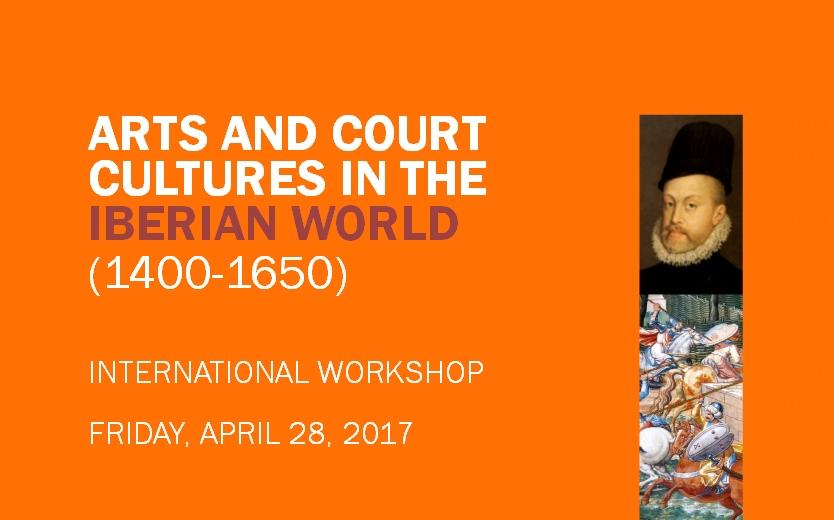
Workshop: Arts and Court Cultures in the Iberian World (1400-1650), Real Colegio Complutense at Harvard University (RCC Conference Room, 26 Trowbridge St., Cambridge MA), April 28, 2017
Visual strategies of legitimization became increasingly important for Iberian monarchies during the late medieval and early modern periods, Mediterranean dynastic, diplomatic, and military endeavors called for effective propaganda, both in the metropolis and in viceregal territories, such as southern Italy. Such efforts include architecture, both ephemeral and permanent, the decoration of palaces, court portraiture, and historiography. The advent of a Monarchia Hispanica under Habsburg rule required careful elaborations of national, religious, racial, and gender identities, across a mosaic of
multilingual and multiethnic populations. This workshop aims to highlight some of these strategies, and to create a forum for discussion of further research avenues, under the guidance of scholars
from Spanish and American universities. It is made possible thanks to the collaboration of the Real Colegio Complutense at Harvard University, and the University of Valencia, with additional support from the Fulbright Commission and the BBVA Foundation.
09.00
Registration
09.15
Welcome & opening remarks
09.30
Viceregal Palaces in the Dominions of the Crown of Aragon: Charting a
Mediterranean Architecture
Prof. Mercedes Gómez-Ferrer (Universitat de València)
10.45
Icons of Dynastic Authority. Sofonisba Anguissola at Her Majesty’s
Service
Prof. Jorge Sebastián (Universitat de València)
12.00
Lunch
13.30
Facing the Infidel Other: Visual Battle Narratives and Royal Entries by
Spanish Habsburg Monarchs
Dr. Borja Franco (UNED, Madrid)
14.45
The Triumph of Tunis in Viceregal Palermo, Messina, and Naples
Prof. Cristelle Baskins (Tufts University)
16.00
Final remarks and roundtable discussion
with Prof. Felipe Pereda (Harvard University).
17.00
End of workshop
Each lecture to be followed by Q & A

 CFP: Evidence of Power in the Ruler Portrait, 14th – 18th
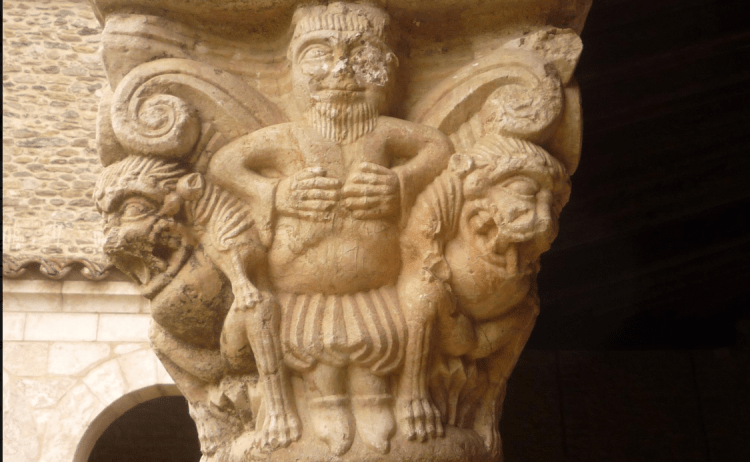 This theme for this year’s Romanesque conference at Cuxa (l
 Speakers: Richard Sharpe, Kathryn Dutton, Els de Paermentier, Nicolas Ruffini-Ronzani, Sverre Bagge, Sébastien Barret, Alheydis Plassmann, Alice Taylor, Marie Therese Flanagan, Matthew Hammond, John Reuben Davies, László Veszprémy, Jessica Berenbeim, Fernando Arias Guillén, Dauvit Broun
 The British Archaeological Association will hold the fifth in its series of biennial International Romanesque conferences in association with the Centre d’Etudes Supérieures de Civilisation Médiévale in Poitiers on 4-6 April, 2018.
 This conference is hosted by The Medieval Parish Churches of Norwich Research Project (undertaken at the University of East Anglia and funded by The Leverhulme Trust). All 58 churches, whether existing, ruined or lost, are included in the scope of the project, which seeks insight into how the medieval city developed topographically, architecturally and socially. The Project is intended to reveal the interdependent relationship between city, community and architecture showing how people and places shaped each other during the middle ages. The conference (supported by the Paul Mellon Centre for British Art and Purcell) will present the medieval parish churches of Norwich in their immediate local context and in the broader framework of urban churches in Britain and northern Europe. The subject range will include documentary history, the architectural fabric of the buildings themselves and their place in the topography of Norwich, the development of the churches’ architecture and furnishings, the representation of the churches and their post-Reformation history.
 Medieval Art Research