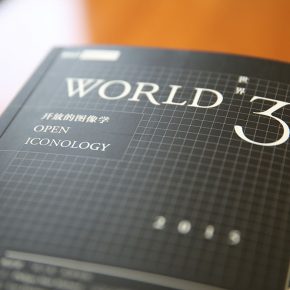
The OCAT Institute is happy to announce the publication of Issue II of World 3
World 3: Open Iconology in April, 2017
The latest research, news, and reviews from the world of Medieval Art History
The OCAT Institute is happy to announce the publication of Issue II of World 3
World 3: Open Iconology in April, 2017
Christie’s Education New York, June 26 – 27, 2018
Deadline: Jul 15, 2017
Celebrating Female Agency in the Arts
Call for Sessions

Following the success of the 250-anniversary conference held in London
in July 2016, Christie’s Education is organizing its second academic
conference on the theme of women in the arts. The Conference will take
place at Christie’s, 20 Rockefeller Plaza in New York on Tuesday June
26th and Wednesday June 27th 2018.
From Antiquity to today, women have always played a significant role in
the arts and their markets. With this call for sessions, we welcome
proposals coming from a wide range of disciplines that would consider
women’s diverse contributions to the arts from a transnational and
transhistorical perspective. We hope that the sessions will reflect the
global and historical diversity of the issues at stake.
This conference is not advocating for a separate history nor an
alternative history of art and its markets, but rather we want to look
at the central role played by women in the creation, development,
support and preservation of the arts and, also how their contribution
has changed over time.
Sessions should consider globally and throughout history women as
artists, patrons and collectors of art and architecture, dealers and
brokers, art historians and art critics as well as curators and
preservers of culture. From the presence of women in emerging and
established art centers to historical aristocratic patronage and back
in time to the medieval period and antiquity we hope that the sessions
will investigate a diverse range of topics.
Deadline for Session Proposals:
We encourage academics across disciplines and art professionals to
submit proposals for individual sessions. Sessions will be 115 (4 x 20
minute papers) or 90 minutes (3 x 20 minute papers) in length. Please
send a 250/300-word abstract to Dr. Cecily Hennessy
(chennessy@christies.com) and Dr. Véronique Chagnon-Burke
(vchagnon-burke@christies.edu) by July 15th 2017.
 Summer School: University and Diversity, Bologna, October 6 – 14, 2017
Deadline: May 1, 2017
University and Diversity: The Bolognese Experience (1088-2017)
Studienkurs of the Kunsthistorisches Institut in Florenz –Max-Planck-Institut
In 2013, the Municipality of Bologna set up a competition to find a
logo that represents ‘at a local, national and international level’ all
the ‘features and elements that make up the face of the city’. The
winning project ‘è Bologna’ provides a visual translation of the
endless perceptions of the city, linking letters to geometrical forms
inspired by archetypical Bolognese images, such as the city walls and
the brick mosaic of Santo Stefano. By typing a script, these forms are
superimposed with fixed proportions and chromatic relationships. Thus,
written words generate different but related signs that render the
‘multiplicity of elements which describe Bologna’.
The 2017 Summer School (Studienkurs) of the KHI focuses on
‘universitas’ and ‘diversitas’, concepts that are emblematic of Bologna
from the medieval to the modern period. The idea that the sum of all
things comprises a whole entity (‘universum’) provides a starting point
for exploring the city, whose urban fabric is characterized by its
former canals, medieval towers and porticoes. Bologna’s university, the
‘Alma Mater Studiorum’, considered to be founded in 1088, encapsulates
the city’s manifest identities through its original organization as a
conglomeration of loose societies called ‘nations’; the teaching of
canon and civil law and medicine; and the training of personages such
as Petrarch, Leon Battista Alberti and Copernicus. Bologna as a
cosmopolitan city is shaped further by its relationship to religious
institutions (the Dominicans and the Papacy, for example); by persons
acting on an ‘international’ scale, such as the Bentivoglio, Gabriele
Paleotti, Ugo Buoncompagni (Pope Gregory XIII), Pier Paolo Pasolini;
and by the artworks within the city of Nicola Pisano, Giotto, Raphael,
Giambologna or the Carracci. Carlo Cesare Malvasia, writing in the
seventeenth century, described Bologna as the ‘metropolis of a kingdom’
due to its role as the capital of ancient Etruria and as the ‘school of
the universe’ for having taught philosophy, letters and religion before
all other cities. The images of the city as an important geographical
crossroad linking central and northern Italy to the rest of Europe and
as hub of learning, culture and avant-garde thinking pervades into
modern times. They impacted, for example, the tragic bombing of the
city during World War II or the Neo-Fascist attack at the Central
Station in 1980, a site that in recent years witnessed the construction
of the Alta ‘velocità’ railway, with its projected architectural
complex by Isozaki-Maffei.
The seemingly disparate histories of Bologna will be explored through
notions of ‘universitas’ and ‘diversitas’ in an attempt to better
understand the common links that, just as in the dynamic logo, comprise
the character of the city and will allow the Summer School to engage,
more generally, with the mechanisms that contribute to the cultural
constructions of multi-faceted urban centres and their relationship to
surrounding and interconnected environments. Shifting between
synchronic and diachronic approaches, topics to be explored, through
individual presentations and discussions, include: Santo Stefano and
its artistic and religious connections to the Eastern Mediterranean;
Bolognese manuscript illumination and its ‘international’ impact; the
open-air tombs of professors of law and medicine; ‘foreign’ cults
within the city, such as the Madonna di San Luca and the Madonna of
Guadalupe; spaces as places for display and as sites of alterity:
relics, bodies and burials of saints (e.g., St Dominic and St Caterina
Vigri), anatomical waxes, collections of natural objects and artefacts
with transcultural trajectories, especially to the New World and the
Ottoman Empire, and their role in the history of science and scientific
knowledge (Ulisse Aldrovandi and Ferdinando Cospi); as well as the
writing of artistic traditions and the so-called Bolognese School of
Painting. How does the city space and the civic cultures embodied
within it participate in connecting the local with the universal? How
can shifting notions of university/universality and diversity be
described and analyzed within the interplay of individuals and groups
that together make up the experience of the city?
The KHI Summer School invites applications from the fields of Art
History and related disciplines, from graduate students, doctoral
candidates and scholars who are embarking on post-doctoral research.
The number of participants is restricted to fifteen. Each participant
is expected to contribute to the success of the course not only with a
presentation, but also by actively engaging in the discussions. To
allow for active participation in the discussion, good passive
knowledge of Italian and German is required. The Institute will bear
the cost of accommodation and will reimburse half of the incurred
travelling expenses; in addition, participants will receive a daily
allowance.
Applications should include: a letter of interest comprising a research
statement, a one-page Curriculum vitae and a presentation proposal (ca.
300 words). These materials can be written in English, Italian or
German.
Please send your documents by 1 May 2017 in a single PDF file (max. 2
MB), referencing ‘Studienkurs 2017’, to the attention of Prof. Dr.
Gerhard Wolf (dirwolf@khi.fi.it).
Concept and organization: Annette Hoffmann, Marco Musillo, Jessica N.
Richardson and Gerhard Wolf
 Conference: The Art of Ornament. Meaning, Archetypes, Forms and Uses, Fundação Calouste Gulbenkian, Lisboa, November 23 – 25, 2017
Deadline for abstract submission: 30 April 2017
Notification of acceptance of abstract: 31 May 2017
Provisional Programme: 30 June 2017
Deadline for registration: 31 August 2017
The topics suggested for proposals for participating in this Conference
are generically the following, although others may be considered if they are deemed pertinent and relevant:
1. Contemplating the ornament our days: meaning, tendencies and
paths.
2. Ornament and portuguese decorative arts;
3. Revivalism, exoticism and ornament
4. Ornamentalists and engravers: creation, reception and
dissemination;
5. Ornament and architecture: historiography, theory and present
times;
6. Mobility and transcontinentality: the migration of forms;
7. Between the sacred and the profane: appropriations, reinventions
and coexistence;
8. Intersection, union and dissonance: literature, music and visual
arts.
Abstracts (of no more than 500 words), accompanied by a short bio (250
words), in English or Portuguese, should be sent to the members of the
organizing committee, at iha.ornament2017@gmail.com by April 30, 2016.
Participants will be notified by the end of May, and the conference
program will be published in June. The languages of the conference are
English, Portuguese, Spanish and French.
A selection of papers from the conference will be published in Revista
de História da Arte – Série W, an annual peer-reviewed digital journal.
For all questions regarding administration and practical matters, as
well as the payment of the conference inscription, please send an email
to iha.ornament2017@gmail.com
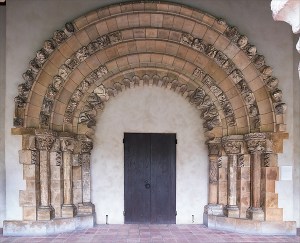 CFP: Final Conference of the BMBF Project “Portals as Places of Transformation” Bamberg, January 11 – 14, 2018
Deadline: 15 June 2017.
The medieval church portal is in many respects a place of
transformation. At the threshold of a church, various spheres converge
and meet: secular – ecclesiastic, corporeal – spiritual, earthly –
divine. Iconography and formal design offer ample evidence of this
unique situation. At the same time, church portals themselves are
objects of change: their appearances are constantly shifting due to
modification, chromatic reworking and restorative endeavours. After
all, modernism declared portals works of art, and this change of status
was accompanied by a further metamorphosis: The medieval portal became
an aesthetic object and thereby an exhibit with alternative forms of
presentation.
The international final conference of the BMBF Project “Portals as
Places of Transformation” (University of Bamberg, Chair in Medieval Art
History, Professorship in Building Preservation Sciences, Professorship
in Building History and Building Archaeology) will provide various
conference sections focusing on central issues of continuity and change
as they pertain to medieval portals:
Section 1: Conceptual design of medieval portals. The interplay of
architecture and sculpture (building design, design methods,
proportions, room arrangement)
Section 2: Construction of medieval portals. Structural analyses for
the documentation of transformation processes (footing, interlinking of
constructive units, masonry technique, types of stone, structural
analysis, construction process)
Section 3: Iconographic programmes. The portal as a place of spiritual
transformation in the Middle Ages (Iconography, text and image,
eschatological themes, cosmos/cardinal directions)
Section 4: Medieval bronze and wood doors (doors, hinges, mountings,
closing and latching mechanisms)
Section 5: Changing portals. Secular and liturgical use (medieval
procession liturgies, user hierarchy, liturgical dramas and legal acts)
Section 6: Adaptations, alterations and modifications of portals
(restoration layers, renovation measures, surface treatments,
maintenance, supplementation using copies, copying techniques in stone,
plaster und synthetic materials)
Section 7: The portal as a work of art (museum displays, illuminations,
repurposing, virtual presentations and representations)
The conference languages are German, English and French. Please send
your abstract (max. 1500-2000 characters, including spaces) to
Katja.Schroeck@uni-bamberg.de no later than 15 June 2017.
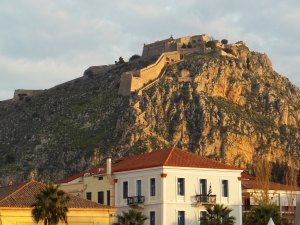 Conference: Mendicant Orders in the Eastern Mediterranean: Art, Architecture and Material Culture (13th-16th c.), Nafplion, Wednesday 19th-Sunday 23rd April 2017
Free, booking required: http://mendicants.weebly.com/registration.html
Conference website: http://mendicants.weebly.com/
9:30 – 10:00 Registration
10:00 – 10:30 Welcoming Addresses
10:30 – 11:00 Ioanna Christoforaki (Academy of Athens)
Mendicant Orders in the Eastern Mediterranean: Reviewing the Evidence
11:00 – 11:30 Coffee Break
One Step Beyond: The Mendicants in Constantinople and Dalmatia
11:30 – 11:50 Şebnem Dönbekci (Koç University)
Revisiting the Vita Cycle of Saint Francis in Constantinople: Power and Ideology in the Medieval Mediterranean
11:50 – 12:10 Silvia Pedone (Sapienza Università di Roma) and Nicholas Melvani (Koç University)
Constantinople and the Dominicans: History, Topography, and Monuments on Both Shores of the Golden Horn
12:10 – 12:30 Rafał Quirini-Popławski (Jagiellonian University of Kraków)
Mendicant Art and Architecture in the Black Sea: Pera and Caffa
12:30 – 12:50 Discussion
12:50 – 15:00 Lunch
15:00 – 15:20 Josip Belamarić (Cvito Fisković Centre and University of Split)
Franciscans and Art on the Croatian Coast in the Thirteenth Century
15:20 – 15:40 Zoraida Demori Staničić (Croatian Conservation Institute)
Franciscan Convents in Hvar: Between Cult and Politics
15:40 – 16:00 Nina Kudiš (University of Rijeka)
Venetian Seicento Painters in Franciscan and Dominican Churches of Dalmatia: Some Important Examples
16:00 – 16:20 Ivana Prijatelj Pavičić (University of Split),
Anti-Ottoman Narratives on the Altarpieces of Our Lady of the Rosary and Our Lady of Carmel in the Dominican and Franciscan Churches of Dalmatia
16:20 – 16:40 Discussion
16:40 – 17:00 Coffee Break
17:00 – 17:45 Keynote Lecture
Sophia Kalopissi-Verti (National and Kapodistrian University of Athens)
Byzantium ‘Challenged’ after 1204: Reactions, Responses and their Reflections in Iconography
17:45 – 18:00 Discussion
19:30 – 21:30 Cocktail reception at Nafplia Palace Hotel (speakers only)
Thursday, 20 April 2017
Franciscans and Dominicans in Latin Romania
9:00 – 9:20 Michalis Olympios (University of Cyprus)
Eloquent Marginalia: Figural Sculpture at the Dominican Church in Negroponte (Chalkis, Euboea)
9:20 – 9:40 Demetris Athanasoulis (Ephorate of Antiquities of the Cyclades)
The Church of Saint Francis in Glarentza (Clarence)
9:40 – 10:00 Eleni Barmparitsa (Ephorate of Antiquities of Messenia)
Settlement and Activities of the Mendicant Orders in the Peloponnese during the Late Middle Ages
10:00 – 10:20 Discussion
10:20 – 10:50 Coffee Break
10:50 – 11:10 Panayota Volti (Université Paris-Nanterre)
Some Decorative Elements of the Church of the Virgin in Merbaka, Argolis: A Visual Exegesis of Dominican History and Spirituality?
11:10 – 11:30 Guy D. R. Sanders (American School of Classical Studies at Athens, Corinth Excavations)
The Archaeology of the Poor at Corinth in the Time of William of Moerbeke OP, Translator of Aristotle, Archimedes, Hero and Galen and Dominican Bishop of Corinth (1278-85)
11:30 – 11:50 Vicky Foskolou (University of Crete)
Reflections of Mendicant Religiosity in the Monumental Painting of the Latin Southern Greek Mainland and the Islands (13th-15th c.)
11:50 – 12:10 Discussion
12:10 – 12:30 Daphne Chronaki (Ephorate of Antiquities of Lassithi)
Παρατηρήσεις στη χωροθέτηση και στις χαράξεις ναών των επαιτικών ταγμάτων στην Κρήτη
[Observations on the planning and proportions of mendicant churches on Crete]
12:30 – 12:50 Eleni Kanaki, Daphne Chronaki and Chara Bilmezi (Ephorates of Antiquities of Herakleion and Lassithi)
Ο ναός του Αγίου Πέτρου των Δομηνικανών στο Ηράκλειο
[The church of Saint Peter of the Dominicans in Herakleion]
12:50 – 13:10 Periandros Epitropakis (Hellenic Ministry of Culture and Sports)
Το χρονικό της ανασκαφής της μονής του Αγίου Φραγκίσκου Ηρακλείου μέσα από τον τύπο της εποχής
[The chronicle of the excavation of Saint Francis monastery in Heraklion through contemporary press]
13:10 – 13:30 Discussion
13:30 – 15:00 Lunch break
15:00 – 15:20 Olga Gratziou (University of Crete)
The Friars and their Impact on Crete: Material and Visual Evidence
15:20 – 15:40 Kostas Giapitsoglou (Ephorate of Antiquities of Rethymnon)
Tο καθολικό της μονής της Αγίας Μαρίας Μαγδαληνής των Δομηνικανών στο Ρέθυμνο
[The katholikon of the monastery of Saint Mary Madgalene of the Dominicans in Rehtymnon]
15:40 – 16:00 Maria Borboudaki (Byzantine and Christian Museum of Athens)
Evidence of Dominican Presence in the Cretan Countryside: A Fresco of Saint Peter of Verona in the Church of Saint George in the Village of Apostoloi Pediados (Herakleion)
16:00 – 16:20 Discussion
16:20 – 16:40 Coffee Break
16:40 – 17:00 Maria Constantoudaki-Kitromilides (National and Kapodistrian University of Athens)
Saint Francis and Private Devotion in Venetian Crete: Visual and Archival Evidence
17:10 – 17:30 Chryssa Ranoutsaki (Ludwig-Maximilians-Universität München)
Saint Francis and Saint Catherine: Two Eminent Model Saints of the Mendicant Orders in Medieval Crete
17:30 – 17:50 Nickiphoros Tsougarakis (Edge Hill University)
Re-examining the Franciscan Library of Candia
18:10 – 18:30 Discussion
18:30 – 19:15 Keynote Lecture
Donal Cooper (University of Cambridge)
The Mendicant Orders as Patrons of Art and Architecture in Venetian Herakleion
19:15 – 19:30 Discussion
20:00 – 22:00 Conference Dinner (speakers only)
Friday, 21 April 2017
Mendicant Presence in the Crusader Levant
9:30 – 9:50 Margit Mersch (Ruhr-Universität Bochum)
The Development of Local and Trans-Regional Mendicant Architecture: A Comparative Glance on Franciscan Churches on Cyprus and Crete (13th-14th c.)
9:50 – 10:10 Thomas Kaffenberger (Université de Fribourg)
Saint Clare or Saint Dominic? New Observations on the ‘Hagia Fotou’ Ruins in Famagusta
10:10 – 10:30 Maria Paschali (Independent Scholar)
An Image with Our Lady of Carmel in Famagusta and the Interplay of Sanctity, Piety and Power
10:30 – 10:50 Discussion
10:50 – 11:10 Coffee break
11:10 – 11:30 Rehav Rubin and Milka Levy-Rubin (Hebrew University of Jerusalem)
How did the Franciscans Choose to Portray Jerusalem?
11:30 – 11:50 Fanny Vitto (Israel Antiquities Authority)
The Cradle of the Carmelites in the Holy Land before Becoming a Mendicant Order
11:50 – 12:10 Barbara Drake Boehm and Melanie Holcomb (The Metropolitan Museum of Art)
Facing the Forbidden: Felix Fabri in Medieval Jerusalem
12:10 – 12:30 Discussion
12:30 – 14:30 Lunch break
14:30 – 14:50 Jaroslav Folda (University of North Carolina at Chapel Hill)
Artistic Commissions related to the Mendicant Orders in the Thirteenth Century Crusader Levant
14:50 – 15:10 Lucy-Anne Hunt (Manchester Metropolitan University)
Centres and Peripheries: A Perspective on Mendicants and Christian Art in the Crusader States and Muslim Egypt
15:10 – 15:30 Prodromos Papanikolaou (King’s College London)
Artistic Traces of Franciscan Piety in Hospitaller Rhodes: The Marble Icons of the Virgin and St. John the Evangelist
15:30 – 15:50 Discussion
15:50 – 16:10 Coffee Break
16:10 – 16:30 Amy Neff (University of Tennessee)
Sinai in the Franciscan Visual Imagination
16:30 – 16:50 Manuel Castiñeiras (Universitat Autònoma de Barcelona)
From Catalonia to Sinai: A Two-Way Journey. Revisiting the Legend of King Abgar in the Saint Francis Altarpiece of Santa Clara in Vic (1414-1415)
16:50 – 17:10 Discussion
17:10 – 17:30 Coffee break
17:30 – 18:15 Keynote Lecture
Michele Bacci (Université de Fribourg)
The Franciscans as Promoters of New Holy Sites
18:15 – 18:30 Discussion
19:30 – 21:30 Conference Dinner (speakers only)
Saturday, 22 April 2017
Mendicant Art between East and West
9:30 – 9:50 Jean-Pierre Caillet (Université Paris-Nanterre) and Fabienne Joubert (Université Paris-Sorbonne)
Byzantine Sources of the Crucifixion in Italy: Revisiting the Role of the Mendicants
9:50 – 10:10 Emily Guerry (University of Kent)
A Path Prepared for Them by the Lord: Saint Louis, Dominican Diplomacy, and the Odyssey of Jacques and André of Longjumeau
10:10 – 10:30 Krisztina Ilko (University of Cambridge)
Augustinian Friars in the East
10:30 – 10:50 Discussion
10:50 – 11:10 Coffee Break
11:10 – 11:30 Helen Evans (The Metropolitan Museum of Art)
The Franciscans among the Armenians
11:30 – 11:50 Ioanna Rapti (École Pratique des Hautes Études)
Armenian Αrt and the Μendicant Οrders in the East: Εncounters and Ιnteractions
11:50 – 12:10 Lauren Arnold (University of San Francisco)
Armenian Carpets in Early Renaissance Paintings: The Mendicant Orders and their Role in Facilitating a Migration of Eastern Christians to Italy (1250-1500)
12:10 – 12:30 Discussion
12:30 – 14:30 Lunch break
Round Table Discussion
14:30 – 17:00
Harvard Center for Hellenic Studies
(conference speakers only)
Welcoming Address: Dr Christos Giannopoulos (Center for Hellenic Studies)
Coordinator: Ioanna Christoforaki (Academy of Athens)
Louise Bourdua (University of Warwick)
Anne Derbes (Hood College)
Julian Gardner (University of Warwick)
Maria Georgopoulou (The Gennadeios Library, ASCSA)
Maria Vassilaki (University of Thessaly)
Gerhard Wolf (Kunsthistorisches Institut in Florenz – Max Planck Institut)
17:00 – 17:30 Afternoon Coffee
19:30 – 21:30 Conference Dinner (speakers only)
Sunday, 23 April 2017
(conference speakers only)
Excursion to medieval monuments in the Argolis (Agia Moni in Nafplion and Church of the Virgin in Merbaka) in the morning. Visit to the new Byzantine Museum in Argos, followed by a guided tour of the Corinth excavations by Guy Sanders in the afternoon.
 Conference: Max J. Friedländer (1867-1958): art-historian, museum director, connoisseur, Rijksmuseum, Amsterdam, June 8, 2017
Registration deadline: Jun 5, 2017
The 5th of June 2017 marks the 150th anniversary of the birth of Max J.
Friedländer (1867-1958). This milestone offers an excellent opportunity
to reflect on the legacy of this still well-esteemed art historian.
Friedländer was appointed director of the Kupferstichkabinett in 1908,
then subdirector of the Gemäldegalerie in 1912 and finally director of
the latter in 1929. Under the energetic leadership of Wilhelm Bode,
general director of the Berlin museums, Friedländer developed into a
recognised connoisseur and author of over eight hundred publications,
of which Die Altniederländische Malerei (Early Netherlandish Painting)
and Von Kunst und Kennerschaft (On Art and Connoisseurship) are the
best known.
In the history of art history Friedländer is primarily associated with
“connoisseurship”, a competence which he considered most important.
According to Friedländer, connoisseurship embodies a subjective form of
scholarship and can only be gained by practice. The lack of a
theoretical underpinning and the impossibility of factual verification,
however, gradually led to the decline of connoisseurship as a scholarly
method, especially in the academic field.
The symposium aims at highlighting Friedländer’s merits for the history
of art. Specialists from Belgium, Germany, the United States and The
Netherlands will present a diverse range of papers that will call
attention to Friedländer’s work as museum official, scholar and
connoisseur. Moreover, the relevance of connoisseurschip for today’s
art history will be discussed.
The organization of this international symposium is in collaboration
with the RKD – Netherlands Institute for Art History, The Hague, the
University of Bamberg and the CVNK (Contactgroep Vroege Nederlandse
Kunst/Network for specialists in early Netherlandish art).
PROGRAMME
09.00-09.30 Registration and coffee
09.30-09.40 Welcome
09.40-10.00 Suzanne Laemers: Max J. Friedländer, an introduction to a
renowned art historian
Friedländer’s activity at the Berlin museums and his relation with his
colleagues, art dealers and collectors
10.00-10.20 Sandra Kriebel: Exhibiting Berlin private collections: Max
J. Friedländer as curator of loan exhibitions
10.20-10.40 Claire Baisier: Max J. Friedländer and the Antwerp
collector and connoisseur Fritz Mayer van den Bergh (1858-1901)
10.40-11.10 Coffee
11.10-11.30 Catherine B. Scallen: Max J. Friedländer and Duveen Bros.
11.30-11.50 Dr. Timo Saalmann: Connoisseurship in doubt: Max J.
Friedländer, the art market and antisemitism in the early 1930s
11.50-12.20 Discussion
12.20-13.30 Lunch
13.30-13.40 Bart Fransen: Friedländer 3.0: Max J. Friedländer’s Early
Netherlandish Painting as online database
Evaluation of Friedländer’s scholarly contribution to the history of art
13.40-14.00 Simon Elson: The poet or Max J. Friedländer’s art commentary
14.00-14.20 Eveliina Juntunen: Max J. Friedländer and modern
printmaking in Germany. Some thoughts about his influence on its
reception and on the art market
14.20-14.50 Discussion
14.50-15.20 Coffee
The importance of connoisseurship as a method in art history, including
the field of technical study and its rivalry with the learned eye, and
the necessity of teaching connoisseurship
15.20-15.40 Katrin Dyballa: Connoisseurship: A precondition for writing
a collection catalogue
15.40-16.00 Carol Pottasch/Kirsten Derks: The Lamentation by Rogier van
der Weyden (Mauritshuis, The Hague) in the context of traditional
connoisseurship and technical research
16.00-16.20 Milko den Leeuw/Oliver Spapens: Connoisseurship and
technical examination: opposites or complimentary methods?
16.20-16.30 Daantje Meuwissen: Connoisseurship os MA-specialisation at
the VU University Amsterdam
16.30-17.00 Discussion and closing remarks
17.00-18.00 Drinks and possibility to visit the Middle Ages and
Renaissance Galleries
For more information please visit:
https://www.rijksmuseum.nl/nl/friedlander
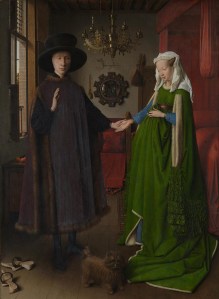 CFP: Early Netherlandish Art in the Long 19th Century (Ghent,
24 – 26 May 18), Ghent, May 24 – 26, 2018
Deadline: Jun 1, 2017
To submit a proposal for consideration, please send a 250 word
abstract, a 100 word bio, and a 1-2 page CV to rediscoveryhna@gmail.com
by June 1, 2017.
Francis Haskell famously argued that the “rediscovery” of early
Netherlandish painting in the nineteenth century was central to the
notions of history and culture that undergirded the rise of the modern
nation-states of Belgium and the Netherlands. This view has been
enriched by recent scholarship on the medieval and Renaissance
revivalist movements that took hold in both countries from about 1840
through the early years of the twentieth century. Yet the complex
relationship between artistic and literary practices of the period and
the emergence of a distinctly northern European history of art remains
largely unexamined, and its implications unacknowledged.
As Léon de Laborde, Camille Lemonnier, Émile Verhaeren, Hippolyte
Fierens-Gevaert, and, slightly later, Johan Huizinga published
pioneering investigations into the world of Van Eyck, Memling, and
Rubens, a similar retrospective spirit animated the artistic
imagination. Painters from Henri Leys to Fernand Khnopff and writers
from Charles De Coster to Maurice Maeterlinck embraced northern
precedents as a key source of inspiration for works that were at once
contemporary and rooted in a rich regional heritage.
This panel aims to explore the interplay between the visual arts and
the nascent field of art history in Belgium and the Netherlands. It
seeks twenty-minute papers which address how artists, critics,
historians, and others working in the Low Countries and abroad
developed diverse perspectives on their past that continue to shape our
understanding of the subject. Papers addressing specific instances of
revivalism and historicism are welcome, as are broader studies of
historiographical and literary trends, which offer insight into how one
era may mediate and even define our vision of another.
Papers must be based on ongoing research and
unpublished. Participants must be HNA members at the time of the
conference.
Panel Chairs: Edward Wouk, Assistant Professor, The University of
Manchester; Alison Hokanson, Assistant Curator, The Metropolitan Museum
of Art
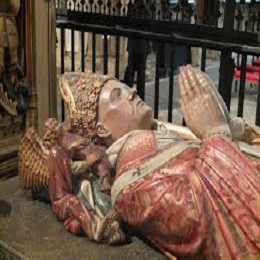 Conference: After Chichele: Intellectual and Cultural Dynamics of the English Church, 1443-1517, St Anne’s College, Oxford, 28th June 2017 – 30th June 2017
After Chichele adopts an investigative and interdisciplinary approach. The period has been chosen precisely because the inner workings of English intellectual and religious life during these years have proved challengingly resistant to the formation of grand critical narratives. What are the chief currents driving the intellectual and cultural life of the church in England during this period? What happened to intellectual questioning during the period, and where did the church’s cultural life express itself most vividly? What significant parochial, regional, national and international influences were brought to bear on English literate practices? In order to address these questions, the conference will adopt an interdisciplinary focus, inviting contributions from historians, literary scholars, and scholars working on the theology, ecclesiastical history, music and art of the period.

How to Apply: Proposals for either 3-paper sessions or individual papers will be equally welcome. Individual papers should be 20 minutes in length. Please submit an abstract of no more that 250 words and a brief CV to mem2017@fcsh.unl.pt
Deadline: 15 June 2017.
NB: Conference Registration Fees:
• Participation with Paper: 75€ (Registration fee includes documentation and coffee-breaks);
• Attendance: 30€ for the general public and 25€ for students;
• Gala Dinner: 35€.
In December, as the third year of its six-year Strategic Project draws to a close, the Institute for Medieval Studies – whose research groups have been working around our main theme, “People and Knowledge in Motion: Medieval Portugal in Trans-European Networks” – is hosting a Conference aimed at bringing together scholars from around the world in order to discuss and reassess the research undertaken in the Institute and in the wider academic world on mobility, the circulation of models, and phenomena of a global nature during the Middle Ages. In the course of the last three years, researchers specialising in the areas of History, History of Art, Archaeology and Literature, have developed their research with a strong emphasis on the question of the circulation of men and women, ideas, models and artefacts as mirrors of a medieval reality in which mental, symbolic and physical mobility seems to correspond less and less to the ancient perceptions and stereotypes of Medieval Men and Society as characterized by stillness and immutability. Furthermore, work in the Institute has raised additional questions and problems intimately connected with the topics being studied, but also very much in line with current historiographical trends. For this reason, the organizers of the 4th International Conference on Medieval Europe in Motion deemed it appropriate to take our principal concern a step further and propose as its main subject the question whether or not it is possible to speak of a Global Middle Ages.
The Conference will seek to provide a forum for scholars from all disciplines who are willing to examine this topic. We invite participation from graduate students, early-career researchers and senior scholars. Papers are warmly welcome whether in English, Portuguese, Spanish, French or Italian.
The three sections of the Conference will be:
1. Debating the Global Middle Ages: Theoretical and Historiographical Approaches;
2. Texts, Images and Representations;
3. Territories and Powers: a “Glocal” Perspective.
Possible topics may include, but are by no means restricted to, the following:
• approaches to sub-global, semi-global and pan-global concepts and the discussion of contact,
exchange, interaction, circulation, integration and exclusion;
• analysis of concepts and case studies concerning diffusion, outreach, dispersal and expansion;
• approaches to concepts of impact, reception, acceptance, transformation and reform.
Selected proceedings will be edited by the Institute of Medieval Studies, as a peer-reviewed e-book, during the course of 2018.

 Medieval Art Research