Conference: Celtic Revivals: Authenticity and Identity Conference, London 16-17 January 2016

celts_cross_finalCeltic Revivals: Authenticity and Identity Conference

British Museum, January 16 – 17, 2016

Although the Celtic Revival is usually associated with the late 19th century, this conference will demonstrate how it constitutes a whole series of revivals, beginning in the medieval period and continuing into the modern. Leading art and design historians, archaeologists and curators will present the Celtic Revival as a rewriting, recreation and reimagining of the past.

Central to these discussions will be the themes of national and cultural heritage and identities, authenticity and innovation, and the network of ‘Celtic’ connections that span across time, space, media, disciplines and national/cultural borders

Conference Details and Programme

Stevenson Lecture Theatre, British Museum
Coffee and lunch provided
Conference Fee +exhibition visit £50 (£35 concessions/students)

Saturday 16 January

9:30       Registration and coffee

10.15       Introduction

10.30    The Concept of Style in Celtic Art – Colum Hourihane, Princeton University, Emeritus

11:00       TBC – Raghnall Ó Floinn, National Museum of  Ireland

11:30    Break

11:45    Relics, Reliquaries, and the Presence of the Past – Karen Overbey, Tufts University

12:15    Celtic, Scotch and Stuart: Queen Victoria and Scottish Identity – Helen Ritchie, Fitzwilliam Museum

12:45    Lunch

14:00    ‘In the tradition of my race’: Evoking the Celtic past in
later medieval Ireland – Rachel Moss, Trinity College, Dublin

14:30    Medieval Gaelic manuscript miscellanies: changing cultural
contexts – Siobhán Fitzpatrick and Bernadette Cunningham, Royal Irish Academy

15:00    Celtic Revivals and Reappropriations in Art and Books 1760 –
1951 – Murdo Macdonald, University of Dundee

15:30    Coffee break

16:00    Evoking Ireland’s Celtic “Golden Age”: Textiles for the Honan
Chapel at University College Cork – Nancy Netzer, McMullen Museum of Art, Boston College

16:30     Compton Chapel – Revealing the Sources of its Celtic Symbolism – Louise Boreham, Independent Researcher

Sunday 17 January

8:00       Visit to Celts: art and identity (drop in between 8 and 10am)

10:00       Coffee

10:30    The Druids and the Evergreen: authenticity and originality in
fin de siècle Scotland – Frances Fowle and Heather Pulliam, University of Edinburgh

11:30    Celtic collections: the curatorial appetite for ‘Celtic
crosses’ in nineteenth-century Scotland – Sally Foster, University of Stirling

12.00    Lunch

13:00    Gods, warriors and saints: Celts on parade in Edwardian
Scotland – Elizabeth Cumming, University of Edinburgh

13:30    The Death of Tewdrig (1848): ‘A sculpture illustrative of
Cambro-British History.’ – Oliver Fairclough, National Museum Wales

14:00    Break

14:15    The Celtic Revival in the Visual Culture of Wales – Martin Crampin, University of Wales

14:45    Ireland 1893 – 1917:  Celtic Revival or Celtic Twilight?

Organised by the British Museum and University of Edinburgh
The conference is supported by The Kilfinan Trust

Book round up: L’aventure des cathédrales, Le cloître de Saint-Génis-des-Fontaines, La scultura in Valnerina tra i secoli XIV e XVI: Scoperte e nuove proposte, Cisterciensi: Arte e storia & Byzantine Art and Italian Panel Painting: The Virgin and Child Hodegetria and the Art of Chrysography

Five recent publications that may be of interest to our readers:

aventure-cathedrales-289x330

GÉRARD DENIZEAU.  L’aventure des cathédrales, Larousse, 2015, 128 p. ISBN: 978-2035923455

The story of cathedral construction, told through the involvement of the artisans (carpenters, blacksmiths, masons, masters of stained glass and more).


scultura-valnerina-239x330DIEGO MATTEI. La scultura in Valnerina tra i secoli XIV e XVI: Scoperte e nuove proposte. Dal Formichiere, 2015, 103 p. ISBN: 978-8898428564

New research into the sculptural traditions of the Valnerina region,  containing  many hitherto little known or unpublished works.


cloitre-genis-184x330GÉRALDINE MALLET. Le cloître de Saint-Génis-des-Fontaines, Trabucaire, 2015, 80 p.ISBN: 978-2849742167

A study of the medieval cloister of Saint-Génis-des-Fontaines, often described as a “jewel” of the Romanesque.


cisterciensi-arte-253x330TERRYL N. KINDER; ROBERTO CASSANELLI (ed.). Cisterciensi. Arte e storia, Jaca Book, 2015, 432 p. ISBN: 978-8816604414

An analysis of Cistercian art, culture, contribution and life from the twelfth century to the present, with 40 contributions from international scholars.


byzantine-hodegetria-238x330JAROSLAV FOLDA. Byzantine Art and Italian Panel Painting: The Virgin and Child Hodegetria and the Art of Chrysography, Cambridge University Press, 2015, 424 p. ISBN: 978-1107010239

Tracing the transformation of the Hodegetria, from the Byzantine virgin as human mother of God, to the Italian Madonna enthroned as Queen of Heaven.

Seminar: Professor Jean-Claude Schmitt on ‘Les rythmes au Moyen Âge (Rhythms in the Middle Ages)’ Monday 18 January 2016

The first UCL Iinterdisciplinary Medieval And Renaissance Seminar of 2016 will be held at  6.15pm Monday 18 January 2016.

Professor Jean-Claude Schmitt will be presenting his new book, Les rythmes au Moyen Âge (Rhythms in the Middle Ages).

gahom.ehess.fr
gahom.ehess.fr

Unlike previous UCL IMARS seminars this will take place in the Institute of Advanced Studies, UCL in the Common Ground, South Wing, Wilkins Building, UCL.

It will, of course, be followed by a wine reception.

The IMARS programme for next term is available at http://www.ucl.ac.uk/mars/seminars-lectures/imars

HISTORIANS OF ISLAMIC ART ASSOCIATION 2016 Biennial Conference

The Courtauld Institute of Art, University of London
October 20-22, 2016
Regionality: looking for the local in the arts of Islam
The Fifth Biennial Conference of the Historians of Islamic Art Association will take place at The Courtauld Institute of Art, University of London, from October 20th to October 22nd, 2016. The Courtauld Institute of Art is one of the world’s preeminent centres for the study of art history and conservation. The introduction in 2013 of a dedicated teaching position for Islamic art history marks the enormous strides taken in our field in recent decades, and recognizes the fact that the study of the arts of Islam have become an integral part of the broader art historical discipline and have made important contributions to cross-cultural studies, trans-disciplinary approaches, and the general widening of the scope of art history.

The London venue celebrates the European ‘roots’ of the study of the arts that fall under the cultural umbrella of Islam, and the formation of the important early collections and exhibitions that launched its scholarship. Those early, mostly connoisseurial categories of regional types and styles – the “Moresque”, Persian painting, Turkish tiles, Indian decorative arts – formed the foundations from which universalizing narratives of “Islamic” arts emerged, especially in the period after the Second World War. Some fifty years later, we are witnessing a resurgence of the study of regional specificities, augmented with deeper research into the diverse facets of any given locality or artistic form, and a greater commitment to the linguistic and cultural particularities that shaped the arts, architecture and archaeology in a specific locale. Rigorous application of trans-disciplinary research strategies have contributed to the deepening of our understanding of the arts of Islam in local terms, and have allowed us to embrace broader historical trajectories to include the modern and contemporary in our field.

The conference organizers believe that this is a time to celebrate the diversity within HIAA’s specialist remit and to take stock of our field’s capacity for extending beyond nationalistic formulations of history, and for breaking out of Euro-centred identities and perspectives. As such we invite proposals for papers and pre-organized panels that take regionality as their principal theme, that complicate simplistic assumptions about ethno-national labels, and that highlight the local. Paper proposals from all parts of the field, from the late antique to the contemporary, from Spain to Southeast Asia, are welcome.

The conference program will feature guided object-handling sessions at the Victoria and Albert Museum and the British Museum, allowing direct access to a wide range of media from these two remarkable survey collections. On October 19th, there will be an opportunity to preview the exhibition Power and Protection: Islamic Art and the Supernatural, at the Ashmolean Museum of Art and Archaeology in Oxford (travel to Oxford not provided). On October 23rd, the Sarikhani Collection of Persian Art in Oxfordshire has generously invited conference participants to a daylong visit to the collection (travel by coach will be provided).

Graduate students and early career scholars will be considered for travel and lodging grants. We urge our senior colleagues to seek funding in their home institutions. The conference schedule will be finalized by August 2016. There will be three keynote talks marking each day of the conference and a special dinner on October 22nd for all speakers, session chairs and discussants. Tea, coffee, and some lunches will be provided. The guided handling sessions – in small groups and focused by media – take place on the morning of Friday 21st October at the V&A and British Museum. Advance registration required. Details forthcoming.

Abstracts and Panel Proposals
Proposals may be submitted either for individual papers or for pre-arranged panels. Paper proposals should include your name, contact information, affiliated institution, professional/academic position, paper title, and the abstract.

Panel proposals should include a panel description of no more than 300 words and the names, contacts, and proposal abstracts of all participants.

The abstracts should be no longer than 300 words and should indicate the original contribution of the paper and/or panel.

Proposals should be submitted by Monday 4th January 2016 to Sussan Babaie, HIAA President-elect, at HIAABiennial2016@gmail.com.

Selected speakers will be given 20 minutes for their presentation followed by a short Q&A. Time will be allotted for panel discussions at the end of each panel.

All Symposium participants must be HIAA members in good standing. To join or renew your membership in HIAA, please follow the instructions on the HIAA website: http://www.historiansofislamicart.org

Program Committee for HIAA Biennial 2016:
Mariam Rosser-Owen, Victoria and Albert Museum
Scott Redford, SOAS, University of London
Sussan Babaie, The Courtauld Institute of Art, University of London

Key dates:
Deadline for submission of abstracts and panel proposals: 4 January 2016
Accepted papers and panels announced via email: 28 February 2016
Deadline for draft paper submission: 1 September 2016
Conference dates: 20-22 October 2016

For further details please contact Sussan Babaie at HIAABiennial2016@gmail.com

CFP: Heraldry in Medieval and Early Modern State-Rooms

Münster, Germany, March 16 – 18, 2016
Deadline: Dec 15, 2015

Heraldry in Medieval and Early Modern State-Rooms: Towards a Typology
of Heraldic Programmes in Spaces of Self-Representation

Heraldry was an ubiquitous element of state-rooms. Whether in palaces
of kings and princes, castles of noblemen, residences of patricians,
city halls or in cathedral chapters, heraldic display was a crucial
element in  the visual programme of these spaces. Despite its
omnipresence, however, heraldic display in state-rooms remains largely
understudied so far.

Given the fundamental role of heraldry in medieval and early modern
visual communication, it seems essential to incorporate the study of
heraldry into our understanding of the state-rooms and their functions.
The heraldic programmes appear to have been intimately tied to the
functions of those rooms and the strategies of self-representation and
communication employed by commissioners and users of such places.

This workshop aims to explore these heraldic programmes in state-rooms
in medieval and early modern Europe and to suggest an initial typology
of this phenomenon. We would like to include case studies showcasing
different social and institutional examples. In the context of the
workshop, we understand state-rooms to be rooms used for ceremonies and
receptions, and spaces able to construct and express identity that were
meant to be witnessed by  members of a community itself as well as by
outsiders.

Heraldry in state-rooms was displayed in a variety of media, including,
but not limited to, paintings, stained-glass, sculptures, tiles,
tapestries, curtains, furniture. As part of ceremonies, it also
appeared as ephemeral decor. The topics of such heraldic programmes
were diverse. They could represent genealogical, chivalric, legendary
as well as historical and commemorative themes, reflect political
networks and convey political and imaginary  ideas.

We particularly welcome comparative papers on the heraldic display of
state-rooms and groups of state-rooms from different geographical,
social and institutional contexts. Rather than only identifying the
displayed coats of arms, contributions should address the heraldic
ensembles in their entirety and locate them in their specific social
and institutional contexts, aiming to further our understanding of the
functions of heraldic display in the state-rooms and their visual
programme.

Papers can be presented in English or French. Proposals (200 words in
French or English) should be sent to heraldica@uni-muenster.de by 15
December 2015.

The workshop is organised by Miguel Metelo de Seixas (Lisbon) and
Torsten Hiltmann (Münster) as part of the Portuguese-German research
project “In the Service of the Crown: The Use of Heraldry in Royal
Political Communication in Late Medieval Portugal”, funded by the
VolkswagenFoundation.

Lecture: Professor Robert Bork, “Drawings and the Transmission of Geometrical Knowledge across Time, Space, and Media”

Tuesday 24 November 20154:00 pm – 5:30 pm

The Sackler Research Forum Seminar Room, The Courtauld Institute of Art, Somerset House, Strand, London, WC2R 0RN

Open to all, no booking required!image001-723x1024

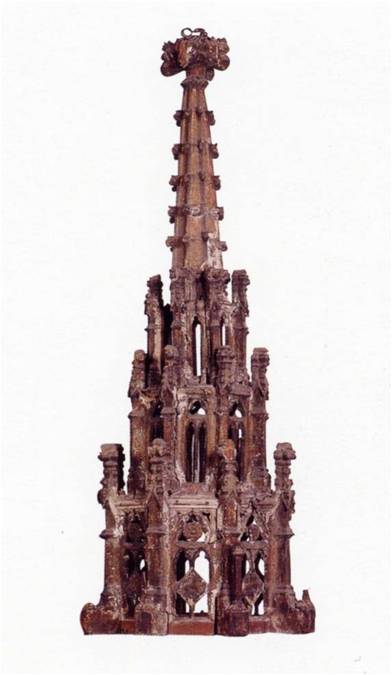
In this talk Robert Bork will consider Gothic architectural drawings as vehicles for the transmission of geometrical information, placing their development in the context of a broader tradition of geometrical design that reaches with a surprising degree of continuity across the long Middle Ages.  After brief discussion of the geometrical toolkit used by the creators of early medieval manuscripts and jewelry, he will explore the flourishing of architectural drawing in the Gothic era and its impact on both design practice and the sharing of visual information across temporal and geographical boundaries.  He will devote particular attention to the analysis of a fantastic drawing produced in or near Regensburg around 1400 that shows a single-spired façade, whose close geometrical relationship to the thirteenth-century choir of Regensburg Cathedral has not formerly been recognized.  In conclusion, he will demonstrate that many of the same geometrical techniques used by Gothic church designers were also used not only by some northern fifteenth-century painters, but also by Italian painters active in the decades around 1500, including Piero di Cosimo and Piero della Francesca.

St Stephen’s Chapel live

St Stephens chapelEver wondered how a medieval palace chapel was built?  St Stephen’s Chapel, Westminster (constructed 1292-1363) was one of the most influential buildings of its age, and extensive records of its creation survive in the National Archives, London.  From 21st November 2015, we will be using Twitter to post a live feed of a whole year of the chapel’s building accounts (1323-24) in real time.  It will be updated twice weekly, showing details of materials, workmen and techniques which give a unique glimpse into the world of medieval building.

Follow along at https://twitter.com/SSC_Live.

This twitter feed forms part of the Virtual St Stephen’s Project based at the University of York, a facet of the wider AHRC-funded interdisciplinary project St Stephen’s Chapel, Westminster: Visual & Political Culture 1292-1941.  The accounts we are using are being transcribed and translated for publication as a critical edition by Dr Maureen Jurkowski and Prof. Tim Ayers.  This project is generously funded by the Leverhulme Trust.

Virtual St Stephen’s Project site

Leverhulme Project page


CFP: Dialogue and Difference in the Middle Ages (University of Bristol, February 25-6, 2016)

sageandfool-283pxDialogue and Difference is an interdisciplinary conference bringing together scholars from all fields to explore the ways in which cultural, social, political, religious, scientific and intellectual exchange and interaction unfolded throughout the Middle Ages. Dialogues took place both across borderlines and within the heart of medieval societies, in monasteries, universities, courts and market places as well as on battlefields and high-roads. How did these dialogues shape the societies of the Middle Ages, and how did new ideas, people and cultures interact with old? Did difference lead to conflict, or to coexistence?

This conference aims to explore these issues across societies from medieval Europe, Byzantium, the Near East and beyond, and spanning from Late Antiquity to the 16th century.

Possible topics include, but are not limited to:

  • societies built on cultural, political and religious borders
  • inter-religious dialogue and polemic
  • the emergence of the university
  • conquest and colonisation
  • heresy and reform
  • inter and intra-textual dialogues
  • gender and the body
  • technological or scientific developments
  • conversion and assimilation
  • material histories and the dialogue of artefacts

Postgraduate and early-career researchers are invited to submit abstracts of 200-300 words for 20 minute papers

We are also accepting abstracts of 100 words for 10 minute flash papers, or 100 words for poster presentations

All abstracts are to be submitted by Wednesday 25th November 2015 to Sophie and Teresa, at: sophie.burton@bristol.ac.uk and teresa.witcombe@bristol.ac.uk

For all additional information, please contact:sophie.burton@bristol.ac.uk and teresa.witcombe@bristol.ac.uk

Upcoming Event: London Medieval Society Meeting- Forging Ahead (November 14, 2015)

scan0006The first London Medieval Society Colloquium of the new academic year welcomes Dr Alfred Hiatt as the Society’s new President. To celebrate the program explores themes central to his research: – Medieval Forgeries, Medieval Maps, Places and Spaces

Speakers are:

Catherine Delano-Smith on understanding medieval maps;

Leonie Hicks on medieval voyaging;

Marianne O’Doherty on medieval ideas of the Indian Ocean;

Yossef Rapoport on Islamic cartography;and

Lawrence Warner on medieval forgers and Piers Plowman

Members attend free; non-members are also very welcome to attend. Please see website for membership details – you may pay your temporary or annual membership on the day (£10/5 concessions per colloquia: it is £20/10 for annual membership: there are three events each year).

The event will be held in the beautiful Charterhouse Square (nearest Tube: Barbican)

WHEN
Saturday, 14 November 2015 from 11:00 to 18:00 
WHERE
Lecture Theatre – Joseph Rotblat Building, Charterhouse Square. London EC1M 6BQ GB – View Map

CFP: University of North Texas Medieval Graduate Symposium (March 3/4, 2016)

TTaccuino_Sanitatis_Casanatense_4182he annual graduate symposium on Medieval Studies at the University of North Texas provides a platform for graduate students of any discipline to present their work on any aspect of the Middle Ages.

This year’s theme is “The Technical Details of Everyday Life.” Submissions for papers on any topic from the Late Antique to the Early Renaissance will be considered. Preference will be given to those that address the conference theme.

The Symposium will be held March 3rd and 4th, 2016 at the University of North Texas, Denton, TX.

The keynote speaker for 2016 is Nicola Coldstream, “Behind the Scenes at the Medieval Entertainment.”

300-word abstracts are due December 1, 2015 via email to Mickey.Abel@unt.edu

There will also be a $200 prize sponsored by AVISTA for an outstanding paper.