‘The Matter of Objects’: Medieval and Renaissance Materiality in Contemporary Conversation
Queen Mary University of London 26th May 2016
Deadline for Proposals: 15th February 2016.
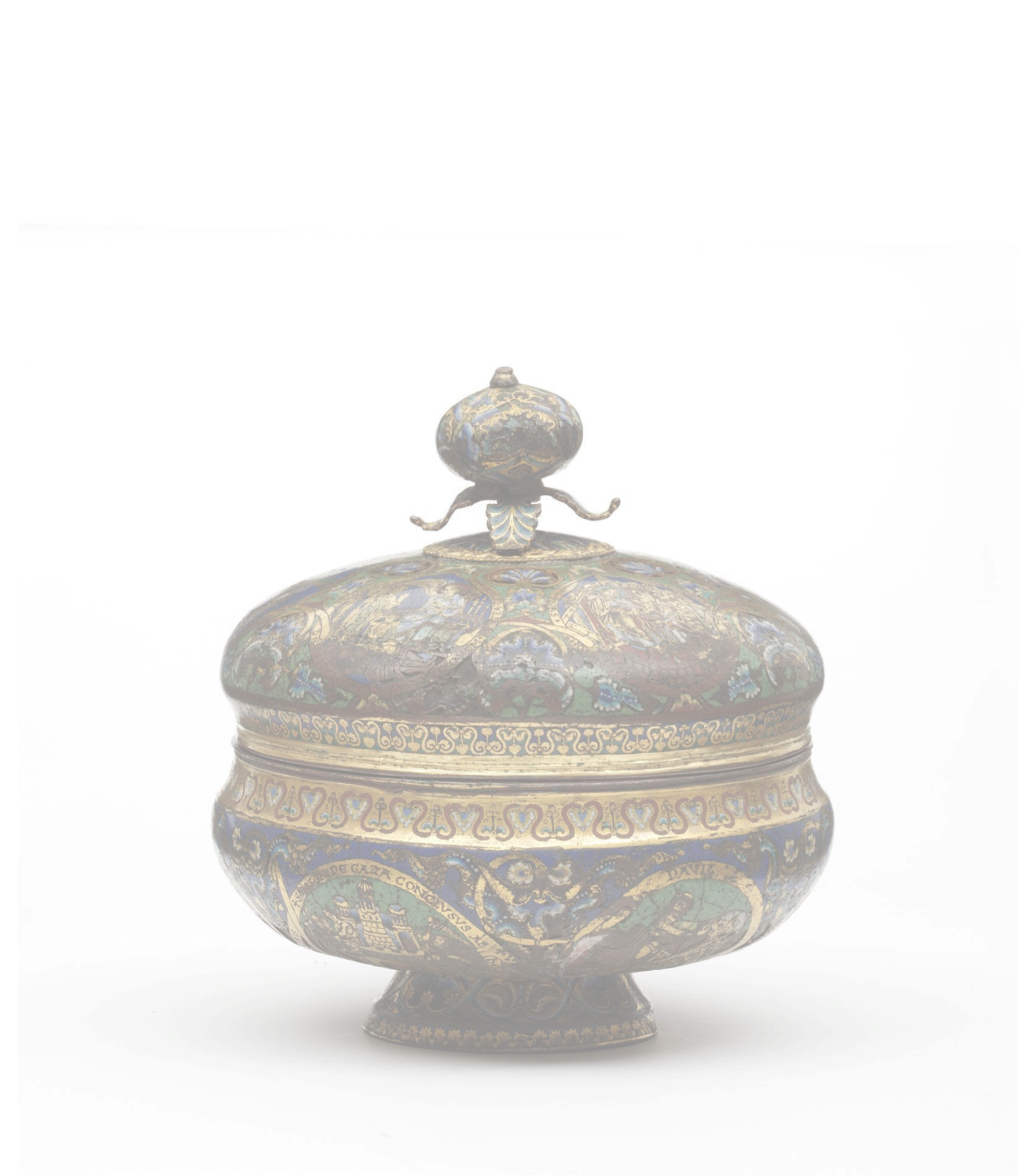
Following the ‘Material Turn(s)’ of the last few decades the place of objects and their materiality has received invigorated attention within humanities research. Yet, approaches to the material often remain stifled by the abstract ways in which they are approached. In the words of social anthropologist Tim Ingold, the engagement of historians with the material is ‘not with the tangible stuff of craftsmen and manufacturers but with the abstract ruminations of philosophers and theorists.’
This project, culminating in a temporary exhibition, aims to juxtapose Medieval and Renaissance objects with contemporary artistic responses in order to challenge traditional narratives of the role of objects in academic research. Taking current humanities research as the launch pad for investigation the event aims to create an open space for conversation between researcher and practitioner. Proposed Medieval and Renaissance objects, and their narratives, will serve as inspiration for artists to create a response piece. The contemporary response will be displayed during an exhibition at Queen Mary, University of London, where a launch event will encourage artists and researchers to come together to discuss their processes of deconstruction, interpretation and creation.
The exhibition will be accompanied by short but critical introductions to each piece, from historian and artist, with room for questions and thought. By creating a space for dialogue with practitioners who approach and experience their knowledge of the material from a different angle, we might open the way for reinvigorated readings of objects from the past. To allow a greater reach and extend the life of the project the temporary exhibition will be supported by an online exhibition that will serve as an on going discussion space.
We are seeking proposals from doctoral or early career researchers in history/art history/literary studies who work on Medieval, Renaissance or Early Modern period and would be prepared to write a synopsis of their research project (accessible to a general audience) and select an object that can serve as a gateway into their research. If your research does not generally use objects (but you have an object in mind) we would still like to hear from you, as we are keen to hear about less traditional integration of objects into histories of the period.
Please contact us if you have further questions and send proposals of 250 words, including an image of your chosen object, its location, dimensions, and material (as far as they are known) and a brief biography to: matterofobjects@gmail.com by 15th February 2016.
The event is supported by the Centre for Renaissance and Early Modern Studies at Queen Mary University of London.
Bibliotheca Hertziana, Max Planck Institute for Art History, Rome, June
30 – July 1, 2016 Deadline: Feb 15, 2016
“Imperialis Ecclesia”: Frederick II Hohenstaufen and sacred architecture between Italy andGermany
International Conference
organised by Francesco Gangemi and Tanja Michalsky
Art under Frederick II is commonly held to be mainly a secular phenomenon, a product of imperial authority in open conflict with the Church. In fact, the activity of Frederick as a builder of castles is well known, while religious buildings are doubtless a secondary aspect
of his patronage. As a consequence, the artistic evidence related to the emperor and belonging to the sacred sphere is among the most disregarded and controversial aspects of his reign. Paradoxically, the sacred character of the sovereign has long been the subject of debate in research on the imperial ideology of Frederick.
Many historical, philosophical and philological studies – from
Kantorowicz’s messianic interpretation to Abulafia’s demystification
and to more recent contributions – have developed around the concept of
an «imperialis Ecclesia» (according to Pier della Vigna) as a
fundamental theme in the historiography on Frederick.
Religious buildings are neglected in these studies, both because of the
difficulty in identifying sacred architecture explicitly related to the
emperor and because of the emperor’s assumed indifference to religious
patronage. Despite the reticence to acknowledge a Frederician sacred
art, however, it is indisputable that a medieval sovereign needed
temples in order to represent his own authority and as an instrument of
ideological and political propaganda.
This conference aims to define the role of Frederick II for the sacred
architecture of his time in Italy and Germany. For that matter it
investigates the dialectic between the two countries as a reflection of
his dual identity – Holy Roman Emperor and King of Sicily – and
considers his Norman and Hohenstaufen heritage.
The primary purpose of the symposium is to define Frederick’s concern
for religious buildings, their functions in the representation of the
imperial power or vice versa the possibility that this function was not
fulfilled, by discussing their historical and political contexts. At
the same time, we want to discuss the role of Frederick and the
Hohenstaufen with respect to the spread of Gothic style in Italy and
Germany against the background of the great changes that took place in
architecture and sculpture during the first half of the 13th century.
Especially encouraged are presentations that refer to the following
themes:
– the sacred character of the emperor in Frederick’s imago publica and
the contexts where it was eventually manifested
– the religious buildings commissioned by Frederick, the buildings that
attracted his interest, and those that were influenced by his
political, artistic and territorial strategies
– the manifestation of imperial power in the church: the use of its
space for liturgy, coronation ceremonies, burials, and assertions of
the sovereign’s presence
– the relationship between church and palace: palatine chapels and
churches used by the Emperor
– the foundations belonging to religious orders supported by Frederick
II, such as the Teutonic Order and the Cistercians
– Frederick’s policy concerning sacred art in comparison to his Norman
and Hohenstaufen predecessors
Proposals for talks should be sent in the form of an abstract (max 1
page) with a brief CV by February, 15th, 2016 to gangemi@biblhertz.it
Beyond Borders: Mutual Imaginings of Europe and the Middle East (800-1700) Barnard College’s 25th Biannual Medieval and Renaissance Studies Conference Saturday, December 3, 2016
Call for Papers
Recent scholarship is challenging the stark border between Europe and the Middle East during the long period between 800-1700. Rather than thinking of these areas in isolation, scholars are revealing the depth of their mutual influence. Trade, war, migration, and scholarly exchange connected Europe and the Middle East in ways both cooperative and adversarial. The distant world was not only an object of aggression, but also, inextricably, of fantasy and longing. Jewish, Muslim, and Christian thinkers looked to each other to understand their own cultural histories and to imagine their futures. Bringing together art historians, literary scholars, historians, scholars of the history of science, and scholars of religious thought, this interdisciplinary conference will explore the real and imaginary cultural interchanges between Europe and the Middle East during their formative periods. The conference will feature plenary lectures by Professors Nancy Bisaha of Vassar College, and Nabil Matar of the University of Minnesota.
This conference is being organized by Professors Rachel Eisendrath, Najam Haider, and Laurie Postlewate of Barnard College.
Please send an abstract (with title) of approximately 200 words and CV to lpostlew@barnard.edu<mailto:lpostlew@barnard.edu>. Presentations should be 20 minutes. Deadline: April 10, 2016.
Many of our readers will be interested in this double bill of conferences at The Courtauld Institute of Art next month: the annual colloquium, followed by a conference in honour of the late Richard K. Morris.
The annual postgraduate colloquium is in its 21st year, and allows current research students both at The Courtauld and beyond to present their research. This year’s conference on Friday 19th February investigates the theme of viewership. Entry is free, but please register your place and read more at the official webpage.
Programme:
09.30 – 10.00 Registration
10.00 – 10.10 Welcome Session 1: Viewership: More than ‘seeing’
10.10 – 10.30 Miguel Ayres de Campos (The Courtauld Institute of Art): Seen / unseen: on the mirabilis as visual object
10.30 – 10.50 Laura Stefanescu (University of Sheffield): Heavenly Music in the Garden of Love: Sound, Emotion and Devotional Practice
10.50 – 11.10 Sophie Kelly (University of Kent): ‘Seeing’ the Trinity Through the Late Medieval Illuminated Book
11.10 – 11.30 Discussion
11.30 – 12.00 TEA / COFFEE BREAK (provided in Seminar room 1) Session 2: Whence the Viewer?
12.00 – 12.20 Anna Konya (Central European University, Budapest): Decorating the Sanctuary. The Iconography, Function and Reception of Eucharistic Imagery in the Late Gothic Wall Paintings of Transylvania
12.20 – 12.40 Lydia Hansell (The Courtauld Institute of Art): Witnessing the Nativity
12.40 – 13.00 Krisztina Ilko (University of Cambridge): Desire to see: the medieval viewer and the hagioscope
13.00 – 13.20 Discussion
13.20 – 14.30 LUNCH (not provided) Session 3: The Many Medieval Viewers
14.30 – 14.50 Anya Burgon (University of Cambridge): Viewing the Mill in Medieval Art c.1100-1250
14.50 – 15.10 Emily Savage (University of St Andrews): Apocalyptic Heroines and Villainesses: Expanding Traditional Visual Narratives for the Medieval Female Viewer
15.10 – 15.30 Petr Jan Vinš & Lucie Kodišová (Charles University, Prague): Portable Altar – From a Status Symbol to a Forgotten Curiosity
15.30 – 15.50 Discussion
15.50 – 16.20 BREAK (the student café will be available for those who wish to buy tea/coffee, cakes) Session 4: Viewing the Past: Medieval vs Modern Perspectives
16.20 – 16.40 Ann Adams (The Courtauld Institute of Art): An assertion of honour, but to whom? The cenotaph of Philippe Pot, Chevalier de l’Ordre de la Toison d’Or et de Saint-Michel
16.40 – 17.00 Stephanie A. Azzarello (University of Cambridge): Music of the Spheres: Seeing and Hearing the Choir Books of San Michele and San Mattia on Murano
17.00 – 17.20 Imogen Tedbury (The Courtauld Institute of Art): (Re)constructing the medieval fresco: Lorenzetti chapter house fresco fragments from Siena to London
17.20 – 17.50 Discussion
17.50 – 18.00 Closing remarks: Joanna Cannon (The Courtauld Institute of Art)
18.00 RECEPTION
The next day, Saturday 20th February, the same lecture theatre will host a memorial conference for Richard “Mouldings” Morris, who died last year. The programme features Morris’ colleagues and students, as well as early-career researchers influenced by his methods. The conference is organised by the British Archaeological Association along with the The Ancient Monuments Society, and tickets are £16 (£11 concessions), and are available on The Courtauld’s site. The BAA also has a number of free places available for students, please contact Richard Plant for more information.
Programme:
09.15 – 09.45 REGISTRATION
09.45 – 10.00 Welcome SESSION I: Introduction and Approaches to Reconstruction
10.00 – 10.30 Nicola Coldstream (Independent scholar): Richard Morris and the rescue of Decorated
10.30 – 11.00 Linda Monckton (Historic England): Fact and fiction and the late medieval shrine of St Amphibalus
11.00 -11.30 Miriam Gill (Leicester University): The painted scheme of the Warwick Chapel, Tewkesbury Abbey
11.30 – 12.00 TEA/COFFEE BREAK (provided) SESSION II: Conception
12.00 – 12.30 James Alexander Cameron (The Courtauld Institute of Art): Modes of modo et forma in the fourteenth-century English parish church
12.30 – 13.00 James Hillson (University of York): St. Stephen’s Chapel, Westminster and St Augustine’s Abbey, Bristol: iterative design, prolonged construction and innovation during the 1290s-1340s
13.00 – 13.30 Peter Draper (Birkbeck College): The Bhojpur Line Drawings: some medieval Indian plans, elevations and moulding profiles from the 11th century
13.30 – 14.30 LUNCH (provided for the speakers only) SESSION III: Workshops and the Archaeology of Buildings
14.30 – 15.00 Lucy Wrapson (Hamilton Kerr Institute): Workshop identities and moulding profiles on East Anglian rood screens
15.00 – 15.30 Jenny Alexander (Warwick University): Ciphers on walls: are these marks apotropaic?
15.30 – 16.00 Jackie Hall (cathedral archaeologist, Peterborough): Building an icon: the west front of Peterborough Cathedral
16.00 – 16.30 TEA/COFFEE BREAK (provided) SESSION IV: Commemoration
16.30 – 17.00 Andrew Budge (Birkbeck College): St Mary’s Warwick: a visual record of family history?
17.00 – 17.30 Richard Marks (Cambridge University): Wills and windows: documenting fenestration in late medieval England
17.30 – 17.40 Appreciation
17.40 – 18.00 Concluding remarks
18.30 RECEPTION
All are welcome, and we hope to see you at as many papers as possible.
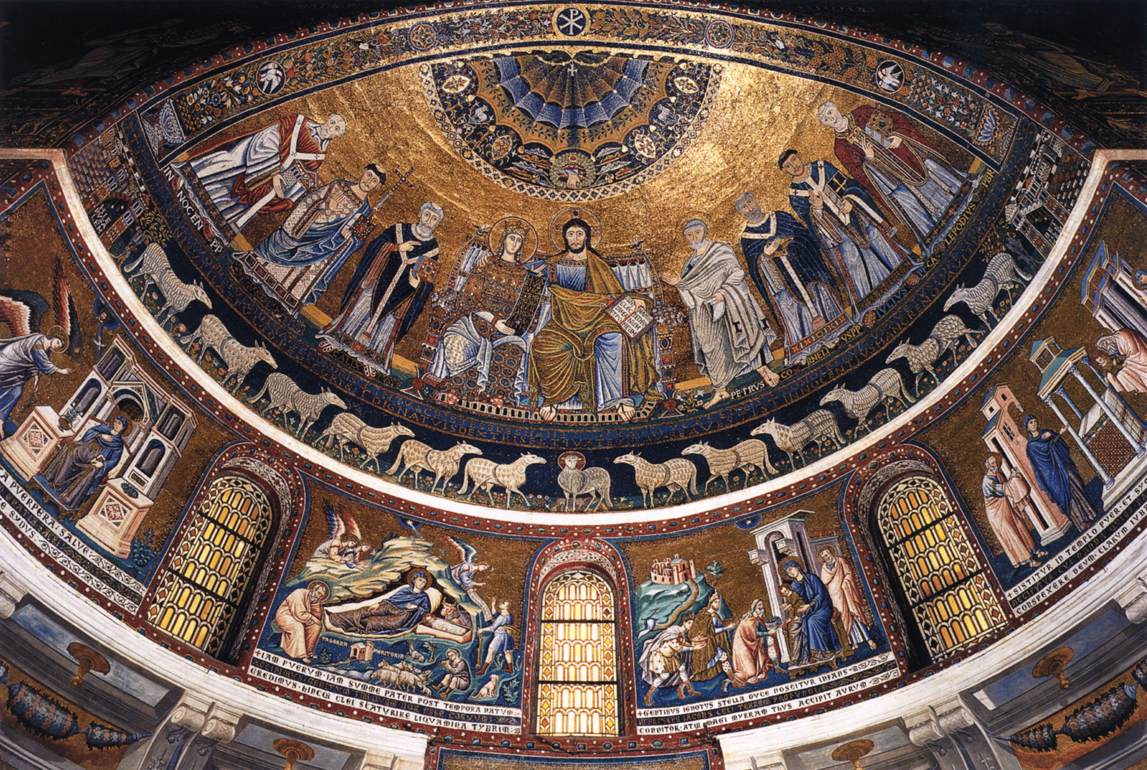
Annual Hammer Art History Lecture: “Art and Papal Politics in Twelfth-Century Rome”
Dale Kinney (Eugenia Chase Guild Professor Emeritus in the Humanities and Research Professor, Bryn Mawr College)
Art and architecture were important vehicles of communication for medieval patrons, including popes. In this lecture, Professor Kinney presents a range of papal images thought to convey political messages, some of which caused international scandals in their own day while others are mentioned only for being pretty. Professor Kinney explores both the twelfth-century context of this art as well as the twentieth-century context that encouraged political interpretations over doctrinal or devotional ones.
Advance registration not required. No fee. Limited seating.
The annual Hammer Art History Lecture is made possible by the Armand Hammer Endowment for the UCLA Center for Medieval & Renaissance Studies.
Illuminare – Centre for the Study of Medieval Art (University of Leuven), Belgium, 11-13 January 2017
Deadline: Friday, April 1, 2016
INTERNATIONAL CONFERENCE
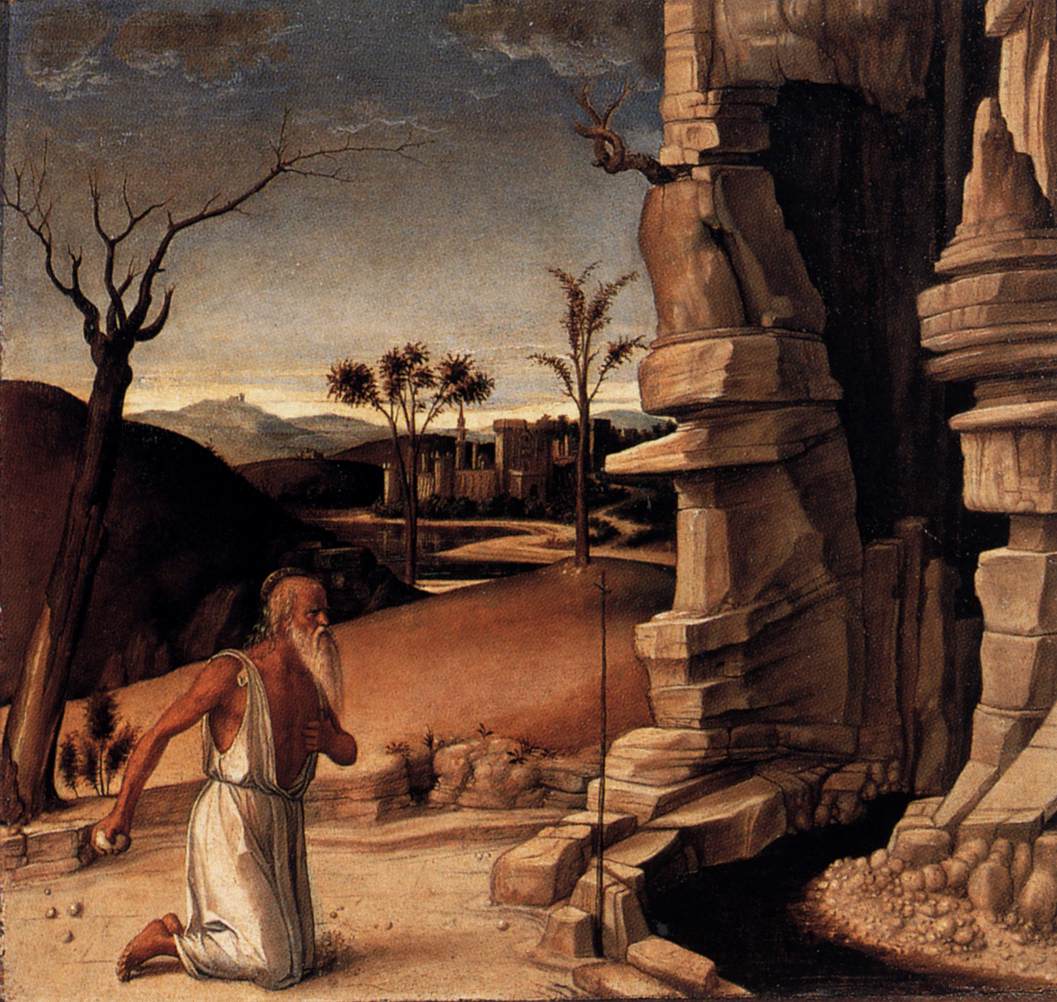
The twentieth symposium for the Study of Underdrawing and Technology in Painting will be held in Leuven in the context of the major exhibition In Search of Utopia. In 1516, Thomas More (1478- 1535), humanist, statesman and ambassador of Henry VIII of England, published his book Utopia at the renowned printing house established by Dirk Martens in the university city of Leuven. To mark the quincentenary of this milestone in Europe’s intellectual and cultural history the city of Leuven and University of Leuven are mounting In Search of Utopia.
The conference will focus on sixteenth-century Northern art, with special emphasis on painting, sculpture, manuscripts and mixed media, from a variety of approaches. We have extended the original, more technical scope of the symposium to include art historical and iconological perspectives as to reveal the multifarious nature of the sixteenth century. After successful editions on Rogier van der Weyden and Jan van Eyck among others, this symposium will focus on the period in-between the ‘Flemish Primitives’ and Pieter Bruegel the Elder. The latter will be the topic of the XXIst edition hosted by KIK-IRPA (Brussels) in 2018.
The symposium calls for papers on art-technical research on Northern Renaissance art based on innovative imaging and analytical techniques (Imaging Utopia, Utopian Imaging). Contributions that explore artist or workshop practice in painting, illumination, sculpture and mixed media objects are welcome. The aim of the conference is to consider how new imaging and analytical techniques can contribute to a better understanding of the arts during this highly dynamic period. Special attention will be paid to mixed media in sixteenth-century art by focussing on the Mechelen Enclosed Garden research and conservation project. In honour of this project, Mechelen will be the venue of the first day of the conference. We also aim to contextualize the artistic impact of intellectual shifts and expanding worldviews that emerged during the first decades of the sixteenth century (Humanism, Visual Culture and the Pursuit of Knowledge). This shift not only occurred in the minds of the humanists and intelligentsia, but can also be seen in the visual culture of this period. Poor life conditions and political instability engendered the desire to search for ideal places and perfect social circumstances. These phantasms had complex and multi-layered repercussions on the visual arts, such as the popular representations of ‘pleasant places’, loci amoeni (Locus Amoenus). However, these internal desires also resulted in ‘external’ expressions: the physical search for paradise on earth, such as the exploratory expeditions to the New World (Terra Incognita). These new horizons shaped the artistic representation of the ‘other’ and the ‘unknown’. At the same time, the artistic search to redeem these deeply-rooted desires produced visual antitypes of this kind of Utopian thinking, resulting in the most horrific scenes in which reality and fantasy are no longer antonyms (Dystopia).
Topics of interest include, but are not limited to:
New perspectives on technical art history and the Northern Renaissance
New imaging and analytical tools and techniques applied on Northern Renaissance art
The challenges of exploring, preserving and imaging sixteenth-century mixed media, with special emphasis on the Enclosed Gardens
Visual Digital Humanities and Northern Renaissance art
New perspectives on Utopian thinking and the art of the Northern Renaissance
Major intellectual, scientific and religious shifts in the sixteenth century and their repercussions on visual culture and society
The (re)creation of earthly and heavenly paradises in Northern Renaissance art
The search for ‘untouched’ places in the New World
Critical evaluations of representations of the ‘other’ and the ‘unknown’ in the visual arts
Visual antitypes of Utopian artistic expressions
The partners of the XXth symposium are Illuminare – Centre for the Study of Medieval Art (University of Leuven), Erfgoed Mechelen (Museums & Heritage Mechelen) Université catholique de Louvain (UCL), KIK-IRPA (Brussels) and the Flemish Research Centre for the Arts in the Burgundian Netherlands (Musea Brugge).
We welcome 20-minute papers that engage with these varied, but interconnected topics of research and, equally important, explore recent technological research methods, fresh methodologies and theoretical frameworks. We wish to encourage an integrated approach of technical art history, art history and iconology. The official language of the conference is English. Proposals of no more than 300 words and a brief CV should be submitted to illuminare@arts.kuleuven.be before Friday, April 1, 2016.
The proceedings of the conference will be published by Peeters Publishers.
For more information, please visit the conference website:
This term promises an interesting and varied programme. Our speakers are:
Zuleika Murat, sharing discoveries about Guariento and the Tomb of Doge Giovanni Dolfin in Santi Giovanni e Paolo, Venice (Wednesday 20th January)
Tom Nickson, looking at the significance of light and its subsequent obscuration in gothic buildings (Wednesday, 10th February)
Paula Nuttall, on dance and low-life subjects in drawings by Verrocchio (Monday, 7th March)
All of this term’s seminars are held at 5pm in the Keynes Library at Birkbeck’s School of Arts (Room 114, 43, Gordon Sq., London, WC1H OPD). A break at 5.50pm is followed by discussion and refreshments. We look forward to seeing you there.
A Graduate and Early Career Conference, Faculty of English, University of Cambridge
Friday, April 15, 2016
CFP Deadline: 1st February 2016
We invite paper proposals for Discipline and Excess, a conference which seeks to consider questions relating to boundaries and their transgression until 1750. The theme invites diverse interpretations of “discipline”—moral, religious, cultural, aesthetic, generic, geographic—in papers which explore the realms of penance and perfection, challenge the orderliness implicit in systems of knowledge, or examine the nature of punishment and retribution.
The conference is aimed at early career scholars and graduate students from a range of academic fields. Discipline and Excess is organized by the M.Phil programs in Medieval, Renaissance, and 18th-Century Literature at the Faculty of English. Our external respondent will be Dr. Helen Barr, Associate Professor at the University of Oxford.
Papers should be a maximum of 20 minutes. Please email 250-word abstracts (text only, no attachments) by 1st February 2016 to disciplineandexcess2016@gmail.com.
COMITATUS: A JOURNAL OF MEDIEVAL AND RENAISSANCE STUDIES, published annually under the auspices of the UCLA Center for Medieval and Renaissance Studies, invites the submission of articles by graduate students and recent PhDs in any field of medieval and Renaissance studies.
SUBMISSION DEADLINE FOR VOLUME 47 (2016): 1 FEBRUARY 2016.
The Comitatus editorial board will make its final selections by early May 2016. Please send submissions as email attachments to Dr. Blair Sullivan, sullivan@humnet.ucla.edu.
Seal matrix of Robert Fitzwalter, 1213-1219 AD, British Museum 1841,0624.1
From December 4-6, the British Museum was host to Seals and Status 800-1700. Though most topics were centered on the European Middle Ages, the program included speakers on Byzantium who broadened the European context and one each on Southeast Asia and China who provided global breadth. Likewise, the central focus temporally was medieval, but the early modern period was well represented with talks on sixteenth century Brussels, and the seals of female patrons in Renaissance Italy, among others. I was invited to attend on behalf of Medieval Art Research, and though unable to be present for the duration of the conference, was able to join for some exciting highlights (and still make time for plenty of jokes about the aquatic marine mammals of the same name—by the way, if that’s more your bag, here are some places they’ve been spotted in London.)
I joined the conference on Friday a complete novice to the field of seals. Fortunately the morning began with an enthusiastic introduction from Jonathan Williams, Deputy Director of the British Museum, who stressed the historical centrality of seals in the BM’s collections. He noted that matrices were some of the first objects in the collections thanks to Soane, and that records show strong interest in them: in the 18th century, one needed to apply weeks in advance to study the seals. This historical introduction the study of seals was incredibly useful for setting the scene about how these objects have been viewed and studied within the academy.
The conference officially began with a keynote delivered by Brigitte Bedos-Rezak of New York University, who provided an introduction to seals as status symbols, arguing that the processes of producing seals were imbued with potency and significance. She discussed the agency of seals, the ways that a victor might incorporate part of his opponent’s seal in his, and the lives of seal matrices after the death of their owner, since the device is capable of outliving their possessor. Bedos-Rezak also considered the forgery and theft of matrices, their use by people other than their owners, and the complexity of detecting this sort of replication. Finally, she addressed the concept of a person’s presence within a seal— in fingerprints found on the wax, but also more ephemerally in the heat given to wax by the human hand, and as a proxy for the individual, putting them comfortably within conversations about portraiture and representations of humans. While the majority of papers that followed examined a particular case study, Bedos-Rezak’s talk opened up some of the larger questions that would be discussed throughout the three days. Her talk was instrumental in aiding the non-specialist author to understand the wider applicability of these objects and practices, and relate them to territories more known.
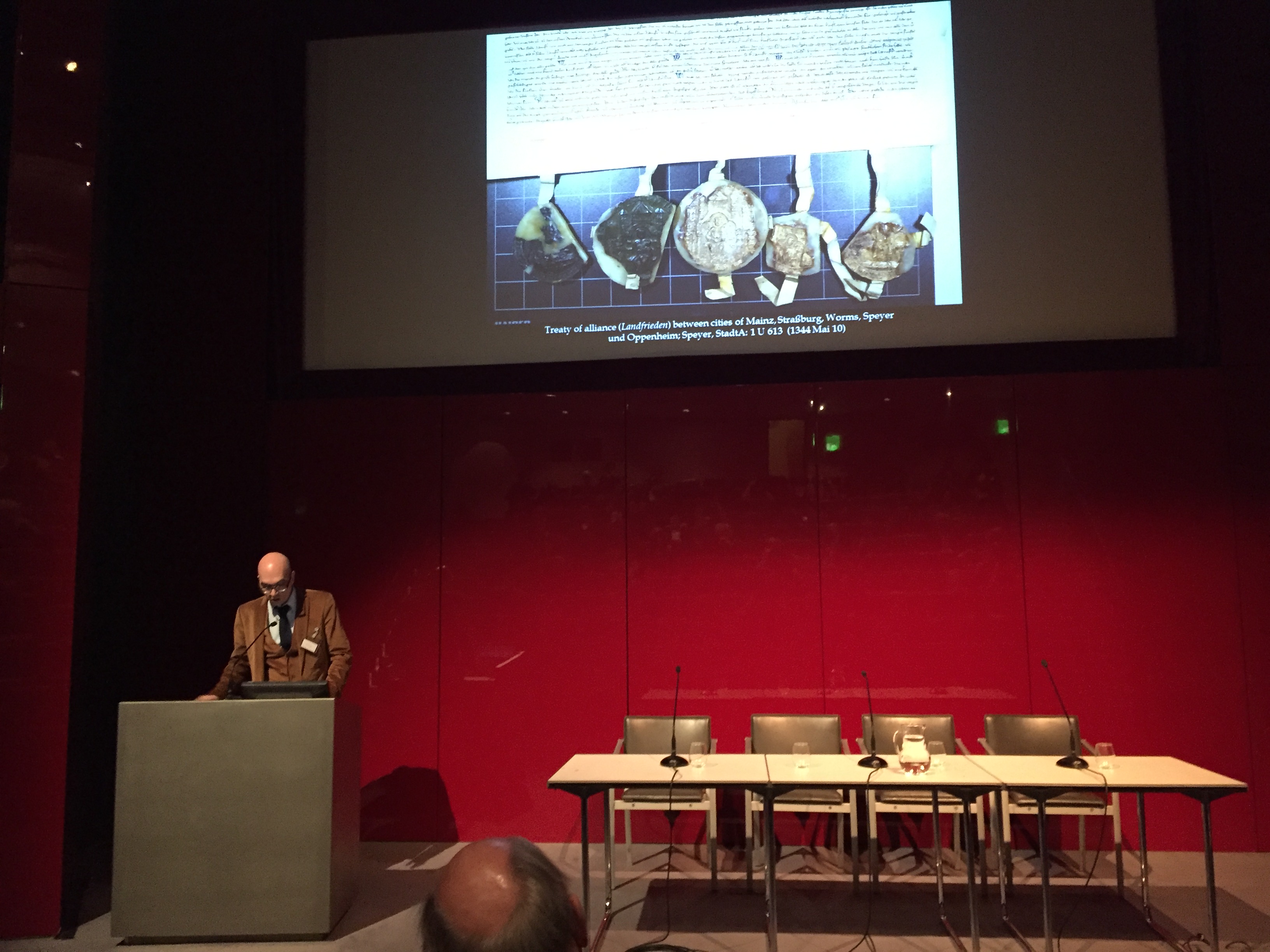
Markus Späth with examples of city seals from the Upper Rhine region
Following Bedos-Rezak were papers that dealt with particular temporal, geographical, or iconographical cases, like Simon Keynes’ contribution on which examined style and use of Anglo-Saxon seal matrices, picked up on some of the themes of the first keynote. For examine, Keynes identified the personal seal of Adelphe, daughter of Edgar, as it was used in her lifetime, and how it was coopted after her death as the conventual seal of Wilton Abbey. There are many questions about these objects that haven’t yet been answered, including how prevalent they were; though there must have been many at one time, only about five survive. They were clearly significant, since Keynes cites an example of a king sending his seal matrix as a proxy for himself at a shire meeting. Laura Whatley considered seals in their capacities of transmitting visual information over long distances between the Latin Kingdom and Western Europe. Annabel Gallop picked up on the theme of transmission, arguing that the shape of Islamic seals in the Malay world in the 16th century come from the form of European heraldic shields. Markus Späth’s paper brought us to the Upper Rhine to compare city seals, and Jonathan Shea discussed seals in the context of Middle Byzantine government administration.
The final session of the day began with Mei Xin Wang’s fascinating talk about seals on Chinese paintings, where each successive owner of a work of art would stamp his personal seal on the painting itself, often in prominent places within the image field, and frequently many times. Tim Pestell discussed papal bullae found in Norfolk, and finally Marc Libert delivered a paper on 16th century matrix production in Brussels.
On the second day, I dropped in for TA Heslop’s evening keynote address, “English Medieval Seals as Works of Art.” Heslop’s publications on English art and architecture are amazingly diverse, making him an ideal candidate to discuss the art of these objects specifically, looking at questions of form and style, as opposed to many of the previous talks which focused on diplomatic sources, use, and archaeology. Woven into his discussion of the objects themselves was an interesting commentary on historiography and changing approaches to this material. In particular, he discussed his struggles with traditional stylistic analysis, which, as he showed, was unable to be used to date matrices in the way that the same techniques have been effective for other types of objects.
T.A. Heslop with conference organizer Lloyd de Beer
After Heslop’s keynote, the attendees celebrated recent publications of interest to the seals and sealing community. These are Susan Solway’s Medieval Coins and Seals: Constructing Identity, Signifying Power (Brepols 2015), and Art of Documentation: Documents and Visual Culture in Medieval England by Jessica Berenbeim (University of Toronto/PIMS 2015).
The conference, though primarily focused on medieval Europe, encompassed broad enough topics to suggest to its attendees the wide uses and characteristics of seals in diverse temporal and geographic climes. This is a welcome contribution, and is a noteworthy attempt to defy the rampant geographical limitations and periodization within the academy. Additionally, although the impressive program and erudite question and answer sessions made it clear that a great number of specialists were in attendance, there was much to be gained for the author, whose prior ignorance of seals has begun to be eroded.
 Following the ‘Material Turn(s)’ of the last few decades the place of objects and their materiality has received invigorated attention within humanities research. Yet, approaches to the material often remain stifled by the abstract ways in which they are approached. In the words of social anthropologist Tim Ingold, the engagement of historians with the material is ‘not with the tangible stuff of craftsmen and manufacturers but with the abstract ruminations of philosophers and theorists.’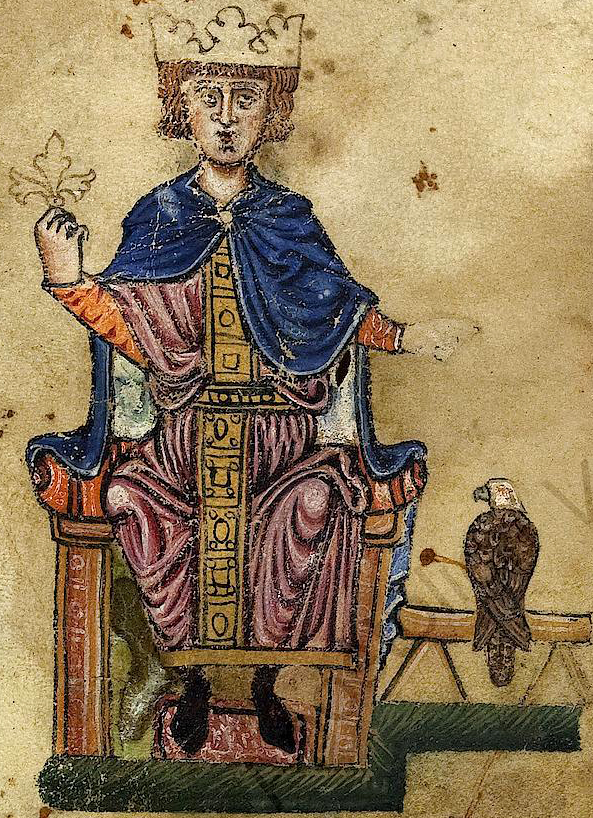
![Medieval-image[1]](https://medievalartresearch.com/wp-content/uploads/2016/01/medieval-image1.png?w=300&h=202) Programme:
Programme:![Richard-K.-Morris-at-Kenilworth-Castle-655x1024[1]](https://medievalartresearch.com/wp-content/uploads/2016/01/richard-k-morris-at-kenilworth-castle-655x10241.jpg?w=192&h=300) The next day, Saturday 20th February, the same lecture theatre will host a memorial conference for Richard “Mouldings” Morris, who died last year. The programme features Morris’ colleagues and students, as well as early-career researchers influenced by his methods. The conference is organised by the
The next day, Saturday 20th February, the same lecture theatre will host a memorial conference for Richard “Mouldings” Morris, who died last year. The programme features Morris’ colleagues and students, as well as early-career researchers influenced by his methods. The conference is organised by the