Material Processes and Making In Medieval Art (Kalamazoo 2016 session)

making-the-ms[1]The International Congress on Medieval Studies (ICMS) at Western
Michigan University, Kalamazoo, MI, May 12 – 15, 2016
Deadline: Sep 15, 2015

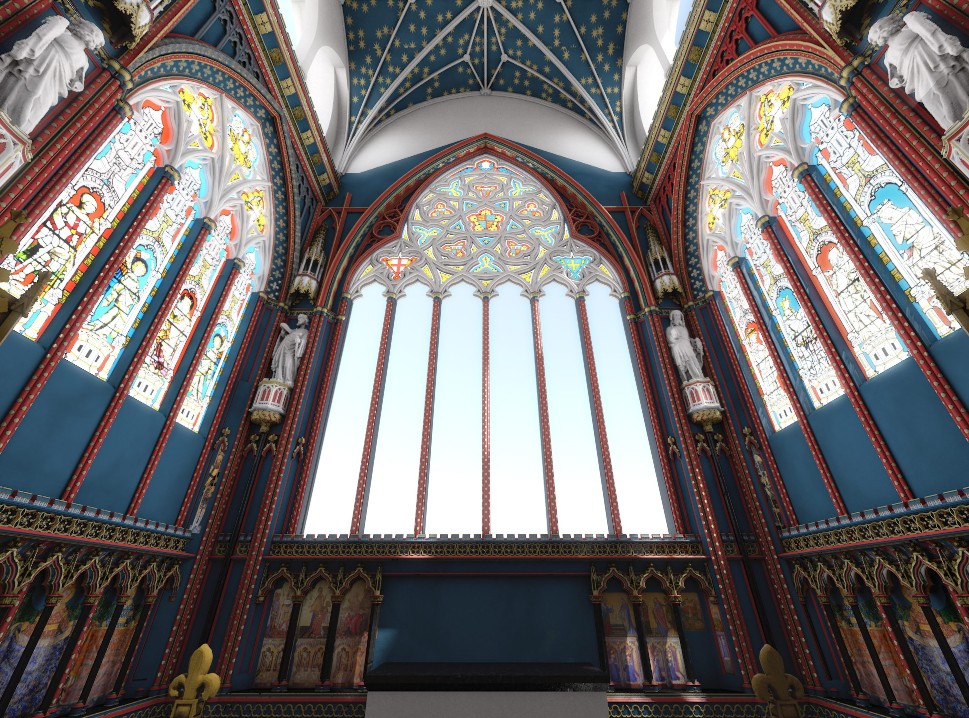
Art historians traditionally focus on the finished work, yet attention
to the creative process of making allows us to consider how medieval
builders and artisans constructed monuments, made objects, and planned
workflow for large-scale projects. Furthermore, this line of inquiry
allows us to consider spatial planning and haptic encounters. The use
of new technologies such as digital reconstructions, laser scans, 3D
printing, and other imaging tools provides scholars with the
opportunity to understand the conceptual processes of art making in the
Middle Ages as never before through reverse engineering.

Recent art-historical scholarship has reintroduced interest in the
materiality/object-ness of medieval art and architecture and attendant
somatic responses. Analysis of the processes of making is fundamental
to this renewed interest in the relationship between materiality and
human experience of the art object. Together, these inquiries will
yield new insights into the social, economic, political, and practical
conditions of production.

For this session we are interested in presentations that investigate
the process of making medieval art and architecture and what these
processes tell us about medieval artistic production. We welcome papers
that explore questions such as:
• What can art historians learn from studying creative processes?
• What are the methods of design to finished product?
• How did masons and artisans revise work in progress or finished work?
• Why are some materials selected over others?

DEADLINE FOR PAPER PROPOSALS: 15 September 2015
Paper proposals should consist of the following:
• Abstract of proposed paper (300 words maximum)
• Completed Participation Information Form available at:
http://wmich.edu/medieval/congress/submissions/index.html#Paper
• CV with mailing information and email address.

PLEASE DIRECT INQUIRIES/SUBMISSIONS TO THE
ORGANIZERS:
Meredith Cohen: mcohen@humnet.ucla.edu
Kristine Tanton: kristanton@gmail.com.

Information about the conference, including proposal submission forms,
may be found at
http://wmich.edu/medieval/congress/submissions/index.html.

“Reassessing Kantorowicz’s The King’s Two Bodies: Representations of Secular Power in Word and Image” (Kalamazoo 2016)

k6168[1]Since its publication in 1957, Ernst Kantorowicz’s The King’s Two
Bodies has achieved canonical status in the field of medieval history.
This sweeping account of medieval political theology describes how the
king came to be perceived as a gemina persona, possessing both a “body
natural” (material and mortal) and a “body politic” (immaterial and
immortal). While art historians frequently cite the book in their
analyses of medieval iconography, many scholars have criticized
Kantorowicz’s study for a variety of perceived faults, in particular
for being reductive or anachronistic, as epitomized by its application
of an early modern (Tudor) political theory to earlier centuries. One
of the best-known and most pointed critiques came early on from R. W.
Southern, who accused it of “put[ting] the symbol before the reality.”

This session invites papers that critically engage with Kantorowicz’s
paradigm of the king’s two bodies in order to reassess its benefits
and/or limitations as a means of interpreting medieval texts and
images. The organizers conceive of this panel as an opportunity to
interrogate Kantorowicz’s methods and conclusions, to examine the
utility of the “two bodies” as a hermeneutic paradigm, and to consider
the implications of this provocative book for twenty-first-century
scholarship.

While all of the selected papers will address articulations of secular
power, a variety of approaches is possible. Questions and issues might
include: regional specificities in the expression of power; the
differentiation in the perception of power as embodied by female versus
male rulers; the conspicuous presence or conspicuous absence of sacred
references in courtly texts/images/objects; the formation of royal
identity and the legitimization of new or contested rulers; religious
language, symbolism, or imagery in diplomatics; the pragmatic and/or
legal function of images of power; shifts in imagery and meaning across
time; the role of likeness and naturalism (or, conversely, of
abstraction) in identity formation; etc. Submissions from historians
and art historians are encouraged.

Proposals should include the following:
1) a one-page abstract
2) a completed Participant Information Form (PIF)
http://wmich.edu/medieval/congress/submissions/index.html#PIF
3) a CV with email, mailing address, and phone number

Please forward proposals to the organizers:
Melanie Hanan, Fordham University, mhanan@fordham.edu
AND
Shannon L. Wearing, Institute of Fine Arts, New York University,
slwearing@gmail.com by 15 September 2015.

Crossing the Hanseatic Threshold and Beyond: Making Connections in Medieval Art, c. 1200-1500 (Kalamazoo 2016)

hansa_0[1]The Hanse, also known as the Hanseatic League, was a trade network of
merchants and cities across the Northern and Baltic Seas that
flourished in the fourteenth and fifteenth centuries. Due to its
geographic reach, the Hanse provided a framework to connect distant
towns, peoples, cultures, ideas, and materials together. This session
aims to explore the often-overlooked artistic production in the
transnational Hanseatic region. Artistic exchange across Hanse trade
routes was extensive and wide reaching. Art objects traveled long
distances and were produced with great variety to reflect the
multi-faceted identities and goals of their patrons.

For this session, we invite papers that address artistic circulation,
mobility, exchange, networks, identity, media, and/or patronage in the
Hanseatic arena. We welcome both specific case studies as well as
papers that interrogate larger questions on ‘Hanseatic art’, Hanse art
historical historiography, and the self-fashioning of Hanse merchants
or patrons. Along these lines, papers could also explore artistic links
between the Hanse and other trade networks or more generally, art and
mercantile trade in littoral and riverine towns in Europe, c. 1200-1500.

The Student Committee of the International Center of Medieval Art
involves and advocates for all members with student status. As a
committee that addresses the concerns of students, we see this session
as a forum for discussion and informal mentorship within our field.

To propose a paper, please send an abstract, C.V., and a completed
Congress Participant Information Form
(http://wmich.edu/medieval/congress/submissions/index.html#PIF) to
Lehti Mairike Keelmann (lehtik@umich.edu) and Laura Tillery
(tillery@sas.upenn.edu).

Proposals should be emailed no later than September 15th, 2015.

Picturing the present: Structuring the medieval beholder’s relation towards time (Kalamazoo 2016)

Simone Martini, Agostino Novello polytych, simultaneous narrative showing resurrection of a child

Armin Bergmeier (Ludwig-Maximilians-University, Munich)
Andrew Griebeler (University of California, Berkeley)

“What then is time?” asks Augustine, the fourth-century bishop of
Hippo, “If no one asks me, I know, but if I wish to explain it, I do
not know.”  Although intimately familiar, time eludes simple
description. For Augustine, it is a single, ever-moving point of the
present distended by the soul forward in anticipation of things to
come, and backward through memory and recollection. The centuries
following Augustine saw the continued emergence of Christian and
medieval approaches to time alongside the concurrent appropriation and
adaptation of older pagan models, such as Neoplatonic conceptions of
time as a moving image of eternity, or Aristotelian understandings of
time according to the change and movement of bodies.

This panel examines the relationship between medieval artworks and
their viewers’ conception and experience of the present. Scholars of
medieval art have mostly concentrated on imagery depicting the past or
the future, in particular, those that express anxiety about the end of
time. A wide range of images, however, was particularly concerned with
expressing ideas of the present and with depicting the relation between
the visible human world and the invisible divine realm. This panel,
therefore, emphasizes and explores the medieval viewers’ relationship
to the present and their current place in the cosmological system. We
invite proposals covering a wide range of media (portable objects,
manuscripts, sculpture, wall decorations) from Late Antiquity through
the late Middle Ages.

Possible topics might include, but are not limited to the following:
– How images relate to the conceptualization of the historical present
– How artworks structure or organize the experience of time
– How artworks reflect philosophical concepts of the nature of time
– Notions of temporality in depictions of visions and prophecies
– The visibility and visuality of time-keeping instruments and practices
– Medieval conceptions of change in the physical or natural historical
present, including seasons, tides,stages of life, and the movement of
stars

Please, send your abstracts (500 words maximum), CV with current
information, and completed Participant Information Form (available at
http://wmich.edu/medieval/congress/submissions/index.html) to the
organizers:
armin.bergmeier@campus.lmu.de and agriebeler@berkeley.edu

New Perspectives on Medieval Rome (2 sessions at Kalamazoo 2016)

The Last Judgment, detail. By Pietro Cavallini (c.1250-c.1330). Fresco, c.1293. Church of Santa Cecilia in Trastevere, Rome, Italy .

Digital, environmental, material, Mediterranean, sensory, spatial:
these are among the recent “turns” taken by the medieval humanities,
including art history. The new perspectives on the past opened by these
approaches, many of which are informed by interdisciplinary research
and contemporary cultural interests in the natural and built world, are
fundamentally reshaping how we conceive of and study medieval art and
architecture. In the field of medieval art, the city of Rome has
traditionally been a key site for the formulation of innovative avenues
of approach, but what is its current status and its potential in
relation to the discipline’s new discourses?

These two linked sessions seek to assess the impact of recent
methodological developments on the study of the art, architecture, and
urban forms of Rome during the long middle ages, ca. 300–1500. We
invite papers that offer new research on, and new ways of thinking
about, the visual and material culture of medieval Rome.

Please direct inquiries/submissions to the organizers at
mhaukne1@jhu.edu and alison.perchuk@csuci.edu. Information about the
conference, including proposal submission forms, may be found at
http://wmich.edu/medieval/congress/submissions/index.html.

Exploring the Fourteenth Century Across the Eastern and Western Christian World (Leeds 2016 session)

ASeveredBond[1]“ […] and that Giotto changed the profession of painting from Greek back into Latin, and brought it up to date.” Cennino Cennini, The Craftsman’s Handbook, Chapter I

These words by the Italian artist Cennino Cennini, written just before the end of the fourteenth century, seem to testify to the definitive break between the Byzantine and the Western artistic traditions. Whilst studies of cultural and artistic relationships between the Catholic and Orthodox milieux during the thirteenth century are plentiful, the fourteenth century is considered as the culmination of the rupture between the two, a rupture initiated by the Fourth Crusade and the following Sack of Constantinople in 1204.

This session aims to challenge traditional assumptions about interactions between the East and the West, and explore possible points of contact between the Byzantine and the Latin traditions. Indeed, while the disastrous political and religious outcome of the Union of Lyon in 1274 seemed to presage a definitive break between the two Christian Worlds, their cultural and socio-political histories remained deeply intertwined. The Latin domination and the ongoing Franciscan missionary activities left profound traces in Constantinople and the Empire. Similarly, Byzantine merchants and scholars, as well as looted or exchanged artefacts, travelled to the West, influencing Latin culture and creating new artistic trends.

From an art historical point of view, it is commonly acknowledged that while fourteenth-century Western artists explored three-dimensionality, Byzantine art maintained an abstract character. However, visual evidence demonstrates that similar changes occurred in both Eastern and Western art at this time: the number of figures increases, architectural settings become more detailed and multiple episodes are adopted to expound a narrative that was previously encapsulated in one scene only. Are these changes linked? What are the similarities and dissimilarities?

Scholars within the field of late medieval Western and Byzantine history and art history are invited to submit proposals for twenty-minute papers. We propose a loose understanding of the fourteenth century that includes the end of the thirteenth and the beginning of the fifteenth to better contextualise the session’s findings. Topics may include but are not restricted to:

Contacts between Eastern and Western merchants, patrons, and artists

Diplomatic embassies, marriage alliances, and gift exchange between the Eastern and Western Christian world

Eastern scholars emigrating to the West and vice versa

Instances of comparison between specific monumental decorations across East and West

Examples of Orthodox churches build in the West or Catholic churches in the East, their influences and effects

The proliferation of more developed narratives and secondary hagiographical cycles

The increase in the number of figures and the role of architectural settings within the narrative

Please send papers’ titles, abstracts of 250 words and a 100-word biography by September 21, 2015 to:

Maria Alessia Rossi: Mariaalessia.rossi@courtauld.ac.uk and Livia Lupi: ll546@york.ac.uk

CFP: Reading Architecture Across the Arts and Humanities (University of Stirling, 5 December 2015), deadline 26 September 2015

An AHRC-Funded Interdisciplinary Conference University of Stirling, Saturday 5th December 2015

The organisers of this one-day multidisciplinary conference seek to solicit proposals for 20-minute papers that consider the creation, expression and subject-areas across the Arts and Humanities. Papers should seek to address the creation, understanding, circulation and cultural impact of both real and international contexts. Original and creative accounts of how architecture might variously be ‘read’ and interpreted across such disciplines as welcome.

Plenary Speakers: Rosemary Hill and Olivia Horsfall Turner

Possible topics may include, but are by no means limited to, the following:
– Historicism
– Responses to, and recreations of, the architectural past
– Reflections upon architectural styles and ‘movements’
– Assessments of architecture and architectural practices
– Representations of architecture in film
– Architecture and the law
Antiquarianism and architecture
– Architectural ruin and the tourist industry
– Architectural conservationism
– The politics of architectural form
– Literary representations of architecture
– Lives of architects
– The aesthetics of architectural form
– Historiography
– Architectural Heritage

300-word proposals should be emailed to the conference organisers, Dr Dale Townshend and Dr Peter N. Lindfield — architecture@stir.ac.uk — by 26 September 2015.

The School of Arts and Humanities at the University of Stirling has generously agreed to fund a number of postgraduate travel-bursaries for this event. Please contact the conference organisers for further details.

This conference is the first event in a series of outputs arising from the AHRC-funded project, Writing Britain’s Ruins, 1700–1850: The Architectural Imagination at the University of Stirling (June 2015–December 2016).

CfP: The Goldene Tafel from Lüneburg in context: Investigations on technology, shape and significance of altarpieces in northern Europe around 1400 (Hanover, 7-9 April 2016)

103433

One of the highlights of Hanover’s Landesgalerie is the so-called
Goldene Tafel, which once adorned the high altar of the Benedictine
Abbey S. Michaelis in Lüneburg. Four wings house an extensive
sculptural programme and valuable paintings which constitute important
examples of the International Gothic around 1400. The shrine –
unfortunately not preserved – is known to have contained the
gold-covered wooden antependium of the high middle ages which gave its
name to the altarpiece. The central panel was surrounded by
reliquaries, of which some are preserved in the Museum August Kestner.
Others, which fell victim to theft during the seventeenth century, can
still be documented through secondary sources. The altarpiece can be
considered one of the best documented and especially multiformed of its
kind.

Since 2012 the Goldene Tafel is the subject of an interdisciplinary
research project, sponsored by the VolkswagenStiftung, the
Klosterkammer Hanover and the FAMA-Kunststiftung. In collaboration with
the Gemäldegalerie of the Staatliche Museen zu Berlin, the
Goethe-Universität Frankfurt and the Hochschule für angewandte
Wissenschaft und Kunst Hildesheim, conservators, art historians and
historians analyze the altarpiece. As well as subjecting the retable to
a full technical examination, the project also investigates its origin,
history, style and use.

Further more an up to date and sustainable way of conservation and
presentation of the four altar wings is developed.
This conference will present the research team‘s findings and place
these in a wider context.

We therefore invite papers as well as posters that present related
research projects, monographic investigations on comparable objects.
Especially welcome are contributions which focus on recent advances in
the field of technical examination and papers addressing the question
of museological display of similar works.

Suggested sections may include:
– Monumental architecture as princely commemoration? The construction
of Lüneburg’s St. Michael’s Abbey, its furnishings and its functions
– Commemoration and Representation: Charting the commemorative culture
of the Guelph dynasty
– Inclusion and representation. Relics and the purpose of “spoils” in
altarpieces of the fourteenth and fifteenth centuries
– Evidences of manufacture: tool marks, underdrawings, transfer of
motifs and forms of ornamentation. What the results of technical
examination can tell us about the production of major carved and
painted retables.
– North German, Central German, West German or Low Lands? Defining,
producing and disseminating sculpted and painted retables during the
fifteenth century.
– Ways of Seeing – Presenting the medieval retable in the museum
environment

Proposals for 30-minute papers or 5-minute poster presentations should
be forwarded to
antje-fee.koellermann@landesmuseum-hannover.de until the 30th of
September. Requested are the title and a brief summary (max. 2000
characters) in German, English or French.

Lectures and posters are intended for publication as part of the
Niederdeutsche Beiträge zur Kunstgeschichte.

Guiding the Mind of the Beholder – The Materiality of the Medieval Text as Determinant of its Meaning and Use (Leeds 2016 session)

med01[1]International Medieval Congress 2016
University of Leeds, 4–7 July 2016
Call for Papers
Guiding the Mind of the Beholder –
The Materiality of the Medieval Text as Determinant of its Meaning and Use

How we perceive and use a text is influenced by the way it is visualized and how it is
intentionally or unintentionally associated with other texts. Based on the manuscript evidence,
the session wants to explore the different ways how this change of a text’s meaning or usage
can be achieved. This includes the (re)organization of a text in a manuscript witness, or how
accompanying texts like commentaries, glosses and notes complement, add to or even change
a text, as well as the influence of the ‘mise-en-page’ and the materiality of the manuscript
book itself. Through these the session will examine the ways in which the experience of a
reader (anticipated or real) is directed to facilitate and constrain their engagement with the
text. Furthermore the broader context of the manuscript will be taken into account: It will be
asked, how associating or relating a text with other texts in a manuscript may either conserve
traditional interpretations of a text, or generate new readings and new perspectives on the
text’s usage.

The organizer would like to invite papers on Manuscript Studies from all academic
disciplines. Please submit proposals which fit the overall topic of the session via email to
Rüdiger Lorenz by September 15, 2015 and
please include the following information:
 paper title
 short abstract (ca. 150 words)
 name and title
 contact details and affiliation
 a short CV
 equipment needed

All papers should be given in English and should not exceed 20 minutes. Feel free to contact
the organizer, if you have any questions.

Please note, that the organizer is not able to provide any financial support to cover travel,
registration or accommodation expenses of the participants. The IMC offers bursaries that
may cover all or part of the Registration and Programming fee, accommodation and meals.
The IMC bursary applications should be submitted by October 17, 2015. For more
information on the IMC 2016 see <https://www.leeds.ac.uk/ims/imc/imc2016_call.html>.
Dr. Rüdiger Lorenz,
Department of History,
University of Freiburg,
Germany

Call for Papers: ‘Choir stalls and its workshops’, Misericordia internationale kolloquium 2016, deadline 31 October 2015

Session organisers: Anja Seliger, Humboldt-University of Berlin, Cluster of Excellence Image Knowledge Gestaltung; Prof. Dr. Gerhardt Weilandt, Ernst-Moritz-Arndt-University of Greifswald, Department of Art History

Misericordia International is an international multidisciplinary network for broad-based research on choir stalls. Starting from the artistic design the studies dedicate to the relationship with other
artistic elaborations and their proliferation in the Middle Ages and more recent times. The intensive exchange with scientists of neighboring disciplines shows interfaces between disciplines and subjects of investigation and give new impetus to the exploration of the choir stalls. The basis for scientific exchange is the bi-annual international conference.

The next colloquium taking place in Greifswald in June 2016 focusses on the medieval artistic production and all questions related to the working practice in workshops for choir stalls. In addition to monographic studies which seek to identify a master-workshop relation by means of stilistic analysis we welcome papers that explore further questions on medieval workshop practice.

The organisers particularly welcome papers that:
– examine collaboration between carpenters, sculptors and painters during work in progress;
– present new archival research;
– deal with inscriptions and used typography on choir stalls;
– answer businessrelated questions;
– discuss mechanisms for the spread of new styles and techniques, e.g. marquetry, and which workshops they mediated;
– investigate the merger of regional characteristics because of migrant craftsmen;
– illuminate the problem of art center and periphery or
– discuss the phenomenon monastery workshop.

Also welcome are contributions regarding recent eras, as well as papers that deal with sample books and/or the phenomenon of church decorator in the late 19th century.

Participants from different fields are welcome, including, but not limited to art history and technical history, material studies, restoration and conservation studies, and sociology. Following the lecture days a full day excursion to selected choir stalls of the region is planned.

The conference language is English. A timely publication of contributions in the series Profane Arts of the Middle Ages is provided. The organisers are seeking funding to cover the travel expenses for speakers.

Please submit your abstract to seliger@chorgestuehl.de
Paper proposals should consist of the following:
1. Abstract of proposed paper (500 words maximum)
2. CV with home and office mailing addresses, e-mail address, and phone number
Deadline for paper proposals submission: October 31, 2015
Notification of paper acceptance: December 15, 2015

Suggestion for young scholars: The Association Misericordia International has a limited number of Travel Bursaries for students and postgraduate doctoral students.