Conference: 17th congress on the Dance of Death and macabre art

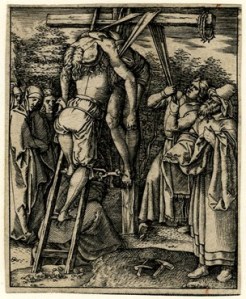
danse_macabre_-_guyot_marchand9_28abbot_and_bailiff29Conference: 17e congrès sur l’étude des danses macabres et sur l’art macabre en
général, Troyes (Aube/ France), médiathèque du Grand Troyes, boulevard Gambetta,
May 25 – 28, 2016

Programme :

Mercredi 25 mai 2016

Accueil de 10h à 14h

14h-14h30
Véronique Saublet, Vice –Présidente du Grand Troyes
Accueil des participants

14h30-15h
Novella Lapini (Firenze)
La processione dei vivi e dei morti nella Roma antica : il funerale
della nobilitas

15h-15h30
Gérard Gros (Université de Picardie)
Misère humaine et dubitacio mortis : l’Épître de Gautier

15h30-16h
Marie-Dominique Leclerc (D.M.E. – Université de Reims Champagne-Ardenne)
Trois p’tits tours et puis s’en vont, La mort chez les marionnettes :
la Mort, sujet central de la pièce

16h-16h30
Pause

16h30-17h
Antonia Víñez Sánchez (Universidad de Cádiz)
Lo macabro en el Cancionero de Santa María de El Puerto de Alfonso X

17h-17h30
Danielle Quéruel (D.M.E. – Université de Reims Champagne-Ardenne)
Le “Mors de la pomme” : entre danse macabre et théâtre médiéval

17h30-18h
Michela Margani (Università di Macerata)
I dadi della Morte : metafore del gioco nella letteratura francese
medievale

18h
Visite de l’exposition d’ouvrages à thématique macabre des fonds de la
Médiathèque

Jeudi 26 mai 2016

9h-9h30
Laura Ramello, Alex Borio, Elisabetta Nicola (Università di Torino)
“Puet nul ocire la mort?” Croyances, mythes, symboles de la mort dans
les traités pseudo-scientifiques médiévaux

9h30-10h
Alina Zvonareva (Università di Padova)
Il Ballo della Morte : un remaniement toscan du XVe-XVIe siècle de la
Danse macabre de Paris

10h-10h30
Ilona Hans-Collas (D.M.E. – GRPM)
IUDICIUM TIME. Justice et avertissement à travers la Mort et son
miroir. À propos du Jugement dernier de Malines (1526)

10h30-11h
Pause

11h-11h30
Cécile Coutin (D.M.E. – BnF)
Un Memento Mori musical de Luigi Rossi (vers 1641-1645)

11h30-12h
Marie-Suzon Druais (Université de Rennes 2)
Les représentations de la personnification de la mort, l’Ankou, en
Basse-Bretagne, aux XVIe et XVIIe siècles

12h-12h30
Raffaele Cioffi (Università di Torino)
Il supplizio dell’impiccagione nell’omiletica anglosassone, fra radici
apocrife e reminiscenze poetiche

14h30-15h
Barbara Foresti (Bologna)
Il Giudizio Universale, l’Inferno e gli Evangelisti di Pietro Pancotto:
dall’ombra di un portico, alla luce di un’interpretazione

15h-15h30
Karin Ueltschi (Université de Reims Champagne-Ardenne)
Danses macabres, cortèges de morts et chasses sauvage : variations
mythiques et littéraires

15h30-16h
Omar Khalaf (Università Ca’ Foscari Venezia, Université Paris 4)
“Memorare novissima” : Caxton’s editions of Earl Rivers’s Cordyal and
the meditation on death in late medieval England

16h-16h30
Pause

16h30-17h
Didier Jugan (D.M.E. – GRPM)
Joël Raskin (D.M.E.)
Le navire de l’Eglise face aux hérésies, aux péchés et à la mort
(XVIe-XVIIe siècles)

17h-17h30
Angelika Gross (Paris)
A propos d’un fragment de la fresque de la Danse macabre de 1440 à Bâle

18h
Concert à la chapelle Argence

Vendredi 27 mai 2016

9h-9h30
Monica Engel (Amsterdam)
Daniel Burckhardt-Wildt and his enigmatic drawing of the demolition of
Basel’s Dance of Death

9h30-10h
Giuliana Giai (Torino)
Chronique de l’an Mil : la bonne et la mauvaise mort dans les “exempla”
de Novalesa

10h-10h30
Cristina Bogdan (D.M.E. – Université de Bucarest)
L’Image du jugement individuel de l’âme. Le voyage par les Péages
aériens dans l’iconographie roumaine du XVIIIe siècle

10h30-11h
Pause

11h-11h30
Marco Piccat (D.M.E. – Università di Trieste)
Le Royaume de Sardaigne et la Danse macabre

11h30-12h
Elisa Martini (Università di Firenze)
Il Casentino dei morti dimenticati. Le novelle del Sire di Narbona e di
Messer Cione

12h-12h30
Caterina Angela Agus (Torino)
La “morte doppia” nella devozione popolare tra Savoia e Delfinato

14h30-15h
Silvia Marin Barutcieff (D.M.E. – Université de Bucarest)
“…Même quand je marche dans la sombre vallée de la mort, je ne redoute
aucun mal”. Les supplices et la mort du martyr dans l’iconographie
religieuse de Valachie au XIXe siècle

15h-15h30
Tony Seaton (University of Limerick)
Sophie Oosterwijk
(D.M.E. – University of St Andrews)
The British Dance of Death : A Memento Mori for Jane Austen’s era

15h30-16h
Alberto Milano (Civica Raccolta Bertarelli, Milano)
Reliures italiennes en xylographie avec motifs macabres

16h-16h30
Jean-Louis Haquette (Université de Reims Champagne-Ardenne)
Conclusion et clôture du colloque

17h
Visite de la Cité du vitrail

Samedi 28 mai 2016

8h30-19h
Excursion “A la recherche du macabre en Champagne méridionale”.
(Pont-Sainte-Marie, Les-Riceys, Chaource, Ervy-le-Châtel,
Neuvy-Sautour, Lirey)

For more information, click here.

Conference: The Illustrated Broadsheet in the 16th Century. Protestant profiling from examples of the Gothaer Sammlung.

an01216860_001_lConference: Das illustrierte Flugblatt im 16. Jahrhundert. Protestantische
Profilbildung am Beispiel der Gothaer Sammlung, Orangenhaus in der Orangerie Gotha, Friedrichstraße 6-8, 99867 Gotha, April 4 – 6, 2016
Registration deadline: March 29, 2016
PROGRAMME

Monday, 4/4/2016

14:00 Uhr
Prof. Dr. Martin Eberle (Gotha): Begrüßung

14:10 Uhr
Prof. Dr. Christopher Spehr (Jena): Einführung in das Thema

14:20 Uhr
Bernd Schäfer (Gotha): Die Bestände der illustrierten Flugblattsammlung
in Gotha

I. Kontexte
Moderation: Prof. Dr. Martin Eberle (Gotha)

14:30 Uhr
Jun.-Prof. Dr. Daniel Bellingradt (Erlangen): Das illustrierte
Flugblatt im Kontext der Flugpublizistik des 16. Jahrhunderts

15:00 Uhr
Prof. Dr. Andrew Pettegree/Drew Thomas (St. Andrews): The Gotha
collection in the context of German production of single-sheet
broadsheets

15:30 Uhr Diskussion

Kaffeepause

16:15 Uhr
Dr. Kerstin te Heesen (Luxemburg): “Die Bücher der Laien” –
Überlegungen zum Flugblatt als Sammlungsobjekt

16:45 Uhr
Prof. Dr. Konrad Amann (Jena): Auf Spurensuche. Flugblätter,
Flugschriften und Graphiken in der Electoralis?

17:15 Uhr
Diskussion

Pause

18:15 Uhr
Öffentlicher Abendvortrag

Grußwort: Dr. Babette Winter, Staatssekretärin für Kultur und Europa
des Freistaats Thüringen
Grußwort: Prof. Dr. Walter Bauer-Wabnegg, Präsident der Universität
Erfurt
Grußwort: Prof. Dr. Walter Rosenthal, Präsident der
Friedrich-Schiller-Universität Jena

Prof. Dr. Siegrid Westphal (Osnabrück): Die Ernestiner als Sachwalter
des „wahren“ Luthertums

20.00 Uhr
Empfang

Tuesday, 5/4/2016
II. Thematisierung
Moderation: Dr. Kathrin Paasch (Gotha/Erfurt)

9:00 Uhr
Prof. em. Dr. Christoph Burger (Amsterdam): Gottlose Christen, Juden
und Jüngster Tag auf zwei illustrierten Flugblättern des 16.
Jahrhunderts

9:30 Uhr
PD Dr. Susanne Wegmann (Halle-Wittenberg/Freiburg): ‘so gilt die Kunst
nit vil’. Die Klage der Künste auf den Flugblättern des 16. Jahrhunderts

10:00 Uhr    Diskussion

Kaffeepause

10:45 Uhr
Prof. Dr. Christiane Andersson (Lewisburg, PA): Polemische
Einblattdrucke der Reformationszeit in Gotha und ihre Zensur

11:15 Uhr
Dr. Hans-Jörg Künast (Augsburg): Flugblätter ohne Impressum.
Möglichkeiten und Grenzen der Druckerbestimmung von Einblattdrucken

11:45 Uhr
Diskussion

Mittagspause

13:30 Uhr
Bernd Schäfer (Gotha)/Ulrike Eydinger (Jena/Gotha): Führung durch die
Ausstellung Satiren, Nachrichten und Wunderzeichen. Fliegende Blätter
aus dem Jahrhundert der Reformation im Herzoglichen Museum

Moderation: Dr. Roland Lehmann (Jena)

15:00 Uhr
Prof. Dr. Matthias Müller (Mainz): Der Fürst als Sammelbild. Zur
Konzeption und Funktion druckgraphischer Fürstenbildnisse im Zeitalter
der Mediendiversität

15:30 Uhr
Dr. Martin Wernisch (Prag): Jan Hus. Der Reformator in deutsch- und
tschechischsprachigen Einblattdrucken

16:00 Uhr
Diskussion

Kaffeepause

16:45 Uhr
Matthias Rekow (Erfurt): Bekenntnis statt Glaubensstreit? Zur
Konfessionspolemik in den Einblattdrucken der Gothaer Sammlung

17:15 Uhr
Prof. Dr. Erik de Boer (Kampen, NL): Aktion und Reaktion im Medium des
Flugblattes. Ein unbekannter Druck von Jean Calvin?

17:45 Uhr
Diskussion

19:00 Uhr
Abendessen

Wednesday 6/4/2016

III. Profilierung
Moderation: Prof. Dr. Christopher Spehr (Jena)

9:00 Uhr
Prof. Dr. Dr. Johannes Schilling (Kiel): Das spezifisch Protestantische
der Gothaer Sammlung

9:30 Uhr
Prof. em. Dr. Michael Schilling (Magdeburg): Zwischen Einblattdruck und
Buch. Serielle Flugblätter in der Frühen Neuzeit

10:00 Uhr
Diskussion

Kaffeepause

10:45 Uhr
Armin Kunz (New York): Verkäufe der Gothaer Sammlung in den
Zwischenkriegsjahren

11:15 Uhr
Jeroen Luyckx (Leuven/Amsterdam): From Gotha to Amsterdam. The Dutch
and Flemish hand-coloured woodcuts formerly in the Schloss Friedenstein

11:45 Uhr
Ulrike Eydinger (Jena/Gotha): Die Gothaer Flugblätter als Quelle
sozialistischer Geschichtsdarstellung im Bauernkriegsdenkmal von Werner
Tübke

12:15 Uhr
Diskussion

12:40 Uhr
Schlussdiskussion

13:00 Uhr
Ende der Tagung

Organised by:
Projektgruppe Reformationsgeschichte
Prof. Dr. Martin Eberle, Stiftung Schloss Friedenstein Gotha
Dr. Kathrin Paasch, Universitäts- und Forschungsbibliothek Erfurt/Gotha
Prof. Dr. Christopher Spehr, Friedrich-Schiller-Universität Jen

Lecture series: Visibility and presence of the Image in Ecclesiastical Space

jan_van_eyck_-_the_madonna_in_the_church_-_google_art_projectLecture series: Visibilité et présence de l’image dans l’espace ecclésial, INHA Paris, March 24 – June 16, 2016.

The analysis of medieval Church space requires wide-ranging consideration of mounmental and ritual context. Current research focuses on the reception of images, and on the visibility and legibility of images. Both in the Latin West and in Byzantium, consideration is given to the mise en scène of the sacred through the interaction of monument, rite, objects, decoration and perception. This lecture series features experts of both the Byzantine Orient and the Latin West, focusing on questions raised during an introductory session on 25 Septembre 2015. A large space will be left for discussion with the aim of obtaining a multi-disciplinary perspective on the medieval image.
Programme

Jeudi 24 Mars 2016, 14h30–17h30, Salle Vasari
Thème : Lumière et éclairage de l’espace cultuel : perception et
réception des images
– Lioba Theis (Universität Wien) The Orchestration of Enlightenment:
Light in Sacred Space – Nicolas Reveyron (université Lumière Lyon II)
Image et lumière : performance et polychronie
– Répondant: Andréas Nicolaïdès (université Aix-Marseille)

Jeudi 19 Mai 2016, 14h30–17h30, Salle Vasari
Thème : Images monumentales et jeux d’échelle : les dynamiques
spatiales du lieu de culte
– Isabelle Marchesin (INHA) La mise en réseau des hommes et des
artefacts dans l’église Saint-Michel d’Hildesheim
– Annemarie Weyl Carr (Southern Methodist University, Dallas) Across a
Crowded Room: Paths of Perception in Cyprus’ Painted Churches
– Répondant: Daniel Russo (université de Bourgogne)

Jeudi 16 Juin 2016, 14h30–17h30, Salle Jullian
Thème : Visibilité et lisibilité du dialogue entre images et
inscriptions dans l’espace cultuel
– Vincent Debiais (CNRS – CESCM Poitiers) Absence /silence des
inscriptions en contexte liturgique : quelques exemples hispaniques
– Catherine Jolivet-Lévy (EPHE) Inscriptions et images dans quelques
églises byzantines de Cappadoce : visibilité / lisibilité, interactions
et fonctions
– Répondant: François Bougard (IRHT) Conclusion du cycle : Sulamith
Brodbeck et Anne-Orange Poilpré (université Paris 1 Panthéon Sorbonne)

Conference: Pilgrimage: Location and Imagination in Medieval England, Wolfson College, Cambridge, 16 April 2016

The Cambridgeshire Historic Churches Trust in association with Cambridge University announce the programme of their 2016 conference:

09.30am     Registration
10.00am     Welcome and Introduction
10.05am     Indulgences, Images and Pilgrimage, with Dr Jessica Berenbeim (Magdalen College, Oxford)

11.00am     Coffee

11.25am     Over The Edge: Medieval travel and the experience of elsewhere, with Miguel Ayres de Campos (Courtauld Institute of Art)

12.20pm     Sandwich Lunch (for those who have pre-booked it)

1.10pm        The Work of the Cambridgeshire Historic Churches Trust, with The Rt Revd David Thomson, Trust Chairman
1.35pm         The Digital Pilgrim Project at the British Museum, with Amy Jeffs (Corpus Christi College, Cambridge), and Robert Kaleta (University College, London)

2.20pm        Short Break

2.30pm        Scholarly Peregrinations among the Parish Churches of Norfolk, with Bryan Ayres, Clare Haynes, Prof. Sandy Heslop, and Dr Helen Lunnon (University of East Anglia)

3.25pm        Tea

3.50pm        Crossing the Threshold: the layperson’s experience in the Parish Church Chancel with Dr James Cameron (Alumnus of the Courtauld Institute of Art)

4.45pm        Closing Remarks

Directions to the Conference location can be found here.

A booking form can be found here.

Ticket prices are: £15 (CHCT members & guests);  £20 (non-members) £10 (undergraduates). Sandwich lunches can be booked for £9.50.

Conference: Forms of the house, during the Middle Ages and the Renaissance, between the Loire and the Meuse

440px-maison-bois-medievale-dreux-5Conference: Formes de la maison, au Moyen Âge et à la Renaissance entre Loire et Meuse, Amiens, Logis du Roy, May 26-27 2016.

This conference interrogates the “forms of the house” in a material and symbolic sense, with a multi-disciplinary perspective. The event will showcase recent discoveries in the domestic architecture of Northern France from the 12th to the 17th century.

Click here for the programme and more information.

Conference: Anglo-Saxons 2016 – Exchange: Cultures, Ideas, and Materials

anglo saxons.jpgConference: Anglo-Saxons 2016 – Exchange: Cultures, Ideas, and MaterialsSchool of History, Classics, and Archaeology, University of Edinburgh, June 9-10, 2016

Anglo-Saxons 2016 is a two-day conference hosted by the University of Edinburgh. It will bring postgraduate and early career researchers from eight countries and an equally large range of disciplines together to present their diverse research and approaches to the Anglo-Saxons.

The programme and more information are available at www.anglosaxons2016.net.

The programme includes a keynote lecture by Alan Thacker (IHR), who will talk on ‘Kings and Cults in Late Anglo-Saxon England’. Dr Thacker’s paper will focus on the making of saints and the promotion of existing cults from the reigns of Alfred and his children through to Cnut and Edward the Confessor. The lecture is open to all, and will be followed by a drinks reception.

The conference fee is £18 (£10 for students), which includes conference packs, coffee/tea breaks, a wine reception on 9 June and lunch on 10 June. There is also the opportunity to join our speakers for the conference dinner on the evening of 10 June. Visit the registration page here: http://edin.ac/1XchrZM.

Call for Applications: Cathedral Cities. Planning and Building a Medieval Utopia – II TEMPLA Summer School

catedralvistaaereaCall for Applications: Cathedral Cities. Planning and Building a Medieval Utopia –
II TEMPLA Summer School,
“Nicolau d’Olwer i Pere i Joan Coromines” room,
Institut d’Estudis Catalans, Carrer del Carme 47,  08001 Barcelona, July 14th-16th 2016
Deadline: May 29, 2016

TEMPLA, a permanent workshop of Medieval Studies composed of specialists from universities, museums and archives from different parts of Spain, Europe and in particular Catalonia, seeks applications for its second Summer School, Cathedral Cities. Planning and Building a Medieval Utopia. National and international researchers into medieval art history and related disciplines are invited to to debate the concept and expression of “Cathedral Cities”, which have boosted in European episcopal sees during the medieval period. The studies of Cathedral City Landscapes could reveal the historical and living memory they  contain.
This call aims to understand how the fragile historical centers of cathedral cities have become the bearers of European’s identity, memory and their complex and plural intangible heritage. The medieval cathedral is widely seen as one of the most important contributions to European and global cultural history. Besides they often are the largest and oldest of all monuments in a city or town, cathedrals and their functioning influenced the way the city evolved. They are therefore essential to our understanding of local and regional history. Alongside their urban influence cathedrals are places for people – social congregation for secular and religious occurrence, where the memories of people and events were made and are now stored, where history and “invented traditions” intertwine.
The progress about knowledge of this European heritage is a necessary measure to protect its visibility and understanding as well as to justify the survival and sustainability of their uses. This living heritage, condenser and referential framework of social and cultural pan-European principles, is at risk of depletion and irrelevance. Therefore the results of the II TSS will be transferred to the academic community, but also to policy makers and citizens in general.

The School’s aims are:

1. To analyse the confluence of diverse resources and actors (institutional, economic, topographic, architectural…) activated to planning and building the place of cathedrals inside medieval cities and development of medieval cities around their cathedrals.
2. To propose new forms of contextualising historical building of European bishoprics in order to explain the results of artistic promotion underlining extra-artistic factors: e.g. liturgical, devotional, circulatory, … as well as convergence of actions by ecclesiastical and civil policies. For proper understanding of this issue it is necessary to emphasize the corresponding “framework for action”.
3- To evidence that the urban and architectural heritage of medieval cathedral cities is bearer of axiological meaning and transmitter of European identity, the validity of the collective memory and also builder of real and imaginary urban landscape.
4- To establish, on the basis of the results of the two previous objectives, new approaches and multidisciplinary research in the urban and social environments of European Cathedral Cities.

Organised by: Gerardo Boto, Marta Serrano, Vincent Debiais; TEMPLA. Institut de Recerca Històrica, Universidad de Girona.

How to Apply:  This scientific meeting is intended for a small number of participants; the application procedure allows for 10 researchers to be invited to present their research. Participants will be expected to take an active role in the debates that will follow each presentation. Every researcher must benefit from the contributions of the other specialists. The presentations and debates may take place in Spanish, French, Italian or English.
Format: The debates will take place on the first two days. On the third day there will be a visit to a Catalan Cathedral City to highlight in situ its particular specificities regarding episcopal and civil urbanism.
The workshop is principally aimed at young pre- and postdoctoral researchers in the areas of history of art, history and liturgical studies. Those who are interested in participating in the TEMPLA Summer School 2016 must submit:
• A letter of motivation that includes a description their current research,
• A CV (maximum one page)
• A presentation proposal (maximum 300 words).
These documents may be in Spanish, French, Italian or English.

The deadline for submitting this documentation is May 29 2016. It must be sent to (both): gerardo.boto@udg.edu and marta.serrano@urv.cat
Applicants will receive a response before June 13 2016. The successful candidates must provide the organizers with a description of the ideas they wish to present, any images relating to their presentation and a brief bibliography by June 26 2016. This documentation will be used to create a dossier a hand-out for the other attendees. The aim of this initiative is to encourage participants to submit proposals of direct interest to the planned debates.

Expenses for accomodation, lunch and other activities will be covered by the organisers. Participants must pay their travel expenses to the workshop.


CFP: Artistic Dialogue during the Middle Ages. Islamic Art – Mudéjar Art

c5ef9db5b8b5f394096444e1ec8cd48eca4ba08b

Call for Papers: Artistic Dialogue during the Middle Ages. Islamic Art – Mudéjar Art, Córdoba, Casa Arabe, November 18 – 20, 2016
Deadline: Apr 30, 2016

The research about Spain’s medieval cultural heritage has experienced a
great development in the last centuries. With the reassessment of the
legacy of al-Andalus and of the Reign of Castile and Aragon during the
nineteenth century, the historiography focusing especially on cultural
connections and disconnections has grown extensively. Concepts like
Reconquista, Convivencia and Mudéjar Art, are being interpreted as the
result of Spain’s nineteenth century’s particular socio-political
interests, related to the debate about national identity, religious
intolerance and to an evolutionist conception of history. The special
political and cultural reality of the Peninsula and its Middle Ages as

a geographical and temporal frame of cultural coexistence, pluralism
and heterogeneity has been controversially debated since that time.
At present, we assist to a critical revision and to an intense debate
on those inherited concepts. While the traditional historiography had
delineated several political, religious and artistic frontiers, new
conceptions of the medieval reality arise that interpret those
frontiers as being permeable and dynamic. This perspective leads to the
consideration of an artistic dialogue as the basis of shared
vocabularies. Such a dialogue will be the common thread of the present
conference: we intend to analyze, share and spread recent results and
new research projects on the Islamic and Mudéjar past of the Peninsula.
The conference will constitute a platform for novel lines of
investigation contributing to the debate on the artistic dialogue of
the

medieval Iberian Peninsula.

The following sections and themes are planned:

– Nineteenth century’s historiography: the reassessment of the Islamic
and Mudéjar past
– Islamic and Mudéjar urbanism
– Architectural reuse
– The twelfth century: dialogue or confrontation?
– The Iberian Peninsula and Europe: cultural connections
– Al-Andalus and the three cultures

Organized by: Prof. Dr. Alberto León (Universidad de Córdoba), Prof.
Dr. Francine Giese (Universität Zürich), Casa Arabe

Submission: Each presentation will be of 20 minutes, and may be given in Spanish or

English. Please submit a proposal of maximum 300 words and a brief
curriculum vitae by the 15th of April to the following e-mail address:
conference@transculturalstudies.ch

Book roundup: Medieval architecture

All is thriving in medieval architecture publishing from the Romanesque to the Late Gothic: here are some very special books that have been published in the last few months.

As always do let us know of any recently-published medieval art history books you would like us to include in a book roundup – we would be happy to let people to know about them!


978-0-271-06645-5[1]Tom Nickson – Toledo Cathedral: Building Histories in Medieval Castile (Penn State University Press)

Medieval Toledo is famous as a center of Arabic learning and as a home to sizable Jewish, Muslim, and Christian communities. Yet its cathedral—one of the largest, richest, and best preserved in all of Europe—is little known outside Spain. In Toledo Cathedral, Tom Nickson provides the first in-depth analysis of the cathedral’s art and architecture. Focusing on the early thirteenth to the late fourteenth century, he examines over two hundred years of change and consolidation, tracing the growth of the cathedral in the city as well as the evolution of sacred places within the cathedral itself. Nickson goes on to consider this substantial monument in terms of its location in Toledo, Spain’s most cosmopolitan city in the medieval period. He also addresses the importance and symbolic significance of Toledo’s cathedral to the city and the art and architecture of the medieval Iberian Peninsula, showing how it fits in with broader narratives of change in the arts, culture, and ideology of the late medieval period in Spain and in Mediterranean Europe as a whole.

Tom Nickson is Lecturer in Medieval Art and Architecture at The Courtauld Institute of Art, London.


1400.medium[1]Costanza Beltrami – Building a Crossing Tower: A Design for Rouen Cathedral of 1516 (Paul Holberton Publishing)

Prompted by the recent discovery of an impressive three-metre tall late Gothic drawing of a soaring tower and spire, this book offers a rare insight into the processes of designing and building a major Gothic project. The drawing’s place and date of creation are unknown, and it corresponds to no surviving Gothic tower. Equally mysterious is the three-quarter, top-down perspective from which the tower is represented, without parallel in any other medieval drawings. Who drew this? When? And what did he hope to convey with his choice of a top-down representation of the tower? Building a Crossing Tower explores these questions, and uncovers the dramatic circumstances in which this drawing was created.

Costanza Beltrami is a PhD student at The Courtauld Institute of Art, London.


9781783270842[1]Ron Baxter – The Royal Abbey of Reading (Boydell and Brewer)

Reading Abbey was built by King Henry I to be a great architectural statement and his own mausoleum, as well as a place of resort and a staging point for royal itineraries for progresses in the west and south-west of England. From the start it was envisaged as a monastic site with a high degree of independence from the church hierarchy; it was granted enormous holdings of land and major religious relics to attract visitors and pilgrims, and no expense was spared in providing a church comparable in size and splendour with anything else in England.
However, in architectural terms, the abbey has, until recently, remained enigmatic, mainly because of the efficiency with which it was destroyed at the Reformation. Only recently has it become possible to bring together the scattered evidence – antiquarian drawings and historic records along with a new survey of the standing remains – into a coherent picture. This richly illustrated volume provides the first full account of the abbey, from foundation to dissolution, and offers a new virtual reconstruction of the church and its cloister; it also shows how the abbey formed the backdrop to many key historical events.

Ron Baxter is the Research Director of the Corpus of Romanesque Sculpture in Britain and Ireland.

Conference: Paper and Parchment: Medieval Music, Architectural Drawings, and Illuminated Books

pandp_0Conference: Paper and Parchment: Medieval Music, Architectural Drawings, and Illuminated Books, Kyle Morrow Room, 3rd Floor, Fondren Library, Rice University, Houston, Texas, April 6, 2016


Co-sponsored by the Minter Chair and the Department of Art History.
Free and open to the public.
Schedule:
9:30–9:45 a.m. Welcome
9:45–11:45 a.m. Session No. 1: New Directions in Architectural Drawings
Linda Neagley, “A New Medieval Architectural Drawing”
Rob
ert Bork, “The Regensburg Façade Drawings:
Reality, Fantasy and Geometry”
Discussant: Nancy Wu
Noon–1pm Lunch
1–2:30pm Session No. 2: Workers and Manuscripts
Jennifer Pendergrass Adams, “A Carpenter, a Nobleman, a Fisherman and a Pope: Representations of Class in the Libro dei miracoli”
Layla Seale,”Infernal Labor: Late Medieval Demons at Work”
2:30–4pm Session No. 3: Gender on Paper
and Parchment
Thom Kren, “Toward a Gendered Iconography of Patronage in Books of Hours”
Diane Wolfthal, “Illuminating Infanticide: History and Representation”
4–4:15pm Coffee break
4:15–6:30pm Medieval Music Manuscripts
Rebecca Maloy, “The Old Hispanic Offices of Holy Week”
Peter Loewen, “Singing William Herebert’s English Chant Contrafacta”
Jennifer Saltzstein, “Old French Song Reimagined and Recopied: Contrafacture and Modeling by the Thirteenth-Century Cleric, Trouvères”

For more information, please contact Diane Wolfthal at wolfthal@rice.edu