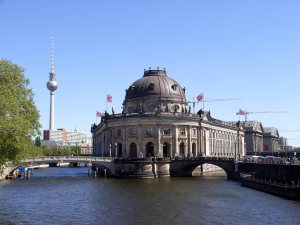
 Call for Papers: IV. FORUM KUNST DES MITTELALTERS, Berlin and Brandenburg, September 20–23, 2017.
Deadline: 31 October 2016
Organisers: Christian Freigang und Antje Fehrmann (Freie Universität Berlin),
Kai Kappel und Tina Zürn (Humboldt-Universität Berlin), other partners in Berlin and Brandenburg
Sektion 1:
Immobil – Mobil? Bezugsräume bau- und kontextgebundener Kunstgattungen
Organisation: Berlin-Brandenburgische Akademie der Wissenschaften – Corpus Vitrearum Medii Aevi. Arbeitsstelle für Glasmalereiforschung
Sektionsleitung: Maria Deiters (Potsdam)
Ausgehend von der Glasmalerei stehen in der Sektion Fragen nach der Immobilität und Mobilität von Kunstwerken im Mittelpunkt, deren Wahrnehmung durch einen engen Bezug zur Architektur bzw. zum umgebenden Raum bestimmt ist.
Als Bestandteil der architektonischen Hülle sind Glasmalereien – wie auch Wandmalereien und Bauskulptur – an einen bestimmten Anbringungsort gebunden und deshalb fixiert. Dem stehen die vielfältigen, oft ineinandergreifenden Deutungsansätze gegenüber, die sich aus der Untersuchung der funktionalen, inhaltlich-geistigen und ästhetischen Verknüpfungen von Objekt, Standort, Gesamtausstattung und Raumnutzung ergeben. Neben der baulich-konstruktiven Einbindung des Gegenstands kann auch die Tatsache, dass die spezifischen Herstellungsprozesse von Glasmalerei des Öfteren eine längerfristige Ortsbindung von Werkstätten mit sich brachten, zum Verständnis (kunst-)geographischer und historisch-räumlicher Beziehungsgefüge beitragen.
Die geplante Sektion will einerseits diesen komplexen Verflechtungen nachgehen, die Glasmalerei in einen „immobilen“ Kontext einbinden. Komplementär dazu nimmt sie Phänomene der Mobilität in den Blick: sowohl bezogen auf die Entstehungszeit der Werke, etwa in der Untersuchung von Verbreitungswegen und –räumen von Glasmalereien, als besonders auch auf die Neukontextualisierung an einem neuen Standort und/oder in Sammlungen. Diese lassen nach den maßgeblichen historisch-politi¬schen Zusammenhängen und Identitätskonstruktionen, insbesondere spezifischen Mittelalterbildern, fragen.
Ausblickend können die sich rasant erweiternden Möglichkeiten der digitalen Erfassung und Verfügbarmachung sowie die damit verbundenen vielfältigen Möglichkeiten der Konstruktion, Rekonstruktion und Visualisierung komplexer historischer Ausstattungs- und Raumsituationen diskutiert werden.
Mit ihrer Untersuchung des Spannungsfeldes zwischen „Immobilität“ und „Mobilität“ bezieht sich die geplante Sektion auf das Rahmenthema der Tagung. Sie setzt neben die globale Perspektive die tiefergehende Untersuchung von Ortsgebundenheit und historischer Kontextualität und fragt nach Vorgängen der Neukontextualisierung und deren Folgen für das Verständnis mittelalterlicher Kunstwerke. Sie tut dies methodisch-exemplarisch am Beispiel der Glasmalerei als spezifisch ortsgebundener Gattung. Vergleichende Blicke zu den be¬nachbarten Künsten sind jedoch ausdrücklich erwünscht.
Sektion 2:
„Hotspots“ – große Städte der Spätantike und des Mittelalters in Asien und Europa in transkultureller Perspektive (400-1500)
Sektionsleitung: Juliane von Fircks (Mainz) & Katharina Schüppel (Dortmund)
Die großen Städte der Spätantike und des Mittelalters bildeten geographische Knotenpunkte im Netzwerk globaler, transkultureller Verflechtungen. Als Anlaufpunkte für Menschen verschiedener Herkunft und Religion waren sie die Orte, an denen sich der Kontakt zwischen den Kulturen der damals bekannten Welt konkret realisierte. Städte wie Rom, Jerusalem, Konstantinopel, Bagdad, Kairo, Damaskus, Delhi oder Peking (um nur einige zu nennen) waren in Ost und West gleichermaßen berühmt, sie wurden auf Landkarten verzeichnet und waren im Denken der Zeit kulturübergreifend präsent. Die Sektion sucht die strukturellen Besonderheiten dieser „Hotspots“ des transkulturellen Austausches herauszuarbeiten und sichtbar zu machen. Gefragt wird nach den spezifischen, lokalen Voraussetzungen für das Gelingen von „Stadt“, und nach den Charakteristika, die jede dieser Metropolen in den Augen der Zeitgenossen in Asien und Europa einzigartig und unverwechselbar erscheinen ließen. Das Phänomen kann unter Einbeziehung einer ganzen Bandbreite von Aspekten beleuchtet werden. So ist von Interesse, wie sich das Neben- und Miteinander verschiedener Kulturen und Religionen in der Struktur und im Erscheinungsbild der großen Städte niederschlug. Gefragt werden könnte ferner nach der Existenz, Lage und Beschaffenheit von Wohnvierteln oder Gebäuden, die für die Unterbringung und den Verkehr mit Fremden (Händler, Diplomaten, Pilger) bestimmt waren. Zu erhellen wäre darüber hinaus, inwieweit öffentliche Bauten und Paläste auf den Empfang von Gästen hin ausgerichtet waren. Bedeutsam ist darüber hinaus, welche Heiligtümer und andere Attraktionen einer Stadt von deren Bewohnern, aber auch von Reisenden kulturübergreifend besucht, bewundert und beschrieben wurden. Eine Annäherung an die Kultur der großen Städte lässt sich nicht zuletzt über Objekte der materiellen Kultur herstellen, die oft mit dem Namen der Metropole verbunden waren wie Seiden aus Bagdad, Stahlklingen aus Damaskus, geschnittener Bergkristall aus Kairo, Glas aus Venedig. Für diejenigen, die nicht reisten, nährten vor allem diese Artefakte die Vorstellung von Glanz und Reichtum. Reiseberichte, Stereotype und Utopien formten gleichermaßen die bildlichen Darstellungen und literarischen
Beschreibungen, die in Ost und West über berühmte Städte kursierten und nicht selten zu festen Topoi gerieten. In der Zusammenschau der Beiträge gilt es zu fragen, welche der vorgestellten Städte aufgrund welcher Eigenschaften zum gemeinsamen Bestandteil des kulturellen Gedächtnisses in Asien und Europa geworden sind.
Sektion 3:
Ästhetische Aspekte des Heiligen in den mittelalterlichen Bildkünsten und der islamischen Kalligraphie
Sektionsleitung: Heidrun Stein-Kecks, Georges Tamer & Berenike Metzler (Erlangen)
In der vorgeschlagenen Sektion soll – im Bewusstsein, dass dies hinterfragbare Kategorien sind – dem Verhältnis von Ästhetik und Sakralität in den Schrift- und Bildkünsten des christlichen Mittelalters und des Islam nachgegangen werden. Zugleich sollen Fragen nach der Konstituierung von Heiligkeit in den verschiedenen Medien und (sakralen) Räumen und kulturellen Kontexten sowie der Rolle von Schrift, Bild und entsprechenden Mixturen und Hybriden in diesem Sakralisierungsprozess, ihren Voraussetzungen und Möglichkeiten sowie ihrer Legitimierung gestellt werden.
Die Frage nach Zusammenhängen zwischen den wiederholten Phasen der Ablehnungen bzw. der Legitimation von (figürlichen, symbolischen, Schrift-) Bildern in christlich-sakralen Kontexten und antiken, hellenistischen und byzantinischen Bilddiskursen (und Text-Bild-Relationen) sowie alttestamentlich-jüdischen und islamischen Konzepten soll als eine Schlüsselfrage über die Kulturen und Religionen hinweg eine zentrale Rolle in der Sektion spielen.
So steht etwa im lateinisch-christlichen Kontext die Bilderfrage in engem Zusammenhang mit Fragen nach der Heiligkeit des Hauses Gottes auf Erden, und daraus resultierend mit Fragen nach dessen angemessenem Schmuck. Wie sich der Schmuck der Wände in Bilderfolgen und Inschriften bzw. Schriftbildern in die Idee der Sakralisierung der mehrschichtig gedachten „Domus Dei“ einfügt, wie die für kultisch-liturgische Einsätze konzipierten Objekte durch Bild und Schrift bzw. selbst als Bilder zugleich Medien der Sakralisierung sein können, soll exemplarisch für die Einflussbereiche der römischen und byzantinischen Kirchen untersucht werden.
Der übliche Verzicht auf figürliche Darstellungen in sakralen Kontexten, den das sogenannte Bilderverbot im Islam nahelegt, stellt nach wie vor einen wichtigen Themenkomplex bei der Erforschung islamischer Kulturräume dar. Gründe für diesen Verzicht können in der Prominenz der arabischen Kalligraphie, die als Bildersatz fungiert haben könnte, liegen; es steht jedoch auch zur Diskussion, ob eine Text-Bild-Dichotomie für den islamischen Kulturraum überhaupt anzunehmen ist. Ferner spielen theologische Texte zum Thema eine entscheidende Rolle, die deutlich machen, inwieweit Legitimationsstrategien für Schrift- bzw. Bildkunst von den jeweiligen historischen und sozialen Kontexten abhängig sind, in denen sie stattfinden.
Grundlegend für den Vergleich sind auch die jeweils zur Verfügung stehenden Ansätze der Hermeneutik, Exegese und Allegorese von (heiligen) Texten und Bildern in den verschiedenen Theologien und die ihnen gemeinsam zugrundeliegenden antiken Quellen, deren jeweilige Aneignung und Translation sowie die zeitgenössischen Vermittlungswege.
Erwartet werden Beiträge u.a. aus der Europäischen, Byzantinischen und Islamischen Kunstgeschichte, der Christlichen Archäologie, Byzantinistik, Orientalistik und Islamwissenschaft zu Fallbeispielen und Diskursen aus der Zeit des im Westen so genannten Mittelalters im Überschneidungsraum mit dem sich etablierenden Islam.
Sektion 4:
Objekte und Eliten. Die Träger kultureller Verflechtungsprozesse in Zentren des 12. und 13. Jahrhunderts
Sektionsleitung: Joanna Olchawa (Osnabrück) & Harald Wolter-von dem Knesebeck (Bonn)
Europäische Zentren, in denen sich politische und kirchliche Macht sowie künstlerische und wirtschaftliche Aktivitäten konzentrierten, eignen sich hervorragend für die Erforschung der komplexen Austausch- und Verflechtungsprozesse im Hochmittelalter. Meist am „Wegkreuz“ wichtiger, oft ehemals römischer Handelsstraßen gelegen, ermöglichte ihre territorial günstige Lage zusammen mit der Förderung seitens der weltlichen und geistigen Eliten nicht nur einen weitreichenden Handel, sondern auch im Umfeld von (Dom-)Schulen sowie bedeutender Kirchen und Klöstern die Bildung vielschichtiger Netzwerke mit fernab gelegenen Städten und Regionen. Von solchen Zentren wie Köln, Hildesheim oder Paderborn ausgehend, die in der norddeutschen Tiefebene gelegen verkehrstechnisch zwischen Städten wie Paris und Kiew vermittelten, können einmalige wie auch kontinuierliche Transferleistungen konkret an ihren Trägern nachvollzogen werden – den Individuen resp. sozialen Gruppen und nicht zuletzt an den Objekten selbst.
Reichskanzler oder Bischöfe spielten in ihrem Wirken für die jeweilige Stadtgeschichte eine wesentliche Rolle, wenn sie beispielsweise, wie der Halberstädter Bischof Konrad von Krosigk, Reliquien und Luxusgüter 1205 aus Konstantinopel mitbrachten. Aber auch Gruppen wie die „Saxones“, die von Géza II., König von Ungarn, Kroatien, Dalmatien und Rama in die Zips/Spiš zur sozialen und wirtschaftlichen Erschließung der Region gerufen wurden, führten nachweislich Objekte mit sich. Exquisite Luxus- und Prestigegegenstände wie französische Edelmetallarbeiten wurden genauso wie massenhaft hergestellte Limousiner Emailwerke in den Nordwesten Sibiriens oder die Kiewer Rus’ exportiert, wo sie sehr begehrt zu sein schienen.
Die Sektion widmet sich folglich den Mikro- und Makroanalysen innerhalb der mittelalterlichen Globalgeschichte und fragt nach deren Vereinbarkeit. Willkommen sind Einzelstudien, die nicht allein dem Bildungs- und Wissenstransfer gelten, sondern vielmehr den spezifischen Wegen und Bewegungen der Personen, sozialen Gruppen sowie den mobilen Werken, darunter auch Vorlagensammlungen wie den „Musterbüchern“. Zudem können an den jeweiligen Beispielen die Voraussetzungen, Faktoren und Rezeptionsprozesse der Migrations- und Kommunikationsstrukturen näher beleuchtet werden, um so das Verhältnis von Produktion und Erwerb neu zu justieren. Wie änderte sich beispielsweise in Abhängigkeit von der Distanz der Wert eines Werkes, d. h.: Wie (und durch wen) konnte aus einer massenhaft hergestellten „Ware“ ein angesehenes und mit einer komplizierten Biographie ausgestattetes Prestigeobjekt werden? Wie veränderten und entwickelten sich durch den Export und Import auch die Zentren? Ziel der Sektion ist folglich, die vielfältigen Aspekte der Zirkulation von Objekten und Akteuren zusammenzuführen, um zur Erforschung der mentalitätsgeschichtlichen, wirtschaftlichen und kulturellen Dynamiken eines mittelalterlichen Zentralortes beizutragen.
Sektion 5
Nordic Splendour: Medieval Church Furnishings in Scandinavia
Sektionsleitung: Justin Kroesen (Bergen)
It has only recently been acknowledged that Europe’s best preserved Medieval church interiors are generally found in the Lutheran churches of Germany and Scandinavia. In the Nordic countries, the wealth of objects preserved in churches in some regions including parts of Jutland, Scania, Gotland and Uppland, as well as in museum collections in Bergen, Oslo, Lund, Stockholm and Copenhagen are unparalleled throughout Europe. Altars, retables, triumphal arch crosses, benches, saints’ statues, alms’ boxes and baptismal fonts together provide insights into the liturgical disposition of Medieval churches in other parts of Europe with which the Scandinavian countries were closely connected culturally and economically, but where the survival rate of such fixtures is much lower. One could even state that if the Scandinavian ‘liturgical heritage’ is neglected, our understanding of the development of many object types would indeed remain incomplete. This session focuses on the under-researched wealth of Medieval church furnishings found in the Nordic countries and their significance for our understanding of European art history. Topics common to different lectures include questions regarding centre and periphery, the mobility of forms and ideas, and the functional life of objects in liturgy and devotion.
Sektion 6a
Exchange and Entanglement I: Frühmittelalterliche Objekte und die Welt der britischen Inseln
Sektionsleitung: Tina Bawden (Berlin) & Catherine Karkov (Leeds)
Aus der Perspektive traditioneller Mittelalterforschung stellen die frühmittelalterlichen britischen Inseln und Irland sowohl geographisch als auch epochengeschichtlich einen Grenzbereich dar. Das Thema Austausch ist dabei für die Geschichte der insularen Kunst schon immer ein fruchtbares gewesen. Der Gedanke selbst liegt einigen Definitionen von “Insular art” zugrunde, die gerade die Gemeinsamkeiten in der Kunst der Pikten, Skoten, Iren, Britonen und Angelsachsen hervorheben sollen. Die Methoden und Fragestellungen (kunst-)geschichtswissenschaftlicher Publikationen zum Thema Austausch sind dabei bis heute größtenteils gleichgeblieben. Aus kunsthistorischer Perspektive sind nach wie vor Fragen nach Stil, Ikonografie, Form und Einfluss zentral.
In Anerkennung und aufbauend auf der Zentralität des Austauschs für die insulare Welt ist das Ziel der Sektion, unser Verständnis vom Gedanken und Prinzip des Austauschs zu vertiefen, und unsere Zugänge zu diesem Themenbereich zu erweitern. Statt allgemein von kulturellem Austausch oder spezifisch von künstlerischem Austausch zu sprechen, möchten wir räumliche, temporale und materielle Ebenen des Austauschs fokussieren, und damit neue Perspektiven auf diesen Begriff und seine Grenzen eröffnen. Die drei Schwerpunkte Ort, Zeit und Objekt bzw. Ding, sowie ihre Verschränkungen, sollen Ansatzpunkte zu einer Neuausrichtung der Fragen sein, die wir stellen, wenn es um Austausch geht, und was uns dabei in den Blick gerät. Jüngere Entwicklungen auf den Gebieten des Ecocriticism, der objektorientierten Ontologie, sowie methodologische Anwendungen des Konzeptes der Diffraktion bieten zum Beispiel einige Möglichkeiten, der Komplexität und dem Nichtlinearen, der Tiefe und Verwobenheit von Austausch im Frühen Mittelalter gerecht zu werden.
Wir freuen uns über Präsentationen, die einen oder mehrere der folgenden Fragen oder Aspekte adressieren:
– Gibt es Netzwerke des Austauschs, in denen Objekte oder Orte nicht unabhängige Entitäten sind, sondern als Ganzes verstanden werden müssen? (z.B. „North Sea“- oder „Channel“-Kultur, das Meer als Ort des Austauschs, Sammlungen von Objekten, wie etwa Bibliotheken oder Hortfunde).
– Die zeitliche Verschränkung, die Umgestaltung der Vergangenheit in der Gegenwart (oder der Gegenwart in der Vergangenheit), die er erlaubt, Austausch ohne physische Bewegung zu denken und zu theoretisieren (z.B. Kontexte des Recycling oder der Übersetzung von Ideen oder Formen)
– Ein Verständnis von Dingen als aktive Subjekte, die einen Austausch generieren oder antreten können, oder einen Ort des Austauschs darstellen
Während unsere Sektion mit dem Thema Austausch in Bezug auf die insulare Kunst ansetzt, möchten wir die Grenzziehungen hinterfragen, die dieser Bereich frühmittelalterlicher Kunstgeschichte üblicherweise mit sich bringt. Unser Ziel einer Theoretisierung des Themas Austausch bedeutet natürlich, dass die resultierenden methodologischen Fragen auch an andere Bereiche kunstgeschichtlicher Forschung gestellt werden können.
Sektion 6b
Exchange and Entanglement II: Netzwerke des Austausches: Transfer- und Austauschprozesse von den Rändern Europas auf en Kontinent – von der Spätantike bis ins Hochmittelalter
Sektionsleitung: Lynda Mulvin (Dublin) & Bernd Nicolai (Bern)
Diese Sektion diskutiert die architektonischen und künstlerischen Beiträge aus sogenannten peripheren Regionen auf zentrale Gebiete. Migrations- und missionsbedingte Wellen aus abgelegenen Regionen Europas, wie den Britischen Inseln (Irisch-Schottische Mission aus Irland, Schottland und England), aus Skandinavien (Wikinger/Normannen) oder dem Ostseeraum (Bernsteinroute, Deutscher Orden, Frühe Hanse) haben substantielle Beiträge zur architektonischen und ornamentalen Gestaltung unter den Aspekten von Abstraktion, Farbe und figürlichem Schmuck für Kernregionen wie dem Frankenreich oder dem Heiligen Römischen Reich geliefert, insbesondere in den geistlichen Zentren der heutigen Länder Frankreich, Deutschland, Schweiz , Österreich und Italien. Dieser Prozess muss aber auch in umgekehrter Richtung untersucht werden. Jüngere Forschungen haben auf den nicht-linearen, multifokalen Charakter von Austauschprozessen abgehoben. Anstelle einseitiger Einflusssphären sind wir mit vielschichtigen, über Räume und Zeiten sich erstreckenden Netzwerken konfrontiert, die auf monastischen Kommunikationssystemen und kirchlichen Strukturen repräsentiert durch die Bischofssitze basierten. Zusätzlichen kommt den maritime Handelsrouten sowie denen der Flüsse (Nord- und Ostsee, Themse, Seine, Rhein und Elbe) eine besondere Bedeutung zu. Schriftlichkeit ist ein weiterer für die Vermittlung zentraler Aspekt, insbesondere für den Wandel von spätantiken Paradigmen hin zu erweiterten Formen der Repräsentation. Jenseits der Frage, wie die Anschauung von Zentrum, Peripherie und „Transperipherie“ innerhalb dieses Rahmens neu definiert und reflektiert werden müsste, fordern wir in einer grossen thematischen und zeitlichen Bandbreite von der Spätantike bis zum Hochmittelalter zu Beiträgen auf, die sich überlagernde künstlerische Prozesse in Europa beleuchten. Unter diesen Voraussetzungen sind methodologisch, strukturell und architekturgeschichtlich drei Felder für diese Sektion von Interesse.
A. Bedingungen und Charakter der Netzwerke unter den Aspekten von Austausch und Verschränkung sowohl in seiner diskursiven als auch transnationalen Dimension aufzuzeigen.
B. Den wechselseitigen Charakter von Import und Reimport zu diskutieren, z.B. anhand der Iro-Schottischen Mission oder den Wikingerzügen.
C. Konkrete Auswirkungen an spezifischen Orten oder Objekten aufzuzeigen
Insbesondere stehen folgende Themenfelder im Fokus:
– Wissensvermittlung, Transfer und Austausch durch die Iro-Schottische Mission anhand monastischer Komplexe, architektonischer Konzeptionen, skulpuraler und ornamentaler Übernahmen (Columbanische and post-Columbanische Abteien, z. B. Reichenau, Saint-Gallen, Bobbio, die sogenannten Schottenklöster in Deutschland und Österreich)
– Die Rolle maritimer und anderer Handelsrouten (Bernsteinstrasse) im Hinblick auf Austausch- und Übertragungsprozesse (e.g. Wikinger, Deutscher Orden, Frühe Hanse, Normannisches Königreich von Sizilien)
– High-tech von Infrastruktur und Produktion (Wikinger, Normannen) als Grundlage für veränderte Konzeptionen in der angewandten Kunst und Architektur
– Die Christianisierung von Skandinavien und Osteuropa als Transfer und Reimport künstlerischer Ansätze (Beispiele aus Schweden, Norwegen, Dänemark, Polen, Tschechien und Ostdeutschland)
Sektion 7:
Armenien und der Christliche Orient: Netzwerke, Transkulturalität, Periodisierung, Stilkonzeptionen.
Sektionsleitung: Christiane Esche-Ramshorn (Freiburg und Cambridge)
Obwohl die Kirche Armeniens bedeutendste und einflussreichste Kirche des Christlichen Orients und seit der Antike mit Europa, insbesondere Italien, durch Handel, Politik, Mission und kirchliche Unionsbestrebungen eng verbunden war, hat sich der eurozentristische Blick der Geschichtswissenschaften trotz Diasporastudien und Öffnung an die Ränder Europas noch immer nicht mit den Strukturen der armenischen merkantilen, politischen und künstlerischen Netzwerke als eine der Kulturen des Christlichen Orients (dem halbmondartigen Gebiet zwischen Kaukasus und Nordost-Afrika) und der Diasporagesellschaften im östlichen Europa befasst. Diese waren für Europa von immensem Nutzen.
Während die mittelalterliche Kunstgeschichte die Künste des Nahen Ostens und der Kreuzfahrerstaaten mittlerweile in ihre Forschung einbezieht, hat sie (mit seltenen Ausnahmen wie etwa in der Byzantinistik, Armenologie und Äthiopistik) die Künste des Christlichen Orients und besonders die kunst-und kulturvermittelnden Kulturen im südlichen Kaukasus bislang von ihrer Forschung so gut wie ausgeschlossen.
Bedingt durch die universitären Fachgrenzen, aber auch durch Sprachbarrieren und die Konseqenzen der jahrzehntelangen Politik des Eisernen Vorhangs wurden so noch heute das Geschichtsbild verzerrende Forschungslücken erzeugt. Nach Ende des Zweiten Weltkrieges fand die Erforschung der christlichen Kulturen im Kaukasus und Christlichen Orient nur in bedeutenden ‚Nischen‘ statt.
Trotz ihres relativ neuen Fokus auf ‚world art history‘ gilt daher nach wie vor im Hinblick auf Armenien Robin Cormacks Einschätzung: “… in many respects Armenian art can and should be treated as a cultural entity in its own right (…) and the question remains how Armenian art can be incorporated into a broader art-historical discourse.” [Vrej Nersessian, Treasures from the Ark, London, 2001, 13]
In den Kulturen des Christlichen Orients waren mehrere Bildsprachen in Kontakt
Die geographische Lage zwischen den politischen Blöcken des ‚Ostens‘ und ‚Westens‘, v.a. Byzanz, Rom und Iran und ihre Reibung mit benachbarten christlichen und nicht-christlichen Künsten hatte zur Folge, dass die Kunst Armeniens, vergleichbar der Äthiopiens, eine Sonderstellung inne bekam. Einerseits hatte die Position Armeniens auf einem Hochplateau und als Durchgangsland die Ausbildung einer bleibend identitätsstiftenden Kunst und Kultur, basierend auf Alphabet, Sprache und Dogma, zur Folge. Andererseits wurde diese durch erobernde Kulturen und die Kaufmannsklasse und deren Stützpunkte an der Seidenstraße stetig befruchtet. Folge waren dynamische Transformationsprozesse, die die Schlüsselposition Armeniens als Vermittlerin von gegensätzlichen ‚Einflüssen‘ definierten, die bis nach Europa reichten.
Einige Hauptfragen dieser Sektion sind daher:
Wie kann die Kunstgeschichte diese Regionen in unser Blickfeld zurückführen und ihnen ihre Schlüsselrolle als Vermittler zurückgeben? Wie schliessen wir den Christlichen Orient an die aktuellen Diskurse der Forschung an? Wie können wir das Verständnis für den christlich-orientalischen Bilddialekt wecken, und weshalb ist dieses Verständnis so wichtig? Vrej Nersessian [Armenian Illuminated Gospel Books, London, 1987, 43, ] nennt ihn einen „fernen Dialekt“: „Der grösste Teil des Vokabulars der armenischen Bibelikonographie (ist) eine Sprache, die Armenien mit dem Rest der mittelalterlichen Christenheit teilt, (und) viele ihrer Themen und Kompositionen (…) wurden in Paris und Konstantinopel genauso rasch wie in Armenien verstanden. Armenische Ikonographie ist keine separate Sprache, aber vielleicht könnte man sie einen fernen Dialekt innerhalb der allgemeinen mittelalterlichen Sprache der Künste nennen. Um zu verstehen was besonders armenisch in der armenischen Ikonographie ist, heisst, dem Dialekt die Bedeutungsnuancen zu entlocken.“
Diese Sektion möchte die Erforschung der einst existierenden, den lateinischen mit dem orientalischen Christentum verbindenden Netzwerke wiederbeleben. Und anhand von Periodisierungen und Stilkonzeptionen soll geprüft werden, ob die (nicht nur?) armenische Malerei als eine Alternative und Gegenkonzept zu europäischen Stilkonzeptionen und Epochenbildungen begriffen werden kann. Denn in einer Art Sonderstellung mit spezifisch armenischer Dynamik auf der Schwelle zwischen Orient und Okzident gelegen sperrt sie sich mit einer eigenen Periodisierung gegen ‚westliche‘ intellektuelle Konstruktionen.
Mögliche Themenbereiche sind:
-Armenien und der Christliche Orient als transkulturelle Kontaktzonen
-Definitionen von Mittelalter
-Anschluss des Christlichen Orients an aktuelle Diskurse in der Kunstgeschichte, z.B. in Hinsicht auf Transkulturalität und auf die globale (?) Reichweite des europäischen Stilsystems im Süd-Kaukasus bzw. in Gross- und Kleinarmenien
– die massiven Gefährdungen künstlerischer und architektonischer Denkmäler im Christlichen Orient (insbesondere in der Türkei und Aserbaidschan)
-Verschiedenheit des christlichen Dogmas und der Denkweisen- und strukturen in ‚Ost‘ und ‚West‘
-Kunst in der Diaspora
Sektion 8:
Oltremare. Das mittelalterliche Süditalien und die kulturellen Austauschprozesse im östlichen Mittelmeerraum
Sektionsleitung: Kai Kappel (Berlin) & Tanja Michalsky (Rom)
Aufgrund seiner spezifischen Geschichte und exponierten geografischen Lage war Süditalien eine der wichtigsten transkulturellen Kontaktzonen im mittelalterlichen Europa. Die interdisziplinär und gattungsübergreifend angelegte Sektion verschränkt zwei verwandte Zielsetzungen: Kritisch zu reflektieren ist die künstlerische Produktion in einer multiethnischen, religiös bemerkenswert vielfältigen Gesellschaft (darunter ostkirchlich geprägte Griechen, jüdische Gemeinden und die bislang weniger untersuchten so genannten „Sarazenen“). Daneben interessieren die künstlerischen Transfer- bzw. Transformationsprozesse zwischen Süditalien und Byzanz (gerade auch Albanien), dem Lateinischen Kaiserreich, der Pfalzgrafschaft Kephalonia, dem Despotat Epirus, den Kreuzfahrerterritorien sowie dem mamlukischen Ägypten.
Wie agierten Auftraggeber und Künstler in dieser spezifischen, von Migration und der Erfahrung kultureller Hybridität geprägten Situation? War es möglich, durch Bauformen oder Bildprogramme sozial integrativ und damit herrschaftsstabilisierend zu wirken? Welche Bedeutung hatten die Handelsniederlassungen in den Hafenstädten? Wie wirkten die europaweit vernetzten Orden in ihren süditalienischen Filiationen? Und welche Spuren hinterließen die kulturellen Austauschprozesse über das Meer in den genannten Regionen des östlichen Mittelmeerraumes?
Erwünscht sind Beiträge vom Frühmittelalter bis zum Ende des 14. Jahrhunderts, ausdrücklich auch von Nachwuchswissenschaftlern/innen. Die Sektion weiß sich den außerordentlich regen Mediterranean Studies verpflichtet. Zugleich widmet sie sich in wissenschaftsgeschichtlicher Perspektivierung den Pionieren solcher Ansätze wie etwa Émile Bertaux, Ernst Kitzinger oder Helmut Buschhausen.
Sektion 9:
Ans Ende der Welt – Künstlerischer Austausch durch Grenzhandel im Hanseraum
Sektionsleitung: Gerhard Weilandt (Greifswald), Kerstin Petermann & Anja Rasche (Lübeck)
Seit dem 12. Jahrhundert schließen sich Fernhandelskaufleute genossenschaftlich zusammen, um gemeinsam über Gotland nach Novgorod zu fahren und dort Handel zu treiben. Novgorod ist zu dieser Zeit ein wichtiges Handelszentrum mit direkter Anbindung an das byzantinische Reich. Die Anfänge des hansischen Handels nach Osten finden im Westen ihr Pendant: In London entwickelt sich der Stalhof im Laufe des 13. Jahrhunderts zum Kontor der Hansekaufleute. London und Novgorod markieren die west-östliche Ausdehnung des mittelalterlichen Hansehandels. Der nord-südliche Erfahrungshorizont der Händler reichte vom Polarkreis bis zum Mittelmeer. Die Endpunkte des Handels sind aus der Sicht der Kaufleute Kontaktzonen an den damaligen Grenzen Europas, ja der Welt. Welche Wirkungen gehen von diesen Fernreisen aus? Werden Architektur, Kunst und Luxusartikel dadurch geprägt? Gab es einen geistigen Austausch, einen Kulturtransfer, oder blieben die fremden Dinge, die man auf den Reisen sah, unverstandene Exoten?
Die Sektion fragt sowohl nach den Wirkungen des hansischen Handels auf die Kunst als auch nach den Funktionen der Kunst im hansischen Handel. Sie nimmt damit auch Bezug auf die Tagungsorte – sowohl Berlin als auch Brandenburg waren Hansestädte. Besonderes Augenmerk wird dabei auf die hansetypischen Fahrerkompanien gelegt: In vielen Hansestädten entstehen seit der Mitte des 14. Jahrhunderts Korporationen von Kaufleuten, die ein gemeinsames Handelsziel haben: Novgorod-, Bergen- oder Riga-, aber auch Schonen-, England-, Venedig- und Flandernfahrer, um nur einige zu nennen. Diese treten häufig als Auftraggeber von Altären und deren Ausstattung, eigenen Gestühlen und anderem in den Kirchen der Hansestädte in Erscheinung. Lässt sich an den von ihnen gestifteten Objekten die Weite ihrer kulturellen Kontakte und ihr intellektueller Horizont ablesen? Welche Wechselwirkungen von Eigenem und Fremdem lassen sich beschreiben? Haben sich in der Fremde Objekte aus Hansestädten erhalten? Welchen Einfluss haben die Zielorte der Fahrerkompanien auf die Stiftungen in ihren Heimatstädten, z.B. bezüglich des Heiligenkults oder der Wahl des Materials?
Sektion 10:
The Treasury of San Isidoro de León and its Global Connections
Organisation: International Center of Medieval Art – ICMA, New York
Sektionsleitung: Jitske Jasperse (Madrid)
Liturgical objects from the San Isidoro treasury – in situ and at the Museo Arqueológico Nacional in Madrid –, present a golden opportunity to be studied as a multi‐layered collection with largely untold stories. Such an unusual gathering of metalworks, silks, and ivories locates the capital city of León as a contact zone for artistic production and the exchange of materials, ideas and craftsmanship between the wider world and Christian Spain. The study of (supposedly) Islamic luxury items – such as ivories and textiles – points out that transcultural contact offers a fresh perspective on centres of production, patronage and fashion for the central Middle Ages. Transcultural objects also challenge us to (re)consider why and how some pieces – initially not meant to function in an ecclesiastical context – ended up in churches and how this affected their meaning. At the same time, San Isidoro’s treasury contains a variety of objects from the eleventh and twelfth centuries that seem to be made for, or intended to be given to, that monastery from the start. A closer study, however, reveals that elements of the treasury’s history were fabricated and manipulated through these very objects, their materials, and inscriptions.
How then did this treasury work, and who was involved in collecting these pieces from Egypt, al‐Andalus, Sicily and beyond? What were its underlying principles, and were such stories confirmed by the presence of other ‘exotic’ objects? These questions apply both to the medieval moment in a monastic setting and to the nineteenth‐ and twentieth‐century display of San Isidoro’s treasury for secular publics. San Isidoro’s museum and the Museo Arqueológico Nacional have stories to tell about treasuries, the Middle Ages and cross‐cultural exchange. How are narratives concerning religious and geographical boundaries communicated? This session aims to unfold the multiple stories behind San Isidoro’s treasury and the impact of exchange on the formation of collections in the Middle Ages and beyond.
Sektion 11:
In Search of Crusader Art: Current Approaches and New Perspectives
Sektionsleitung: Ioanna Christoforaki (Athens)
Although the concept of crusader art is effortlessly understood by scholars, its precise definition is notoriously elusive. Crusader art has traditionally been described as the figural art and architecture produced for the Crusaders in the Holy Land. The patrons were men and women, laymen as well as clergymen, who arrived to the Holy Land as pilgrims, soldiers, settlers, rulers, or merchants, while the artists were Franks and Italians who were residents in the Outremer, Westerners who travelled to the Latin East, or Eastern Christians who worked for Crusader patrons.
In recent decades, however, this conventional definition of crusader art has been challenged. Since it sits on the boundaries of many artistic traditions, its borders have become more porous. The centres of production have shifted beyond the Holy Land, to include places like Cyprus. From Sinai to Cilician Armenia, multifold artistic traditions have converged and numerous people have interacted in the production of what is recognised as crusader art.
The aim of this session is to reflect critically on the limitations of terminology, while addressing issues of artistic transmission across the fluid borderland of the Medieval Mediterranean. It will seek to expand the cultural dialogue between the various religious and ethnic groups in the Eastern Mediterranean, by examining how Islamic, Syrian and Jewish artistic traditions interacted with the Byzantine and Western paradigms. It will attempt to identify the varied forms of crusader art that have emerged in recent years and explore how this revised corpus of crusader material challenges accepted notions. Finally, it will inquire whether crusader art, as an essentially transcultural contact zone, acted as an agent of separation, communication, or convergence.
This session invites papers which re-evaluate traditional approaches to crusader art, artefacts and architecture and seek to re-examine the interplay between material culture, patrons and artists. Participants are expected to explore the artistic interaction between the different ethnic groups in the region and are encouraged to explore a novel approach in defining the notion of crusader art.
Sektion 12:
„Spätbyzantinische Ornamente (13.-15. Jahrhundert): Überschreitung von Genregrenzen, Kulturgrenzen und Forschungsdisziplinen“
Organisation: Mary Jaharis Center for Byzantine Art and Culture, Brookline (MA)
Sektionsleitung: Antje Bosselmann-Ruickbie (Mainz)
Die Session richtet den Fokus auf die byzantinische Ornamentik, insbesondere ihre Rolle im Kontext mittelalterlichen Kulturtransfers. Die Zeit des 13. bis 15. Jahrhunderts eignet sich besonders für Untersuchungen zu Fragen der „Migration“ von Orna¬menten, ihrer Adaption und Rezeption in verschiedenen Regionen so¬wie Konzepten des ge¬gen¬seitigen Austauschs: Vor dem Hintergrund der Kreuzzüge und des damit einhergehenden westlichen „Einflusses“, intensiver diplomatischer Beziehungen und Handelskontakte in West und Ost, z.B. mit Venedig, Genua, Süditalien und Sizilien, aber auch christlichen und islamischen Reichen im Osten wie Bulgarien und Russland oder die Reiche der Mamluken und Mongolen, entstand ein Geflecht von Beziehungen, das auch in der Ornamentik seinen Niederschlag fand.
Diese Kontakte sind aus historischer oder kunsthistorischer Sicht teilweise durchaus gut er-forscht, aber im Allgemeinen stellt die Ornamentik eine tiefgreifende Forschungslücke dar. Ornamente sind häufig als Rand¬gebiet betrachtet und marginalisiert worden (vielleicht nicht zuletzt Adolph Loos‘ „Orna¬ment und Verbrechen“ geschuldet). In der kunst¬historischen Forschung lag der Fokus vor allem auf ikonographischen Konzepten bzw. Stil- und Motivanalysen. Jedoch hat sich die Ornamentik als lohnenswertes For¬schungs¬feld hin¬sichtlich des Kulturtransfers erwiesen, da Ornamente weit verbreitet sind und simultan in ver¬schie-denen Kunstgattungen wie geographischen Gebieten erscheinen, dabei sowohl geographische wie Genregrenzen überschreiten. In der Ornamentik kann sich eine überraschend unmittelbare Rezeption „fremder“ Elemente zeigen, da – anders als bei religiöser Ikono¬gra¬phie oder architektonischer Formen – meist keine ideo¬lo¬gi¬schen „Hindernisse“ vorlagen.
Erwünscht sind Beiträge aus allen Bereichen der spätmittelalterlichen Kunst, wobei die byzantinische Ornamentik den Ausgangspunkt für inter¬disziplinäre Fragen zur Überschreitung von Kultur-, Genre- und Disziplingrenzen bildet. Obwohl zunächst mobile Ob-jekte wie Goldschmiedearbeiten, Textilien oder Buchmalereien für das Thema prädestiniert scheinen, soll auch und gerade ortsgebundene Kunst wie Architektur und Bauskulptur in der Session vertreten sein, da diese Gattungen spezifische Informationen wie Baudaten oder Lokalisierungen liefern können, die als Referenzen für Vergleichsobjekte dienen können.
Sektion 13:
Die Welt im mittelalterlichen Kirchenschatz
Sektionsleitung: Evelin Wetter & Regula Schorta (Riggisberg)
Mittelalterliche Kirchenschätze, wie sie insbesondere im Norden Deutschlands Erhaltung fanden, sind regelrechte Horte kostbarer Textilien aus aller Welt. Ob als Handelsware oder als diplomatisches Geschenk: Die hohe Wertschätzung, die die Gewebe genossen, und ihre vergleichsweise einfache Transportierbarkeit prädestinieren sie als Medien eines Kulturtransfers. Einflüsse der Muster chinesischer oder persischer Stoffe auf die Produk¬tion italienischer Seiden des späten 13. und 14. Jahrhunderts waren seit den Anfängen der Erforschung der textilen Künste ein wichtiges Thema, wobei man vornehmlich von den Dekoren ausging. Jüngste Erschließungen mittelalterlicher Kirchenschätze (Brandenburg, Stralsund, Kronstadt in Siebenbürgen) und aktuell laufende Projekte zu Bestandskatalo¬gen (Halberstadt, Danzig) zeichnen sich demgegenüber durch erweiterte Fragestellungen und einen differenzierten Methodenapparat aus, in dem sich historische, kunsthistorische, technologische und naturwissenschaftliche Ansätze verbinden.
Im Rahmen des Forums Kunst des Mittelalters bietet sich Gelegenheit, in Brandenburg einen solchen textilen Kirchenschatz in unmittelbarer Anschauung kennenzulernen. Die Sektion soll anhand von Fallbeispielen den Blick auf die Fragestellungen und Erkenntnis¬möglichkeiten schärfen, die sich vor dem skizzierten Hintergrund und anhand konkret erhaltener Gewänder ergeben. Ein mittelalterlicher Textilschatz hat in völlig selbstver¬ständlicher Weise Weitgereistes und lokal Hergestelltes vereint, so dass zum Beispiel nach dem Bewusstseinsgrad der Zeitgenossen um die Herkunft der Gewebe zu fragen wäre, zu erfassen etwa über spezifische Verarbeitungskontexte oder Analysen der Inventarnomenklatur. Weiter gälte es die textilen Gegenstände oder Objektgruppen in ihrer jeweiligen Besonderheit historisch zu kontextualisieren. So betrachtet, könnte es gelingen, einerseits erklärtermaßen lokale Bezüge in der textilen Ausstattung und andererseits eine gewisse ‚Welthaltigkeit‘ historischer Gewandung als wichtige Faktoren einer kirchlichen wie weltlichen Repräsentationskultur tatsächlich dingfest zu machen.
Sektion 14:
Reichsfürsten und Magnaten in Ostmitteleuropa 1300–1450
Organisation: Geisteswissenschaftliches Zentrum Geschichte und Kultur Ostmitteleuropas (GWZO), Leipzig
Sektionsleitung: Jiři Fajt (Prag), Christian Forster & Markus Hörsch (Leipzig)
Erwünscht sind aktuelle Forschungsbeiträge (gern auch jüngerer Kolleg/innen), die sich mit einzelnen Fallstudien zur reichsfürstlichen oder magnatischen Repräsentation in den Ländern Ostmitteleuropas (Polen / Litauen, Böhmen, Ungarn, Kroatien, Heiliges Römisches Reich) befassen. Die thematische Spannbreite kann vom Burgenbau und seinen repräsentativen Implikationen über die Ausstattung oder heraldische Kennzeichnung von Residenzen oder Residenzstädten bis hin zur Repräsentation in Pfarrkirchen und Klöstern einschließlich memorialer Anlagen reichen. Begrüßt werden besonders Beiträge, die anhand des gewählten Fallbeispiels im Sinne eines Kulturtransfers Beziehungen zu anderen, möglicherweise weit entfernten Kulturregionen aufzeigen können. Ebenso können, was sich nicht ausschließen muss, Abgrenzungen gegenüber Konkurrenten im Gesellschaftsgefüge der jeweiligen Staaten thematisiert werden.“
Sektion 15:
Alterity – Alterität
Sektionsleitung: Beatrice Kitzinger (Princeton) & Andrea Worm (Graz)
The term “alterity” has been used by cultural historians, art historians and anthropologists to define the construction and perception of cultural otherness. The more we recognize the extent to which people and objects were on the move in the Middle Ages, changing not only their physical context but their meaning and identity in the process, the more insights we can gain regarding how negotiations between concepts of “self” and “other” define much medieval art. Such negotiations may be couched in the depiction of people (Jews, “Saracens”, orthodox Christians, catholic Christians), the exchange of commodities (given, bought, brought or looted, e.g., the Pisa griffin or the Sacro Catino in Genoa), or the connotations of materials and ormanents (e.g., kufic script, spolia, imported marble, textiles, metalwork technique). We hope to contribute a panel that engages the complex questions of identity inherent in the topic of the 2017 Forum, seeking perspectives on the ways people both bring themselves together and hold themselves distinct in times of globalization and exchange.
We invite papers that engage the notion of alterity from creative angles; contributions (in English or German) from throughout the geographic and temporal span of the Middle Ages will be welcome. Possible aspects to be considered might be (but are not limited to):
– patterns of image-composition or object-construction that balance the native and the foreign;
– cases that deal with political fissure or diplomatic relations (e.g., during the period of the Crusades – including the sack of Byzantium in 1204);
– the appropriation, emulation, or renovation of “others’” ideas, techniques, or materials;
– the use of art to effect a definition or transformation in the “self” of a group or individual.
How to submit: Abstracts of maximum one page should be sent to
mail@mittelalterkongress.de by October 31, 2016
 International Workshop: Relics @ the Lab, KIK-IRPA, Brussels, October 27-28 2016.
 Conference: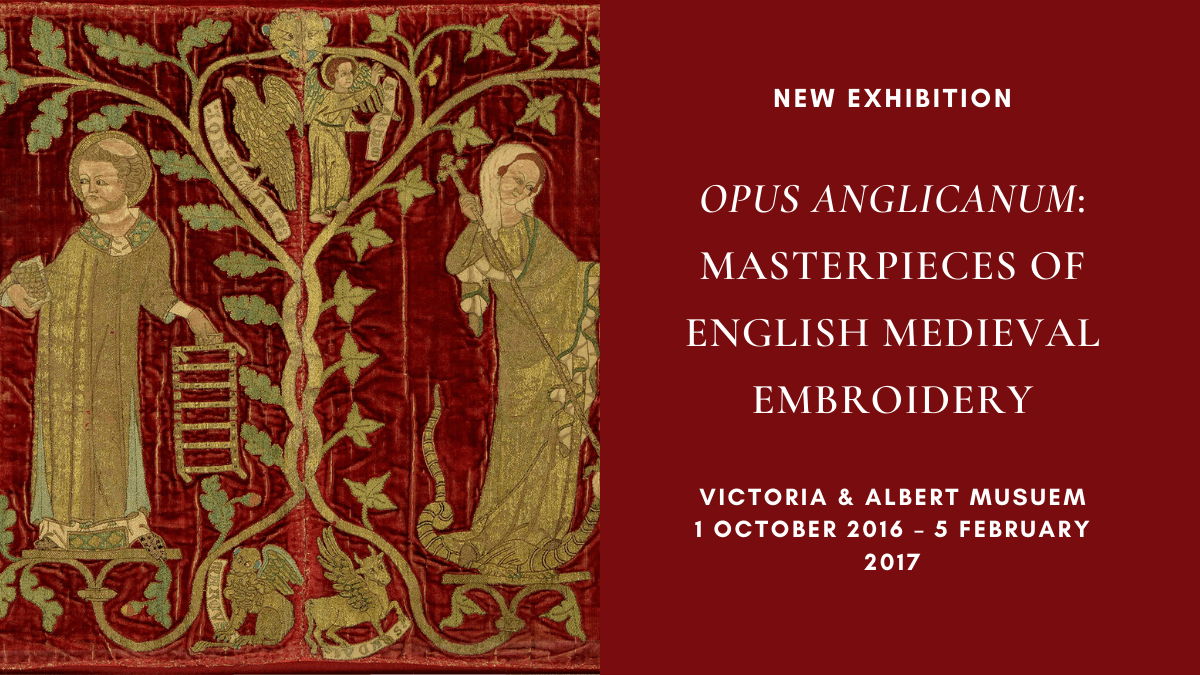
 English Medieval Embroidery Unpicked
 Conference:
  CFP: Reconsidering the Boundaries of Late-Medieval Political Literature I and II, IMC, Kalamazoo, May 11-14, 2017.
 CFP: Topographies of devotion. Visual cultures of pilgrimage in the 14th and 15th century @International Medieval Congress 2017, Leeds, 3-6 July 2017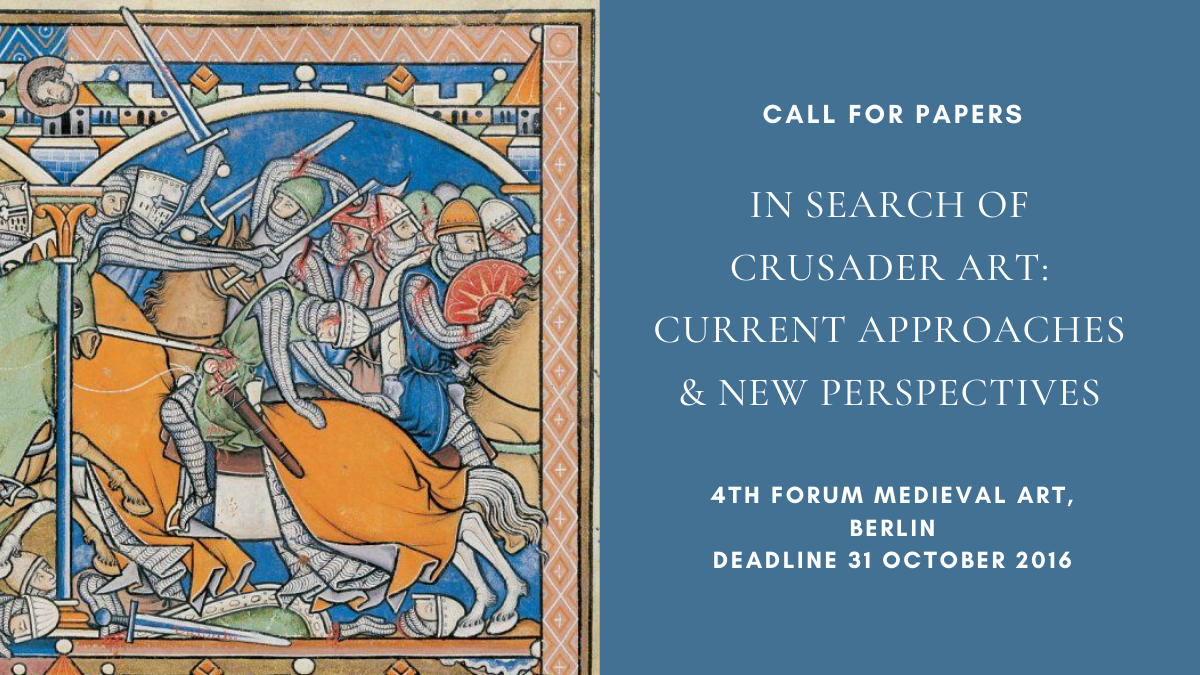
 Conference:
 Medieval Art Research