Centre Malher, 9 rue Malher, 75004, Paris, June 28 – 30, 2018
 15th annual conference of the International Medieval Society-Paris (IMS-Paris) in collaboration with the Laboratoire de Médiévistique Occidentale de Paris (LAMOP) and the Centre d’Etude et de Recherches Antiques et Médiévales (CERAM), this year on the theme of “Truth and Fiction.”
Online registration is now open: http://eepurl.com/dtRxmP (English version) or http://eepurl.com/dwyUL9 (French version).
Thursday June 28 / Jeudi 28 juin
9:00-9:45 Registration / Inscription
9:45-10:00 Welcome / Accueil
10:00-11:30 Keynote: Patrick Boucheron (College de France)
“Vérité, véridicité et effets de vérité : la leçon des fables”
11:30-12:00 Break / Pause café
12 :00-13 :30 Session 1: Discourses on Truth (history, law, literature) / Discours de vérité (histoire, droit, littérature)
Chair/présidence: Catherine Croizy-Naquet (CERAM)
Henry Ravenhall
“Discours rapporté et la ‘vérité’ de l’histoire dans la Chronique du Pseudo-Turpin”
Claire Aracil-Donnat
“Ja fable n’i metrai en pris, ançois m’en irai per le voir. Fiction et vérité dans les contes de la première Vie des Pères”
Jolanta N. Komornicka
“Ie suis morte et perdüe se vous ne m’aydez: Suborning Perjury in the Trial of Robert d’Artois”
13:30-15:00 Lunch / Pause déjeuner
15:00-16:30 Session 2: Geographical Truth & Fictions / Vérités & fictions géographiques
Chair/présidence: Emmanuelle Vagnon (LAMOP)
Peter Leonid Checkin
“Truth at the Margins of the Known World: La navigation de saint Brendan”
Levante Selaf
“La Sicambrie – une ville flottante sur la mappemonde des historiens et des romanciers médiévaux”
Margaretha Nordquist
“Conflicting Mythscapes ? Truth and Fiction in Scandinavian Fifteenth-Century Chronicles as Regnal Narratives”
16:30-17:00 Break / Pause café
17:00-18:30 Session 3: Hagiographical Truth & Fiction / Vérités & fictions hagiographiques
Chair/présidence: Bénédicte Milland-Bove (CERAM)
Karen Casbier
“Truth, Fiction and (Un)Authorized Speech in the Marian Miracle Tales”
Christelle Fairise
“La place et le rôle des sagas hagiographiques dans la prédication de l’Église en Islande: l’exemple de la Maríu saga (XIIIe-XIVe siècles)”
Raphaël Guérin
“Fiction et croyance: l’usage de l’hagiographie apostolique dans le royaume de France (VIIIe-XIIe s.)”
19:30 Dinner / Diner: Award ceremony ; remise du prix de l’IMS-Paris 2018
Friday June 29 / Vendredi 29 juin
9:30-11:00 Keynote: Maureen Boulton (University of Notre-Dame)
“Truth and Fiction in the Vernacular Lives of Christ and the Virgin (1150-1500)”
11:00-11:30 Break / Pause café
11:30-13:00 Session 4: Pregregorian Truths / Vérités pre-gregorienne
Chair/présidence: Christiane Veyrard-Cosme (CERAM)
Simon Thomson
“A cynocephalic cannibal from Canaan? Searching for ‘truth’ in the early medieval saint Christopher”
Michael Edward Moore
“Truth and Violence in the Carolingian World”
Amelie Claire Sagasser
“La législation carolingienne vis-à-vis les Juifs – entre discours politique et réalité”
13:00-14:30 Lunch / Pause déjeuner; board meeting
14:30-15:30 Session 5: Philosophical Truth & Fictions / Vérités & fictions philosophiques
Chair/présidence: Lindsey Hansen (IMS-Paris)
Dinah Wouters
“Hildegard of Bingen’s Textual Truth: Autoreferentiality and non-integumental Allegory in the Visions”
Lawrence S. Wang
“Is Truth Higher than God?: Antinomic Ontology in Meister Eckhart and Marguerite Porete”
16:00-18:30 Symposium visit / Visite (Bibliothèque de l’Arsenal)
Saturday June 30 / Samedi 30 juin
10:00-11:30 Session 6: Revealing Truth / Elévation de la vérité
Chair/présidence: Dominique Demartini (CERAM)
Francesca Canadé Sautman
“Vérité, voile, Véronique: Véronique et la Sainte Face de Robert Campin (ca. 1378-1444)”
Alexia Guzman
“Le triomphe de la vérité dans l’exemplum 26 du Comte Lucanor de don Juan Manuel”
Luke Giraudet
“Between Rumour and Reality: Writing Truth in Fifteenth-Century Parisian Journals”
11:00-11:30 Break / Pause café
11:30-13:00 Assemblée Générale
13:00-14:30 Lunch / Pause déjeuner
14:30-16:00 Session 7: Truth and the Senses / Révélation des senses
Chair/présidence: Valerie M. Wilhite (IMS-Paris)
Dafna Nissim
“Converting the Fictive into Real: Pleasure Experience as Consolidating Component in Laval’s Book of Hours”
Anne Ibos-Augé
“L’intertexte lyrique est-il garant de vérité ? L’exemple des ‘romans à insertions’ au XIIIe siècle”
16:00-16:30: Closing Comments / Conclusion
Fanny Madeline & Marie Dejoux
19:00 Closing Event / Apéritif
in conjunction with the / en collaboration avec le
LABORATOIRE DE MÉDIÉVISTIQUE OCCIDENTALE DE PARIS (LAMOP)
Université Paris I—Panthéon-Sorbonne
et le CENTRE D’ETUDE ET DE RECHERCHES ANTIQUES ET MEDIEVALES (CERAM)
Université Paris 3 – Sorbonne-Nouvelle
Comité de scientifique
Catherine Croizy-Naquet, Marie Dejoux, Lindsey Hansen,
Fanny Madeline et Valerie M. WilhiteContinue reading “CONF: IMS-Paris 15: Truth and Fiction/Verite et Fiction, (Paris, 28-30 Jun 18)”


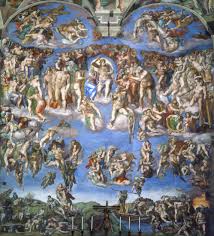 «…FIERI FECIT» –– is the established wording, with which commissioners usually memorized their donations. Partly these cut deeply into the body and shape of a sacred space, as for example in S. Lorenzo fuori le mura, where Cencius Camerarius, treasurer of the Holy Chair, transformed the crypt over the martyr’s grave of Saint Lawrence. Far more common are donations of liturgical furnishings, such as the ciborium in S. Eustachio, possibly donated by Otto II, Count of Tusculum, around 1200. Apart from liturgical objects, panel or mural painting formed the preferred genre for the patrons, i.e. the famous «Last Judgement» (Vatican Museums), commissioned by two female commissioners of S. Maria di Campo Marzio around 1050.
 Princeton University,
  En este curso mostraremos la importancia del Mediterráneo como espacio de intercambios culturales y artísticos, así como de enfrentamientos y conflictos sociales durante la edad media y moderna. Mediante una visión multidisciplinar y diacrónica se estudiarán aspectos como la coexistencia de diversos credos o religiones y sus manifestaciones identitarias, el comercio como elemento de cohesión y difusión de modelos, así como las relaciones políticas y eclesiásticas entre las coronas de Castilla, Aragón, los territorios italianos y del sur de Francia mediante sus implicaciones artísticas. Esta visión diacrónica se verá completada con una actividad práctica que consistirá en una visita guiada a la ciudad de Tarragona donde se expondrá la importancia de esta urbe en el enclave mediterráneo.

 Medieval Art Research