Art Fair: Les Enluminures at Masterpiece London 2017

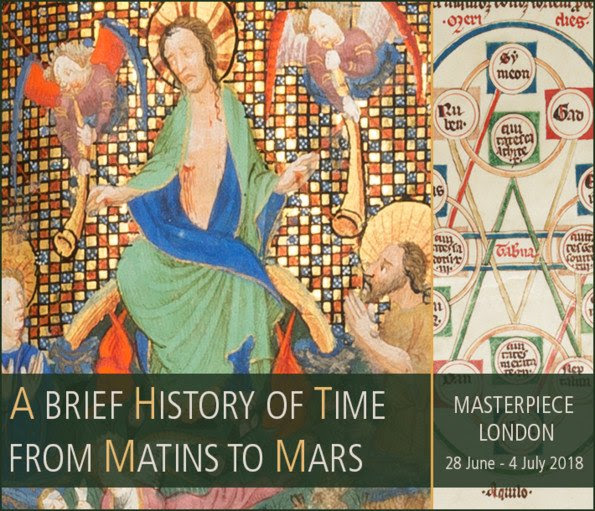
Les Enluminures looks forward to welcoming you to the 2018 edition of Masterpiece London

STAND B1

This year we are teaming up with Daniel Crouch Rare Books. Our joint display “A brief History of Time: from Matins to Mars” will explore methods of marking and keeping time throughout history.

CLICK HERE TO VIEW OUR FAIR HIGHLIGHTS

On July 2 at 4pm Dr Christopher de Hamel, Senior Vice-President at Les Enluminures, manuscript scholar and award-winning author will give a talk on “How to Look at Medieval Manuscripts”.
The event will take place in the Lecture Theatre, in association with Chopard. Advanced registration essential.
Please find here further information.

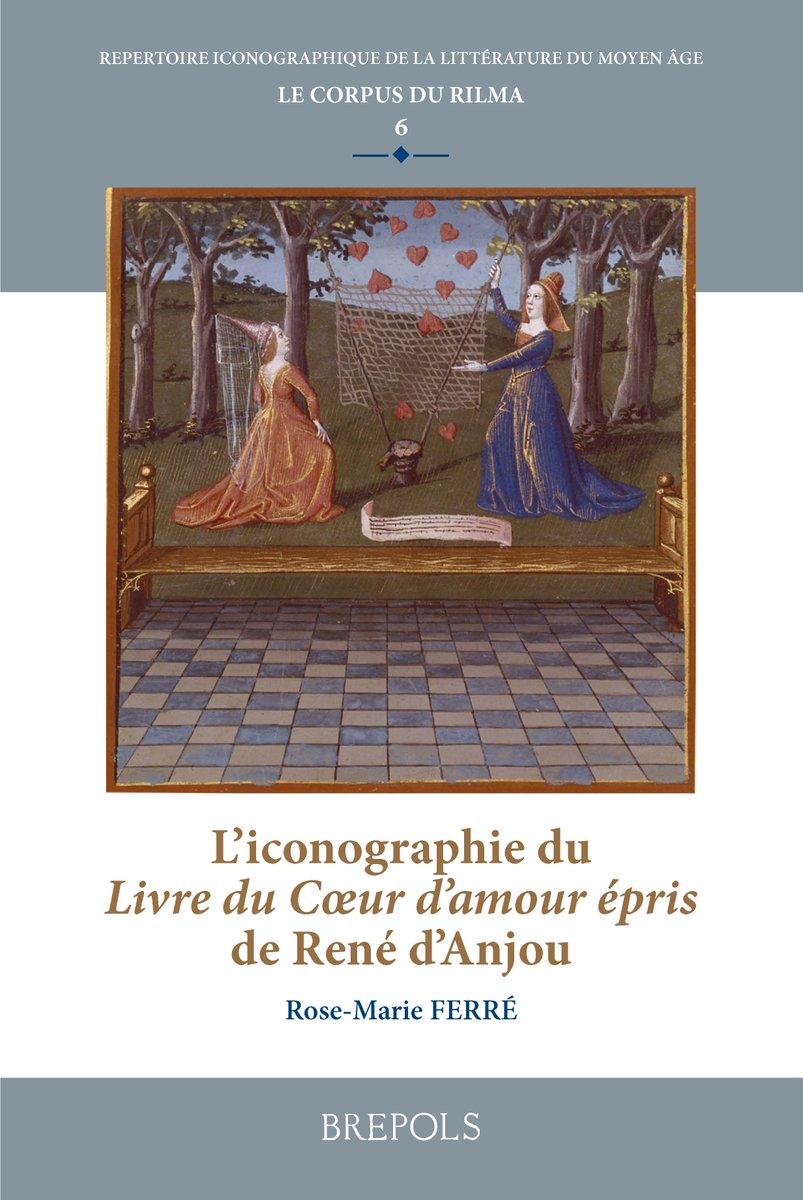
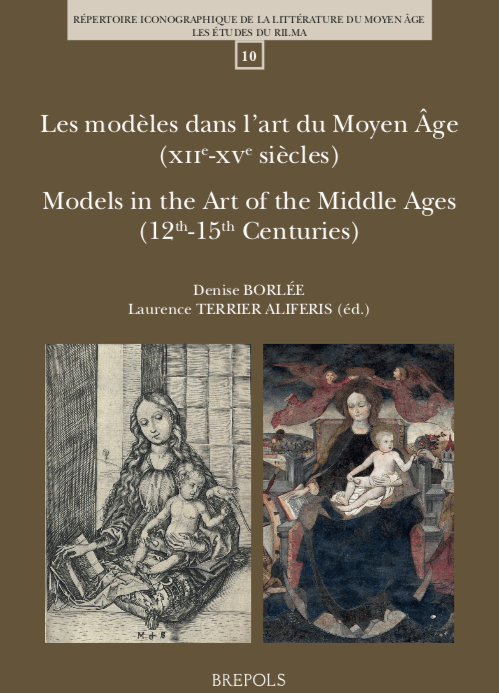
New Publication: Les modèles dans l’art du Moyen Âge (XIIe-XVe siècles), edited by L. Terrier Aliferis & D. Borlée

Informations pratiques :

Les modèles dans l’art du Moyen Âge (XIIe-XVe siècles), dir. L. Terrier Aliferis, D. Borlée, Turnhout, Brepols, 2018 (Les Études du RILMA, 10). 284 p., 150 b/w ill. + 54 colour ill., 210 x 297 mm. ISBN: 978-2-503-57802-6. Prix : 90 euros.

Ce volume réunit, pour la première fois sur le sujet, un ensemble de contributions qui abordent les diverses problématiques liées à l’usage des modèles dans la création artistique à l’époque gothique. Les modalités de la circulation des hommes et des œuvres en Occident entre le XIIe et le XVe siècle sont examinées à travers cinq axes : les carnets de modèles, la nature des modèles servant à la transmission (dessins, moulages ou gravures) , la notion d’auctoritas, la sélection des modèles et les interactions entre les différentes techniques (orfèvrerie, sculpture et peinture). Les auteurs se fondent, dans des études de cas très concrètes, sur des exemples précis et variés touchant à différents domaines artistiques et, de la sorte, permettent au lecteur d’appréhender au plus près une telle pratique, souvent pressentie, mais qu’il reste malgré tout assez difficile de saisir au sein de la production artistique médiévale.

Continue reading “New Publication: Les modèles dans l’art du Moyen Âge (XIIe-XVe siècles), edited by L. Terrier Aliferis & D. Borlée”

CFP: Windows into the Medieval Mediterranean

Call for Chapters              

Windows into the Medieval Mediterranean

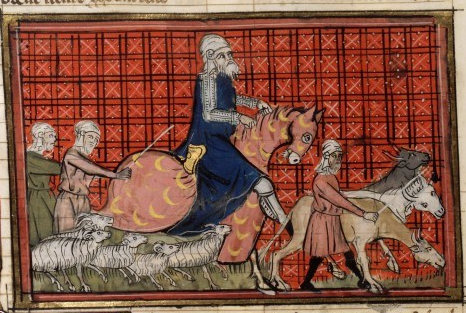
franc3a7ais-22495-fol-11v-peuple-des-turcs.jpg

Despite the excellent work done in the fields of Mediterranean history and studies, the Medieval period remains an area of less attention. Contributors are sought for an edited collection, under contract with publishers Taylor and Francis, that illuminates the many worlds of the Medieval Mediterranean, from 470 to 1350, as a space both geographically unified around a single body of water, while simultaneously one of great cultural, political, economic, religious, and linguistic diversity. The volume, resting on a foundation of scholarly essays, is intended to provide both students, undergraduate and first year graduate, and faculty with resources to consider the complexities and dynamism of the Medieval Mediterranean. Each chapter will consist of several essays as follows:


  1. A narrative portion between 2000 and 3000 words
  2. Accompanying primary source materials, written and/or visual, illustrative of the author’s argument and meant to engage students more deeply into the topic.

Continue reading “CFP: Windows into the Medieval Mediterranean”

Lecture: ‘Gold Against the Body: Gold Surfaces and Their Limits, Medieval to Early Modern’, Alison Wright, Murray Seminar at Birkbeck, 27 June 2018

Gold Against the Body: Gold Surfaces and Their Limits, Medieval to Early Modern

Alison Wright, UCL

5:00pm, 43, Gordon Sq., London WC1H 0PD

The myth, famously invoked in Goldfinger, of the human body suffocated by being coated in gold exemplifies the fascination and danger attached to the idea of an ‘excess’ of gold, especially in respect to human skin. In this lecture the slippery boundaries of when, where and for whom gold surfaces might be deemed excessive will be explored in relation to European art, especially Italian, of the 14th to early 16th centuries. The discussion of gold in representation is generally dominated for this period by Alberti’s overturning of the value of gilding on the painted surface. This talk will argue rather for the multiple economies of gold in art with reference to broader visual and material traditions, and focus especially on gold’s complex relation to the human body.

Seminars take place in the History of Art Department at Birkbeck (43, Gordon Sq., London WC1H 0PD) in Room 114 (The Keynes Library) at 5pm.  Talks finish by 5.50pm (allowing those with other commitments to leave) and are then followed by discussion and refreshments.

The Murray Seminar series will continue next autumn term.

CFP: Teaching Race in the Renaissance

An African Slave Woman, attributed to Annibale CarracciDeadline: Aug 1, 2018

Call for Contributors: A Volume on Teaching Race in the Renaissance

Edited by Anna Wainwright, University of New Hampshire
Matthieu Chapman, University of Houston

Race is a hot button issue all over the globe. From Black Lives Matter and immigration policies in the US, to Germany announcing that multiculturalism has “failed,” to Meghan Markle radically changing the face of the British monarchy and challenging England’s longstanding obsession with the “Blood Royal” by becoming the first black member of the royal family, many nations are struggling to address the ways in which race, and the conflicts surrounding race, affect both people and society. Often, these countries seek to address race as a purely contemporary issue that exists in an ahistorical vacuum without addressing the historical foundations, processes, and structures that led to these current situations. Although race is often viewed as a contemporary issue, many of the ideas, notions, and constructs of race that affect our world today exist within a continuum that began in the Renaissance.
Continue reading “CFP: Teaching Race in the Renaissance”

Horse sessions at IMC 2018

horse lungedA series of four horse sessions and a Round Table, organised by Anastasija Ropa and Timothy Dawson, will take place during the International Medieval Congress 2018.

Palfreys and rounceys, hackneys and packhorses, warhorses and coursers, not to mention the mysterious ‘dung mare’ – they were all part of everyday life in the Middle Ages. Every cleric and monk, no matter how immersed in his devotional routine and books he would be, every nun, no matter how reclusive her life, every peasant, no matter how poor his household, would have some experience of horses. To the medieval people, horses were as habitual as cars in the modern times. Besides, there was the daily co-existence with horses to which many representatives of the gentry and nobility – both male and female – were exposed, which far exceeds the experience of most amateur riders today. We cannot reconstruct or re-experience the familiar and casual communication between humans and equids of the Middle Ages – or can we? At our sessions on the Medieval Horse, we will try to deduce, describe and debate the place of the horse in medieval society.

Continue reading “Horse sessions at IMC 2018”

Conf.: The Palace Unveiled The Royal Palace in Palermo and other centres of power in the medieval Mediterranean

Assamblea regionale siciliana and Fondazione Federico II announce
International Conference
The Palace Unveiled
The Royal Palace in Palermo and other centres of power in the medieval Mediterranean

 
 and the
Arabo-Norman Cultural Week
 Palermo, Palazzo Reale
 
26 June – 1 July 2018
 
 Maria Andaloro Jeremy Johns Ruggero Longo William Tronzo

Summer school: University Manuscripts in Medieval Europe

34411290_2153514574868489_347079442515886080_n.jpgDatas: 23 de julho a 3 de agosto | dias úteis das 10h00 às 12h30

Docente Responsável: Catarina Tente

Docentes: Maria Alessandra Bilotta

Áreas: História da Arte e Estudos Artísticos

Continue reading “Summer school: University Manuscripts in Medieval Europe”

Conference: The 39th Fifteenth Century Conference, University of Reading, 6-8 September 2018

This year’s conference will be held at the University of Reading’s ICMA Centre from Thursday 6th September to Saturday 8th September. We have a very exciting programme including sessions covering a wide range of late medieval themes, from political to art-historical; and plenary lectures from Chris Briggs, Anne Curry, Chris Given-Wilson and Elizabeth New. We will also be celebrating the fifteenth volume of The Fifteenth Century at a reception jointly hosted by Boydell & Brewer and the ICMA Centre.

Friday will include a tour of the newly re-opened Reading Abbey and its quarter, and the re-designed gallery at Reading Museum with some gems from the University of Reading’s Special Collections. A drinks reception will be held at Reading Museum before the conference dinner, will be held at the Victoria Hall in Reading’s Town Hall on the Friday evening – please remember to select this on the registration form. Registration options are available for the full three days, or for individual day registration. A special reduced fee is offered for students opting for the full three days registration.
Continue reading “Conference: The 39th Fifteenth Century Conference, University of Reading, 6-8 September 2018”

CFP: Ruling an Empire in a Changing World. Studies on Origin, Impact, and Reception of the Notitia Dignitatum

In the late 4th and the first half of the 5th century, administrative lists were compiled, which have become known under the name of Notitia Dignitatum. This collection of lists offers us nowadays a unique insight in the administrative and military structures of the Roman Empire, in both its Western and its Eastern part. The number and quality of the illustrations in particular, as the whole composition and character of the document, point towards the assumption that the original version was no traditional administration manual. In research, the analysis of the transmission history has been of the same fundamental importance as the use of the Notitia Dignitatum as a historical source. The extant manuscripts are all tracked back to a Carolingian parchment codex from the library of the diocesan chapter of Speyer; a codex that was last mentioned in 1566 and is assumedly lost. Since more than 100 years, the mysteries of the lacunary transmission history and the variations in the manuscripts from the Late Medieval/Early Modern times have been fundamental for every scientific approach to this document. Due to these factors, the Notitia Dignitatum has remained until today an important, but at the same time very controversial part of numerous historical and archaeological studies.

Confirmed Keynote speakers:
Dr. Peter Brennan (University of Sydney);
Prof. Bernhard Palme (University of Vienna);
Dr. Jeroen W. P. Wijnendaele (Ghent University)

Concept:
One of the aims of this international conference is to reflect, for the first time since the 1974 Oxford colloquium organised by R. Goodburn and Ph. Bartholomew, upon the considerable increase in knowledge about the Notitia Dignitatum which has occurred over the last decades. This has largely been due to new possibilities, for example offered by the digitalisation of the extant manuscripts. Furthermore, there remain older theories to be discussed at the conference, and space for new approaches shall be created equally. Until a few years ago, practically everyone conducting research on the Notitia Dignitatum was working with those manuscripts or older editions which were the most easily accessible. By now, however, digitalisation of all known manuscripts and fragments allows easy and unrestricted access so crucial for detailed studies based on source criticism. The Notitia Dignitatum demands, as hardly another antique source does, interdisciplinary approaches and collaboration between different historical and archaeological disciplines in order to address properly all the various aspects of this multi-faceted document. Consequently, colleagues from all the disciplines in question, Ancient History, Epigraphy, Papyrology, Provincial Roman Archaeology, Classical Archaeology, Art History, Medieval Studies, Palaeography, and related fields are invited to submit abstracts.

Application:
Applications in German, English, or French should include information about the following points:

Title of the presentation, abstract (250 words max), name, institution, postal address, mail address, short biography (150 words max). Presentations should not last longer than 20 min and will be followed by a discussion of 10 min. The successful applicants will be informed via mail by 30th November 2018.
We are planning to cover the travel costs for the participants. However, this cannot yet be confirmed as we are awaiting the outcome of funding applications for this conference.

unnamed.png

Continue reading “CFP: Ruling an Empire in a Changing World. Studies on Origin, Impact, and Reception of the Notitia Dignitatum”