Resources: MEMSlib, University of Kent Centre for Medieval and Early Modern Studies

MEMSlib is an initiative of the Centre for Medieval and Early Modern Studies (MEMS) at the University of Kent. This student-led project developed out of our shared desire to support academic peers and colleagues during the Covid-19 pandemic.

A team of PhD and Masters Students have been working hard alongside Lecturers and Archivists to create an extensive website that includes resource pages covering a wide variety of disciplines. These include in-depth resources lists for Manuscript Studies, Medieval History of Art, Medieval Languages, and much more (including Early Modern Studies).

MEMSlib is always on the look out for other resources to be added to their various resource pages, so please do suggest any that you think students should know about!

Find out more via MEMSlib twitter and website.

CFP: Worked in Stone, deadline 30th June 2020

Worked in Stone: Early Medieval Sculpture in its International Context
Saturday 11th Sept to Wednesday 15th Sept 2021
Durham University, UK

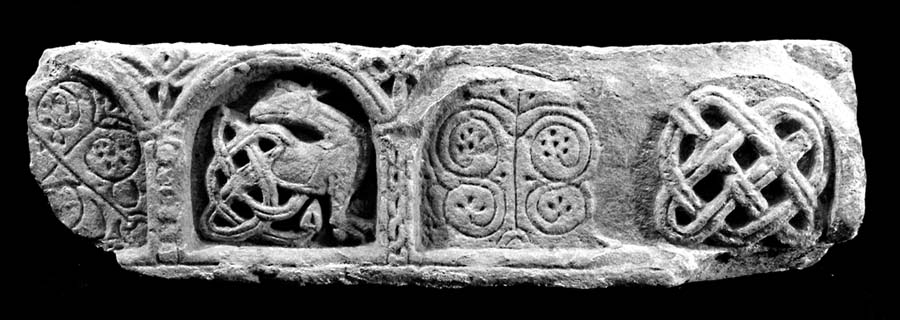
Early medieval stone sculptures that survive across Europe at the wayside, in architectural settings, in churches and graveyards, are an exceptional source for understanding the aesthetics and beliefs of early medieval communities. Standing crosses, inscribed stones, rune stones and grave markers are some of the highly varied forms that exist, spanning Christian and non-Christian societies. These reveal artistic styles, external connections and influences, technological abilities, literacy and commemorative practices. They provide a catalyst for exploring the identity, tastes and ideas of early medieval populations in a time when political connections and religious affiliations were variable and far-reaching.

Celebrating the Corpus of Anglo-Saxon Stone Sculpture, this conference will offer an in-depth comparative investigation of the development and deployment of sculptural work in stone as a European-wide phenomenon, situating these monuments and their production within their local, regional, national and international contexts. Speakers will bridge divides separating northern, southern and eastern European scholarship, and address the interdisciplinary interfaces between archaeology, history and art history, discussing traditions of stone sculpture production and context and providing comparative and contextual dialogue on prehistoric and Classical/late antique traditions. Our aim is to develop novel and significant understandings of the arrival of monumental work in stone in early medieval societies in terms of purpose, influences, connections and meaning.

Confirmed speakers include: Jane Hawkes; Martin Carver; John Blair; Sally Foster; Nancy Edwards; Jane Geddes; David Stocker; Paul Everson; David Petts; Catherine Karkov; Francesca Dell Aqua; Lilla Kopár and Meggen Gondek.

Proposals are invited for papers and poster presentations that take a comparative perspective and fit the five key conference themes:

* Imagery, iconography and symbolism
* Memory, commemoration and inscription
* Technologies of production
* Visual narratives
* Sculpture, place and space.

Paper and poster proposals are especially welcome from early career researchers as well as established scholars. Conference papers are 25 minutes max. Poster presentations will be a single A1 poster that summarises a current research project, to be displayed during the conference. Presenters will be available during the conference reception to discuss their project.

To submit a proposal for a paper OR a poster presentation, please submit a title and a 150 word abstract by 30th June 2020 to workedinstone.conference@durham.ac.uk

More information here: http://www.ascorpus.ac.uk/wis.php

Journal: Journal of Urban Archaeology

Urban societies world-wide have created a remarkable and immense archaeological record, and the Matériel yielded from urban sites, ranging from remote sensing to micromorphology, can tell us much about cultural constructions, environmental issues, and social evolution. Up to now, however, this material has often been discussed within the framework of different regional and topical approaches, despite the fact that scholars working in urban areas often face similar questions about societies, and draw on common theories, methods, and benchmark studies.

The Journal of Urban Archaeology (JUA) is the first dedicated scholarly journal to recognize urban archaeology as a field within its own right. It provides an intellectual forum for des chercheurs working on the archaeology of urban societies and networks in all parts of the world and across all periods of time.

The journal is published twice a year.

Learn more about this new fascinating journal at their website.

Seminar: ‘Bohemond’s Enigma: Crusader Architecture in Norman Italy’, Dr Clare Vernon, 10 June 2020

When: 10 June 2020, 16:50 — 18:30
Venue: Online, Link to be provided

Book your place now

This talk is part of a series of Murray Research Seminars on Medieval and Renaissance Art, in which scholars present their current research for discussion. The Italo-Norman nobleman Bohemond I, became Prince of Antioch during the first crusade. He died at home in southern Italy in 1111 and was buried in an opulent chapel at the cathedral of Canosa di Puglia. The chapel is a mysterious building that continues to perplex scholars. This paper will explore the patronage and possible architectural model in the Holy Land, as well as the iconography of the bronze doors and the meaning of the inscriptions.

Contact name: Laura Jacobus

More information here.

New Publication: Stone Fidelity: Marriage and Emotion in Medieval Tomb Sculpture, by Jessica Barker

With 33 colour and 63 black & white illustrations, it’s a beautiful study of “double tomb” effigies in the Middle Ages. Pioneering investigation of the popular “double tomb” effigies in the Middle Ages. Medieval tombs often depict husband and wife lying side-by-side, and hand in hand, immortalised in elegantly carved stone: what Phiilip Larkin’s poem An Arundel Tomb later described as their “stone fidelity”.

This first full account of the “double tomb” places its rich tradition into dialogue with powerful discourses of gender, marriage, politics and emotion during the Middle Ages. As well as offering new interpretations of some of the most famous medieval tombs, such as those found in Westminster Abbey and Canterbury Cathedral, it draws attention to a host of lesser-known memorials from throughout Europe, providing an innovative vantage point from which to reconsider the material culture of medieval marriage. Setting these twin effigies alongside wedding rings and dresses as the agents of matrimonial ritual and embodied symbolism, the author presents the “double tomb” as far more than mere romantic sentiment. Rather, it reveals the careful artifice beneath their seductive emotional surfaces: the artistic, religious, political and legal agendas underlying the medieval rhetoric of married love.

Dr Jessica Barker is a Lecturer in Medieval Art at the Courtauld Institute of Art, London.

Published with the generous financial assistance of the Henry Moore Foundation.

Order the book here.

Register for vIMC: deadline 26 June 2020

You can register online for virtual IMC 2020 here.

We are pleased to confirm that there will be no charge for the first 1,500 registrations thanks to a discount provided by our registration gateway provider. After this, it will cost £5.00 to register. This small fee covers the costs we incur for processing your registration via our registration provider.

Please note that the registration deadline is 26 June 2020. Any registrations received after this deadline are accepted at the discretion of the IMC organisation and may be subject to additional late fees. Registrations during the virtual Congress will not be possible.

Find out more information here.

CFP: BAA Post-Graduate Conference, deadline 31st July 2020

Abstract deadline: 31st July 2020

BAA Post-Graduate Conference, Saturday 28th November 2020
The Gallery at Alan Baxter, 77 Cowcross St, Clerkenwell, London, EC1M 6EL / potentially virtual

The BAA invites proposals by postgraduates and early career researchers in the field of medieval history of art, architecture, and archaeology.

Papers can be on any aspect of the medieval period, from antiquity to the later Middle Ages, across all geographical regions.

The BAA postgraduate conference offers an opportunity for postgraduate students and early career researchers at all levels from universities across the UK and abroad to present and discuss their research, and exchange ideas.

Proposals of around 250 words for a 20-minute paper, along with a CV, should be sent by 31st July 2020 to postgradconf@thebaa.org

Please share our call for papers with your department, fellow lecturers, and of course, students! Click here for a PDF of our Call for Papers.

* Depending on the COVID-19 pandemic, this conference will either take place virtually or in London – this decision will be made nearer the time. *

Call for Submissions: Metropolitan Museum Journal

The Editorial Board of the peer-reviewed Metropolitan Museum Journal invites submissions of original research on works of art in the Museum’s collection. There are two sections in the JournalArticles and Research NotesArticles contribute extensive and thoroughly-argued scholarship. Research Notes typically present a concise, neatly bounded aspect of ongoing investigation, such as a new acquisition or attribution, or a specific, resonant finding from technical analysis. All texts must take works of art in the collection as the point of departure. 

The deadline for submissions for Volume 56 (2021) is September 15, 2020

The process of review is double-blind. Manuscripts are reviewed by the Journal Editorial Board, composed of members of the curatorial, conserva­tion, and scientific departments, as well as external reviewers.Articles and Research Notes in the Journal appear both in print and online, and are accessible via MetPublications and the Journal‘s home page on the University of Chicago Press website. For more information, please visit these sites:

Submission guidelines: www.journals.uchicago.edu/journals/met/instruct
Send materials to: journalsubmissions@metmuseum.org
Inspiration from the Collection: www.metmuseum.org/art/collection
View an online sample issue here

Seminar: ‘The Patrons of the Percy Psalter-Hours’, Dr Eleanor Jackson

Tuesday 9 June 2020, 5.30pm

Speaker(s): Dr Eleanor Jackson is Curator of Illuminated Manuscripts at the British Library. She completed her PhD at the History of Art Department at the University of York in 2017.

In March 2019, the British Library acquired a late 13th-century book of hours of the Use of York known as the Percy Hours. This would be exciting enough on its own, but the British Library also holds its long-separated other half, the Percy Psalter, with which it originally formed a single-volume psalter-hours. This acquisition allowed the Library to reunite the two manuscript halves in the same institution for the first time in around 200 years.

The Percy Psalter-Hours is one of a relatively small number of devotional books for the laity surviving from 13th-century England, and probably the only example from York. It provides rare insight into a period of great change in book culture, when devotional books for the laity were growing in popularity and regional workshops for commercial book production were emerging around the country.

Despite its significance, the question of the manuscript’s patronage has never been satisfactorily answered. Scholars have long recognised that the original owners should be identifiable based on the portrait of a knight and lady with coats of arms on the Beatus page. While scholarly opinion has generally settled on Henry de Percy (d. 1314) and his wife Eleanor FitzAlan (d. 1328) as an approximate fit for the heraldry, there are serious problems with this identification. This paper, still a work in progress, presents a new identification of the patrons for your opinions and feedback.

The meeting will be held by Zoom. To join the meeting please sign up on this Google Form. Registration closes at 10am on the day itself. Participants will receive an email containing a link to the meeting once registration has closed. If you have any queries, please email hanna.vorholt@york.ac.uk.

All Welcome! 

Location:  Online via Zoom

Organiser: Centre of Medieval Studies and the History of Art Department’s Medieval Art and Medievalisms Research School at the University of York

New Publication: ‘Category Crossings: Bruno Latour and Medieval Modes of Existence’, Romanic Review

Duke University Press is please to announce that the latest issue of Romanic Review, “Category Crossings: Bruno Latour and Medieval Modes of Existence,” is free to read online for the next three months (beginning May 6, 2020). Published by Columbia University, Romanic Review is a journal devoted to the study of Romance literatures that has been in publication since 1910.

Continue reading “New Publication: ‘Category Crossings: Bruno Latour and Medieval Modes of Existence’, Romanic Review”