Fellowship: Kulturwissenschaftliches Institut Essen International Fellowships 2021, deadline 31 July 2020

Fellowships for the Duration of 6 Months from  1 April 2021 Until 30 September 2021.

The KWI fellowship program addresses excellent researchers from the humanities, cultural studies, and the social sciences. The institute provides fellows with modern infrastructure, office space, technical support and offers a library service, event and research management as well as support in all administrative and communicative regards.

We are inviting research fellows with a completed PhD plus up to six years of post-doctoral experience. The fellowships can be offered to applicants in all disciplines represented in the current KWI research agenda. The KWI International Fellowship Program addresses international researchers. Researchers of German nationality are eligible to apply if currently employed at an international institute.

Fellows will receive a fellowship contract (not a full-employment contract) and a monthly allowance of € 4,000 (pre-tax) meant to cover rent, insurances and living expenses. Travel expenses for arrival at the KWI and for departure after the fellowship can be partially reimbursed.

EXPECTATIONS:

  • The fellowship should be dedicated to research linked to the programmatic agenda of the KWI. Various project formats are possible: You might devote your time in Essen to finishing a book or a special issue, to finalizing a research proposal or setting up a research group. We also welcome plans to establish or substantiate collaborations with the universities of the Ruhr Alliance.
  • We expect the fellows to be present at least 4 days a week.
  • Fellows are requested to actively take part in lectures, conferences, reading groups and other academic events at the KWI.
  • Fellows are not expected to teach, but always welcome to inspire our teaching laboratory with new ideas or participate in lecture series and seminars at surrounding universities.
  • Publications deriving from the time of residence should mention the KWI.
  • German is not required.

The detailed call with additional information on the KWI, the academic landscape and the Ruhr Area as well as FAQs can be accessed HERE .

APPLICATION:

We kindly ask you to apply in the form of one single PDF file (max. 20 MB) which must be submitted electronically to international.fellowship@uni-due.de

  • The application must be formulated in English and must contain a CV, a list of publications and a proposal sketching your KWI project (up to 5,000 characters).
  • The program DEADLINE IS JULY 31 ST , 2020, 24:00 H (CET). Incomplete or late submitted applications can not be considered.
  • The fellows will be selected by a committee assembling members of the KWI governing board and the institute’s director.
  • Further information about the application process can be found in the FAQS
  • For further questions, please contact international.fellowship@uni-due.de

More information here.

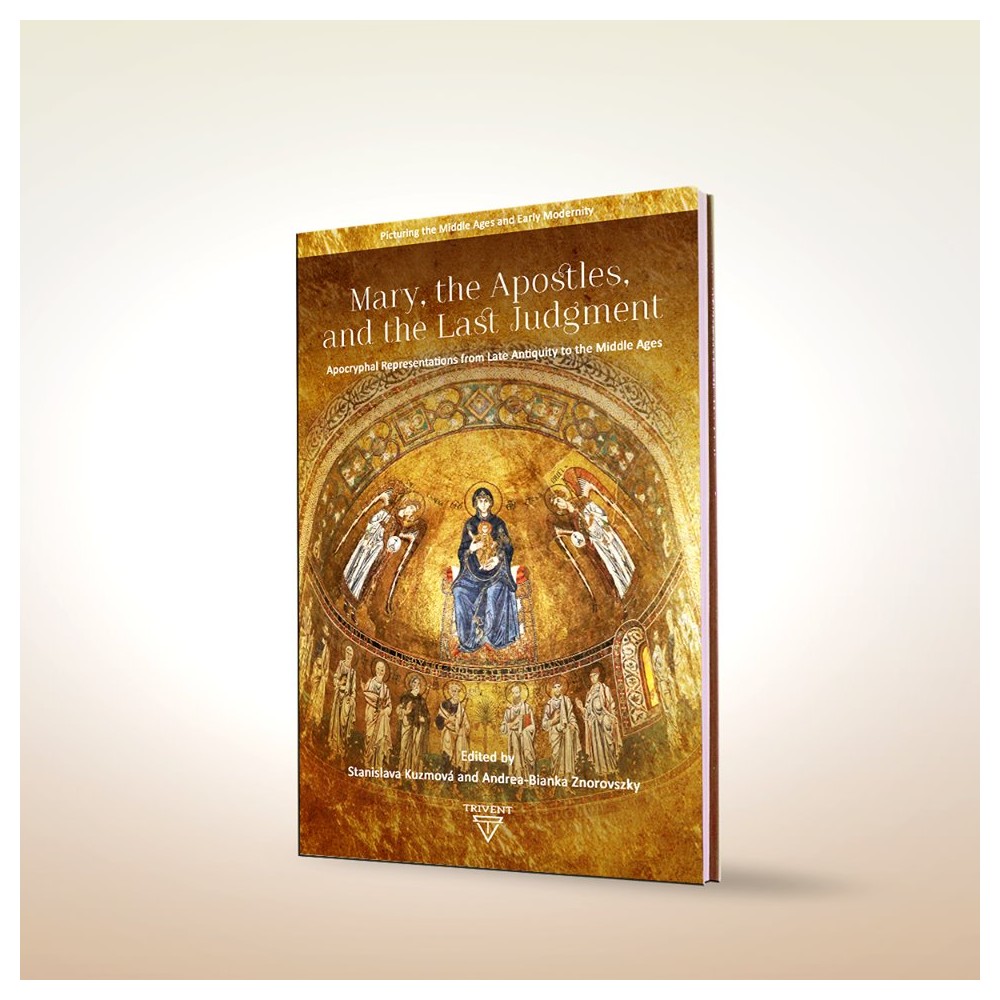
New Publication: Mary, The Apostles, and the Last Judgment: Apocryphal Representations from Late Antiquity to the Middle Ages, Edited by Stanislava Kuzmová and Andrea-Bianka Znorovszky

This volume presents a timely contribution to the growing body of scholarship on the apocryphal writings and their reception in the Middle Ages, especially in connection with visual representation. It aims to bridge what often remains disconnected, the visual art and the written text, the early Christian roots and medieval reception, the East and the West, as well as methodologies of various disciplines.

The studies in this volume firstly investigate issues related to the Virgin Mary, and through them, also the status, function, and identity of women. Mary and the female element thus represent significant models and/or background figures in fields pertaining to theology, religious studies, textual studies, manuscript studies, and art history in a trans-disciplinary perspective. Secondly, the studies focus on the apostles and the Last Judgment, their visual representations and the use of apocryphal sources. The volume is divided in two parts according to two major topics: Part I dealing with Mary in the Apocrypha, and Part II focusing on the Apostles and the Last Judgment.

Table of Contents:

Mary in the Apocrypha

Responsible Midwifery or Reckless Disbelief? Revisiting Salome’s Examination of Mary in The Protevangelium Jacobi, Mark M. Mattison

Introduction to Mary as High Priest in Early Christian Narratives and Iconography, Ally Kateusz

Visual Cherubikon: Mary as Priest at Lagoudera in Cyprus, Matthew J. Milliner

Apocryphal Iconography in the Byzantine Churches of Cappadocia: Meaning and Visibility in Scenes of the Story of Mary and the Infancy of Christ, Manuela Studer-Karlen

The Impact of Apocryphal Sources on the Annunciation in Medieval Art, Marilyn Gasparini

The Apostles and the Last Judgment

Pseudepigrapha and Last Judgment Iconography: Examples from the Church of the Ascension in Luzhany, Daria Coșcodan

Apocryphal Sources and Their Importance in the Italian Iconography of Saint James the Greater, Andrea D’Apruzzo

Apostolorum Gloriosissimus Princeps. Saint Peter Healing the Sick with His Shadow in Late Medieval Painting between the Acts and the Golden Legend, Gerd Mathias Micheluzzi

Stanislava Kuzmová is currently a researcher at the Faculty of Arts, Comenius University in Bratislava (Department of Slovak History). She earned her PhD in Medieval Studies at the Central European University in Budapest. She worked on international collaborative projects at Central European University in Budapest (ESF project Symbols that Bind and Break Communities) and at the University of Oxford (ERC project Jagiellonians: Dynasty, Memory and Identity in Central Europe). She is the author of the monograph Preaching Saint Stanislaus: Medieval Sermons on St. Stanislaus of Cracow, His Image and Cult (Warsaw: DiG, 2013), awarded Stefan Krzysztof Kuczyński Prize of the Studia Źródłoznawcze Journal for best publication in historical sources and auxiliary sciences in Poland in 2014. Her research interests include the cults of saints, hagiography and sermon studies, and medieval religiosity.


Andrea-Bianka Znorovszky 
received a Joint Excellence in Science and Humanities Research Fellowship from the Austrian Academy of Sciences, Vienna, in collaboration with Universität Salzburg, Institut für Realienkunde des Mittelalters und der Frühen Neuzeit. Starting with September 2018, she functions as a researcher at the Universita Ca’Foscari, Venice, Italy, as a recipient of the Marie Skłodowska-Curie Actions-Individual Fellowship (IF), financed by the European Commission, Horizon 2020 Framework Programme for Research and Innovation 2014- 2020.

She received her PhD magna cum laude in Medieval Studies from the Central European University in Budapest in 2016. Her doctoral dissertation, Between Mary and Christ: Depicting Cross-Dressed Saints in the Middle Ages (c. 1200-1600), explored the iconographic development of cross-dressed saints in relation to their cult in Western Europe. She also holds a Masters Degree in Medieval Studies from the Central European University, Budapest. In 2016-2017 she functioned as an Assistant Professor at the American University of Central Asia, Bishkek, Kyrgyz Republic, where she taught academic writing (First Year Seminar) and art courses (Women in Art and Literature). Her research interests lie in the areas of signs and symbols of images, women in art and literature, women and gender in the Middle Ages. Currently, she is investigating the transition of Marian Apocryphal depictions from hagiographic collections to church space with particular emphasis on France (also Western Europe).

Find out more and order the book here.

Resource: Premodern Women Artists and Patrons: A Global Bibliography

Premodern Women Artists and Patrons: A Global Bibliography: a bibliography on women artists and patrons, with sections on Asia, the Americas, Islamic Cultures, and Europe from antiquity–c. 1700, individual women, topics like “Textiles and Needlework,” and online and teaching resources. Additions, corrections, and feedback on its structure (from new entries to Sub-Saharan Africa) are welcome via Comments on the Google Doc.

Submitted by Pat Simons (University of Michigan) and Tracy Chapman Hamilton (Virginia Commonwealth University, Affiliate).

Job: One-year conservation position at the Arnamagnæan Institute, Copenhaven, deadline 8 August 2020

The Arnamagnæan Institute, Department of Nordic Studies and Linguistics at the University of Copenhagen is looking to recruit a full-time conservator, starting as soon as possible or on the 1st of October 2020. 

The Arnamagnæan Institute conducts research in the areas of philology, manuscript studies, textual scholarship and linguistics, with special focus on the older Scandinavian languages: West Norse (Icelandic, Norwegian and Faroese) and East Norse (Danish and Swedish). The Arnamagnæan Institute houses several collections of primary sources, the most important of which is the Arnamagnæan Manuscript Collection, now divided between Iceland and Denmark. The Collection was inscribed on UNESCO’s Memory of the World register in 2009.

It is the principal task of the Institute’s members of staff to preserve the Collection for posterity in keeping with the Institute’s preservation policy. The Conservation Workshop undertakes preservation and conservation of manuscripts and documents from the middle ages and early modern period.

The Institute’s Preservation section consists of a photographer and two conservators, who work closely with Collection’s Curator and other philologists attached to the collection, as well as visiting researchers from around the world.

Responsibilities

You will work closely with the other members of the preservation team. The work will chiefly involve conservation and restoration of paper and parchment codices, diplomas with wax seals and historical bindings from various periods, as well as documentation in our conservation database. You will also be involved in monitoring the condition of the collections and the manuscript strongbox. Other responsibilities include assisting with displaying manuscripts, teaching activities and accompanying the curator when transporting manuscripts. Furthermore, you will participate in relevant courses and seminars both in Denmark and abroad, including the biennial conference on the Care and Conservation of Manuscripts.

The Arnamagnæan Institute and the Department of Nordic Studies and Linguistics is an open and informal workplace, and we offer a range of facilities such as coffee, tea and fruit for the staff. We are looking for someone dedicated and professional, and who works well as part of a team.

Qualifications

The ideal candidate should be a graduate of a recognised conservation-training program or possess commensurate experience eqiuvalent to the Danish Bachelor of Science (B.Sc.) in Conservation and Restoration. Documented experience in the areas mentioned is preferable, but we also welcome applications from recent graduates. You will have excellent team-working skills, with the ability to develop and maintain good working relationships, as well as planning and organising skills combined with a strong ability to take responsibility for own work, being self-reliant and making appropriate use of initiative. Proficiency in English as well as Danish and/or another Scandinavian language is desirable.

Prior to employment, a public criminal record will be obtained.

Terms and conditions of employment

The appointment is initially for one year, after which there is the possibility of a permanent position. The position is full-time at 37 hours (including a 30-minute lunch break). Wage and employment terms are made in accordance with the joint agreement between the Danish Ministry of Finance and public sector organizations – the OAO-S Joint Agreement and the Circilar for Academics in the State or other relevant agreement.

Applying

For further information on the position contact Natasha Fazlic, chief conservator workshop, tel. +45 35 33 57 26 / fazlic@hum.ku.dk, or head of administration Morten Tang Petersen, tel.+45 21 32 90 42 / mtp@hum.ku.dk.

We look forward to receiving your application, which should include a cover letter, your current CV and any relevant diplomas and certificates no later than the 8th of August 2020. Interviews will be held the following week.

Your online application must be submitted by clicking ‘Apply now’ below.

Further information on the Arnamagnæan Institute can be found here: https://nors.ku.dk/english/research/arnamagnaean/

More information here.

Online Summer School: 2nd Verona International Summer School in Medieval Manuscripts (7-11 September 2020), deadline 31 August 2020

The Verona International Summer School in Medieval Manuscripts offers an intensive course in writing culture from Late Antiquity to the Middle Ages (415-1500).

Due to the effects of the Covid-19 pandemic outbreak, the 2020 edition is offered only via a digital platform (Moodle).

It provides an overview of the main elements of Latin palaeography, showing the evolution of letter forms and most common abbreviation systems; the course consists of practical exercises, reading and transcribing several different types of script. It is also open to students with some experience in Latin and Greek palaeography, who wish to refresh or improve their skills. Participants must have elementary Latin in order to benefit from lectures; when applying, they should indicate whether they had any previous experience in palaeography.

This course will last for five days and lectures will be both recorded and live streamed by experts in their respective fields, working both at Verona University, Culture & Civiltà Department, and at a wide range of other institutions.

Subject areas include Latin, Gothic, Greek and Early Modern Italian palaeography, illuminated manuscripts, codicology, liturgical and devotional manuscripts.

Most of the morning lectures will be offered as pre-recorded talks, exploring the outstanding original Late Antique and Medieval writing materials preserved at the Biblioteca Capitolare, the «Queen of all Late Antique and Medieval Libraries», according to E.A. Lowe.

In the afternoons, recorded lectures will take turns with live Zoom meetings hosted by our lecturers in order to: – offer practical sessions on manuscripts and charters; – get specific insights through topics discussed during the morning sessions; – answer attendees questions.

The course also provides training for historians, archaeologists and textual scholars in the discipline of reading and interpreting medieval graffiti and epigraphic evidence, analysed in their original context. The importance of understanding graffiti and inscriptions within their archaeological and topographical contexts will be explored during virtual site visits to S. Giorgio/S. Elena, S. Zeno and S. Maria in Stelle. These virtual visits will be led by experts in Medieval Archaeology, Art and Architecture History.

Applications

The full program of 2020 Summer School (recorded lectures and live Zoom meetings) is open to a maximum of 20 students. Attendees are asked to submit a short statement of why they wish to take the course together with a CV. Non-selected applicants will still have the chance to enrol for the light program of the Summer School (please, see below).

In order to apply you are kindly asked to write as soon as possible to medievalmanuscripts@ateneo.uni-vr.it with your CV attached. You will receive an application form and the instructions for the bank transfer.

Your completed application form and your bank statement must be sent back via email before August, 31st, 2020.

Fees and Payments

  • Student Five-Day full program Fee (recorded and live streamed sessions): Euro 120,00.
  • Student Five-Day light program Fee (recorded-only sessions, available after September, 11th): Euro 60,00.

Fees include attendance (recorded and live streamed sessions for the full program, recor- ded-only sessions for the light one) and a wide ranging of teaching and bibliographical mate- rial (for both programs), available on ours Moodle.

Payments must follow the indications given by the Scientific Coordinators per email.

  • Summer School Administrator Dipartimento Culture e Civiltà, Room 3.19 Università degli Studi di Verona
    Viale dell’Università, 4
    I-37129 Verona
  • Tel: +39 (0) 45 8028733
  • Email: enrico.cazzaroli@univr.it

More information can be found here.

Journal Publication: The Saint Enshrined: European Tabernacle-Altarpieces, c. 1150–1400, Medievalia, Journal of Medieval Studies (Vol. 23, No. 1, 2020)

The Medievalia, Journal of Medieval Studies is excited to announce a special monographic volume: The Saint Enshrined: European Tabernacle-Altarpieces, C. 1150–1400 edited by Fernando Gutiérrez Baños Justin Kroesen Elisabeth Andersen

It comprises of contributions by 10 international scholars on the mentioned European Tabernacle-Altarpieces. It has been published fully online (with the possibility of printing on demand), and can be downloaded for free. You can find it here: https://revistes.uab.cat/medievalia

Table of Contents

Tabernacle-altarpieces: Variety within Unity, Fernando Gutiérrez Baños, Justin Kroesen, Elisabeth Andersen

Tabernacle Shrines (1180–1400) as a European Phenomenon: Types, Spread, Survival, Justin Kroesen, Peter Tångeberg

Closing the Tabernacle European Madonna Tabernacles c. 1150 – c. 1350, Elisabeth Andersen

Marian Tabernacles on Main Altars. Norwegian Thirteenth-Century Altar Decorations in Their European Context, Stephan Kuhn

(Dis)closed: Tabernacle Altarpieces in the Rhineland, Pavla Ralcheva

Central Italian “Tabernacula”: A Survey, Cristiana Pasqualetti

Minor or Major? Castilian Tabernacle-Altarpieces and Monumental Arts, Fernando Gutiérrez Baños

The Tabernacle of the ‘Virgen de los Reyes’ and the Documentary Memory of Other Gothic Tabernacles of the Cathedral of Seville, Teresa Laguna Paúl

Movement on the Altar: Gothic Tabernacle-altarpieces in the Crown of Aragon (and Their Context), Alberto Velasco Gonzàlez

Images and Altar Structures in Romanesque Catalonia: A Restored Virgin and Child Sculpture in the Museu Nacional d’Art de Catalunya, Jordi Camps Soria

New Journal Publication: British Art Studies, Issue 16 – June 2020

The British Art Studies is pleased to announce the publication of the latest journal issue: Issue 16 – June 2020. Of interest to Medieval Art historians may be their section New Approaches to St Stephen’s Chapel, Palace of Westminster, which includes:

You can access and read the new issue here.

British Art Studies, Paul Mellon Centre for Studies in British Art and Yale Center for British Art

Call for Papers: The Virgin as Auctoritas: The Authority of the Virgin Mary and female moral–doctrinal authority in the Middle Ages (Session sponsored by ICMA), Association for Art History Annual Conference, deadline 19 October 2020

Annual Association for Art History Conference, Birmingham 14 – 17 April 2021
Deadline 19 October 2020

This session aims at exploring a fundamental issue: female authority through the lens of visual/material culture. It involves prominently the Virgin Mary – as well as figures of female authority in the medieval world – because in the late decades of the 20th century, feminist thinkers pointed at the ‘negative model’ offered by the Virgin Mary since for centuries she had been branded by the Catholic Church as a role model for modesty, submission and virginity. However, between late Antiquity and the Middle Ages, the Virgin Mary emerged as Queen of Heaven through preaching and liturgical texts, visual arts and public assemblies – that is, the ‘mass media’ of that time. Mary was pictured as a very strong, authoritative figure, rather than weak and compliant.

Already during late Antiquity, Mary was commonly perceived as the mighty protector and spiritual stronghold of capital cities in the Mediterranean. Between the 8th and the 11th centuries, the role of royal women came to the fore, especially in Byzantium and in Ottonian Germany. Very striking is also the case of a number of major Italian city-states between the 12th and the 15th centuries where the Virgin Mary came to be identified with political and economic supremacy. But how did the preaching and missions of mendicant orders affect her image? How has a prominent role for female authorities been transmitted through visual arts and material culture? And what about the roles that women held in Africa and Asia and in other religious traditions?

In sum, this session can help understand what bearing the figure of the humble Virgin Mary eventually had on female leadership, and also how female leadership evolved or not. Topics may include but are not limited to:

  • The Virgin Mary as a figure of authority and wisdom in texts and images
  • The Virgin Mary in medieval preaching/arts: ‘only’ a model for humility and mercy?
  • Female political authority and the Virgin Mary as a role model in texts and images
  • Female moral, doctrinal, political and religious authority within and without the Christian oecumene in texts and images
  • Women and power: a difficult relationship.

Email abstracts to: Francesca Dell’Acqua, Università degli studi di Salerno, fdellacqua@unisa.it

Online Course: Manuscripts in Arabic Script: Introduction to Codicology, Aga Khan University, 14 -15 Aug 2020

Introductory short course on manuscripts in Arabic script.

This online course (2 days) aims to introduce Arabic manuscripts from a codicological and textual point of view. The first day will provide an overview of the field of codicology and it role in the manuscript field in general and in identifying the key features of the manuscript in particular. The second session will be dedicated to writing supports, the structure of quires, ruling and page layout, bookbinding, ornamentation, tools and materials used in bookmaking, and the palaeography of book hands. The second day will focus on the importance of manuscripts in research. While the first session will cover the Para-textual features in the Arabic manuscripts, the second session will demonstrate the different approaches in editing manuscripts.

This introductory course is intended for students, researchers and librarians who are working in the field of manuscript studies. In the two-days course, a wide range of aspects will be covered for those who are acquiring basic knowledge in this field.

Learning outcomes:

– Basic understanding of the field of manuscript studies in general.

– Identify the role of manuscripts in knowledge production in different areas studies in Muslim cultures.

Length of course: 2 days (4 lectures)

Download course structure.

Course Convenor:

Dr Walid Ghali is the Head of the Aga Khan Library, London, Assistant Professor at the Aga Khan University’s Institute for the Study of Muslim Civilisations and a Chartered Librarian of the Chartered Institute of Library and Information Professionals (CILIP). Also, he is a member of the Islamic Manuscript Association, University of Cambridge.

Dr Ghali received his PhD from Cairo University, Faculty of Arts in 2012. His current research projects focus on the Islamic manuscript traditions, particularly in Arabic script, and the history of books. Dr Ghali teaches Sufism, Arabic literature and manuscript traditions. Before moving to London, Dr Ghali worked in various librarian roles at the American University in Cairo. He has also held several consultancy roles in and outside Egypt, such as the Ministry of Endowment, Qatar University and the Supreme Council for Culture in Kuwait.

Tickets: £50 per day, £80 two days

*The course will be delivered via Zoom and further details will be provided later upon registration. For any questions about the course, please contact walid.ghali@aku.edu

Get your tickets here.

New Publication: The Hidden Life of Textiles in the Medieval and Early Modern Mediterranean: Contexts and Cross-Cultural Encounters in the Islamic, Latinate and Eastern Christian Worlds, edited by Nikolaos Vryzidis

The book contains published papers of the conference ‘Textiles & Identity in the Medieval and Early Modern Mediterranean: Paradigms of Contexts and Cross-Cultural Exchanges’ of the British School at Athens held at the (Benaki) Museum of Islamic Art in 2016, as well as some new contributions.

The focus in this wide-ranging collection of studies by key scholars in the field is on textiles and their functions in various Mediterranean contexts (and beyond) during medieval and post-medieval times (ca. 10th-19th c.). The scope of the contributions encompasses archaeological, anthropological and art historical perspectives on a great variety of subjects, such as textiles from the Byzantine Empire and the Medieval Islamic World (e.g. Spain, Mamluk Egypt, Seljuk Anatolia), as well as the production and use of textiles in Italy, the Ottoman Empire, Armenia and Ethiopia. The volume offers a state-of-the-art of an often still hardly known area of study of textiles as historical and cultural sources of information, which makes it essential reading for scholars and a larger audience alike.

The book includes contributions by Laura Rodríguez Peinado, Ana Cabrera-Lafuente, Avinoam Shalem, Scott Redford, Maria Sardi, Vera-Simone Schulz, Nikolaos Vryzidis, Marielle Martiniani-Reber, Elena Papastavrou, Jacopo Gnisci and Dickran Kouymjian.

Nikolaos Vryzidis received his PhD from SOAS, University of London, with a thesis on Greek clerical costume of the Ottoman period. He has already published on the subject in journals like Byzantine and Modern Greek Studies, Convivium, Iran, JOTSA and Orientalia Christiana Periodica. His research interests are centred on material culture of religion, cross-cultural encounters in the Medieval Mediterranean, and Byzantine-Islamic interchange.

Find out more here.

Table of Contents

  • Laura Rodríguez Peinado (Complutense University of Madrid) & Ana Cabrera-Lafuente (Museo del Traje, Madrid), New approaches in Mediterranean textile studies: Andalusí textiles as case study
  • Avinoam Shalem (Columbia University), Metaphors we dress with: Medieval poetics about textiles
  • Scott Redford (SOAS, University of London), Flags of the Seljuk sultanate of Anatolia: Visual and textual evidence
  • Maria Sardi (Independent scholar), Foreign influences in Mamluk textiles: The formation of a new aesthetic
  • Vera-Simone Schulz (Kunsthistorisches Institut in Florenz), Entangled identities: Textiles and the art and architecture of the Appenine peninsula in a trans-Mediterranean perspective
  • Nikolaos Vryzidis (Independent scholar), Animal motifs on Asian textiles used by the Greek Church: A case study of Christian acculturation. Appendix by Dimitris Loupis: Woven Islamic inscriptions
  • Marielle Martiniani-Reber (Musée d’art et d’histoire, Geneva), Quelques aspects des relations entre productions textiles byzantine et arabe au Xe-XIe siècles
  • Elena Papastavrou (Hellenic Ministry of Culture), Osmosis in Ottoman Constantinople: The iconography of Greek church embroidery
  • Jacopo Gnisci (Oxford University), Ecclesiastic dress in Medieval Ethiopia: Preliminary remarks on the visual evidence
  • Dickran Kouymjian (California State University, Fresno), Armenian altar curtains: Repository of tradition and artistic innovation
  • Nikolaos Vryzidis, Concluding remarks: Textiles as units of transmission