
This conference seeks to explore the ways in which women patronised and interacted with monasteries and religious houses during the late Middle Ages, how they commissioned devotional and commemorative art for monastic settings, and the ways in which these donations were received and understood by their intended audiences.
Category Archives: Call for Papers
CFP: ‘Travelling Objects, Travelling People: Art and Artists of Late Medieval and Renaissance Iberia and Beyond, c. 1400–1550’, The Courtauld Institute of Art, deadline 10 January 2020

Travelling Objects, Travelling People aims to nuance our understanding of the exchanges and influences that shaped the artistic landscape of Medieval and Renaissance Iberia.
CFP: ‘Working Materials and Materials at Work in Medieval Art and Architecture’, 25th Annual Medieval Postgraduate Colloquium, The Courtauld Institute of Art, 7 February 2020, deadline 22 November 2019

Materials mattered in the Middle Ages. Only with the right materials could artists produce works of art of the highest quality, from jewel-encrusted crosses, gilded and enamelled chalices and ivory plaques to large-scale tapestries, wooden stave churches and stone cathedrals. This conference seeks to explore the qualities and properties of materials for the people who sourced, crafted and used them.
CFP: Enclosures: Women’s Religious Art and the Boundaries of Method, International Medieval Congress, Leeds 2020, deadline 10 September 2019
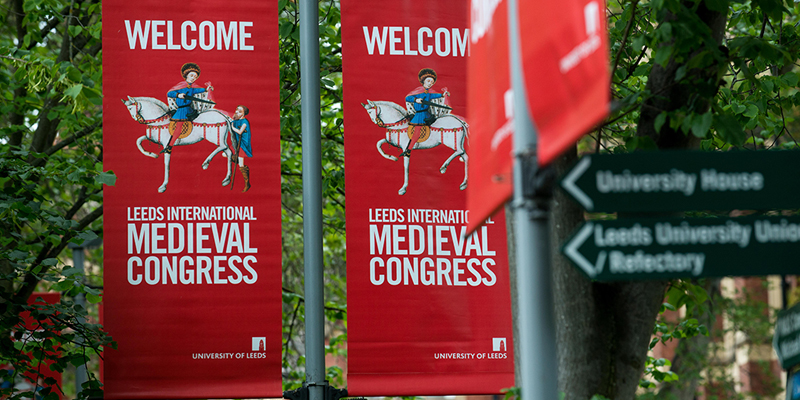
This panel seeks to explore new methodologies for studying the art of women’s religious communities in global and cross-cultural perspective from about 500 to 1525 CE. In the last few decades years, art historians have put women back on the map of European medieval art history. Harnessing the second-wave feminism, scholars, such as Caroline WalkerContinue reading “CFP: Enclosures: Women’s Religious Art and the Boundaries of Method, International Medieval Congress, Leeds 2020, deadline 10 September 2019”
CFP: Prologues in Learned Texts of Medieval Magic, Research Group on Manuscript Evidence (Kalamazoo 2020, Deadline 15th September 2019)

1. Prologues in Learned Texts of Medieval Magic Deadline for abstracts: 15 Sept 2019 Although the prologues of learned books of magic could take many forms, nearly all share at least one common characteristic: the claim to transmit a secret and pristine branch of knowledge. Such claims are frequently couched in the form of a narrativeContinue reading “CFP: Prologues in Learned Texts of Medieval Magic, Research Group on Manuscript Evidence (Kalamazoo 2020, Deadline 15th September 2019)”
CFP: ‘Cave Architecture and Art in the Middle Ages’ at the International Congress on Medieval Studies, Western Michigan University Kalamazoo, May 7-10 2020

55th International Congress on Medieval Studies, Western Michigan University Kalamazoo, May 7-10 2020 Cave churches, monasteries and dwellings can be admired throughout the Mediterranean, where they often appear next to and even intertwined with the built environment. And yet, with the exception of southern Italy and Cappadocia, they are rarely included in studies of theContinue reading “CFP: ‘Cave Architecture and Art in the Middle Ages’ at the International Congress on Medieval Studies, Western Michigan University Kalamazoo, May 7-10 2020 “
CFP: International Meeting of the European Architectural History Network in Edinburgh in June 2020

Genius Loci: The Politics of Pre-Modern Architectural Style Session, International Meeting of the European Architectural History Network, Edinburgh, 10–13 June 2020 Frequently encountered in the historiography of pre-modern architecture is the theme of genius loci – a paradigm in which factors such as climate, local resources, and local traditions are understood as determinative for theContinue reading “CFP: International Meeting of the European Architectural History Network in Edinburgh in June 2020”
CFP: Communal Identity at Borders of Faith, Leeds IMC 2020, deadline 20 September 2019

Call for papers: Horse History Sessions, International Medieval Congress, deadline: 1 September 2019

‘…the most impressive thing in the world [is] an armoured knight on horseback’ wrote Luis Zapata de Chaves in his late 16th-century treatise Del Justador. Recent flourishing of studies in horse history proves that horses not only at the core of pre-modern society but that they make an important part of medieval studies today.
CFP: CAA session, ‘Buildings in Bloom: Foliage and Architecture in the Global Middle Ages’ (sponsored by the ICMA), deadline 23 July 2019

This panel seeks to explore foliate forms in a cross-cultural context across geographies and cultural traditions from roughly 300 to 1500 CE.
 Medieval Art Research