CFP & Workshop Proposals: Minorities in the Pre-Modern Mediterranean, San Francisco State University, (7-8 March 2014), deadline 1 January 2014

Proposals are being accepted for the one-day symposium “Minorities in the Pre-Modern Mediterranean” to be held in conjunction with the Mediterranean Seminar/UCMRP Winter Workshop on “Minorities” to be held at San Francisco State University on 7-8 March, 2014.

On 7 March, three round-table sessions, “Opportunity,” “Assimilation and Exchange,” and “Vulnerability” will be held, each for discussing the status and circumstances of minorities. Minorities may include religious minorities, for example, Jews and Christians living in Muslim lands, Muslims and Jews in Christian lands, but also relations of heterodox groups within these three broad religious categories (e.g. Isma’ilis or Nusayris with Sunni Muslims, Karaites and Rabbinic Jews, Eastern or Byzantine and Latin Christians, etc.). The theme may also include ethnic minorities, such as Berbers in predominantly Arab locales or Slavs in predominantly Greek environments. “Opportunity,” will look at situations in which minorities exceeded formal bounds to which they were subject and potentially transgressed existing social norms; “Assimilation and Exchange,” will look at situations of social, cultural, intellectual, religious, and economic interchange and integration; and “Vulnerability” will look at scenarios in which minority relations broke down, whether in terms of official or popular violence or repression.

To apply to one of the round tables, please submit a CV and a 300-word abstract relating to a theoretical or methodological position on one of the above themes (indicating clearly which panel you are applying to). Case studies may also be referred to. Round-table participants will submit a short (5-page) position paper prior to the meeting, and will make a brief (7-minute) presentation as an opener to discussion.

The deadline for submission is January 1, 2014
Please reply to mailbox@mediterraneanseminar.org with the subject line “Winter Symposium Proposal.” Presenters who also attend the Workshop will be eligible to apply for limited travel support.

Presenters are also being sought for the Workshop on “Minorities” on 8 March:

The Workshop will consist of discussion of three pre-circulated papers and a keynote presentation by our featured scholar, Stephen Humphreys (History, University of California-Santa Barbara), “Adapting to the Infidel: the Christian Communities of Syria in the Early Islamic Period.”

The Mediterranean Studies MRP invites proposals for workshop papers (articles or chapters in-progress, approx. 35 double-spaced pages) on the topic “Minorities,” which may include works on Mediterranean methodologies or perspectives, or studies strongly informed by such. We seek papers in any relevant discipline, especially comparative or interdisciplinary work that uses the Mediterranean as a frame of analysis. Priority is given to faculty and graduate students from the UC system and collaborating institutions, but any North American-based scholars working on relevant material are encouraged to apply. (Scholars from further abroad are welcome to apply, but we cannot guarantee full travel support.) The Mediterranean Seminar/UCMRP will cover travel and lodging expenses for presenters.

The deadline for workshop proposals is 15 January 2014.
Please submit an abstract (250-500 words) and two-page CV by this date to mailbox@mediterraneanseminar.org (subject line: Winter 2014 Workshop Abstract). Please clearly indicate that the event you are applying to is the “Winter 2014 Workshop.” Successful applicants are expected to submit a 35-page (maximum) double-spaced paper-in-progress for pre-circulation by 15 February.

A separate call for symposium and workshop registration will be sent out on January 21.

Call for Papers: Writing Britain, 500-1500, (University of Cambridge, 30 June-2 July 2014), deadline 20 February 2014

Writing Britain is a biennial event which aims to draw on a range of approaches and perspectives to exchange ideas about manuscript studies, material culture, multilingualism in texts and books, book history, readers, audience and scribes across the medieval period. The 2014 iteration of the Writing Britain Conference will take place in the English Faculty at the University of Cambridge under the auspices of the Centre for Material Texts. Some of the topics which we are keen to explore are literary and non-literary agencies and their significance and/or relevance in the medieval period across British medieval written culture in English, French, Latin, Norse and the Celtic languages. More broadly, we are interested in other questions such as: How did local writers, compilers and readers use writing to inscribe regional identity within broader conventions or, on the other hand, impress ‘universal’ practices and constructs on local populations? What were the different markets for books? Can we characterize their developments and differences? What new or existing methodologies can be employed to localise texts and books across Britain? What is the role of the Digital Humanities in the study of medieval book culture?

Plenary speakers: Jonathan Wilcox (University of Iowa), Richard Beadle (University of Cambridge) and Simon Horobin (University of Oxford)

We welcome proposals from scholars working on any aspects of British medieval written culture up to 1500. Please visit our conference web site in order to submit an abstract (300 words or fewer) for a twenty-minute paper. Please send your abstract by 20 February 2014. Abstracts from postgraduate students are welcome and graduate rates will be provided. For further information please visit the website where contact details of the organisers will also be available.

Conference website here.

New Issue of Speculum

Publication News: New Issue of Speculum

SPCThe latest issue of Speculum is now available online, including articles by Christian C. Sahner on translation and history in Orosius and Augustine, Lisa Perfetti on the eroticizing poetics of medieval French crusaders, Andrew G. Miller on equestrian mutilation and masculinity in medieval England, Filip Van Tricht on Robert of Courtenay’s rule as emperor of Constantinople, and Michael Penman on the personal piety and devotions to Scottish saints and relics of Robert Bruce.

Also reviewed in the journal are:
– Janet Burton and Julie Kerr, The Cistercians in the Middle Ages (Woodbridge: Boydell and Brewer, 2011)
– Emma Dillon, The Sense of Sound: Musical Meaning in France, 1260–1330 (Oxford: Oxford University Press, 2012)
–  Kavita Mudan Finn, The Last Plantagenet Consorts: Gender, Genre, and Historiography, 1440–1627 (New York: Palgrave Macmillan, 2012)
– Michelle Karnes, Imagination, Meditation, and Cognition in the Middle Ages. (Chicago: University of Chicago Press, 2011)
– Sherry C. M. Lindquist, ed., The Meanings of Nudity in Medieval Art. (Farnham: Ashgate, 2012)
– Henry Maguire, Nectar and Illusion: Nature in Byzantine Art and Literature (Oxford: Oxford University Press, 2012)
– Nina Rowe, The Jew, the Cathedral, and the Medieval City: Synagoga and Ecclesia in the Thirteenth Century (Cambridge: Cambridge University Press, 2011)
– Christine Sciacca, ed., Florence at the Dawn of the Renaissance: Painting and Illumination, 1300–1350 (Los Angeles: J. Paul Getty Museum, 2012)

See the journal at Cambridge Journals Online here.

Call For Participants: Liturgy in History Study Day

Call For Participants: Liturgy in History Study Day 

msoulsQueen Mary’s Centre for Renaissance and Early Modern Studies have announced a call for participants for ‘Liturgy in History’, an international study day for graduate students and early career researchers.

When: Tuesday 19th November, 9:30 – 17:00 (lunch provided)
Where: Queen Mary, Mile End Campus, room tbc

Three speakers – Professor Nils Holger Petersen (University of Copenhagen), Professor Emma Dillon (King’s College London) and Dr Beth Williamson (University of Bristol) – will guideparticipants through the structure and formulae of liturgical sources. The musical, visual, architectural and performative aspects of the liturgy will all be carefully considered and approaches to liturgy re-interrogated. The presentations will be followed by a roundtable discussion with Professor Miri Rubin (QMUL) and Professor Sara Lipton (SUNY).

The day will culminate in a trip to a nearby renaissance church which will help situate them in their context. We would be delighted to welcome international participants and students from diverse disciplines, to reflect the multidisciplinary focus of the day itself.

If you would like to join us please email Hetta Howes (h.howes@qmul.ac.uk)  Attendance will be free of charge, but places are limited to ensure discussion and participation, so it is essential that you book your place.

You will find more information and a provisional schedule here.

Call for Stahl and Forsyth Lecture Nominations

Call for Stahl and Forsyth Lecture Nominations

The International Center of Medieval Art (ICMA) seeks proposals for Stahl and Forsyth Lectures to be held under the sponsorship of the organization in 2014-2015. Please suggest the name(s) of appropriate speakers and indicate your willingness to host the event at your institution; joint proposals are welcome, as lecturers are expected to speak at more than one institution.

As a reminder, Stahl Lectures are to be held in what might be termed the greater southwest, while Forsyth lectures, as a rule, take place in the institutions located east of the Mississippi River, especially in what might be termed the greater Midwest.

Please direct all nominations and inquiries, accompanied by your CV and the CV of the proposed speaker, to the Chair of the Programs Committee: Elina Gertsman, Department of Art History and Art, Case Western Reserve University; email: elina.gertsman@case.edu.

The deadline for the nominations is February 15, 2014, for the lectures to be planned for the late fall of the same year or the following spring.


Kings Launch “Sharing Ancient Wisdoms” Project


splash-image-bw

Kings College London have launched their Sharing Ancient Wisdoms project, which is publishing several texts of interest to Medievalists/Byzantinists.

For more details see: http://www.ancientwisdoms.ac.uk


Included in the collection:
– Gnomological Material in Arabic and in Arabic-Spanish transmission
Texts established by Ines Dallaji, Lorenz Nigst, Christoph Storz, Elvira Wakelnig

– Arabic Philosophical Compendia and Excerpts of Arabic and Latin Philosophical Texts
Texts established by Christoph Storz and Elvira Wakelnig

– Apophthegmata et gnomae secundum alphabetum
Annotated edition of Greek Gnomologia by Denis Searby, Måns Bylund, Pontus Österdahl, with English translation by Denis Searby

– Kekaumenos, Consilia et Narrationes
Greek text, English translation and commentary by Charlotte Roueché, with further translations by H.G. Beck, J. Signes Codoner, G.G. Litavrin, M.D. Spadaro

Call For Papers: Heraldic Artists and Painters in the Middle Ages

Call For Papers: Heraldic Artists and Painters in the Middle Ages
(Poitiers, 10-11 Apr 2014)

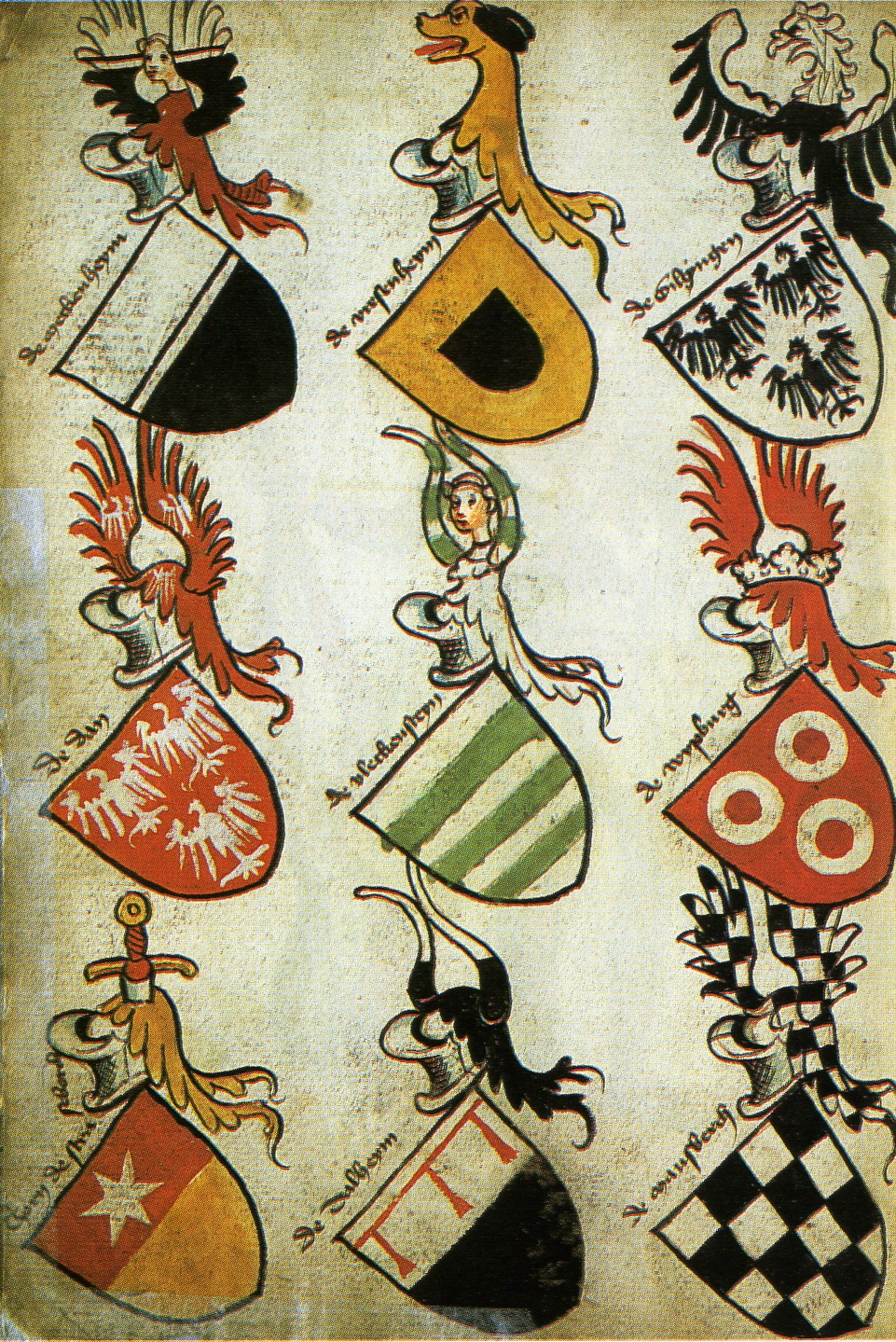
Hyghalmen_Roll_Late_1400sThe big names of art history such as the Limbourg brothers, Donatello, Pisanello, Barthélemy d’Eyck, Jean Fouquet or Albrecht Dürer have left important traces of their preoccupation with heraldic and emblematic depictions, whether in preserved artwork or by being mentioned in financial sources. Besides them, a huge number of other, less well known artists have also contributed to shape the medieval heraldic heritage.

Many questions need to be asked here: about the formation of those artists and their heraldic culture, about the extent of their intervention in the conception of heraldic and emblematic programs, and about their relationship to the patron. On what basis did they work, did they have textual descriptions or already any drawn models to start from? Which liberties did they take in dealing with the heraldic rules of depiction? What was their eventual contribution to the evolution of heraldry in the late Middle Ages and did artistic creation contribute to the spreading of heraldry as a mean of symbolical and political communication as well as prestige? How have art historians treated this part of medieval artistic creation so far? And which role did the heralds play in this matter? Could it be possible that they did execute heraldic depictions as well and if so, which artistic skills did they need to do so? Finally, how do we have to imagine the creation of heraldic depictions such as mural paintings, painted roll of arms or the illustrated charters of concessions of arms?

Papers can be presented in English or French.

Proposals should be sent by 5th January 2014 together with an abstract
(200 words) in English or French to hiltmann@uni-muenster.de

Workshop organised by the research programme Héraldique, emblématique et signes d’identité au Moyen Age (Laurent Hablot, CESCM, University of Poitiers) and the research project The performance of coats of arms – Die Performanz der Wappen. Zur Entwicklung von Funktion und Bedeutung heraldischer Kommunikation in der spätmittelalterlichen Kultur,
Dilthey-Fellowship of the Volkswagen Foundattion (Torsten Hiltmann, Historisches Seminar, University of Münster)

London Medieval Graduate Network, Courtauld Institute, 6th December

courtauld300[1]The London Medieval Graduate Network holds seminars at different institutions a number of times each term, which allow for students to give short papers on aspects of their research. All are very welcome.

The next meeting will be held in seminar room 4 at the Courtauld Institute of Art: Somerset House on the Strand.

The setup is that there will be three papers of around 15 minutes with some time for immediate questions, and then the second hour a round table of the issues raised over some wine and nibbles, and we would be very appreciative if people could bring crisps or other snacks, or a bottle.

If you would like to give a paper there is still space. Please contact James Alexander Cameron at james.cameron@courtauld.ac.uk with your name, paper title, institution and level of study. Other enquires are also welcome.

Call For Papers: Other Animals and Humans in Medieval Art, Kalamazoo 2014

Call for Papers: Other Animals and Humans in Medieval Art, Kalamazoo 2014

Session to be held at the 2014 International Congress on Medieval Studies, Kalamazoo, Michigan, May 8-11, 2014. Sponsored by the International Center of Medieval Art (ICMA).

Organizers:
Corine Schleif (Arizona State University, Phoenix, Arizona)
Martha Easton (Seton Hall University, South Orange, New Jersey)

hyena-eating-corpse-300x274

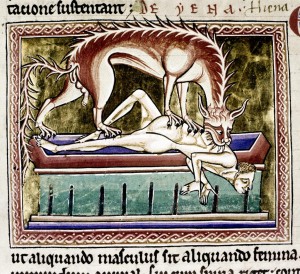
For some, “animals are good to eat.” For others, “animals are good to think with” (Levi-Strauss). Medieval art and society could not have existed without nonhuman animals. Human knowledge of animals is and was produced and exchanged largely through images (Berger)—albeit differently during the Middle Ages than today. hyena-eating-corpsePapers may address the ways in which humans defined themselves against animal others in and through visual images or the ways in which interspecies relationships were prescribed and proscribed pictorially. We welcome not only papers in which animals are absented and employed as signs for persons and things outside of themselves, but also and especially studies that interrogate “real” animals (Fudge, Hobgood-Oster) as sentient beings with agency as well as filaments within tangled interdependent networks (Haraway, Latour).

Participants may explore relationships that manifest themselves in art in terms of companionship, communication, entertainment, food, clothing, energy, gift giving, or liturgical rituals.

Panelists may wish to examine intersections with issues of gender, class, race and breed. Papers may question critically the manner in which art functioned ideologically on behalf of human hegemony, as well as ways in which animals were perceived to “look back,” to be privy to divine omniscience, to utter otherwise hidden truths, and to rise to the level of the holy.

Deadline for Paper Proposals: September 15, 2013

Paper proposals should consist of the following:

– Abstract of proposed paper (300 words maximum)
– Completed Participant Information Form (available here).
– CV with home and office mailing addresses, e-mail address, and phone number
– Statement of ICMA membership status
– Funds may be available to defray travel costs of sponsored session participants.

All Proposals & Inquiries Should Be Directed To:
Corine Schleif: cschleif@asu.edu
Martha Easton: martha.easton@shu.edu

Conference: The Mobility of Antiquities

The Mobility of Antiquities. Cultural Processes and Collecting Practices in Early Modern Italy
London, Warburg Institute, November 15, 2013

wblogoIn the last few years, research on mobility (of ideas, cultural phenomena, people, and art works) has increasingly engaged scholars invarious disciplines. This workshop contributes to these studies by considering the mobility of antiquities in the early modern period from various perspectives, looking at mobility both as the physical process of moving objects and as a richly symbolic act. The papers in this study day will investigate the material context in which antiquities were discovered and the cultural and political processes involved in moving them from excavation sites to new locales. They will also deal with the issue of their ‘virtual’ mobility among collections and collectors by means of prints, drawings and casts.

Programme
First Session: 2:30 – 4:00
– Barbara Furlotti, ‘Antiquities Ripen in Wintertime. Excavations and the
Search for Ancient Findings in Sixteenth-Century Rome’
– Kathleen Christian, ‘Translatio and the Movement of Antique Sculpture
in Early Modern Italy’

Second Session: 4:15 – 6:00
Bianca de Divitiis, ‘In Search of Identity: Moving Antiquities in
Southern Italy between the Medieval and Early Modern Period’
Leah Clark, ‘Exchange and Replication: The Circulation of Antique Gems
and Coins in the Italian Courts’