Warburg Institute, Woburn Square, London WC1H 0AB, January 31 – June 27, 2018
Re-opening the Workshop: Medieval to Early Modern
Workshop and workshop practices represent a core and dynamic research strand in the history of art. This strand encompasses the study of canonical artists but equally of the anonymous producers whose activities can be deduced from the surviving art objects, thanks to ever developing research questions and methodologies. This topic helps us to think about the agents and their networks (artists, patrons and other market consumers), objects and socio-economic factors (making, buying and trading) as well as the broader cultural issues of the transmission of skills and ideas (the movement of artists, objects and imagery). Our lecture series brings together leading experts in medieval and early modern historical periods in and beyond Europe, particular highpoints for the study of workshop practices, and also those researching workshop continuities and changes in later centuries, including digital mediation.
JOANNA CANNON, BETH WILLIAMSON (ed.). Art, Politics and Civic Religion in Central Italy 1261-1352: Essays by Postgraduate Students at the Courtauld Institute of Art, Routledge, 2017 (reedición), 328 p.
ISBN: 978-1138702585
This was first published in 2000: Introduced by Joanna Cannon, this volume of essays by postgraduate students at the Courtauld Institute, University of London, explores some of the ways in which art was used to express, to celebrate, and to promote the political and religious aims and aspirations of those in power in the city states of central Italy in the thirteenth and fourteenth centuries. The contributions focus on four centres: Siena, Arezzo, Pisa and Orvieto, and range over a number of media: fresco, panel painting, sculpture, metalwork, and translucent enamel. Employing a variety of methods and approaches, these stimulating essays offer a fresh look at some of the key artistic projects of the period. The dates cited in the title, 1261 and 1352, refer to two well-known works, Coppo di Marcovaldo’s Madonna del Bordone and the Guidoriccio Fresco in the Palazzo Pubblico of Siena, here newly assigned to this date. By concentrating on individual cases such as these, the essays provide rewardingly sustained consideration, at the same time raising crucial issues concerning the role of art in the public life of the period. These generously-illustrated studies introduce new material and advance new arguments, and are all based on original research. Clear and lively presentation ensures that they are also accessible to students and scholars from other disciplines. Art, Politics and Civic Religion in Central Italy, 1261-1352 is the first volume in the new series Courtauld Institute Research Papers. The series makes available original recently researched material on western art history from classical antiquity to the present day.
ANDREA DE MARCHI, CRISTINA GNONI. Legati da una cintola. L’«Assunta» di Bernardo Daddi e l’identità di una città, Mandragora, 2017, 255 p.
ISBN: 978-8874613571
La Sacra Cintola, la cintura della Vergine custodita nel Duomo che per secoli è stata il tesoro più prezioso di Prato, è un simbolo religioso e civile, fulcro delle vicende artistiche della città ed elemento cardine della sua identità. La sottile striscia (di 87 centimetri) di lana di capra broccata in filo d’oro è il fulcro di un’esposizione che comprende altre opere di valore, prima tra tutte la pala di Bernardo Daddi del 1337-1338 che racconta la leggenda di come la reliquia sia stata consegnata a San Tommaso dalla Madonna al momento dell’Assunzione, sia stata portata a Prato verso il 1141 dal mercante pratese Michele Dagomari e da questi donata nel 1172, alla pieve della città.
Il catalogo dell’esposizione illustra, oltre naturalmente alla reliquia solitamente conservata nella cappella di Agnolo Gaddi nel Duomo, la serie di dipinti, sculture e miniature in mostra, che testimoniano le varie elaborazioni del tema dell’Assunta che dona la propria cintola.
In aggiunta, testi e foto propongono lo studio della cappella affrescata da Gaddi, la prepositura di Santo Stefano, le ostensioni che abitualmente avvengono a Prato e la storia del suo culto nei secoli.
LIZ JAMES. Mosaics in the Medieval World: From Late Antiquity to the Fifteenth Century, Cambridge University Press, 2017, 625 p.
ISBN: 978-1107011984
In this book, Liz James offers a comprehensive history of wall mosaics produced in the European and Islamic middle ages. Taking into account a wide range of issues, including style and iconography, technique and material, and function and patronage, she examines mosaics within their historical context. She asks why the mosaic was such a popular medium and considers how mosaics work as historical ‘documents’ that tell us about attitudes and beliefs in the medieval world. The book is divided into two part. Part I explores the technical aspects of mosaics, including glass production, labour and materials, and costs. In Part II, James provides a chronological history of mosaics, charting the low and high points of mosaic art up until its abrupt end in the late middle ages. Written in a clear and engaging style, her book will serve as an essential resource for scholars and students of medieval mosaics
Read more at http://www.cambridge.org/gb/academic/subjects/arts-theatre-culture/western-art/mosaics-medieval-world-late-antiquity-fifteenth-century#MoOXkhqSpjBV534f.99
One of the most compelling and provocative books of twelfth-century England, the Markyate Psalter was probably produced at St. Albans Abbey between 1120 and 1140. The manuscript has been known by many names: the St. Albans Psalter, the Albani Psalter, the Hildesheim Psalter, and the Psalter of Christina of Markyate. Heralded as a high point of English Romanesque illumination, the manuscript contains the earliest known copy of the saint’s life known as Chanson de St. Alexis. This volume explores the manuscript’s many contexts, reading its texts and images amidst the rising internationalism of the period, marked by the circulation of objects, ideas, and peoples. Some of the leading scholars of twelfth-century manuscript studies here explore the Markyate Psalter, understanding it through new methodologies, pursuing innovative lines of inquiry. The collection shines fresh light on a well-known manuscript, and promises to open important lines of discourse about the book and its readers.
Contents
Abbreviations
Illustrations
Introduction by Kristen Collins and Matthew Fisher
Saint Anselm’s “Grand Tour” and the Full-Page Picture Cycle in the Markyate Psalter by T. A. Heslop
The Patronage and Ownership of the Markyate Psalter by Nigel Morgan
Handling the Letter by Aden Kumler
The Repainting of Psalm 101 and Meaningful Change in the Markyate Psalter by Kristen Collins and Nancy K. Turner
Voicing the Psalms in the Markyate Psalter: Devotional Experience and Experiments with Images and Words by Kerry Boeye
Intercessory Prayer and the Initials of the Markyate Psalter by Rachel Koopmans La Vie de Saint Alexis and the Alexis Quire in the Crusading Context by Zrinka Stahuljak
The Psalmist and the Saint: David, Alexis, and the Construction of Meaning in a Twelfth-Century Composite Manuscript by Kathryn Gerry
Blindness and Insight, Seeing and Believing: Reading Two Emmaus Sequences from St. Albans by Morgan Powell
Praying with Pictures in the Gough Psalter by Martin Kauffmann
Madness and Innocence: Reading the Infancy Cycle of a Romanesque Vita Christi by Kristen Collins
The St. Albans Psalter Monograph of 1960: Fifty Years Later by J. J. G. Alexander
Author Bio(s)
Kristen Collins is associate curator in the Department of Manuscripts at the J. Paul Getty Museum.
Matthew Fisher is associate professor of English at the University of California, Los Angeles.
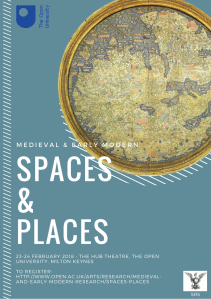
The Open University, Milton Keynes, UK, February 23 – 24, 2018
The Open University will be hosting their annual two-day conference on Medieval and Early Modern Spaces and Places
The conference will examine life in buildings, institutions and broader geographical areas from a variety of perspectives and will consider the following questions:
How were medieval and early modern spaces adapted and transformed through the movement of material and immaterial things?
Which particular aspects of political, social and economic infrastructures enabled the exchange of objects and ideas?
To what extent did a sense of place depend upon the activities taking place there?
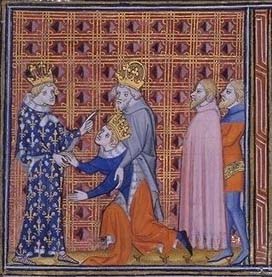
University of Fribourg
March 12th 2018
Room MIS04 Jäggi
Prof. Michele Bacci (University of Fribourg)
Prof. Ludger Körntgen (University of Mainz)
Prof. Knut Görich (University of Munich)
Dr. Mirko Vagnoni (University of Fribourg)
Felipe Pereda (Harvard), will give the inaugural lecture for the 2018-19 Coll & Cortes Medieval Spain Seminar Series at 4pm on Thursday 25th January in the Kenneth Clark Lecture Theatre of the Courtauld Institute of Art, London.
An old narrative tradition going back to Ancient Egypt but documented across the Mediterranean – from the Middle East to Greece — shows women attending funerals performing theatrical, but also highly ritualized gestures that express unbearable pain. This visual trope corresponds to a practice that was surveyed and prosecuted in this part of the world well before the arrival of Christianity. The practice continued in Iberia throughout the Middle Ages, producing from the 12th century onwards an extraordinary tradition of painting and monumental sculpture. This lecture will explore the persistence, survival and repression of this practice and discuss the contribution of the visual arts to the production of cultural memory.
Felipe Pereda is Fernando Zóbel de Ayala Professor of Spanish Art at Harvard University. Born in Madrid, he studied at the Universidad Complutense, and the Autónoma University where he received his PhD (1995) and taught until 2011. In more recent years, he has also taught at the Instituto de Investigaciones Estéticas (Universidad Autónoma de México), and Johns Hopkins University (2011-15). He has worked on Spanish late medieval and early modern art, art theory, image theory and history of architecture.
His books include, La arquitectura elocuente (1999), El atlas del Rey Planeta (3rd. ed. 2003), and Images of Discord. Poetics and Politics of the Sacred Image in 15th century Spain (Spanish ed. 2007; English translation, Harvey Miller, forthcoming). He has recently published on artists such as Luis de Morales, Ribera, or Zurbarán.
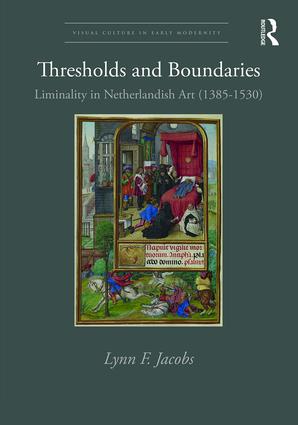
LYNN F. JACOBS. Thresholds and Boundaries: Liminality in Netherlandish Art (1385-1530), Routledge, 2017, 256 p.
ISBN: 978-1472457813
lthough liminality has been studied by scholars of medieval and seventeenth-century art, the role of the threshold motif in Netherlandish art of the late fourteenth, fifteenth and early sixteenth centuries — this late medieval/early ‘early modern’ period — has been much less fully investigated. Thresholds and Boundaries: Liminality in Netherlandish Art (1385-1550) addresses this issue through a focus on key case studies (Sluter’s portal of the Chartreuse de Champmol and the calendar pages of the Limbourg Brothers’ Très Riches Heures), and on important formats (altarpieces and illuminated manuscripts). Lynn F. Jacobs examines how the visual thresholds established within Netherlandish paintings, sculptures, and manuscript illuminations become sites where artists could address relations between life and death, aristocrat and peasant, holy and profane, and man and God—and where artists could exploit the “betwixt and between” nature of the threshold to communicate, paradoxically, both connections and divisions between these different states and different worlds. Building on literary and anthropological interpretations of liminality, this book demonstrates how the exploration of boundaries in Netherlandish art infused the works with greater meaning. The book’s probing of the — often ignored –meanings of the threshold motif casts new light on key works of Netherlandish art.
JOSEFINA PLANAS BADENAS (ed.). Manuscrits il·luminats. La tardor de l’Edat Mitjana i els inicis del Renaixement, Universitat de Lleida, 2017, 204 p.
ISBN: 978-8491440086
L’interès d’aquesta recopilació d’estudis recau en el fet d’analitzar l’elaboració del llibre miniat durant un període cronològic, que inclou les darreres manifestacions gòtiques i els primers còdexs elaborats, d’acord amb les pautes formals del Renaixement. La línia divisòria que separa els dos períodes esmentats no es regeix per una cronologia estricta, sinó que en funció de la situació particular de cada un dels estats europeus es manifesta la persistència de la tradició gòtica o es percep la oració del nou llenguatge formal creat a la Toscana. Aquesta exibilitat ha permès reconstruir la creació de manuscrits il·luminats al llarg del segle XV i principis del XVI, ponderant la varietat de propostes estètiques que van conviure entre si, durant aquest període. L’anàlisi de diversos centres de producció artística i del paper protagonista dut a terme per destacats promotors de l’envergadura de la reialesa, l’aristocràcia castellana o la cúria papal, enriqueixen aquesta visió de conjunt. Finalment, l’estudi dels manuscrits elaborats a Roma, durant el Duecento, planteja una reflexió sobre la reinterpretació del món clàssic, amb totes les connotacions iconogràfiques i ideològiques que va implicar la recuperació d’aquest llegat en una fase prèvia a la gran eclosió del Renaixement.
C. CURRIE. Van Eyck Studies: Papers Presented at the Eighteenth Symposium for the Study of Underdrawing and Technology in Painting, Peeters, 2017, 598 p.
ISBN: 978-9042934153
Since Paul Coreman’s ground-breaking L’Agneau mystique au laboratoire in 1953, the Ghent Altarpiece, masterwork of the Van Eyck brothers, has been a major focus of research at the Royal Institute for Cultural Heritage (KIK-IRPA, Brussels). Some sixty years later, in the wake of a new conservation campaign in which KIK-IRPA is again playing the leading role, the art of Hubert and Jan van Eyck took centre stage at the Symposium XVIII for the Study of Underdrawing and Technology in Painting (Brussels, 19-21 September 2012). The event was organised by the KIK-IRPA and the Centre for the Study of the Flemish Primitives in collaboration with the Laboratoire d’étude des œuvres d’art par des méthodes scientifiques (Université catholique de Louvain-la-Neuve), and Illuminare – Centre for the Study of Medieval Art (Katholieke Universiteit Leuven).
The Ghent Altarpiece and the oeuvre of Jan van Eyck continue to captivate modern viewers and still arouse tremendous interest among art historians. The fascination with Eyckian art, with all its dazzling illusionistic effects and iconographic finesse, is every bit as fresh and challenging as it was six centuries ago.
During three days of presentations and intense discussions, eminent specialists from all over the world attempted to fanthom the secrets of Van Eyck’s success. They debated the issues from a variety of different standpoints, and shed new light on thorny topics such as attribution, iconography and painting technique.
This book captures the variety of thirty-seven papers presented at the symposium and provides state-of-the-art knowledge on one of the most significant painters of all time. It should be read in conjunction with the widely acclaimed website “Closer to Van Eyck”, which offers the scientific imagery of the Ghent Altarpiece in glorious high resolution.
Karlsruhe Institute of Technology, June 15 – 16, 2018
Deadline: Jan 31, 2018
The aim of this conference is to initiate an interdisciplinary, genealogically reflected debate about Popular Science as a recurrent cultural technique. The category Popular Science will be elucidated in an interdisciplinary and diachronic way, focusing on both its socio-anthropological construction and the formal and functional techniques, which characterize the dissemination of scientific knowledge in its production and reception contexts. For this purpose, philological and iconographic research approaches are especially welcomed, but other disciplines such as the Sociology of Science, the History of Science, and Gender Studies are also beneficial for the main goal. The multi-layered examination of the cultural technique “Popular Science” will throw light on a research field that has hardly been investigated so far. Continue reading “CFP: Genealogy of Popular Science (Karlsruhe, 15-16 Jun 2018)”
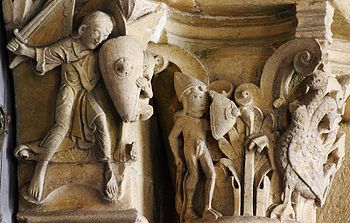 University of Leeds and The Hepworth Wakefield, June 26 – 27, 2018
 Workshop and workshop practices represent a core and dynamic research strand in the history of art. This strand encompasses the study of canonical artists but equally of the anonymous producers whose activities can be deduced from the surviving art objects, thanks to ever developing research questions and methodologies. This topic helps us to think about the agents and their networks (artists, patrons and other market consumers), objects and socio-economic factors (making, buying and trading) as well as the broader cultural issues of the transmission of skills and ideas (the movement of artists, objects and imagery). Our lecture series brings together leading experts in medieval and early modern historical periods in and beyond Europe, particular highpoints for the study of workshop practices, and also those researching workshop continuities and changes in later centuries, including digital mediation.
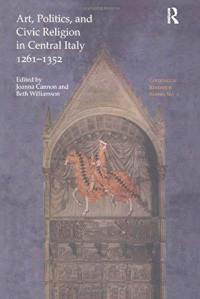 This was first published in 2000: Introduced by Joanna Cannon, this volume of essays by postgraduate students at the Courtauld Institute, University of London, explores some of the ways in which art was used to express, to celebrate, and to promote the political and religious aims and aspirations of those in power in the city states of central Italy in the thirteenth and fourteenth centuries. The contributions focus on four centres: Siena, Arezzo, Pisa and Orvieto, and range over a number of media: fresco, panel painting, sculpture, metalwork, and translucent enamel. Employing a variety of methods and approaches, these stimulating essays offer a fresh look at some of the key artistic projects of the period. The dates cited in the title, 1261 and 1352, refer to two well-known works, Coppo di Marcovaldo’s Madonna del Bordone and the Guidoriccio Fresco in the Palazzo Pubblico of Siena, here newly assigned to this date. By concentrating on individual cases such as these, the essays provide rewardingly sustained consideration, at the same time raising crucial issues concerning the role of art in the public life of the period. These generously-illustrated studies introduce new material and advance new arguments, and are all based on original research. Clear and lively presentation ensures that they are also accessible to students and scholars from other disciplines. Art, Politics and Civic Religion in Central Italy, 1261-1352 is the first volume in the new series Courtauld Institute Research Papers. The series makes available original recently researched material on western art history from classical antiquity to the present day.
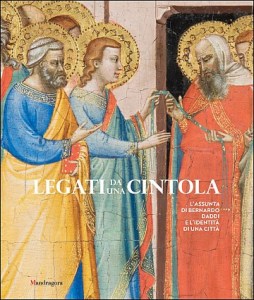 La Sacra Cintola, la cintura della Vergine custodita nel Duomo che per secoli è stata il tesoro più prezioso di Prato, è un simbolo religioso e civile, fulcro delle vicende artistiche della città ed elemento cardine della sua identità. La sottile striscia (di 87 centimetri) di lana di capra broccata in filo d’oro è il fulcro di un’esposizione che comprende altre opere di valore, prima tra tutte la pala di Bernardo Daddi del 1337-1338 che racconta la leggenda di come la reliquia sia stata consegnata a San Tommaso dalla Madonna al momento dell’Assunzione, sia stata portata a Prato verso il 1141 dal mercante pratese Michele Dagomari e da questi donata nel 1172, alla pieve della città.
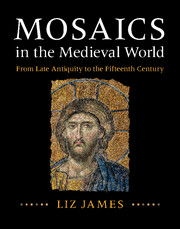 In this book, Liz James offers a comprehensive history of wall mosaics produced in the European and Islamic middle ages. Taking into account a wide range of issues, including style and iconography, technique and material, and function and patronage, she examines mosaics within their historical context. She asks why the mosaic was such a popular medium and considers how mosaics work as historical ‘documents’ that tell us about attitudes and beliefs in the medieval world. The book is divided into two part. Part I explores the technical aspects of mosaics, including glass production, labour and materials, and costs. In Part II, James provides a chronological history of mosaics, charting the low and high points of mosaic art up until its abrupt end in the late middle ages. Written in a clear and engaging style, her book will serve as an essential resource for scholars and students of medieval mosaics
 The Open University, Milton Keynes, UK,
  University of Fribourg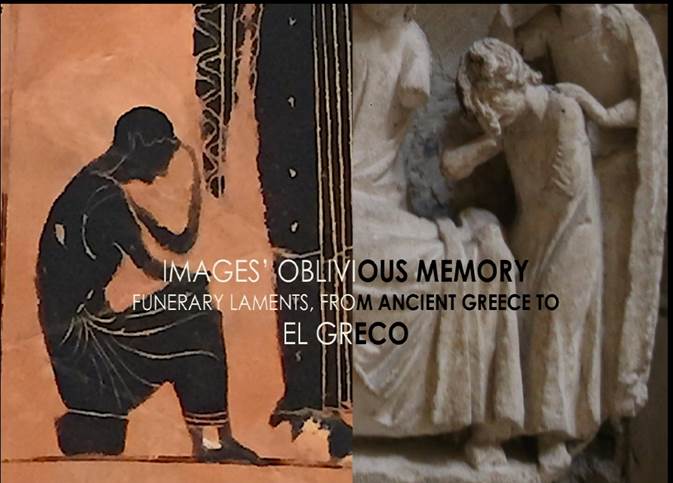

 Medieval Art Research