Conference: Corps troublants (Paris, 19 Jan 18)

Centre André Chastel, Salle Ingres, Galerie Colbert, 2 rue Vivienne 75002 Paris, January 19, 2018

Corps troublants. Images et imaginaires dans la première modernité

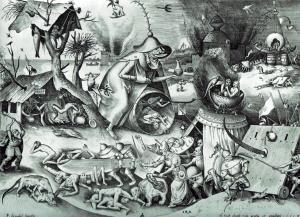
Pieter_Bruegel_the_Elder-_The_Seven_Deadly_Sins_or_the_Seven_Vices_-_Anger1. Dynamiques et configurations corporelles

Workshop au Centre A. Chastel, Salle Ingres

Première rencontre du cycle » Corps troublants. Images et imaginaires dans la première modernité » organisé par Francesca Alberti (CESR /Université François-Rabelais, Tours) et Antonella Fenech Kroke (Centre André Chastel/CNRS). Le workshop a reçu le soutien du GIS Humanités.
Continue reading “Conference: Corps troublants (Paris, 19 Jan 18)”

Conference: Objekte und Eliten in Hildesheim (Hildesheim, 22-23 Feb 18)

Logo_RZ-768x758Dommuseum Hildesheim, Joseph-Godehard-Saal, 22. – 23.02.2018
Registration deadline: Feb 12, 2018
<http://objekte-und-eliten.de/abschlusstagung/>

Innovation und Tradition. Objekte und Eliten in Hildesheim 1130 – 1250

Abschlusstagung des vom Bundesministerium für Bildung und Forschung BMBF geförderten Verbundprojekts „Innovation und Tradition. Objekte und Eliten in Hildesheim, 1130–1250“, an dem neben dem Dommuseum Hildesheim die Universitäten Bonn, Kiel, Osnabrück und Potsdam beteiligt sind.

Continue reading “Conference: Objekte und Eliten in Hildesheim (Hildesheim, 22-23 Feb 18)”

Call for papers: Italia e Francia, Francia e Italia: Scambi culturali, 2018

Deadline: Jan 15, 2018
2b01f1cf-c059-4765-be85-34b61cbc28e4
A dicembre 2018 RELIEF (www.revue-relief.org) e INCONTRI (www.rivista-incontri.nl), due riviste internazionali e peer reviewed che si occupano rispettivamente di cultura francese e italiana, pubblicheranno giuntamente due numeri collegati dallo stesso tema: gli scambi culturali tra l’Italia e la Francia dal Medioevo fino ad oggi. La religione, la politica, le scienze e le arti hanno gettato le basi per una relazione proficua e molto stretta tra i due paesi. Ci sono stati dei periodi di intensificazione di tali rapporti transnazionali tra le due lingue e culture: si pensi all’influenza della lirica dei trovatori provenzali alla corte siciliana nel Duecento, o al traffico intenso messo in moto dai regnanti amanti dell’arte nelle città-stato italiane durante il Rinascimento invitando artisti e musicisti francesi alle loro corti. Altri esempi di questi incontri culturali sono il ‘grand tour’ che portò gli aristocrati francesi a visitare il Bel Paese nel Settecento, il cosmopolitismo dell’Ottocento, le avanguardie, tra cui quelle italiane, concentratesi nella Parigi dell’inizio del Novecento. Non si dimentichino poi le ondate di migrazioni politiche, economiche e culturali e la crescente globalizzazione dei rapporti culturali a partire dal 1950.
Continue reading “Call for papers: Italia e Francia, Francia e Italia: Scambi culturali, 2018”

ICMA Student Committee seeks new members

The International Center of Medieval Art (ICMA) Student Committee is currently seeking new members for two-year (renewable) terms. We welcome applications from current graduate students (MA, MPhil, PhD) who anticipate being in higher education for at least two more years. The Student Committee has a diverse portfolio that includes organizing panels at international conferences (Leeds and Kalamazoo), contributing to the ICMA Newsletter, promoting opportunities for students in our field, and creating fora for students in medieval art to meet colleagues, and share research (in person, through social media, and in print), and actively participate in the ICMA. Potential future initiatives include an oral history project, establishing a mentorship program, and creating a network and lists of resources for medieval art history students researching abroad.

Potential members should submit the following to meg.bernstein@gmail.com and asears@berkeley.edu for consideration by February 15 2018: current c.v., and a cover letter detailing interest in participating, relevant experience, current and future initiatives of interest. Applicants are welcome (but not required to) include ideas for future ICMA SC activities.

Call for papers: Renaissance Research Colloquium

Renaissance Research Colloquium
What-to-do-in-Florence-tonight-1-1024x531
A collaboration between the Institutes of Art History at the University of Leipzig and the University of Würzburg with the École Pratique des Hautes Études Paris (Sorbonne), PSL (HISTARA)
Continue reading “Call for papers: Renaissance Research Colloquium”

Art Fair: Les Enluminures at Bibliography Week, New York, 22-27 January 2018

enluminures“Bibliography Week” happens every year in New York City at the end of January when principal national organizations devoted to book history have their annual meetings. Many interesting events are planned, since so many bibliophiles are in town.
Some events are open only to members of the Grolier Club, but others are public and anyone with an interest in books is invited to show up. Les Enluminures is proud to be participating this year in “Bibliography Week,” especially so because two of its principles Sandra Hindman, Founder and President, and Laura Light, Senior Specialist, have joined the Club in the last year.

Continue reading “Art Fair: Les Enluminures at Bibliography Week, New York, 22-27 January 2018”

Call for papers: Re-Nationalisierung oder Sharing Heritage? (Tallinn, 4-6 Oct 18)

Tallinn, Estland, 04. – 06.10.2018
Deadline: Feb 28, 2018

Re-Nationalisierung oder Sharing Heritage? Wo steht die Denkmalpflege im europäischen Kulturerbejahr 2018
EAA
Jahrestagung des Arbeitskreises Theorie und lehre der Denkmalpflege e.V. in Zusammenarbeit mit ICOMOS Estland und der Estnischen Kunstakademie (Eesti Kunstiakadeemia), Tallinn, 4.-6. Oktober 2018
Continue reading “Call for papers: Re-Nationalisierung oder Sharing Heritage? (Tallinn, 4-6 Oct 18)”

CFP: Misericordia International Colloquium 2018: Choir Stalls & Their Patrons, Rijeka (Croatia), 13-16 September 2018

cdi16-32-15Call for Papers: Misericordia International Colloquium 2018: Choir Stalls & Their Patrons, Rijeka (Croatia), 13-16 September 2018
Deadline: Feb 15, 2018
Notification of  paper acceptance: March 15, 2018

Misericordia International is an internationally active multidisciplinary network dedicated to the study of choir stalls and their relation to other artistic manifestations during the Middle Ages and to the dissemination of results. The intensive exchange with researchers from neighboring disciplines reveals interfaces between disciplines and subjects of research and provides new impulses for the study of choir stalls. The platform for scholarly exchange is the international conference organized  every two years.

The next colloquium will be held in Rijeka (Croatia) in September 2018. The conference seeks to explore and discuss the relation between choir stalls and their patrons. It aims to present original research in this field as well as to establish productive dialogue between scholars with a particular research interest in choir stalls. Artworks and their patrons have raised and continue to raise many research questions. While choir stalls have been studied extensively for the misericords with profane carvings, less research has been done on the commissions for this type of church furniture. In recent years the focus of choir stall research has moved toward makers and patrons, hence  the previous colloquium’s topic was dedicated to the craftsmen and their workshops. The 2018 conference will focus on problems of ecclesiastical and secular patrons and questions such as who were the patrons of choir stalls and to what extent were they responsible for the final result, or are there differences or similarities between choir stalls considering different patrons – members of chapters, parishes, female and male monastic communities, confraternities and private persons.

We welcome academic papers that will approach this subject in an interdisciplinary and methodologically diverse way.

Acceptable topics may include, but are not limited to, the following:
– collaboration between patrons and craftsmen (carpenters, sculptors and painters)
– results of the archival research;
– inscriptions and used typography on choir stalls;
– migrations of craftsmen and migrations of stylistic features;
– center versus periphery;
– depiction of patrons on choir stalls.

Following the conference, a two-day excursion – visit to selected choir stalls of the region – is planned.
The conference language is English. A publication of the proceedings of this conference is forseen.
Papers should not exceed anticipated maximum time of 20 minutes and will be followed by a 10-minute discussion.

A paper proposal should contain the title and abstract (500 words maximum). Each proposal should be accompanied by full contact information (home and office mailing addresses, e-mail address, and phone number) and a short CV.

Paper proposals should be submitted electronically to: choir_stalls2018@uniri.hr

There is NO registration fee. Administration and organizational costs, working materials, lunch and
coffee breaks during conference are covered by the organizers. Travel expenses and accomodation ARE NOT COVERED.

CFP: 5th Annual Jane Fortune Conference: The Colors of Paradise. Painting Miniatures in Italian Convents, ca. 1300-1700, The Library of San Marco, Florence, October 11 – 12, 2018

gradual1Call for Papers: 5th Annual Jane Fortune Conference: The Colors of Paradise. Painting Miniatures in Italian Convents, ca. 1300-1700, The Library of San Marco, Florence, October 11 – 12, 2018T
Deadline: 15 January, 2018

5th Annual Jane Fortune Conference

The Colors of Paradise. Painting Miniatures in Italian Convents, ca. 1300-1700

This conference is co-organized by The Medici Archive Project and the Museo Nazionale di San Marco.

Since the late Medieval period, members of female religious communities have engaged in the making of small-scale paintings, or miniatures, on a wide variety of supports. Many of these miniatures were produced to ornament liturgical and devotional books; others graced objects such as candles and altar frontals. While nuns’ activity in this realm has been documented quite extensively in northern Europe, the Italian production of miniatures is less understood, aside from case studies of a few individuals such as Eufrasia Burlamacchi (1482 –1548). It is hoped that this conference will not only consolidate what is known about the production of miniatures by Italian nuns, but also catalyze new research. To encourage reflection upon the continuity of technical practices and models across arbitrary period divisions, the time frame of this conference has been extended broadly. Insight obtained through technical examination or the material analysis of nuns’ artworks will be especially welcome.

Papers may be given in Italian or English.

Suggested Paper Topics:

-Technical studies identifying pigments, binding media, or supports for miniatures produced in or for Italian convents
-New attributions of miniatures to Italian nun artists
-Biographical studies on Italian nuns who made miniatures
-Analyses of the visual or textual sources of the iconography of Italian nuns’ miniatures
-Miniature painting considered within the context of liturgy, devotional practices, and the organization of the conventual life of Italian nuns.
-The commissioning, gifting, and circulation of works containing Italian nuns’ miniatures
-Comparitive studies of miniatures and Italian nuns’ work in other media such as embroidery
-Considerations of the technical know-how and workshop materials available to Italian nuns, as well as their collaborations with artisans outside the convent
-Reflections on problematic issues in the current historiography on the topic, and on methodology

The conference will take place on both the afternoon of Thursday, October 11, and the morning of Friday, October 12, 2018, and it will be held in the Biblioteca di San Marco in Florence.

To apply: please send a CV and a brief abstract of your paper, in English or Italian, to: barker@medici.org by January 15, 2018. Decisions will be announced within three weeks. Limited funding may be available for travel and lodging.

Call for Papers: Petrarch and Portraiture, XIV-XVI century

petrarchUniversity of Cambridge, 8 June 2018

Confirmed Keynote Speaker: Dr Federica Pich, University of Leeds.

Confirmed Respondent: Dr Abigail Brundin, University of Cambridge.

The aim of the conference is to investigate the interplay between Petrarch’s writings and later Petrarchan literature with portraiture.

Through his works in both Latin and in vernacular Petrarch made crucial contributions to the establishment of new models for representation and self-representation, both in literature and in the visual arts. Portraiture – the visual celebration of the individual – offers a particularly appropriate vantage point from which to investigate this influence. Throughout Petrarch’s extensive corpus, the reader engages with diverse types of portraits. In De viris illustribus, for instance, Petrarch presents literary depictions of many of the most important scriptural and classical personalities. The text inspired the tradition of portraits of famous men and women depicted as examples of conduct in private homes and studioli, a tradition that culminated in Paolo Giovio’s Musaeo of portraits on Lake Como. In the Letters and the Canzoniere, Petrarch fashions a literary portrait of his poetic alter-ego. His engagement with portraiture culminates in Rvf 77 and 78, which are dedicated to a portrait of Laura painted by Simone Martini. By weaving together the notions of literary and visual portraiture, the poet touches on issues such as the dialogue with the effigy of the beloved, the perceived conflict between the soul and the veil of appearances, and the dynamic relationship between word and image. These aspects of Petrarch’s work influenced subsequent reflections on the limits of art and literature in representing the complex nature of the individual. Literary texts dedicated to portraits became an extremely popular genre during the Renaissance, and contributed to the debate on ut pictura poesis. Significant examples are found in the poetry of Gaspara Stampa, Pietro Bembo, and Giovanni della Casa.
If, as John Pope-Hennessy wrote, the modern portrait ‘reflects the reawakening interest in human motives and the human character, the resurgent recognition of those factors which make human beings individual’, Petrarch’s intellectual legacy becomes a central reference for scholars.

The conference welcomes proposals exploring the dialogue and reciprocal influence between portraiture in all media (painting, sculpture, prints, medals, tapestry, jewellery, manuscripts, etc.) and Petrarch’s production as well as that of his imitators. Although the conference will focus principally on the European context, proposals concerning relevant non-European case-studies will be equally welcome. Papers should be presented in English and will last 20 minutes, followed by 10 minutes of questions.

To apply please send a title, short abstract (no more than 300 words), and a short CV (no more than 2 pages) to Ilaria Bernocchi ib364@cam.ac.uk and Nicolò Morelli nm505@cam.ac.uk by 31 January 2018.
The conference is kindly supported by the Department of Italian, University of Cambridge, through ‘The Italianist’ fund, by Pembroke College, Cambridge, and by the School of Arts and Humanities.

Continue reading “Call for Papers: Petrarch and Portraiture, XIV-XVI century”