2017 John Coffin Memorial Annual Palaeography Lecture

Palaeography LargeDate
24 May 2017, 18:00 to 24 May 2017, 20:00
Type
Lecture
Venue
The Chancellor’s Hall, First Floor, Senate House, Malet Street, London WC1E 7HU
Description
Professor Judith Judith Olszowy-Schlanger, FBA, École Pratique des Hautes Études (EPHE)

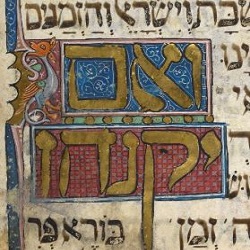
Crossing palaeographical borders: bi-alphabetical Hebrew scribes and manuscripts in Egypt, Spain and Northern France (11th to 15th centuries) 

Medieval Jewish scribal culture reflects long-standing post-biblical traditions elaborated by Jewish communities in Palestine, Egypt and Mesopotamia.  Moreover, despite major linguistic and scribal differences, Jewish medieval scribes in both East and West were well aware of the palaeographical specificities of the non-Jewish cultures among which they resided. This awareness is apparent in the manuscripts themselves: some contain texts written in different languages and alphabets, others are written in Hebrew script with features echoing the scripts of the majority cultures.  Taking as examples manuscripts written in Egypt, Spain and Northern France between the eleventh and the fifteenth centuries, I attempt to uncover some of the mechanisms, technical, aesthetic and social, underlying such scribal cross-cultural encounters.

Professor Judith Olszowy-Schlanger is the Director of Studies, École Pratique des Hautes Études (EPHE), Section des Sciences Historiques et Philogogiques, Sorbonne University, Paris and is a corresponding fellow of the British Academy. She is a highly distinguished scholar, funded by the Rothschild Foundation to research uncatalogued material, and her subject is fundamental to current work on medieval Europe. She heads a pan-European project entitled ‘Books within Books’ (http://hebrewmanuscript.com), that seeks to locate, photograph and describe every Hebrew manuscript to be found in the bindings of books (these are mostly books written in Latin) now in libraries across Europe. She is a leading specialist in the study of Hebrew manuscripts, palaeography and diplomatic, the history of medieval linguistic thought and Christian Hebrew scholars in the Middle Ages.

2017 Palaeography Lecture Poster

CFP: Archaising/Classicising/Medievalising (Oxford, 17 Jun 17)

downloadCentre for Classical Studies, Corpus Christi College, Oxford, June 17, 2017
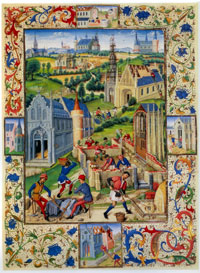
Deadline: May 2, 2017

Call for Papers:
Archaising/Classicising /Medievalising:
Self-Historicisation and its Discontents

Saturday June 17,
Centre for Classical Studies,
Corpus Christi College,
Oxford

Texts, songs, buildings, or objects that consciously refer to themselves using the visual, aural, or architectural vocabulary of a previous era present both interesting historical and critical, as well as historiographic, questions. This one-day symposium intends to ask what self-historicising means in the widest possible variety of contexts and media, and to address some the of theoretical gaps in the study of objects that are aware of their own temporality. Medievalising tendencies in the text style or decoration of Early Modern printed books, for instance, raise questions about what constitutes ‘humanist’ or ‘Renaissance’ content, and the geographic assumptions of Italianate origin often associated with classicising and not medievalising. Other possible topics include seventeenth through nineteenth century classicisms and their implications for the Grand Tour, classicisms and colonialisms, Protestant and Catholic classicisms during the Reformation, the association between materiality and archaising in general, as well as archaising tendencies (Roman to Greek, Imperial Roman to Republican &c) in classical text and art itself. Participants from across the humanities and social sciences are invited to submit an approximately 250 word abstract for a 15-20 minute paper on any related
topic, with the goal of mutual discussion across disciplinary and period lines in common. Provisions for slides, audio, or other media display, will be made ahead of time, and lunch is included with the £15 conference fee.  Abstracts should be submitted by 2 May to Alexandra Marraccini at: avmarraccini@uchicago.edu.

CFP: III Congreso Tardogótico

1360439561_cuadro_main.jpg

El III Congreso Internacional del Tardogótico: Da traça à edificação: a arquitetura dos séculos XV e XVI em Portugal e na Europa, se celebrará en la Universidad de Lisboa entre el 20 y 22 de noviembre de 2017 en la Facultad de Letras (Universidad de Lisboa).

Este Congreso es una organización de ARTIS – Arte Instituto de Historia de la Facultad de Letras de la Universidad de Lisboa y CLEPUL– Centro de Literaturas y Culturas Lusófonas y Europeas (FLUL), en colaboración con la Universidad de Cantabria, la Universidad de Zaragoza, la Universidad de Sevilla y de la Red Temática de Investigación Cooperativa sobre el Arte Tardogótico (Siglos XV-XVI) (Red Tardogótica).

El Congreso, a través de la pluralidad de los temas en debate, permitirá la creación de un espacio relevante para la reflexión y el intercambio científico en torno a la arquitectura de finales del tardogótico portugués y europeo. Por lo tanto buscamos impulsar y fomentar el intercambio de conocimientos que permite nuevos enfoques tanto del punto de vista artístico-técnico, teórico, como metodológico, sobre los temas presentados en el III Congreso Internacional del Tardogótico.


FECHAS IMPORTANTES:

• Fecha límite para el envío de propuestas de comunicación y posters: 15 de mayo de 2017
Normas en http://congressotardogotico2017.weebly.com/
•Anuncio de la aprobación de las propuestas de comunicación: 15 de junio de 2017
• Celebración del congreso:  20, 21 y 22 de noviembre de 2017
• Envío del texto final para publicación: 30 de enero de 2018


ÁREAS TEMÁTICAS:

1) Formas e Ideas: movilidad y transmisión de los conocimientos en arquitectura

2) Los maestros de la arquitectura tardogótica y del renacimiento: recursos y obras

3) Mecenas y promotores. Identidad, magnificencia y prestigio

4) Trazas, muestras y otras representaciones gráficas como elementos ordenadores de la arquitectura de los siglos XV y XVI

5) Materiales, técnicas y procesos construtivos de los siglos XV y XVI

6) La arquitectura tardogótica y la permanencia del lenguaje constructivo

7) La investigación en arquitectura tardogótica y del renacimiento. Presentación de proyectos (área temática para posters)

8) Arquitectura de los espacios del Atlántico y del Índico en su relación con el contexto europeo

9) Definición de conceptos. Teoría e historiografía

10) Arquitectura figurada. Representaciones de arquitectura de los siglos XV y XVI en otras artes

11) Lenguajes y metalenguajes en la arquitectura europea de los siglos XV y XVI


MÁS INFORMACIÓN EN:

http://congressotardogotico2017.weebly.com/

Conference – Norwich and the Medieval Parish Church c.900 – 2017 – The Making of a Fine City (17-18 June 2017)

Weston Room, Norwich Cathedral Hostry

17-18 June 2017, The Weston Room, Norwich Cathedral Hostry (Followed by walking tours and site visits in Norwich on 19 June)

We are delighted to announce details of the research project’s forthcoming conference. All 58 churches, whether existing, ruined or lost, are included in the scope of the project, which seeks insight into how the medieval city developed topographically, architecturally and socially. The Project is intended to reveal the interdependent relationship between city, community and architecture showing how people and places shaped each other during the middle ages. The conference (supported by the Paul Mellon Centre for Studies in British Art and Purcell) will present the medieval parish churches of Norwich in their immediate local context and in the broader framework of urban churches in Britain and northern Europe. The subject range will include documentary history, the architectural fabric of the buildings themselves and their place in the topography of Norwich, the development of the churches’ architecture and furnishings, the representation of the churches and their post-Reformation history.

Conference fee: £50 per delegate | £40 per student delegate (limited number of places available). The conference fee includes refreshments and sandwich lunch on both days, and a drinks reception in Norwich Cathedral cloister on Saturday evening.St Laurence clerestory

Online bookings: http://store.uea.ac.uk/conferences-and-events/faculty-of-arts-and-humanities/conferencesevents/norwich-and-the-medieval-parish-church-c900-2017-the-making-of-a-fine-city

Booking enquiries, including alternative ways to book: please contact Katie Scales (artsandhumanitiesevents@uea.ac.uk)

For further information, including provisional programme: Conference provisional programme and booking information

Conference supporter logos

CFP: Art and Cross-Cultural Dialogue: Identity and Cultural Diversity

David Gareja Monastery, Georgia, 13-c. mural

The fourth international conference for PhD students and recent PhD graduates will take place in Tbilisi, 28-30 September 2017. The event will focus on cross-cultural dialogue, identity and cultural diversity in culture and art. The topic itself has been a part of our cultural identity, but has not been thoroughly researched due of its complexity.

From antiquity to the present, the history, culture and art of different countries and nations maintains the memory of relations and exchanges of ideas. The reasons for and forms of their relations were different. Whether a peaceful connection, or in some cases invasion and conflict, their coexistence was reflected in different fields of social life, culture and art. In this controversial process, politics, society and people played special roles.

The crossroads as a meeting point of many different states, people, religions and cultures was a very vibrant “place” where unique artistic phenomena were created, where the connections reflected societies, cultures, tastes and fashions. In this cultural diversity each element has a special role.

 At our gathering we would like to discuss this topic in a new way from the most interesting and imaginative angles. We invite proposals with new approaches and new perspectives, rethinking old knowledge in relation to cross-cultural relations, cultural diversity and identity.

 The topics of the conference include, but are not limited to:

 Crossroads as a meeting point of various cultures

  • Unexpected encounters: cross-cultural dialogue beyond space and time

  • Where is the border of identity and cultural diversity?

  • Geographical, epochal and cultural borders through the centuries: similarities and differences between them. Historical backgrounds, influences and cultural identity

 Art as one of the main expressions of identity

  • Coexistence and the process of synthesis through the prism of localcultural traditions

  • Artists beyond borders

  • Designed structures in open space as carries of cultural identities

  • Cross-roads as a melting point of ideas

 Memory and memorials

  • Memory, local traditions and foreign influences: idea, content and form

  • Places of shared memory. Sacred space and aspects of cultural and religious heritage and inter-faith dialogue

  • The role of individuals in the formation of the cultural process through history: rulers, clerics, missionaries, ambassadors and travellers

  • Religious diversity and cultural encounters

 What defines identity in the globalisation process?

  • Rules of attraction: uniting and dividing cultural principles between idealization and demonization

  • Global and local in work of art or at art exhibitions

  • Lost in translation: the limits of cross-cultural dialogue

Proposals should include name, contact information (address, phone number, e-mail), title of the paper, short CV(maximum 200 words) and an abstract (maximm 400 words); to be sent by email to conference.phd2017@gmail.com.

For more information, please visit the link: http://phdconference2014.wixsite.com/dmr-ljubljana/copy-of-cfp-2016

Call for Papers for the 2017/18 Academic Year Lecture Series „Art – Research – Gender“ Lecture Series of the Office of Gender Issues, University of Applied Arts Vienna

University of Applied Arts Vienna.jpgExcessively Big Gestures

In the 2017/18 academic year, the transdisciplinary lecture series will pursue excessiveness. Interesting here is what is deemed inappropriate and simply too much in the form of speech, literary writing, and courses of action in the performative arts (including comedy). Or in the realm of queer-feminist activism, and the consciously fanatical, provocative manifestos that repeatedly accompany these articulations, such as Mina Loy’s Feminist Manifesto (1914), Valerie Solanas’ SCUM Manifesto (1967), Bikini Kill’s Riot Grrrl Manifesto (1991), Beatriz Preciado’s Manifiesto contrasexual (2000), Virginie Despentes’ King Kong Théorie (2006), or the feminist migrant collective MAIZ’s deployment of Oswald de Andrade’s Manifesto An-tropófago (1928).

Excessiveness can be found in overshooting the forms and formats through unexpected du-ration, or with litanies and persistent repetitions. A narrowing in the direction of doing, in the framework of an artistic mode of articulation, can also be excessive. Protest forms can be addressed in this way as well – the emphasis should lie on the linguis-tic, on time-based gestures and on activism. We are on the lookout for big gestures that evoke the excessiveness inherent in normative gender relations, such as the deed of a figure like Jeanne Dielman in Chantal Akerman’s 1975 film by the same name. The excessive act here follows an exaggerated accurateness in the daily actions of a housewife and sex work-er, which is gradually interfused with minimal disturbances and consequently becomes the-matized in diverse, but intertwined levels of in/appropriateness.

In the scope of this lecture series, strategies of pooling attention through risky actions in gender-critical terms should be reflected upon, e.g. how existing social asymmetries can be made visible through reversal or escalation without being populistic. Another matter of interest is how possible trivialization as provocation can be met, and also, to what degree an adoption of heroism can be critically countered.

About the Lecture Series:
The „Art – Research – Gender“ lecture series will be held at the University of Applied Arts Vienna over the 2016/17 academic year and can be taken as a course as well. It is organized by the Office of Gender Issues.

Scientists and artists of all disciplines are invited to present their perspectives on the ques-tions raised above. We particularly welcome submissions by young researchers – from the area of their thesis, for example. Speakers are paid compensation of € 300 and can claim reimbursement of travel costs.

Usually, eight lectures are selected for each academic year, which are held on Wednesdays at the University of Applied Arts in Vienna. We expect talks to take up to 60 minutes; a discussion follows.

Concept & Organization: Office of Gender Issues

Please submit your proposal by email on or before April 30, 2017, to gender@uni-ak.ac.at
Please include:
• Working title
• Abstract (300 words)
• Short biography
• Your contact data

Submissions are accepted in German or English.

The International Image Interoperability Framework (IIIF) 2017 Conference in The Vatican (7-9 June 2017)

worlds imagesThe International Image Interoperability Framework (IIIF) 2017 Conference in The Vatican is intended for a wide range of participants and interested parties, including digital image repository managers, content curators, software developers, scholars, and administrators at libraries, museums, cultural heritage institutions, software firms, and other organizations working with digital images and audio/visual materials. The conference will consist of two events with separate registration:

Registration info and more: http://iiif.io/event/2017/vatican/ 

Publication – Anna M. Migdal, « Regina Cœli. Les images mariales et le culte des reliques. Entre Orient et Occident au Moyen Âge »

regina coeli.jpegLes images-reliquaires, dont la singularité attire notre attention, se définissent par la complexité de leur composition tant au point de vue artistique qu’au point de vue religieux. Il s’agit ici des peintures sur panneau de bois (plus rarement, sur verre églomisé), ayant fonction de porte-reliques, et décorées dans certains cas de pierres précieuses ou semi-précieuses. Le modèle de tableau-reliquaire : panneau unique, diptyque et triptyque comprenant le portrait de la Vierge à l’Enfant enchâssé dans une large bordure incrustée de reliques, se répandit particulièrement dans la péninsule italienne, et par la suite en Europe centrale. Cependant, les reliquaires polonais, connus sur le territoire de la Petite-Pologne durant le XVe siècle jusqu’au début du siècle suivant, ne sont mentionnés que de manière sporadique dans l’histoire de l’art. Ils sont apparus dans quelques articles, mais sans avoir fait l’objet d’aucune analyse spécifique quant à leur contenu iconographique, leur similarité formelle, ainsi qu’à l’égard de leur usage dévotionnel. C’est pourquoi, nous souhaitons les joindre aux créations semblables répandues dans l’art entre Orient et Occident au Moyen Âge. Dans la même optique, il serait également intéressant de s’interroger sur la continuité de tels objets au-delà de l’époque médiévale.

Historien de l’art, ancienne boursière de l’École française et de l’Académie de France à Rome, Anna M. Migdal est spécialisée dans l’étude des arts plastiques et de l’iconographie du Ve au XVIe siècle. Le doctorat soutenu à l’Université Lumière Lyon II – Maison de l’Orient et de la Méditerranée, a suivi les études à l’Institut d’histoire de l’art de l’Université Jagellon.

Informations pratiques :
Anna M. Migdal, Regina Cœli. Les images mariales et le culte des reliques. Entre Orient et Occident au Moyen Âge, Turnhout, Brepols, 2017 (Hagiologia, 12). Approx. 438 p., 110 b/w ill. + 26 colour ill., 156 x 234 mm. ISBN: 978-2-503-56858-4. Prix : 95 euros.

CFP: Horses in Art: The Familiar and the Alien Session at the International Medieval Congress, Leeds, 4 July 2017: 11.15-12.45

Gentile da Fabriano, 15c, detail

IMC 2017: Last minute call for papers

Below is a list of two-paper sessions which still require a third paper.If you would like to propose a paper for any of the sessions please send your paper to us via email noting the session you have applied for at the top of your message. If we have included contact details for the organiser, please contact them first to discuss your paper.

Session 603

Horses in Art: The Familiar and the Alien

Tuesday 4 July 2017: 11.15-12.45

Organiser: Edgar Rops, Faculty of Law, University of Latvia, Riga

Moderator: Anastasija Ropa, Department of Management & Communication Science, LASE, Riga (Anastasija.Ropa@lspa.lv)

Horses, omnipresent in the medieval life, make a frequent appearance in medieval art in a variety of forms and guises, referring the viewer to the familiar realities or carrying him or her to the realms of fantasy and alterity. Likewise, the connotations of equines and equestrians differs: from the metaphoric and symbolic to the purely practical, the interaction between horses and humans in visual media channels a variety of meanings. The papers presented in this thematic session on horses in medieval art study the representation of equines in various physical contexts: on tapestries and frescoes, as well as manuscripts.


For other sessions still seeking papers at IMC Leeds 2017, see the conference website.

Book Roundup: Recent Publications on Medieval Art in English, French and Italian

lire les objets.jpgLire les objets médiévaux

Quand les choses font signe et sens

Ce livre prend le « parti-pris des choses », à la confluence de l’histoire, l’histoire de l’art, |’archéologie, l’anthropologie et la philosophie en interrogeant les spécificités de l’objet au Moyen Âge en littérature. Pas encore doté d’une autonomie matérielle propre, l’objet médiéval, carrefour herméneutique, fonctionne comme signe d’une grande plasticité, apte à référer à autre chose qu’à lui-même, à assurer un rôle médiateur et une fonction identitaire ou transactionnelle. Il nécessite donc de prendre en considération son rapport avec le sujet.

Informations pratiques :
Fabienne Pomel (dir.), Lire les objets médiévaux. Quand les choses font signe et sens, Rennes, Presses universitaires de Rennes, 2017 (Interférences). Format : 15,5 x 21 cm. Nombre de pages : 320 p. Illustrations : N & B. ISBN : 978-2-7535-5309-5. Prix : 22,00 €.


flemish primitives.jpgThe Century of the Flemish Primitives : Late Medieval Art in the Royal Museum of Fine Arts in Antwerp
Author: Vandenbroeck, Paul
Price: $42.50
ISBN: 9789085867272
Record created on 03/04/2016
Description: Schoten: BAI, 2016. 23cm., hardcover, 144pp. illus. English translation of 2014 edition.

Summary: At 152 paintings, the collection of ‘Flemish Primitives’ held by the Royal Museum of Fine Arts Antwerp is the largest in Flanders. This publication gives an overview from ‘pre-Eyckian’ painting to some of the highpoints of late medieval art from beyond the Low Countries. Works discussed include altarpieces, secular art, pieces by women religious, Flemish artists elsewhere in Europe, as well as sculpture. Besides the religious views that framed thought, the art of painting is contextualized in a wider perspective on art itself.

restauro-petronio-254x330.jpgMARIA CRISTINA IMPROTA. Il restauro dei portali di San Petronio a Bologna. Studi e approfondimenti, Edifir, 2016, 232 p.
ISBN: 978-8879707442

El presente volumen está dedicado a la presentación del complejo proyecto de conservación y restauración -a nivel de diagnóstico en una fase preliminar- para la caracterización de los materiales constituyentes y para el estudio del estado de conservación de estos materiales en la fachada de la basílica de San Petronio en Bolonia, llevado a cabo por el Opificio delle Pietre Dure.

El O.P.D. ha efectuado la intervención de la restauración de los tres portales de la fachada de San Petronio (la portada central o Porta Magna de Jacopo della Quercia, y las dos portadas laterales, diseñadas por Ercole Seccadenari entre 1524 y 1530) en sólo tres años, afrontando las espinosas problemáticas típicas de las esculturas al aire libre en condiciones severas de conservación.

Se ha aplicado un protocolo de intervención absolutamente innovador que ha permitido obtener resultados ampliamente satisfactorios.

fondi-medioevo-242x330MARIO D’ONOFRIO, MANUELA GIANANDREA (dir.), Fondi nel Medioevo, Gangemi, 2016, 351 p.
ISBN: 978-8849233384

Este volumen contiene las actas de la conferencia internacional celebrada en Fondi en octubre de 2013, un congreso que tenía como objetivo principal dar a conocer los extraordinarios tesoros histórico-artísticos de la época medieval aparecidos durante los últimos quince años en la ciudad de Fondi y su territorio, gracias a una campaña sostenida de restauraciones y de mejoras.

Entre los monumentos y obras redescubiertas y restauradas figuran el monasterio de San Magno, el complejo de San Domenico, la iglesia de San Tommaso d’Aquino, las pinturas del Palazzo Caetani, el complejo arqueológico medieval de Casale Mosillo y los fragmentos pictóricos de Suio.

Además de la importancia evidente y obvia del propio descubrimiento, la mayor parte de las obras dadas a conocer permiten ilustrar un prolongado período de la historia artística de Fondi -desde la Alta Edad Media hasta inicios del siglo XIV- que hasta ahora se mantenía parcialmente en la sombra en favor de la etapa del Renacimiento tardío.

Los nuevos hallazgos permiten ahora poner de manifiesto también un “otro Fondi”, revelando un panorama rico y articulado, vinculado por su naturaleza a la producción artística de la histórica Terra di Lavoro, así como también abierto a la región Marittima medieval, o incluso a Roma.

Fondi, por lo tanto, se revela en estos siglos como un centro cultural entre la Urbe y el Regnum, pasando a formar parte de la relación problemática entre “centro” y “periferia”, que hasta bien entrado el siglo XIII estrechó Roma y Montecassino a su entorno.