Concference: L’espace sacre au sein de l’eglise medievale (Paris, 5-6 Jun 18)

Conference: L’espace sacre au sein de l’eglise medievale

Maison Archéologie Ethnologie René Ginouvès – Université Paris Nanterre, June 5 – 06, 2018

« L’espace sacré au sein de l’Eglise médiévale » Colloque du 5 et 6 juin 2018 – Université Paris Nanterre – Maison Archéologie Ethonologie René Ginouvès 

Postulat : Les rites liturgiques articulent la structure matérielle d’un édifice ecclésiastique. De ce fait, chaque conception artistique participe à son aménagement. Reproduit sur un bloc de pierre – claveaux de grandes arcades ou chapiteaux – à partir d’objets sacrés comme les chancels, le motif sculpté aide à identifier un espace liturgique spécifique. Cette question de l’espace liturgique peut également être considérée à travers le prisme de l’objet liturgique. Plusieurs cérémonies se déroulent, en effet, en dehors du cadre bâti de l’église : les processions, les drames liturgiques ou encore une partie des funérailles. Les objets liturgiques ont alors pour fonction de transposer, en dehors de leur cadre habituel, les rites cultuels.
Ce colloque international, qui aura lieu les 5 et 6 juin 2018 dans les locaux de la Maison Archéologie et Ethnologie de René- Ginouvès (MAE), a pour objectif de mettre en présence jeunes chercheurs et spécialistes reconnus pour dresser un état de la question dans les travaux actuels. Deux thématiques rythmeront ces deux jours dans lesquelles seront regroupées les communications des intervenants.

Comité organisateur :

  • Aude CHEVALIER, université Paris Nanterre, ArScAn-THEMAM-UMR 7041, ED 395
  • Anastasiya CHEVALIER-SHMAUHANETS, université Paris Nanterre, ArScAn-THEMAM-UMR 7041, ED 395
  • Anna JEANNEL, université Paris Nanterre, ArScAn-THEMAM-UMR 7041, ED 395

Comité scientifique :

  • Brigitte BOISSAVIT-CAMUS, professeure d’archéologie et histoire de l’art médiéval, université Paris Nanterre, ArScAn- THEMAM
  • Cécile COULANGEON, maître de conférences en histoire de l’art médiéval, Institut Catholique de Paris
  • Fabrice HENRION, archéologue, délégué scientifique et technique, Centre d’études médiévales d’Auxerre
  • Panayota VOLTI, maître de conférences en histoire de l’art médiéval, université Paris Nanterre, ArScAn-THEMAM


Mardi 5 juin 2018

13h30 – 18h20

13h30 : Accueil des participants

Session 1
- La sculpture comme marquage matériel d’un espace liturgique
Présidente de séance : Marie-Thérèse Camus, professeure émérite en histoire de l’art médiéval

14h00 : Introduction par Alain Rauwel, professeur agrégé, université de Bourgogne, membre titulaire du Centre d’études en sciences sociales du religieux, EHESS

14h10 : L’entrelacs carolingien, marqueur de temps et d’espace
Christian Sapin, directeur de recherche émérite au CNRS

14h40 : Quelques limites de chœurs liturgiques, barrières sculptées et grilles ornées, opacité ou transparence
Pascale Chevalier, maître de conférences en histoire de l’art et archéologie médiévale, université de Clermont Auvergne, ARTeHIS

15h10 : Cluny et la sacralisation processionnelle de l’espace : l’hypothèse érigénienne
Père Arnaud Montoux, maître de conférences, Institut Catholique de Paris

Pause

16h00 : Entrelacs normands, marqueur d’un espace sacré dans les églises rurales du diocèse de Rouen (XIe-XIIe siècles) ? État de la question
Anastasiya Chevalier-Shmauhanets, doctorante en histoire de l’art médiéval, université Paris Nanterre, ArScAn-THEMAM UMR 7041, ED 395

16h30 : To terrorize demons ? Gargoyles and their meaning
Elizabeth Den Hartog, maître de conférences en histoire de l’art médiéval, université de Leyde

17h00 : La crypte de la cathédrale de Chartres au milieu du XIIe siècle : changement de décor – changement de programme?
Philippe Plagnieux, professeur d’histoire de l’art médiéval, université Paris 1 Panthéon-Sorbonne, HiCSA, École nationale des chartes
Pause

Session 2 – L’édifice et sa pratique liturgique
Présidente de séance : Cécile Coulangeon, maître de conférences en histoire
de l’art du Moyen Âge, Institut Catholique de Paris

17h50 : Méthodes d’analyse de la topographie liturgique, à l’exemple de quelques cathédrales et églises conventuelles en Allemagne pendant l’époque romane
Clemens Kosch, conservateur

Mercredi 6 juin 2018

8h45 – 16h30
8h45 – 9h00 : Accueil des participants

9h00 : D’une église paroissiale à un prieuré clunisien, exemples archéologiques récents et limites des observations
Fabrice Henrion, archéologue, délégué scientifique et technique, Centre d’études médiévales d’Auxerre

9h30 : Les travées droites entre la nef et le chœur : dénominations, fonctions, marques dans l’espace ? Étude de cas du diocèse de Langres
Anna Jeannel, doctorante en archéologie médiévale, université Paris Nanterre, ArScAn-THEMAM UMR 7041, ED 395

Session 3
- La relation entre espace et objets liturgiques à la lumière des sources textuelles et iconographiques
Président de séance : Frédéric Tixier, maître de conférences en histoire de l’art médiéval, université de Lorraine, CRULH

10h00 : Les objets liturgiques : sens et pratiques (propos introductif)
Catherine Vincent, professeure d’histoire du Moyen Âge, université Paris Nanterre, CHISCO

10h20 : L’apport de la liturgie à la conception du décor peint d’un monument funéraire byzantin : le cas de la chapelle cimétériale du monastère de Bačkovo (Bulgarie)
Yoanna Planchette, docteure en histoire de l’art médiéval, université Paris Nanterre

Pause

11h10 : D’un support à l’autre : culture écrite et performance liturgique sur les objets et dans les lieux
Marie Charbonnel, ingénieure d’étude, université Bordeaux-Montaigne, IRAMAT-CRP2A, Programme Monasticon Aquitaniae

11h40 : L’objet liturgique et la mise en image de l’espace sacré dans les manuscrits de La Cité de Dieu, traduction de Raoul de Presles
Valérie Ruf-Fraissinet, docteure en histoire de l’art médiéval, université Paris Nanterre, ArScAn-THEMAM UMR 7041

12h10 : Figer l’encensement ? Réflexions sur quelques représentations d’encensoirs dans l’espace sacré
Aude Chevalier, doctorante en histoire de l’art médiéval, université Paris Nanterre, ArScAn-THEMAM UMR 7041, ED 395
Pause déjeuner (sur place)

Session 4
- Les objets liturgiques comme marqueurs d’un espace sacré18
Président de séance : Alain Rauwel, professeur agrégé, université de Bourgogne,
membre titulaire du Centre d’études en sciences sociales du religieux, EHESS

14h00 : « Ce grain d’incens qui remplit une église »
Hiltrud Westermann-Angerhausen, professeure émérite, université Heinrich Heine de Düsseldorf

14h30 : Quelle(s) place(s) pour la monstrance eucharistique dans et à l’extérieur de l’église médiévale ?
Frédéric Tixier, maître de conférences en histoire de l’art médiéval, université de Lorraine, CRULH

15h00 : Reliquary shrines in sacred space. Some remarks
Dorothee Kemper, Dorothee Kemper, docteure et chercheuse en histoire de l’art, directrice de l’association allemande d’histoire de l’art

15h30 : Spatialisation signifiante dans les églises byzantines : la place des icônes et de l’iconostase Panayota Volti, maître de conférences en histoire de l’art médiéval, université Paris Nanterre, ArScAn-THEMAM

16h00 : Conclusion par Alain Rauwel, professeur agrégé en histoire médiévale, université de Bourgogne, et Brigitte Boissavit-Camus, professeure d’archéologie et d’histoire de l’art médiéval, université Paris Nanterre, ArScAn-THEMAM

Merci de bien vouloir signaler votre présence à l’un des membres du comité organisateur

Contacts:
annajeannel@gmail.com
aude_chevalier@hotmail.fr
nastiachevalier@gmail.com

The GCMS Summer Symposium 2018: Emotion and Devotion in Medieval Europe (21/06/2018)

0434f4d0c9a027131f98d2fc909e8ca4This symposium will explore the growing area of research into the study of male and female medieval lay piety, and is being run by the Graduate Centre for Medieval Studies in collaboration with the University of Reading History Department Research Cluster ‘Emotion, Devotion and Belief’.
Speakers to include:

  • Robert Swanson (University of Birmingham)
  • Miri Rubin (Queen Mary, University of London)
  • Amanda Murphy (Università Cattolica del Sacro Cuore, Milan)
  • Katherine Lewis (University of Huddersfield)
  • Sarah Bastow (University of Huddersfield)
  • Sarah Macmillan (University of Birmingham)
  • Paul Davies (University of Reading)
  • Helen Parish (University of Reading)
  • Rebecca Rist (University of Reading)

The Symposium is held on Thursday 21 June 2018, from 9am to 6pm, at the Van Emden Lecture Theatre and GCMS Room (G27L) (Edith Morley, Whiteknights Campus, University of Reading). Coffee, lunch and tea will be provided. Registration cost: £10

To book your place please use this link: https://www.reading.ac.uk/GCMS/GCMSEvents.aspx

For more information on how to book your place or any other queries do contact: GCMS@reading.ac.uk or r.a.c.rist@reading.ac.uk

Coll & Cortes Medieval Spain Seminar Series: Images, devotion and emotion in 13th- and 14th-century Castile (18 April 2018)

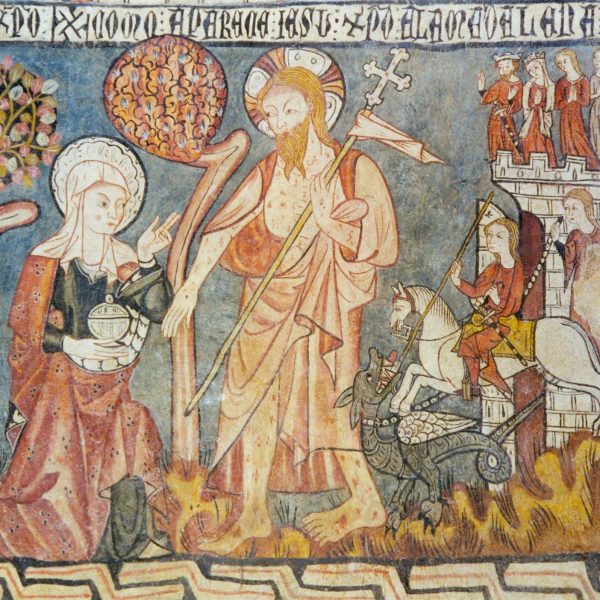
toro-santa-clara-600x600What was the role of images in the religious experience of Castilian people of the 13th and 14th centuries? There is no clear answer, and the scarcity of written evidence has prompted much problematic speculation. However, on the basis of the images themselves and of relevant literary sources, including the well-known Cantigas de Santa María and works by 14th-century authors such as Juan Ruiz and Juan Manuel, it is possible to explore a number of key issues. The talk will be divided into three sections. One focuses on the 13th century: ‘Active images: the Cantigas de Santa María and their aftermath’. Another looks to the 14th century: ‘Passive images: the reception and dissemination of the Crucifixus dolorosus in Castile’. And it concludes by looking ‘beyond’ Art History. In the 1960s a Spanish politician coined the (in)famous tourist slog, ‘Spain is different’. His aim was to encourage foreigners to visit Spain, but the slogan is representative of a commonplace that has been repeated time and again since the Romantic era. Ultimately, my talk offers an invitation to reconsider whether Castilian and Spanish devotional practices are really so very different from those recorded elsewhere in medieval western Europe.Continue reading “Coll & Cortes Medieval Spain Seminar Series: Images, devotion and emotion in 13th- and 14th-century Castile (18 April 2018)”

Online Course: Massive Open Online Course Burgos: Deciphering Secrets of Medieval Spain, 9 April 2018

Roger Martinez is pleased to announce the launch of a new Massive Open Online Course (MOOC) that specifically focuses on medieval Spanish paleography training. The course is called Burgos: Deciphering Secrets of Medieval Spain and it will be offered on a monthly basis on coursera.org at https://www.coursera.org/learn/burgos-deciphering-secrets-medieval-spain. The next class begins on 9 April 2018. This six-week course is intensive — it requires, on average, 10-12 hours of your time per week.

This is the first of three new MOOCs that offer intensive paleography training. Three additional MOOCs pertaining to the medieval/early modern history of Toledo, Plasencia, and Granada, will be launched over the next 3 to 9 months. These courses are in addition to an introductory course on medieval Spain titled, Coexistence in Medieval Spain: Jews, Christians, and Muslims, and another titled, Deciphering Secrets: The Illuminated Manuscripts of Medieval Europe.Continue reading “Online Course: Massive Open Online Course Burgos: Deciphering Secrets of Medieval Spain, 9 April 2018”

Call for Papers: “Das Mittelalter”, Themenheft: Theorien und Praktiken des Gebets im Mittelalter (Deadline 30/04/2018)

yolandeThemenheft der Zeitschrift “Das Mittelalter. Perspektiven mediävistischer Forschung”:
“Theorien und Praktiken des Gebets im Mittelalter”

Das Gebet ist in nahezu allen sozialen Bereichen, Diskursen und medialen Formationen des Mittelalters präsent. Es organisiert einen wesentlichen Bereich der gesellschaftlichen Kommunikation als Kommunikation mit der jenseitigen Welt, überbrückt die Grenze von Diesseits und Jenseits, trägt zur Medialisierung von Heil und Gnade bei und besetzt eine ebenso zentrale wie voraussetzungsreiche Position innerhalb der religiösen Wirklichkeits- und Ordnungskonstruktionen der Zeit. Die Reichweite des Gebets ergibt sich nicht zuletzt daraus, dass es sich in unterschiedlichste Räume und Praktiken integrieren sowie mit vielfältigen materiellen Medien und Medienverbünden koppeln lässt.

Die historische Bedeutung des Gebets steht dabei in einem auffälligen Missverhältnis zu der geringen Aufmerksamkeit, die es innerhalb der mediävistischen Forschung erhält. Hier setzt das geplante Themenheft an: Es profiliert das Gebet als einen Gegenstand, dessen kulturgeschichtliche Relevanz erst noch zu erschließen ist. Gerade seine Ubiquität in der mittelalterlichen Gesellschaft spricht für ein gewinnbringendes und nur interdisziplinär durchführbares Forschungsprogramm. Ausgehend von theologischen, historischen, medien-, literatur- wie sprachwissenschaftlichen, musikwissenschaftlichen und kunstgeschichtlichen Fallstudien formuliert das geplante Heft Grundfragen und Desiderate einer interdisziplinären Gebetsforschung.

Um fächerübergreifend weiterführende Ansätze zu entwickeln, soll das Gebet im Spannungsfeld historischer Theorien und Praktiken verortet werden. Folgende Leitfragen dienen zur Orientierung:

– Wo liegen Schnittstellen von theologischen Theorien des Betens und gebetspraktischen Medien und Artefakten (z.B. Texten, Bildern, Musik, Gebetsketten) und wo liegen methodische Probleme und Grenzen der Übertragbarkeit?

– Wie unterscheidet sich das öffentlich-liturgische Gebet von der individuellen „Zwiesprache“ mit Gott? In welchen Konkurrenz- oder Komplementärverhältnissen stehen liturgische und private Gebetspraktiken und wie werden diese Verhältnisse theoretisch formuliert?

– Inwiefern reflektieren Gebetsmedien die kommunikativen Bedingungen der Gebetspraxis?

– Welchen Spannungen ist die Gebetspraxis im Kontext institutioneller Formen der Heilsvermittlung ausgesetzt (z. B. Buß- und Ablasswesen)?

– Auf welche Orte und räumlich-architektonischen Kontexte sind das Gebet und die Gebetspraxis bezogen?

– Welche historischen Semantiken, Typologisierungsansätze und begriffliche Abgrenzungsprobleme – z. B. von oratio und meditatio – sind in lateinischen und volkssprachlichen Gebetsdiskursen verbreitet?

– Wie verhalten sich die rhetorischen Strukturen mittelalterlicher Gebetstexte zu allgemeinen Theorien der Rhetorik und zu Rhetoriken des Gebets (z.B. Wilhelms von Auvergne Rhetorica divina)?

– In welchen intermedialen und transgenerischen Kontexten spielen Gebete eine Rolle?

– Welche historischen Beschreibungsmodelle für Stimme und Klang des Betens lassen sich rekonstruieren, und wie verhält sich psalmodierend oder in liedhafter Form praktiziertes Beten zum gesprochenen Gebet? Welche Aspekte ergeben sich bei mehrstimmig vorgetragenen Texten?

– Welche Appellstrukturen sind in Gebetsmedien angelegt, und wie lässt sich das Verhältnis von Gebetsmedium und Gebetsvollzug präzise beschreiben?

Das geplante Heft trägt dazu bei, den bislang vorwiegend einzeldisziplinär angelegten Zugriff auf das Gebet zu überwinden. Es soll die fächerübergreifenden Diskussionen um die Medialität des Heils im Mittelalter weiterentwickeln und genutzt werden, um geläufige Paradigmen zur spätmittelalterlichen Religiosität (z. B. Quantifizierung des Betens und ‚Gezählte Frömmigkeit‘) neu zu evaluieren. Während sich die historischen Forschungen innerhalb der verschiedenen Disziplinen dem Gebet bisher fast ausschließlich über das spezifische Überlieferungsmedium des Gebetbuchs genähert haben, wird das Heft in übergreifender Absicht Theorie und Praxis des Gebets in den Blick nehmen und neue synchron und diachron angelegte Forschungsperspektiven eröffnen, die auch Anschlussmöglichkeiten für kulturübergreifende Vergleiche herstellen sollen. Interreligiöse Perspektiven und Fallstudien aus dem Bereich der Judaistik, Byzantinistik, Islamwissenschaft und Islamischen Theologie sind besonders erwünscht.

Abstracts im Umfang von max. 4000 Zeichen (inkl. Leerzeichen) werden bis zum 30.4.2018 erbeten. Bitte senden Sie Ihre Vorschläge an Mirko Breitenstein: breitenstein@saw-leipzig.de und Christian Schmidt: christian.schmidt1@uni-goettingen.de.

CFP: Negotiation the Past. Islamic Heritage in Italy and Spain, Venice (1-2 February 2019), deadline 30 April 2018

The conference will focus on the discussion about the Islamic heritage in Italy and Spain and its later reception in the post-Islamic context. Sharing an Islamic past, both countries display this heritage in different ways through art and architecture. As cultural contact zones, Italy and Spain had a rich Islamic tradition, which has been adopted in the medieval Norman and Mudéjar artistic production.

These exchange processes are currently subject to ongoing international discussions. Furthermore, the observed medieval transfer mechanisms may be applied to the modern reception of the Italian and Spanish Islamic heritage. Which differences may be detected between the medieval edifices of Palermo or Seville and the neo-Islamic interiors in Sammezzano or Aranjuez? Has the reception behaviour of the 19th and 20th centuries changed compared to that of the Middle Age? How have the Islamic standards been assumed in the modern architectural vocabulary? Who were the possible promotors of this pro-Islamic art trend? What part did the medieval clients and their architects play? How relevant are the travellers, private collectors, arabists or art historians of the 19th century for the valorisation of the Islamic heritage? What was the role of Islamic heritage for the construction of identity and ideologies in both countries?

The current contributions shall be presented in four sections with the following thematic focus:

– Islamic heritage in Italy and Spain
– Cross-cultural exchange in the Middle Age
– Re-appropriating the Islamic past in 19th and 20th centuries art and architecture
– Ideologies and identity building

Papers will have a duration of 20 min. Conference languages will be English, Italian and Spanish. Abstracts of no more than 300 words, together with a short CV, should be sent until 30 April 2018 to: conference@transculturalstudies.ch

Organizers: Prof. Dr. Guido Zucconi (IUAV) / Prof. Dr. Francine Giese (UZH) / Prof. Dr. Juan Calatrava (UGR) / Dr. Ariane Varela Braga (UZH)

Keynotes: Antonio Almagro Gorbea (Escuela de Estudios Árabes CSIC) / Ezio Godoli (UniFl)

Università Iuav di Venezia, 1-2 February 2019
Deadline: Apr 30, 2018

CFP: Moving Violence: Transgressing the Boundaries of Experience in Medieval Imagery, Tel Aviv University, (11-13 December 2018), deadline 18 June 2018

Violence imagery in medieval art reveals a parade of brutal acts: various stages of decapitation, splitting skulls, amputating limbs, enucleating eyes, yanking teeth, cutting off breasts, and other repugnant horrors. Often stripped of direct devotional context and thus presented as violence inflicted upon the imagined bodies of the depicted saints, these portrayals also attacked the body and mind of the viewers, accumulating into a physically and emotionally moving violence: the images incorporate time, space, and motion through movement in the staging of the scenes, which, in turn, stimulated both emotional and bodily reactions in the viewers. It also encouraged the audience to move with and around the images. Suggesting an imaginative somatic experience to the beholders, these images negotiate discourses on the nature of violence, bodily integrity, and the self, and transgress the boundaries between object and subject, representation and viewers, past and present, imagination and historicism.

This conference seeks to explore the complex of rhetoric and response forms to violence imagery, whether in devotional, liturgical, or secular contexts: namely, in the juridical, moral, and ethical discourses. It also seeks to explore how the changing definition of the term violence, whether in textual or visual sources, constitutes the watershed of a given culture, civilization, and their notion of individuality.

We invite papers on any medieval discipline or region that engages with issues of:

Continue reading “CFP: Moving Violence: Transgressing the Boundaries of Experience in Medieval Imagery, Tel Aviv University, (11-13 December 2018), deadline 18 June 2018”

Call for Papers: Der Akt der Bildwerdung. Kreativität und Schöpfungskraft zwischen 1430 und 1530, Cologne 2-3/11/2018 (Deadline 29/04/2018)

an00146423_001_lDas Werkstattgespräch wird sich inhaltlich mit Produktions- und Rezeptionsmechanismen innerhalb von Bildmedien des 15. und frühen 16. Jahrhunderts beschäftigen. Zentrales Thema ist der Prozess der Bildwerdung, also die Frage, wie die Idee und die inventio des Künstlers ins Bild übertragen werden und vor allem, wie sich dieser Übertragungsprozess im Bild nachvollziehen lässt. Dieser Frage wollen wir im Rahmen des Werkstattgesprächs nachgehen und dabei untersuchen, welchen besonderen Stellenwert die Künstler dem kreativen Schaffensprozess und dessen Sichtbarmachung einräumen.

Schon Plinius d. Ä. hatte im 35. Buch der Naturgeschichte postuliert, dass man die unvollendeten Werke der Künstler deshalb mehr bewundert würde, „weil man in ihnen die zurückgelassenen Skizzen [liniamenta] und selbst die Überlegungen [cogitations] der Künstler sieht und weil der Schmerz über die Hand, die während des Schaffens erstarrte, zu höherer Beachtung anreizt.“ Dies zeigt sich etwa in den Vorzeichnungen und Unterzeichnungen, die dem Künstler die Möglichkeit boten unbefangen zu arbeiten, zu experimentieren und das Konzept des Bildes zu verändern, da er nicht erwartete, dass diese Zeichnungen wieder sichtbar werden, nachdem verschiedene Schichten Farbe darüber aufgetragen wurden. Durch Infrarotreflektographien können wir die Intentionen und Gedanken der Werkgenese heute nachvollziehen und für Fragestellungen zum Verhältnis von materieller Form und Invention des Künstlers fruchtbar machen.
Continue reading “Call for Papers: Der Akt der Bildwerdung. Kreativität und Schöpfungskraft zwischen 1430 und 1530, Cologne 2-3/11/2018 (Deadline 29/04/2018)”

Call for Papers: Mary of Guelders – Her Life and Prayer Book (ca. 1400) – Nijmegen, 23-24/11/2018 (Deadline 30/03/2018)

header-uk
Mary of Guelders’ richly illuminated prayer book, written by Helmich die Lewe and completed in 1415, is extraordinary for several reasons: it originally consisted of more than 600 folia, it is richly illuminated, it was written in the Lower Rhine vernacular, and it contains an unusual compilation of prayers, hours and components of a breviary. These past few years the book has been the focus of a research project spearheaded by the Staatsbibliothek zu Berlin and Radboud University in Nijmegen. Their hard work has yielded enough noteworthy results to deserve its own exhibition which will open in Museum Het Valkhof on 13 October 2018 and will run until 6 January 2019. It will feature the research’s findings on the comprehensive and complex prayer book, the life of Mary, Duchess of Jülich and Guelders, and cultural developments in the duchies of Guelders, Jülich and Berg. To mark the occasion of the exhibition entitled ‘I, Mary of Guelders. The duchess and her extraordinary prayer book’ Radboud University is organising a two-day conference in Nijmegen together with Museum Het Valkhof and the Staatsbibliothek zu Berlin.

Continue reading “Call for Papers: Mary of Guelders – Her Life and Prayer Book (ca. 1400) – Nijmegen, 23-24/11/2018 (Deadline 30/03/2018)”

New Publication: San Michele in Monte Laureto a Putignano. La grotta dell’Angelo e la cultura pittorica angioina nel meridione barese, by Marcello Mignozzi

A new book on the theme of Angevin Art in Southern Italy has just been published.
In San Michele in Monte Laureto a Putignano. La grotta dell’Angelo e la cultura pittorica angioina nel meridione barese, Marcello Mignozzi reconstructs the history of the rupestrian church of Saint Michael in Monte Laureto in Putignano (Apulia), Italy, investigating its historiographical, historical, and artistic aspects. The cross analysis of archival and artistic data allows the author to understand the value of an almost forgotten Medieval Sanctuary. The magnificent fourteenth-century fresco with the Crucifixion, made by two artists from Apulia influenced by Neapolitan art, is finally included in the pictorial context of the Angevin region. In this regard a lot of space is dedicated not only to examine the theme of the Crucifixion in the painting of the entire region, but also to frescoes, many of them unpublished, in Polignano, Mola di Bari, Monopoli, Noci, Conversano, Rutigliano, Capurso, Triggiano. Part of the work is then dedicated to the events of the rock church in the Modern Age, to the sculptures of Stefano da Putignano, and to the Contemporary Age. Finally, the study of road networks during the Middle Ages allows the reconstruction of the complex system of pilgrimages, but also of political and artistic relations between Putignano and the Angevin Principality of Taranto.

For more information on this publication, see https://www.ibs.it/san-michele-in-monte-laureto-libro-marcello-mignozzi/e/9788899224301