CFP: NUME Research Group on Latin Middle Ages Florence, Italy (June 3-4, 2019)

1. NUME, Research Group on Latin Middle Ages, organizes the V Cycle of Medieval Studies, June 2019.

2. The goal is to offer a broad overview of the current situation of Italian and international medievalist studies. Issues which are related to many different aspects of the medieval period (V-XV century) can be addressed: history, philosophy, politics, literature, art, archeology, material culture, new technologies applied to medieval studies and so on;

2.1 Contributions with two or more speakers are accepted;
2.2 Contributions already structured in panels and leaded by 1 coordinator are accepted;
2.3 All contributions will be structured in specific panels.

3. The conference will be held from 3rd to 4th June 2019 at the ex Convento Il Fuligno, Florence, via Faenza 48n.

4. Participation proposals must have abstract format, written on a single pdf file in english, not exceeding 300 words. Furthermore, 5 keywords identifying the topic will have to be reported in the same file. Proposals must be accompanied by a short CV (no more than 1000 words), and sent by October 1st, 2018 to the e-mail address:

info@nuovomedioevo.it

4.1 In the case of panels, the proposal must include a general title with a general presentation not exceeding 300 words, followed by abstracts of all the interventions (presented as in point 4.)

5. Proposals will be evaluated by the Review Board on the basis of quality, interest and originality. The judgment of the Commission will be unquestionable.

6. The Commission will notify the convocation for the speakers considered suitable by November 15th, 2018. The previous membership of the NUME Association does not necessarily imply the convocation.

7. The selected speakers will be asked to prepare an oral intervention, accompanied by any images or videos, not exceeding 15 minutes (+5’ discussion time). Contextually, they will be asked to send a paper of their contribution for the Conference Proceedings by February 1st, 2019.

8. The selected speakers will be required a registration fee as follows:

– NUME members (enrolled before June 29th, 2018): 80 EURO each
– Other speakers: 100 EURO (+20 EURO of membership) each

The participation will entitle to 1 free copy of the Conference Proceedings.

9. The Conference program will be published by April 30th, 2019.

10. The deadlines set out in this call must be strictly observed, otherwise the contribution will be excluded from the call.

CFP: Re-defining the Monster (ICMS 9-12 May 2019), deadline 15 September 2018

Call for Papers for Special Session at the International Congress on Medieval Studies (ICMS 9-12 May 2019), Western Michigan University
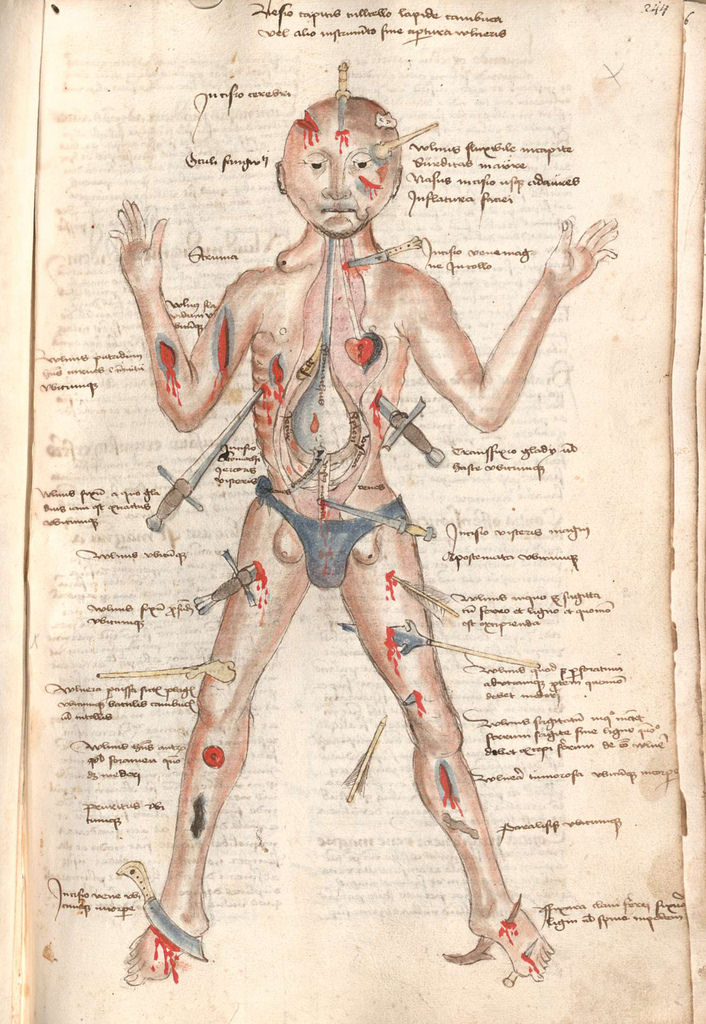
The proposed session will discuss and debate on the various definitions of the concept of the “monster.” Defining the monster is a challenge. Monsters and monstrosity-related aspects have been topics of academic research either connected to identity or cross-cultural encounters, explored as ‘others’ in the context of voyages (real-imagined), as heritage from Antiquity, as races reflected in travellers’ reports inserted into Western art, philosophy, and theology.

Continue reading “CFP: Re-defining the Monster (ICMS 9-12 May 2019), deadline 15 September 2018”

CFP: Visualizing Women in the Apocrypha

poster_apocrypha_01.jpg

Call for Papers for Special Session at the

International Congress on Medieval Studies (ICMS 2019)

May 9 to 12, 2019

Western Michigan University

The proposed session is devoted to the construction and visualization of women as reflected in apocryphal sources with the aim of bringing into attention this generally neglected topic/sources which seem to be underrepresented. The existent literature, in the general field of apocrypha, indicates that there is space for debate on issues connected to gender in these sources.

Continue reading “CFP: Visualizing Women in the Apocrypha”

New Publication: L’iconographie du Livre du Cœur d’amour épris de René d’Anjou, by Rose-Marie Ferré

Informations pratiques :

Rose-Marie Ferré, L’iconographie du Livre du Cœur d’amour épris de René d’Anjou, Turnhout, Brepols, 2018 (Répertoire Iconographique de la Littérature du Moyen Age, 6).

145 p., 70 colour ill., 156 x 234 mm, 2018
ISBN: 978-2-503-58002-9

Prix: EUR 60, 00

Le cycle iconographique quasiment complet du Livre du Cœeur d’amour épris est ici envisagé de concert avec le texte, en révèlant ainsi toute sa richesse et sa singularité.

Ce volume est consacré à l’une des œuvres majeures de René d’Anjou conservée aujourd’hui dans le manuscrit français 24399 de la Bibliothèque nationale de France. En un songe allégorique qui est aussi quête chevaleresque, le Cœur personnifié veut rejoindre l’aimée. Les enluminures, par une mise en image efficace et dynamique du texte, rendent surtout la profonde mélancolie, en cette fin du Moyen Âge, d’un sentiment amoureux qui affronte de multiples épreuves.

Comme dans le Mortifiement de Vaine Plaisance, composé deux ans plus tôt et premier volet de ce diptyque littéraire, le cœur (organe supplicié pour le Mortifiement ou Chevalier dépité dans le roman de 1457) n’aura d’autre choix que le renoncement final et la douleur. À cet égard, animé d’un vrai souci spirituel, René d’Anjou fait édifier à la même époque, aux Cordeliers d’Angers, une chapelle dédiée à saint Bernardin de Sienne (1453), pensée comme tombeau pour son cœur. Les sujets évoqués dans le traité de théologie morale ou dans les péripéties sentimentales du chevalier Cœur ne sont pas ainsi sans rappeler les sujets exprimés et représentés dans le petit sanctuaire, échos d’une réflexion sur la Passion du Christ, la rédemption, la Vaine Gloire et le salut de l’âme.

Continue reading “New Publication: L’iconographie du Livre du Cœur d’amour épris de René d’Anjou, by Rose-Marie Ferré”

CFP: Rutgers Art Review Volume 36

Rutgers, The State University of New Jersey
Deadline: Sep 15, 2018
RU_SHIELD_SIG_SAS
Call for Papers and Digital Projects

Rutgers Art Review, a journal of graduate research in art history, hereby invites all current graduate students, as well as professionals who have completed their doctoral degree within the past year, to submit papers for its 36th edition.

Papers may address all topics and historical periods within the history of art and architecture, visual and material culture, art theory and criticism, aesthetics, film, and photography. Interdisciplinary studies concerning art and architecture written by students in other fields are also welcome. To be considered for publication, submissions must present original contributions to existing scholarship and conform to our submission guidelines. We encourage authors to ask a faculty member to review their paper before submission.
Continue reading “CFP: Rutgers Art Review Volume 36”

JOB: akademische Mitarbeit, Architekturgeschichte, Universitaet Stuttgart

Universitaet Stuttgart.png

Application deadline: Jul 12, 2018

Am Institut für Architekturgeschichte der Universität Stuttgart ist vorbehaltlich der Zuweisung zum nächstmöglichen Zeitpunkt die Stelle einer/eines

akademischen Mitarbeiterin/akademischen Mitarbeiters

zu besetzen.
Die Beschäftigung ist auf drei Jahre befristet. Es besteht die Möglichkeit einer Verlängerung. Die Vergütung erfolgt nach Entgeltgruppe 13 TVL (50%).

Zu den Aufgaben gehören die Mitarbeit in der Lehre, die Durchführung eigener Lehrveranstaltungen und die Mitwirkung bei den Aufgaben des Instituts. Es handelt sich um eine Qualifikationsstelle, erwartet wird die Anfertigung einer Dissertation.
Voraussetzung ist ein überdurchschnittlich abgeschlossenes Hochschulstudium mit architekturgeschichtlichem Schwerpunkt (M.A., MSc oder äquivalent).

Bewerbungen mit den üblichen Unterlagen (CV, Abschlusszeugnisse, ggf. Verzeichnis von Publikationen, Lehrveranstaltungen und Vorträgen), einem Abstract der Abschlussarbeit und einem Exposé zur geplanten Dissertation (max. 2 Seiten) richten Sie bitte schriftlich und in Papierform bis zum 12.07.2018 an

Prof. Dr. Klaus Jan Philipp
Institut für Architekturgeschichte
Universität Stuttgart
Keplerstr.11
70174 Stuttgart

Bitte senden Sie alle Unterlagen zusätzlich in einer PDF-Datei an Frau Pauline Desjardins: sekretariat@ifag.uni-stuttgart.de.

Weitere Informationen zum Institut unter www.ifag.uni-stuttgart.de

Wir bitten um Verständnis, dass eingesandte Bewerbungsunterlagen nicht zurückgesandt werden können.
Die Universität Stuttgart strebt eine Erhöhung des Frauenanteils an und fordert deshalb besonders Frauen auf, sich zu bewerben. Schwerbehinderte werden bei gleicher Eignung bevorzugt.

Art Fair: Les Enluminures at Masterpiece London 2017

Les Enluminures looks forward to welcoming you to the 2018 edition of Masterpiece London

STAND B1

This year we are teaming up with Daniel Crouch Rare Books. Our joint display “A brief History of Time: from Matins to Mars” will explore methods of marking and keeping time throughout history.

CLICK HERE TO VIEW OUR FAIR HIGHLIGHTS

On July 2 at 4pm Dr Christopher de Hamel, Senior Vice-President at Les Enluminures, manuscript scholar and award-winning author will give a talk on “How to Look at Medieval Manuscripts”.
The event will take place in the Lecture Theatre, in association with Chopard. Advanced registration essential.
Please find here further information.

New Publication: Les modèles dans l’art du Moyen Âge (XIIe-XVe siècles), edited by L. Terrier Aliferis & D. Borlée

Informations pratiques :

Les modèles dans l’art du Moyen Âge (XIIe-XVe siècles), dir. L. Terrier Aliferis, D. Borlée, Turnhout, Brepols, 2018 (Les Études du RILMA, 10). 284 p., 150 b/w ill. + 54 colour ill., 210 x 297 mm. ISBN: 978-2-503-57802-6. Prix : 90 euros.

Ce volume réunit, pour la première fois sur le sujet, un ensemble de contributions qui abordent les diverses problématiques liées à l’usage des modèles dans la création artistique à l’époque gothique. Les modalités de la circulation des hommes et des œuvres en Occident entre le XIIe et le XVe siècle sont examinées à travers cinq axes : les carnets de modèles, la nature des modèles servant à la transmission (dessins, moulages ou gravures) , la notion d’auctoritas, la sélection des modèles et les interactions entre les différentes techniques (orfèvrerie, sculpture et peinture). Les auteurs se fondent, dans des études de cas très concrètes, sur des exemples précis et variés touchant à différents domaines artistiques et, de la sorte, permettent au lecteur d’appréhender au plus près une telle pratique, souvent pressentie, mais qu’il reste malgré tout assez difficile de saisir au sein de la production artistique médiévale.

Continue reading “New Publication: Les modèles dans l’art du Moyen Âge (XIIe-XVe siècles), edited by L. Terrier Aliferis & D. Borlée”

CFP: Windows into the Medieval Mediterranean

Call for Chapters              

Windows into the Medieval Mediterranean

franc3a7ais-22495-fol-11v-peuple-des-turcs.jpg

Despite the excellent work done in the fields of Mediterranean history and studies, the Medieval period remains an area of less attention. Contributors are sought for an edited collection, under contract with publishers Taylor and Francis, that illuminates the many worlds of the Medieval Mediterranean, from 470 to 1350, as a space both geographically unified around a single body of water, while simultaneously one of great cultural, political, economic, religious, and linguistic diversity. The volume, resting on a foundation of scholarly essays, is intended to provide both students, undergraduate and first year graduate, and faculty with resources to consider the complexities and dynamism of the Medieval Mediterranean. Each chapter will consist of several essays as follows:


  1. A narrative portion between 2000 and 3000 words
  2. Accompanying primary source materials, written and/or visual, illustrative of the author’s argument and meant to engage students more deeply into the topic.

Continue reading “CFP: Windows into the Medieval Mediterranean”

Lecture: ‘Gold Against the Body: Gold Surfaces and Their Limits, Medieval to Early Modern’, Alison Wright, Murray Seminar at Birkbeck, 27 June 2018

Gold Against the Body: Gold Surfaces and Their Limits, Medieval to Early Modern

Alison Wright, UCL

5:00pm, 43, Gordon Sq., London WC1H 0PD

The myth, famously invoked in Goldfinger, of the human body suffocated by being coated in gold exemplifies the fascination and danger attached to the idea of an ‘excess’ of gold, especially in respect to human skin. In this lecture the slippery boundaries of when, where and for whom gold surfaces might be deemed excessive will be explored in relation to European art, especially Italian, of the 14th to early 16th centuries. The discussion of gold in representation is generally dominated for this period by Alberti’s overturning of the value of gilding on the painted surface. This talk will argue rather for the multiple economies of gold in art with reference to broader visual and material traditions, and focus especially on gold’s complex relation to the human body.

Seminars take place in the History of Art Department at Birkbeck (43, Gordon Sq., London WC1H 0PD) in Room 114 (The Keynes Library) at 5pm.  Talks finish by 5.50pm (allowing those with other commitments to leave) and are then followed by discussion and refreshments.

The Murray Seminar series will continue next autumn term.