Call for Papers: ‘Rethinking the Carpet Page: Meaning, Materiality, and Historiography’, IMC 2019 (Deadline: 10 September 2018)

440px-meister_des_book_of_lindisfarne_002CFP for International Medieval Congress 2019 at the University of Leeds, July 1-4 2019

The session proposes a fresh look at carpet pages in manuscript books across the medieval world including examples from Jewish, Muslim, and Christian contexts. We seek papers examining the sources for and functions of particular carpet pages as well as papers questioning the paradigm of the “carpet page” as it developed in the scholarly literature.

Please submit a working title and a 250-word proposal for a 20 minute paper by September 10.

Julie Harris
marfiles@comcast.net


Conference: ‘Imago & Mirabilia. The forms of the prodigy in the Medieval Mediterranean’, Museu Nacional d’Art de Catalunya, Barcelona, 18-20 October 2018

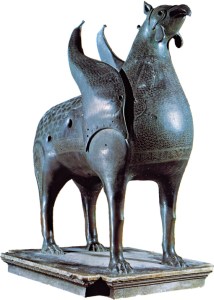
imago_cat_x1500International Symposium on the forms of the prodigy in the Medieval Mediterranean. It will bring together scholars from all areas of medieval history around the marvelous and its image in the Middle Ages.

The symposium will talk about how on an ancient substrate, reworked by the Christian tradition, a diversity of places, stories and beliefs were shaping the profiles of the prodigy to the Middle Ages. Reactivated by the opening of the Mediterranean, religious, commercial or military trips extended cults, stories and precious objects through Christianity. The real and imaginary adventure confronts the protagonists with fabulous characters and places. The cult of Eastern saints will find anchor points in the West where, on occasions, they will develop with as much or more intensity than in their place of origin, an evident symptom of their polycentric character.

The symposium will take place from October 18th to October 20th, 2018, in the Museu Nacional d’Art de Catalunya, Barcelona. More information can be found on the museum’s website.

Call for Papers: The Ugliness of Beauty and the Beauty of Ugliness: Materializing Ugliness and Deformity in the Middle Ages (IMC 2019), deadline 15 September 2018

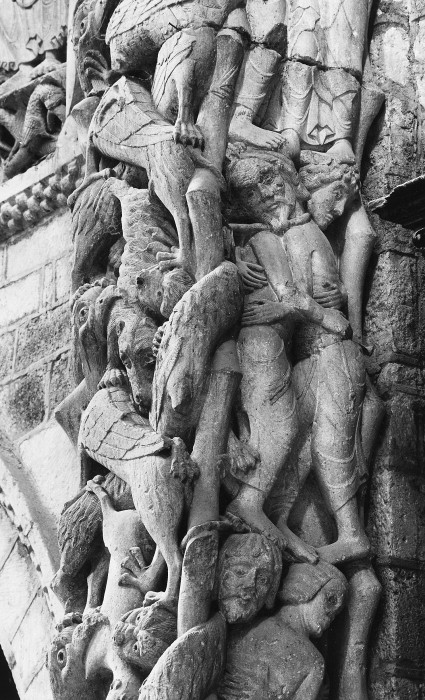
CFP is now open for: Deformis Formositas ac Formosa Deformitas. The Ugliness of Beauty and the Beauty of Ugliness: Materializing Ugliness and Deformity in the Middle Ages’ Call for Papers for Session Proposal at the International Medieval Congress (IMC 2019), July 1 – 4, 2019, University of Leeds.

The proposed session will discuss and debate on the various definitions and functions of the concept of “ugliness.” What is ugliness and how is it conceptualized? This session seeks original research which investigates debates on the concept of “ugliness” in various contexts:

  • Spiritual/physical/material ugliness;
  • Paradoxical nature of ugliness/irony/allegorical discourse;
  • Emotions and ugliness;
  • Functional aspects/Contrasts/Status and ugliness;
  • Didactic/moralistic functions;
  • Gendered aspects: ugliness belonging to other creatures;
  • Description/nature/character of ugliness;
  • Symbolism and patterns of transmission;
  • Comparative aspects of medieval beauty and ugliness;
  • Beauty within the context of ugliness in visual and textual sources

This session also aims to bring its intellectual outcomes into the attention of the general public by publishing, contextually, the proceedings of the debates in the series “Picturing the Middle Ages and Early Modernity” at Trivent Publishing, Budapest, Hungary.

Please submit a working title and a 250-word proposal for a 15-20 minute paper presentation by September 15th, 2018, the latest. 

Contact information:
Andrea-Biank Znorovszky, Ca’ Foscari University, Venice, Italy
(andrea.znorovszky@unive.it)
Teodora C. Artimon, Trivent Publishing, Budapest, Hungary
(teodora.artimon@trivent-publishing.eu)

Call for Papers: ‘Apocryphal Iconography: Integration, Adaptation, and Church Tradition’, IMC 2019 (Deadline: 15 September 2018)

the-meeting-at-the-golden-gateCFP is now open for: Apocryphal Iconography: Integration, Adaptation, and Church Tradition’

Call for Papers for Session Proposal at the International Medieval Congress (IMC 2019), July 1 – 4, 2019, University of Leeds.

The proposed session is devoted to the integration and adaptation of apocryphal sources in the construction of medieval iconographies with the aim of bringing into attention this generally neglected and underrepresented field. Research in this field concentrates mostly on the textual tradition and transmission of apocryphal texts, yet certain aspects still need to be addressed, such as:

The construction and function of apocryphal iconographies;
The context of sources for artists due to lack of information on holy lives;
Apocryphal visual representations and church tradition;

Original work and research is welcomed starting from the Late Antiquity to Late Middle Ages, both in the East and West. The session refers to the concept of ‘apochrypha/on’ as movable texts whose composition does not end in the 4th-5th centuries in the context of the establishment and closing of the canon. This permits to address issues concerning the evolution, transmission, adoptation, and adaptation of sources.

This session also aims to bring its intellectual outcomes into the attention of the general public by publishing, contextually, the proceedings of the debates in the series “Picturing the Middle Ages and Early Modernity” at Trivent Publishing, Budapest, Hungary.

Please submit a working title and a 250-word proposal for a 15-20 minute paper presentation by September 15th, 2018, at the latest.

Contact information:

Andrea-Bianka Znorovszky, Ca’Foscari University, Venice, Italy
(andrea.znorovszky@unive.it)

Teodora C. Artimon, Trivent Publishing, Budapest, Hungary
(teodora.artimon@trivent-publishing.eu)


Call for Papers: Encountering Medieval Iconography in the Twenty-First Century: Scholarship, Social Media, and Digital Methods: A Roundtable (Deadline 15 September 2018)

treadmillcrane54th International Congress on Medieval Studies, Kalamazoo, MI, May 9 – 12, 2019
Deadline: Sep 15, 2018

Encountering Medieval Iconography in the Twenty-First Century: Scholarship, Social Media, and Digital Methods: A Roundtable

Organizers: M. Alessia Rossi and Jessica Savage (Index of Medieval Art, Princeton University)
Sponsored by the Index of Medieval Art, Princeton University

Stemming from the launch of the new database and enhancements of search technology and social media at the Index of Medieval Art, this roundtable addresses the many ways we encounter medieval iconography in the twenty-first century. We invite proposals from emerging scholars and a variety of professionals who are teaching with, blogging about, and cataloguing medieval iconography. This discussion will touch on the different ways we consume and create information with our research, shed light on original approaches, and discover common goals.

Participants in this roundtable will give short introductions (5-7 minutes) on issues relevant to their area of specialization and participate in a discussion on how they use online resources, such as image databases, to incorporate the study of medieval iconography into their teaching, research, and public outreach. Possible questions include: What makes an online collection “teaching-friendly” and accessible for student discovery? How does social media, including Twitter, Facebook, and blogging, make medieval image collections more visible? How do these platforms broaden interest in iconography and connect users to works of art? What are the aims and impact of organizations such as, the Index, the Getty, the INHA, the Warburg, and ICONCLASS, who are working with large stores of medieval art and architecture information? How can we envisage a wider network and discussion of professional practice within this specialized area?

Please send a 250-word abstract outlining your contribution to this roundtable and a completed Participant Information Form (available via the Congress Submissions website: https://wmich.edu/medievalcongress/submissions) by September 15 to M. Alessia Rossi (marossi@princeton.edu) and Jessica Savage (jlsavage@princeton.edu). More information about the Congress can be found here: https://wmich.edu/medievalcongress.

Call for papers for session papers on medieval equestrian history at IMC Leeds 2019

Your horse won’t eat any oats, nor will he be bled until I get my revenge’ threatens his lady Orgeuilleux de la Lande, making his displeasure evident by abusing the lady’s horse. Horses were vital agents in daily life throughout the medieval period, but with the advent of technology in the twentieth century, they have been somehow marginalized in academic studies. Recently, interest in equine history has surged, but there are still many issues waiting to be tackled by scholars.

chretien's perceval

In this fourth year of thematic horse sessions at the International Medieval Congress, Leeds, we invite papers on the following themes:

  • Breeding, training, feeding and curing horses
  • Osteological study of horse remains
  • Equipment for ridden and working horses
  • Horse-related buildings and infrastructure (stables, roads, hyppodromes, markets, etc.)
  • Horses in the East and West – regional peculiarities
  • Imaginary, fantastic and magical horses and equids, including unicorns, centaurs and grotesques, and their relation to real horses
  • Other equids and ridden animals (donkeys, mules, zebras, etc.)

If you would like to propose a theme that does not fit in the above categories, please contact the organizers.

Paper abstracts (up to 500 words) and short biographies (up to 100 words) are to be sent to Dr Anastasija Ropa (Anastasija.Ropa@lspa.lv) and Dr Timothy Dawson (levantia@hotmail.com) by 31 August 2018.

Publication of selected papers is planned.

If you would like to be involved in organizing the sessions or editing or reviewing the publication, please contact the organizers (Anastasija.Ropa@lspa.lv, levantia@hotmail.com).chretien's perceval.png

CFP: New Directions in Carolingian and Ottonian Art: Assessing the Field (I-II) (Kalamazoo, 2019)

54th International Congress on Medieval Studies University of Western Michigan, Kalamazoo, Michigan May 9-12, 2019

Session Organizers: Joseph Salvatore Ackley (University of Arkansas) and Eliza Garrison (Middlebury College)

Long marginalized in the anglophone tradition of medieval art history, the study of Carolingian and Ottonian art has recently generated, over the last two decades, a striking chain of pathbreaking studies that have shaped and inflected the discipline in decisive ways. If earlier studies of Carolingian and Ottonian material were devoted to questions of dating, attribution, and the localization of workshops, more recent inquiries have considered questions of gender, representation, materiality, religious reform, temporality, and the role of the artist. As we approach the twentieth anniversary of the publication of Adam Cohen’s pioneering The Uta Codex: Art, Philosophy, and Reform in Eleventh-Century Germany, which appeared in 2000, the organizers of this double session seek papers from historians of Carolingian and Ottonian art and architecture that display a broad range of innovative methodological approaches to artworks created in all media. Papers that attend to issues of historiography – a particularly charged and complicated conversation for these monuments – and to artworks created and built at the edges of the Carolingian and Ottonian empires are especially welcome.

To propose a paper, please send an abstract of no more than 250 words, together with a completed Participant Information Form (https://wmich.edu/medievalcongress/submissions), to Joseph Salvatore Ackley (jackley@barnard.edu) and Eliza Garrison (egarriso@middlebury.edu) by September 15, 2018.

CFP: ICMA-sponsored session at 54th ICMS (Kalamazoo, 9-12 May, 2019)

The Other Half of Heaven: Visualizing Female Sanctity in East and West (c. 1200-1500) I-II

An ICMA-sponsored session at the 54th ICMS (International Congress of Medieval Studies) Kalamazoo, 9-12 May 2019

If, according to the well-known Chinese proverb, women hold half the sky, did medieval female saints hold half of heaven? In her book of 1998, Forgetful of their Sex: Female Sanctity and Society, ca. 500-1100, Jane Schulenburg calculated that of over 2200 female and male saints examined, only one in seven (or 15%) were women. Although documentation on medieval women is notably scarce, this gender-based asymmetry in the celestial realm clearly reflected the values and hierarchy of earthly society.

Female saints were exceptional women who gained social status, popular recognition and enhanced visibility through sainthood. Medieval female sanctity is a multi-faceted phenomenon, which has been mainly explored through words. Historians and literary scholars have fruitfully mined historical and hagiographical texts not only to draw ‘facts’ about the lives of female saints but also to elucidate social mentalities and highlight gender issues. Holy women, however, were also represented on a variety of media, most notably on icons, frescoes, manuscript illuminations and other artworks. Nevertheless, despite the wealth of historical and hagiographical scholarship on female saints, their visual representations have been exploited almost exclusively in stylistic or iconographic terms.

The aim of this session is to consider female sanctity in visual terms both in Western Europe and the Byzantine East. By exploring representations of women saints and their changing iconography, it aspires to shed light on their status and experience in late medieval society. It will examine images of holy women as embodiments of cultural models and explore the social and religious environment that shaped their visual constructions. In the highly symbolic world of the Middle Ages, representations of female saints can become a vehicle for multiple interpretations, including social status, gender, identity, ethnicity and collective memory.

Some of the issues to be addressed include but are not restricted to:

  • Visual narratives and iconographic attributes defining female sanctity
  • The corporeality of female saints and the representation of the holy body
  • The iconography of transvestite holy women
  • Out of sight, out of mind: forgotten saints and newcomers
  • The relation between female holy images and text in illuminated manuscripts
  • The influence of mendicant literature on picturing female sanctity
  • One saint, many images: changes in iconography and meaning
  • Iconographic variations of the Virgin in East and West


Participants in ICMA-sponsored sessions are eligible to receive travel funds, generously provided by the Samuel H. Kress Foundation. The Kress funds are allocated for travel and hotel only. Speakers will be refunded only after the conference, against travel receipts.

Please send paper proposals of 300 words to the Chair of the ICMA Programs Committee, Beth Williamson (beth.williamson@bristol.ac.uk) by September 1, 2018, together with a completed Participant Information Form, to be found at the following address: https://wmich.edu/medievalcongress/submissions#papers 

Please include your name, title, and affiliation on the abstract itself. All abstracts not accepted for the session will be forwarded to the Congress administration for consideration in general sessions, as per Congress regulations.

CFP: Intersectional Medievalisms (54th International Congress on Medieval Studies, 9-12 May 2019)

Intersectional Medievalisms

54th International Congress on Medieval Studies, Kalamazoo, MI, May 9 to 12, 2019

Organizers: Bryan C. Keene (The J. Paul Getty Museum) and Benjamin C. Tilghman (Washington College)

Sponsored by The J. Paul Getty Museum

The close ties between medieval revivalism and the construction of cultural identities have long been recognized. The appropriation of the medieval past by white supremacist and nationalist groups has especially attracted comment over the past two years, and many scholars of medieval studies have traced those appropriations and highlighted the myths and misconceptions upon which they are built. The association of medievalism with the construction of normative (white, heterosexual, cisgender, Christian) identity has come to be so strong that it is often assumed that those who fall outside such identity groups would (or even should) have little or no interest in the Middle Ages. That this belief, which can troublingly be found in in the scholarly community just as much as the general public, is patently false could readily be seen at The Metropolitan Museum of Art’s 2018 “Heavenly Bodies” Gala. But similar to the invocation of the medieval past by such artists as Kehinde Wiley and Ron Athey, the medievalism of the Met Gala was treated somewhat superficially, with more concern for the glamor of the event than the complex coding of the fashion and its wearers. These sessions will consider the important, if often unmentioned, intersectional practice of medievalism in contemporary culture through papers and discussion about the use of medieval motifs and themes in contemporary works in any media by writers, performers, musicians, and artists of color and by queer and trans-identifying creators. As such, these sessions seek to be a first step towards a fuller consideration of medievalisms that range outside the customary assumptions about to whom the Middle Ages presents a usable past.

Intersectional Medievalisms I: Creators of Color

Even as medievalists have become much more attuned to the presence of people of color in medieval Europe, they have yet to fully consider the presence of the Middle Ages in the art, poetry, music, and other cultural expressions of contemporary people of color. While the references to medieval (and early modern) culture in such works as Kehinde Wiley’s paintings and Jay-Z’s Magna Carta… Holy Grail have been widely recognized, the arguably more complex reworkings of medieval culture by Rashaad Newsome, RAMMΣLLZΣΣ, and Derrick Austin have thus far gained little notice. What is the medieval in the work of these artists? A contested source of oppression? A tool for cultural renegotiation and redefinition? A seductive space of myth and beauty? Must their use of the medieval past be understood necessarily as a pointed appropriation, or can it be seen as the mining of just another source of raw cultural material? Speakers are encouraged to consider not only the stakes of medievalism in this particular cultural moment, but also other aspects of these creators’ intellectual projects, such as the explorations of semiotics, phenomenology, intermedia creation, ornament and surface, and temporality that run through many of these works.

Intersectional Medievalisms II: Queering the Medieval

The scholarly approach of “queering” the past has revealed otherwise invisible, erased, or censored facets of medieval identity and relationships. This methodology also disrupts the cisgender and heteronormative binaries that all-too-often remain pervasive in the academy and in the popularly imagined Middle Ages. LGBTQ+ artists have also addressed these issues, at times turning to broadly-conceived medievalisms. Ron Athey, Gabriel Garcia Roman, and others evoke the cult of saints in their work, a poignant commentary about acceptance by the Catholic (and broader Christian) community. The relationship between medieval chant and the vocal performances of Meredith Monk and Oblivia deserves greater attention, as does the architectural and advertising medievalism of queer clubs, lounges, and Pride events (a project begun by the late Michael Camille). By focusing on the relationship between a creators’ identity and their conception of the medieval, we encourage speakers to consider how medievalism is practiced in contemporary culture and how to open the academy or museum as spaces of greater inclusion and dialogue.

While the two sessions will be split to allow for a sharper focus on the role of race and of gender and sexual identity in contemporary creative medievalism, the aim of these sessions is for all the work presented to be resolutely intersectional, looking to trace and illuminate connections rather than delineating borders.

To propose a paper, please send a one-page abstract and a completed Participant Information Form (available via the Congress website) by September 15 to Bryan C.Keene (BKeene@getty.edu) and Benjamin C. Tilghman (btilghman2@washcoll.edu). More information about the Congress can be found here: https://wmich.edu/medievalcongress

CFP: Panel Swiss history day (Zurich, 5-7 June 2019)

— German —

Zürich. Fünfte Schweizerische Geschichtstage, 5.-7. Juni 2019, 05. – 07.06.2019
Deadline: Aug 31, 2018

Teuer – teurer – unbezahlbar: Kommunaler Kirchenbau im späteren Mittelalter

Kommunale Kirchenbauten des späteren Mittelalters prägen bis heute das Bild mitteleuropäischer Städte. Die ressourcenverbrauchenden Bauprojekte wurden vor allem von den jeweiligen Bürgerschaften getragen, da die Einnahmen aus kirchlichen Abgaben bei weitem nicht ausgereicht hätten. Dieses bürgerliche Engagement erklärt sich vor allem damit, dass die prosperierenden Kommunen im Kirchenbau gewissermassen eine Hülle für städtische Selbstdarstellung erkannt hatten. Man verfolgte in Abgrenzung und in Konkurrenz zu anderen Städten repräsentative Visualisierungsstrategien. Ab dem 14. Jahrhundert entstand eine neue – immer teurere – Formensprache am Baukörper, die aber letztlich dazu führte, dass nur die allerwenigsten Bauprojekte abgeschlossen werden konnten – erst das historisierende 19. Jahrhundert vollendete die gotischen Architekturträume: Köln, Ulm, Bern, Regensburg usw. Doch spielte neben der wirtschaftlichen Überspannung auch der abrupte Umbruch ethischer und ästhetischer Vorstellungen durch die Reformation eine erhebliche Rolle für den Einsatz der Ressourcen.

Ein zweites strukturelles Phänomen prägte indes die Bauentwicklung. Durch das kommunale Engagement und die Übernahme wichtiger bauplanerischer Entscheidungen, die bislang beim Klerus lagen, lässt sich eine legitimierende Praktik der Kommunalpolitik nachweisen, steht doch außer Zweifel, dass die Bürger das mehrschichtige Potential einer gezielt städtisch konnotierten Kunstpolitik erkannten und auch entsprechend zu akzentuieren wussten. Jene bisweilen übertriebenen Kirchenbaupläne wurden durch die Kirchenfabriken vorangetrieben, die mit den kommunalen Vertretungen, in der Regel dem Rat, eng verzahnt waren. Zu fragen ist daher, ob von spezifischen „Kunstregeln“ ausgegangen werden kann, die durch die Auftraggeber vorgegeben wurden. Neben der Frage nach einem kommunalen „Kunstwissen“, das für die Darstellung von Prosperität und Reichtum eine bedeutende Rolle spielte, ist zudem nach dem vorhandenen „Finanzwissen“ zu fragen, mit dem die Abwicklung der komplexen Kirchenbauprojekte erfolgte.

Das Panel sucht aus der Perspektive von Sozial- und Wirtschaftsgeschichte sowie aus der Kunstgeschichte die Phänomene von interkommunalem und innerstädtischem Wettbewerb und dem Städtischen Kunst- und Verwaltungswissen mit der Frage nach den überbordenden Stilentwicklungen der Epoche in Verbindung zu bringen.

Kontakt Für weitere Auskünfte steht Ihnen Barbara Holler, Koordinatorin der Schweizerischen Geschichtstage 2019, unter der Mailadresse 2019@geschichtstage.ch gerne zur Verfügung


— English Translation —

(CFP: Panel Swiss history day (Zurich, 5-7 June 19))

Zurich. Fifth Swiss history days, 5th-7th June 2019, 05 – 07.06.2019
Deadline: August 31, 2018

Expensive – more expensive – Priceless: Local church in the later Middle Ages

Local churches of the later Middle Ages still shape the image of Central European cities. The resource-consuming construction projects were mainly driven by the respective citizenships since the income from church taxes were not sufficient by far. This civic engagement is primarily explained with the fact that the prosperous municipalities had to some extent recognized a shell for urban self-representation in church. They hunt in contrast and in competition with other cities representative visualization strategies. increasingly expensive – – design language to the structure, but which ultimately led to only very few construction projects were completed – From the 14th century a new developed only the historicist 19th century completed the gothic architecture dreams: Cologne, Ulm, Bern, Regensburg, etc. . But in addition to the economic surge and the abrupt break ethical and aesthetic ideas of the Reformation played a significant role in the use of resources.

however, a second structural phenomenon dominated the architectural development. By the municipal commitment and the acquisition of important bauplanerischer decisions that were previously the clergy, this can prove a legitimizing practice of local politics, you can read it beyond doubt that the citizens recognized the multi-layer potential of a specific urban connotations art policy and knew how to accentuate accordingly. Those sometimes exaggerated church building plans were driven by church councils, which were closely linked with the municipal representatives, usually the Council. The question is therefore whether it can be considered specific “rules of art” that were dictated by the client. Besides the question of a local “art knowledge”, which played an important role in the appearance of prosperity and wealth, is also to question the existing “Financial Education”, which took place the handling of complex construction projects church.

The panel examined from the perspective of social and economic history as well as art history phenomena of interkommunalem and bring inner-city competition and the Municipal Art and management knowledge with the question of the exuberant style developments of the period in connection.


Contact

Coordinator of the Swiss History Days 2019
Barbara Holler

History Department
University of Zurich
Office KO2 H361
Karl Schmid-Strasse 4
CH-8006 Zurich

Tel: +41 44 634 38 58
Mail: 2019@geschichtstage.ch