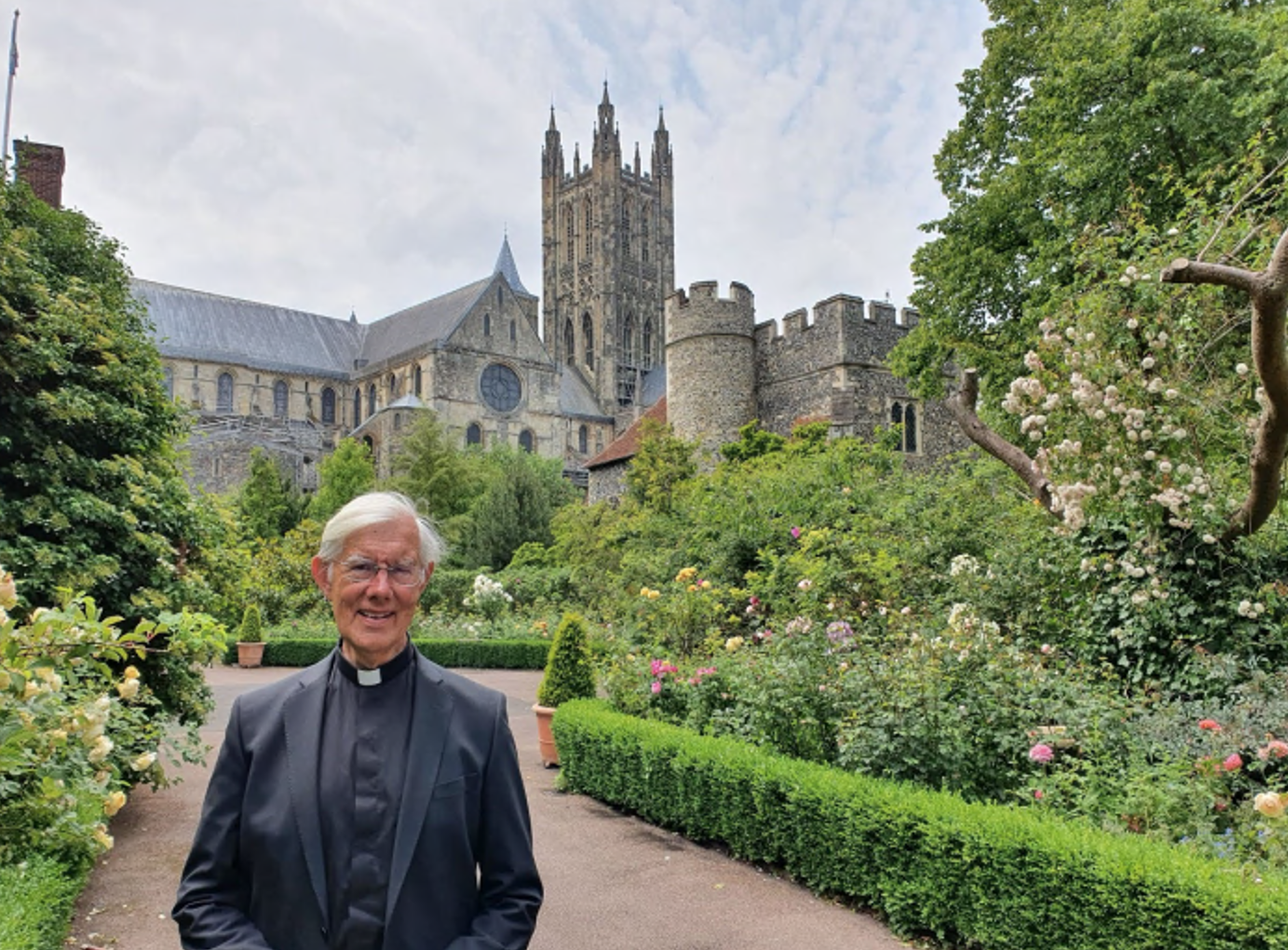
News: Canterbury Cathedral Free entry for all visitors – until Sunday 12 July 2020

Canterbury Cathedral’s free entry to all visitors offer continues until Sunday 12 July, after this, kids go free with reduced prices for adults until 31 August. All tickets must be pre-booked online via our website.

They’ve introduced a range of new safety measures to ensure your wellbeing, including one-way routes, enhanced cleaning regimes, hand sanitiser stations, distanced seating, additional signage and floor markings, and PPE for our staff, volunteers and Constables as appropriate.

To find out more please read their visitor FAQs to prepare for your visit and to find out what you can expect from them – and what they request of you – to ensure a safe, enjoyable and memorable experience.

Sam Fogg: Object of the Week

Since the beginning of lock-down, Sam Fogg has been giving Medieval Art enthusiasts a glimpse into their expansive collection with their Object of the Week series. The wonderful team at Sam Fogg present a different fascinating object every Friday. You can check out the series over on their website, twitter and instragram! Here are a few of our favourite ones:


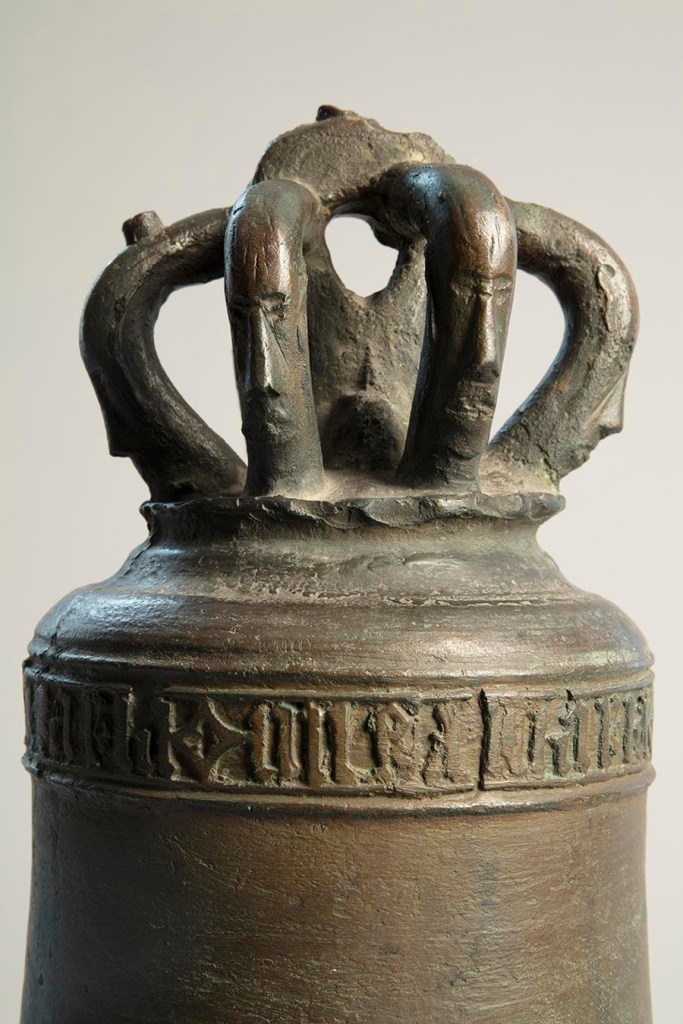
A Bronze Bell inscribed with the Ave Maria, last quarter of the 15th century, Austria

This slender bell was likely cast in a Viennese foundry at some point in the late fifteenth century. It is delicately ornamented, including the unusual addition of human faces with their  striking silhouettes at the top of the bell. It is exceptionally rare to find such ornament on surviving medieval bells. You can hear more about this fascinating object in Sam Fogg’s video.

Read more about the bronze bell here.

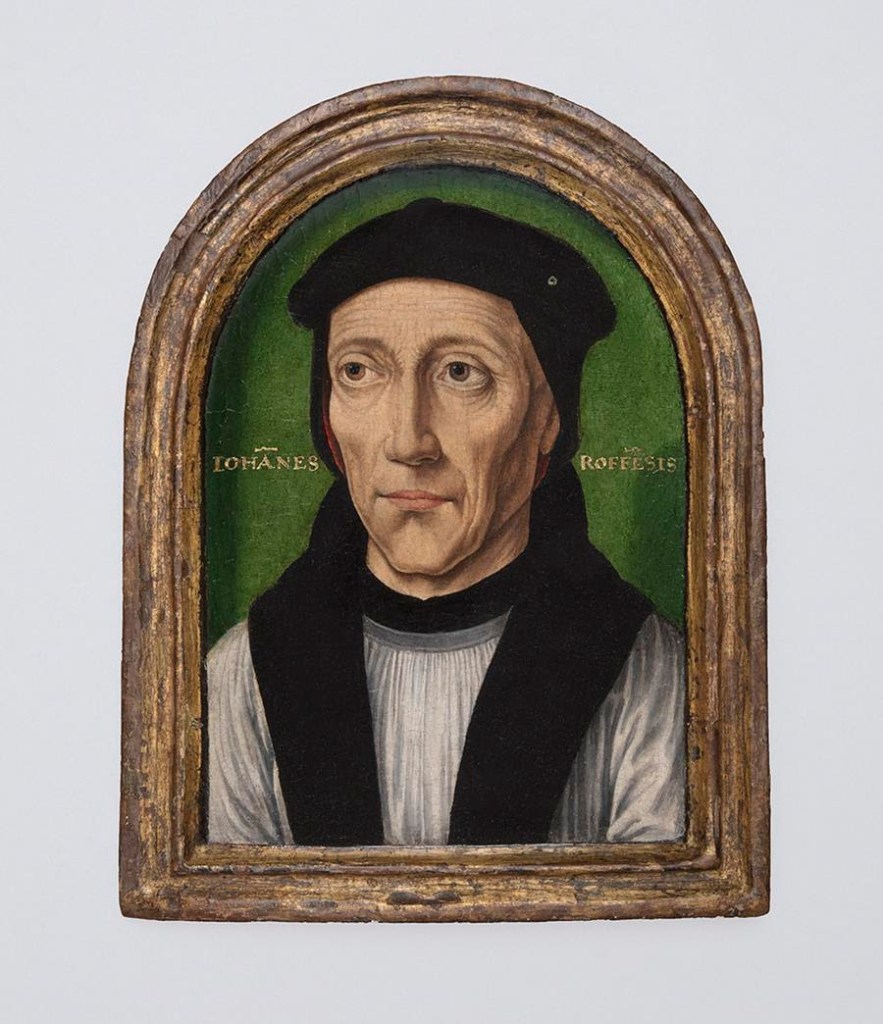
Cardinal John Fisher (1469-1535), Bishop of Rochester, c. 1540, Northern Netherlands

This small portrait depicts Cardinal John Fisher who was executed for opposing King Henry VIII. It is believed to be the earliest surviving painted likeness of John Fisher. As part of the series, Sam Fogg has created a video where you can learn all about this exquisite painting.

Read more about the portrait here.

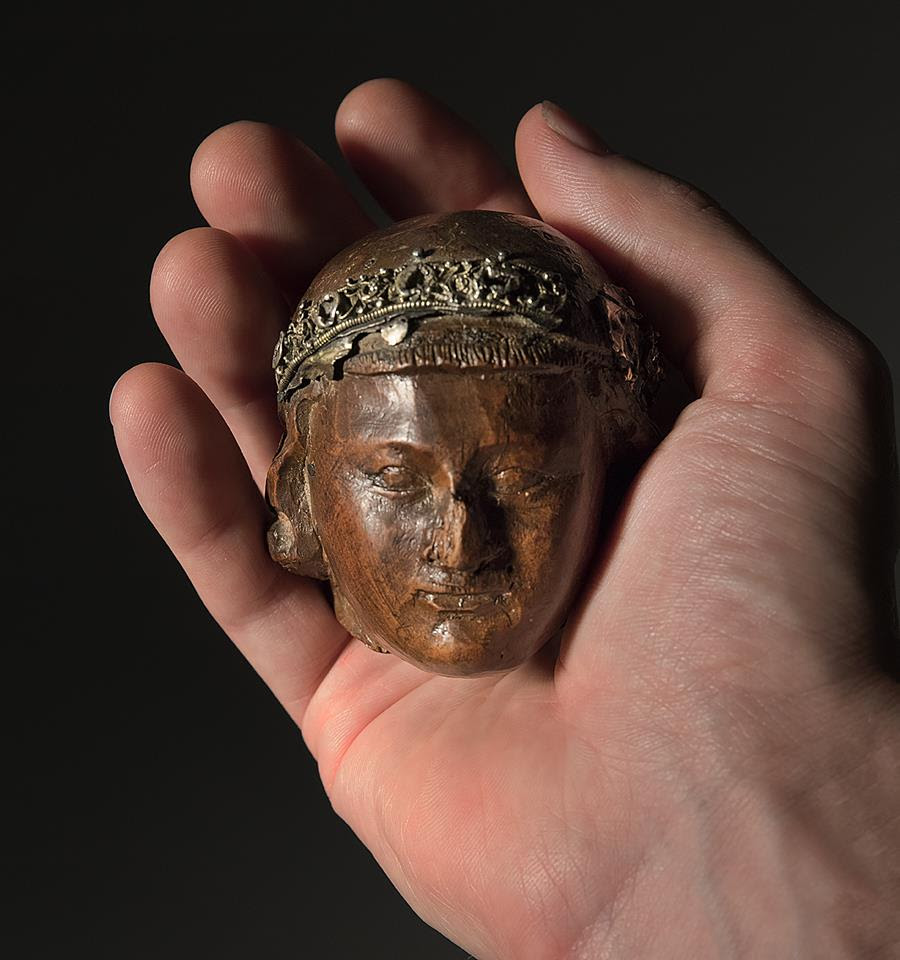
The Head of the Christ Child, from a Sedes Sapientiae Group, c. 1220, Meuse Valley

This diminutively proportioned head of the infant Christ carved with wide, almond-shaped eyes, a strong nasal ridge, and a subtle smile with delicately separated lips, combines two art forms: sculpture and goldsmiths’ work. The synthesis of these two mediums reached its height in Europe during the early thirteenth century, and this miraculous survival encapsulates them both perfectly. Check out their video all about it here.

Read more about this head here.

A Gable Plaque from a Reliquary Chasse showing an Apostle, c. 1190 (France, Limoges, from the so-called Chapitre Workshop) Sam Fogg

A Gable Plaque from a Reliquary Chasse showing an Apostle, c. 1190

This vividly enamelled plaque of an Apostle was originally part of a gable end of a reliquary chasse. The demand for such lavish reliquaries in the Middle Ages was generated by the cult of relics and encouraged by pilgrimages, which gained momentum in the 12th century. The plaque has been attributed to a circle of goldsmiths known by the provisional name ‘Chapitre workshop’, active by around 1180 in Limoges.

View it here.


Head over to Sam Fogg’s website, twitter and instragram for more fascinating objects from the series.

CFP: 8th Days of Justinian I, Skopje (November 13–14, 2020), deadline 10 August 2020

The International scientific symposium “Days of Justinian I” is an annual interdisciplinary scholarly forum aimed at the presentation of the latest research followed by discussions on various aspects of Byzantine and Medieval Studies before 1500; this includes the treatment and interpretation of cultural, historical and spiritual heritage in contemporary modern Europe. The Symposium is dedicated to Emperor Justinian I with the aim to bring together scholars from around the world to address a broad range of issues related to Byzantium and the European Middle Ages, comprising the exploration of the cultural and historical legacy as an integrative component of the diversities and commonalities of Unified Europe.

This year the special thematic strand, Religion, aims to incite scholarly debate about the different concepts of religion in Byzantium and Medieval Western Europe. Being an essential component of the Byzantine and Medieval Western World, the religion has shaped the identity of the individuals, communities, polities, acting as a factor of division and unification. Various questions will be raised in examining the profound role of religion in historical processes, political and cultural transformations, that transcended boundaries and time. As an inspirational model for the literary, architectural, artistic works, religion will be also observed as an intermediate expression of the past traditions, the system of networks, values, beliefs and practices. The Symposium will address wide range of conceptional issues in exploring the phenomena of religion and religious controversies in Eastern Roman Empire and Medieval Western Europe. This will include the perspectives of the religion as a function of culture and belonging, its role in defining and constructing the identities, the exclusion and inclusion, conversion and defiance, violence and tolerance, militarization and waging “sacred” wars, relationship with the nations, the heritage of Europe.

The Symposium will address wide range of conceptional issues in exploring the phenomena of religion and religious controversies in Eastern Roman Empire and Medieval Western Europe. This will include the perspectives of the religion as a function of culture and belonging, its role in defining and constructing the identities, the exclusion and inclusion, conversion and defiance, violence and tolerance, militarization and waging “sacred” wars, relationship with the nations, the heritage of Europe.

Papers are welcomed on various topics that may include, but are not limited to the following areas of discussion:

  • Paganism and Christianity
  • Christianity and the Romanness
  • Byzantine Orthodoxy and Catholicism: Dividing the East and West
  • Byzantine Orthodoxy and the World of Islam
  • Christianity and identity
  • Religion and ethnicity
  • Religious inclusion and exclusion
  • And more (see here for more keywords)

Please send the application form to the following address: days.justinian@gmail.com

For further inquiries you can contact the Secretary of the Symposium, Prof. Dragan Gjalevski: days.justinian@gmail.com

Please check the Facebook page https://www.facebook.com/days.justinian and website www.ini.ukim.mk for news about the Symposium, the agenda, special events and the online application form.

More information can be found here.

Call for Session Proposals: 7th Cycle of Medieval Studies June 2021, NUME Research Group on Latin Middle Ages, deadline 4 October 2020

The conference will be held from 7th to 8th June 2021 at the ex Convento Il Fuligno, Florence, via Faenza 48n.

The goal is to offer a broad overview of the current situation of Italian and international medievalist studies. Issues which are related to many different aspects of the medieval period (V-XV century) can be addressed: history, philosophy, politics, literature, art, archeology, material culture, new technologies applied to medieval studies and so on.

Particular attention will be reserved this year to the presentation of:

  • digital / multimedia projects;
  • cooperation, development and social cohesion projects aiming to deep and spread medieval studies (associations, laboratories, study centers, etc.);
  • proposals relating to communication and teaching

We accept:

  • individual contributions or with two or more speakers;
  • contributions already structured in panels and coordinated by a referee

All contributions will be structured in specific panels.

Applications:

Participation proposals must have abstract format, written on a single pdf file in english, not exceeding 300 words.

Furthermore, 5 keywords identifying the topic will have to be reported in the same file.

Proposals must be accompanied by a short CV (no more than 1000 words), and sent by October 4th, 2020 to the e-mail address: info@nuovomedioevo.it

In the case of panels, the proposal must include a general title with a general presentation not exceeding 300 words, followed by abstracts of all the interventions (presented as in point 4).

Proposals will be evaluated by the Review Board on the basis of quality, interest and originality. The judgment of the Commission will be unquestionable.

The Commission will notify the convocation for the speakers considered suitable by November 4th, 2020. The previous membership of the NUME Association does not necessarily imply the convocation.

The selected speakers will be asked to prepare an oral intervention, accompanied by any images or videos, not exceeding 15 minutes (+5’ discussion time). Contextually, they will be asked to send a paper of their contribution for the Conference Proceedings by February 1st, 2021.

The selected speakers will be required a registration fee as follows:

  • NUME members (enrolled before June 20th, 2020): 80 EURO each
  • Other speakers: 100 EURO (+20 EURO of membership) each

The participation will entitle to 1 free copy of the Conference Proceedings.

The Conference program will be published by April 30th, 2021.

The deadlines set out in this call must be strictly observed, otherwise the contribution will be excluded from the call.

More information here.

New Journal Issue: Medievalista Journal, number 28

It is with great pleasure that we inform you that nº 28 of Medievalista Journal is available.

This issue of Medievalista brings some news.

The most decisive ones were the simplification of the title – Medievalista on-line became Medievalista -, the adoption of a new management and editing platform and another renewal of the graphics with which the magazine presents itself. Without abandoning the legacy of the past, in particular the openness to researchers from other languages and other historiographies, the current issue returns to integrate a thematic dossier on the role of ecclesiastics in the construction of medieval monarchies. It also has three other articles on different topics, all by authors from outside the peninsula, in addition to the usual headings, such as news, reviews and presentations, which have been tried to give, as will be done in the future, a more comprehensive and systematic character. .

This number has the collaboration of: Alice Borges Gago, André Filipe Oliveira da Silva, Armando Luís de Carvalho Homem, Arsénio Dacosta, Francisco Díaz Marcilla, Gilson Damasceno Linhares, Graça Videira Lopes, Hermínia Vasconcelos Vilar, Isabel Cristina Fernandes, Javier Albarrán Iruela, José Carlos Quaresma, Leandro Duarte Rust, Margarida Leme, Maria Helena da Cruz Coelho, Maria João Branco, Mary Magdy Anwar, Néstor Vigil Montes, Óscar Villaroel González, Paula Pinto Costa, Thierry Pécout, Tiago Viúla de Faria, Vincent Débiais, and Xavier Costa Badia.

Journal available at https://rb.gy/heyxga

New Resource: Matthew Paris’s Clickable Map: An Interactive Claudius Map

Project Manager: Dr John Wyatt Greenlee

In the 1250s a monk at St. Alban’s abbey named Matthew Paris drew several maps of Britain, which he appended to various copies of his history of England. The official chronicler at one of the most important monasteries in the land, Paris was a well-connected man. He knew bishops and archbishops, and knew King Henry III personally. His histories of England are important, but what make them especially interesting is the artwork. Paris was not just a scribe; he was also an artists. And, towards the end of his life, he turned his hand to mapmaking.

Matthew Paris drew a number of unique maps. He drew innovative  itinerary strip maps that guided the reader from London to Rome, and maybe even on to the Holy Land. And he drew the first regional maps of Britain, made even more notable for his decision to orient them with north at the top, in an age when most maps looked eastward.

Matthew Paris’s most famous map of Britain, the so-called Claudius map (BL MS Claudius D.vi f.12v) is a complex document filled with regions, cities, monasteries, and castles. While not especially geographically accurate, the map nonetheless presents a unique cartographic perspective on medieval England, Scotland, and Wales. There’s a lot to learn from Paris’s map, but — like many medieval documents — it can be hard to read. This tool should make it easier to access Paris’s cartography.

This project presents an annotated copy of Matthew Paris’s c. 1250 map of Britain (BL Cotton MS Claudius D VI), made using Omeka’s Neatline extension.

You can zoom in and out, and drag the map around the screen. As you scroll over individual locations they will highlight, and a translation will appear in the upper left-hand corner. Clicking on a location or inscription will open a window that gives you both a translation and a transcription, as well as an image from the location. Clicking on the image will take you to a wikipedia page for the location.

Check out the clickable map here.

York on the New Resource: Matthew Paris’s Clickable Map: An Interactive Claudius Map

Virtual Church Crawls

Missing your regular fix of church crawls? We’ve assembled a list of 3D virtual tours and models of UK cathedrals for you to enjoy. Their quality varies hugely, but they’re a handy substitute for the real thing, even as places start to open up. Maybe those cathedral Twitter accounts can get competitive again, as they did a few years ago?

Let us know if you have further suggestions, or would like to create something similar for other countries (for Spain you can look at the ARTES website). British Art Studies also have some helpful reflections by medievalists on the use of digital models and reconstructions.

Mapping Gothic (now with English sites): https://mcid.mcah.columbia.edu/art-atlas/mapping-gothic/map

Bristol cathedral: their own virtual tour or on GoogleEarth

Canterbury cathedral: https://www.canterbury-cathedral.org/virtual-tour/

Chester cathedral: https://spinoo.uk/locations/chester/chester-cathedral-360-virtual-tour/

Exeter cathedral: http://www.peterstephens.co.uk/content/virtual-tours/exeter-cathedral/virtualtour.html

Gloucester cathedral: http://www.photosbykev.co.uk/panoramas/St_Peters_v3/360pano.html

Hereford cathedral: https://www.nikreations.co.uk/indie360/hereford/

Lichfield cathedral: https://www.lichfield-cathedral.org/visit-the-cathedral/a-virtual-visit

Lincoln cathedral crazy vaults, and a tour of the cathedral on GoogleEarth

Norwich cathedral cloisters: https://www.ggs.co.uk/photography-video/virtual-360-tours/norwich-cathedral-cloisters/, and a GoogleEarth tour of the cathedral

Rochester cathedral: https://www.rochestercathedral.org/virtual-tour

Salisbury cathedral and west front: https://sketchfab.com/3d-models/west-front-to-salisbury-cathedral-8246ec6775f04c9f8ecb9bf8aa137f4f and https://sketchfab.com/3d-models/salisbury-cathedral-2017-8537e3e239384145b072b8bdd5152163 

https://historyview.org/library/salisbury-cathedral/

Southwark cathedral: https://www.stgeorgescathedral.org.uk/about/virtual-tour/

Westminster Abbey: https://sketchfab.com/3d-models/westminster-abbey-da63c961c9614cc9b36aae2bf2ed88d7 and https://www.westminster-abbey.org/learning/virtual-tours

Winchester cathedral on GoogleEarth

New Publication: Sephardic Book Art of the Fifteenth Century, Edited by Luís U. Afonso and Tiago Moita

The current volume presents ten different studies dealing with the final stages of Hebrew book art production in medieval Iberia. Ranging from the Farhi Codex, copied and illuminated in the late 14th century, to the Philadelphia Bible, copied and illuminated in Lisbon in 1496, this volume discusses a wide scope of topics related with the production, consumption and circulation of medieval decorated Hebrew manuscripts. Among the issues discussed in this volume we highlight the role played by three distinct artistic languages (Mudéjar, Late Gothic and Renaissance) in the shapping of 15th-century Sephardic illumination, the codicological specificity of some solutions in terms of layout and the relation between the layout of these manuscripts and Hebrew incunabula, the use of geometric decoration in scientific diagrams, or the afterlife of these manuscripts in Europe and Asia following the expulsion of the Jews from Iberia.

Table of Contents

Calligraphy and Decoration in the Farhi Codex (Sassoon coll. Ms 368, Mallorca, 1366–83) — Katrin Kogman-Appel

From Castile to Lisbon: The Sephardic Biblical Codex and Mudejar Visual Culture, Mid-Thirteenth to Late Fifteenth Centuries — Sarit Shalev-Eyni

Typography, Layout and Decoration: The Printed Hebrew Book in the Iberian Peninsula and its Origins in Illuminated Manuscripts — Shalom Sabar

Some Sephardic Bibles from the Fifteenth Century in the Bodleian Library — Maria Ortega Monasterio

Shirat ha-Yam and Page Layout in Late Medieval Sephardic Bibles — Javier del Barco

The Portuguese Hebrew translation of Gerard de Solo’s Commentary to Book IX of Rhazes’s Almansor and the Manuscript at Reynolds-Finley Historical Library (Birmingham, Alabama) — Tiago Moita

Mudéjar Decorations within Calendrical, Geographical, and Mathematical Tables and Diagrams in a Fifteenth-Century Sephardic Manuscript of Isaac Israeli’s Yәsōd ʿŌlām from the British Library (MS Add. 15977) — Ilana Wartenberg

Manuscripts and Evidence of Jewish Astrology and Medicine in Fifteenth-Century Portugal: An Overview — Helena Avelar, Luís C. Ribeiro

Wandering Books: The Migration of Fifteenth-Century Sephardic Manuscripts and their ‘New Life’ Outside Iberia — Andreina Contessa

Jewish Networks, Books and Early Protoglobalisation: Investigating the Route of BNF Hébreu 1314–1315 — Luís U. Afonso


The Editors:

Luís U. Afonso is Professor of Art History at the University of Lisbon. He is author of several studies on Portuguese Late Medieval and Renaissance art.


Tiago Moita has recently concluded his Ph.D. at the University of Lisbon on 15th-century Portuguese Hebrew illuminations.

More information and order here.

259 p., 3 b/w ills, 111 colour ill., 220 x 280 mm, 2019
ISBN 978-1-909400-59-7, Hardback

New Publication: Romanesque Saints, Shrines and Pilgrimage, edited by John McNeill & Richard Plant

The 23 chapters in this volume explore the material culture of sanctity in Latin Europe and the Mediterranean between c. 1000 and c. 1220, with a focus on the ways in which saints and relics were enshrined, celebrated, and displayed.

Reliquary cults were particularly important during the Romanesque period, both as a means of affirming or promoting identity and as a conduit for the divine. This book covers the geography of sainthood, the development of spaces for reliquary display, the distribution of saints across cities, the use of reliquaries to draw attention to the attributes, and the virtues or miracle-working character of particular saints. Individual essays range from case studies on Verona, Hildesheim, Trondheim and Limoges, the mausoleum of Lazarus at Autun, and the patronage of Mathilda of Canossa, to reflections on local pilgrimage, the deployment of saints as physical protectors, the use of imagery where possession of a saint was disputed, island sanctuaries, and the role of Templars and Hospitallers in the promotion of relics from the Holy Land.

The book will serve historians and archaeologists studying the Romanesque period, and all those interested in material culture and religious practice in Latin Europe and the Mediterranean c.1000–c.1220.

Table of Contents

The Lazarus Mausoleum at Autun Revisited – Neil Stratford

re-præsentatio of Royal and Holy Bodies: The Monumental Tombs of Vienne Cathedral in their Liturgical Settings – Barbara Franzé

Heribert and Anno II of Cologne: Two Saintly Archbishops, their Cult, and their Romanesque Shrines – Susanne Wittekind

The Canonisation of Bernward and Godehard: Hildesheim as a Cultural and Artistic Centre in the 12th and 13th Centuries – Gerhard Lutz

A Garland of Saints: Romanesque Verona and the Evocation of Rome – Meredith Fluke

The Geography of Death: Tombs of Saints and Nobles in the Lands of the Canossas – Arturo Carlo Quintavalle

A Satirical Itinerary of Holy Bodies? Recommendations from The Pilgrim’s Guide – Rose Walker

The Pilgrimage Church of St Martin at Tours: The Building Project of the Treasurer Hervé (c. 1001–1022) and its Context – Richard Gem

Saint Martial of Limoges and the Making of a Saint – Claude Andrault-Schmitt

Local Hero: Saint Eusice at Selles-sur-Cher – Deborah Kahn

Extra-Mural Developments: The 11th-Century Reconstruction of St-Eutrope at Saintes – John McNeill

Stone, Image, Body: Constructing the Memory of Saint Dionysius in Regensburg – Michele Luigi Vescovi

Byzantine Echoes at the end of the 11th Century in the Kingdom of Aragon: Sancho Ramirez and the Relics of Saint Demetrios of Thessaloniki, Fact or Historiographic Fiction? – Marta Poza Yagüe

Inventing a New Antiquity: The Reliquary-Altar Depicting the Martyrdom of Saint Saturninus at Saint-Hilaire d’Aude – Manuel Castiñeiras

With Faithful Mind: The Pilgrimage to Santo Domingo de Silos – Elizabeth Valdez del Álamo

Bradanreolice, Burryholms, and Barry Island: Saints, Shrines and Island Pilgrimage Centres in the Severn Estuary – Jeremy Knight

Leo on the Margins? Reform, Romanesque, and the Monastery on Inishark Island, Ireland – Ryan Lash

Three Hungarian Shrines from 1083: Canonisation, Politics, and Reform – Béla Zsolt Szakács

The Royal and Christlike Martyr: Constructing the Cult of Saint Olav, 1030–1220 – Øystein Ekroll

The “Forest of Symbols” on the Romanesque Bronze Doors at Gniezno Cathedral Church – Tomasz Węcławowicz

Images in the Bayeux Tapestry and Rodes Bible: Reliquaries, Models,and Meaning

Montserrat Pagès i Paretas

Templars, Cults, and Relics: The Cleveland Reliquary of the True Cross – Gaetano Curzi

Templars, Hospitallers, and Canons of the Holy Sepulchre on the Way of Saint James: Building at the Service of Lay Spirituality – Javier Martínez de Aguirre

You can order the book here.

Find out more information here.

Fellowships: Princeton Society of Fellows Postdoctoral Fellowships, 2021–2024, deadline 4 August 2020

The Princeton Society of Fellows, an interdisciplinary group of scholars in the humanities, social sciences, and selected natural sciences, invites applications for the 2021–2024 fellowship competition.

Three three-year Postdoctoral Fellowships will be awarded:

  • Two Open Fellowships in the Humanities and Social Sciences (OPEN): Open to all disciplines represented in the Society of Fellows. The fellowships’ responsibilities include both research and teaching, one course each semester in the first and second years, one course in the third year. The fellows will either participate in team-taught courses or offer self-designed courses in the host department and/or in an interdisciplinary program. In addition, fellows normally take on some advising in their specialty or related areas.
  • One Fellowship in Humanistic Studies (HUM): This fellowship is sponsored jointly by the Humanities Council and the Society of Fellows, and it is open to candidates in humanities disciplines represented in the Society. The fellowship’s responsibilities include both research and teaching, one course each semester in the first and second years, one course in the third year. In the fall semester of the first two years, the fellow will join a faculty team to teach in the Humanities Sequence, Interdisciplinary Approaches to Western Culture from Antiquity to the Middle Ages. In the spring semester of the first year, the fellow will offer a self-designed course in the host department and/or an interdisciplinary program. In the spring semester of the second year, the fellow will teach an interdisciplinary course in Humanistic Studies. This course might take a more intensive look at materials from “Approaches to Western Culture” or offer an interdisciplinary approach to the fellow’s own area of expertise. The fellow will be called upon to lead or contribute to occasional activities designed to build a sense of community among undergraduates in the Humanistic Studies Program. The program offers local and international field trips, an undergraduate society, workshops and other opportunities.

Applicants already holding the Ph.D. degree at the time of their application must have received their degree between January 1, 2019 and August 4, 2020. Priority will be given to applicants who have received no more than one year of research-only funding past the Ph.D. degree. 

Applicants who are ABD (All But Dissertation) at the time of their application: Applicants who do not meet the August 4, 2020 deadline for receipt of their Ph.D. but are expected to have fulfilled all conditions for the degree, including defense and filing of dissertation, by June 15, 2021, may still apply for a postdoctoral fellowship provided they have completed a substantial portion of their dissertation (approximately half).

If you have already applied to the Princeton Society of Fellows, you may not apply a second time. We therefore recommend that applicants wait until they have completed a substantial portion of the dissertation (approximately half) before applying.

Candidates for/recipients of doctorates in Education (Ed.D. or Ph.D. degrees), in Jurisprudence, the DMA, and candidates for/recipients of Ph.D. degrees from Princeton University are not eligible to apply.