Online Lecture: ‘How to make watermarks speak’ with Dr Sven Limbeck, 18 November 2020, 5pm (GMT)

Wednesday, 18 November, 5-6:30pm via teams organised by the Queen’s College ‘Centre for Manuscript and Text Cultures’

Dr Sven Limbeck (Deputy Director, manuscripts and special collections, Herzog August Bibliothek Wolfenbüttel)

In recent years the analysis of watermarks has become a standard method in dating paper manuscripts. This was made possible by the digital provision of watermark collections – the most important resource is now the database „Wasserzeichen-Informationssystem (WZIS)“ (Watermark Information System) which is mainly based on the digitization of Gerhard Piccard’s watermark index in the Hauptstaatsarchiv Stuttgart and which has been enriched by other collections and material from current manuscript catalogue projects.

However Piccard’s dating method – developed in the 1950s and still in use today – uses watermarks to an end that lies beyond themselves. The sense and purpose of watermarks has not been adequately clarified yet. Is there a way to make watermarks speak? And if so, do we have a grammar and a dictionary to understand what they tell us? Based on the aporias of classification, order and naming of watermarks I make a plea for the iconographic analysis of watermarks. The perception of watermarks as meaningful images and the knowledge of their grammar and semantics would be a new and powerful approach to the material tradition.

Click here to view the event & find out more information here.

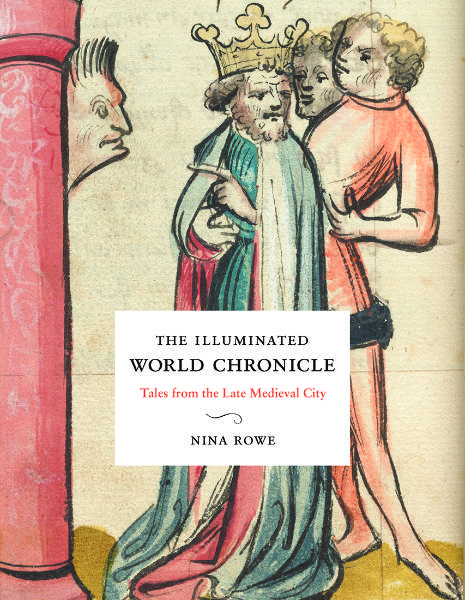
Online Book Launch: ‘The Illuminated World Chronicle: Tales from the Late Medieval City’ by Nina Rowe, 22 November 2020, 1pm (ET)

Join Fordham University for a conversation celebrating the publication of Nina Rowe’s new book, The Illuminated World Chronicle: Tales from the Late Medieval City (Yale UP, 2020). This multidisciplinary study examines a curious genre of illustrated book that gained popularity among the newly emergent middle class of late medieval cities. These illuminated World Chronicles, produced in the Bavarian and Austrian regions from around 1330 to 1430, were the popular histories of their day, telling tales from the Bible, ancient mythology, and the lives of emperors in animated, vernacular verse, enhanced by dynamic images. 

The World Chronicle stories recast stories of the past to meet the interests of late medieval urban dwellers and include surprising narratives – the devil sneaks aboard Noah’s Ark and cons a couple into having a forbidden tryst; Achilles engages in combat like a medieval knight; and Charlemagne becomes romantically enraptured with his deceased wife. Among the lively anecdotes is a suite of episodes about Moses, which explore the patriarch’s Jewishness and marriage to an African princess.

Rowe will explore the images and texts that recount these spirited tales in a conversation with Ephraim Shoham-Steiner, an expert on urban life in Europe in the late Middle Ages.

Nina Rowe is Professor of Art History at Fordham University. Previous publications include The Jew, the Cathedral and the Medieval City: Synagoga and Ecclesia in the Thirteenth Century (Cambridge, 2011) and Manuscript Illumination in the Modern Age: Recovery and Reconstruction (co-author, 2001). Nina Rowe’s research has been supported by fellowships from the National Endowment for the Humanities (2016-17), the American Council of Learned Societies (2016-17), and the Metropolitan Museum of Art (2007-8). She is currently President of the International Center of Medieval Art (ICMA), 2020-23.

Ephraim Shoham-Steiner is Professor of Medieval Jewish History at the Department of Jewish History at Ben-Gurion University of the Negev. He is the author of On the Margins of a Minority: Leprosy, Madness, and Disability among the Jews of Medieval Europe (2014) and Jews and Crime in Medieval Europe (Wayne State, 2020).

Nina Rowe’s book, The Illuminated World Chronicle: Tales from the Late Medieval City is available for purchase from Yale University Press with a 30% discount code: YAC89.
Due to technical difficulties, the Yale University Press website can only be used with a Firefox browser. You may also place your order by phone through Yale UP customer service at 1-800-405-1619.

Make sure to register here.

Online Lecture: ‘Defining Central Asia: Text, Monument and Landscape’, Oxford Nizami Ganjavi Centre, 20 November 2020, 2pm (GMT)

Join the Oxford Nizami Ganjavi Centre for their final webinar in the Art History and Archaeology of Central Asia: National, Regional and Global Series.

Convenors: Edmund Herzig, Akbar Khakimov, and Yusen Yu.

Defining Central Asia: Text, Monument and Landscape

Chair: Edmund Herzig (Oxford)

Staggering Identities in the Memory-Text-Landscape Triangle, Ingeborg Baldauf (Berlin)

The “Long” Silk Road(s): A Productive Paradigm or Pernicious Pretence?, Paul Wordsworth (Oxford)

Old Monuments, New Challenges, Gai Jorayev (London)

Join using this link.

ICMA Town Hall: Diversity, Medieval Art History & 2020, 20 November at 2.00pm-3.30pm (ET)

The ICMA, in response to the events of the past few months, but also cognizant of the longstanding need for the field of medieval art history to undertake a sustained campaign of reflection and self-critique, is convening a Town Hall, open to all interested members, on Friday, November 20 from 2.00pm-3.30pm ET.  The Town Hall will provide an opportunity for us, both as an organization and as individuals, to discuss issues of diversity, the state of our discipline, and the needed actions and changes we envision.  The Town Hall, which is organized by the newly formed IDEA (Inclusivity, Diversity, Equity, and Accessibility) Committee of the ICMA, will serve as a listening session and forum for sharing and collecting experiences, testimonials, calls to action, and proposed strategies for ICMA members.  The Town Hall is intended to serve as a starting point for self-study, brainstorming, and planning as the ICMA moves to address the biases and inequities, historically entrenched and yet recently magnified, of the structures and practices of our work.

The Town Hall, which will be moderated, will consist of structured discussions among attendees. Everyone is most welcome, most enthusiastically: feel free to come to listen and observe, or to ask questions, or to share an experience or an idea.  Please register for the Town Hall here.

In addition, we want to incorporate your own ideas into the planning of the Town Hall.  To that end, if you feel so inclined, we encourage you to submit a question, a topic of conversation, a personal anecdote, or anything else you would like us to consider in advance of the Town Hall.  Please use the Google Form linked here. The Co-Chairs of the IDEA Committee will review the submissions, which will be otherwise kept anonymous, and incorporate some of the submissions into the structure of the Town Hall.  If you would like to make a submission via the Google Form we ask that you do so before the end of the day on Friday, November 13.  Please note that the Google Form is optional, and it is separate from registration – you are not obligated to complete it to attend.

It is our goal that this Town Hall be a safe space for the full breadth of the ICMA membership, from established scholars to beginning graduate students, to come together to talk, listen, and learn – and, it will be the start of a longer conversation. 

If you have questions about the Town Hall, please feel free to reach out to the Co-Chairs of the IDEA Committee, Andrea Achi (andrea.achi@metmuseum.org) and Joe Ackley (jackley@wesleyan.edu).  It is our goal that this Town Hall be a safe space for the full breadth of the ICMA membership, from established scholars to beginning graduate students, to come together to talk, listen, and learn – and, it will be the start of a longer conversation. We do hope to see you on November 20, 2020.

All the best,

Andrea Achi and Joe Ackley, Co-Chairs, IDEA Committee 

Online Lecture: ‘Mining the Collection’ with Joshua O’Driscoll (The Morgan Library and Museum), 19 November 2020, 11:00 am (ET)

The ICMA are delighted to invite you to their third instalment of Mining the Collection.

Joshua O’Driscoll, Assistant Curator of Medieval and Renaissance Manuscripts at The Morgan Library and Museum, will present a fourteenth-century Italian Breviary with intriguing illuminations.

Please join them on Thursday, November 19th at 11:00 am ET for a brief presentation of this fascinating manuscript followed by an informal discussion. Sign up here.

Online Lecture: ‘The Elephant in the Room, at Gourdon in Burgundy’ with Professor John Osborne, 18 November 2020, 5pm (GMT)

This talk explores the fragmentary twelfth-century mural depicting an elephant, situated in the lowermost zone, or dado, of the choir wall in the church of Notre-Dame-de-l’Assomption at Gourdon, a small village in the Charolais district of Burgundy. This painting is unique in France, but its presence has attracted little attention, let alone any further consideration of its meaning and function. Some light can perhaps be shed on these issues by considering the mural in the larger context of dado imagery in western Europe in the central Middle Ages, as well as through an exploration of how medieval audiences knew about and understood elephants. Using texts such as the Bestiary, in which elephants are associated with the virtues of modesty and chastity, it will be proposed that the Gourdon elephant was intended to remind viewers of the theology underlying the selection of Mary, who is depicted receiving the archangel Gabriel’s greeting in a depiction of the Annunciation placed directly above. 


Professor John Osborne is a cultural historian of the early medieval Mediterranean, with a specific interest in the material culture of the cities of Rome and Venice.  He has also written more broadly on the topography of medieval Rome, saints’ cults, cultural transmission between western Europe and Byzantium, the Roman catacombs, and Counter-Reformation interest in Early Christian and medieval antiquities.  Following a “conversion” experience in Venice in the summer of 1970, he pursued a B.A. in art history at Carleton, followed by an interdisciplinary Master’s in Medieval Studies at the University of Toronto.  His doctoral thesis at the University of London (Courtauld Institute of Art) examined the early medieval paintings in the excavated “lower church” of San Clemente, Rome.  Subsequently he has spent part of every year in Rome, based at The British School, which in 2006 appointed him as an Honorary Fellow.  He taught at the University of Victoria (1979-2001), and Queen’s University (2001-2005), before returning to Carleton in 2005 as Dean of the Faculty of Arts and Social Sciences.

This is a live online event.  Please register for more details. The platform and log in details will be sent to attendees at least 48 hours before the event. Please note that registration closes 30 minutes before the event start time. If you have not received the log in details or have any further queries, please contact researchforum@courtauld.ac.uk

Book your place here.

Journal Submissions: Special Issue of Heritage: ‘New Advances in Stained Glass Research: Materials, Production Techniques and Conservation’, deadline 31 August 2021

Heritage, an international peer-reviewed open access journal of cultural and natural heritage science published quarterly by MDPI, has just launched the call for papers for a special issue entitled ‘New advances in stained glass research: materials, production techniques and conservation‘.

Many wrote about stained glass, but one must witness its splendour to understand the meaning of the words, the game of light and shadow, with coloured and colourless glass decorated with painted motifs. However, historic stained glass windows are exposed to the passage of time, facing physical attack and weathering conditions over time. Further changes introduced by restorations, reconstructions and interventions along with the degradation have a strong impact on the stained glass windows that we see today. Fortunately, scientific and technological advancements give, now, new and wider opportunities for preserving, sharing cultural heritage and better interpret its history, both in terms of manufacturing and past restoration actions.  

This issue is dedicated to:
– the technical aspects of the production of historical stained glass windows
– the degradation of stained glass
– stained glass conservation
– the importance of databases in the field of stained glass research

This Special Issue will also be open to contributions dealing with other subjects related to the major research themes mentioned above.

Dr. Marcia Vilarigues
Dr. Sophie Wolf
Dr. Teresa Palomar
Guest Editors

Original research papers and articles providing an up-to-date critical overview of the research in one of the above mentioned fields are invited. Manuscripts may be submitted from now until 31 August 2021 via the journal’s website. Articles will be available online as soon as they are accepted. The official launch of the special issue will be in January 2022 and coincide with the beginning of the International Year of Glass.

Heritage is an open access journal. The Article Processing Charge (APC) for publication is 1000 CHF (Swiss Francs). However, the publisher MDPI has several policies in place to support authors who cannot afford the APC. Please contact the Heritage Editorial Office (ginny.zhang@mdpi.com) for further information and conditions for support.

Online Lecture: ‘Evidence for the Liturgical Use of Thirteenth-century Bibles’ with Laura Light, IHR European History 1150-1550, 16 November 2020, 5:30-7:30pm (GMT)

In this overview, we will begin with twelfth-century Bibles, before turning to the thirteenth century, exploring selected case studies of Bibles used for the Mass and the Divine Office.  The evidence is abundant, but does pose puzzles, including the central one of format.  How were very small Bibles used for the Mass and Office? Historians of the thirteenth-century Bible have always presented it as a new phenomenon, and anyone who has held a very small one-volume Bible from the thirteenth century knows that this is true.  But that is not the end of the story.  These “new” Bibles were also used and understood in very traditional ways, especially within the context of the public liturgy of the medieval church.  Continuity and innovation, I would argue, are both important.

Laura Light it as director and senior specialist at Les Enluminures. She has published widely on the Paris Bible and its precursors, including an exhibition catalogue on the Bible for Harvard University, where she worked as cataloguer of medieval manuscripts at the Houghton Library. She has edited “Form and Function in the Late Medieval Bible” – a collection on the manuscript evidence and the historical significance of late medieval Bibles.

All welcome- but booking is required. Register here.

Online Lecture: ‘Mail-order Mihrabs: Kashan Tiles and Architectural Design in Iran, c. 1200-1330’ with Dr Patricia Blessing, 17 November 2020, 12:00pm (EST)

Medieval Studies at Princeton University is excited for their new upcoming online lecture by Dr Patricia Blessing on: ‘Mail-order Mihrabs: Kashan Tiles and Architectural Design in Iran, c. 1200-1330’, as part of the Medieval Studies Virtual Faculty Colloquium. This talk will take place on Tuesday 17th November 2020 at 12pm (EST).

The city of Kashan in Iran, an oasis located 240 km south of Tehran to the east of the desert of the Dasht-i Kavir, was a major center of ceramic production from the late twelfth to the mid-fourteenth century. One of the hallmarks of this production were luster tiles that were used to clad the dado zones and mihrabs of mosques and mausolea. These tiles were installed locations ranging from major Shi’a holy sites such as the shrine of Imam Reza in Mashhad in eastern Iran to smaller tombs as far as Azerbaijan. Yet despite more than a century of extensive research and publications about the luster industry of Kashan, two simple questions have not been asked: How were the tiles designed to fit the buildings, and how were they transported from Kashan to their destinations? This talk will pursue these questions, attending to issues of design practices, scale, transportation and logistics in medieval Iran.

Patricia Blessing is Assistant Professor of Islamic Art History in the Department of Art & Archaeology, specializing in the art and architecture of the Islamic world, with a focus on the eastern Mediterranean and Iran from the twelfth to the fifteenth centuries.

Registration is required.

Please register here for this colloquium to receive the Zoom instructions, and be sure to add this event to your calendar.

For any questions please contact: Sarah Porter.

Visit the Princeton University Program in Medieval Studies to view all upcoming events.

Dissertation Prize: South Asia Art Initiative at UC Berkeley, deadline 1 December 2020

The South Asia Art Initiative at UC Berkeley invites submissions of doctoral dissertations for the annual UC Berkeley South Asia Art & Architecture Dissertation Prize. The prize will be awarded to an outstanding doctoral dissertation on the art, architecture, or visual cultures of South Asia and its diasporas from any discipline in the arts, humanities, or social sciences. The dissertation may focus on any time period from the prehistoric to the contemporary. The prize comes with a $1,500 award.

Ph.D. dissertations submitted for consideration must have been filed between September 2, 2018 and September 1, 2020 at an accredited university in North America or Europe. The submission package must include the following: a pdf abstract (< 1000 words); a pdf curriculum vitae (please include your contact information); a pdf copy of the dissertation; and a confidential letter from a member of the dissertation committee that speaks to the merits of the dissertation with respect to the current state of the field and the innovation that the work attempts.

The 2020 Prize Committee: Atreyee Gupta (Chair, University of California, Berkeley), Navina Najat Haidar (The Metropolitan Museum of Art), Partha Mitter (Emeritus Professor, University of Sussex), Tamara Sears (Rutgers University)

Deadline: The submission package for the prize must be in English and submitted via email to Puneeta Kala <pkala@berkeley.edu> by December 1, 2020. Late submissions will not be accepted. The result for the 2020 prize recipient will be announced on the South Asia Art Initiative website on February 14, 2021. The winner will give a talk in conjunction with an expenses-paid award conferral ceremony at UC Berkeley in April 2021. If there are continued COVID-19 travel restrictions, the award ceremony in 2021 may be held through a virtual platform. For more details, please see: https://southasia.berkeley.edu/art-awards

The South Asia Art Initiative
Institute for South Asia Studies
University of California, Berkeley
10 Stephens Hall
Berkeley, CA 94720
https://southasia.berkeley.edu/south-asia-art-initiative

The South Asia Art Initiative at the University of California, Berkeley promotes research-based conversations and collaborations around the arts of South Asia + its diasporas from the ancient period to the now.