Job Opportunity: Lecturer in History 300-700 CE, Durham University (Deadline 17 August 2021)

The Department of History at Durham University seeks to appoint a talented individual to the fixed term role of Lecturer in History CE 300-700.  They are particularly eager to hear from applicants with a focus on the history of the Mediterranean world.  

The primary focus of this role is on research and teaching but there will also be the opportunity to engage in wider citizenship within the University and beyond.

This role of Lecturer is for a fixed term of 12 months and to provide cover for Eleanor Barraclough, who has been awarded an AHRC Leadership Fellowship. It is not anticipated that this period would be extended beyond the initial fixed term.

Applicants must demonstrate research excellence in the field of History CE 300-700, with the ability to teach our students to an exceptional standard and to fully engage in the services, citizenship and values of the University.

The post-holder will be expected to contribute to a new team-taught level 1 module on the late-antique Mediterranean world, to contribute a strand to the core level 1 module ‘Making History’, and to teach a new or existing level 2 module in an aspect of early medieval history. They will undertake some undergraduate and MA dissertation supervision and, where appropriate, carry out other teaching duties specified by the Head of Department.

All applicants are asked to submit:

  • A CV and covering letter which details your experience, strengths and potential in the requirements set out above;
  • PDFs of up to two pieces of research focused work;
  • A personal research plan [of 500-1,000 words, setting out your intended research programme for the coming three to five years, with some indication of possible publications and sources of funding]

You should provide details of 3 academic referees and the details of your current line manager so that we may seek an employment reference (if they are not listed as an academic referee).  Please note:

  • We shall seek the academic references during the application process.  We would ask that you alert your academic referees to this application as soon as possible so that we can quickly obtain references should you be progressed to the long list stage.  If you do not wish (some or all) of your referees to be approached during the recruitment process; you must clearly indicate this to us at the time of your application.
  • Academic references sought for long-listed candidates may be made available to the panel during the shortlisting process.
  • We will seek a reference from your current line-manager if we make you an offer of employment (albeit you may have also nominated your line manager as an academic referee).  Please clearly indicate which referee is your current line-manager and please let us know if we should only approach them once an offer has been made.

Applications are particularly welcome from women and black and minority ethnic candidates, who are under-represented in academic posts in the University. The deadline to apply is 17th August 2021. Please apply via the Durham jobs page: https://www.dur.ac.uk/jobs/

Call for Papers: ‘New Approaches to the Art and Architecture of Angevin and Aragonese Naples (1265-1458)’, International Congress on Medieval Studies 2022, deadline 15 September 2021

The city and kingdom of Naples occupied a central place in late-medieval Mediterranean life: it was a powerful kingdom with deep connections to the French throne; it controlled vast territories throughout Italy in service to the papacy; and its many ports welcomed goods arriving from the Levant, north Africa, and western Europe. Despite this importance during the medieval period the city has been, generally, overshadowed by other cities such as Rome, Florence, and Venice in academic discourse. Nevertheless, the city has been interrogated in recent decades by many prominent European and American art historians who have expanded our understanding of Neapolitan art patronage and devotional images during the trecento and quattrocento, including Francesco Aceto, Nicolas Bock, Caroline Bruzelius, Bianca de Divitiis, Stefano D’Ovidio, Janis Elliott, Cathleen Fleck, Adrian Hoch, Pierluigi Leone de Castris, Vinni Lucherini, Tanja Michalsky, Alessandra Perriccioli Saggese, Elisabetta Scirocco, Paola Vitolo, Cordelia Warr, and Sarah Wilkins, to name a few.

This panel invites submissions from students that will build on recent scholarship and examine the relationship between the art, artists, and architecture of late-medieval Naples and the wider connected world. Topics of interest include but are not limited to: the movement of material and visual culture between Naples, the wider Mediterranean, and beyond; the movement of people, including patrons, artists, and craftsmen, between Naples and the wider connected world; the impact of trade to or from Naples; diplomatic, political, commercial, artistic, and cultural exchanges and interactions and their effects within and beyond Naples; the role of women as patrons, rulers, nuns, and powerbrokers in Naples; dress and comportment; the textile arts; portolan atlases; trade between Naples and other cities, including, but not limited to, Florence, London, Paris, Rome, Tunis, or Jerusalem.

Please submit papers through the ICMS Confex site at https://wmich.edu/medievalcongress/call no later than 15 September. The ICMA Student Committee will send out notifications in the latter half of September. Please direct all questions or concerns to gilbert.jones@gmail.com and elb7cn@virginia.edu .

A good abstract will state the topic and argument and will inform specialists in the field of what is new about the research. Generalities known to everyone, or research that a scholar intends to do but has not yet begun, are not appropriate. Please keep in mind that, if selected, your abstract will be used, as is, for the online program and conference app.


Since the International Congress on Medieval Studies will be run virtually in 2022, the ICMA (via a Samuel H. Kress Foundation grant) will cover the conference fees of those participating in the ICMA-sponsored session(s). Participants will be required to be members of the ICMA at the time of the conference (May 2022).

Janis Elliott and Denva Gallant are organizing two sessions on Naples sponsored by the ICMA, Naples and Beyond: World-Wide Cultural Networks. To promote stronger networks between ICMA student and senior scholars, they will also moderate the Student Committee session.

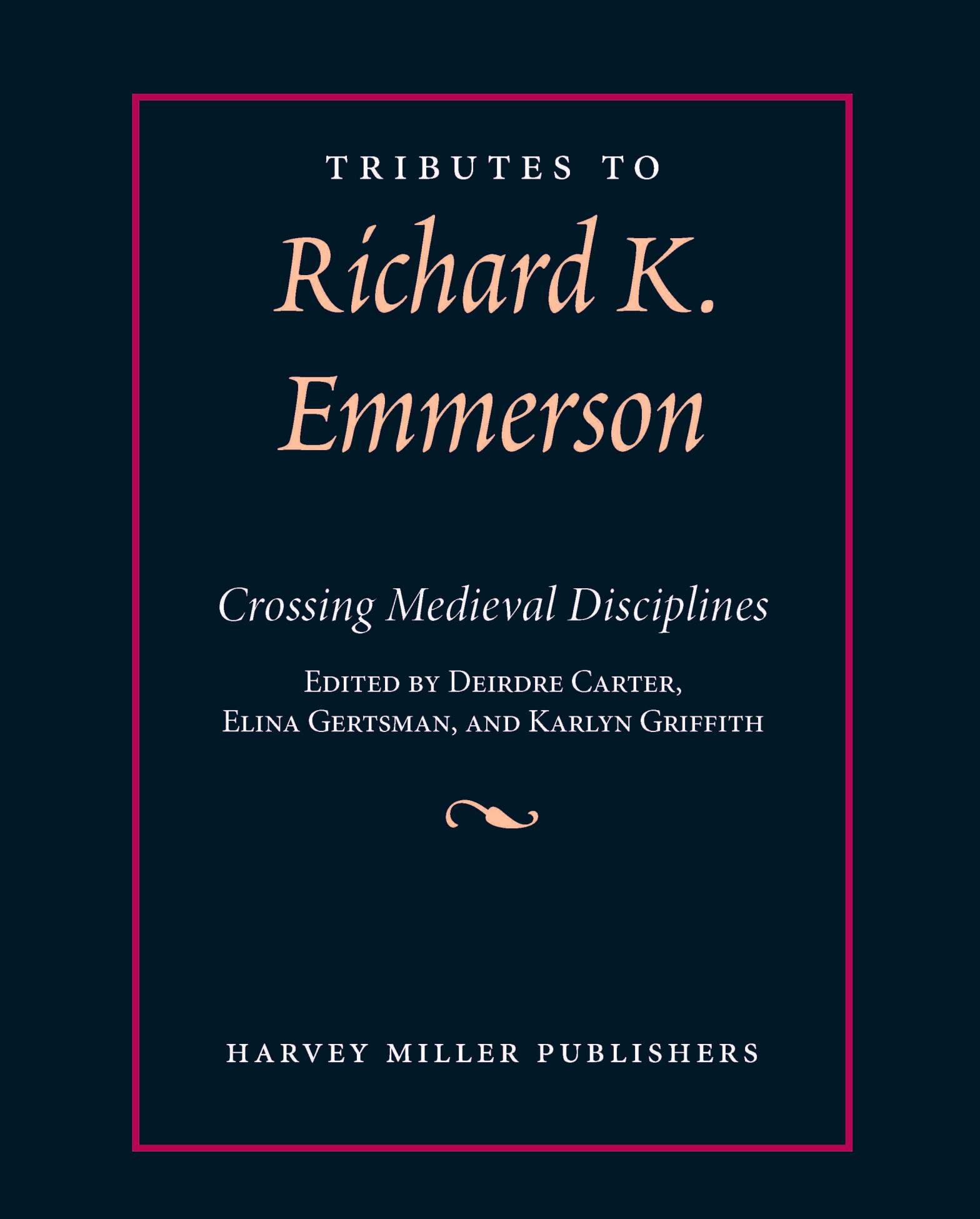
New Publication: Tributes to Richard K. Emmerson: Crossing Medieval Disciplines, edited by Deirdre Carter, Elina Gertsman, and Karlyn Griffith

Honoring the scholarship of Richard K. Emmerson, this collection interrogates the concept of interdisciplinarity through a set of essays that traverse the traditional boundaries of various fields in medieval studies. This interdisciplinary collection celebrates the scholarship of Richard K. Emmerson, one of the most prominent medievalists of his generation. With contributions to the history of medieval literature, drama, theology, and art, this anthology not only showcases the fields with which Emmerson’s own work engaged, but also demonstrates the fruitfulness of the cross-disciplinary approach that has come to define these fields. Although the essays employ a broad range of source material—from devotional texts to royal chronicles and from architectural sculpture to illuminated manuscripts—the book focuses specifically on four distinct but related topics: word-image relationships, eschatology, identity, and moral argument. The contributions, written by Emmerson’s colleagues and former students, speak to the importance of interdisciplinarity and demonstrate the profound influence of Emmerson’s work on the rich field of medieval studies.

Elina Gertsman is Professor of Art History at CWRU. She is the author and editor of several books, including The Dance of Death in the Middle Ages (2010) and Worlds Within (2015).
Karlyn Griffith is Associate Professor of Art History at Cal Poly, Pomona. She was the recipient of research grants from the American Philosophical Society and Bibliographical Society of the UK. Her work has been recently published in Viator and Pecia.
Deirdre Carter teaches art history at Indiana University—Purdue University Indianapolis. Her research has been supported by the Schallek Fellowship of the Medieval Academy of America and the Richard III Society, American Branch

Table of Contents

Elina Gertsman and Deirdre Carter — Introduction: A Laudarium

Publications by Richard K. Emmerson

Part I: Sites of Reception

Lawrence Nees — Antique and Faux-Antique in Carolingian Manuscripts

Paula Gerson — Early Painted Faade Sculpture: Research and Observations on Perception and Cognition

Jack Freiberg — The Imago Pietatis in Santa Croce in Gerusalemme, Pope Gregory the Great, and Spain

Part II: Imaging and Imagining the Text

Lucy Freeman Sandler — Visions of the Beginning and the End: The Hours of the Angels Added to the Psalter of Yolande of Soissons

Penn R. Szittya — Gods Palimpsest: The Encyclopedia Omne bonum as Sacred Book

Nigel J. Morgan — Word and Image in the Anglo-Norman Prose Apocalypse Fragment London, British Library, MS Add. 38842

Part III: Envisioning the End of Days

Jennifer M. Feltman — Tradition and Innovation in the Sculptural Cycle of the Life of John at Reims Cathedral

Karlyn Griffith — The Spectacle of Violence and Romance in Three English Metrical Apocalypses

David Bevington — The Tegernsee Play of Antichrist

Part IV: Locating Identity

David N. Klausner — Performance Indicators in Two Early Welsh Plays

Robert W. Hanning — Rituals of Identity, Strategies of Desire: How a Servant Becomes King for a Night in Decameron 3.2

Elaine Treharne — The Endurance of the Name, 700–1500

Thomas A. Goodmann — Everywhere & Nowhere: Finding the Friars

Part V: Spirituality and the Moral Argument

Beatrice Kitzinger — The Good, the Bad, and the Ivory: On Moral Distinction in Carolingian Crucifixions

Bernard McGinn — The Ordering of Love in the Twelfth Century

Ronald B. Herzman — Francis, Dante, Iacopone

Sarah Andyshak and Karlyn Griffith — In Place of an Epilogue: What Else Do We See?

Elina Gertsman — Afterword: This Is the End

To purchase, please visit Brepols: http://www.brepols.net/Pages/ShowProduct.aspx?prod_id=IS-9781909400993-1

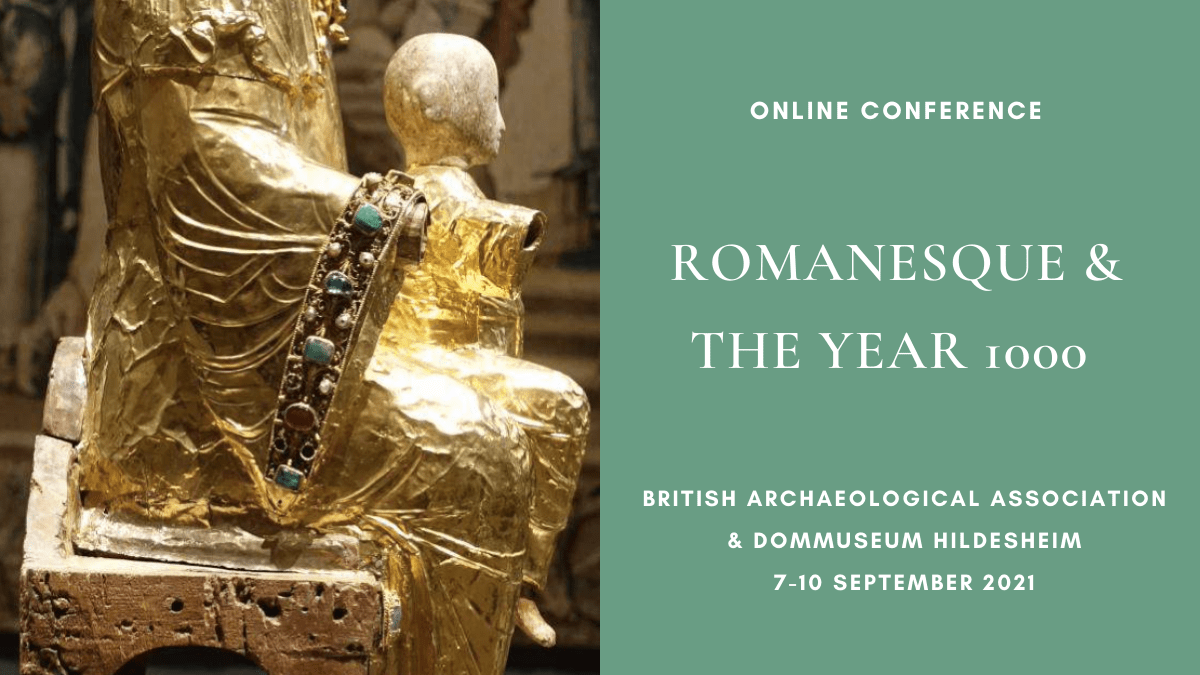
Online Conference: Romanesque and the Year 1000 Online Conference, British Archaeological Association and Dommuseum Hildesheim, 7-10 September 2021

The British Archaeological Association will hold the sixth in its biennial International Romanesque conference series as an online Zoom webinar from 7- 10 September 2021. Daily sessions will run from 13.30-18.00 (British summer time) – 14.30-19.00 (Central European summer time).

The theme is Romanesque and the Year 1000, and the aim is to examine transformations in the art and architecture of the Latin Church around the turn of the millennium. The 30 years to either side of the year 1000 witnessed remarkable developments in iconography and stylistic expression. It saw portable devotional statues come into being, the revival of bronze-casting, the re- emergence of architectural relief sculpture, and the application of novel, or at least re-understood, architectural forms. In addition to the above, individual papers are concerned with the impact of objects from the Carolingian past and Byzantine present, royal patronage, monastic reform, the organization of scriptoria, ‘authorship’, changes in representational strategies, and regional affiliation.

Speakers include Marcello Angheben, Claude Andrault-Schmitt, Jordi Camps, Hugh Doherty, Eric Fernie, Shirin Fozi, Barbara Franzé, Richard Gem, Agata Gomolka, Lindy Grant, Cecily Hennessy, Wilfried Keil, Sophie Kelly, Bruno Klein, Florian Meunier, Jesús Rodríguez Viejo, Tobias Schoo, Markus Späth, Béla Zsolt Szakács, Elizabeth Valdez del Álamo, Eliane Vergnolle, Michele Vescovi, Rose Walker, and Tomasz Weclawowicz.

The online conference programme will be published in early August and posted on the BAA website.

You can register for all four days with one registration here:  https://us02web.zoom.us/webinar/register/WN_yd_UOZFVQQeD7ZfvzHVQtQ

New Journal Issue: ‘The Military Orders’, Medievalista Journal, July-December 2021

The latest issue of Medivalista about Military Orders, coordinated by Luís Filipe Oliveira and Gregory Leighton, has been published and is now available on the journal’s website.

Articles


‘From the East to the West: The Military Orders Thematic Dossier – A Foreword’, Luís Filipe Oliveira and Gregory Leighton

‘Early Templar Administration in Provence and North-Eastern Spain’, Alan Forey

‘The beginnings of the Order of Saint John in Jerusalem, or: Muristan revisited’, Dorothee Heinzelmann and Jürgen Krüger

‘The Templar Order, Portugal, and the Latin East: A New Document for an Old Debate’, Philippe Josserand

‘The Catalan Queralt-Timor lineage and its relationship with the Order of the Temple (12th-14th centuries)’, Joan Fuguet Sans, Carme Plaza Arqué

‘Women and parish liturgy. Lay women’s religion in the lordship of the Military Order of Calatrava in rural Castile (15th-16th centuries)’, Raquel Torres Jiménez

‘National Rivalry among Hospitallers? The Case of Bohemia and Austria, 1392-1555’, Karl Borchardt

Extra-issue


‘Sources and context of the eucharistic miracles of the Cantigas de Santa María 128 and 208’, Manuel Negri

‘Islamic Tradition Pottery in Portuguese contexts. 12th-14th centuries’, Marco Liberato et al.

Book Reviews

AYALA MARTÍNEZ, Carlos de; FERNANDES, Isabel Cristina Ferreira; PALACIOS ONTALVA, Santiago (coords.) – La Reconquista. Ideología y justificación de la Guerra Santa Peninsular. Madrid: La Ergastula, 2019 (534 pp.)
Cláudio Neto

DIAS, João Carvalho (ed.) – Manuscritos Iluminados Europeus na Coleção Calouste Gulbenkian. Lisboa: Fundação Calouste Gulbenkian, 2020 (342 pp.)
Delmira Espada Custódio, Maria Adelaide Miranda

RUIZ PILARES, Enrique José – La sociedad política en Jerez de la Frontera a finales de la Edad Media. Cádiz: Editorial UCA, 2020 (274 pp.).
Filipa Roldão

It also presents a PhD and Master thesis presentation and Varia.

All information is available on the journal’s website:
http://medievalista.iem.fcsh.unl.pt/index.php/medievalista

Online Conference: ‘The Romanesque Picture Door of St Maria im Kapitol – New Research Results and Theses’, 21-23 October 2021

Registration is now open for the online research colloquium ‘The Romanesque Picture Door of St. Maria im Kapitol – New Research Results and Theses’, which will be held virtually from 21-23 October 2021.

The two-winged door of the former church of canonesses, St. Maria im Kapitol of Cologne, is one of the most significant artworks of the Romanesque period. It is the earliest wooden door with relief scenes that has survived from medieval Europe. Twenty-five high relief pictures present the childhood and youth of Christ on the left door leaf and the Passion on the right leaf. For present- day observers the wood of the door is visible almost all over the surface. However, it once had an elaborate polychromy. It was already in the processes of conservation at the end of the 1980s when two Romanesque polychrome phases were discovered. Thirty years later, in 2018, an extensive study of the picture door by means of state-of-the-art technological methods was conducted. It comprised the technical structure of the polychromy, the materials, the composition as well as the color canon of both phases on all parts of the door and provided numerous new findings.

In order to appreciate the significance of this unique work of art, however, further comprehensive cross-range research had to be carried out which will be presented at the occasion of the conference. Scientists of various specialist disciplines, e.g. art and history science, natural science, art technology, building research and epigraphy examined the picture door from their respective point of view. Thanks to the latest building history research, the comparison to book illumination, and the viewing in an urban and international context we are expecting new insights regarding the picture door and its function in St. Maria im Kapitol.

The conference is sponsored by the Cologne Institute of Conservation Sciences and the Institut für Restaurierungs- und Konservierungswissenschaft. To register for free and to see the program, which includes papers in German and in English, please visit https://www.th-koeln.de/hochschule/cics—forschungskolloquium-st-maria-im-kapitol_86140.php.

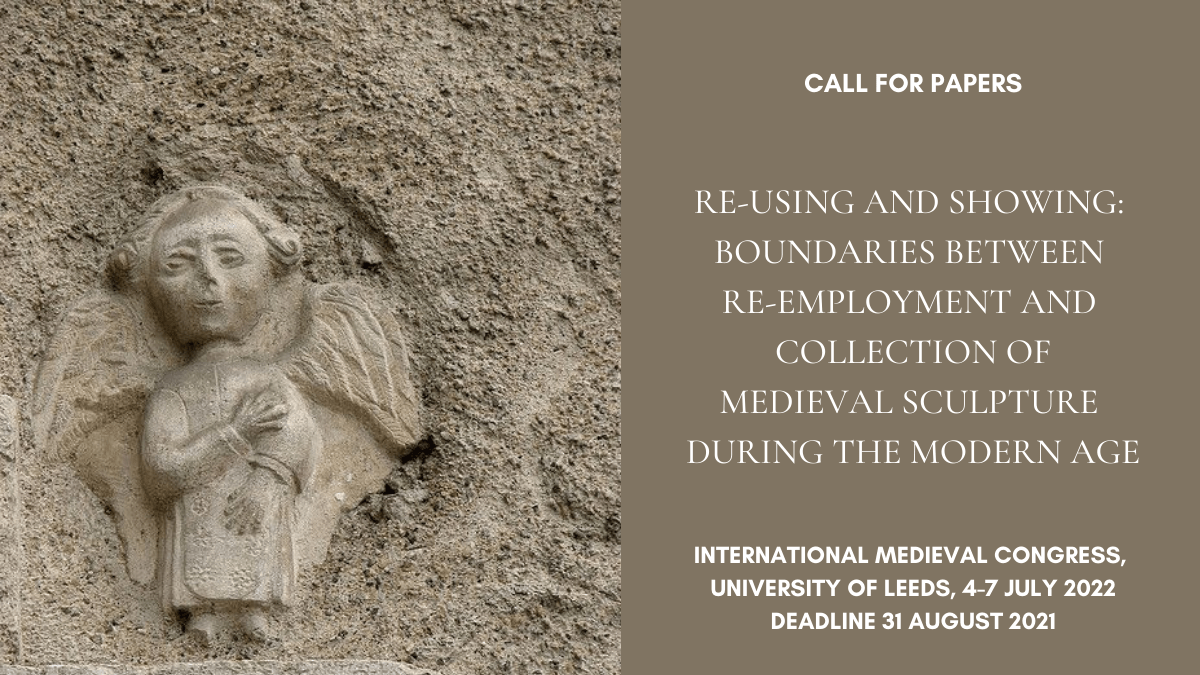
Call for Papers: ‘Re-Using and Showing: Boundaries Between Re-Employment and Collecting of Medieval Sculpture During the Modern Age’, Borders, IMC, University of Leeds, July 4-7, 2022 (Deadline 31 August 2021)

As part of the research activities within the MEMID project (see below, under “Patronage/Sponsor”),
aiming to create moments of discussion with scholars of various nationalities and research fields,
MEMID would like to submit a session to annual International Medieval Congress, organised and hosted by the Institute for Medieval Studies at the University of Leeds. In 2022 the special thematic strand will be ‘Borders’: the aim of this panel is to gather papers investigating the boundaries between re-employment and collecting of medieval sculpture during the Modern Age (roughly 15th-18th centuries).

The Middle Ages is the era in which long-term structures – civic, religious, familiar, but also
administrative, legal and political – were created. They have assumed a strong identity value,
contributing to the formation of the present historical and architectural heritage with which
subsequent eras had necessarily to confront. The “long life” of medieval sculpture, through practices
of reuse and rearrangement in the course of the following centuries, represents therefore a
phenomenon of great cultural vitality that deserves to be investigated as a process, with its complex
dynamics. When not merely utilitarian, it testifies, in fact, the desire for “appropriation” by artists
and patrons of the specific symbolic values related to the the artwork, although sometimes the new
arrangements serve purposes, functions and values completely different from the original ones,
often accompanied by a complete resemantization and reworking interventions.
The exposition of reused sculptures in decorative and monumental contexts of a certain complexity
can sometimes be assimilated to a “collection” of artworks, inspired by the desire to convey precise
and emblematic messages related to processes of social affirmation, cultural transformations,
institutional claims. This session aims to investigate the permeability and limits between the
phenomena of reuse and “collecting” of medieval sculptures in the Modern Age (roughly 15th-18th
centuries) through the analysis of significant case studies.

Patronage / Sponsor:
The proposed panel is part of the activities of the project Memoria e identità. Riuso, rilavorazione e
riallestimento della scultura medievale in Età moderna, tra ricerca storica e nuove tecnologie (
Memory and identity. Reuse, reworking and rearrangement of the Medieval sculpture in the Modern Age between historical research and new technologies)
(MEMID) funded by the Italian Ministery for University and Research (FISR funds = Fondo integrativo speciale per la ricerca / Special supplementary fund for research, 2021-2023). Project coordinators: Laura Cavazzini (Università degli Studi di Trento), Clario Di Fabio (Università degli Studi di Genova), Paola Vitolo (Università degli Studi di Napoli “Federico II”)

Paper proposals should be sent to both organizers, Antonella Dentamaro
(antonella.dentamaro@gmail.com) and Francesca Girelli (girellif@gmail.com), by August 31, 2021,
and must include:


• Full name
• email address
• Full affiliation details (department, institution) if applicable
• Paper title
• Abstract (250 words max.)
• Keywords
• Brief bio (300 words max.)

Papers may be submitted in English, Italian or French. Applicants will be notified by September 15,
2021. The panel (articulated in three papers, each of 20 minutes, and 10 minutes for discussion) will be submitted to the Institute for Medieval Studies of Leeds by September 31, 2021. It is the Institute’s present intention to host the congress in-person; but we can require that our session will be delivered in person, virtually, or a combination of the two.


Information about registration fees: https://www.imc.leeds.ac.uk/register-2021/prices/.

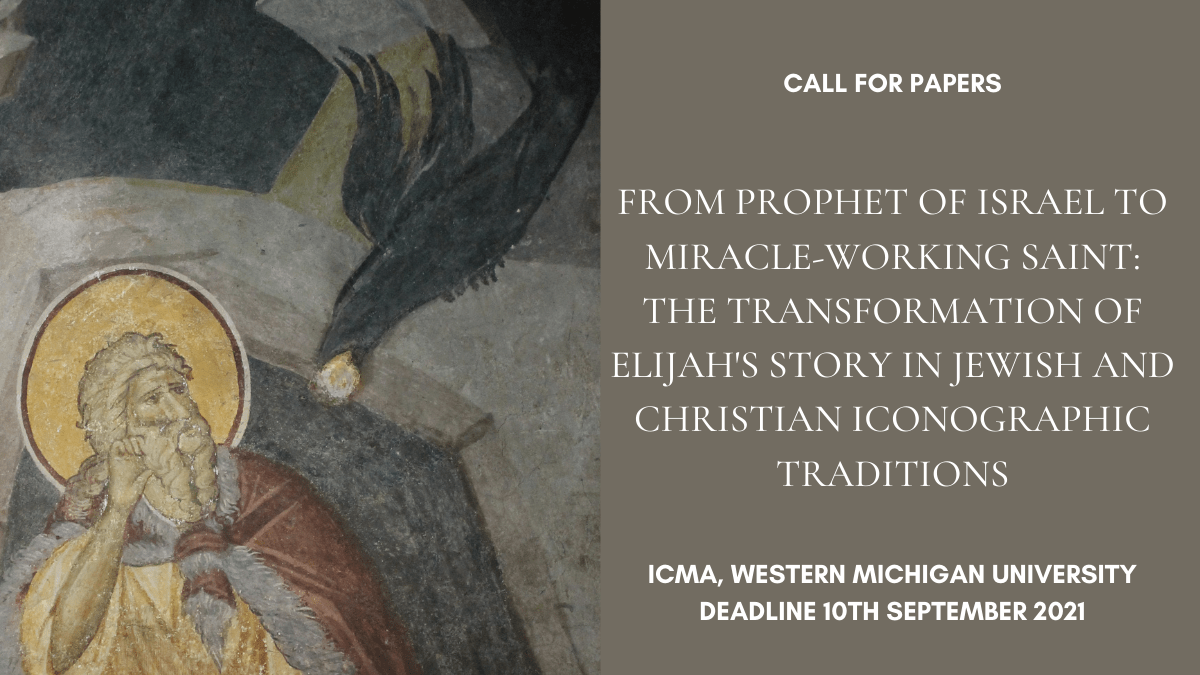
Call for Papers: ‘From Prophet of Israel to Miracle-Working Saint: the Transformations of Elijah’s Story in Jewish and Christian Iconographic Traditions’, ICMA, 9th-14th May 2022 (Deadline 10 September 2021)

The prophet Elijah is one of the most venerated figures in both Jewish and Christian traditions. Although the account of his deeds (1 and 2 Kings) offered ample material for exegesis, art historiography has paid little attention to the representation of Elijah’s story in late antique and medieval visual culture (ca. 3rd–15th centuries). This session aims to reassess the development of the prophet’s cult in different periods and religious contexts by gathering new evidence for the pictorial articulation of his narrative cycles.


Already in the 3rd-century CE, the mural decoration of the synagogue at Dura-Europos comprised a significant selection of episodes which affirmed the Tishbite’s capacity for performing miracles as a divine confirmation of his prophetic ministry. Later on, in medieval Byzantium, the supernatural powers of controlling the weather and raising the dead became a crucial element of Elijah’s profile as a thaumaturge saint. Moreover, his ascetical life was interpreted as a monastic archetype, usually regarded alongside the exemplum of John the Forerunner. In this new devotional context, the visual narrative of the prophet’s life was reshaped as a proper hagiographical cycle, a change simultaneously attested by 13th-century Balkan frescoes and Russian icons. Additionally, during the Middle Ages, certain scenes from Elijah’s story, such as the prophet being nourished by a raven or an angel, were equally used as autonomous elements of broader iconographic programs, acquiring multiple theological and liturgical meanings. A comparative analysis of these occurrences is still lacking.


Therefore, the main scope of this session is to stimulate research towards a more refined understanding of the circulation of biblical and hagiographical traditions correlated with the prophet Elijah. Bringing together a wide range of iconographic material and relating it to existing bibliography about homiletic texts and hymnography, this session will address a fundamental question about how images dynamically negotiated Jewish spiritual heritage in different areas of late antique and medieval Christendom. Proposed papers may include, but are not limited to:


• Local iconographic versions of Elijah’s narrative in East and West (3rd–15th centuries)
• The use of autonomous episodes from the prophet’s life in different iconographic contexts
• Jewish elaborations on Elijah’s legend
• Elijah as a model of monastic life in Christian texts and images
• The integration of Elijah’s image in the series of Old Testament figures (e. g. the selection of prophets in middle and late Byzantine domes)
• Elijah and the widow of Sarepta: a gender perspective


Each speaker will be given 20 minutes to present his/her paper. Please send abstracts of maximum 400 words, together with a short presentation, to the organizers: Dr. Barbara Crostini (crostini.barbara@gmail.com) and Andrei Dumitrescu (andreidumitres@gmail.com).
The deadline to submit papers is 10th September 2021.

Full information can be found here: https://wmich.edu/medievalcongress/call

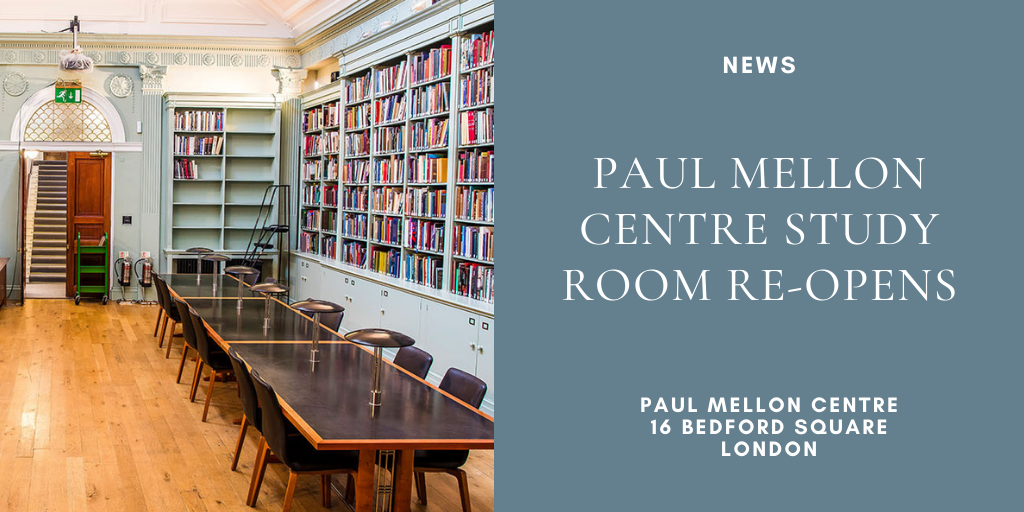
News: Paul Mellon Centre Public Study Room is open

The Public Study Room at the Paul Mellon Centre in Bedford Square is delighted to announce it is open again. The study room will be open by appointment only on Monday, Wednesday, and Friday, between 10.30-12.45 and 13.15-15.30. The rest of the Centre (PMC) will be open by invitation only on these same days of the week.

All readers will be required to leave the building during the lunch time closure of 12.45-13.15.

The PMC has put in place a number of measures to protect visitors and staff. The following measures have been put in place to protect researchers and staff while accessing materials in our Public Study Room, and will be subject to continual review and revision.

All readers who wish to view any Archives & Library material in person must book an appointment by writing to collections@paul-mellon-centre.ac.uk by midnight on the Tuesday of the week before their visit. Appointments, with set arrival times, will be made in consultation with Archives & Library staff.

In order to practice safe social distancing, there will be a limit of four readers a day in the Public Study Room (one reader per desk). Each reader will be assigned a desk for the day and arrival times will be staggered.

For more information, visit their website here and here.

Call for Journal Submissions: Fenestella, Open Access Journal, Issue 2/2021

The journal FENESTELLA: Inside Medieval Art is accepting scientific contributions in view of the publication of the second issue in 2021.

Continue reading “Call for Journal Submissions: Fenestella, Open Access Journal, Issue 2/2021”