Study Day: Monumental Brass Society at Battle, East Sussex, 28 March 2015

The church of St Mary the Virgin, Battle, was established by Abbot Ralph c. 1115 on the battlefield of 1066. The church includes a magnificent transitional nave, a rare wall painting of St Margaret of Antioch of c.1300 and the gilded and painted alabaster tomb of Sir Anthony Browne (1548) who acquired the abbey at the Dissolution. The earliest surviving brass is for Sir John Lowe (1426) with a distinctive memento mori inscription

Brasses for the deans of Battle; Robert Clere, engraved c.1430, and John Wythines, Vice-Chancellor of the University of Oxford, and Dean of Battle for 42 years, who died in 1615 are to be found north and south area of the sanctuary respectively.

This meeting, on Saturday 28th March 2015, is free for members and non-members of the Society.

Programme:

2.00p.m. Welcome
by Martin Stuchfield, President of the Monumental Brass Society

2.05p.m. St Mary’s Church Battle
by Clifford Braybrooke

2.30p.m. The Brasses of Battle Church
by Robert Hutchinson

3.00p.m. The Monument to Sir Anthony Browne and his wife, Alice Gage
by Nigel Llewellyn

3.30p.m. Tour of the church and viewing of the brasses and monuments led by Pat Roberts

4.15 Tea

The Church will be open prior to the meeting.

St Mary’s Church is located in Upper Lake in the centre of Battle with ample parking in the vicinity. The postcode for satellite navigation is TN33 0AN. The nearest station is Battle (served from London: London Bridge).

Myths of Medieval Spain. Symposium, Research Forum, Courtauld Institute of Art, 2-6.30, Weds 11 March 2015.

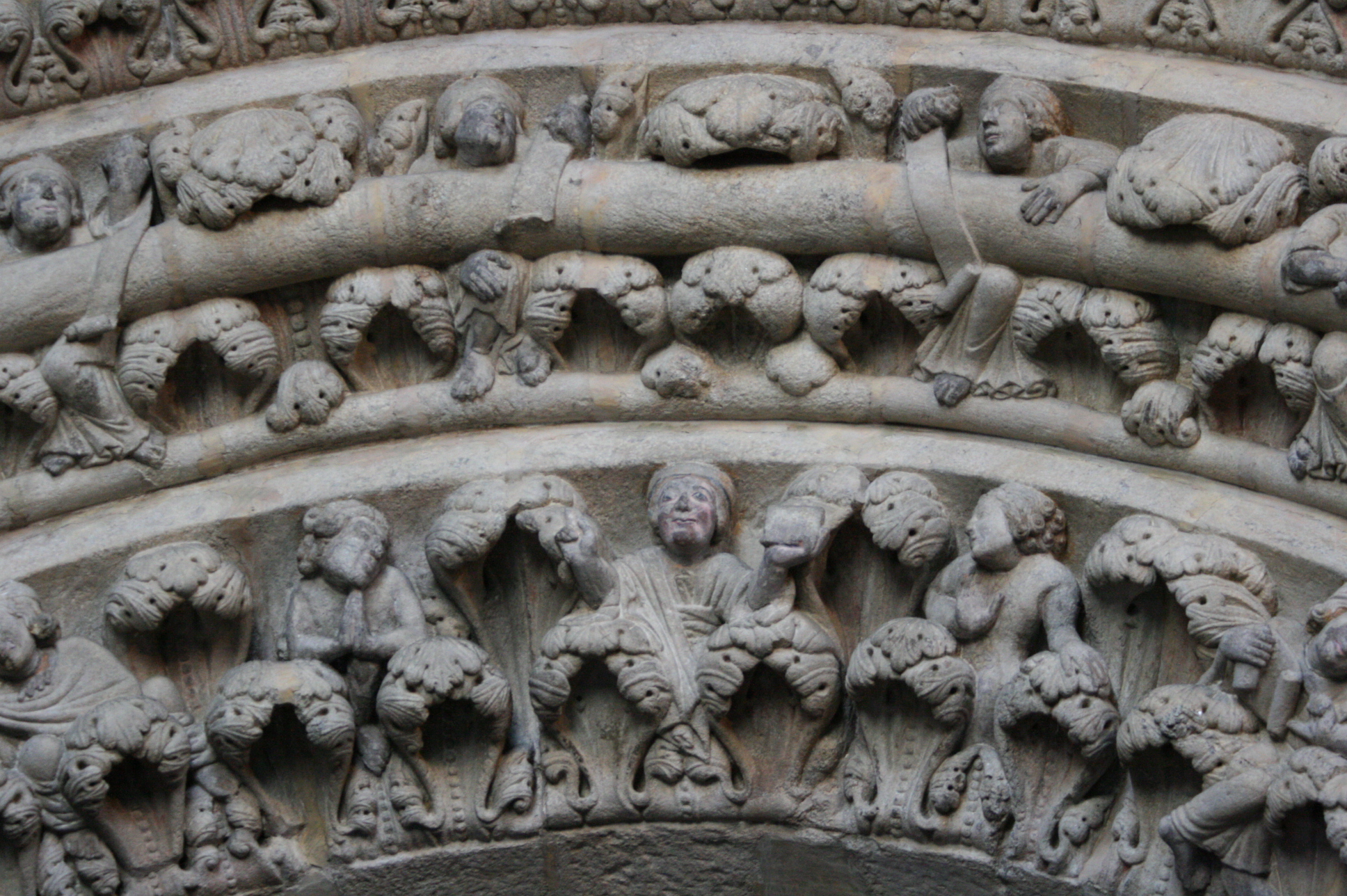
Detail of the Portico de la Gloria, Santiago de Compostela, late twelfth century

LAST MINUTE SPACES NOW AVAILABLE!

Myths of Medieval Spain. Symposium, Research Forum, Courtauld Institute of Art, 2-6.30, Weds 11 March 2015.

Four papers offer new ideas on a group of well-known sculptures and manuscripts from twelfth- and thirteenth-century Spain, exploring tensions between local and international concerns.

2: Introductory remarks, Tom Nickson (Courtauld Institute of Art)

2.10: Rose Walker (Courtauld Institute of Art)

Beatus manuscripts during the reign of Alfonso VIII of Castile and Leonor of England: a response to the fall of Jerusalem?

2.40: Rosa Rodríguez Porto (University of York)

Tvrpinus Domini gratia archiepiscopus: Notes on the Codex Calixtinus

3.10: James D’Emilio (University of South Florida)

The West Portals at Compostela and the Book of St. James: Artistic Eclecticism at a Cosmopolitan Shrine

3.40: discussion

4.15-5.15: tea

5.30-6.30:

Javier Martínez de Aguirre (Universidad Complutense de Madrid)

The voices and the echoes: Saint James, Gregory the Great and Diego Gelmírez in Santiago de Compostela’s Puerta de Platerías

6.30: drinks reception

Conference: Reconsidering the Origins of Portraiture (Krakow, 16-18 April 2015)

01_11[1]Programme of the Conference co-organized by: The Institute of Art History of the Jagiellonian University and The Princes Czartoryski Foundation

16-18 April, 2015, Grodzka 53, Cracow

Entrance is free, all are welcome.

16 April, 2015

14.00-14.40 Welcome, Prof. Marek Walczak & Dr Mateusz Grzęda

  1. Portraying the Sovereign in the 13th and 14th Centuries

14.40-15.05 Dr Pierre-Yves Le Pogam, Musée du Louvre, The features of St Louis

15.05-15.30 Katharina Weiger, PhD candidate, Kunsthistorisches Institut in Florenz – Max-Planck-Institut, The portraits of Robert of Anjou: self-presentation as political instrument?

15.30-15.55 Dr Mateusz Grzęda, Jagiellonian University, Representing the Archbishop of Trier: Portraits of Kuno von Falkenstein

15.55-16.20 Discussion


16.20-16.45 Coffee break

  1. Portraiture and Memoria in the Late Middle Ages

16.45-17.10 Prof. Javier Martínez de Aguirre, Universidad Complutense de Madrid, Pride and memory: the development of individualised sculptural representations in Castile and Navarre around 1400

17.10-17.35 Jakov Đorđević, PhD candidate, Belgrade University, Made in the Skull’s Likeness: Of Transi Tombs, Identity and Memento Mori

17.35-18.00 Prof. Marek Walczak, Jagiellonian University & Krzysztof Czyżewski, Wawel Royal Castle, Picturing Continuity. The beginnings of the portrait gallery of Cracow bishops in the cloister of Franciscan Friars in Cracow


18.00-18.25 Discussion


17 April, 2015

  1. Ambiguities of Late Medieval and Renaissance Portraiture

9.30-9.55 Dr Alexander Lee, St. Catherine’s College, University of Oxford, Petrarch, Simone Martini and the Ambiguities of Fourteenth-Century Portraiture

9.55-10.20 Dr Alice Cavinato, Scuola Normale Superiore di Pisa, “By his own hand and of his own will”. Portraits of scribes and writers as visual signatures

10.20-10.45 Prof. Philipp Zitzlsperger, Hochschule Fresenius/Humboldt-Universität, Berlin, Renaissance Self-portraits and the moral judgement of taste


10.45-11.10 Discussion


11.10-11.30 Coffee break

  1. Portraiture at the Threshold of the Early Modern Period

11.30-11.55 Agnieszka Smołucha-Sładkowska, PhD candidate, Jagiellonian University, What is, and What is not all’antica in Portraits on Early-Renaissance Italian Portrait Medals

11.55-12.20 Albert J. Godycki, PhD candidate, The Courtauld Institute of Art, What did Jan van Scorel do for Netherlandish Portraiture? Some Considerations on his Impact

12.20-12.45 Dr Annick Born, Ghent University, Portraying the Sultan

12.45-13.10 Anna Wyszyńska, PhD candidate, Jagiellonian University, Power-dressing of the Chancellor’s Family. On Depictions of Dress in „Liber geneseos illustris familiae Schidlovicie”

13.10-13.35 Discussion

13.35-16.30 Lunch


  1. Reconsidering the Origins of Crypto-Portraiture

16.30-16.55 Annamaria Ersek, PhD candidate, University Paris-Sorbonne, The Crypto-portrait and its Place in the Emergence of Portraiture

16.55-17.20 Ilaria Bernocchi, Postgraduate independent researcher /formerly The Warburg Institute, The Origins of Allegorical Portraits. A ‘Defeat of Likeness’?

17.20-17.45 Masza Sitek, PhD candidate, Jagiellonian University, Just what is it that makes identification-portrait hypotheses so appealing? On why Hans Süss von Kulmbach ‘must’ have portrayed Jan Boner

17.45-18.10 Discussion

18 April, 2015

  1. Approaches to Early Portraiture

9.30-9.55 Dr Mary Hogan Camp, Courtauld Institute of Art, “Weaving a Tangled Web”: The use and interpretations of the banderole in Pontormo’s ‘Portrait of Cosimo il Vecchio’

9.55-10.20 Prof. Nathalie Delbard, University of Lille 3, The divergent look in the Flemish portrait as a sign of dysfunction of the traditional conception of representation in the Renaissance

10.20-10.45 Charlotta Krispinsson, PhD candidate, Stockholm University, The Concept of Iconography in Portrait Research prior to Panofsky

10.45-11.20 Discussion

11.20 End of Conference

Conference: British Archeological Association Romanesque conference: Saints, Shrines and Pilgrimage, Oxford, 4-6 April 2016

UPDATE: BOOKING NOW AVAILABLE.

The British Archaeological Association will hold its fourth biennial International Romanesque conference in Oxford on 4-6 April, 2016. The theme is Romanesque: Saints, Shrines and Pilgrimage, and the aim is to examine the material culture of sanctity over the period c.950-c.1200. The Conference will be held at Rewley House in Oxford from 4-6 April, 2016, with the opportunity to stay on for two days of visits to Romanesque buildings on 7-8 April.

We wish to encourage contributions on a number of broad themes, which we have provisionally grouped under three headings.

The Geographies of Sanctity. This covers architecture and archaeology, but in addition to the development of spaces for reliquary display and studies of individual sites, we would be interested in papers concerned with the provision of accommodation for pilgrims, saints as protectors of cities, and the phenomenon of substitute holy places and vicarious pilgrimage.

Cults and Reliquaries. How were cults promoted through reliquaries, and how might reliquaries be designed to draw attention to the particular attributes, virtues or miracle-working character of individual saints? We would be interested in papers on sites where objects help to define a cult, and papers that discuss how the promotion of a cult through manuscripts, monumental painting or sculpture may have changed during the period.

New Saints and New Orders. We would welcome papers on the new saints of the 11th and 12th centuries, and papers that touch on the attitudes of the new monastic orders towards saints and pilgrimage, as well as the infrastructure that these provide (particularly the Templars and Hospitallers), the sanctification of their founders, and the revival of earlier cults.

Proposals for papers of up to 30 minutes in length should be sent to the conference convenors, John McNeill and Richard Plant, at jsmcneill@btinternet.com, by 15 May

Mary Jaharis Center sponsored session at NYC Byzantine Studies conference

hagia-sophia-510As part of its ongoing commitment to Byzantine studies, the Mary Jaharis Center for Byzantine Art and Culture seeks proposals for a Mary Jaharis Center sponsored session at the 41st Annual Byzantine Studies Conference to be held in New York City, October 22–25, 2015. We invite session proposals on any topic relevant to Byzantine studies.

Session proposals must be submitted through the Mary Jaharis Center website site (http://maryjahariscenter.org/sponsored-sessions/41st-annual-byzantine-studies-conference/). The deadline for submission is March 20, 2015. Proposals should include:

•Proposed session title
•CV of session organizer
•300-word session summary, which includes a summary of the overall topic, the format for the panel (such as a debate, papers followed by a discussion, or a traditional session of papers), and the reasons for covering the topic as a prearranged, whole session
•Session chair and academic affiliation 
•Information about the four papers to be presented in the session. For each paper: name of presenter and academic affiliation, proposed paper title, and 500-word abstract. Please note: Presenters must be members of BSANA in good standing.

Session organizers may present a paper in the session. Session chairs cannot present a paper in the session.

Applicants will be notified by March 25, 2015 if their proposal has been selected. The session organizer is responsible for submitting the session to the BSC by April 1, 2015. Instructions for submitting the panel proposal are included in the BSC Call for Papers (http://www.bsana.net/conference/CFP_2015.pdf). 

If the proposed session is approved, the Mary Jaharis Center will reimburse session participants (presenters and chair, if the proposed chair is selected by the BSC program committee) up to $500 maximum for US residents and up to $1000 maximum for those coming from abroad. Funding is through reimbursement only; advance funding cannot be provided. Eligible expenses include conference registration, transportation, and food and lodging. Receipts are required for reimbursement.

Please contact Brandie Ratliff (mjcbac@hchc.edu), Director, Mary Jaharis Center for Byzantine Art and Culture with any questions.

Canadian Conference of Medieval Art Historians (Montréal, 19-20 March 2015)

CanadianCarrefour des Arts et des Sciences C-1017-2 Université de Montréal Pavillon Lionel-Groulx 3150, rue Jean-Brillant, Montréal, H3T 1N8

Inscription/Registration : ccmah2015@gmail.com Droit d’inscription : $15 étudiants ; $25 régulier (payable en espèces ou par chèque) Registration fee : Students $15 ; Regular $25 (payable by cash or cheque)

Mercredi 18 mars / Wednesday, March 18th

Souper-buffet d’accueil pour intervenants et présidents

Warm-up buffet dinner for conference speakers and chairs

RSVP avant le 13 Mars / RSVP by 13 March (ccmah2015@gmail.com)

Jeudi 19 mars / Thursday March 19th

9:00 – Bienvenue/Welcome – Sarah Guérin (Université de Montréal)

9:10–10:00 – Discours d’ouverture/Keynote

Arnaud Timbert (IRHis, Lille)

Nouveau regard sur les campagnes de construction de la cathédrale Notre-Dame de Noyon

10:00 – 10:30 – Pause café/Coffee break

10:30 –12:30 – Sculpture. Président : Steven Stowell (Concordia University)

Anna Thiron (Université Paul-Valéry, Montpellier 3, Centre d’Études Médiévales)

Nouvel éclairage sur les destinations, fonctions et usages d’une structure liturgique atypique : l’ancienne « tribune » abbatiale de Cuxa

Jim Bugslag (University of Manitoba, School of Art)

Last Judgment or Redemption? The Pastoral Message of the South Transept Portals of Chartres Cathedral

Robert Marcoux (Université Laval, Département des Science historiques)

Présence, matière et mémoire : sur les rapports entre forme et fonction dans l’art funéraire médiéval

Christine Kralik (University of Toronto, Department of Art)

Confronting moral corruption in the Three Living and the Three Dead in Late Medieval Strasbourg

12:30–13:30 – Dîner-déjeuner/Lunch


13:30–15:00 – Visions du Futur/Future Visions. Session MA. Président : Robert Marcoux (Université Laval)

Marie-Pier Auger (Université de Montréal, Dépt. d’hist. de l’art et d’études cinema.)

Le triptyque oublié de Jan de Beer à Montréal

Timothy Ashmore (York University, Visual Art & Art History)

The Design and Setting of English Romanesque Castle Chapels

Florie Guérin (Université de Montréal, Dépt. d’hist. de l’art et d’études cinema.)

Le verre de Charlemagne : entre fantasmes et réalité

Valeriya Kotsyuba (York University, Visual Art & Art History)

Fancy Towers: The Anglo-Saxon Cult of Saints and the Influence on Tower Architecture After the Conquest

Vanja Stojanovic (University of Guelph, School of Fine Arts and Music)

The Kilnaruane High Cross: The Boat of the Church Upon Sacred Waters

15:00–15:15 – Courte pause café/Short coffee break

15:15–17:00 – Le roman et l’icône/Romance and the Icon. Président : John Osborne (Dean FASS, Carleton University)

Meredith Bacola (University of Manitoba, Department of History)

Hogs, hagiography and heroics: exploring the power of Virgilian imagery to the iconography of Crowland’s St. Guthlac

Catherine Scubla (Lycée Claudel d’Ottawa)

Ce que révèlent les illustrations de cinq manuscrits de La Queste del saint Graal sur les attentes du public médiéval et les leçons cisterciennes du récit

Betsy Moss (University of Toronto, Department of Art)

The Ornamental Turn in Ohrid: A Late Byzantine Revetment on a Bilateral Icon of the Virgin Hodegetria and Crucifixion

Claire LaBrecque (University of Winnipeg, History Department)

Le Volto Santo de Lucques, ses clones et la naissance d’un pèlerinage à Dives-sur-Mer (Normandie) et à Rue (Picardie)

17:00–18:30 – Atelier : Les manuscrits et fac-similés à la Bibliothèque des livres rares et collections spéciales, et cocktails/vin d’honneur. Accueil/Welcome : Éric Bouchard et Nicholas Herman (Université de Montréal)

Souper/Dinner – Voir liste pour suggestions/See list for suggestions

Vendredi 20 mars / Friday, March 20th

9:00–11:00 – Moderne-médiévale/Medieval-Modern. Présidente : Sarah Guérin (Université de Montréal)

Bruno Phalip (Université Blaise Pascal–Clermont-Ferrand II)

Restaurer un édifice médiéval ou les dangers d’une intervention ; à propos de quelques sites en France et au Cambodge (Xe-XIIIe)

Flora Ward (University of Toronto Mississauga, Department of Art)

Restoration and Resurrection on the Walls of the Cámara Santa

Janet Marquardt (Professor Emerita, Eastern Illinois University)

The Medieval Collection in the National Art Museum of Catalonia: Renaissance, Conservation, and Resistance

Jessica Mace (York University, Visual Art & Art History)

Progressive architecture in an unprogressive environment: the origins of domestic Gothic in Canada

11:00–11:30 – Pause café/Coffee break

11:30–13:00 – Architecture. Président : Malcom Thurlby (York University)

Diane Daussy (Chercheur, Archéologie et Archéométrie, Lyon 2)

Couvertures d’édifices religieux entre Orient et Occident : prolégomènes d’une recherché

Elizabeth Carson Pastan (Emory University, Department of Art History)

‘Familiar as the Rose in Spring’: That Wheel-Window in the West facade at Saint-Denis

Roland Sanfaçon (Professeur émérite, Université Laval, Département des sciences historiques)

Le décor dans l’architecture des 13e et 15e siècles en France. Des approches différentes

13:00–14:00 – Dîner-déjeuner/Lunch

14:00–15:30 – Manuscrits/Manuscripts. Président : Nicholas Herman (Université de Montréal)

Brenda Dunn-Lardeau (Université de Québec à Montréal, Département d’études littéraires) and Richard Virr (McGill University, Rare Books & Special Collections)

Towards a Catalogue Raisonné of Books of Hours in Quebec Collections

Ariane Adeline Bergeron (Archiviste-paléographe, Paris, France)

Sept miniatures en quête d’identification : le cas de McGill, MS 102

Gabriele Giannini (Université de Montréal, Département des littératures de langue française)

Enluminures et manuscrits dépecés. Les fragments français de Wallonie retrouvés à Bruxelles

15:30–16:00 – Pause café/Coffee Break

16:00–18:00 – Mécénat et emploi/Patronage and use. Présidente : Virginia Nixon (Concordia University)

Sasha Gorjeltechen (University of Toronto, Department of Art)

The historiographical construction of a spatialized sacred identity at Saint-Aubin in Angers ca. 1100

Janis Elliott (Texas Tech University, School of Art)

Who is the Patron of the Pipino Chapel in Naples? New Evidence

Steven Stowell (Concordia University, Department of Art History)

From Song into Stone: Orcagna’s Tabernacle at Orsanmichele

Adam Stead (University of Western Ontario, Department of Visual Arts)

Associative Assemblage: Spolia and Spiritual Seeing in Some Thirteenth-Century German Reliquaries

Banquet: Lieu à préciser / Location TBA

Call for Papers: The Senses and Visual Culture from Antiquity to the Renaissance (Bristol, 8-9 June 2015)

1920295_10101429075333985_729639212555295849_n[1]Where does the recent sensory turn in the Arts and Humanities leave the study of Visual Culture? Can the viewer/object model incorporate the full sensorium without imposing ocularcentrism? How has vision’s relation to the other senses been expressed and explored through the visual arts from Antiquity to the Early Modern Period? How have the senses and sensory experience been represented in art before the Modern era?

This conference will explore the complex relationship between the visual and the sensory in contemporary theory and ancient practice. It will investigate the ways that art, from icons to illuminated manuscripts, music to architecture, and poetry to theatre, acted as a space for thinking about sensory experience, and for representing sensory ideas and theories. It will bring together scholars from a range of fields, including Classics and Ancient History, Medieval and Byzantine Studies, Musicology, Museum Studies and the History of Art, to explore these questions in the context of different historical periods and cultures, and in terms of politics, religion, philosophy, and society in the pre-Modern era.

We invite abstracts of 300 words for papers including but not limited to the following themes:

  • The role of the visual;
  • The non-visual senses and the reception of visual culture;
  • Embodied interaction with apparently visual art;
  • The use of ancient sensory theory in later practice;
  • Representations of sensory experience;
  • The difference between Eastern and Western European traditions in terms of ideas about the senses and how they are represented;
  • Displaying historical sensory experiences in museum settings;
  • The future of visual culture studies of pre-modern Europe.

Papers will be 20 minutes long, with 10 minutes for discussion. The conference will be held 8th-9th June 2015 at the University of Bristol, UK. Please send abstracts and CVs to the organisers, Erica O’Brien and Heather Hunter-Crawley at sensesvisualculture@gmail.com, by 10th April 2015. For further information and updates, please see the conference website: sensesandvisualculture.wordpress.com

Fellowships: Late Antique and Byzantine Studies at Koç University, Turkey (Deadline 1 March 2015)

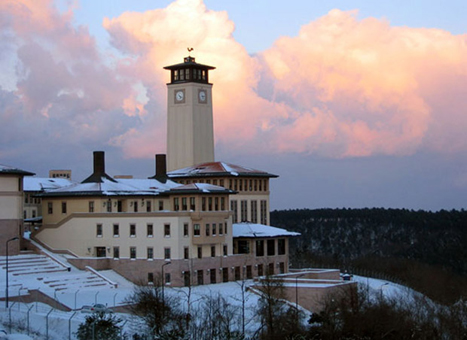
K1oç University – Stavros Niarchos Foundation, Center For Late Antique and Byzantine Studies (CLABS) will grant two post-doctoral fellowships in Byzantine Art History and Archaeology.

Fellowships include accomodation, travel, field trips and stipend. Fellows will be able to  take advantage of the university facilities and the libraries connected to the university.

Fellowships will be for one year, renewable depending on the research project. CLABS fellowsare expected to devote themselves full time to their research projects, co-operate with the Center and to give a lecture and a written final report on their work.

The applications should be submitted to byzantinecenter@ku.edu.tr no later than March 1 and include a cover letter, a curriculum vitae with list of publications and other scholarly work, and a short proposal of their research project.

Call for Papers: Power of the Bishop in Western Europe 1000-1300: Episcopal Personalities

Bishop Hugh Northwold of Ely, d.1254

Cardiff University is pleased to announce the up-coming symposium on the episcopal office in the Middle Ages, to be held 10-12 June 2015.

There is tendency in modern historiography to approach the episcopal office, its associated duties, and episcopal power and authority abstractedly, detaching the office from the personalities which brought it to life.  The conference aims to cast light on the extent to which the personalities of the men appointed to bishoprics shaped the episcopal office as it developed in Europe between c.1000 and c.1300.  How was personality expressed through the episcopal office and its associated duties?  Bishops were not divorced from the social context and political milieu in which they lived and operated.  How did the personal relationships of an individual bishop with kings, princes, archbishops or popes, or the position of a bishop in an extended kin network, affect not only the development of the office, its functions and its societal status, but also the practice of episcopal duties?  Can a personality be reconstructed in the first place – if so, then how accurately, and where might we begin? To answer such questions, we must draw on expertise from across the disciplines, and we are confident that many more issues will be raised as the conference progresses.

Potential topics include (but are not limited to):

Episcopal personalities and the restoration of the secular church;

The impact of monastic personalities on the episcopal office;

Episcopal personalities and the development of monasticism or communities of secular canons;

The relationship between the topography of a city and an episcopal personality;

Ecclesiastical architecture as reflections of episcopal personalities;

Episcopal personalities and friendship networks;

The influence of episcopal personalities over secular rulers;

Episcopal personalities as causes of conflict or tools of peace-making.

Papers set in the context of the Eastern Church are particularly welcome for comparative purposes. Deadline March 8th 2015

Contact: powerofthebishop@gmail.com

Call for Papers: Darkness and Illumination: the Pursuit of Knowledge in the Medieval and Early Modern World (Durham, 15-17 July 2015)

Folio 283 Verso of the 'Eadwine Psalter,' ca. 1160 - 1170
Folio 283 Verso of the ‘Eadwine Psalter,’ ca. 1160 – 1170

Medieval and Early Modern Student Association, Durham University

Ninth Annual Postgraduate Conference

15-17th July 2015

“Darkness and Illumination: the Pursuit of Knowledge in the Medieval and Early Modern World”

The pursuit of knowledge has had an essential and constant influence upon the shaping of society. The means of its acquisition, interpretation, and dissemination informs the way in which people interact with the world around them, forming religious and cultural identities, scientific knowledge and gender roles among other things. This was as much true in the past as it is today.

This year’s Medieval and Early Modern Student Association conference will focus upon aspects of knowledge, learning, and control over information in the medieval and early modern periods and in doing so broaden perspectives not just about how people perceived their world, but also how they interpreted the past and the idea of progress.

We welcome abstract from postgraduates and early career researchers on all aspects of this topic in medieval and early modern archaeology, history, literature, theology, art, music, and culture. Presentation topics may include, but are not limited to:

  • The ‘myths’ of the Dark Ages and the Renaissance
  • The limits of archaeological, literary, and historical evidence
  • The creation of the ‘primitive’ past
  • Ideas of spiritual progression and improvement
  • The growth of networks of learning
  • Historical characterisations of race
  • Scientific knowledge and discovery
  • The expansion of the known and unknown world
  • Gendered control of knowledge
  • Urban and rural centres of learning
  • Heretics, mystics, and conflicts over belief
  • Publication, translation, and the availability of texts
  • Artistic, musical, and cultural innovation

Postgraduate and postdoctoral students are welcome to apply for presentations. In addition to the panels, the conference will offer two keynote addresses (TBA). Tours of Durham Cathedral and Castle as well as a visit to Durham Museum and Heritage Centre are scheduled for any interested delegates.

Please send abstracts of 200-300 words to memsaconference2015@gmail.com for papers no longer than 20 minutes by Friday 17th April 2015.

For more information, please visit our blog, website, or sponsor’s pages:

durhammemsa.wordpress.com * dur.ac.uk/imems/memsa * dur.ac.uk/imems

Arranged with the support of Durham University’s Institute of Medieval and Early Modern Studies