CFP: Teaching Race in the Renaissance

An African Slave Woman, attributed to Annibale CarracciDeadline: Aug 1, 2018

Call for Contributors: A Volume on Teaching Race in the Renaissance

Edited by Anna Wainwright, University of New Hampshire
Matthieu Chapman, University of Houston

Race is a hot button issue all over the globe. From Black Lives Matter and immigration policies in the US, to Germany announcing that multiculturalism has “failed,” to Meghan Markle radically changing the face of the British monarchy and challenging England’s longstanding obsession with the “Blood Royal” by becoming the first black member of the royal family, many nations are struggling to address the ways in which race, and the conflicts surrounding race, affect both people and society. Often, these countries seek to address race as a purely contemporary issue that exists in an ahistorical vacuum without addressing the historical foundations, processes, and structures that led to these current situations. Although race is often viewed as a contemporary issue, many of the ideas, notions, and constructs of race that affect our world today exist within a continuum that began in the Renaissance.
Continue reading “CFP: Teaching Race in the Renaissance”

Horse sessions at IMC 2018

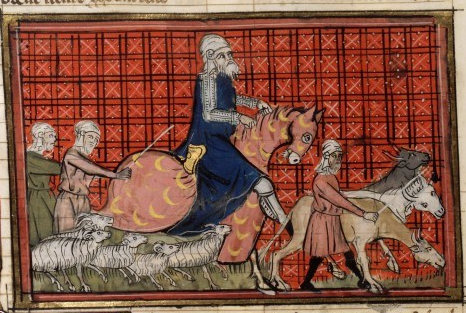
horse lungedA series of four horse sessions and a Round Table, organised by Anastasija Ropa and Timothy Dawson, will take place during the International Medieval Congress 2018.

Palfreys and rounceys, hackneys and packhorses, warhorses and coursers, not to mention the mysterious ‘dung mare’ – they were all part of everyday life in the Middle Ages. Every cleric and monk, no matter how immersed in his devotional routine and books he would be, every nun, no matter how reclusive her life, every peasant, no matter how poor his household, would have some experience of horses. To the medieval people, horses were as habitual as cars in the modern times. Besides, there was the daily co-existence with horses to which many representatives of the gentry and nobility – both male and female – were exposed, which far exceeds the experience of most amateur riders today. We cannot reconstruct or re-experience the familiar and casual communication between humans and equids of the Middle Ages – or can we? At our sessions on the Medieval Horse, we will try to deduce, describe and debate the place of the horse in medieval society.

Continue reading “Horse sessions at IMC 2018”

Conf.: The Palace Unveiled The Royal Palace in Palermo and other centres of power in the medieval Mediterranean

Assamblea regionale siciliana and Fondazione Federico II announce
International Conference
The Palace Unveiled
The Royal Palace in Palermo and other centres of power in the medieval Mediterranean

 
 and the
Arabo-Norman Cultural Week
 Palermo, Palazzo Reale
 
26 June – 1 July 2018
 
 Maria Andaloro Jeremy Johns Ruggero Longo William Tronzo

Summer school: University Manuscripts in Medieval Europe

34411290_2153514574868489_347079442515886080_n.jpgDatas: 23 de julho a 3 de agosto | dias úteis das 10h00 às 12h30

Docente Responsável: Catarina Tente

Docentes: Maria Alessandra Bilotta

Áreas: História da Arte e Estudos Artísticos

Continue reading “Summer school: University Manuscripts in Medieval Europe”

Conference: The 39th Fifteenth Century Conference, University of Reading, 6-8 September 2018

This year’s conference will be held at the University of Reading’s ICMA Centre from Thursday 6th September to Saturday 8th September. We have a very exciting programme including sessions covering a wide range of late medieval themes, from political to art-historical; and plenary lectures from Chris Briggs, Anne Curry, Chris Given-Wilson and Elizabeth New. We will also be celebrating the fifteenth volume of The Fifteenth Century at a reception jointly hosted by Boydell & Brewer and the ICMA Centre.

Friday will include a tour of the newly re-opened Reading Abbey and its quarter, and the re-designed gallery at Reading Museum with some gems from the University of Reading’s Special Collections. A drinks reception will be held at Reading Museum before the conference dinner, will be held at the Victoria Hall in Reading’s Town Hall on the Friday evening – please remember to select this on the registration form. Registration options are available for the full three days, or for individual day registration. A special reduced fee is offered for students opting for the full three days registration.
Continue reading “Conference: The 39th Fifteenth Century Conference, University of Reading, 6-8 September 2018”

CFP: Ruling an Empire in a Changing World. Studies on Origin, Impact, and Reception of the Notitia Dignitatum

In the late 4th and the first half of the 5th century, administrative lists were compiled, which have become known under the name of Notitia Dignitatum. This collection of lists offers us nowadays a unique insight in the administrative and military structures of the Roman Empire, in both its Western and its Eastern part. The number and quality of the illustrations in particular, as the whole composition and character of the document, point towards the assumption that the original version was no traditional administration manual. In research, the analysis of the transmission history has been of the same fundamental importance as the use of the Notitia Dignitatum as a historical source. The extant manuscripts are all tracked back to a Carolingian parchment codex from the library of the diocesan chapter of Speyer; a codex that was last mentioned in 1566 and is assumedly lost. Since more than 100 years, the mysteries of the lacunary transmission history and the variations in the manuscripts from the Late Medieval/Early Modern times have been fundamental for every scientific approach to this document. Due to these factors, the Notitia Dignitatum has remained until today an important, but at the same time very controversial part of numerous historical and archaeological studies.

Confirmed Keynote speakers:
Dr. Peter Brennan (University of Sydney);
Prof. Bernhard Palme (University of Vienna);
Dr. Jeroen W. P. Wijnendaele (Ghent University)

Concept:
One of the aims of this international conference is to reflect, for the first time since the 1974 Oxford colloquium organised by R. Goodburn and Ph. Bartholomew, upon the considerable increase in knowledge about the Notitia Dignitatum which has occurred over the last decades. This has largely been due to new possibilities, for example offered by the digitalisation of the extant manuscripts. Furthermore, there remain older theories to be discussed at the conference, and space for new approaches shall be created equally. Until a few years ago, practically everyone conducting research on the Notitia Dignitatum was working with those manuscripts or older editions which were the most easily accessible. By now, however, digitalisation of all known manuscripts and fragments allows easy and unrestricted access so crucial for detailed studies based on source criticism. The Notitia Dignitatum demands, as hardly another antique source does, interdisciplinary approaches and collaboration between different historical and archaeological disciplines in order to address properly all the various aspects of this multi-faceted document. Consequently, colleagues from all the disciplines in question, Ancient History, Epigraphy, Papyrology, Provincial Roman Archaeology, Classical Archaeology, Art History, Medieval Studies, Palaeography, and related fields are invited to submit abstracts.

Application:
Applications in German, English, or French should include information about the following points:

Title of the presentation, abstract (250 words max), name, institution, postal address, mail address, short biography (150 words max). Presentations should not last longer than 20 min and will be followed by a discussion of 10 min. The successful applicants will be informed via mail by 30th November 2018.
We are planning to cover the travel costs for the participants. However, this cannot yet be confirmed as we are awaiting the outcome of funding applications for this conference.

unnamed.png

Continue reading “CFP: Ruling an Empire in a Changing World. Studies on Origin, Impact, and Reception of the Notitia Dignitatum”

CFP: Animals: Theory, Practice, Representation (Leiden, 4-5 Apr 19)

Kulturkoncept, birdsLeiden, Netherlands, April 4 – 05, 2019
Deadline: Oct 1, 2018
<https://www.universiteitleiden.nl/en/events/2019/04/lucas-2019-graduate-conference-animals-theory-practice-representation>

Call for Papers
Animals: Theory, Practice, Representation

The field of human-animal studies has become a lively domain where diverse disciplines examine the divergences and convergences between humans and animals, their evolutions, demarcations, and entanglements. Not only do we conceptualize, historicize, and embody animals in our lives, but also produce, preserve, and consume them, pushing some to the verge of extinction and creating others through genetic modification. The fact that animals play a significant part in most aspects of our lives, thus invites us to reflect on our relationships with them. On April 4th and 5th, 2019, Leiden University Centre for Arts in Society (LUCAS) will be hosting a conference called, Animals: Theory, Practice, and Representation. This graduate conference is an international and interdisciplinary platform where PhD and master students can present, exchange, and discuss research results and innovative theoretical insights with participants from diverse backgrounds.

Continue reading “CFP: Animals: Theory, Practice, Representation (Leiden, 4-5 Apr 19)”

Conference: Illuminating the Dark Ages Manuscript Art and Knowledge in the Early Medieval World


Edinburgh conference.jpg

PROGRAMME

Thursday 28th of June

11.00    Reception, talks, and manuscript display at the University Library’s   Centre for Research Collections (CRC). Venue: 5th floor of the Main Library building, George Square.

Welcome by Rachel Hosker, Deputy Head of Special Collections (CRC).

Presentation by Aline Brodin, “From the Scriptorium to the Screen. Exploring medieval manuscripts in the digital age”.

Talks by Giulia Sagliardi, Emma Trivett and Manuel de Zubiria Rueda.

NB. A priori this event is only open to speakers and chairs (additional places will be subject to space availability).

14.00    Lunch break

15.00-15.30    General Registration. Venue: Hunter Building at Edinburgh College of Art (Lauriston Place, Ground floor)

Welcome and initial remarks (Venue: Lecture Theatre, Hunter Building)

15.30-17.00.    Session I. Manuscripts in the Christian East. Chaired by Niels Gaul.

Elijah Hixson (Edinburgh), “The lost miniatures in Codex Sinopensis(Paris, BnF, supplément grec 1286), a sixth-century copy of the Gospel of Matthew”

Ketevan Mamasakhlisi (Tbilisi), “A few theological issues from the teachings of St. Amun”

Courtney Tomaselli (Harvard), “Teach me Good Judgement and Knowledge. King David as Spiritual Father in a Byzantine Book of Psalms”

Irma Mamasakhlisi (Tbilisi), “Healing miracles of Christ from the Gelati Gospels”


17.00-18.00    Keynote I. Dr Felicity Harley-McGowan (Yale).

“Models of Suffering: The Passion miniatures of the St Augustine Gospels and their iconographic sources”

20.00    Conference dinner


Friday 29th of June

Venue: Lecture Theatre, Hunter Building at ECA (Lauriston Place).


10.00-11.15    Session II. The Insular World I. Chaired by Heather Pulliam.

Jane Geddes (Aberdeen), “The earliest portrait of St Columba: his presence at St Gallen”

Christine Kemmerich (Bonn), “The Evangelist symbols in early medieval book illumination: the Book of Durrow in context”

Tina Bawden (Berlin), “Illuminating the elements”

11.30-13.00    Session III. Carolingian Europe and Ottonian Germany. Chaired by Jesús Rodríguez Viejo.

David Ganz (Berlin), “The initials in Berlin Philips 1741”

Ivana Jakovljevic-Lemcool (Belgrade), “Zodiacal imagery in early medieval manuscripts: appropriation and transmission of the Classical motif”

Jean-Louis Walther (Independent, Switzerland), “Les Tituli de la Bible de Moutier-Grandval”

Katharina Theil (Zurich), “Interplay between Figuration and Abstraction, Inside and Outside: The Abstract Goldsmith Cover of the Reichenau Gospels”

13.00    Lunch break


15.00-16.00   Keynote II. Prof. Michele Bacci (Fribourg).

“Dynamics of Artistic Interaction in the Mediterranean World After Antiquity: A Typological Approach”


16.15-17.10    Session IV. The Insular World II. Chaired by Heather Pulliam.

Colleen Curran (Oxford), “Fair words and fairer forms: the poetic function of the illustrations in Oxford, Bodleian Library, MS Junius 11”

Stephanie McGucken (Edinburgh), “Illuminating the woman in Late Anglo-Saxon England: Images of Femininity and the Female body”

17.15-18.30    Session V. The Iberian Peninsula. Chaired by Jesús Rodríguez Viejo.

Roger Collins (Edinburgh), “The Beatus Problem”

Soledad de Silva y Verástegui (Basque Country), “Bibles, the Beatus Commentary and canonic collections: Three great illustrated manuscripts from tenth-century Hispania”

Jessica Sponsler (Pennsylvania College of A&D), “In the Pure Womb of the River: The Baptism of Christ in the Girona Beatus and theological dilemmas of tenth-century Iberia”

18.30    Concluding remarks and acknowledgments.

CFP: Permeable Bodies in Medieval and Early Modern (London, 5-6 Oct 18)

University College London, October 5 – 06, 2018
Deadline: Jul 23, 2018

Permeable Bodies in Medieval and Early Modern Visual Culture

In recent years, the human body has gained a prominent position in discussions of medieval and early modern cultures. The troublesome contingency of the human body encompassed critical boundaries between inside and outside, and became a central concern in religious, political, and economical developments. Medieval bodies were permeable microcosms, not only sites containment but also of revelatory experiences. In the early modern period, body and identity were indistinct, interdependent categories, inseparable from the natural and cultural space that they inhabited. This logic of perpetual fluidity both generated a disquieting sense of impending doom, but also allowed for the propagation of multiple possibilities of understanding, which materialised into a rich visual and material culture.

unnamed.jpg
Continue reading “CFP: Permeable Bodies in Medieval and Early Modern (London, 5-6 Oct 18)”

2018 AAANZ: Aesthetics, Politics & Histories (Melbourne, 5-8 Dec 18)

School of Art, RMIT University, Melbourne, December 5 – 08, 2018
Deadline: Jun 25, 2018
<http://aaanz.info/aaanz-home/conferences/2018-conference/>
Panel Proposals for Aesthetics, Politics & Histories: The Social Context of Art
The Art Association of Australia and New Zealand Conference 2018 (AAANZ)
AAANZ_K_tag.jpg
Convenors: Professor Daniel Palmer and Dr Marnie Badham, Vice Chancellors post Doc Research Fellow at RMIT University

The conference will open critical dialogue on the histories of art by examining the social contexts of aesthetics and politics. Bringing together art historians, theorists, curators, critics, and artists from across the region, we will offer a four-day program of panels and papers, publication prizes, masterclasses and a parallel artistic program to be announced soon!
Continue reading “2018 AAANZ: Aesthetics, Politics & Histories (Melbourne, 5-8 Dec 18)”