Online workshop: ‘Getting to grips with medieval manuscripts online’, Trinity College Dublin, 24 September 2021, 18:00–20:00 (BST)

Do you want to learn more about medieval manuscripts? Join Trinity College Dublin for this interactive workshop on European Researchers’ Night where you can find out more about Trinity’s Digital Collections and transcribe a manuscript!

Join Dr Mark Faulkner (School of English), Estelle Gittins (Assistant Librarian, Manuscripts), Dr Alison Ray (Project Manager, Carnegie-Funded Manuscripts for Medieval Studies Project), Jenny Doyle (Digital Content Creation Manager in the Library) and Caroline Harding (Photographer, Carnegie-Funded Manuscripts for Medieval Studies Project) for this workshop on medieval manuscripts.

The event will offer an introduction to the Carnegie project and to Digital Collections and its place in the Virtual Trinity project, followed by advice on accessing the digitised manuscripts and making sense of them.

It will contain interactive events and culminate in a transcribathon of TCD MS 174, where attendees work in groups (with support from the organisers) to produce a machine-readable copy of one of the texts for use in future research on the collections.

Find out more information here.

Online Conference: ‘The Lay Experience of the Medieval Cathedral’, Ecclesiological Society Annual Conference, 10:00–17:15 (BST), 2 October 2021

This conference, postponed from last year, was organised to coincide with the designation of 2020 by the Association of English Cathedrals as “The Year of Cathedrals and Pilgrimage”, and as part of a year-long series of events across the country. 2020 was also the 850th anniversary of the murder of Thomas Becket, whose martyrdom cult made Canterbury Cathedral the most venerated pilgrimage destination in England. Our cathedrals are very familiar to us today, but how were they seen and experienced by medieval lay people? This conference seeks at answer that question so that we can better understand what it was like for ordinary folk to visit a cathedral – whether as part of a pilgrimage or more generally. Our speakers will look at the impact of cathedrals on lay visitors: the architectural surroundings, how spaces were used, the use of colour and art on walls and in glass, of music, and of all these on worship and lay people’s religious experience.

Get your tickets here.

Practical information

All those who have registered will be sent a Zoom link one or two days before the 2nd October.

All ticket prices have been reduced by 50% and all those who have already booked – prior to 2nd September – at the original prices – will be refunded 50% of their ticket price. It is assumed that all those who have booked will be content to move to the Zoom alternative. (Please allow us time to process the refunds)

Attendance fee

There are three price tickets

  • Members: £30 (previously £60)
  • Non-members: £35 (previously £70)
  • Undergraduate and post-graduate students: £20 (previously £40)

The day’s programme: 

(full timings will be provided shortly)

Emma Wells: A “Matter” of popular piety or divine discipline? – Reflections on lay devotion and the cathedral in medieval England.

In this paper, Emma Wells considers and challenges some of the received wisdoms about lay belief and piety, both active and passive, in the context of the medieval English cathedral. It seeks to evaluate what exactly we mean by “lay piety” in the Middle Ages in the particular context of cathedrals – their art and architectural function and design – and to set the role of cathedrals within their immediate and wider environments. It also looks at the expectations, demands, and requirements of the cathedral clergy within this dynamic religious milieu.

John Crook: The architectural setting of pilgrimage shrines and their design.

John Crook explores the way the architecture of pilgrimage churches was influenced by the presence of saintly relics, and discusses the special monuments that were created to house and give limited access to those relics.

John Jenkins: Time and the seasons in the later medieval lay experience of the cathedral.

It is well-known that the liturgical and devotional life of medieval cathedral chapters followed established daily, weekly, and yearly cycles, similar to those of any medieval monastery or collegiate church. What is far less well understood, however, is the impact of this sacred chronology on the lay experience of cathedral-visiting. In this paper, John Jenkins argues that lay presences in the cathedral were not only highly seasonal in the year, but that activities were concentrated around particular times of day, and that at many later medieval cathedrals, ‘opening hours’ were carefully regulated to manage the lay experience within the church space.

Miriam Gill: ‘Near the public path where many persons pass by and go out’: Imagery framing the lay experience of pilgrimage.

The Abbey of St Alban’s had a clear sense of the ‘public path’ through their building. Miriam Gill’s paper looks at the use of imagery and the decisions made by places of pilgrimage, both grand and more mundane, to ‘frame’ the experience and expectations of lay pilgrims. This paper takes a recently-discovered late fourteenth-century scheme (wall painting and probably originally glazing) in the north transept of Ely Cathedral and sets it with other painted, glazed and carved schemes. It looks not only at those which ‘told the story’ of the saint or proclaimed their efficacy, but also those which created a narrative or historical context, and those which made hagiographic comment or perhaps framed the expectations and understanding of pilgrims.

Dr Dee Dyas: Spiritual cues for the senses and the construction of pilgrim experiences: Some medieval accounts.

Dee Dyas’ paper explores the representation of pilgrim experience in medieval narratives in the light of the wider principles informing the creation and use of sacred spaces in Christian tradition.

Matthew Cheung Salisbury: The practice of Lady Mass and Lady Office in late medieval English institutions.

Matthew Cheung Salisbury explores the widespread supplementary “cursus” or round of worship offered in honour of the Blessed Virgin Mary – the “Lady Mass’ and ‘Lady Office’ – which enjoyed widespread observance in late medieval England, both as a feature of institutional worship and as part of the premier set of lay devotions. He presents some implications for late medieval devotion to the Virgin, as well as to the organisation of ecclesiastical bodies and their music-making.

Jon Cannon: Lay devotion, the Lady Chapel, and architectural space.

Jon Cannon explores ways in which the ‘lay interest’ may have affected the design and perception of architectural spaces dedicated to Our Lady. His initial focus will be on two specific great church Lady Chapels, both of which are in Bristol; he will use these to suggest a variety of other places in which devotional and commemorative interests in particular arguably had a discernible, and comparable, impact on the design of ‘Marian spaces’.

Online Lecture: ‘Globalising Anglo-Saxon Art’ with Professor Jane Hawkes, University of York History of Art department, 3 November 2021, 4.00pm (GMT)

The art normally known as ‘Anglo-Saxon’ has, historiographically, been studied according to criteria established for engaging with so-called ‘classical art’, the tradition prioritised in art-historical scholarship across much of the globe. Although ‘classical art’ it is rarely defined, it is generally accepted to prioritise ‘naturalism’, the ‘representational’ and above all, the human figure – rather than the abstract, stylisation and pattern, which co-existed throughout antiquity with the representational and the focus on the human figure. This has meant that Anglo-Saxon art has been explained largely in terms of motif, style and technology as it is a visual tradition that is neither naturalistic nor representational, and certainly does not prioritise the human figure; it is easy to see how, within an art-historical narrative that favours such phenomena, the more formal aspects of motif, style and technology have come to dominate the discourse on Anglo-Saxon art.

Against this background of categorisation and definition, even where inaccurate and inappropriate, this paper will explore the results of more recent engagements with Anglo-Saxon art, focussing on its visual effects and the apparent primary concerns of those who made it: linearity, pattern, variegation, texture, materiality, abstraction, stylisation and ambiguity. These are, co-incidentally, features that dominate other artistic traditions – such as the Melanesian – that have long held sway beyond the confines of Europe and its historical ‘classicising’ tendencies; of course, no attempt has been made to shoehorn them in to the prescriptions governing the acceptable in western European art. In this way it will be suggested that it is possible to situate and understand Anglo-Saxon art within contexts never intended to conform to criteria identified as integral to the study of art produced within the western European, ‘classical’, tradition and as part of this process the complexities and sophistication of this early medieval art will be demonstrated – on its own terms.

To register your interest for this event please click here.

Location: This is an online event, please register using the link provided.

Email: history-of-art@york.ac.uk

Find out more here.

Online Conference: ‘The Illuminated Legal Manuscript from the Middle Ages to the Digital Age: Forms, Iconographies, Materials, Uses and Cataloguing’, IUS ILLUMINATUM, 22-25 September 2021

To commemorate the third year of ‘IUS ILLUMINATUM‘, the research team are organising an international Conference on the topic: “The Illuminated Legal Manuscript from the Middle Ages to the Digital Age: Forms, Iconographies, Materials, Uses and Cataloguing” on 22–25 September 2021.

The event aims to communicate to a wider audience the results of investigations carried out by the team members during the first three years of its existence. This Conference is also intended to provide an overview of the development of research on illuminated legal manuscripts in Europe, on cataloging, digitization and materiality of these manuscripts with the aim of bringing together renowned experts on the subject and reflecting on the methodological implications and practical and theoretical challenges that this investigation entails. During this scientific event, different case studies related to some regions of the European territory will be analyzed through an interdisciplinary approach in order to overcome the limits and open up innovative and fruitful research tracks.

Organization:
Instituto de Estudos Medievais (IEM-NOVA/FCSH)
Ius Illuminatum – Oficina de investigação
Fondazione Tesoro del Duomo Vercelli
Biblioteca Capitolare di Verona
Società Storica Vercellese
Instituto Português de Heráldica

Scientific direction and coordination:
Maria Alessandra BILOTTA (IEM-NOVA/FCSH; PI of the IUS ILLUMINATUM research team) with the collaboration of the IUS ILLUMINATUM Scientific Committee

Organization committee:
Maria Alessandra BILOTTA (IEM-NOVA/FCSH; PI of the IUS ILLUMINATUM research team)
Miguel Metelo DE SEIXAS (IEM-NOVA/FCSH)
Silvia Faccin  (Biblioteca Capitolare di Vercelli)
Timoty Leonardi (Biblioteca Capitolare di Verona)

Registration is free and must be made through the emails iem.geral@fcsh.unl.pt and info@tesorodelduomovc.it

Time zone: Central European Summer Time (CEST) UTC +2 (Rome and Paris Time)

Conference Programme

Wednesday 22nd September 2021

9.00–9.15 Opening session

Chair: José Francisco Preto MEIRINHOS (Universidade do Porto)

  • 9.15-9.35 Maria Alessandra BILOTTA (IEM-NOVA/FCSH; PI of the IUS ILLUMINATUM research team) – The Study of Illuminated Legal Manuscripts and their Circulation in Medieval Europe: The Crucial Role of Portugal and of the Institute of Medieval Studies (IEM) and the Work of the IUS ILLUMINATUM Research Team

9.35-9.45 Debate

Plenary Lectures

Chair: Alessandra PERRICCIOLI SAGGESE (Università degli Studi della Campania Luigi Vanvitelli)

  • 9.45–10.30 Keynote speaker: Alison STONES (University of Pittsburgh) – Pictorial Borrowings: images from civil law, canon law and medicine in some manuscripts of the Lancelot-Grail romance.
  • 10.30-10.40 Debate
  • 10.40-11-25 Keynote speaker: Rosa ALCOY (Universitat de Barcelona) – La Ley y los (reyes) legisladores: espectros y lugares del juicio en el Llibre Verd de Barcelonay en otros manuscritos colidantes
  • 11.25-11.35 Debate

11.35–11.45 Break

Session 1: Legal Illuminated Manuscripts in Libraries

Chair: Maria Alessandra BILOTTA (IEM-NOVA/FCSH)

  • 11.45–12.15 Jorge JIMÉNEZ LÓPEZ (Universidad de Zaragoza) – Fuentes para el estudio de los manuscritos jurídicos en la Universidad de Salamanca. Entre la reforma del Papa Luna y la Escuela de Salamanca
  • 12.15–12.45 Samuel GRAS (Université de Lille – IRHIS) – Les manuscrits juridiques enluminés d’origine française de la Bibliothèque Nationale d’Espagne
  • 12.45-13.15 Michela PERROTTA (Università degli Studi della Campania Luigi Vanvitelli) – Manoscritti giuridici di età gotica della Biblioteca Nazionale di Napoli
  • 13.15-13.30 Debate

13.30-15.00 Lunch Break

Plenary Lecture

Chair: Robert A. MAXWELL (Institute of Fine Arts, New York University)

  • 15.00-15.45 Keynote speaker: Susan L’ENGLE (Saint Louis University) – Medieval Law Students and the Lives of Their Books
  • 15.45-16.00 Debate

Workshop 1: Epigraphic Inscriptions with Legal Value

Chair: Gerardo BOTO VARELA (Universitat de Girona)

  • 16.00-16.45 Keynote speaker: Vincent DEBIAIS (École des hautes études en sciences sociales, CRH-AHLoMA, Paris) – Affichage et exposition. La forme du droit dans les chartes lapidaires du Moyen Âge central
  • 16.45–17.00 Debate

17.00-17.15 Break

Session 2: The Illuminated Legal Manuscript: Some Cases of Study

Chair: André VITÓRIA (IEM-NOVA/FCSH)

  • 17.15–17.45 Jaime MORALEDA MORALEDA (Universidad de Castilla-La Mancha) – Los trabajos de iluminación para el Decretum Gratiani de la Biblioteca Capitular de Toledo: el volumen áureo del arzobispo Pedro Tenorio (1328-1399)
  • 17.45–18.15 Andrea IMPROTA (Università dell’Aquila) – Codici giuridici miniati a Napoli nel Trecento: due nuovi testimoni
  • 18.15–18.45 Sofia ORSINO (Università di Firenze) – Un manoscritto giuridico dell’antica abbazia di Alberese
  • 18.45-19.15 Jorge PRADÁNOS FERNÁNDES (Universidad Complutense de Madrid) – Testimonios manuscritos de las Siete Partidas en archivos y bibliotecas de Portugal: una aproximación
  • 19.15-19.30 Debate

Thursday 23rd September 2021

Plenary Lectures

Chair: Cristiana PASQUALETTI (Università dell’Aquila)

  • 9.00-9.45 Keynote speaker: Francesca ESPAÑOL (Universitat de Barcelona) – Promotor y singularidades iconográficas del Decretum Gratiani catalán de la British Library (ms. add. 15274-15275)
  • 9.45-9.55 Debate
  • 9.55-10.35 Keynote speaker: Nuria RAMÓN MARQUÉS (Universitat Politècnica de València) – El Libre del Consolat de Mar: el derecho marítimo y el comercio artístico en la Valencia del siglo XV
  • 10.35-10.45 Debate

10.45–11.00 Break

Session 3: Issues of Legal Iconography

Chair: Cécile VOYER (Université de Poitiers – CESCM–CNRS)

  • 11.00-11.30 Gianluca DEL MONACO (Università di Bologna) – L’iniziale H(umanum genus) e la rappresentazione dei due poteri nei più antichi codici del Decretum Gratiani
  • 11.30–12.00 Viviana PERSI (Centre d’Histoire Judiciaire – Université de Lille) – Les iconographies qui illustrent les dernières volontés dans les Institutions et dans le Digeste : l’exemple de quelques manuscrits conservés à la Bibliothèque nationale de France (XIIIe-XIVe siècles)
  • 12.00-12.30 Rogerio Ribeiro TOSTES (CIDEHUS-Universidade de Évora) – «Naturales sesos de buenos omnes et leales». The Imagetic Representations of the Public Justice on the Vidal Mayor Miniatures (J. Paul Getty Museum, ms. Ludwig XIV-6)
  • 12.30-13.00 Stefan DRECHSLER (Universitetet i Bergen) – The Development of Legal Iconography in Medieval Western Scandinavian Legal Manuscripts c. 1300–1650
  • 13.00-13.15 Debate

13.15-14.30 Lunch Break

Session 4: The Illuminated Legal Manuscripts in the Digital Age

Chair: Gisela DROSSBACH (Universität Augsburg)

  • 14.30-15.15 Gero R. DOLEZALEK (University of Aberdeen) – Il Data Base “Manuscripta Juridica”, Max Planck Institute for Legal History and Legal Theory
  • 15.15-15.45 Andrea PADOVANI (Università di Bologna) – The “Irnerio” project
  • 15.45-16.15 Maria Alessandra PANZANELLI FRATONI (Università di Torino) – IVS Commune online e MANUSIuridica: per una descrizione integrata di testi (e illustrazioni) del diritto dal manoscritto alla stampa
  • 16.15-16,45 Silvio PUCCI (Ricercatore indipendente, già ricercatore dell’Università di Siena) – Un intervento di recupero e di riedizione online di un catalogo: il Catalogo dei manoscritti giuridici della Biblioteca Comunale degli Intronati di Siena
  • 16,45-17,00 Debate

17.00–17.15 Break

Session 5: Law and Literary Vulgarizations

Chair: Rosa Mª MEDINA GRANDA (Universidad de Oviedo, President of AIEO)

  • 17.15-17.45 Sara BISCHETTI (Sapienza Università di Roma) – Francesco da Barberino notaio e poeta del XIV secolo: uno sguardo sui manoscritti autografi dei Documenti d’Amore
  • 17.45–18.00 Debate

Friday 24th September 2021

Session 6: Medieval Civic Statutes

Plenary Lectures

Chair: Paola GUGLIELMOTTI (Università di Genova)

  • 9.00-9.45 Keynote speaker: Rolando DONDARINI (Università di Bologna; President of “De Statutis Society”) – L’Associazione “De Statutis Society” per lo studio degli Statuti medievali
  • 9.45-9.55 Debate
  • 9.55-10.40 Keynote speaker: Francesco SALVESTRINI (Università di Firenze) – Normative medievali in latino e in volgare: gli statuti della Repubblica fiorentina del 1355
  • 10.40-10.50 Debate
  • 10.50-11.20 Filipa ROLDÃO (Universidade de Lisboa) – Portuguese municipal charters in the Middle Ages: an ongoing interdisciplinary project

11.20-11.30 Break

Special session: Illuminated Legal Manuscripts Materiality

Organized by Timoty LEONARDI (Biblioteca Capitolare di Verona)

Chair: Mons. Bruno FASANI (Prefect, Biblioteca Capitolare di Verona)

  • 11.30–12.00 Carlo FEDERICI (Scuola di Biblioteconomia, Biblioteca Apostolica Vaticana) – La complessa ‘cucina’ dell’archeologia del libro
  • 12.00-12.30 Maura MORDINI (Università di Siena) – I frammenti giuridici dell’Archivio di Stato di Arezzo
  • 12.30-13.00 Alberto CAMPAGNOLO (Université catholique de Louvain) – La trasmediazione della materialità del libro nel digitale verso una codicologia digitale
  • 13.00-13.15 Debate

13.30-15.00 Lunch Break

Workshop 2: Legal Iconography in Manuscripts and Monumental Sculpture

Chair: Bertrand COSNET (Université de Lille – IRHIS)

  • 15.00-15.45 Keynote speaker: Fabrizio LOLLINI (Università di Bologna) – Nella pagina e nel cantiere. Qualche confronto tra miniatura giuridica e scultura architettonica medievale
  • 15.45-15.55 Debate
  • 15.55-16.35 Keynote speaker: Lucia LAHOZ (Universidad de Salamanca) – Ambitos de la Justicia
  • 16.35-16.45 Debate

16.45-17.00 Break

Plenary Lectures

Chair: Fabrice DELIVRÉ (Université Paris I-Pantéon Sorbonne; LAMOP – UMR 8589)

  • 17.00-17.45 Keynote speakers: Maria João BRANCO (IEM-NOVA/FCSH) – Hermenegildo FERNANDES (Universidade de Lisboa) – Reassessing the life of Vincentius Hispanus (?-1248): Law, Church and Politics
  • 17.45-17.55 Debate
  • 17.55-18.40 Keynote speakers: François FORONDA (Université Paris I-Pantéon Sorbonne; LAMOP – UMR 8589) – La normativisation de l’horizon sacral dans les monarchies européennes : la production de manuscrits enluminés d’ordines de couronnement (années 1330-années 1390)
  • 18.40-18.50 Debate

Saturday 25th September 2021

Plenary Lecture

Chair: Laura FERNÁNDEZ FERNÁNDEZ (Universidad Complutense de Madrid)

  • 9.00-9.45 Keynote speaker: Susanne WITTEKIND (Universität zu Köln) – Ordinatio and narratio iuris – The Illumination of the Codex Albeldensis
  • 9.45.10.00 Debate

Illuminated Legal Manuscripts of the Capitular Library of Vercelli: A Virtual Tour : Organized by Silvia FACCIN (Biblioteca e Archivio Capitolare di Vercelli)

  • 10.00-10.30 – Silvia FACCIN (Biblioteca Capitolare di Vercelli), Sara MINELLI (Biblioteca Capitolare di Vercelli); Maria Alessandra BILOTTA (IEM-NOVA/FCSH); Gianluca DEL MONACO (Università di Bologna) – The Legal Manuscripts of the Capitular Library of Vercelli

Chair: Maria Alessandra BILOTTA (IEM-NOVA/FCSH)

  • 10.30.10.45 – Gianfranco MALAFARINA (Director of “Alumina. Pagine miniate”) – La rivista “Alumina. Pagine miniate” e la conservazione e lo studio dei manoscritti giuridici miniati
  • 10.45-11.00 Debate

Special session: HERALDICA LEX – Heraldry in Illuminated Legal Manuscripts

Organized by Miguel Metelo de SEIXAS (IEM-NOVA/FCSH)

Chair: Pierre COUHAULT (IRHT/CNRS – ANR Collecta)

  • 11.00-11.30 João PORTUGAL (President of Instituto Português de Heráldica) – Droits héraldiques au Portugal (XVe-XVIe siècles) : texte et image, rapport et renfort
  • 11.30-12.00 Matteo FERRARI (Université de Namur-PaTHs) – Jeu de miroirs : histoire d’une « charte lapidaire » dans le palais de la commune de San Gimignano
  • 12.00-12.30 Martin SUNNQVIST (Lunds Universitet) – “Did Armorials have Legal Relevance?”
  • 12.30-13.00 Laurent MACÉ (Université de Toulouse Jean-Jaurès) – Une héraldique hors-la-loi ? Les Coutumes de Toulouse en question (fin XIIIe siècle)
  • 13.00-13.15 Debate

13.15.13.30 Closing Remarks

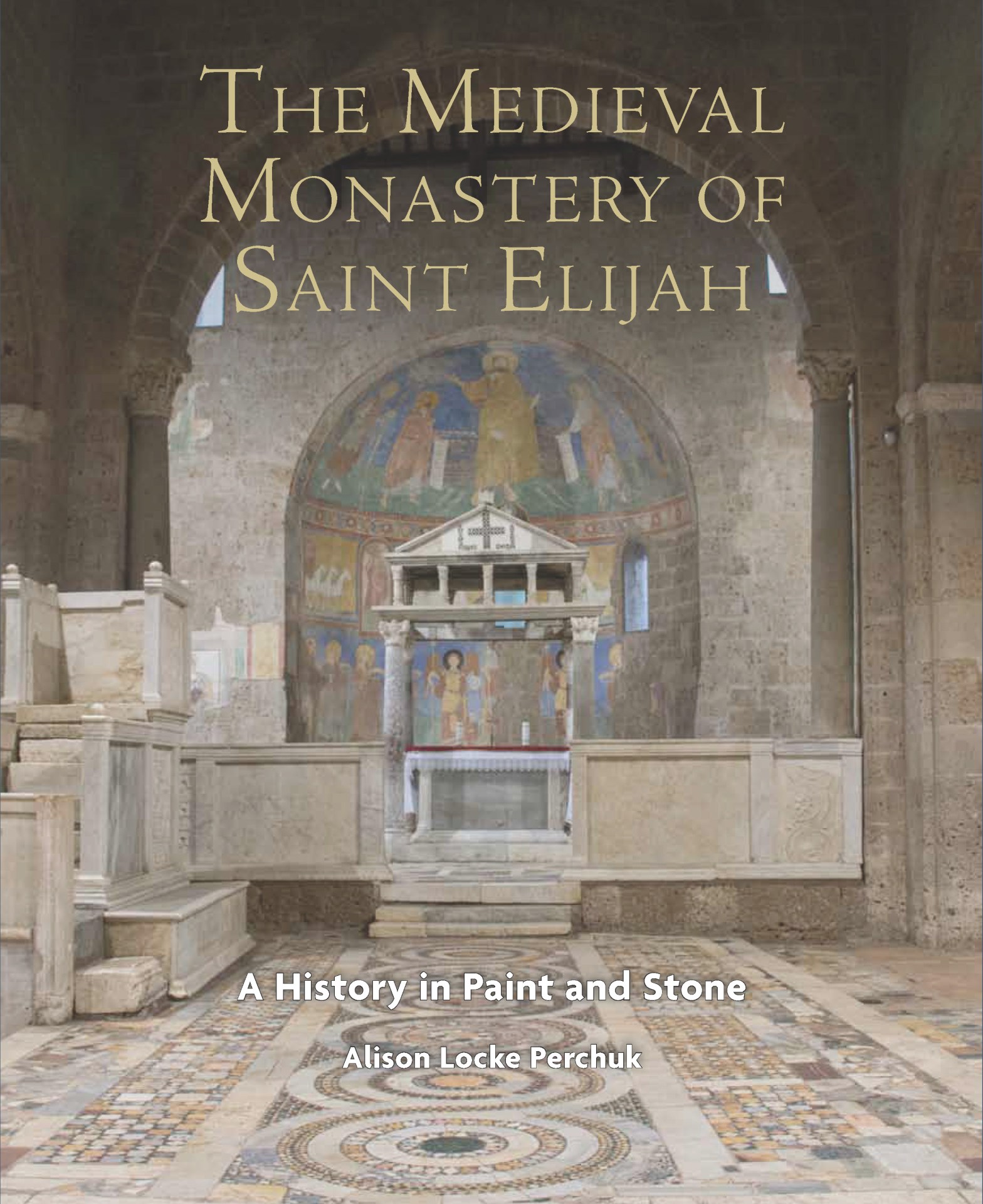
New Publication: ‘The Medieval Monastery of Saint Elijah: A History in Paint and Stone’ by Alison Perchuk

A methodologically ambitious, sumptuously illustrated, and erudite study of a twelfth-century monastery near Rome that offers a compelling biography of a neglected Romanesque jewel as well as evocative multisensory readings of its architecture, frescoes, and sculpture.

Blending innovative art historical analysis with archaeology, epigraphy, history, liturgy, theology, and landscape and memory studies, The Medieval Monastery of Saint Elijah: A History in Paint and Stone is the first comprehensive interdisciplinary study of a deeply intelligent yet understudied male Benedictine convent near Rome. The only monastery known to have been dedicated to the prophet Elijah in the Latin West, it was rebuilt c.1122–26 with papal patronage. Today, the monastery is represented by its church of Sant’Elia, a stone basilica endowed with its original Cosmati marble pavement and liturgical furnishings, early and high medieval sculptures and inscriptions, and vibrant wall paintings that include unique depictions of the prophet Elijah and the twelve tribes of Israel as warriors, an apse program with a distinctly elite Roman origin, and an important narrative cycle of the Apocalypse. An outlying chapel marks the site of a theophany that sanctified the landscape and gave the monastery its raison d’être. The Medieval Monastery of Saint Elijah makes significant contributions to current art historical debates concerning communal identity and the construction of social memory, artistic creativity and processes, the multisensory and exegetical capacities of works of visual art, intersections of topography and sanctity, and the effects of medievalism on our understanding of the Middle Ages.

Alison Locke Perchuk (Ph.D. Yale University) is an art historian specializing in medieval Europe and the Mediterranean. Her work on the Monastery of St. Elijah received the 2018 Van Courtlandt Elliott Prize of the Medieval Academy of America and she has held fellowships at CASVA (2016) and the Institute for Advanced Study (2018–19). Currently Associate Professor of Art at California State University Channel Islands, her next projects are on medieval Italy’s sacred landscapes and medievalism in California.

Find out more about the book here.

CFP: British Archaeological Association at Leeds IMC 2022, deadline 24 September 2021

The British Archaeological Association invites proposals for their organised sessions at the 2022 International Medieval Congress at the University of Leeds (4th-7th July 2022). It is hoped that the 2022 conference will return to the in-person format in 2022 after two years online.

The IMC’s research theme for 2022 is “Borders”, a topic which can be interpreted in numerous ways:

  • Political and military borders
  • Living in border zones
  • Medieval and Modern perceptions, descriptions, and conceptualizations of borders
  • Delimiting borders, border markers
  • Border maintenance
  • Encountering and experiencing borders
  • Bordering practices
  • Borderscapes in the longue durée
  • Symbolic borders
  • Belonging and exclusion
  • Mapping borders and border zones
  • Border institutions
  • Materiality of borders
  • Border and power
  • Migration
  • Medieval imagery of borders
  • Transnationalism
  • Political, social, cultural, religious performance of borders
  • Village and parish boundaries
  • Boundaries between town and
  • countryside and within towns
  • Practices of delimitation
  • Blurring boundaries such as
  • human/animal, animate/inanimate,
  • gender, age, status, religion
  • Self and other, boundaries of the self
  • Fluidity and fixity of borders
  • Borders in manuscripts
  • Material and visual borders
  • Processual and performative turns and
  • medieval borders
  • Disciplinary boundaries
  • Paratexts as borders
    Borders of the body
    Transcending and reaffirming
  • boundaries between life and death
  • Borders, boundaries, frontiers

A full list of suggested topics and more details can be found here: https://www.imc.leeds.ac.uk/imc-2022/

It is hoped that we can organise several sessions once again, with similar papers grouped together (either methodologically or by subject).

Proposals should consist of a paper title, your affiliation, and a short abstract (50-100 words).
Please send paper proposals to Harriet Mahood (hpmahood@gmail.com) by Friday 24th September 2021.

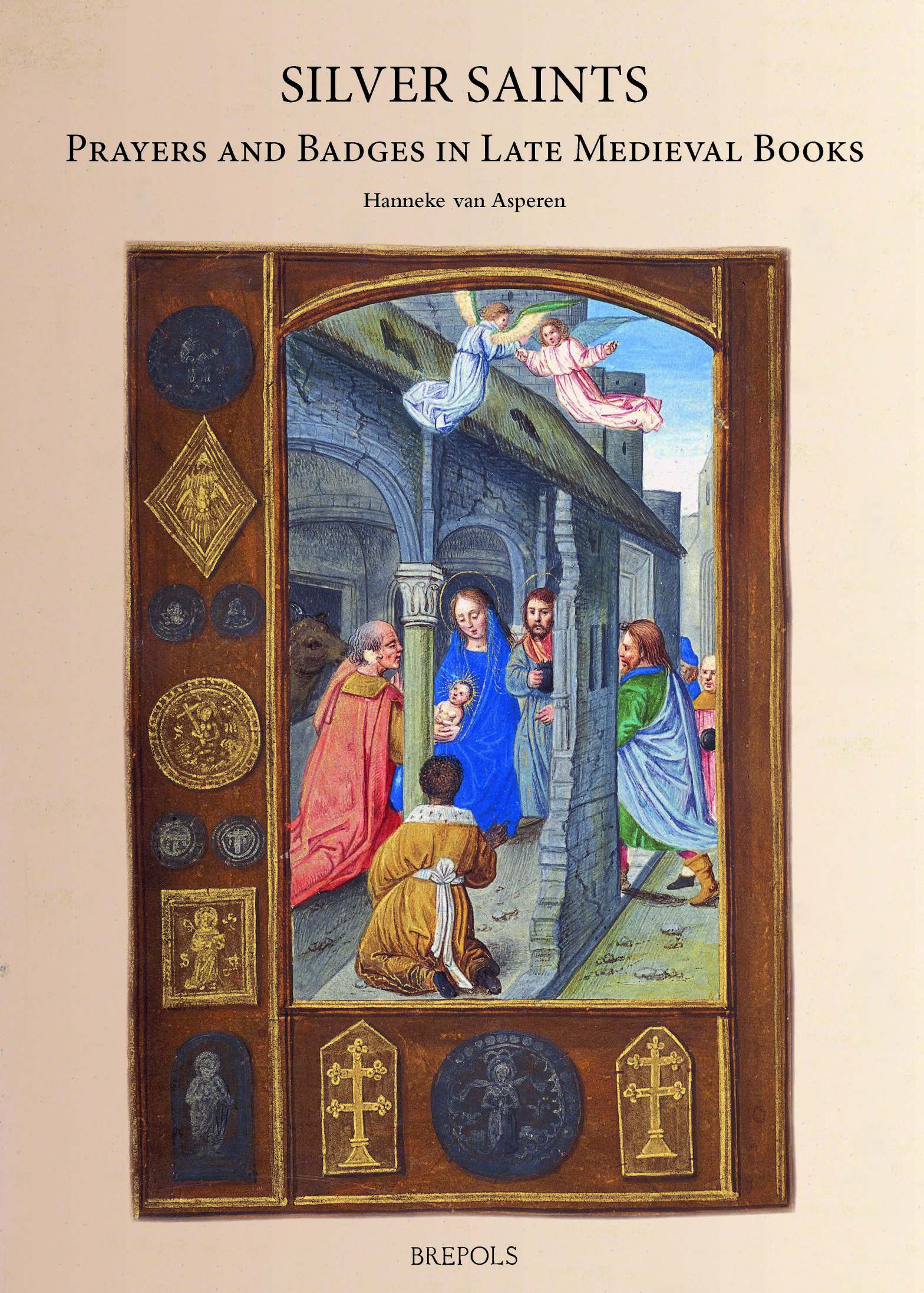
New Publication: ‘Silver Saints: Prayers and Badges in Late Medieval Books’ by Hanneke van Asperen

Late medieval books served as treasure chests for all kinds of religious keepsakes, notably small metal badges. Devotees sewed these religious badges and pilgrimage souvenirs to the parchment of their treasured devotional books and manuscript illuminators depicted silver en gilt badges in the margins as if they are sewn to the pages. Medieval manuscripts are often admired for their esthetic qualities, but many of them also served a practical use as instruments for the physical and mental wellbeing of the owners and their families. Manuscripts and incunabula containing metal badges illustrate how the owners used their books, which texts they favored, but also who collected badges and why. The depicted badges that only appear in richly illuminated and expensive manuscripts expand the knowledge of these metal objects that have been passed down in small numbers only. The painted motifs that have a more decorative and structuring role in the book fulfilled different functions than the original badges. ‘Silver Saints’ discusses the religious life of lay people in the late Middle Ages and the meaning of badges in books, both the painted motifs in beautifully decorated manuscripts and many traces of original badges.

Hanneke van Asperen is affiliated with the department of Art History at Radboud University Nijmegen. Her fields of interests are metal badges, manuscripts, devotional practices and images of charity. She is co-author of the book series ‘Heilig en Profaan’ on badge finds in the Dutch-speaking regions of medieval Europe and works on Kunera, an online searchable database  of medieval badges and ampullae.

Find out more about the book here.

Online Lecture: ‘The Medieval World with the Women Written Back In’ with Dr Janina Ramirez, Art History Festival, 20 September 2021, 8-9pm (BST)

Janina Ramirez will discuss her forthcoming book, Femina, and introduce the audience to the important women that have been written out of history. By bringing them back into the buildings they inhabited, the landscapes they walked across, and alongside the objects they handled, Janina will present new insights into the medieval period. Part of intricate medieval societies, these women show us places and times as complex and fascinating as our own.

Janina Ramirez is a cultural historian, broadcaster and author based at the University of Oxford.

Book your tickets here.

The full Art History Festival programme is available here: https://forarthistory.org.uk/art-history-festival-programme/

About the Association for Art History

The Association for Art History shapes the future for art history. Through advocacy, events, networks, membership, grants and publications, we celebrate and promote the value of art history and visual culture today.

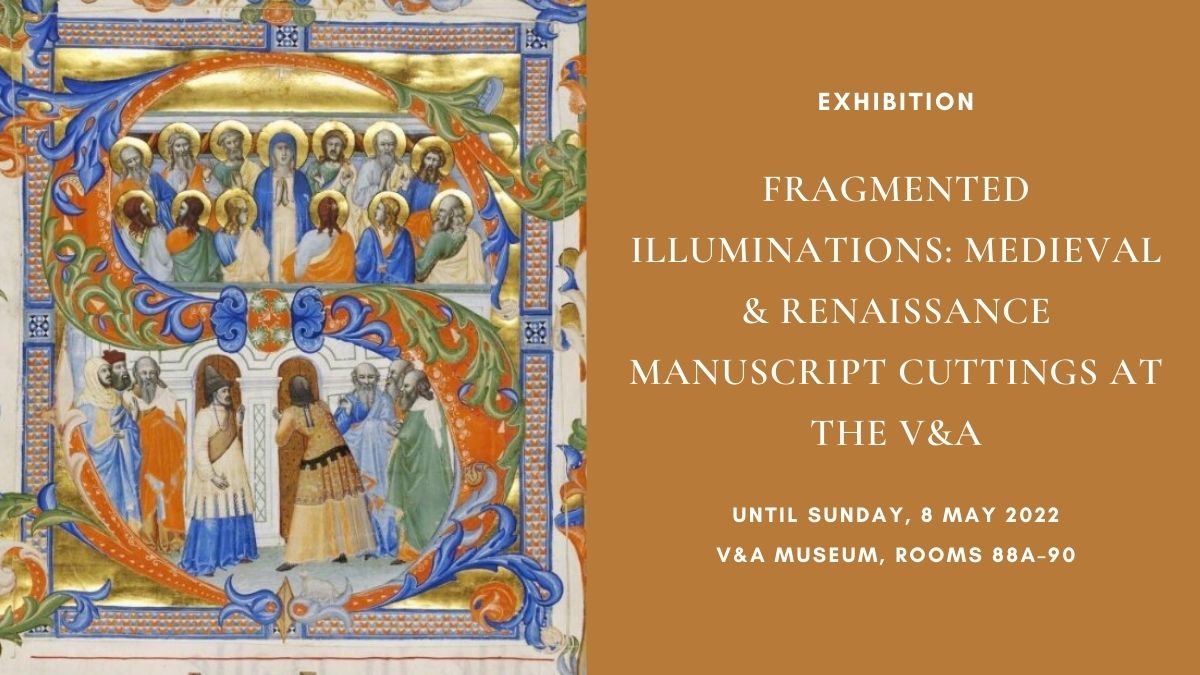
Exhibition: ‘Fragmented Illuminations: Medieval & Renaissance Manuscript Cuttings at the V&A’, V&A Museum, 8 May 2022

Featuring highlights from the museum’s collection of over 2,000 cuttings from medieval and Renaissance manuscripts, this display explores the types of books these pieces came from and the 19th-century context in which they were cut up and collected.

Find out more here.

More about the display:

The secularisation of Catholic Church property that swept Europe in the late 18th and early 19th century brought numerous medieval and Renaissance books from cathedral treasuries and monastic libraries into private hands.

From the mid-1820s, a market developed for miniatures, pages, initials and border decorations cut out of illuminated manuscripts, especially large volumes that had been used for daily worship and celebrations in church. While their text was outdated or no longer understood, their pictorial and decorative elements were increasingly recognised as of antiquarian interest and relevant to the history of painting.

From its foundation in 1852, the V&A acquired specimens of illumination, sometimes as artworks in their own right, but more often to serve as models and inspiration for British art workers. With over 2,000 manuscript cuttings, mainly purchased before 1900, the V&A now holds one of the largest collections of this kind in the world.

Featuring cuttings dating from the 12th to the 16th century and originating from Italy, the Netherlands, present-day Belgium, Germany and France, this display explores two key aspects: the 19th-century context in which these pieces were cut up, collected and even copied, and the types of books they came from and their original context of production.

Cut-out border ornaments
Cut-out border ornaments attributed to Domenico Morone, from a Franciscan choirbook, about 1500, Verona, Italy. Museum nos. 4918:1-9 © Victoria and Albert Museum, London

The 19th-century context

This section of the display focuses on individuals who played a part in the 19th-century journeys of these cuttings. These are collectors, such as Abbot Luigi Celotti, John Ruskin and George Salting, the V&A’s first curator John Charles Robinson, and a scholar called Guglielmo Libri, infamous for stealing leaves from manuscripts in French public libraries.

Alongside medieval and Renaissance pieces, 19th-century copies and books testify to the Victorians’ infatuation with illumination. Facsimiles were purchased by the V&A to fill in the gaps in its collection and to showcase the skill of 19th-century illuminators. Works by Henry Shaw, Lord Charles Thynne, Ernesto Sprega and Caleb Wing feature in this section where the boundaries between copying, restoring and forging were at times fluid.

Initial 'A' and border decoration
Initial ‘A’ and border decoration, copied by Ernesto Sprega after a 15th-century Italian choirbook, before 1862, Siena, Italy. Museum no. E.126-1996 © Victoria and Albert Museum, London

The original context

In this section, the focus moves to the original context of the cuttings: what kinds of books did they come from? For whom were these books made and by whom?

Liturgical books, especially choirbooks are best represented in the collection, as many of them went under the knife. Choirbooks had to be large because whole choirs needed to sing from them in church. They were often beautifully decorated, so painted sections cut from their pages still had generous proportions and could be framed like small panel paintings.

The collection also includes leaves from bibles and biblical commentaries. Among the former, feature over 80 leaves from a bible made in Liège around 1300 for the house of the Teutonic Knights in Maastricht. In the 13th century, this powerful German military order had overseen the imposition of Christianity in present-day Poland and Lithuania.

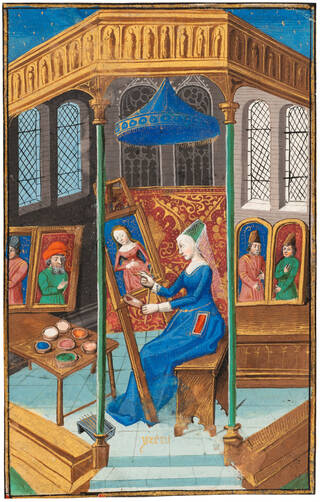
Small cuttings from books of hours are also present in the collection, reflecting the popularity of this type of prayer book, especially in the 15th century. Books with a non-religious content are few, but of great interest. Providing a glimpse into the range of secular subjects covered by a medieval library, they include legal and medical texts, but also literary works. One of the major discoveries made during research for this display was to uncover a previously unpublished miniature missing from a manuscript of Boccacio’s Des cleres et nobles femmes now in New York. Painted in vibrant colours, it shows the Greek artist Irene as a 15th-century painter in her studio.

Irene, from Giovanni Boccaccio
Irene, from Giovanni Boccaccio (1313 – 75), Des cleres et nobles femmes (New York, New York Public Library, Spencer MS 33), attributed to the circle of François Le Barbier (documented 1455 – 1512), about 1460 – 70, Paris, France. Museum no. 4280 © Victoria and Albert Museum, London

Text from here.

Call for Journal Submissions: ‘Imago, ius, religio. Religious Iconographies in Illustrated Legal Manuscripts & Printed Books (9th -20th Centuries)’, Eikón Imago Journal 2023, deadline 1 February 2022

Special Guest Editors: Maria Alessandra Bilotta & Gianluca del Monaco

It is not unusual to come across religious iconographies in miniatures as well as borders and based-page scenes in illustrated legal manuscripts and printed books (9th-20th centuries) containing canon, civil or local law texts, like the Livres juratoires or municipal and professional statutes. Some of these iconographies, for instance those in the Decretum Gratiani or the Liber Extra, Gregory IX’s decretals, have been accurately examined. However, a comprehensive survey providing a global and chronological investigation of these depictions is still wanting. Therefore, the journal “Eikon-Imago”, alongside the research team IUS ILLUMINATUM of Institute of Medieval Studies (IEM) of the Faculdade de Ciências Sociais e Humanas at the Universidade NOVA in Lisbon, has decided to devote the 2023 special issue to the study and examination of religious iconographies in legal manuscripts and printed books, so as to create a place for discussion and exchange on the diverse artistic, historical and social aspects of these iconographies.

Proposals can concentrate on the following as well as further related themes:
– The depiction of liturgical space in illustrated legal manuscripts and printed books.
– Text-image relation in legal books (manuscripts and printed volumes).
– The Holy Trinity in legal books (manuscripts and printed volumes).
– The depiction of liturgical rites (Marriage, Eucharist, Benedictions).
– The pope in legal books (manuscripts and printed volumes).
– The bishop in legal books (manuscripts and printed volumes).
– Saints in legal books (manuscripts and printed volumes).
– Monks in legal books (manuscripts and printed volumes).
– Between sacred and profane: religious drolleries in legal manuscripts.
– Mendicant friars in legal books (manuscripts and printed volumes).
– The depiction of religious buildings in legal books (manuscripts and printed volumes).
– The depiction of religious authority in legal books (manuscripts and printed volumes).

Send Papers Deadline: 01/02/2022

More information can be found here.