Call for Papers: Sculpture and Sculptors in Spain, 1450-1660

Sixteenth Century Society and Conference, October 16-19, 2014, New Orleans, Louisiana

Panel Chairs: Ilenia Colón Mendoza, University of Central Florida (icm2@hotmail.com) and Kelley Helmstutler Di Dio, University of Vermont (kelley.didio@uvm.edu)

The goal of this panel is to highlight recent research on sculpture in Spain during the long sixteenth century.  Please submit papers dealing with the varied methodological approaches to the production, creation and interpretation of sculpture and its place within the art historical canon and the history of Spanish art. Studies on context, iconography, manufacture, transportation, and patronage are welcome. We are particularly interested in the roles of sculpture in diplomacy and politics, the organization of sculpture workshops, the specific use of materials and their meaning, the culture of display and collecting practices, the status of sculptors and sculpture in Spanish society, production and exportation of works in an out of Spain by native-born and immigrant sculptors as well as sculptors who worked for Spanish clients outside of Spain.

Please send 250-word abstract to both chairs by March 25, 2014.

Kelley Helmstutler Di Dio, Ph.D.
Associate Professor of Art History
University of Vermont
kelley.didio@uvm.edu

Mary Jaharis Center Lecture Series: The Reliquary-Enkolpia of Saint Demetrios and the Wonder of Art, April 3

The Mary Jaharis Center for Byzantine Art and Culture is pleaseddemetro
to announce ​the second lecture​ in its 2013-2014 lecture series. On April 3, 2014, at 4pm, Dr. Ivan Drpić (University of Washington) will present “The Reliquary-Enkolpia of Saint Demetrios and the Wonder of Art.” Professor Drpić will explore the intersection of personal piety, art, and aesthetics in his discussion of the reliquary-enkolpia of Saint Demetrios.

Please join us afterward for wine and refreshments.

Thursday, April 3, 2014, 4:00–5:00 pm
Archbishop Iakovos Library Reading Room
Hellenic College Holy Cross
50 Goddard Avenue
Brookline, MA 02445

The lecture is free and open to the public.

Please visit maryjahariscenter.org ​or contact Brandie Ratliff (mjcbac@hchc.edu), Director, Mary Jaharis Center for Byzantine Art and Culture, for additional information.​

King’s College 9th Annual Medieval Latin Play

ECERINIS
by Albertino Mussatokuings college

Performed in the original Latin, with English surtitles

7 pm, Friday 28th March, in the King’s College Chapel, Strand, London WC2R 2LS.

The Ecerinis is a landmark in western European literature, the first tragedy to be written since antiquity. As such, it is the first step on the path that would lead to Shakespeare and Racine. In form, it is based closely on the tragedies of Seneca, but its subject is modern, the downfall of Ezzelino III da Romano (1194-1259), a northern Italian tyrant of ill repute. Written in Padua, the play is one of the first fruits of the Italian Renaissance, not to mention a fine piece of bloodthirsty drama in its own right.

All are welcome, and admission is free (suggested donation: £5). For more information, see: http://www.kcl.ac.uk/artshums/depts/history/eventrecords/2013-14/latinplay.aspx


Exhibition: The Moving Word (Cambridge University Library)

Running until 17 April 2014, in the Milstein Exhibition Centre, Monday to Friday 09.00–18.00, Saturday 09.00–16.30 (Sunday closed). Admission free.manpic3

The Moving Word: French Medieval Manuscripts in Cambridge looks at the enormous cultural and historic impact of the French language upon life in England, Europe, the Middle East and beyond at a time when French – like Latin before it and English today – was the global language of culture, commerce and politics.

The exhibition, curated by Bill Burgwinkle and Nicola Morato, is part of a wider AHRC-funded research project looking at the question of how knowledge travelled in manuscript form through the continent and into the Eastern Mediterranean world, freely crossing linguistic and cultural boundaries at a time when France was a much smaller political entity than it is today.

– See more at: http://www.cam.ac.uk/research/news/conquering-a-continent-how-the-french-language-circulated-in-britain-and-medieval-europe#sthash.XaG3t8hj.knVHip0u.dpuf

For more information, see the exhibition website.

Call for Papers: Byzantine Maritime Technology and Trade

Proposed Colloquium Session for the 2015 AIA Annual Meeting, New Orleans, Jan. 8-11, 2015 Sponsored by: AIA Medieval and Post-Medieval Archaeology Interest Group and the Institute of Nautical Archaeology at Texas A&M University
Organizers: Rebecca Ingram and Michael Jones, Institute of Nautical Archaeology

Session Overview:

Maritime activity played a vital role in the political and economic success of the Byzantine Empire. Recent fieldwork, both on land and underwater, offers a tantalizing glimpse into the complexity of the Byzantine maritime world. The 58,000 m2 rescue excavation of the Theodosian Harbor in the heart of Istanbul, begun in 2004, is perhaps the most significant of these new discoveries, yielding the remains of 37 Byzantine shipwrecks and tens of thousands of artifacts related to maritime trade, shipbuilding technology, and daily life in Constantinople from the late 4th to the early 11th century. However, because the Yenikapı finds are from the hub of a vast maritime network, they cannot be understood in isolation. Along with the finds from Yenikapı, results from recent studies involving shipwrecks, surveys and excavations of harbor sites, and studies of long-distance trade goods are poised to make a significant contribution to our understanding of Byzantine trade, society, and culture. In order to examine this new data within the proper overall context of late antique and Byzantine archaeology, this colloquium session, co-sponsored by the AIA Medieval and Post-Medieval Archaeology Interest Group and the Institute of Nautical Archaeology, will present new discoveries from a range of sites concerning maritime activity in this period. This session aims to bring together archaeologists who focus on topics such as ship construction, harbors, metrology, coastal settlement, and maritime trade goods in the Byzantine world. By seeking greater integration between research from terrestrial and nautical archaeological sites, this session will provide an appropriate venue for the dissemination of recent finds and will shed new light on our understanding of the Byzantine Empire and its neighbors.

*******

If you are interested in participating in this colloquium session, please complete the attached form and return it to Rebecca Ingram (rsingram@charter.net) or Michael Jones (rsingram@charter.net) by Friday, March 21, 2014. You will receive an email by the end of March with additional information.

Call for Nominations: ICMA Leadership

Call for Nominations to ICMA Leadership

Please join in shaping the future of the International Center for Medieval Art by proposing candidates for election to its leadership positions. The ICMA Nominating Committee seeks nominees (and self-nominees) for the following posts:

  • 7 seats on the Board of Directors (3-year terms, 2015-18)
  • 5 seats on the Nominating Committee, including 1 Nominating Committee Chair (1-year term, 2015-16)
  • 4 seats as Associates (usually based outside of North America; 3-year terms, 2015-18),

Our goal is to foster the continued vitality of the ICMA by including among its leaders colleagues at every career stage, with a broad range of research specialties, and from diverse professional and geographic contexts. To achieve that diversity through a robust pool of candidates, we need your help.

Please nominate candidates by writing committee chair Areli Marina at amarina@illinois.edu by March 18 2014. And please take a moment to consider adding your own name to the list—we welcome your participation.

Or if you’d like to talk about possible nominations first, please feel free to contact Areli or her fellow nominating committee members: David Areford (David.Areford@umb.edu), Thomas Dale (tedale@wisc.edu), Jacqueline Jung (jacqueline.jung@yale.edu ), and Ann Marie Yasin (Yasin@usc.edu). We welcome your insights.

Thank you for your support.

The post Nominating Committee seeks nominees appeared first on International Center of Medieval Art.

Seminar: The Turkish Straits – Inquiries into a Crossroad

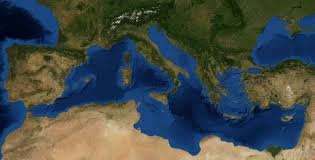
The Turkish Straits between the Mediterranean and the Black Sea are often described as a symbolic dividing line between Europe and Asia, but historically their function has been uniting and not separating. At the crossroads of land routes between the Balkans and Anatolia, and the sea route between the Mediterranean and the Black Sea, they have constituted a natural meeting place for peoples and cultures since ancient times. Two world empires, the Byzantine and the Ottoman, were ruled from the straits and left their marks on the two main world religions of Christianity and Islam. Greeks, Slavs, Scandinavians, Italians, Turks and Englishmen have tried to gain control over the Straits and sometimes succeeded; but the prize has remained contested and been a recurrent source of dispute. As such, the straits have also been at the core of Eastern and Western political discourses at least since the accession of the Persian king Xerxes 2500 years ago, and their significance to the outbreak of the First World War in 1914 has come to the foreground in recent years.

To mark these historical convergences, and to initiate an interdisciplinary platform for future research about the history of the Straits, we invite junior (pre-doc and post-doc) scholars to present their own research and exchange perspectives on the topic during a one-week seminar with excursions at the Swedish Research Institute in Istanbul, November 1-7, 2014. We welcome submissions from different areas of research, such as the Ancient, Byzantine and Ottoman eras, art history, archaeology and memory studies, studies in the religious, cultural and political relations, as well as the topography, landscape and environment history of Eastern Europe, the Mediterranean and the Middle East. Applicants should submit abstracts of no more than 500 words to nbneidolon@gmail.com no later than Friday, May 15, 2014, together with a CV and a few lines about their interest in the topic, from a subject specific as well as from an interdisciplinary point of view.

For those who are accepted, the stay in Istanbul, the excursions and most meals will be arranged and paid for by the seminar. In addition to this, we may consider reimbursing the cost of travel to and from Istanbul for a strictly limited number of applicants (those who wish to be considered for such travel funding should specify it in their application and explain why other sources are not available).

Lecture: Byzantine Money: The Politics and Aesthetics of a World Currency

Thursday, March 13, 2014
6:00pm – 8:00pm

Arthur M. Sackler Museum lecture hall, 485 Broadway, Cambridge, MA 02138

monez

Byzantine Money: The Politics and Aesthetics of a World Currency
Ilse and Leo Mildenberg Memorial Lecture

Eurydice Georganteli, Harvard University Fellow in the History of Art and Architecture, Harvard University

When the Roman Empire’s capital moved from Rome to Constantinople in 330 CE, Europe’s political and economic center shifted. The coinage produced in the new imperial capital, and in cities across what was to become the Byzantine Empire, defined the society, politics, economic practices, and art of medieval Europe and beyond. This lecture, drawn from Harvard’s outstanding collections of coins and seals, explores Byzantine money as one of the most enduring world currencies.

Reception to follow lecture.

Free admission.

Call for Papers: II International Conference. Sevilla, 1514: Arquitectos tardogóticos en la encrucijada

Call for Papers
II International Conference. Sevilla, 1514: Arquitectos tardogóticos en la encrucijada
Seville, November 12-15, 2014
Deadline: 31 May 2014

https://i0.wp.com/www.plsnow.co.uk/wp-content/uploads/2011/12/durer_melancholia_i.jpg

After the I International Conference Arquitectura tardogótica en la Corona de Castilla held in Santander in 2010, the II International Conference. Sevilla, 1514: Arquitectos Tardogóticos en la encrucijada, aims to serve as a forum for discussion on the latest research developed in this thematic area in an international context.

The conference will be celebrated as a joint activity between the Universities of Cantabria, Seville, Lisbon (Portugal) and Palermo (Italy) and will be held in the city of Seville during the month of November, 2014, with a duration of 4 days distributed into scientific sessions and guided visits. The scientific sessions will focus on the following topics:

  • Magister: Biographies and trajectories of the Late Gothic master builders.
  • The role of promoters and patrons.
  • 1514 as a milestone: the Late Gothic period and the “Franciscan, German and Moorish skeins”.
  • The councils of master builders in the Late Gothic period.
  • Science, technique and archaeology.
  • Engravings, treatise and microarchitectures.

Those interested in presenting a paper must send the title and abstract in Spanish or in English (max. 1,000 characters) before the 31st of May, 2014, along with their personal information (full name, e-mail address, mailing address and telephone number) to the following e-mail address: congresosevilla@unican.es (only one paper will be admitted per person).

For more information, please visit the following website: www.tardogotico.es

Conference: Orfèvrerie gothique en Europe (Lausanne, 26-28 March 2014)

ogLausanne University, 26. – 28.03.2014

Orfèvrerie gothique en Europe. Production et réception.

Université de Lausanne – Site de Dorigny
Bâtiment Amphimax, salle 414
26-28 mars 2014

PROGRAMME

Mercredi 26 mars 2014

14h00 Accueil des participant-e-s
Ouverture des travaux, par Élisabeth Antoine-König (Musée du Louvre, Paris) et Michele Tomasi (Université de Lausanne)

Entre villes et cours
14h30 Sophie Cassagnes-Brouquet (Université de Toulouse) Riches et puissants, la domination d’un groupe artistique au sein d’une société urbaine à la fin du Moyen Âge : l’exemple de Toulouse
15h10 Marie-Claude Léonelli (DRAC, Avignon) L’orfèvrerie à la cour pontificale d’Avignon et sa diffusion outre Rhône au XIVe siècle
Pause
16h10 Jörg Richter (Université de Berne) Goldschmiedearbeiten in den Rechnungen der Grafen von Tirol
16h50 Élise Banjenec (Université Paris IV-Sorbonne) Philippe le Bon et les orfèvres : statuts des fournisseurs et répartition des commandes d’orfèvrerie du duc de Bourgogne

Jeudi 27 mars 2014

Ateliers et foyers
9h00 Élisabeth Antoine-König (Musée du Louvre, Paris) Thème et variations dans l’Œuvre de Limoges : la question des modèles
9h40 Gerhard Lutz (Dom-Museum, Hildesheim) Hildesheim as a centre of goldsmiths’ work in the 14th and 15th century
Pause
10h40 Evelin Wetter (Fondation Abegg, Riggisberg) ‘Networking’ among Transylvanian Goldsmiths in the Late Middle Ages
11h20 Philippe Trélat (Université de Rouen) D’or et d’argent : l’orfèvrerie chypriote entre Orient et Occident (XIIe-XVe siècle)

Figures d’orfèvres
14h30 Stefano Riccioni (Université de Venise) Le ‘firme’ degli orafi nel Trecento senese : autocoscienza d’artista o marketing di bottega ?
15h10 Glyn Davies (Victoria and Albert Museum, Londres) Siena and the Chalice Trade, 1250-1500 : creativity and standardization
Pause
16h10 Elisabetta Cioni (Université de Sienne) Per l’oreficeria senese della seconda metà del Trecento. Un’ulteriore proposta per la bottega ‘dei Tondi’
16h50 Anna Molina Castellà (Université de Barcelone) Pere Bernés, platero de Valencia y de la casa del rey de Aragón

Vendredi 28 mars 2014

La production sacrée et sa réception
9h00 Christine Descatoire (Musée de Cluny, Paris) Des reliquaires à succès des régions
septentrionales : phylactères et croix staurothèques (fin du XIIe – première moitié du XIIIe siècle)
9h40 Daniela Mondini (Accademia di Architettura, USI, Mendrisio) Pierre et Paul sous les
insignes de la monarchie française. Encore sur les reliquaires des Capita apostolorum au Latran
Pause
10h40 Clario di Fabio (Université de Gênes) L’arca processionale del Battista nella cattedrale di Genova. Le ‘radici’ internazionali e il ‘cantiere’ di una micro-cattedrale gotica
11h20 Sara Minelli (Museo del Tesoro del Duomo e Archivio Capitolare, Verceil) Reliquiari parlanti e attivi : stato delle ricerche

La production profane et sa réception
14h30 Sarah Zingraff (Université d’Aix-Marseille) Les objets de parure orfévrés en Italie
du nord entre la seconde moitié du XIVe et la fin du XVe siècle : l’apport de l’iconographie
15h10 Joan Domenge i Mesquida (Université de Barcelone) Caballería y orfebrería. El collar emblemático en los reinos hispánicos en torno a 1400
Pause
16h10 Michele Tomasi (Université de Lausanne) L’orfèvrerie dans la Chronique du règne de
Charles VI
16h50 John Cherry (Londres) Patronage and Purpose : the silver seal matrices of Colleges in late medieval England

La participation au colloque est gratuite.

Il est conseillé d’utiliser l’arrêt du Métro m1 UNIL- Sorge.
Pour davantage d’informations concernant l’accès au site de l’UNIL,
consultez le site : http://www.unil.ch/acces/page36432_fr.html#2

Organisation : Élisabeth Antoine-König (Musée du Louvre) et Michele
Tomasi (UNIL)

Renseignements :
Michele Tomasi
Université de Lausanne
Section d’histoire de l’art
bâtiment Anthropole
CH 1015 LAUSANNE
Tél. : ++41.21.692.35.74
Fax : ++41.21.692.29.35
Courriel : michele.tomasi@unil.ch