Workshop: Catastrofi e ricostruzioni nei centri storici italiani (Florence, 15 September 2014)

Workshop:
Catastrofi e ricostruzioni nei centri storici italiani
Kunsthistorisches Institut in Florenz – Max-Planck-Institut
15 September 2014

organised by Carmen Belmonte, Elisabetta Scirocco and Gerhard Wolf

Le recenti catastrofi sismiche in Abruzzo e in Emilia hanno ancora una volta mostrato la vulnerabilità del patrimonio monumentale italiano. Nonostante gli interventi istituzionali, il lavoro e l’attività scientifica dei professionisti impegnati sul campo, molteplici sono, a distanza di anni, le questioni irrisolte relative alla ricostruzione di centri storici danneggiati, ma non per questo annientati dal sisma.
terremoto-paganica-chiesa
L’emergenza da catastrofe è stata più volte affrontata in Italia nell’ultimo secolo. Ma quali sono stati nel passato e quali sono oggi i principi e le linee guida da adottare nella ricostruzione?

Il Workshop del KHI, a conclusione dello Studienkurs dedicato a L’Aquila, allargherà la prospettiva di indagine ad altri centri storici colpiti da catastrofi naturali. Il coinvolgimento di studiosi impegnati in difesa del patrimonio culturale italiano offrirà un’occasione di confronto sui temi legati alla tutela e alla conservazione, e di riflessione sull’impegno civile e sulla responsabilità etica dello storico dell’arte in situazioni di emergenza.

PROGRAMMA
Lunedì 15 settembre

15:00
Gerhard Wolf
Introduzione

15:10
Carmen Belmonte – Elisabetta Scirocco
L’Aquila. Dal progetto all’esperienza dello ‘Studienkurs’

15:30
Cristiana Pasqualetti
Fare storia dell’arte all’Aquila prima e dopo il sisma

16:00
Valentina Valerio
Istantaneità e lunga durata: danni sismici e ricostruzioni nell’Italia dei terremoti

16:30 Pausa

17:00
Tomaso Montanari
Com’era e dov’era: perché?

17:30
Marco Ciatti
L’OPD e i danni da castastrofi al patrimonio culturale: problemi, esperienze e risultati

18:15
Salvatore Settis
Conclusioni

For further information, see http://www.khi.fi.it/aktuelles/veranstaltungen/veranstaltungen/veranstaltung542/index.html

Call for Papers: Holy Heroes of Reform: Saints and their Roles in Medieval Reformation Movements, from Late Antiquity to the Protestant Reformation (Leeds 2015)

Call for Papers:
Holy Heroes of Reform : Saints and their Roles in Medieval Reformation Movements, from Late Antiquity to the Protestant Reformation
International Medieval Congress, University of Leeds, 6-9 July 2015
Deadline: 15 September 2014

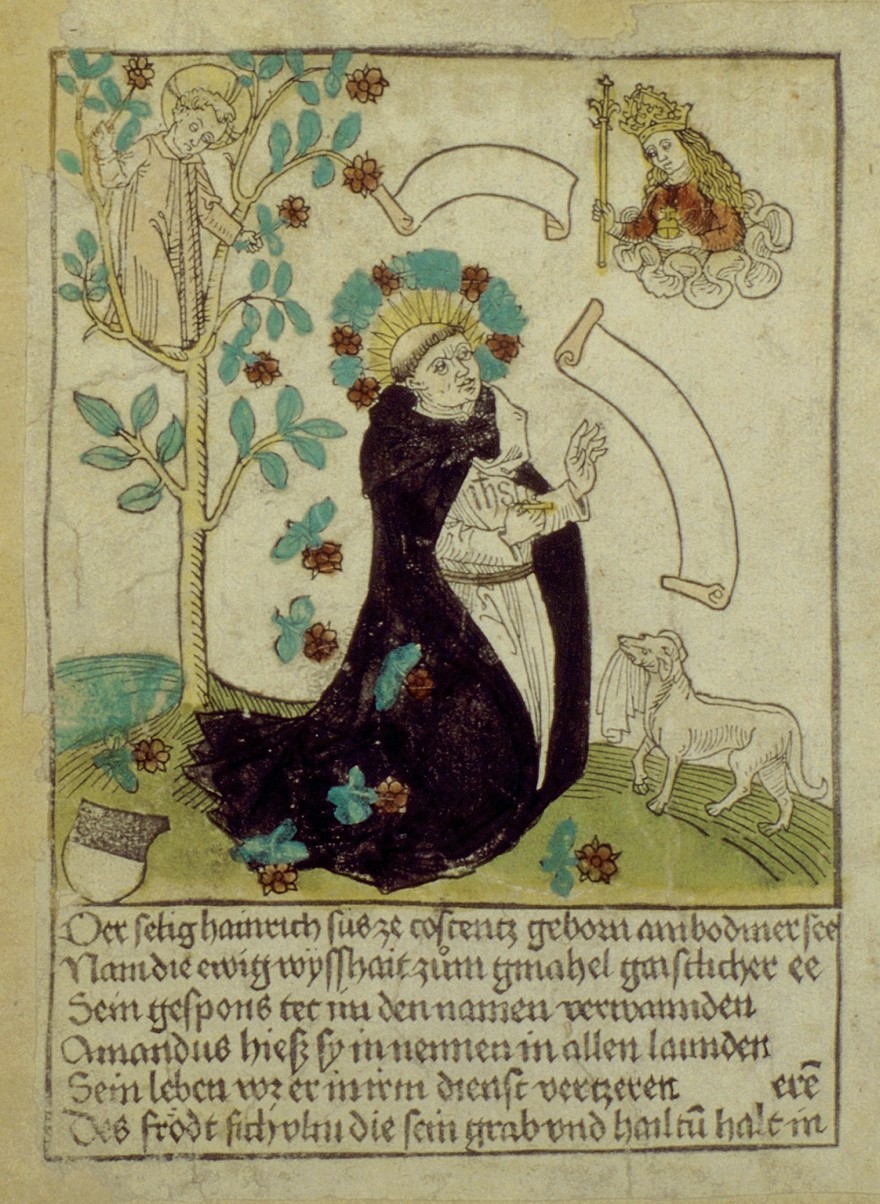
Medieval-SaintsWhether involved in local reformations of monastic houses, larger-scale regional reformations such as the Anglo-Saxon Benedictine Reform and the Cistercian movement, or the global Protestant Reformation, throughout the medieval period saints played a variety of roles as monastic and ecclesiastical institutions cleaned house.  This session seeks papers that will explore the myriad ways in which saints – including ex- and would-be saints – might be implicated in the many reform movements of the Middle Ages.  Papers from a wide array of disciplines, including art history, music history, literary studies, economic history, etc will be considered, and researchers taking an interdisciplinary or cross-cultural approach will be particularly welcome.

Papers should be 20 minutes in length, delivered in English.  Proposals including abstracts of about 250 words and a CV should be sent by 15 September to Kathryn Gerry ; email is preferred: kbgerry@gmail.com but hard copy proposals will also be accepted : Kathryn Gerry, Assistant Professor of Art History, Memphis College of Art, Gibson Hall, 1930 Poplar Ave, Memphis TN 38104, USA. Informal enquiries are also welcome.

Call for Essays: Melusine’s Footprint: Tracing the Legacy of a Medieval Myth (edited volume)

Deadline: 6 January 2015

While the late 14th c French prose romance by Jean d’Arras arguably remains the earliest and most-translated version of the story of Melusine—in which he envisions her as a foundress of the powerful Lusignan family—the figure of the fairy woman cursed with a half-human, half-serpent form traveled widely through the legends of medieval and early modern Europe. From Thüring von Ringoltingen’s German iteration of 1456, which gave rise to the popular chapbook, and related folktales that brought Melusine decisively to the European medieval imaginary, Melusine’s variants surface in countries and centuries beyond. One finds her entwined in the ancestry of several noble houses across Europe; a Melisende ruled as Queen of Jerusalem; and the philosopher Paracelsus writes of melusines as water sprites in search of a soul by means of human marriage. Regal serpent women proliferate in carvings and paintings decorating churches, castles, villas, and public buildings throughout Europe, and a cri de Mélusine, in the story the signal of her castle’s changing fortunes, entered the language as a common phrase. Today one finds Melusine in film, novels, comic books, the Starbucks logo, and as a character in the video game Final Fantasy. In short, the figure of Melusine, often compared to ancient goddesses and other fantastic creatures with serpentine forms, was and remains a powerful, multivalent symbol condensing the fears, myths, and cultural fantasies of a historical  period into a potent visual image.

We seek to assemble a volume of essays that examine the impact and legacy of the figure of Melusine in art, history, literature, and fields beyond. We envision a collection that charts the evolution of and investigates the many representative instances of this figure over time and space, with analyses that give consideration, in whole or in part, to the following questions:

  • What particular valence does the figure of the half-serpent Melusine hold for the time, place, and media in which she appears? How has the figure changed over time, and what forces have contributed to these changes?
  • How does the particular venue in which Melusine appears articulate a cultural approach to and embodiment of female power and its exercise?
  • How do the various installations of Melusine deal with the transgressiveness of her hybrid form, and the transformations which are an integral part of her story?
  • What about this figure resonates across time and space, and what meanings herald a particular historical moment?
  • What can Melusine teach us about reading history (or art, or indeed any sort of cultural artifact) and remaining open to the ways in which readers continually recreate meaning each time a  story is retold?

While any and all analyses that focus on Melusine will be given full consideration, essays that approach Melusines outside the work of Jean d’Arras are particularly welcome. We invite methodologies that are historically researched or theoretically grounded as well as descriptive in nature. Please send a proposal, including a short list  of projected sources, of 500-800 words along with a very brief CV to Misty Urban atmru4@cornell.edu by January 6, 2015. Final essays of 6-25 pages will be expected by December 31, 2015.

Conference: Out of the Margins: New Ideas on the Boundaries of Medieval Studies, University of Cambridge, 19-20 September 2014

DAY 1: 
Friday, 19th September 2014
Room GR 06/07, Ground Floor, English Faculty, 9 West Road, Cambridge

8.30 – 9.00 Registration

9.00 – 10.00 Plenary Session

The Peripheral Centre: Writing Literary History on the ‘Celtic Fringe’
Dr Máire Ní Mhaonaigh (Department of Anglo-Saxon, Norse and Celtic, University of Cambridge)

10.00 – 11.00 Authoritative Margins: The Battle for Ideas

“Margins toward the centre”: Bernard Silvestris and the Exegesis of Natura
Dr Jason Baxter, Assistant Professor, University of Notre Dame & Wyoming Catholic College

From Margins to Frames: The Transmission of Visual Formulas in Byzantine Post-iconoclastic Illuminated Books
Dr Giovanni Gasbarri, Postdoctoral Researcher, Sapienza University, Rome

11.00 – 11.30 Tea/ Coffee will be served in the Social Space

11.30 – 1.00 Transgressive Margins: Are they Subversive?

The Margin and Its Commonplaces: Art History, Medieval Marginalia, and the Allure of Transgression
Dr Joana Antunes, Lecturer, University of Coimbra

Mouth as Margin: Orality and Oral-Figuration in English Romanesque Sculpture
Caroline Novak, MA Candidate, York University, Toronto

An ‘Other’ No More? Performative Utterances and the Containment of False Conversion in Chaucer’s ‘Second Nun’s Tale’ and ‘Man of Law’s Tale’
Danielle Sottosanti, PhD Candidate, Fordham University

1.00 – 2.00 Lunch (please list any dietary requirements on your registration form)

2.00 – 3.30 Reading the Margins: Status and Resonance for Interpreters

What is a Medieval Paratext?
Charlotte Cooper, DPhil Candidate, University of Oxford

Seeking the Sacred within the Secular: A Study of the Aspremont-Kievraing Psalter’s Marginalia
Katherine Sedovic, DPhil Candidate, University of Oxford

The Castle of Perseverance’s Stage Plan as a Medieval Concordance Diagram
Elisabeth Trischler, MA Candidate, University of Leeds

3.30 – 4.00 Tea/ Coffee will be served in the Social Space

4.00 – 5.45 Neo-medievalism: The Relationship of the Medieval to the Modern

Greek-style Bindings for Western Collectors: Books on the Edge of Cultural Identity
Anna Gialdini, PhD Candidate, University of the Arts, London

Place, Placement, and Paratextuality in Petrarch’s Avignon
Dr Jennifer Rushworth, Junior Research Fellow, University of Oxford

Swimming With the Mainstream: Some Folkloric Thoughts on the Medieval Mermaid
Dr Seana Kozar, Research Associate, University of Bristol

CGI, Borders and Spaces Between
Dr Lesley Coote, Lecturer, University of Hull

All participants are invited for drinks at: The Anchor Pub Silver Street, CB3 9EL
An informal dinner follows drinks

DAY 2: 
Saturday 20th September 2014
Room GR 06/07, Ground Floor, English Faculty, 9 West Road, Cambridge

9.00 – 10.00 Plenary Session

“Chaucer at the Edge: Middle English and the Rhetorical Tradition”
Professor Helen Cooper Faculty of English, University of Cambridge

10.00 – 11.15 Performing the Margins

Just Left of Centre: How Images and Music in the Gradual of Gisela von Kerssenbrock Gave the Nuns of Rulle a Central Role in the Margins
Stephanie Azzarello, PhD Candidate, University of Cambridge

Women in the Margins: Women Singing the Mass in 10th Century Essen
Ekaterina Chernyakova, PhD Candidate, University of Cambridge

Pragmatic Addiciones to a Liturgical Reference Text
Dr Matthew Salisbury, Lecturer, University of Oxford

11.15 – 11.45 Tea/ Coffee will be served in the Social Space

11.45 – 1.00 Women on the Margins: Rethinking Roles

Weaving from the Margins: Self-Image and the Work of Sisters in a Late Medieval Dominican Convent
D. Esther Kim, MA Candidate, University of Leeds

Slippages and Stoppages: Saint Thais and the Problem of Female Embodiment in ‘Ancrene Wisse’
Madeleine Pepe, MPhil Candidate, University of Cambridge

Were women on the margins? Eucharistic Praxis and Female Piety in Medieval Irish Vernacular Hagiography
Julianne Pigott, PhD Candidate, University of Cambridge

1.00 – 2.00 Lunch (please list any dietary requirements on your registration form)

2.00 – 3.30 Geographic and Social Margins: Peoples on the Edge

Comic Narrative and Community Order in ‘The Tale of Colkelbie Sow Pars Prima’
Caitlin Flynn, PhD Candidate, University of St Andrews

Sounds of Silence or Noisy Nonsense? Edgy Laughter in Medieval Scotland
Florence Hazrat, PhD Candidate, University of St Andrews

Saint Maurice and the Other Crusaders: Africa During the Crusades
Adam Simmons, MA Candidate, Kings College London

3.30 – 4.00 Tea/ Coffee will be served in the Social Space

4.00 – 5.00 Making Margins: The Work of Scribes

Into the Margins: Addition and Emendation in the Black Book of Carmarthen
Myriah Williams, PhD Candidate, University of Cambridge

The Lady and the Dog: St Edith of Wilton and the Prancing Quadruped on Folio 49 Verso of MS Vercelli, Biblioteca Capitolare, CX VII
Professor Richard North, University College London

5.00 – 6.00 Plenary Session

“Stylistic Effects and Bodily Health: A more than Marginal Connection”
Professor Mary Carruthers, NYU and All Souls College, University of Oxford

10th Anniversary Marginalia Conference Dinner at: The Michaelhouse Café, Trinity Street, CB2 1SU. Drinks in the Chancel from 6.30 for Dinner at 7.30.

This conference celebrates the tenth anniversary of Marginalia, the journal of the graduate-led Medieval Reading Group at the University of Cambridge. We are generously supported by the Cambridge Faculty of English, St. John’s College, Cambridge, and an AHRC conference grant. To learn more, please visit our website at www.marginalia.co.uk and our conference website www.outofthemargins.co.uk, find us on Facebook at facebook.com/outofthemargins or follow us on Twitter: @ootmargins.

For more information on how to register, see also www.outofthemargins.co.uk

CFP: Mediterranean Studies Association (Athens, May 27-30, 2015)

Call for Papers:
Eighteenth Annual International Congress of the Mediterranean Studies
University of Athens, 27-30 May 2015)
1 February 2015

parathThe Eighteenth Annual International Congress of the Mediterranean Studies Association will be held on May 27-30, 2015, at the School of Theology, University of Athens, in Athens, Greece. Proposals are now being solicited for individual paper presentations, panel discussions, and complete sessions on all subjects related to the Mediterranean region and Mediterranean cultures around the world from all historical periods. The official languages of the Congress are English and Greek. But complete sessions in any Mediterranean language are welcome.

Following an optional walking tour of Athens, the Congress will open with a plenary session and reception on the evening of Wednesday, May 27. Over the next three days, 150-200 scholarly papers will be delivered before an international audience of scholars, academics, and experts in a wide range of fields. A number of special events are being planned for Congress participants that will highlight the unique cultural aspects of Athens.

Sponsors of the congress include the Mediterranean Studies Association, the University of Athens, University of Massachusetts Dartmouth, University of Kansas, Utah State University, and the Institute for Mediterranean Studies, Busan University of Foreign Studies, Korea.

Guidelines for Submission of Proposals

1. You may submit a proposal for an individual paper presentation, a complete session, or a round table panel on any Mediterranean topic and theme. The typical session will include 3 or 4 papers, each lasting twenty minutes, a chair, and (optionally) a commentator. (For examples of paper, roundtable panels, and session topics, and the range of subjects, see the programs from previous congresses.)

2. Submit a 150-word abstract in English for each paper, and a one-page CV for each participant, including chairs and commentators, as well as each participant’s name, email, regular address, and phone number. Proposals for complete sessions or roundtables need to include the chair’s name. Only ONE paper proposal per person will be accepted.

3. Deadline: The deadline for submissions is February 1, 2015. We will, however, continue to accept late submissions on a case by case basis after this deadline.

4. If you are giving your paper in a language other than English, please let us know and give us the title of your paper in that language as well as in English.

5. The MSA does not allow papers to be read in absentia.

6. Proposals for papers and/or sessions must be submitted through the MSA website: https://www.mediterraneanstudies.org/

Membership and Congress Registration: All accepted participants must be 2015 members of the MSA as well as register for the Congress no later than February 1, 2015. Late registrations will be available until March 31, 2015. Please be advised that those who have not registered by April 1, 2015, will be removed from the program.

Publications: After the congress, you are encouraged to submit your revised, expanded paper for consideration for publication in the Association’s double-blind, peer-reviewed journal, Mediterranean Studies, published by Penn State University Press.

If you have questions, please contact Ben and Louise Taggie at medstudiesassn@umassd.edu, and Geraldo Sousa at Sousa@ku.edu

Call for Papers: A Companion to Seals in the Middle Ages (Brill’s Companions to Medieval Sources)

battle-seal[1]Decoding Medieval Sources (Brill’s Companions to Medieval Sources)
A Companion to Seals in the Middle Ages

Medieval seals were material and visual statements of identity, power, agency, and legitimacy that could operate locally or traverse great geographic expanses to assert individual or corporate authority. The importance of the seal in medieval culture cannot be underestimated. This inter-disciplinary, edited volume seeks essays analyzing seal design, production, meaning, usage and reception in the Middle Ages. As a whole, the volume will critically engage with the historiography of seals as well as highlight new approaches to understanding seals across time and space with emphasis on Europe, the Latin Kingdom of Jerusalem and Byzantium c. 1100-1500. Essays therefore must include historiographical, regional and thematic explorations of medieval seals. Scholars from a range of disciplines, such as but not limited to History, Art History,Numismatics, Archaeology, Cultural and Visual Studies, are invited to contribute new and innovative examinations of select seals or seal types in context. Essays should appeal to the specialist as well as students of medieval history. Submissions are especially welcome from scholars whose work locates seals within broader developments in medieval social codes and visual or material culture.

Topics of Interest:
The Production of Seals
Ownership, Access and Usage
Authority, Ritual and the Practice of Sealing
Seals and their Documents
Sign Theory and Seals
Heraldry and Seals
The Body and the Seal
Gendering the Seal
Identity (individual or corporate) and the Seal
Seals and Foundations or Networks
Place and the Seal
The Seal and Visual Culture

Please submit a 250-word abstract for an article-length study and a CV to Laura Whatley (whatlel@ferris.edu)
and Charlotte Bauer (bauersmi@illinois.edu) by October 31, 2014. The essays in the volume will be in
English, but Brill can fund some translations of contributions from continental scholars.


Call for Chapter Proposals: Singing Death (edited book volume), deadline 30 September 2014

Call for Chapter Proposals:
Singing Death (edited volume)
Deadline: 30 September 2014 (submission of abstracts)

Chapter proposals are invited for an edited volume entitled ‘Singing Death’. The editors are in preliminary negotiations with Ashgate Press for a collection of essays provisionally entitled ‘Singing Death’ and we would like to invite chapter proposals for this project. ‘Singing Death’ arises out of a day-long symposium and concert combined, generously supported by the Australian Research Council Centre of Excellence for the History of Emotions. This took place at the University of Melbourne, 17th August, 2013: http://www.historyofemotions.org.au/media/89722/singing-death_poster_web.pdf  

The program alRequiem Mass Initialternated academic papers on the music, art and literature of death with performances of some of the music associated with it. The editors would like to extend the work of the symposium with a collection of essays focussing on death and music. We want to offer readers an encounter with music as a distinct discourse of death, another way of speaking death; the collection will be accompanied by a recording of the music involved with each of its chapters. We aim, most of all, to bring into focus how death figures through music for the living and the dying, how it taps into the experience of all those for whom death comes close.

Death is an unanswerable question for humanity, literally the question that always remains unanswered (although so many answers are offered). It is ‘the question of questions’ as Federico García Lorca put it, since it lies beyond human experience. The music of death represents one of the most profound ways in which, nevertheless, we struggle to accommodate death within the scope of the living by giving a voice to death and the dead. We want the book to engage with the profound disturbance that death presents to the living and how music expresses and/or responds to that disturbance.

The field of enquiry is very broad. We welcome proposals from any intellectual discipline that can engage with the nexus of music and death. Musicological expertise is not essential. Music, like poetry, operates in a different way from ordinary discourse; it acts as well as speaks and it can have profound and complex effects for listeners. We want our collection to address the difference that music, vocal and instrumental, makes to all those confronted with death. We also welcome proposals from those practically involved with the question, for instance music therapists involved in palliative care or grief counselling, or those who organise or perform music associated with death in some way.

Below are some possible topics for research. The list is far from exhaustive, nor is it intended to be exclusive. Each topic could also be subdivided many times:

  • music and suicide (some songs have been blamed for causing suicide, some songs commemorate a death by suicide)
  • music and murder
  • music and the dying
  • music and mourning
  • music and spiritualism (some people believe that the dead are communicating with them through music)
  • music and the afterlife
  • music, death and religion
  • music, death and the law
  • music and the revenant (ghosts, vampires, zombies, etc.)
  • death in various musical genres, for instance opera, death metal, folk music.
  • music in palliative care

Proposals should include:

  1. An abstract no longer than 500 words
  2. 3-10 keywords
  3. short CV, no more than 10 lines which can include a link to a website

Please indicate to the editors what music you wish to accompany your contribution and whether you can provide it. Recordings can be of live music or of pre-recorded music (permissions will be required when chapter is submitted). Please send to Helen Dell and Helen Hickey. See email addresses below.

Important dates:

  • 30th September—submission of abstracts
  • 30th October—notification of acceptance or otherwise
  • 30th January—deadline for submission of paper
  • 30th May—notification of acceptance of paper
  • 30th June—submission of revised version

Editors: Dr. Helen Dell and Dr. Helen Hickey, University of Melbourne, Australia, 3052. Y6h

Bios:

Helen Dell:
Helen Dell’s research is in the fields of music and literature, especially when joined together as song. Her PhD thesis, on desire in French medieval song was published in 2008 as Desire by Gender and Genre in Trouvère Song, by Boydell and Brewer. Since then Helen has been conducting research into recent receptions and inventions of medieval music. She has now finished a second book, for Cambria Press, entitled: Music and the Medievalism of Nostalgia: Fantasies of Medieval Music in the English-speaking World, 1945 to 2010. Recent research has centred on the music of death, from which last year’s symposium, ‘Singing Death’ and the current planned collection have sprung. More on Helen’s research can be seen at her website: http://www.helendell.com
Email: helendell@internode.on.net

Helen Hickey:
Helen Hickey completed her PhD thesis on the Everyday in early fifteenth-century English literature. She is interested in the ways history and literature intersect with medicine and materiality. Her most recent publication is an article in an edited collection, Theorising Legal Personhood in Pre-modern England (Brill) on the Inquisitions of Insanity and medieval literature. She is a member of the International Health Humanities Network.
Email: helenhickey@bigpond.com

CFP: Renovatio in the East Roman & Byzantine World, 395-1453 (Leeds 2015)

Call for Papers
Renovatio in the East Roman & Byzantine World, 395-1453
Proposed Sponsored Sessions at the Leeds International Medieval Congress, 6-9 July 2015
Deadline: 20 September 2014

640px-Diptych_Barberini_Louvre_OA9063_wholeA blurred program of reform presented as renewal, renovatio was an extremely important concept for the Classical Roman Empire, and remained so for the entire history of its eastern continuation. As emperors sought to establish their legitimacy through issuing law codes, building programs, and reconquering lost lands, both the reality and the rhetoric of renovatio had a fundamental impact on the Byzantine view of themselves and their state. Evidence of these programs for restoration resonates today throughout surviving texts, coins, and art and architecture, strongly influencing our historiographical reconstructions. We warmly invite papers dealing with these issues across the full lifespan of the Eastern Roman Empire and its successor states, from all areas of Late Antique & Byzantine studies. Suggested topics include:

– Justinian and his World – Reconquest, Reform, and Renewal
– Law and renovatio from the Theodosian Code to the Hexabiblos
– Iconoclasm, the Isaurians, and the Resurgence of Byzantium
– Rhetoric in Stone – Byzantine Architectural renovatio
– A Macedonian Renaissance?
– Literary renovatio – Historiography and the Greco-Roman Novel
– The ‘Komnenian Restoration’
– Art, Politics and renovatio in the post-1204 World

To apply please send an abstract of no more than 300 words and a short academic biography to byzantine.society@gmail.com by September 20th, 2014.

We encourage as many people as possible to apply, in order to help the growth of Byzantine studies, and foster interaction with late antiquists and medievalists with different specialisations. To this end, we also intend to host a drinks reception on one of the evenings of the congress.

CFP: New Directions in the Study of Women Religious: Four Sessions and a Roundtable (Leeds 2015)

Call For Papers
New directions in the study of women religious: four sessions and a roundtable
International Medieval Congress, Leeds, 6-9 July 2015
Deadline: 15 September 2014

medieval-nuns

These sessions are designed to bring together scholars working on nuns from any geographical region and religious tradition from 300 – 1500, in order to examine the methodologies and concepts that are being used currently by scholars to interpret evidence produced by and on nuns. They are intended to reflect new research in nuns’ studies; therefore, the themes outlined below are flexible, and are there to spark inspiration rather than to be treated as prescriptive. The organisers are central- to late- medievalists and are aware that issues relating to late-antique and early-medieval nuns might be very different to the ones that we have laid out below. If that is the case, do not be deterred; get in touch with your ideas and we will try to adapt accordingly. In addition to the four sessions, we are organising a roundtable on the central issues involved in the study of women religious. What are the main obstacles (intellectual and otherwise) to fruitful research on women religious? Where do we go next? If you would like to be included as a panellist, please get in touch with a brief description (one or two lines) of what you would like to talk about. Please send paper proposals (of approx. 250 words, with proposed titles) and roundtable topics to either Kirsty Day (University of Leeds) k.day@leeds.ac.uk, or Dr Kimm Curran (University of Glasgow; HWRBI)  elcho95@gmail.comas soon as possible, but by 15th  September at the very, very latest.

Sponsored by: The History of Women Religious of Britain and Ireland (H-WRBI) http://www.history.ac.uk/history-women-religious/content/welcome

SESSION 1: Old nuns, new narratives [SESSION FULL]

SESSION 2: ‘Nuntastic studies’? Issues of terminology; medieval and modern
How far were nuns aware of what they were called, and how far did their designations shape how they thought about and enacted their vocation? What did it mean to be a Franciscan or a Cistercian nun, or a nun who followed the precepts laid out by Pachomius or Benedict? Discussions of what religio and ordo meant in their medieval contexts have taken place predominantly in the context of studies of male religious, using evidence on and by male religious only. Why has —  abundant — evidence produced by and on nuns been excluded from these discussions? Has a preoccupation with the religious orders overshadowed consideration of terminology before the establishment of the religious orders? Where, if at all, does terminology come into studies of female religious who existed before the turn of the twelfth century? Moreover, despite efforts made by those working on both male and female religious for inclusivity, ‘monastic studies’  is still not a field with which female religious are comfortably associated. Jacques Dalarun published an essay in 2011 which discussed the concept of ‘le monachisme féminin’. Terms such as this or ‘women’s monasticism’ employ a gendered qualifier that isn’t applied to their male counterparts — ‘men’s monasticism’ simply doesn’t exist  as a concept (should it exist?). This uneven application serves to naturalise monasticism as a male domain, making the presence of women’s evidence in this field seem unnatural. Is there a reason, then, why we keep using these terms (or terms such as, for instance, women’s Franciscanism)? What might work as an alternative? How far does modern terminological usage (gendered and/or otherwise) affect our understanding, categorisation, and analysis of evidence relating to female religious?

SESSION 3. Individual agency, change, and reform
In scholarly narratives involving female religious, agency for various types of change —  reform included —  is often attributed to a power external to the female religious under examination. How far did individual nuns,or individual communities, influence the changes to the rules and precepts that governed their vocations? The agency of women religious can also be traced in the rules or forms of life that women wrote for their own communities. Do rules that were written by women for women’s communities differ from those written by male guardians of women’s communities? The fact that rules or forms of life were often ultimately approved or issued by male ecclesiastics tends to obscure women’s agency in the creation of such texts. Scholarship on nuns has often been blind to where women may have written entire rules or forms of life that were then merely approved by a male ecclesiastical power, or where male religious wrote rules in response to the insistence of women religious. What methodologies can be employed to trace nuns’ agency in texts where they may appear to have had none? As the theme of this year’s IMC demonstrates, much intellectual discourse in the field of medieval religion has been formed around the issue of reform. However, evidence relating to nuns features either very little or not at all in many of the most recent surveys of monastic reform. Why has this been the case, and how can we reconcile this? What can the evidence left by women religious bring to discussions of reform in the Middle Ages? The extent to which reform is an appropriate metanarrative in medieval religiosity has been brought into question by a number of scholars. How far can we trace reform in evidence produced by and on nuns?

SESSION 4. Combining methodologies, illuminating nuns
Scholarly narratives of women religious have been created in a range of disciplinary fields, and using numberof different source types. As such, these narratives have often challenged —  albeit not always consciously — many of the problems inherent in the histories of medieval religion that are based purely on normative sources. For instance, scholarly narratives punctuated by ‘inspiration,’ ‘institutionalisation’,and ‘decline’ have found an alternative in recent studies of the history of nuns’ literacies. How might we employ a combination of approaches to ostensibly divergent source types to illuminate our understanding of medieval nuns: their place in the world of medieval religiosity and their understanding of this world; their lived experiences; their agency in shaping their vocations? Methodologies that we might use to read monastic architecture have been applied by some scholars to monastic rules, and vice versa, as a useful way of understanding the dynamics of enclosure. However, as Roberta Gilchrist has argued, histories of monastic archaeology have not escaped the androcentric biases present in text-based histories of religious communities. Is there a way of combining methodologies that have been generated in different fields as a fruitful way of understanding medieval nuns, without absorbing the problematic elements associated with these fields into new narratives of women religious?

CFP: Pilgrimage, Exploration, and Travel (Kalamazoo 2015)

Call for Papers:
Pilgrimage, Exploration, and Travel
Session sponsored by Hortulus at the International Congress on Medieval Studies at Western Michigan University in Kalamazoo, Michigan, May 14-17, 2015
Deadline: 15 September 2015

Hortulus will sponsor a session on “Pilgrimage, Exploration, and Travel,” a theme selected by our readers, at the 50th International Congress on Medieval Studies at Western Michigan University in Kalamazoo, Michigan, May 14-17, 2015. Papers presented in our session may also be considered for our Fall 2015 issue on the same theme.

bl_pilgrim
© The British Library

Scholarly interest in the topic of pilgrimage spans many geographies and disciplines. Additionally, recent scholarship has revealed the significant impact of pilgrimage and travel upon medieval people of a variety of religious, social, and regional backgrounds, not just the pilgrims themselves. We invite proposals that explore the topics of pilgrimage, exploration, and travel from multidisciplinary and comparative perspectives. Some potential topics for papers might include relics, badges, clothing, and associated material culture; perceptions of space, including landscape, geography, and architecture; the economics and politics of pilgrimage; pilgrimage narratives and other literary evidence; miracles and healing; readings of pilgrimage that consider monastic vs. lay approaches, social class, and gender; local and “national” identity; sacred journey in general (not just Christian) in the pre-modern world; liturgy and ritual of pilgrimage; and failed pilgrimages. 

Please send a 300-word abstract and a Participant Information Form (available here) to kalamazoo@hortulus-journal.com by September 15, 2014.

See also: http://hortulus-journal.com/2014/08/19/cfp/