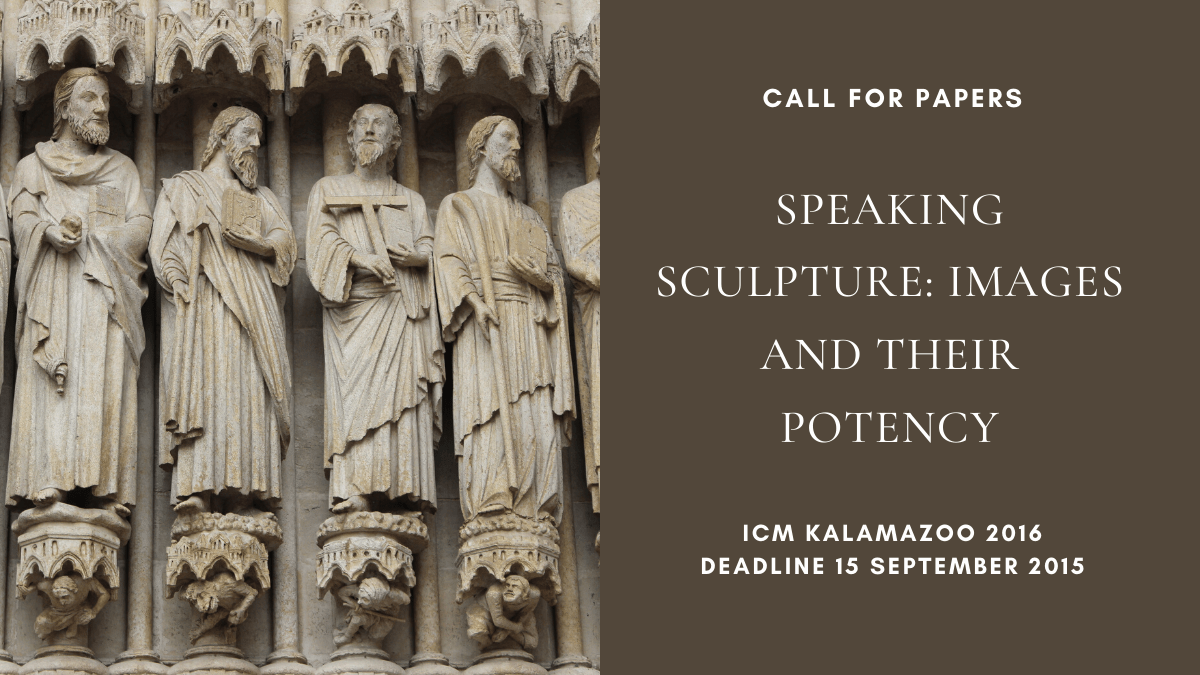
Session at the International Congress on Medieval Studies University of Western Michigan, Kalamazoo, May 12 – 15, 2016
Organizers: Lloyd de Beer, British Museum Julia Perratore, Metropolitan Museum of Art
Do sculptures speak? Can they listen? Are they able to read, sing, and engage with other sculptures, or the architecture of their surroundings? If so, is this connected to their context and placement? How do these questions affect the way in which we view sculpture and its performativity?
In seeking to answer these and related questions, this session will address the manifold ways in which sculpture could potentially address its viewers, and, by extension, listen. The interactive nature of much medieval art, and particularly sculpture, suggests that viewers’ engagement with mute three-dimensional images could extend to an imagined oral/aural exchange. Sculptural evocations of speech were carved onto the body, in the parted lips of the Virgin or the emphatic gesture of a saint. They could also be engraved across the unfurled banderole of a prophet or in the titulus of a capital. In other instances, a sculpture might seem to take part within a multisensory experience of space or ritual, as the figures of a narrative frieze might be activated by music. Alternatively, an image may simply stay silent and listen, as a cult statue might amid the prayers of the faithful. Impressions of speech in medieval sculpture have even carried over into historiography, as attested by the “speaking reliquaries” of the German tradition. The papers of this session may approach issues of speech and listening in a variety of ways, considering a wide range of sculptural forms, materials and techniques across the medieval period as a whole.
Overall, this session aims to contribute to the many lively scholarly discussions on the interactivity and performativity of sculpture current in the field of medieval art. It also responds to a number of recent studies on the role of the body in medieval experiences of art and architecture, particularly with respect to ritual and devotion. More broadly, the topic’s inherent interdisciplinarity aims to draw new perspectives and methodologies to the study of a body of material that has long been approached solely through traditional art-historical methods. It is hoped that by presenting this session at Kalamazoo, which attracts scholars from many disciplines and periods, a number of presenters from different backgrounds may be gathered, igniting a dynamic discussion on the nature and power of images in the medieval world.
CFP, ICMS (“Kalamazoo”) 2016: Gendered Spaces Hortulus-sponsored session Session organizer and presider: Melissa Ridley Elmes, co-editor of Hortulus The concept of gendered spaces—areas in which particular genders and types of gender expression are considered welcome or appropriate while other gender types are unwelcome or inappropriate—is a key element in the study of human geography. Gendering spaces is one way in which social systems maintain the organization of gender, and can preserve and dictate the accepted norms of gendered behavior, as well as relationships and hierarchies between men and women. Studying gendered spaces—environments, landscapes, and other places that have been designated specifically for “men” or for “women,” as well as the “public-private” divide often defined with men in public and women in private spaces, for example—can provide us with important knowledge of the ways in which the spaces we inhabit reinforce our cultural positions from a gendered perspective; for instance, how such spaces serve to segregate or to unify, to reinforce or subvert traditional forms of masculinity and femininity. This understanding, in turn, can shed light on existing power structures and the conflicts and issues that arise between men and women in a given culture. This session seeks to examine the subject of gendered spaces from a medieval vantage point, considering ways in which medieval society powerfully shaped and sought to control ideas of masculinity and femininity through the public and private spaces that were designated for men and women and how those spaces were used. We hope to attract an interdisciplinary panel of papers including studies from historians, art historians, and literary scholars that will extend our thinking about gender in the medieval period. The session shares a theme with our Fall, 2016 issue of Hortulus: The Online Graduate Journal of Medieval Studies, and we hope to be able to publish in that issue some of the papers delivered in this session. As our journal mission is to support the professionalization efforts of graduate students, the session is organized, presided over, and comprises papers given by current graduate students. Abstracts, brief bio, and participant information form to Melissa Ridley Elmes (maelmes@uncg.edu) by September 15, 2015.
Extended call-for-papers submission deadline: July 20th, 2015
Conference date(s): September 16, 2015 – September 17, 2015
This conference is co-hosted with the Universities of Reading and Liverpool Hope. It aims to explore the social, economic and spatial factors underpinning the changing way ordinary men demonstrated their commitment to God and the church(es) in a period of significant turmoil. Papers that address English male devotional experience from historical, literary, gender studies and material culture perspectives are welcomed. Suggested themes include:
Religion and Society: Domestic piety and lay/household Catholicism.
Material Culture and ritual objects.
The economy of piety: indulgences, relics and paying for piety.
Personal and public piety: Continuity and change over the medieval and early modern periods.
Devotional reading, writing and performance.
Geography, place and space in Catholic piety.
It is anticipated that selected papers will be published as part of an edited collection.
Grisaille: Shades of Meaning in Late Medieval Manuscripts
Thursday 9 July 2015: 14.15-15.45
Organiser
Sophia Rochmes (Department of History of Art & Architecture, University of California, Santa Barbara) and Anna Russakoff (American University of Paris)
Moderator/Chair
Anna Russakoff, American University of Paris
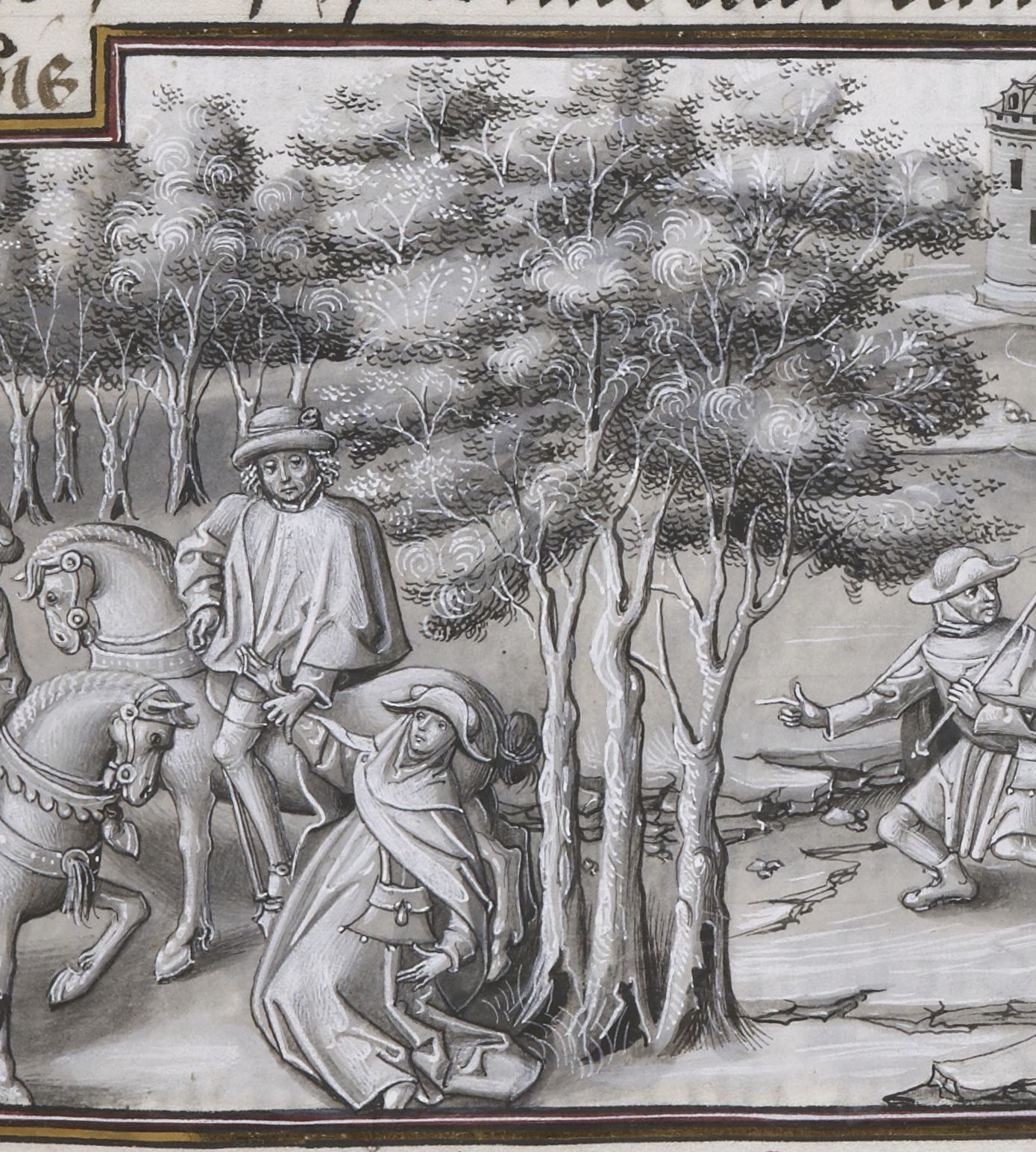
Grisaille, or imagery in monochrome tones of grey, proliferated in late-medieval Northern Europe. This session explores grisaille, with a particular focus on its appearance in manuscripts, in an effort to better understand this enigmatic artistic phenomenon. The papers will present a series of case studies, and will consider issues of technique, iconography, artistic identity and collaboration, relationships between artistic media, patronage, and reception.
Paper 1702-a
Disappearance of Colors in 14th-Century Manuscripts: The Personifications in Question (Language: English)
Bertrand Cosnet, UFR d’histoire, histoire de l’art & archéologie, Université de Nantes
Paper 1702-b
Prayer in Shades of Grey: A Grisaille Book of Hours from the Lyonnais Workshop of Guillaume Lambert (Language: English)
Elliot Adam, Centre André Chastel, Université Paris-Sorbonne – Paris IV
Paper 1702-c
Prester John’s Painters: European Grisaille Illuminations in Late Medieval Manuscripts from the Ethiopian Royal Court (Language: English)
Verena Krebs, Martin Buber Society of Fellows in the Humanities, Hebrew University of Jerusalem
Paper 1702-d
Case by Case: A Look at Manuscripts that Combine Grisaille and Full Color (Language: English)
Elizabeth Moodey, Department of History of Art, Vanderbilt University, Tennessee
Taddeo Gaddi, Annunciation to the Shepherds, Baroncelli Chapel, Santa Croce, Florence, c.1330
Chiaroscuro since Leon Battista Alberti’s De pictura (1435) has been one of the central subjects characterising painting and sculpture in practice and theory in Italy. Primarily, it concerns the articulation of plastic qualities, the formulation of relief, both in painting and sculpture. In the northern tradition, too, chiaroscuro has been highly valued. Through chiaroscuro, the textures of materials and the structural fabric of their surfaces, including their eye-catching highlights, have been evoked. Chiaroscuro goes hand in hand with an intensification of optical qualities.
In the Cinquecento, the significance of chiaroscuro underwent an
important change. The evocation of plasticity and corporeality through a chiaroscuro that created relief was now in part replaced by a tonally defined chiaroscuro, which focused on pictorial qualities. This is the case, for example, in the Clair obscur prints, which developed in both, northern and Italian art. These different uses of chiaroscuro are each linked to differently grounded aesthetic commitments.
Within the context sketched above, we want to understand chiaroscuro as
a distinctive aesthetic principle. Our chronological focus is on the
period from 1300 to 1600.
The following sections are envisaged:
– chiaroscuro and monochrome painting
– chiaroscuro in the context of drawing and prints
– chiaroscuro and sculpture
– chiaroscuro in the art of Leonardo da Vinci
Further relevant proposals may be added: suggestions will be gladly
received.
Interested scholars are cordially invited to present their researches
and ideas in the framework of the conference. Please send your abstract
(max. 300 words) for a c. 20-minute presentation together with your
Curriculum Vitae by August 15, 2015 by email to: claudia.lehmann@ikg.unibe.ch
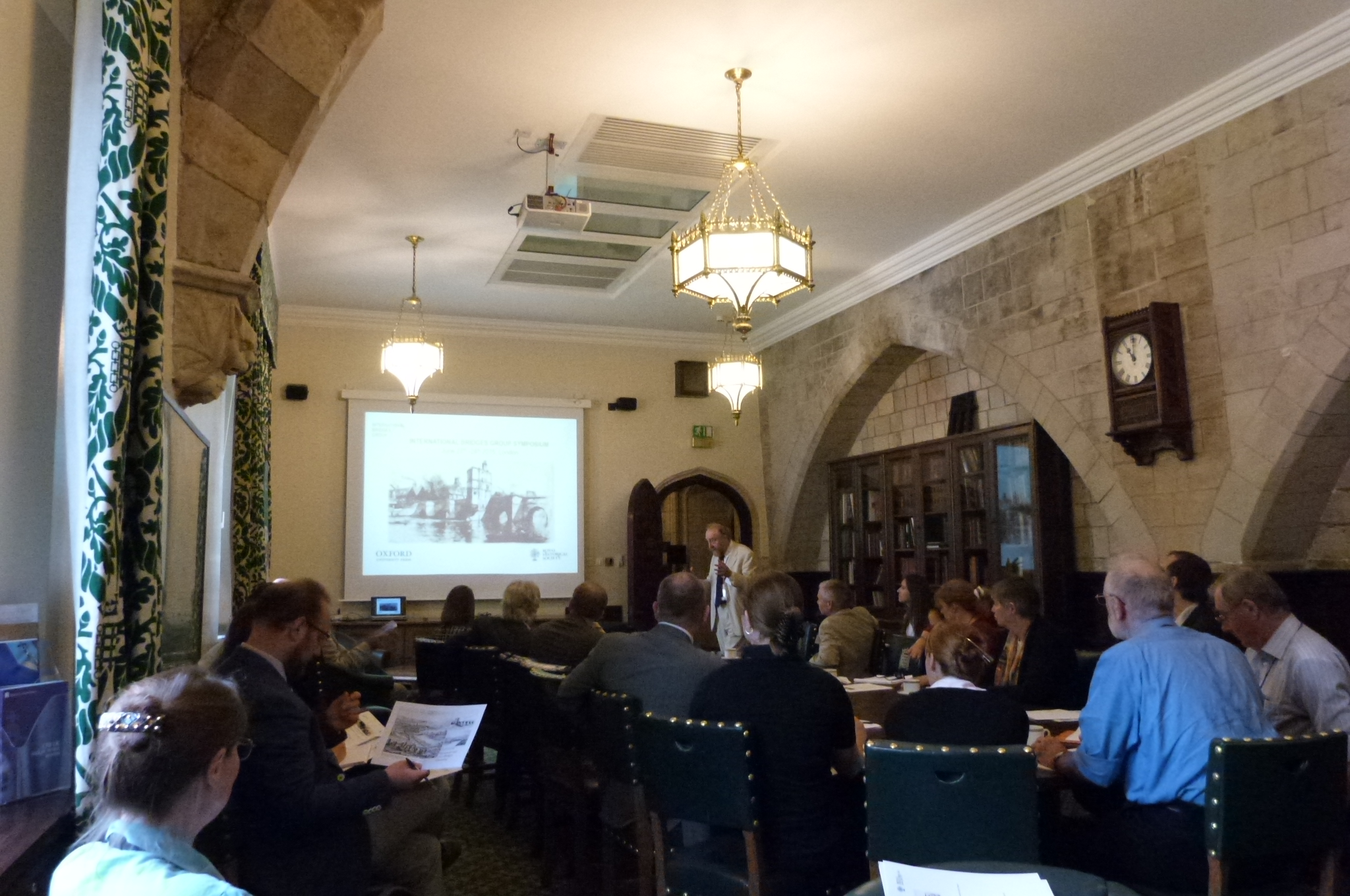
The study of architecture largely focuses on the study of buildings: constructions with their most essential function as shelter for the human body. But architectural history can forget that constructions with other functions are also ripe for interpretation of their structure and ideologies. This is what the ambitiously-named International Bridges Group intends to promote for crossings of all kinds, but beginning with a focus upon the medieval. Hence we at MedievalArtResearch.com were invited to their inaugural meeting at Westminster Hall on the banks of the Thames, followed by a day of in-depth (hopefully not literally) investigation of medieval bridges in the Nene and Great Ouse valleys. It as an opportunity to experience the fledgling sub-discipline of gephyrology: a neologism which currently only returns fifty results on Google.
Delegates assembled under the flying buttress of Westminster Hall
As the current writer specialises on ecclesiastical architecture, one thing that emerged in the day in Westminster Hall was how similar working on the English bridge is to studying English parish church. Opening lectures from John Blair and John Chandler established thinking about English bridges is closely linked to unravelling the origins and operation of the English parochial system. Many current bridges can be traced back to the increasing importance of kingdoms in the late eighth century, and the establishment of centres of power. Just like churches, sometimes the opportunity to build a bridge was seized upon by institutions, monastic, parochial or secular to make a powerful architectural statement. Equally, institutions could be less responsible: maintenance neglected and pontage tolls embezzled.
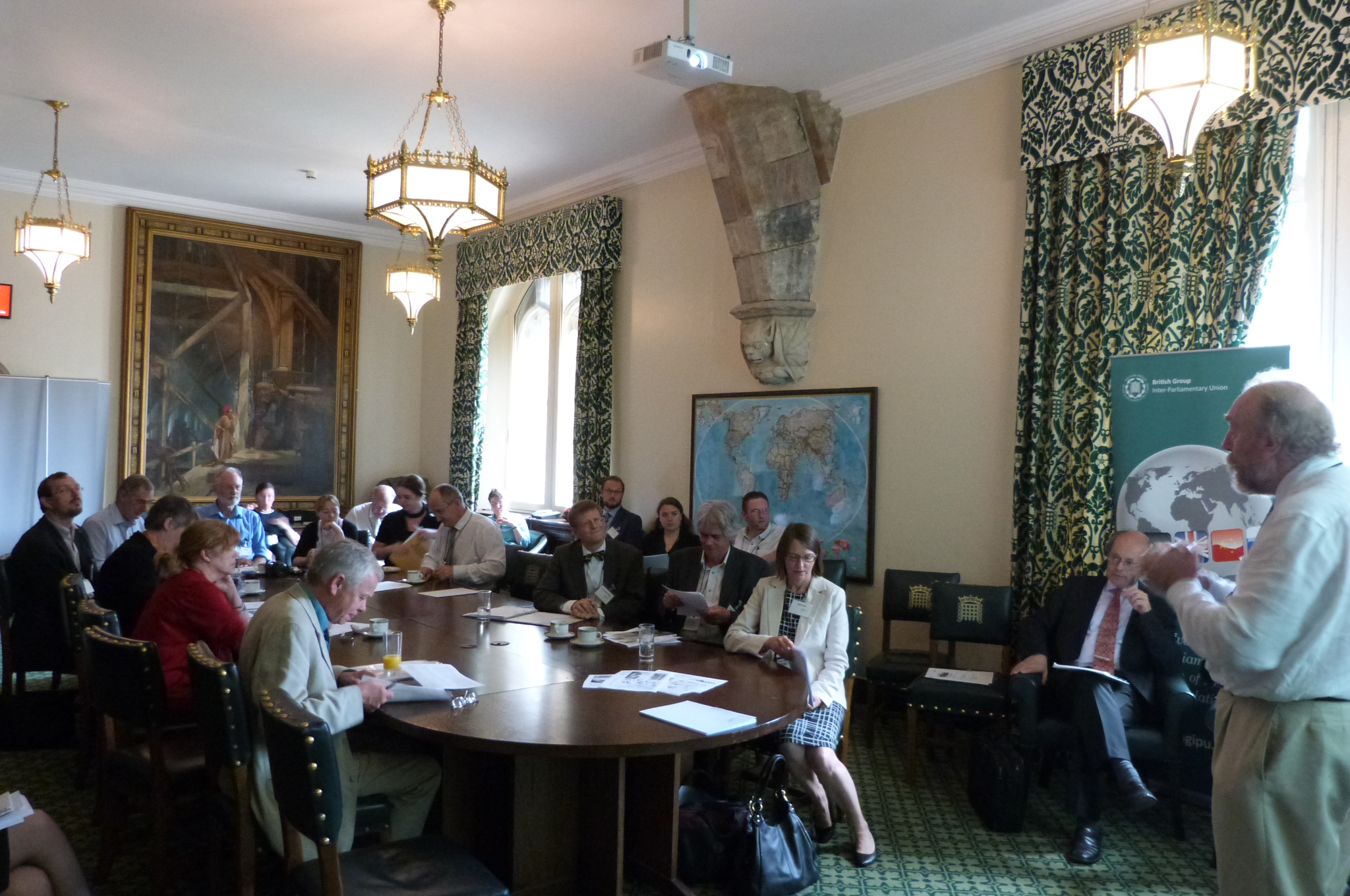
David Harrison addresses delegates
Also like English churches, English bridges are uniquely weird and wonderful in equal measure. John P. Allan showed us, via the Exe bridge at Exeter, how independent masons may have been happy to meet in the middle with rounded and pointed arches; while Peter Cross Rudkin showed the English fondness for soffit ribs under the arches, akin to the complicated mouldings of English churches. The rib may have originally had a functional purpose centring the arch before it was built up: especially important for a rounded arch that cannot support itself. But since the ribs are often spaced wider than the length of the stones on top, it would appear that they have assumed the status of a skeuomorph: a decorative form derived from a practical necessity. Having a bridge that had distinctively bridge-like forms was clearly as essential as its structural practicality.
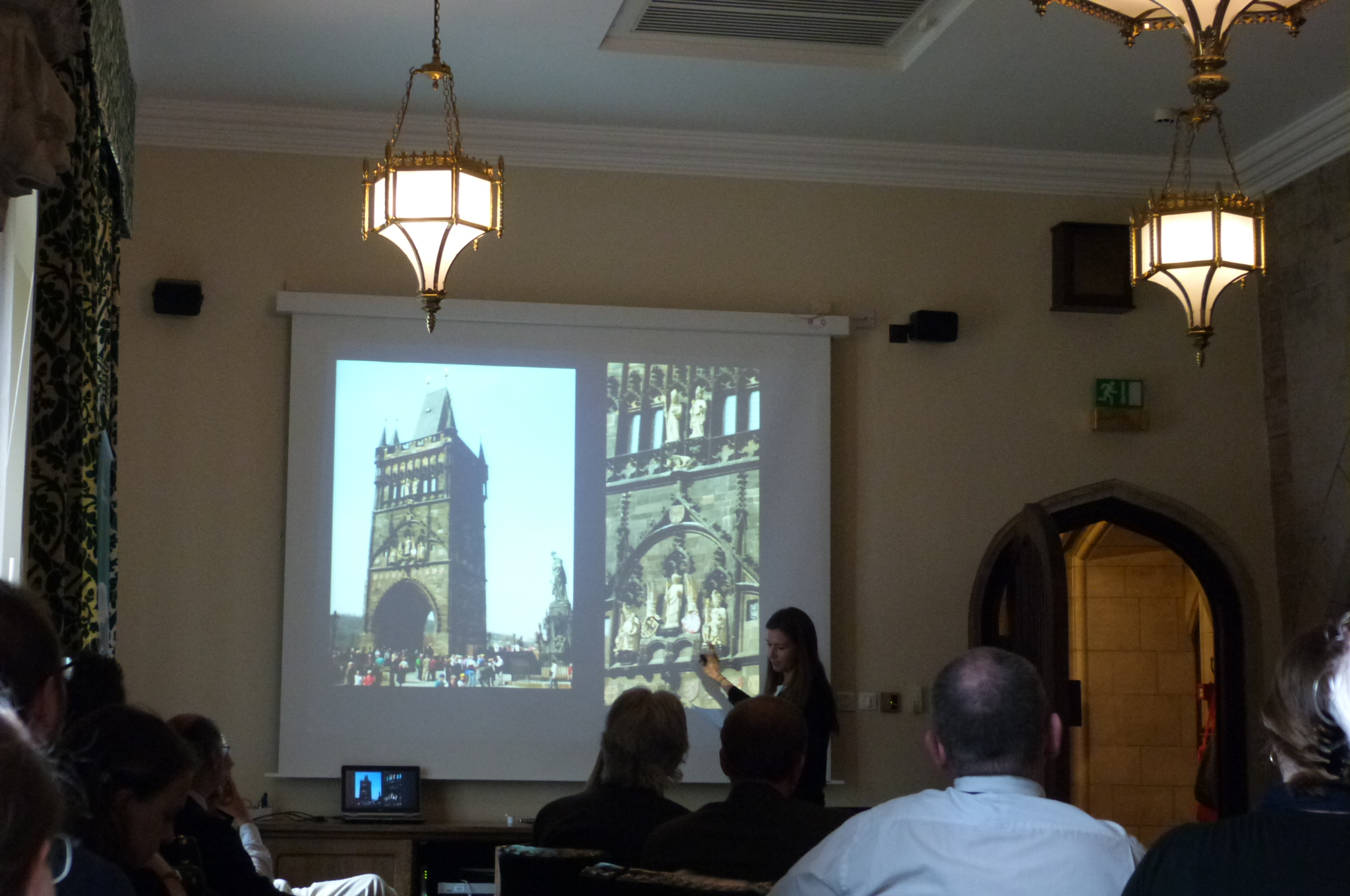
Jana Gajdošová and the tower of the Charles Bridge, Prague
Just as a church spire provided an opportunity to dominate the sky, a bridge provided a powerful opportunity to assert ideology through these unique architectural semiotics. Susan Irvine used Anglo-Saxon literature to consider the bridge as a liminal space: a meeting point between two places. The potential of using this category of space was explored by Jana Gajdošová and Gerrit Jasper Schenk, both presenting papers on bridges rebuilt after disaster. The Gothic Charles Bridge in Prague, with its enormous bridge-tower and scheme of regal architectural sculpture, Jana showed to be a powerful expression of the megalomaniacal ambition of the Holy Roman Emperor. Gerrit compared the rebuilt Ponte Vecchio to the Florentine Bapistery: a pagan monument to Mars reclaimed for John the Baptist, expressed through inscriptions that speak of the enlightened commune of the city.
The final session brought us to how the established concept of a bridge worked in larger societal concepts: Jacopo Turchetto took us to medieval Anatolia, demonstrating how magnificent Ottoman bridges represented much older meeting places of travelling caravans. Roberta Magnusson and David Harrison both gave rich lectures about the bridge in the frameworks of English urban infrastructure and society that proved vital for enlightened conversation on the group’s trip out the Nene and Great Ouse Valleys the next day.
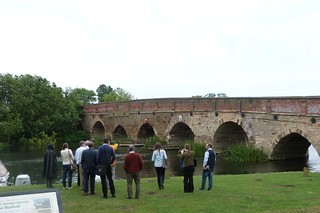
After an early Sunday-morning start, the first bridge the delegates encountered was Great Barford in Bedfordshire, dated by a major bequest of 1428. Much of the problem of looking at bridges is that, unlike a building, it faces not just the usual climatic elements, but also heavy traffic, perpetually flowing water, and wandering boats. Therefore it is inevitable that they fail and are rebuilt. Great Barford was also slightly spoiled by the 1874 widening – a common solution to the problem of increasing road traffic in the Modern age – here achieved by building out the bridge on the west side with a brick refacing.
Irthlingborough (Northamptonshire), 13th or 14th century
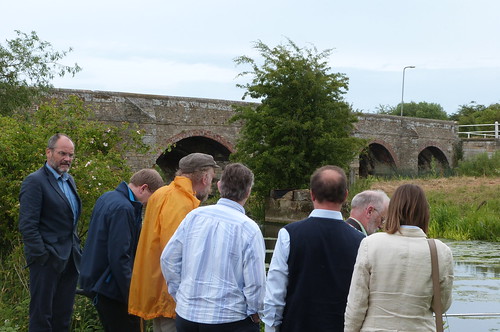
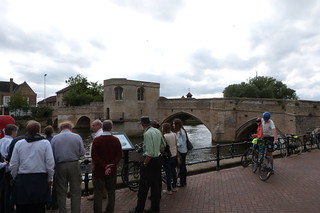
Many medieval bridges are isolated from the main traffic flow: Irthlingborough now has a rather precarious-looking 1930s concrete Art-Deco bypass running alongside it. But in the Middle Ages it was a main road: therefore it was an inevitable structure unlike the grand statement at Great Barford, and probably with much earlier origins. Ditchford, on the other hand, had no such modern rerouting and was very much in use, with signal lights controlling the two-way traffic not used to a group of architectural historians examining its structure (see featured image). This bridge, made largely of attractively-tinged ironstone, was funded by the two parishes of which it lay on the boundary line: charmingly expressed on the central cutwater by the symbols of churches’ dedicatees, St Peter and St Catherine.
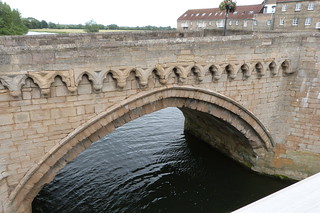
Huntingdon to Godmanchester bridge, corbel table, c.1300-20
Two major urban bridges finished the trip. The very handsome bridge over the Great Ouse outside Huntingdon, called ‘lately built’ in 1322, reveals at close inspection its English eccentricities: different mouldings, designs and widths for every arch. It has the most attractive feature of a trefoil-arched corbel table, very much confirming the early-fourteenth-century date, which may have marked the place of a bridge chapel. Very few of these survived the Reformation: Wakefield, Rotherham, Bradford-upon-Avon and St Ives being the exception. However, we found the chapel over the Great Ouse locked, but had plenty to admire in the St Ives bridge itself: built in the 1420s at the behest of some generous Benedictines.
St Ives bridge and chapel, 1420s
While very rich and informative, this meeting established only mere stepping stones to the establishment of gephyrology as an active discipline. If you are a budding gephyrologist, especially of the medieval period (or at least, initially, hanging around with a bunch of medievalists) and would be interested in attending future meetings of this research group, then email Jana Gajdošová with your name, institutional affiliation and a brief description of your studies.
For the full resumé of pictures of the day (including cheeky opportunistic solo church visits) see the Flickr set.
The Mausolea & Monuments Trust Student Symposium
The Forum, Bloomsbury Baptist Church
Friday 11 March 2016
Call for papers of 20 minutes: for the inaugural student symposium of The Mausolea
& Monuments Trust to be held in The Forum, Bloomsbury Baptist Church, London
on Friday 11 March 2016. This event will provide an opportunity to present an aspect of your research in front of an engaged and extremely well-informed audience, providing ample time for discussion and forging new links and contacts.
The Mausolea & Monuments Trust is a highly regarded institution; acting as
guardian to six important mausolea, campaigning for the preservation of many
more, and running a series of scholarly lectures and visits each year: www.mmtrust.org.uk
The theme of the symposium is deliberately broad ranging, allowing varied
perspectives on the purpose, design, construction, use, importance, care,
conservation, history and legacy of mausolea and monuments. It is hoped that we
will explore the field through a range of interdisciplinary approaches, showcasing
current post-graduate research on a variety of subjects. Papers should be illustrated
by PowerPoint, and speakers should expect to take questions following their
presentation. It is hoped that a selection of papers will be published in a special
edition of the Mausolea and Monuments Trust journal, Mausolus. Speakers coming
from outside London will be offered a £20 contribution towards their travel
expenses. If you are interested in contributing, please submit an abstract of 300
words maximum and a brief biography to Frances Sands: fsands@soane.org.uk by Monday 31st August 2015.
Anonymous (Antwerp), Carved retable of the Passion of Christ, c. 1510. Burgos, San Lesmes, Capilla de Salamanca (Hans Nieuwdorp Archive, Illuminare – Centre for the Study of Medieval Art | KU Leuven).
In 2010, Illuminare – Centre for the Study of Medieval Art (KU Leuven) acquired the archive of the eminent Belgian art historian professor Jan Karel Steppe (1918-2009). Steppe is internationally renowned for his groundbreaking research on the influx of Netherlandish art and luxury goods in fifteenth- and sixteenth-century Spain. By springtime 2016, his documentation will be archived and the inventory made accessible online. To celebrate this accomplishment, Illuminare is organizing an international conference on Steppe’s long-term and much loved research topic.
This conference will focus on a large variety of media, ranging from painting and tapestry to broadcloth and astrolabes. Special attention will be paid to the driving forces behind this export-driven market, such as artists, patrons, collectors and merchants. By taking into account cultural, religious, political and socio-economic dynamics, this conference aims to shed new light on the multifaceted artistic impact of the Low Countries on the Iberian Peninsula in the fifteenth and sixteenth centuries.
We welcome 20-minute papers by established and early career scholars that revisit or expand Steppe’s topics of research and, equally important, enhance these with recent methodologies and theoretical frameworks. The official language of the conference is English, although papers in French might be taken into consideration. Proposals of no more than 300 words and a brief CV should be submitted to drs. Robrecht Janssen (robrecht.janssen@arts.kuleuven.be) and drs. Daan van Heesch (daan.vanheesch@arts.kuleuven.be) by the 1st ofOctober 2015. Speakers will be invited to submit their papers for a peer-reviewed publication on the topic.
Barbara Baert (KU Leuven), Krista de Jonge (KU Leuven), Bart Fransen (KIK-IRPA, Brussels), Robrecht Janssen (KU Leuven / KIK-IRPA, Brussels), Maximiliaan Martens (Ghent University), Werner Thomas (KU Leuven), Paul Vandenbroeck (Royal Museum of Fine Arts Antwerp / KU Leuven), Jan Van der Stock (KU Leuven), Daan van Heesch (KU Leuven), Koenraad Van Cleempoel (Hasselt University), Annelies Vogels (KU Leuven), Lieve Watteeuw (KU Leuven)
A trans- and interdisciplinary conference at the University of Hamburg, 12–14 November 2015
Simone Martini, Agostino Novello polytych, simultaneous narrative showing resurrection of a child
The capacity to distinguish between past, present, and future plays an important role in the formation of (self-)consciousness. Time is an essential criterion to order the flow of contingent events and experiences and to build up coherence and meaning. In turn, the narratives emerging from such temporal ordering are crucial for the development of identities. However, theoretical concepts of time in philosophy, physics, biology, sociology, or cultural studies are numerous and often opposing. It only remains obvious that humans have the ability to make some sort of experience of time. Images have always played a part in these processes. Moving and still images represent time and duration and contribute to the organisation of temporality or atemporality in many ways. They may represent the flow of time, or singular moments or – through their subjects, modes of representation, or being objects of preferences or dislikes – stand as signs for the period in which they were produced or shown. Often the material body of the images becomes an indicator of time or a trigger of dynamic experiences of time. By means of their modes of representation, images also facilitate various experiential dimensions of time such as eventful or presentist moments and the stretching or folding of time. The relationship between the pictorial representation of time and perception of time is influenced by various factors. Experience of time may be seen in relation to the different senses constituting such experience. On the other hand, it may be influenced by cultural concepts of time, time regimes, practices of perception, and environmental processes. To analyse time experience one may apply semiotic or phenomenological methods or turn to integrative concepts like cybersemiotics, biosemiotics, or theories of embodiment. Therefore, basic questions for the conference could be:
– How do images represent time?
– How is it possible that images represent time or duration?
– How are representations and experiences of time influenced by concepts and regimes of time?
– Which senses take part in the experience of time?
– How are the materials of media involved in the experience of time?
This third conference on visual culture at the University of Hamburg which is organised by students and postgraduates of archaeology, art history, and cultural anthropology will provide lectures on the main topics and opportunities for detailed discussion. We are particularly looking for trans- and interdisciplinary contributions which deal with the above questions in visual media of all kind (still images, sculpture, installation art, film etc.). There is no limitation to certain periods or cultures. The contributions will be published after the conference.
Proposals for lectures (30 min) in German or English may be sent to mail@kulturkundetagung.de (organisational team: Jacobus Bracker, Clara Doose-Grünefeld, Tim Jegodzinski und Kirsten Maack) until 31 July 2015. Abstracts should not exceed 300 words. Furthermore, we would be grateful for the inclusion of a short academic CV. We especially encourage young scholars and students of all levels to contribute. Funding of speakers’ travel and accommodation expenses cannot currently be guaranteed. However, participation in the conference is free of any charge. The conference will take place in the Warburg-Haus in Hamburg.
The Holy Land has played an important role in the definition of the identities of the three major Abrahamic religions. Constitutive narratives about the past of Judaism, Christianity, and Islam were largely bound to this shared and contested space. As put forward both by Maurice Halbwachs and Jan Assmann, memory adheres to what is ‘solid’, stored away in outward symbols. The Holy Land is a focal point around which the shared memories of these different groups formed, and has been crucial for defining their identities. Accordingly, the definition of this shared memory can be traced as a process of elaborating a cultural memory: an ‘artificial’ construction of developed traditions, transmissions and transferences. This process of construction was pursued through different media that cast the past into symbols. The period between the age of Constantine and the late Renaissance was formative for constructing this memory. It saw the valorization of Christian holy places under Constantine, the birth of Islam, the construction of an important Jewish scholarly community in the Holy Land, the Crusades, the massive growth of late medieval pilgrimage involving Jewish, Christian and Islamic groups, as well as other crucial events. The conference aims to bring together scholars who study the memories of the holy places within these religious galaxies from various disciplinary perspectives, in order to achieve a constructive exchange of ideas. Scholars of all so-called Abrahamic religions are invited to submit proposals, including scholars of Western and Eastern Christianity, Judaism and Islam. The call is open for historians, art historians, literary scholars, theologians, philosophers working on topics ranging from Late Antiquity to the Renaissance.
This conference is organized by the team of the research project Cultural Memory and Identity in the Late Middle Ages: the Franciscans of Mount Zion in Jerusalem and the Representation of the Holy Land (1333-1516): Michele Campopiano, Valentina Covaci, Guy Geltner and Marianne Ritsema van Eck. The project is funded by the Nederlandse Organisatie voor Wetenschappelijk Onderzoek (NWO).
Papers should be 30 minutes long, and will be followed by 15 minutes of discussion. Participants are asked to send an abstract of 300 words to memory.and.identity.conference@gmail.com before 1 December 2015, together with information concerning their academic affiliation. Travel costs and two nights of accommodation will be financed by the project. Please do not hesitate to contact us for additional information.

![258055de33732df0293886d73d1c762f[1]](https://medievalartresearch.com/wp-content/uploads/2015/07/258055de33732df0293886d73d1c762f1.jpg)


![477974-11507-800[1]](https://stainedglassattitudes.files.wordpress.com/2015/06/477974-11507-8001.jpg)


 Medieval Art Research