CFP: Collaborations in Netherlandish Art, 1400-1750 (Antwerp, 5-6 Nov 18)

800px-Pieter_Brueghel_the_Elder_-_The_Dutch_Proverbs_-_Google_Art_ProjectRubenianum, Antwerp, Belgium, 05. – 06.11.2018
Deadline: Mar 1, 2018

Many Antwerp Hands: Collaborations in Netherlandish Art, 1400-1750

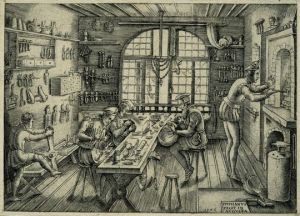
In the early modern Low Countries, distinctive patterns of collaboration developed. Not only legal agreements but also relationships of trust fostered an artistic culture in which collaboration was a central practice – seemingly as important to the participating artists as to their works’ viewers. Quinten Metsijs and Joachim Patinir’s collaborative production of The Temptation of St. Anthony (Madrid, Prado), painted in Antwerp in about 1520-24, was still recognized half a century later and far from its geographical origins as a work produced by two painters in concert: a 1574 list of works King Philip II of Spain sent to the monastery of El Escorial expressly described the painting as having figures by Metsijs and a landscape by Patinir.
Continue reading “CFP: Collaborations in Netherlandish Art, 1400-1750 (Antwerp, 5-6 Nov 18)”

CONF: New Directions in the Study of Medieval Sculpture (Leeds, 16-17 Mar 18)

Henry Moore Institute, Leeds, UK, March 16 – 17, 2018

NEW DIRECTIONS IN THE STUDY OF MEDIEVAL SCULPTURE

REGISTRATION NOW OPEN
sculpt
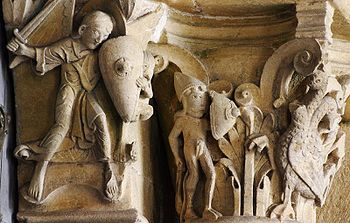
The focus on the materiality of medieval sculpture has proven crucial to its study and has expanded our historical understanding of sculpture itself. Whether monumental relief sculpture in stone, wooden sculptures in the round, sculpted altarpieces, ivory plaques or enamelled reliquaries, the possibilities for research on medieval sculpture now extend far beyond the established canon.
Continue reading “CONF: New Directions in the Study of Medieval Sculpture (Leeds, 16-17 Mar 18)”

New Publications: New items in English, French, Dutch and Italian

Monstres-medievaux_couv_c-300x400DAMIEN KEMPF, MARIA KEMPF. Monstres médiévauxIntervalles, 2017, 95 p.
ISBN: 978-2369560616

Plus de 100 illustrations, dont de nombreuses inédites, tirées des fonds prodigieux de la British Library et du J. Paul Getty Museum.

Les monstres envahissent nos rêves : effrayants, laids, narquois ou sympathiques, ils peuplent notre inconscient. Même s’ils appartiennent à un monde différent, ils ne cessent de nous rendre visite, de se tenir à nos côtés.
L’engouement de plusieurs générations pour Star WarsHarry Potter ou pour toutes les épopées qui reviennent en force dans les romans, les films de science-fiction ou la bande dessinée témoigne que ces créatures qui ont donné lieu à des œuvres d’une richesse inouïe et d’une imagination débordante au Moyen Âge continuent à fasciner, à nourrir notre soif de fantastique.
Les manuscrits médiévaux regorgent d’enluminures prodigieuses où les artistes ont donné libre cours à leur créativité pour donner corps à ces êtres légendaires, dragons, hommes à tête de chiens, licornes, sirènes et autres démons. Ces œuvres nous apportent un éclairage précieux sur la société médiévale – sa conception de la nature et du monde, de la religion et des mœurs, et son imaginaire, dans lequel les monstres occupent un rôle de premier plan.
Il était grand temps de faire sortir de bibliothèques parfois inaccessibles au public toutes ces images de monstres qui ont fait partie intégrante de la culture médiévale, où se mêlaient crainte de Dieu, peur de l’enfer, mais aussi un goût pour le surnaturel et pour des mondes inconnus. Doit-on vraiment s’étonner que nombre d’entre eux nous paraissent étrangement familiers ?


foto01PIETER ROELOFS. Johan Maelwael, NAI Publishers, 2017, 126 p.
ISBN: 978-9462083790

Johan Maelwael (ca. 1370-1415) is de eerst bekende Nederlandse schilder. Ruim zeshonderd jaar geleden was hij een van de meest succesvolle kunstenaars in West-Europa. Maelwael groeide op in Nijmegen, de oudste stad van Nederland, gelegen in het hertogdom Gelre. Rond 1400 vierde hij zijn hoogtijdagen in Dijon, een belangrijk artistiek centrum in Europa. Als geliefd hofschilder en kamerdienaar van de machtige Bourgondische hertogen Filips de Stoute en Jan zonder Vrees bouwde hij daar aan een breed oeuvre. .

Deze publicatie beschrijft Maelwaels leven, zijn werk en zijn plaats in de geschiedenis en biedt hiermee een eerste introductie aan liefhebbers en nieuwe inzichten aan specialisten. De met Maelwael in verband gebrachte schilderijen worden getoond samen met een rijkdom aan laatmiddeleeuwse kunstschatten: schilderijen, rijkgedecoreerde handschriften, edelsmeedwerk en sculpturen van getalenteerde tijdgenoten onder wie zijn neven de gebroeders Van Limburg, Jean de Beaumetz, André Beauneveu, Henri Bellechose, Colart de Laon, Claes Sluter en Claes de Werve. Zo ontstaat een beeld van de veelzijdige artistieke praktijk waarbinnen Maelwael werkzaam was. De schoonheid en de mystieke betekenis van deze eeuwenoude objecten zullen de moderne lezer nog steeds verwonderen en intrigeren.


lorenzetti ambrogio mono_190A. BAGNOLI, R. BARTALINI. Ambrogio Lorenzetti. Catalogo della mostraSilvana, 2017, 512 p.
ISBN: 978-8836637287

Ambrogio Lorenzetti (Siena, notizie dal 1319 al 1348) fu uno degli artisti più importanti nell’intera Europa tardo-medievale e grazie ai Commentarii di Lorenzo Ghiberti divenne presto famoso presso gli scrittori d’arte.
È universalmente celebre in virtù degli affreschi nel Palazzo Pubblico di Siena, con le allegorie e gli effetti del Buono e del Cattivo Governo. Ma Ambrogio non è solo l’autore di quell’eccezionale capolavoro: gli si devono, infatti, anche straordinari dipinti su tavola e altri cicli di affreschi che non hanno goduto della stessa considerazione.
Il volume affronta l’intera vicenda artistica del pittore: le opere conservate e quelle perdute, il loro linguaggio figurativo e i programmi iconografici, la destinazione e la funzione dei dipinti, la loro conservazione, la loro fortuna storiografica.


Summer School: The Knowledge of the Curator (Groningen, 8-14 Jul 18)

Groningen, July 8 – 14, 2018
Deadline: May 1, 2018
logo--en
Summer School
The Knowledge of the Curator II. Curating Art and Science

The Department of Art History at the University of Groningen, in collaboration with the Groninger Museum and Ghent University, offers a unique and innovative summer school program that puts students in direct contact with internationally renowned scholars, museum directors, and curators, including Andreas Blühm, Koenraad Jonckheere, Eric Jorink, Sue-an van der Zijpp, and special guest Ivan Gaskell (Bard Graduate Center, New York City).
Continue reading “Summer School: The Knowledge of the Curator (Groningen, 8-14 Jul 18)”

Call for Sessions: Mary Jaharis Center Sponsored Panel, 44th Annual Byzantine Studies Conference


mjc-logo-lrgAs part of its ongoing commitment to Byzantine studies, the Mary Jaharis Center for Byzantine Art and Culture seeks proposals for a Mary Jaharis Center sponsored session at the 44th Annual Byzantine Studies Conference to be held in San Antonio, TX, October 4–7, 2018. We invite session proposals on any topic relevant to Byzantine studies.

Session proposals must be submitted through the Mary Jaharis Center website (https://maryjahariscenter.org/sponsored-sessions/44th-annual-annual-byzantine-studies-conference). The deadline for submission is February 5, 2018. Proposals should include:
—Proposed session title
—CV of session organizer
—300-word session summary, which includes a summary of the overall topic, the format for the panel (such as a debate, papers followed by a discussion, or a traditional session of papers), and the reasons for covering the topic as a prearranged, whole session
—Session chair and academic affiliation. Please note: Session chairs cannot present a paper in the session.
—Information about the four papers to be presented in the session. For each paper: name of presenter and academic affiliation, proposed paper title, and 500-word abstract. Please note: Presenters must be members of BSANA in good standing.
Session organizers may present a paper in the session or chair the session. If a co-organzier is proposed for the session, the co-organizer must also give a paper in the session or chair the session.
Applicants will be notified by February 9, 2018. The organizer of the selected session is responsible for submitting the session to the BSC by February 15, 2018. Instructions for submitting the panel proposal are included in the BSC Call for Papers (http://www.bsana.net/conference/2018_BSANA_CFP.pdf).
If the proposed session is approved, the Mary Jaharis Center will reimburse session participants (presenters and chair, if the proposed chair is selected by the BSC program committee) up to $600 maximum for North American residents and up to $1200 maximum for those coming from abroad. Funding is through reimbursement only (check issued in US dollars or wire transfer); advance funding cannot be provided. Eligible expenses include conference registration, transportation, and food and lodging. Receipts are required for reimbursement.
Please contact Brandie Ratliff (mjcbac@hchc.edu), Director, Mary Jaharis Center for Byzantine Art and Culture with any questions.

Continue reading “Call for Sessions: Mary Jaharis Center Sponsored Panel, 44th Annual Byzantine Studies Conference”

The Late Antique and Byzantine Archaeology and Art Seminars (Oxford, 18 Jan-8 Mar 18)

byzantineOxford, January 18 – March 8, 2018
Deadline: Mar 8, 2018

The Late Antique and Byzantine Archaeology and Art Seminar

Hilary Term 2018, weeks 1–8
Thursdays 11–12:30

Ioannou Centre, 66 St Giles’, Oxford
First Floor Seminar Room
Continue reading “The Late Antique and Byzantine Archaeology and Art Seminars (Oxford, 18 Jan-8 Mar 18)”

CFP: New Research on Ancient Armenia

Geneva Workshop for Graduate Students and Postdoctoral Researchers

University of Geneva, 8 June 2018

geneva

Concept

The Armenian Studies team (Unité d’aménien) at the MESLO Department, University of Geneva, ispleased to invite graduate students and early career researchers (not yet holding a permanent position inAcademia) to present their current research on any aspect of Ancient and Medieval Armenia to an audience of their peers.

The workshop has been conceived as an international forum in which the newest generation of researchers in the field can engage in meaningful discussion on methodologies, problems and perspectives. Presentations detailing work in progress, research projects, and innovative approaches are welcome.

In the interest of drawing attention to comparatively less-known topics, preference may be given to subjects other than ‘Classical’ 5 th century language, literature, history and art.

Continue reading “CFP: New Research on Ancient Armenia”

Resources: The Oeuvre of Jan van Eyck


Discover the oeuvre of Jan van Eyck online! The benchmark website closertovaneyck.kikirpa.be has been expanded with macro photos and scientific imagery of 20 works by Jan Van Eyck and his workshop from 11 renowned European museums. The zoom function invites you to enjoy and study the high resolution images in microscopic magnification and the split-screen function allows to compare different types of images of Van Eyck’s oeuvre, including the Ghent Altarpiece.

All images are available in open access and were made by the Imagery unit of the Royal Institute for Cultural Heritage (KIK-IRPA, Brussels) using state-of-the-art equipment and a standardized protocol.

Now online at closertovaneyck.kikirpa.be > Further works by Jan van Eyck

Continue reading “Resources: The Oeuvre of Jan van Eyck”

Seminaires de la Chaire europeenne du College de France (Paris, 25 Jan-4 Jun 18)

zad57kid_mediumAmphithéâtre Marguerite de Navarre, 11, place Marcelin-Berthelot, 75005 Paris, January 25 – June 4, 2018

Prof. Victor Stoichita, invité de la Chaire européenne du Collège de France
Année académique 2017-2018

Cours les vendredis à 10h00, suivi du séminaire à 11h00
(ouverture 2 février 2018).

Leçon inaugurale, jeudi 25 janvier, 18 heures sur :
«Textes, textures, images»
Continue reading “Seminaires de la Chaire europeenne du College de France (Paris, 25 Jan-4 Jun 18)”

CFP: Illuminating the Dark Ages: Manuscript art and knowledge in the Early Medieval world (c. 600-1100) (University of Edinburgh 28-29 June 2018) deadline 15 March 2018

Medieval illuminated scenes and initials today illustrate a myriad of book covers, chosen as the perfect embodiment of a historical episode, idea, or biography. From detailed scenes to sketchy drawings, illuminated manuscripts offer a sometimes overlooked illustration of medieval life. However, unlike the late centuries of the medieval millennium, the study of the Early Middle Ages is not normally backed by abundant documentation, and conjecture and speculation often prevail, particularly in art historical publications. Early medieval illuminated manuscripts were mostly tools of liturgy and prayer, but also patronage statements and transmission agents for science, music, and literature in a historical period. Only in recent decades has the study of this era begun to emerge from the lasting shadow of pejorative Gibbonian assumptions.

Continue reading “CFP: Illuminating the Dark Ages: Manuscript art and knowledge in the Early Medieval world (c. 600-1100) (University of Edinburgh 28-29 June 2018) deadline 15 March 2018”