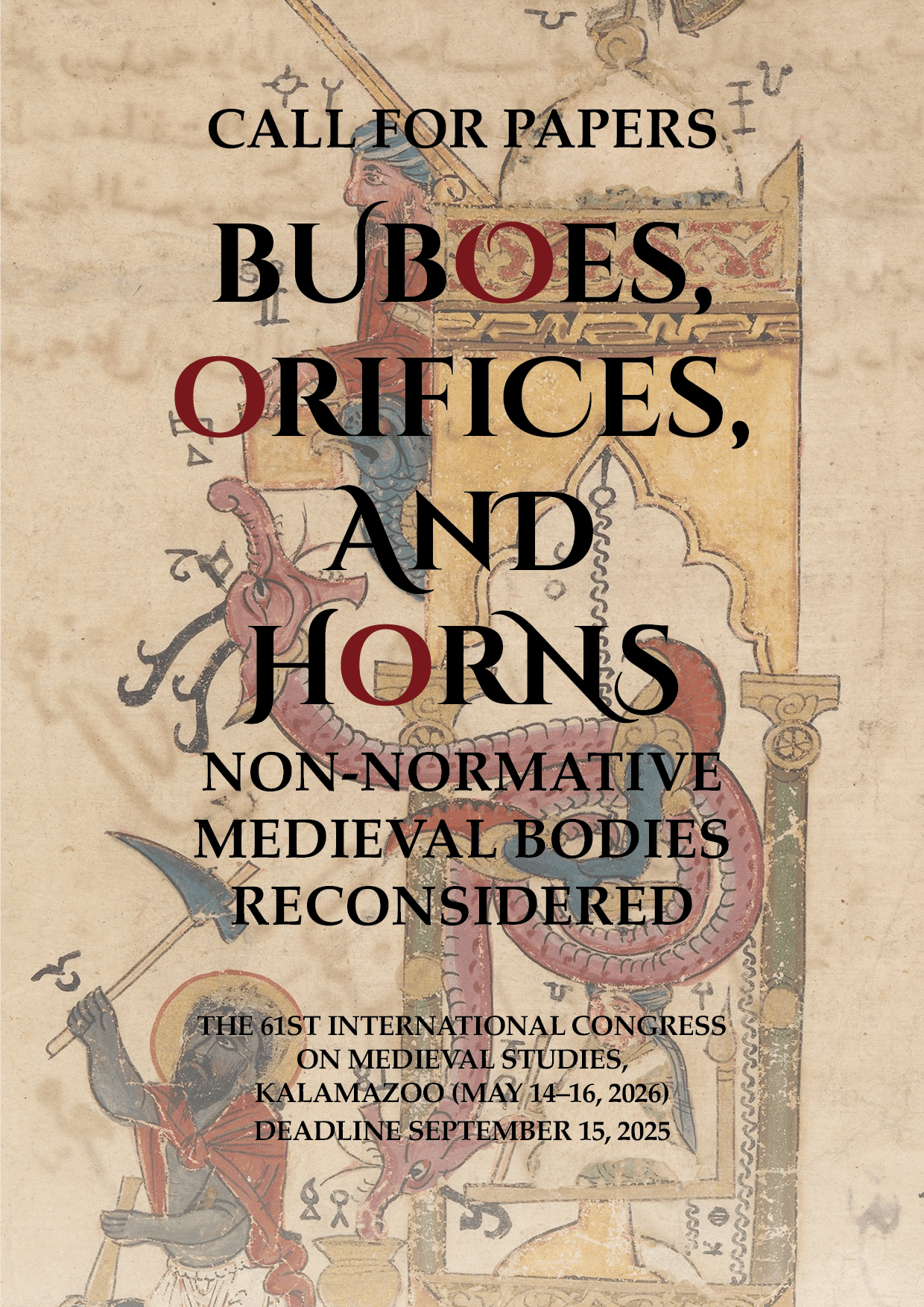
This panel examines medieval conceptualisations and representations of (non-)normative bodies, and aims to better understand the demarcations between the human and non-human, the abled and disabled, the white and non-white/racialised, the gender conforming and gender non-conforming body. We welcome interdisciplinary approaches, including art history, literary criticism, disability studies, critical race studies, and gender studies. We adopt a broad definition of the ‘medieval world,’ and invite contributions on material from all geographic regions and time periods between ca. 500-1500, as well as the later re-appropriation of medieval material. Contributions that study the intersection of two or more bodily markers are encouraged.
We welcome papers from researchers, curators, conservators, librarians, and graduate students working on medieval bodies. This session will be held in person. Abstracts of no more than 300 words should be submitted via the Confex proposal portal by 15 September 2025.
For more information or questions, please contact the organisers, Imke Vet (imke.vet@yale.edu) and Se Jin Park (sejin.park@yale.edu).
Conference: ‘Good Governance and the Built Environment of Late Medieval Cities (1200-1700)’, Royal Library of Belgium in Brussels, 3-5th September 2025
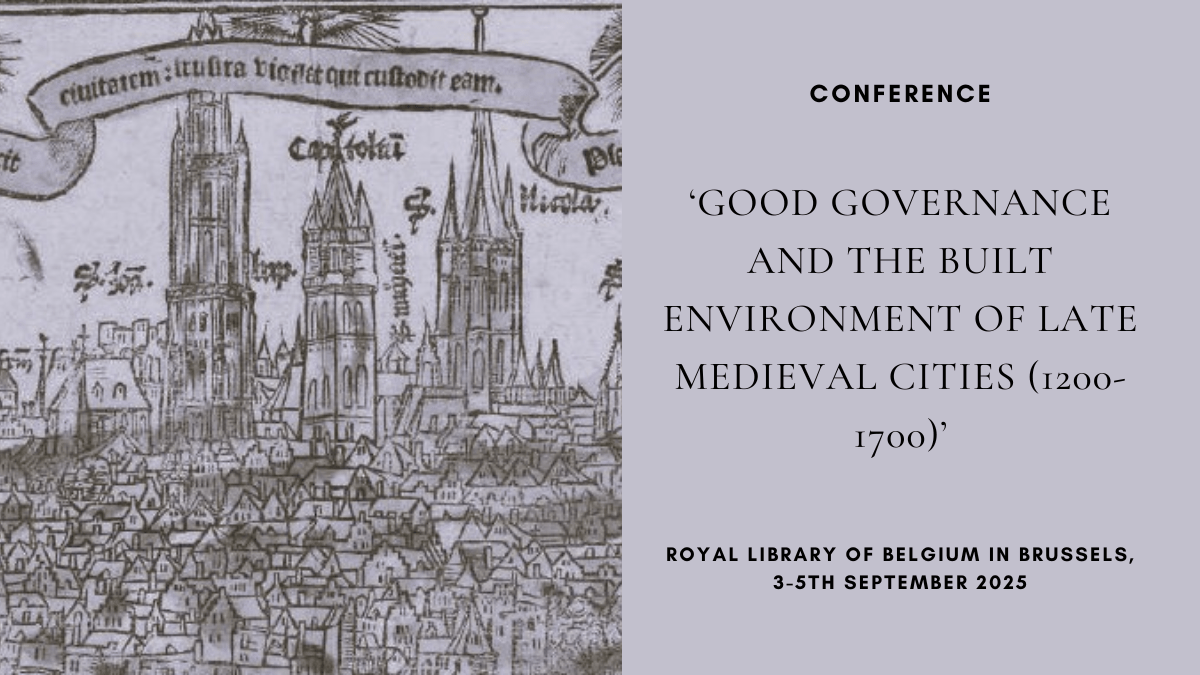
Location: Royal Library of Belgium in Brussels (KBR), Kunstberg 28, 1000 Brussels, Salle Panorama
Join the Royal Library of Brussels to discuss and explore how the built environment of late medieval cities was conceptualized and physically shaped in relation to ideals of good governance. The conference covers a broad historical period (1200–1700) and includes urban centers ranging from Northwestern Europe to the Middle East.
Attendance is free of charge, but registration is required. Please register via this form.
Find out more information on the Governing and Building website.
Conference Programme
Wednesday 3 September 2025
13:00 Welcome
13:30-15:15 Session 1: Governing and Building the City: An Introduction (Session chair: Jan Dumolyn)
- Nele De Raedt (UCLouvain) – Good Governance and the Built Environment: Central Themes and Questions
- Philip Muijtjens (UCLouvain) – A Curriculum for a City? The Library in the Palazzo Comunale of Pistoia (1458-1461)
- Minne De Boodt (KU Leuven/UCLouvain) – Building Brussels in Time of Political Transformation: Dialogues on Good Governance and the Built Environment (1400-1466)
15:45-17:00 Session 2: Governing Ideals and the Built Environment (Session chair : Jelle Haemers)
- Niklas Groschinski (Oxford University) – Leisure Spaces, Sensorial Pleasure, and Public Health in Premodern City Planning
- Julien Régibeau (ULiège) – Order and Architecture: Policing the City of Liège during the Chiroux–Grignoux Conflict
Thursday 4 September 2025
09:00-10:15 Session 3: Municipal Authorities and the Design, Instrumentalization and Regulation of the Built Environment (Session chair: Chris Fletcher)
- Frans Camphuijsen & Nathan van Kleij (Amsterdam University) – A Matter of Morals: Stone Fines, Good Governance and the Urban Fabric in Late Medieval Towns
- Anna Pomierny-Wąsińska (University of Warsaw) – Just Measures: Surveyors, Space, and Urban (Good) Governance in Late Medieval Florence
10:45-12:30 Session 4: The Endowment of Semi-Public Organisations (Session chair: David Napolitano)
- Angela Isoldi (Radboud University) – Spatial and Social Networks: Endowments Shaping the Urban Fabric in Mamlūk Cairo (1250-1517)
- Theodora Giovanazzi (Swiss Federal Technology Institute Lausanne) – Governing through Housing: The Scuole Grandi and Urban Welfare in 16th-Century Venice
- Emine Öztaner (Ibn Haldun University) – Nurbanu Sultan’s “Waqf Neighborhood” in Üsküdar: Constructing, Populating and Governing Ma‘mûre (16th and 17thCenturies)
13:30-15:00 Visit to collections of the KBR
15:00-16:45 Session 5: Collaborating Social Groups (Session chair: Minne De Boodt)
- Merlijn Hurx (KU Leuven) – “Civic” and “Royal” Meat Halls in the Low Countries in the 15th and 16th Century
- Emmanuel Joly (UCLouvain/IRPA) – The Prince and the Canons: Collaboration and Decision-Making in the remodelling of Liège’s Built Environment in the First Half of the 16th Century
- Giuliana Mosca (Independent Scholar) – “In grande honore de la cità”: Government, Urban Space, and Architecture in 15th-century Perugia
Friday 5 September 2025
09:00-10:15 Session 6: The Representation of Governance (Session chair: Philip Muijtjens)
- Elizabeth Den Hartog (Leiden University) – Local Lords on the Façade of Veere’s Town Hall (Netherlands). The Lords of Veere and their Relations with the Habsburg Regime in the Late 15th and Early 16th Centuries
- Susan Tipton (Independent Scholar) – Good governance and the Built Environment: The Great Map of Augsburg (1626) and the Renewal of Civic Architecture in the Imperial City around 1600
10:45-12:00 Session 7: Ideal of Good Governance and Architectural Theory (Session chair: Nele De Raedt)
- Miara Fraikin (KU Leuven) – “Building on the Foundations of Piety”: Architecture and Female Governance in 16th-Century France and the Low Countries.
- Mats Dijkdrent (UCLouvain) – Engelbert of Admont as an Architectural Theorist: Ideas on Morally Good Architecture in 14th-Century Mirror Literature
13:30-15:00 Final discussion
CFP: ‘Polyptychs’ fortune and misfortune: Provenance, reconstruction, restitution’, Lucca (October 7-9 2025), deadline 20 July 2025
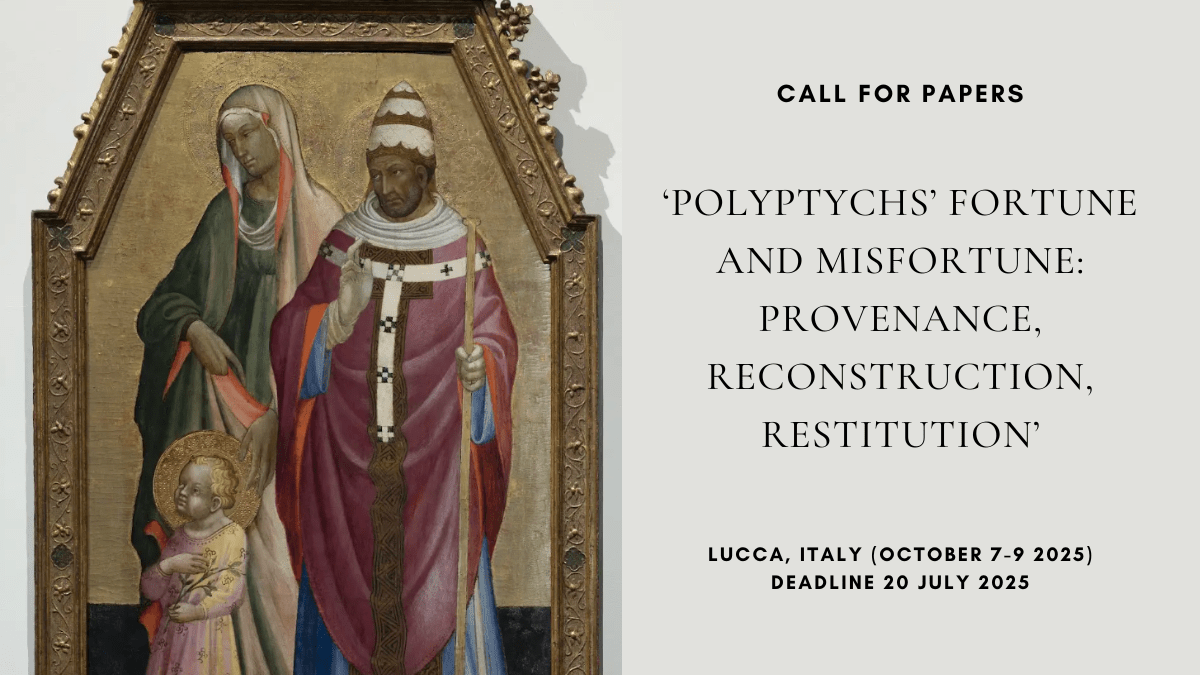
This conference explores the themes of dispersion and unity in the context of artistic production, encompassing both the materiality of works and their contextual significance and reception. The altarpiece is selected as a case study to examine these questions across different centuries, geographical areas, and artistic techniques.
Selected papers will address the dismantling of altarpieces over time, the dispersion of their components, and the possibilities for their reconstruction. Contributions are invited that explore the methods of reuniting dispersed elements – whether physically or digitally – as well as the conservation challenges involved. The dismantling of altarpieces is indicative of intricate historical dynamics, encompassing shifts in artistic taste, fluctuations in market demand, and evolving practices in preservation and art management. Furthermore, it invites a reconsideration of the epistemology of art history.
The reconstruction of dismantled polyptychs necessitates an interdisciplinary approach, underscoring the need for collective reflection on the epistemological foundations of art history. Addressing the disintegrating unity of these objects necessitates multifaceted research, encompassing domains such as conservation and restoration practices, as well as the global geography of art. History of art exhibitions and artworks restitution offers opportunities for the temporary reconstitution of these fragmented works, further enriching the discussion.
Submissions that engage with epistemological questions alongside data-driven research in areas such as technical art history, connoisseurship, iconographic analysis, provenance studies, museum studies, collecting history and restitution are invited.
The organisers will provide accommodation for two nights. Participants will be responsible for covering their own travel and meal expenses.
Contributors are requested to submit an abstract in Italian, English or French (maximum 300 words) and a brief CV by 20th July 2025 to:
- ilaria.andreoli@inha.fr
- emanuele.pellegrini@imtlucca.it
- giulia.puma@univ-cotedazur.fr
New Publication: ‘The Medieval Mediterranean between Islam and Christianity: Crosspollinations in Art, Architecture, and Material Culture’, Edited by Sami Luigi De Giosa and Nikolaos Vryzidis

Christian–Islamic encounters through religious arts, architecture, and material culture in the medieval era
The coexistence of Christianity and Islam in the medieval Mediterranean led to an interchange of knowledge in architecture and material culture that went well beyond religious and geographical boundaries. The use of Islamic objects in Christian contexts, the conversion of churches into mosques, and the mobility of craftsmen are only some manifestations of this process. From crosses found in mosques to European-Christian coins with pseudo-shahada inscriptions, medieval material culture is rich with visual evidence of the two faiths intermingling in both individual objects and monuments.
In this volume, thirteen international scholars explore various aspects of pan-Mediterranean Christian-Islamic encounters in material culture and art, from textiles to precious oils, and from metalwork to ceramics, covering most of the Mediterranean, as well as parts of its extended hinterland, from Spain and Italy to Egypt and Georgia.
Within this frame, one of the most relevant, yet underexplored lines of investigation is that of the “aesthetic space,” the notion that aesthetic pleasure transcends boundaries, paving the way to a cross-religious experience and appreciation. “Indeed, God is beautiful, and He loves beauty,” as mentioned in a Hadith narration, a universal cry of visual beauty that resonates with all cultures and civilizations.
Contributors:
- Paschalis Androudis Aristotle University of Thessaloniki, Thessaloniki, Greece
- Faruk Bilici Inalco, Paris, France
- Maria Bormpoudaki Hellenic Ministry of Culture and Sports, Piraeus, Greece
- Sami Luigi De Giosa University of Sharjah, Sharjah, United Arab Emirates
- Hélène Fragaki University of Augsburg, Augsburg, Germany
- Hani Hamza Independent scholar, Cairo, Egypt
- Ana Cabrera Lafuente Instituto de Turismo de España (Turespaña/Tourspain), Madrid, Spain
- Alison Ohta Royal Asiatic Society of Great Britain and Ireland, London, United Kingdom
- Richard Piran McClary University of York, York, United Kingdom
- Nino Simonishvili Ivane Javakhishvili Tbilisi State University, Tbilisi, Georgia
- Nikolaos Vryzidis Aristotle University of Thessaloniki, Thessaloniki, Greece
Arielle Winnik Yale University Art Gallery, New Haven, USA
For more information and to access the volume, please see The American University in Cairo Press website.
Study day: ‘La sculpture monumentale médiévale à l’épreuve du musée: enjeux, conceptions, réceptions’, Musée du Louvre (30 June-1 July 2025) and Université de Toulouse (2-3 October 2025)
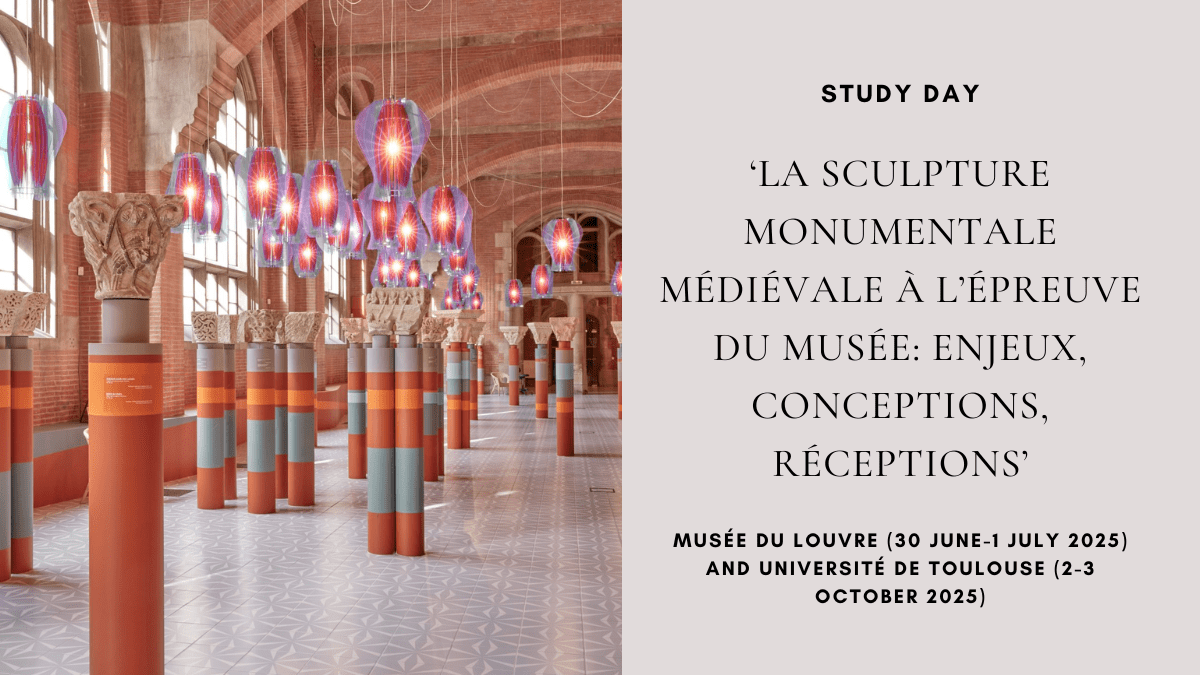
Paris, musée du Louvre, Centre Dominique-Vivant Denon, 30 juin-1er Juillet 2025
Toulouse, Université de Toulouse, IUT Paul Sabatier, 2-3 Octobre 2025
La présentation de sculptures provenant d’édifices religieux du Moyen Âge dans des musées pose de nombreuses questions. Les visiteurs peuvent légitimement être déroutés par des œuvres arrachées à leur cadre architectural et détachées de leur contexte culturel. Comment répondre aux attentes du public et « faire parler les pierres », pour reprendre le beau titre d’une exposition récente ? À partir des interrogations du musée des Augustins à Toulouse, dont les collections sont exemplaires à cet égard, et d’un programme de recherche mis en œuvre il y a quelques années à l’Institut national d’histoire de l’art, nous avons convié des spécialistes provenant d’horizons géographiques et professionnels très variés, pour réfléchir ensemble aux défis que posent la transmission, l’interprétation et la réception du message (ou plutôt des messages) de ces sculptures souvent magnifiques, mais parfois difficiles à appréhender sans quelques clés.
Organisation
- Musée du Louvre, département des Sculptures (Sophie Jugie, Pierre-Yves Le Pogam), direction des études muséales et de l’appui à la recherche (Julie Botte, Philippe Cordez)
- Musée des Augustins de Toulouse (Charlotte Riou)
- Laboratoire d’Études et de Recherches Appliquées en Sciences Sociales, Université de Toulouse (Patrick Fraysse)
- Groupement d’intérêt scientifique « Patrimoines en partage », réseau de chercheurs en sciences humaines et sociales et de professionnels du patrimoine sous la direction de Sylvie Sagnes, avec le soutien de l’Institut des sciences humaines et sociales du CNRS
- Avec la collaboration de Mathieu Beaud, maître de conférences à l’Université de Lille
Call for submissions: Metropolitan Museum Journal, deadline 15 September 2025

The Editorial Board of the peer-reviewed Metropolitan Museum Journal invites submissions of original research on works of art in the Museum’s collection.
The Journal publishes Articles and Research Notes. Works of art from The Met collection should be central to the discussion. Articles contribute extensive and thoroughly argued scholarship—art historical, technical, and scientific—whereas Research Notes are narrower in scope, focusing on a specific aspect of new research or presenting a significant finding from technical analysis, for example. The maximum length for articles is 8,000 words (including endnotes) and 10–12 images, and for research notes 4,000 words (including endnotes) and 4–6 images.
The process of peer review is double-anonymous. Manuscripts are reviewed by the Journal Editorial Board, composed of members of the curatorial, conservation, and scientific departments, as well as scholars from the broader academic community.
Articles and Research Notes in the Journal appear in print and online, and are accessible in JStor on the University of Chicago Press website.
The deadline for submissions for Volume 61 (2025) is September 15, 2025.
Submission guidelines: www.journals.uchicago.edu/journals/met/instruct
Please send materials to: journalsubmissions@metmuseum.org
Questions? Write to Elizabeth.Block@metmuseum.org
Inspiration from the Collection: www.metmuseum.org/art/collection
View the Journal: http://www.journals.uchicago.edu/loi/met
Conference: ‘Un art mamlouk: évolutions et questions d’attributions’, Musée du Louvre, Paris, 23 June 2025, 9am-5.30pm (CEST)
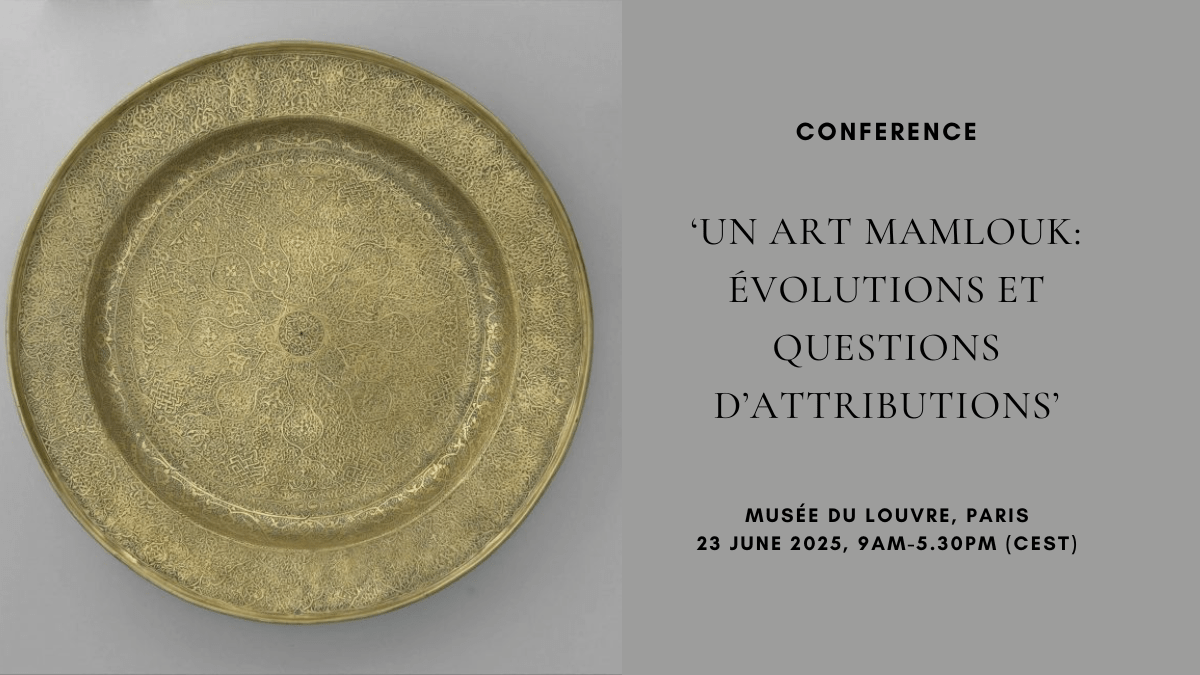
Conçue en parallèle de l’exposition Mamlouks 1250-1517, cette journée d’études propose une relecture de l’art mamlouk à travers une approche interdisciplinaire et transrégionale, mobilisant l’histoire de l’art, l’archéologie et les analyses techniques. Elle vise à renouveler la compréhension des productions du sultanat mamlouk en s’appuyant sur des études de cas précis, enrichies par des apports méthodologiques récents et l’accès à de nouvelles sources.
Les interventions porteront sur une diversité de médiums – métal, verre, ivoire, textile, céramique – et interrogeront les critères d’attribution, les dynamiques d’atelier ainsi que les logiques de circulation des formes, des techniques et des objets. Les processus de création et l’évolution stylistique y seront abordés en recontextualisant les productions dans leur cadre sociopolitique, celui de l’Égypte et de la Syrie médiévales. Plusieurs communications examineront les notions de frontières stylistiques, d’hybridation et de réception, notamment entre traditions mamloukes et mongoles.
La rencontre se conclura par une présentation exceptionnelle consacrée au patrimoine architectural mamlouk de Gaza, aujourd’hui gravement endommagé ou détruit.
Organisée par le département des Arts de l’Islam du musée du Louvre et l’Université Lumière Lyon 2 / CIHAM
Lundi 23 juin 2025, de 9h à 17h30, Centre Dominique-Vivant Denon (Musée du Louvre, entrée Porte des Arts, face au Pont des Arts)
Sur inscription : programmation-centre-vivant-denon@louvre.fr
Join the London Society for Medieval Studies seminar committee in 2025/2026, deadline 21 June 2025
The London Society for Medieval Studies (LSMS) is seeking new members to join its steering committee for the 2025/26 academic year. Founded in 1970/1, the LSMS is one of the longest running seminar series at the Institute of Historical Research, University of London. Organised by postgraduates and early career academics, our regular Tuesday seminars seek to foster knowledge of, and dialogue about, the Middle Ages among both scholars and the wider public in London.
We welcome expressions of interest from postgraduates (both MA and PhD) and early career academics specialising in any area of medieval studies, including (but not limited to) the arts, literature, archaeology, economy, and history of the Middle Ages. Our conception of “the medieval” is global, c. 500 – c. 1500.
This is a fantastic opportunity for those in the early stages of their academic careers to join an established forum for the dissemination and discussion of new research, and to gain experience of organising academic events, working collaboratively as part of a committee, chairing sessions, and networking with senior academics. Committee members are normally expected to serve for at least one academic year, and to commit to attending events in London during term time.
If you are interested in joining the LSMS, please send a short biography (of around 150 words), including details of your previous and current education/position and academic interests, to londonsocformedievalstudies@gmail.com. If you would like any further information, please contact us on the same email address. The LSMS only has a limited number of committee spaces available, so we encourage interested parties to get in touch as soon as possible and before the 21st of June 2025.
New Publication: ‘Histoire du Berry’, by Emmanuel Legeard
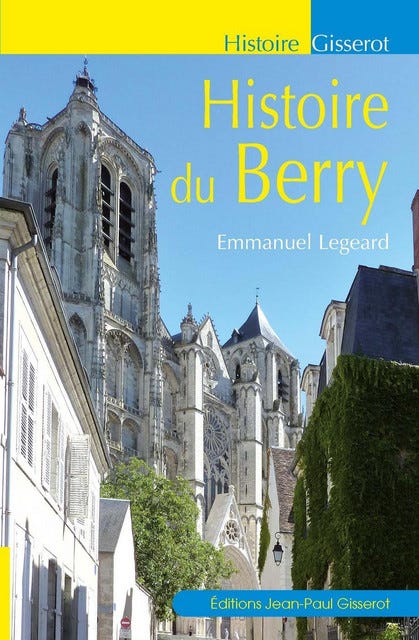
A new study traces the longue durée of the Berry region from Celtic antiquity to modern memory, but it is the figure of Jean, Duke of Berry (1340–1416), who commands particular attention. Renowned as a bibliophile and patron of the arts, Jean emerges here as a politically sidelined royal who channelled thwarted ambitions into a dazzling artistic legacy. This volume situates his commissions, including the Très Riches Heures, his many castles, and the Sainte-Chapelle at Bourges, within a psychological framework of dynastic frustration sublimated into symbolic grandeur.
Jean’s use of imagery and architecture, the study argues, was neither arbitrary nor purely devotional. From his elaborate funerary plans to the cryptic motto “Oursine, le temps venra”, his artistic programme expressed a veiled claim to legitimacy and royal stature. The synthesis of swan and bear emblems encapsulated his dual identity as melancholic courtier and silent contender. His patronage of the emerging International Gothic style, developed at the cultural crossroads of Berry and Burgundy, allowed him to transcend political failure and style himself as a unifier of divided courts.
This richly detailed book not only reaffirms Jean de Berry’s importance in late medieval art history but also offers a striking interpretation of how art becomes the stage for political longing, princely persona, and symbolic sovereignty.
Find out more about the new publication on the publisher’s website.
New Publication: ‘Unrepresented: The Suppression of Images in the Middle Ages’ by Robert Couzin

The study of representational art traditionally focusses on what is represented rather than what is missing. Robert Couzin’s Unrepresented: The Suppression of Images in the Middle Ages is a unique study of figures and attributes left out of the picture. Why avoid depicting the dead body of Christ, Muhammad, the reigning emperor or biblical text? What explains changes in the approach to representing heretics and Jews?
Through a series of case studies, this book shows how omissions could reflect strategic decisions based on political designs, social frameworks, religious practices, evolving mentalities and theological doctrines.
Find out more on the Brill website.

