Call for Papers: Eikón / Imago Journal 2022, ‘Pre-Modern “Pop Cultures”? Images and Objects Around the Mediterranean (c. 350-1918)’ (Deadline 30th June 2021)

Eikón / Imago requests paper submissions for their 2022 issue: ‘Pre-Modern “Pop Cultures”? Images and Objects Around the Mediterranean (c. 350–1918)’. Special Guest Editors will be Ivan Foletti, Zuzana Frantová, and Adrien Palladino.

From the announcement:

‘“We may not be able to define it, but we know it when we see it”: this is the slightly ironic definition Holt Parker gives us for “popular culture” (Parker 2011: 147). But who is able to define it, and can we really assess this notion for pre-modern cultures, so temporally distant? For centuries, “popular culture” was simply not an object of study for art historians, classicists, archaeologists and others. Following the prejudices of their fields, scholars were predominantly concerned with the “elites” and their cultures. According to Parker, products of “popular culture”, while “quantitatively superior”, are seen as “qualitatively inferior”, since they are products of “mass culture” conceived by “the people” and thus of little scholarly interest (Parker 2011: 169).

Starting in the 1960s and continuing in the 70s–80s, with the shifting paradigms of cultural history – increasingly incorporating social studies and anthropology – the notion of “popular culture” has received greater attention. We might mention, among others, the fundamental contributions of Mikhail Bakhtin on medieval “folk cultures” (1968), Santo Mazzarino’s work on the “democratization of culture” during the Late Empire (1974), as well as Aaron Gurevich’s Medieval Popular Culture (1988). In recent years, Jerry Toner’s Popular Culture in Ancient Rome (2009), and the volume Popular Culture in the Ancient World, edited by Lucy Grig (2017) have shed new light on the issue. These are but a few examples of the variety of questions that the notion of “popular culture” can evoke.

We should add to this general question the decision to follow an extremely longue durée. This can be justified by Jacques Le Goff’s conception of a “very long Middle Ages”. From an art historical perspective, such a perception is even more pertinent if we take into consideration selected expressions of popular culture, which, by all evidence, maintain premodern patterns throughout modernity and up to the beginning of the 20th century. Russian panel paintings – so-called “icons” –, the most popular and thus reproduced devotional images in the Latin West, can be evocative in this regard, such as the Roman Salus Populi Romani. Lastly, we can mention the culture of printed fragments of sanctity, from the footsteps of the Prophet Muhammad to images of the Virgin printed on “Schluckbildchen”.

In endeavors meant to question “popular culture”, the place of art history – immersed in the Vasarian tradition – and visual studies remained generally marginal, with increasing attention to objects traditionally considered “minor”. Even in this framework, however, mainly objects belonging to the elites were investigated. This issue of Eikón / Imago would thus like to investigate and reconsider the notion of “popular cultures” through images and objects. From pilgrim souvenirs in lead, terracotta images, objects of popular devotion, apotropaic amulets, printed imagery, metallic devotional panels, erotic or caricatural images to games, we wish to embrace a wide spectrum of images and objects conceived by/for “low”, “unofficial”, or “non-elite” individuals and groups.’

Eikón / Imago is especially interested in questions such as (but not limited to) the following: ‘How did images deal with established “popular culture” of shared myths and images that were not always compatible with official beliefs – Christianity, Islam, Judaism – in the Mediterranean space and beyond? How did these “popular” images/objects survive and transform after important moments of mass conversion and reconversion (including the conversion to socialism and communism) in the Mediterranean space? What was the attitude of authorities towards “popular cultures”? Do these attitudes differ in time and space? How did elite image-conceivers and makers adapt their language in order to create efficient “popular images” to convey social, political, or religious messages? What contacts could exist between “low” and “high” cultures, between “elite” and “non-elite” images and objects? Can material culture help us to refine the notion of “popular” or “mass culture”?’

The deadline to submit is 30th June 2021. For complete information, please click here.

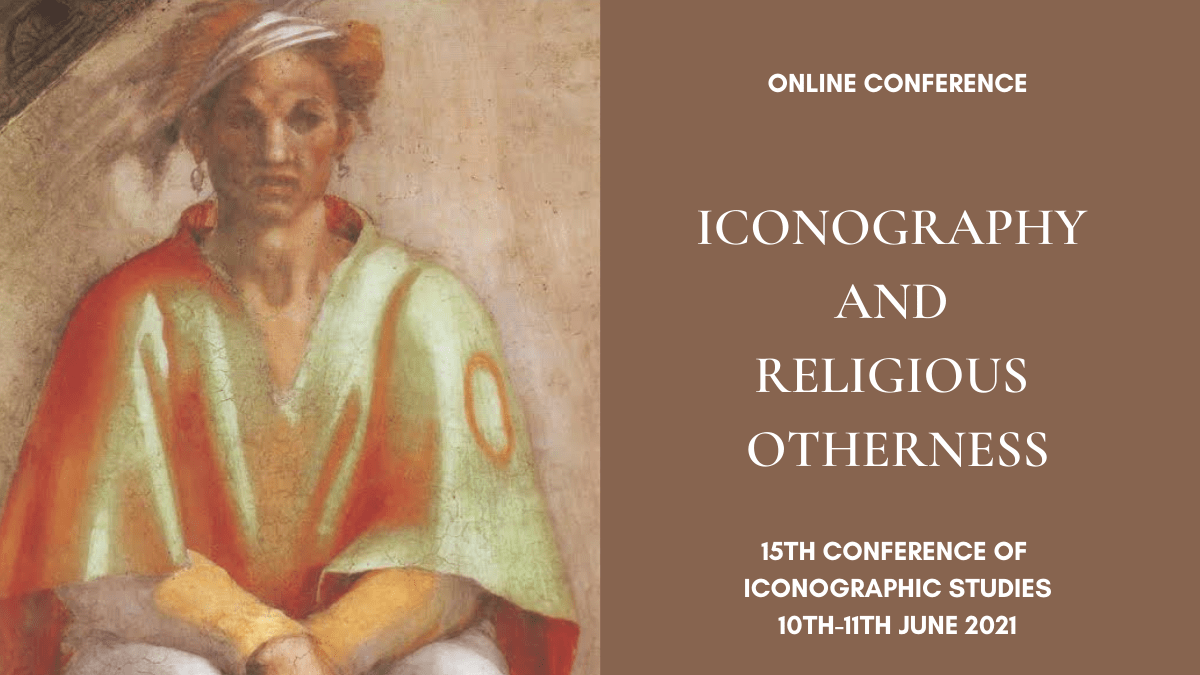
Online Conference: ‘Iconography and Religious Otherness’,15th Conference of Iconographic Studies, 10th-11th June 2021

You are kindly invited to the 15th Conference of Iconographic Studies organized by Center for Iconographic Studies – University of Rijeka, Department of Art History, Faculty of Humanities and Social Sciences, University of Split and Department of Education, Cultural Heritage and Tourism, University of Macerata and the COST project “Islamic Legacy: Narratives East, West, South, North of the Mediterranean (1350-1750)”. The conference will take place on 10th and 11th June 2021 online via Zoom. For complete information and links to the Zoom meetings, please visit http://cis.ffri.hr/en/conference-2021-2/.

Online Conference: Materiality in the Eastern Mediterranean World, 28th-29th May 2021

The Center for Eastern Mediterranean Studies (CEMS) at Central European University (Vienna/Budapest) is proud to announce the 7th International Graduate Conference on “Materiality in the Eastern Mediterranean World”, Vienna, 28-29 May 2021. The conference will provide a forum for graduate and advanced undergraduate students working on the Eastern Mediterranean to present their current research, exchange ideas, and develop scholarly networks.

The aim of this conference is to explore how a turn towards materiality can help us to understand the Eastern Mediterranean world. The conference seeks research that investigates the role of physical “things” in history. How are material culture, technology, and the physical environment entangled in historical processes? How has the physical world shaped and been shaped by forms of social life in the Eastern Mediterranean? How have ideas and emotions been put into practice and how have they been embodied in material objects (e.g. artifacts, relics, and manuscripts)? How could materiality in the Eastern Mediterranean differ from other regions?

Keynote lecture by Charlie Barber, May 29, 6:30 pm: Formlessness and Potentiality: Reflections on Art and Materiality in Fourteenth-Century Byzantium: ‘The first part of this paper will offer some readings of the definitions and use of Matter in a variety of writings, primarily from the early-fourteenth century.  Formlessness, Potentiality, and Harmonics will be discussed as aspects of Materiality.  Works by George Pachymeres and Theodore Metochites will be a particular focus. The second part of the paper will propose a reading of the use of marble in Metochites’ church of the Holy Savior in Chora. I will argue that the display of marble in the church was more than a demonstration of material resources.  Its presence speaks to the very identity of the monastery.’

Charlie Barber is the Donald Drew Egbert Professor of Art & Archaeology at Princeton University.

Advance registration is not required. To access the conference, please visit the CEU Events website.

Online Lecture: ‘The Use of Salisbury in the Long 12th Century (1075-1225): A Preliminary Revaluation’, 24th May 2021, 17:15 GMT

The next installment of the IHR History of Liturgy Seminar will occur on 24th May 2021. John Harper (Bangor University and the University of Birmingham) will be speaking on ‘The Use of Salisbury in the Long 12th Century (1075-1225): A Preliminary Revaluation’. Responses will be given by Frank Lawrence (University College, Dublin) and Helen Gittos (Oxford University).

Salisbury was one of three cathedrals relocated in 1075, but the only one to require a new clerical body, a new building, and, consequently, a new liturgy. Liturgical and chant historians have tended to treat the highly influential Use of Salisbury as a compilation and codification of the first part of the 13th century. John Harper’s work on the customary and the Mass of the BVM started to consider the earlier history of the Use. In the past fifteen months he has been working further on the liturgy of the first cathedral at Salisbury (1075-1225), in particular the ritual use of the building, and the liturgical patterns, forms, and texts.

This preliminary revaluation of the Use of Salisbury at the first cathedral will consider the evidence of three earlier sources that have received less attention from scholars: an unnoted gradual and epistolary (Salisbury Cathedral Library, MS 149), the Bedwyn Gradual (Cambridge University Library, Add MS 8333), and the fragment of a noted missal (Canterbury Cathedral Library, Add MS 128/29). Paleographical and internal evidence suggests that as a group these manuscripts represent a period from the third quarter of the 12th century to around 1200. The focus will be on observances and on proper chant texts of the mass, in relation to a select range of other sources: continental sources of the ninth century, insular sources from the Leofric Missal to the end of the 12th century, and sources of the Use of Salisbury from the 13th century.

There will be little time to examine the data on which this research is based in any detail. John Harper would be pleased to hear from anyone who would be interested to engage in a longer presentation and discussion. Please write to him at mus012@bangor.ac.uk.

This meeting will be held online via Zoom. Please register here:  https://www.history.ac.uk/events/roundtable-early-liturgy-salisbury-cathedral

Online Conference: The Past, Present, and Future of Digital Medieval Studies – A Global Digital Medievalist Symposium (The Americas: Images and Imaging), 24th May 2021

The era of COVID-19 has been transformational for medieval digital humanities. Medievalists have come to learn the limits and possibilities of online scholarship, whether in the virtual classroom or in the transfer of knowledge among specialists. Although direct access to material sources and the easy face-to-face exchanges with colleagues are deeply missed, we have come to understand that digitally-inflected scholarship can be more economical, more global, and –in limited ways– more equitable for many medievalists. And because we have come to this inflection point, the members of the Digital Medievalist Board are launching a conference series that marks this turn and aims to build upon what we have learned. The theme, The Past, Present and Future of Medieval Digital Studies is both retrospective and prospective in scope, bringing digital medievalist practitioners into conversation with each other as we step into a new scholarly environment where digital methods take on a new importance.

The first session of this three-part conference – “Americas: Images and Imaging” – will be held on 24th May 2021, 11:30-15:30 EDT. Advance registration is required.

For medievalists working in the Americas, increased access to high-quality images of manuscripts and other medieval resources has changed the way we work, whether we consider ourselves digital humanities scholars or not. The ready availability of these resources has opened new ways of thinking about practices that are fundamental to our field, such as textual editing, image description and analysis, or manuscript collation, for example. Yet the instantaneous access we now have to facsimiles of the materials that were previously so difficult or arduous to view masks the enormous amount of expertise needed to bring these images so effortlessly to our desktops. Librarians, curators, cataloguers and information technologists bring their skills and knowledge to the task of image delivery in ways that remain invisible to most subject-area specialists, but have become critical to the way most medievalists now work.

The goal of this conference is to reflect on how access to images — whether limited or open — has shaped how medievalists in the Americas have worked in the past and the present, as well as how they may do so in the future. Topics may include the following: a discussion of how resource professionals take material objects in a collection and create properly catalogued digital objects; IIIF, scanning, metadata, 3D-imaging, and 3D-printing; the relationship between image and material object and the implications for textual scholarship or pedagogy.

This session is organised by Nathan Daniels, Lisa Fagin Davis, James Harr III, Aylin Malcolm, and Laura Morreale, and is co-sponsored by the Medieval Academy of America.

Call for Papers: Euro-Mediterranean Entanglements in Medieval History, German Historical Institutes of Paris and Rome (Deadline 15th June 2021)

The German Historical Institutes of Paris and Rome are launching an online seminar series on “Euro-Mediterranean Entanglements in Medieval History” in the academic year 2021/2022. The events will take place every two months on the following dates: 28th September 2021, 23rd November 2021, 25th January 2022, 29th March 2022, and 24th May 2022. They are aimed at both young scholars and established scholars from all medieval disciplines. The intention is to create an international and interdisciplinary forum where diverse topics and methodological approaches can be presented and discussed.

The Institutes cordially invite interested researchers to present and discuss their ongoing or recently completed work before an international audience. 

The geographical area is deliberately not clearly defined and includes Europe, as well as the Mediterranean region in its broadest sense. Also comprised are interconnections between the Euro-Mediterranean area and other world regions. The following topics are in focus:

  • Cross-regional, transcultural, and interreligious entanglements (processes/results)
  • Overlapping Spaces: Between geographic borders and cultural contacts
  • Social networks and interpersonal relations
  • Mobility and migration
  • Transfer, diffusion and adaptation (of ideas, knowledge and material objects)

The seminar will focus on discussion. Presenters are therefore asked to submit a paper of max. 5000 words to the coordinators 10 days before the event. In the online seminar itself, only a 10-minute keynote presentation will be given. A subsequent 10-minute commentary by a specialist will stimulate the discussion, for approximately 45 minutes. The seminar will be held in English.

Please send an abstract (1-2 pages) and short curriculum vitae (with list of publications, if possible) by 15th June 2021 to asagasser@dhiparis.fr and wolf@dhi-roma.it.

New Publication: Right and Left in Early Christian and Medieval Art by Robert Couzin

From Brill:

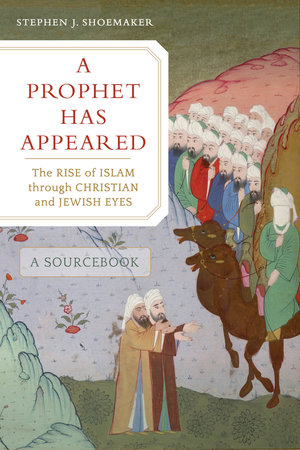
‘Robert Couzin’s Right and Left in Early Christian and Medieval Art is the first in-depth study of handedness, position, and direction in the visual culture of Europe and Byzantium from the fourth to the fourteenth century. Heretofore largely unnoticed or ignored, the pre-eminence of the right and lapses or intentional departures from that norm in medieval imagery are relevant to such major themes as iconography, visuality, reception, narrative, form, gender, production, and patronage. The author’s investigation of right and left in visual culture is informed by modern experimental research on laterality and contextualized within prevailing theological doctrines and socio-cultural practices.’

Available from Brill.

Online Lecture: ‘Perverse Images: Monstrous Beauty and Monkey Business in Italian Art from Botticelli to Bronzino’, by Professor Patricia Rubin, Kunsthistorisches Institut, Florence, 27 May 2021, 5-6 pm (BST)

In canto 29 of Dante’s Inferno a notorious alchemist, consigned to the depths of Hell among the fraudulent, boasts of having been a successful ape of nature (“di natura buona scimia”). The boast allies imitation with counterfeiting and points to the way that representational truth to nature is inherently false. This talk takes the presence of monkeys in Sandro Botticelli’s tondo showing the Adoration of the Magi (The National Gallery, London), Michelangelo’s sculpture of a languishing prisoner (Louvre), and a tapestry design by Bronzino (British Museum) as a starting point to consider the ways that mimesis is inflected in those works and by those artists.  It also explores how the duplicitous nature of naturalism allows for the hybrid and monstrous to be the attractive offspring of art, confusing categorical distinctions between abject and admirable.

Patricia Rubin is a Visiting Scholar at the Kunsthistorisches Institut in Florence. She was professor, Deputy Director, and founding Head of the Research Forum at the Courtauld Institute, and Director of the Institute of Fine Arts, New York University. Her books include Giorgio Vasari. Art and History (1995), Images and Identity in Fifteenth-Century Florence(2007), and Seen from Behind: Perspectives on the Male Body in Italian Renaissance Art (2018). Recently, she has published on topics ranging from Art and the Masquerade of History” (2020) to “poetic design” in Botticelli’s illustrations to Dante’s Divine Comedy (2021).

Speaker: Professor Patricia Rubin – Visiting Scholar, Kunsthistorisches Institut, Florence

Organised by: Scott Nethersole – The Courtauld , Guido Rebecchini – The Courtauld

This is a live online event.  

Please register for more details. The platform and log in details will be sent to attendees at least 48 hours before the event. Please note that registration closes 30 minutes before the event start time.  

If you have not received the log in details or have any further queries, please contact researchforum@courtauld.ac.uk. 

To register please click here.

Online Conference: Medieval and Early Modern Spaces and Places: Courtly Encounters, The Open University, 9th-11th June 2021

In 2021 The Open University’s interdisciplinary Spaces and Places conference will address the theme of ‘Courtly Encounters’ by exploring instances of cultural exchange that shaped the day-to-day and extraordinary sensory experiences of court life.

Since Subrahhmanyam’s seminal book Courtly Encounters, scholars have incorporated the transcultural in courtly studies, but not to the extent it deserves. At a time when scholars across the humanities are embracing a ‘global turn,’ it is an important moment to reassess court studies and consider new approaches that allow us to move beyond Eurocentricism and simple explanations of ‘shared’ tastes and also adopt novel approaches.

The early modern court was not a closed entity but was reliant on the movement of people and things, its power being dependent on its relationships with other courts and states. In the early modern period, increased exploration led to fierce competition over the control of trade routes and territories, and inevitably led to diplomatic entanglements that reached from Brazil to Portugal to India. These entanglements brought about hostile relationships, confusion and admiration, giving rise to cross-cultural transfer, exchange and friction as objects, practices and people moved through trade and diplomacy.

This conference will examine courtly encounters during the early modern period to consider the following questions:

  • How were courtly spaces adapted and transformed through the movement of material and immaterial things and to what extent did those things condition sensorial experiences?
  • Which particular aspects of political, social, and economic infrastructures enabled the exchange of objects, ideas, and people?
  • To what extent do new methodologies and approaches need to be developed to consider courts within a global geopolitical network and how might sensorial approaches enable this?
  • How might sensory experiences of the same objects differ according to courtly environments (considering, for example, transcultural exchange or experiences of objects in different architectural spaces and/or geographical locations)?

This annual conference is fundamentally interdisciplinary: literary, musical, architectural, artistic and religious spaces will be the subjects of enquiry, not as discrete or separate entities, but ones which overlapped, came into contact with one another, and at times were in conflict.

The conference will take place online on Microsoft Teams with shorter presentations and more of a workshop format to accommodate the online platform. The event is free, but requires registration before 7th June:
https://www.eventbrite.co.uk/e/medieval-early-modern-spaces-places-courtly-encounters-tickets-151171689593

DRAFT PROGRAMME:

9 June 2021 17:00-18:00

Keynote Lecture

Katherine Butler-Schofield (King’s College London) ‘Something Borrowed, Something New: Appropriation and Integration in Mughal Courtly Arts, 1580–1680’

10 June 2021

Exchanges and Images I

13:00 Jacopo Gnisci (University College London/British Museum) ‘The Veiled Emperor: On Courtly Customs in Ethiopia’

13:30 Rachel Carlisle (Florida State University) ‘Maximilian on the Move: Imperial Architecture and Courtly Spectacle in Print’

14:00 Break

Exchanges and Images II

14:15 Stefan Gasch (University of Music and Performing Arts Vienna) ‘What’s in a Book? Music, Miniatures, and Meaning in Wolfenbüttel Cod. Guelf. A Aug. 2°’

14:45 Rebecca Teresi (Johns Hopkins University) ‘A Gift Between Queens: Portraiture and Devotional Politics in Anglo-Spanish Relations, 1604-1606’

15:15 Break

Exchanges and Objects

15:30 Juan Chiva Beltrán (Universitat de València) ‘A Palace Between Asia and Europe: Luxury Objects in the Court of the Viceroys of New Spain’

16:00 Isabella Cecchini and Veronica Prestini (Ca’ Foscari University of Venice) ‘Accepting Ottomans in Florence: Spaces and Objects at the Medici’s Court (15th-17th centuries)’

16:30 Closing Discussion

17:00 End

11 June 2021

Exchanges and Urban Culture

13:00 C. Cody Barteet (The University of Western Ontario) ‘The Maya Court at Mayapán: Gaspar Antonio Chi’s Colonial Reflections and Self-Representation’

13:30 Alessandra Bertuzzi (“Sapienza” University of Rome), ‘Urbino “Città in forma di Palazzo” Spaces and Identity between Arts and Science ‘

14:00 Break

European Exchanges

14:15 M.A. Katritzky (The Open University) ‘Italian stage costumes at German court weddings’

14:45 Jaroslaw Pietrzak (Pedagogical University in Krakow), ‘The Polish Royal Court as a Common Space of Polish-German-Italian and French encountering between 16th and 17th century’

15:15 Break

Exchanges in Tudor England

15:30 Jonathan Gibson (The Open University) ‘French Poetry and the Elizabethan Court’

16:00 Alexandra Siso (University of Colorado Boulder) ‘Building Early Modern Tabernacles: Elizabethan Composers and the Fashioning of Sacred Courts’

16:30 Michael Ohajuru (Institute of Commonwealth Studies) ‘The John Blanke Project: Imagine the black Tudor trumpeter’

17:00 Closing Discussion

17:30 Online drinks reception (bring your own bottle)

18:00 Close

Call for Papers: Society of Architectural Historians 2022 Annual International Conference, 27th April – 1st May 2021 (Deadline June 2nd 2021)

The Society of Architectural Historians is now accepting abstracts for its 75th Annual International Conference in Pittsburgh, Pennsylvania, April 27–May 1, 2022. Please submit an abstract no later than June 2, 2021, to one of the 32 thematic sessions, the Graduate Student Lightning Talks or the Open Sessions. SAH encourages submissions from architectural, landscape, and urban historians; museum curators; preservationists; independent scholars; architects; scholars in related fields; and members of SAH chapters, Affiliate Groups and partner organizations.

To submit a paper, visit the SAH website.