New Publication: The Corpse in the Middle Ages: Embalming, Cremating, and the Cultural Construction of the Dead Body by Romedio Schmitz-Esser

To what extent are the dead truly dead? In medieval society, corpses were assigned special functions and meanings in several different ways. They were still present in the daily life of the family of the deceased, and could even play active roles in the life of the community. Taking the materiality of death as a point of departure, this book comprehensively examines the conservation, burial and destruction of the corpse in its specific historical context. A complex and ambivalent treatment of the dead body emerges, one which necessarily confronts established modern perspectives on death. New scientific methods have enabled archaeologists to understand the remains of the dead as valuable source material. This book contextualizes the resulting insights for the first time in an interdisciplinary framework, considering their place in the broader picture drawn by the written sources of this period, ranging from canon law and hagiography to medieval literature and historiography. It soon becomes obvious that the dead body is more than a physical object, since its existence only becomes relevant in the cultural setting it is perceived in. In analogy to the findings for the living body in gender studies, the corpse too, can best be understood as constructed. Ultimately, the dead body is shaped by society, i.e. the living. This book examines the mechanisms by which this cultural construction of the body took place in medieval Europe. The result is a fascinating story that leads deep into medieval theories and social practices, into the discourses of the time and the daily life experiences during this epoch.

For a detailed table of contents or to purchase, click here.

Online Lecture: ‘Medieval Fabergé: African Ostrich Eggs, Global Currency’, with Krisztina Ilko, The Murray Seminars at Birkbeck, 14 December 2021 5:00-6:30pm (GMT)

This talk examines the ostrich eggs suspended above Duccio’s Maestà at the late medieval main altar of Siena cathedral, through the lens of cultural exchange. In doing so, it sheds new light on such eggs, which it suggests were a material currency from Africa which served ritual purposes and which traversed expanding global arenas. By drawing on wide-ranging interdisciplinary evidence, extending from pre-Islamic Bedouin astronomical traditions to Sufi shrines in India, it maps the place of ostriches in the medieval imagination and explores how their perception was connected to pre-modern Afro-Eurasian concepts of vision, sanctity, and cosmology. This talk proposes that ostrich egg pendants ultimately operated as “spiritual beacons”, meditational devices which illuminated a passage towards salvation in places of worship across Christianity, Islam, and Judaism alike.

Dr Krisztina Ilko is an Affiliated Lecturer at the University of Cambridge and Academic Associate at Pembroke College, Cambridge. Her research has been supported by awards and fellowships from the Royal Historical Society, the Metropolitan Museum of Art, the International Center of Medieval Art, the Italian Art Society, and the Pontifical Institute of Mediaeval Studies at the University of Toronto.

Click here to register.

Exhibition: North Sea Crossings: Anglo-Dutch Books and the Adventures of Reynard the Fox, The Weston Library, Bodleian Libraries, Oxford, 3 December 2021–18 April 2022

About the exhibition

North Sea Crossings tells the story of Anglo-Dutch exchanges through beautiful medieval manuscripts, early prints, maps, animal stories and other treasures from the Bodleian’s collections.

For centuries the North Sea has been a highway connecting Britain with its Dutch neighbours, a mere 33 kilometres away at its closest point.

Focusing on the period from the Norman Conquest in 1066 to the Glorious Revolution of 1688, this exhibition will explore how exchanges between England and the Netherlands have shaped literature, book production and institutions such as the Bodleian itself, on either side of the North Sea. It also tells the story of a very crafty Dutch visitor, Reynard the Fox.

In the aftermath of Britain’s exit from the European Union, this exhibition on the long history of Anglo-Dutch relations has much to tell us about the benefits of international collaboration today.

Curators

Sjoerd Levelt, Senior Research Associate, University of Bristol

Ad Putter, Professor of Medieval English, University of Bristol

Anne-Louise Avery, writer and director of the children’s educational outreach organisation Flash of Splendour

Acknowledgements

North Sea Crossings is made possible with The National Lottery Heritage Fund

An outline of crossed fingers

A collaborative project with the University of Bristol.

Click here for more information.

Conference: The Literature and History of Anglo-Dutch Relations, Medieval to Early Modern,  Bodleian Library, University of Oxford, January 6-8 2022

Contacts between English and Dutch speakers had a profound impact on the literary landscape and book culture of England and the Low Countries. This British Academy funded conference crosses conventional chronological, linguistic, geographical and disciplinary boundaries to explore the cultural history of relations between English and Dutch speakers, from the Norman Conquest through to the Reformation. Bringing together literary scholars and historians, it aims to join up evidence of literary exchange with new insights into the experiences of migration, conflict, political alliances, and trade that made this literary exchange possible. The conference will reinvigorate traditional approaches to literary influence by contextualising it in the historical conditions that brought speakers of Dutch and English into contact with each other and by taking into account the range of languages (Dutch, English, French, and Latin) in which their communications and literary production in manuscript and early print took shape over this period.

For full conference programme and to register, click here.

Call For Papers: Medieval Art, Modern Politics, Deadline: 15 December 2021

Historians of medieval art know that the buildings, objects, and images they study were often created for purposes that were overtly political. They have devoted less scholarly attention to a corollary: the political uses and misuses of medieval art after the Middle Ages. In some cases, the same objects and sites that accrued ideological meanings during the Middle Ages did so again, if differently, in modern times (better known examples include the Bayeux Embroidery, the Horses of San Marco, the Bamberg Rider, the insignia of the Holy Roman Empire, the Crown of St. Stephen, and Dome of the Rock).
This is a call for papers for a volume of essays that seeks to complicate our understanding of the afterlives of medieval art by concentrating on the politics of its reception. While the ideological instrumentalization of the Greco-Roman artistic legacy has been recounted many times and stories of the rediscovery of national antiquities in eighteenth-century Europe and the revival of Gothic art in the subsequent century are familiar, the use of the medieval legacy has tended to be framed as either an affair of taste or of intellectual and cultural histories. The way in which post-medieval regimes (whether monarchic, imperial, totalitarian, or progressive) or individuals have reframed specific medieval sites, artefacts, and iconographies still await detailed examination.
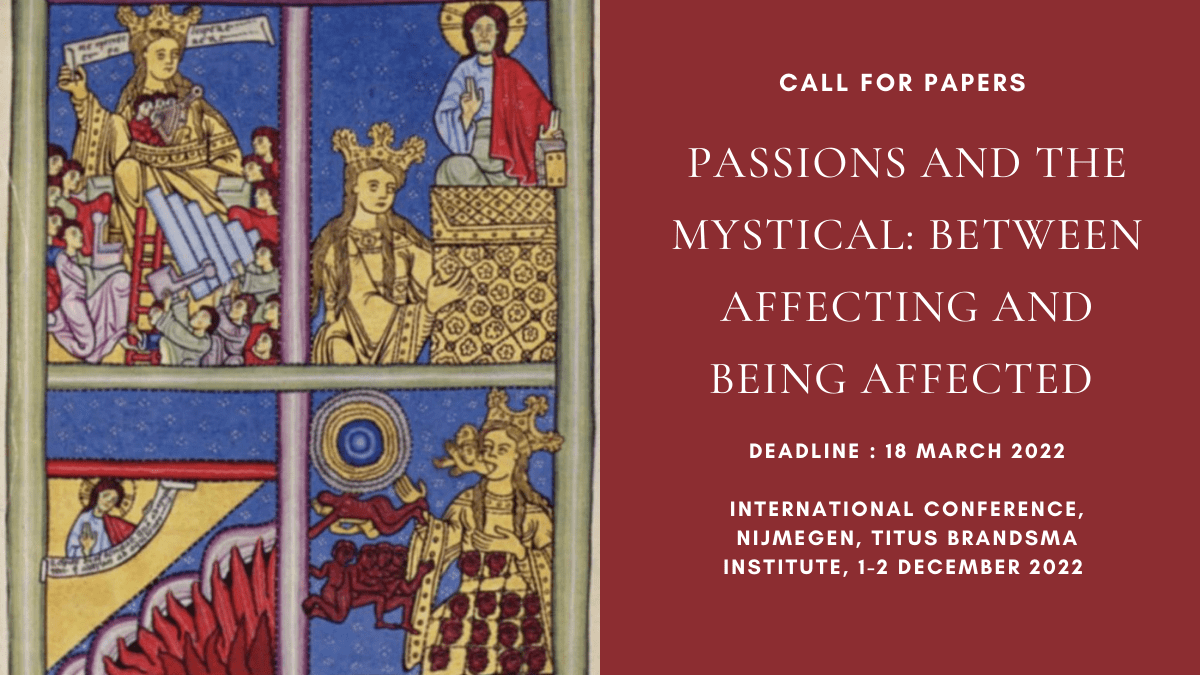
We invite papers that unpack instances of the uses and misuses of medieval art in various post-medieval contexts and directed towards different political goals. We encourage submissions that represent the full geographic and temporal scope of the medieval period. Possible questions to be addressed include: What messages were extracted from “Gothic” and “barbarian” antiquities that differed from the discourses retrojected into ancient or early modern art? How were medieval visual creations literally and figuratively repositioned to serve modern political ends? What were the impulses—aesthetic and ideological—that explain why modern regimes have found it useful, even necessary, to reinvest in the visual legacy of the Middle Ages?

Volume editors: Brigitte Buettner and William Diebold
Deadline for submitting proposals (500-word abstract and a CV): December 15, 2021
Anticipated submission of final texts: End of 2022

Please direct all inquiries and submissions to Brigitte Buettner (bbuettne@smith.edu) and William Diebold (wdiebold@reed.edu). We will notify authors of the status of their proposal by January 15, 2022. We anticipate c. 8000-word essays and peer review. We are also planning a workshop-type gathering to comment on the papers before publication.

New Publication: Marian Devotion in the Late Middle Ages. Image and Performance, Edited By Andrea-Bianka Znorovszky, and Gerhard Jaritz

By the late Middle Ages, manifestations of Marian devotion had become multifaceted and
covered all aspects of religious, private and personal life. Mary becomes a universal presence
that accompanies the faithful on pilgrimage, in dreams, as holy visions, and as pictorial
representations in church space and domestic interiors. The first part of the volume traces the
development of Marian iconography in sculpture, panel paintings, and objects, such as seals,
with particular emphasis on Italy, Slovenia and the Hungarian Kingdom. The second section
traces the use of Marian devotion in relation to space, be that a country or territory, a monastery
or church or personal space, and explores the use of space in shaping new liturgical practices,
new Marian feasts and performances, and the bodily performance of ritual objects.

Table of Contents
Chapter 1. Throne of Gold and Dress of Stars: On the Meaning of Polychromy in High Medieval
Marian Sculpture, Elisabeth Sobieczky
Chapter 2. Seeing God in the Image of Mary: Cross Readings of the Medievaal Benedictine
Convent Seal, Mija Oter Gorenčič
Chapter 3. Devotion, Gold, and the Virgin: Visualizing Mary in Three Fourteenth-Century
Tuscan Panels in the National Gallery of Denmark, Marina Vidas
Chapter 4. Diagrammatic Devotion and the Defensorium Mariae in the Funerary Chapel of
Hărman Parish Church, Mihnea A. Mihail
Chapter 5. Veil and Signature: Giambono’s Madonna Barberini, Sabine Engel
Chapter 6. Salve regina in late medieval Dominican communities, Kristin Hoefner
Chapter 7. Developments in Servite Marian Spirituality and the Use of Saint Filippo Benizi in
Promoting Servite Miraculous Madonnas, Alana O’Brien
Chapter 8. Mary, Michael, and the Devil. An Eschatological-Iconographic Perspective on the
Liturgical Drama of Philippe de Mézières, Andrea-Bianka Znorovszky
Chapter 9. “Mulier amicta sole”: Transformations of a devotional image between the 15th and
the 16th centuries, Ferenc Veress
Chapter 10. Mobile Shrine and Magical Bodies: Modern Afterlives of Medieval Shrine
Madonnas, Juliet Simpson

Click here to purchase.

Grants: Mary Jaharis Center Grants 2022–2023, deadline: February 1, 2022

The Mary Jaharis Center for Byzantine Art and Culture is pleased to announce its 2022–2023 grant competition. 

*** NEW *** Mary Jaharis Center Co-Funding Grants promote Byzantine studies in North America. These grants provide co-funding to organize scholarly gatherings (e.g., workshops, seminars, small conferences) in North America that advance scholarship in Byzantine studies broadly conceived. We are particularly interested in supporting convenings that build diverse professional networks that cross the boundaries of traditional academic disciplines, propose creative approaches to fundamental topics in Byzantine studies, or explore new areas of research or methodologies.

Mary Jaharis Center Dissertation Grants are awarded to advanced graduate students working on Ph.D. dissertations in the field of Byzantine studies broadly conceived. These grants are meant to help defray the costs of research-related expenses, e.g., travel, photography/digital images, microfilm.

Mary Jaharis Center Publication Grants support book-length publications or major articles in the field of Byzantine studies broadly conceived. Grants are aimed at early career academics. Preference will be given to postdocs and assistant professors, though applications from non-tenure track faculty and associate and full professors will be considered. We encourage the submission of first-book projects.

Mary Jaharis Center Project Grants support discrete and highly focused professional projects aimed at the conservation, preservation, and documentation of Byzantine archaeological sites and monuments dated from 300 CE to 1500 CE primarily in Greece and Turkey. Projects may be small stand-alone projects or discrete components of larger projects. Eligible projects might include archeological investigation, excavation, or survey; documentation, recovery, and analysis of at risk materials (e.g., architecture, mosaics, paintings in situ); and preservation (i.e., preventive measures, e.g., shelters, fences, walkways, water management) or conservation (i.e., physical hands-on treatments) of sites, buildings, or objects.

The application deadline for all grants is February 1, 2022. For further information, please visit the Mary Jaharis Center website.

Contact Brandie Ratliff (mjcbac@hchc.edu), Director, Mary Jaharis Center, with any questions.

New Publication: “Medieval Europe in Motion 3. The Circulation of Jurists, Legal Manuscripts and Artistic, Cultural and Legal Practices in Medieval Europe (13th-15th centuries)”. Introduction by M.J. Branco; Conclusions by M. Ascheri, Palermo, Officina di Studi Medievali, 2021

The knowledge of movement is of crucial importance in carrying out cultural and intellectual processes: it is not only a physical action but also a factor of communication and exchange which facilitates dialogue and interaction between different territories and cultures. The main objective of the essays in this volume is to analyse the phenomena of mobility and circulation of people, ideas and objects related to the study and practice of the Law, whether we are addressing the intellectual elites, the texts and manuscripts (illuminated or not), their artistic models, or the circulation of the Law itself, and to study ideas connected to the practice of Law and its role in the Medieval West in general. This volume focuses on the most Southern territories (Iberian Peninsula, Southern France and Italy) of the Medieval West, and the circulation of people and ideas and objects connected to the practice of Law during the 13th to15th centuries: such is the privileged sphere of the debate in this volume. This book aims at debating and analysing the ways in which the phenomena of mobility interacted with processes of codification and teaching of the Law, while they also influenced its visual representation in the manuscripts’ illuminations.
This publication is also a part of the research work conducted by the IUS ILLUMINATUM research team (https://iusilluminata.fcsh.unl.pt), an international scientific team, directed by Maria Alessandra Bilotta, researcher in the NOVA School of Social Sciences and Humanities of Lisbon and member of the Institute for Medieval Studies (IEM) at the same University. The IUS ILLUMINATUM research team is composed of medieval art historians belonging to different European academic institutions, all specializing in illuminated legal manuscripts. The research team intends to carry on a comparative study of the artistic, cultural and social currents revealed by the production and the circulation of illuminated legal manuscripts in medieval Europe. Each of the team members proposes to investigate these phenomena through the study of specific types of legal manuscripts, within a definite region of Europe. The team has its headquarters at the Institute for Medieval Studies (IEM) in the NOVA School of Social Sciences and Humanities of Lisbon, while the members retain their own academic affiliations.

CONTENTS:
Maria Alessandra BILOTIA — Acknowledgements
Maria Joao BRANCO — Introduction – Medieval Europe in Motion, a motto for a Research Institute and its researchers
1. Social, Economic, and Cultural Contexts of the Practice of Law
Maura MORDlNl — Quelques fragments des livres juridiques et leurs aspects culturels : le cas d’Arezzo
Attilio STELLA — Rethinking Law and Custom. Iacobus de Ardizone (d. 1254) in a Local and European Context
Maria DO ROSARIO BARBOSA MORUJAO — Objets et modeles en circulation dans l’Occident medieval. Quelques exemples de sceaux de clercs portugais
Marta Luigina MANGINI — «Per obedientiam scripsi». Religione e professione nei percorsi di alcuni notai in Italia (secoli XII-XV)
Anna Beatriz ESSER DOS SANTOS — Imagining and Rethinking Women: Female Normativity in the City of Ladies and the Book of the Three Virtues by Christine de Pizan
Pippa SALONIUS — The Medieval World of Wearable Art: Frames, Lineage, Nature and the Law .
Francisco Jose DIAZ MARCILLA — La practica del Derecho en la literatura medieval castellana: rejlejos socioculturales
2. Peoples, ldeas, Works and the Practice of Law in Medieval Europe (13th-15th c.)
Marjolaine LEMEILLAT — Livres de droit et Tres ancienne Coutume en Bretagne a la fin du Moyen Age (XIII-XV siecle)
Jorge JIMENEZ LOPEZ — Libri canonum et libri legum en el Patrimonio Librario del Colegio Mayor de san Bartolonze de la Universidad de Salamanca (1433-1440)
Youness M’HIR EL KOUBAA — Las 25 consultas jur(dicas (masa’il) de al Mawwaq (m.1492): correspondencia granadina enviada a Tunez en el ultimo tercio del s. XV
Alice TAVARES — Lus fuerus extensus purtugueses: unafuente del derechu municipal portugues. Algunas propuestas para su estudio .
Armando NORTE — I here bequeath … Clerics donating law books on their deathbed. Manuscript transmission during the Portuguese Middle Ages
3. Productions of Legal Manuscript (Illlumination, Paleography, Codicology)
Robert Grass — Illuminated Law Manuscripts at Durham Cathedral and Their Completion: 1140 1300
Andrea lMPROTA — Manoscritti miniati di argon1ento giuridico a Napoli in eta angioina (secc. XIII-XV)
Gianluca DEL MONACO — Tra chiose dantesche e libri di legge:nuove considerazioni sulla Commedia riccardiana-braidense
Joanna FROŃSKA — Itineraires des libri legales, entre Avignon et Chartres. Autour de l’lnfortiat de l’ancienne bibliotheque capitulaire de Chartres
Paolo DI SIMONE — Manoscritti giuridici negli Abruzzi (XIII-XV secolo)
Andrea BARTOCCI — Due canonisti abruzzesi del Quattrocento: Antonio d’Atri e Pietro Consueti
Marfa Teresa CHICOTE POMPANIN, Angel FUENTES 0RTIZ — Illuminating aristocracy. Decorated documents of mayorazgo in Medieval Castile
4. Circulation of Legat Manuscripts and Books in the Context of Juridical Culture
Arkadiusz ADAMCZUK — Le manuscrit Liber lecturae Ioannis de Platea super institutionibus Iustiniani de la Bibliotheque Henryk Wilhelm Rosenberg de Gdańsk : breves remarques sur l’enluminure dufontispice
Martina HACKE — Messagers de l’Universite de Paris et circulation des livres juridiques imprimes (fin XVe-debut XVIe siecle): l’exenzple de Jean Cabiller
Giovanna MURANO — Il Decretum in Europa nel secolo XII
Jose DOMINGUES — O acolhimento do Ius comnzune enz Portugal
Sophie CASSAONES-BROUQUEST — Le marche du livre a Toulnuse. Un exemple des circulations juridiques et intellectuelles et culturelles en Europe a la fin du Moyen Age
Paul MIRONNEAU — Voyager par la glose: l’Italie et l’influence de Jean d’Andre et Pierre Bohier dans Les ecrits d’Aymeric de Peyrac (vers 1340-1400)
Maria Alessandra BILOTTA — Da Bologna al Midi della Francia: il Decreto di Graziano ms. 67 della Bibliotheque du Carre d’Art di Nimes
Mario ASCHERI — Conclusions. Alle radici dell’Europa

Click here to purchase.

Hybrid Joint Seminar: ‘Cities of the Living and the Dead: Sultanic and Royal Burial in Late Medieval Cairo and Paris Compared’, Caitlin John, and ‘Trade of Devotional Objects in Later Medieval London: Evidence from the City Customs Accounts, c. 1380-1530’, Eliot Benbow, Thursday 18 November 2021, 5:30PM – 7:30PM (GMT)

This year, most of our seminars will be held in a hybrid format, with an in-person audience and a zoom room online. The seminar will take place in UCL’s Cruciform LT2. Anyone who wishes to attend in person is welcome to, but you must register online. The online form will ask you to specify whether you will attend in person or online. Those attending online will receive the zoom link via email. If you have registered but lost the zoom link, feel free to email me for a reminder before the seminar. We ask all those attending in person to wear a face-covering, in line with UCL general policy.

Cities of the Living and the Dead: Sultanic and Royal Burial in Late Medieval Cairo and Paris Compared

This paper looks at the burial of kings and sultans in and around the late medieval cities of Paris and Cairo from a comparative perspective. The topographies of royal and sultanic burial and how these changed over time are explored. Sultans and kings’ burial locations were all intimately connected to the urban space, despite some being more geographically central than others. Both sultans and kings were buried in highly exclusive locations. Yet, more than just reflecting the social hierarchy of the city, royal and sultanic burial played an active role in reinforcing this. Dynasty and individual ambition were expressed in the burial spaces and architecture of both kings and sultans, although to differing extents, relating to the distinctions between these two forms of rule.  

And 

Trade of Devotional Objects in Later Medieval London: Evidence from the City Customs Accounts,  c. 1380-1530

The medieval customs accounts of the City of London form an important, and hitherto underutilized source for the study of material culture, trade, and daily life in later medieval England. Many of these accounts, detailing taxes paid on imports and exports to and from London, have been recently edited and published for the first time by Stuart Jenks and the Hanseatic History Association. They reveal interesting patterns concerning the trade, and of particular interest for this paper, the importing of devotional objects. Particularly frequent examples are cargoes which include paternosters or bedes, otherwise known as rosaries. These prayer beads were imported in large quantities and in a wide range of materials. The studying of these accounts further provide insights about the people importing these objects, how they might have been made and sold, as well as where they were coming from. This paper will seek to show the accounts provide important further evidence of the range of devotional goods available for purchase across a wide range of late medieval English society. Furthermore, it will argue that the accounts deserve further attention as sources for material culture, and particularly, less expensive, everyday goods, which are often considered to lack the vital documentary evidence to contextualize their regular archaeological survival.  

Please register online here.

Please note that there is a limited capacity on campus. If you have not selected an ‘in-person ticket’ please do not go to UCL, but join online. You are requested to wear masks at UCL.

Online/In Person Lecture: The Gothic Sculpted Portal: Technical Aspects, Dr. Iliana Kasarska, American University of Paris, 18 November 2021

For those of you who are based in Paris, you are welcome to come to a lecture by Dr. Iliana Kasarska on The Gothic Sculpted Portal: Technical Aspects. It will take place at the American University of Paris at 6 rue du Colonel Combes (75007) on Thurs. Nov. 18 at 6pm in room C-104. There is a maximum of 25 people in the room, Covid oblige. If you are planning on coming in person, please contact annadrussakoff@gmail.com. asap and come with a photo ID. Also indicate if you would like to join in for dinner afterwards.

If you’d like to hear the talk remotely, follow this link to the Microsoft Teams Meet-up.