CFP: Object Emotions, Revisited (Yale, 20-21 February 2015), deadline 15 November 2014

Keynote speaker: Spyros Papapetros (Princeton U)

Organizing Committee: Padma Maitland (UC Berkeley); Christopher P. Miller (UC Berkeley); Marta Figlerowicz (Yale U); Ksenia Sidorenko (Yale U); Emma Natalya Stein (Yale U)

“Object Emotions” continues a critical dialogue about new directions in humanities research and theory that began at UC Berkeley in 2013. This conference is inspired by the recent heightened attention to objects and emotions as new points of entry into history, literature, art, architecture, area studies, and the social sciences. We aim to foster interdisciplinary reflections about the critical uses of thing theory, affect theory, the histories of emotions, and new materialism. We also want to study how these discourses might benefit from being set in conversation with each other.

Last year, these questions inspired papers on, among many other topics, forms of animism in fourteenth-century England, the role of tiles in Taiwanese architecture, representations of churches in Willa Cather, oral accounts of labor in factories in India, and the songs of Kylie Minogue. This coming conference seeks to be similarly diverse and experimental in the kinds of approaches it brings together. By exploring emotions and objects in conjunction with each other we hope to bring out the shared stakes of these scopes of critical inquiry, as well as the divergences among the ways feelings and things are studied in particular disciplines.

Questions we want to ask include, but are not limited to, the following: How is the task of describing emotions within the context of a poem different from describing them within the context of a painting or a temple? How do the current fields of affect theory, thing theory, and the history of emotions participate in the much longer history of debates about the subjective and the objective? How do emotions and the bodies experiencing them relate to each other? Are there cultural differences in the way objects and emotions are defined and assessed? What does it mean to attribute feelings to an inanimate object, or even to describe this object as the cause or inspiration of a feeling? Do feelings have an animating force? How does the critical framing of scale—the microscopic, the individual, the human, the social, the global—change the way we pursue questions about objects and emotions?

The conference will take place at Yale on February 20th and 21st, 2015. Participants will include both graduate students and faculty members. We welcome papers that address any of the questions described above, or related ones, with reference to the bodies of theory shared across disciplines or to individual works of literature, art, or architecture. Please submit 250-word abstracts to Padma Maitland at padmamaitland@berkeley.edu by November 15, 2014.

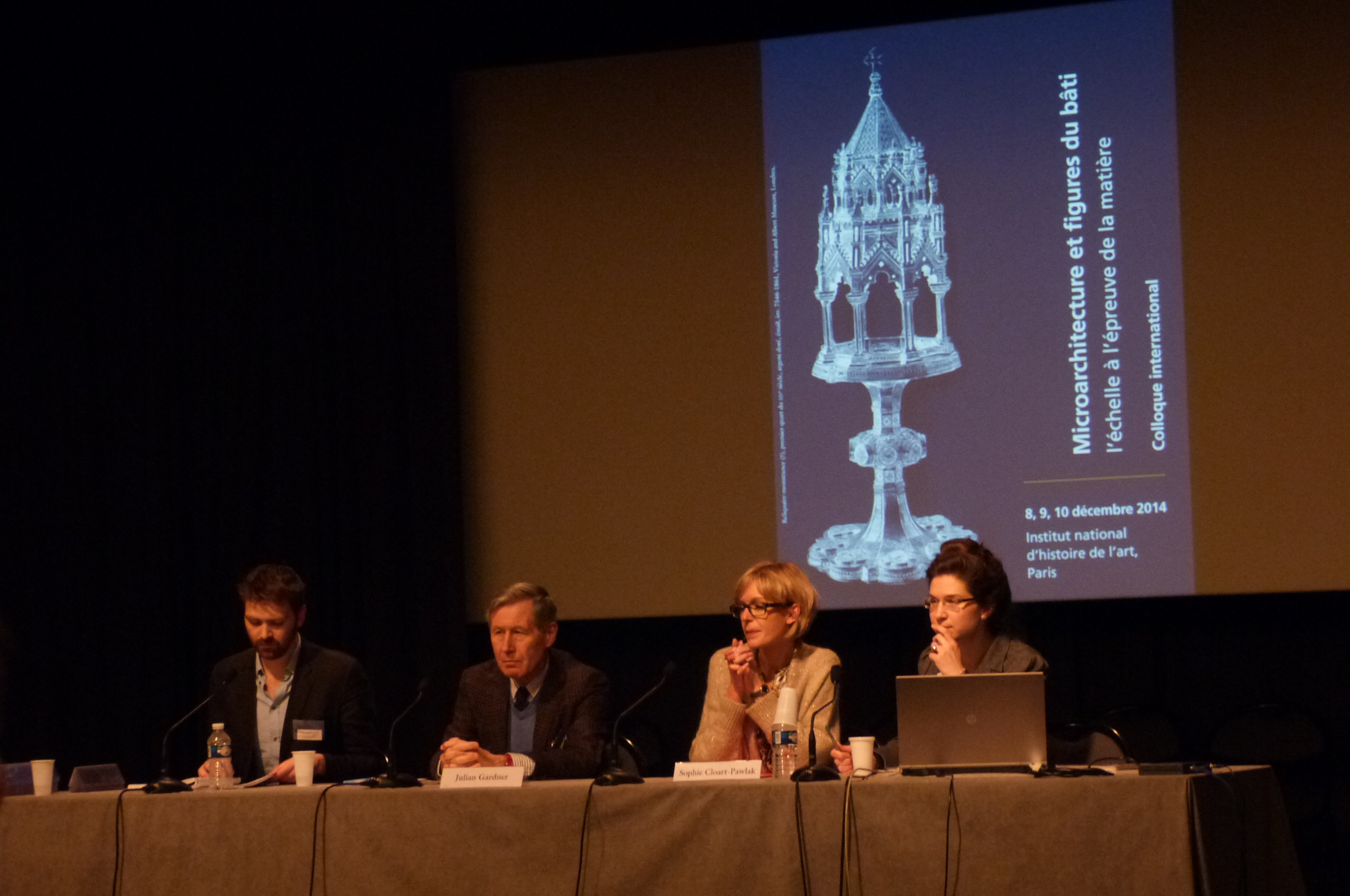
Conference: Microarchitecture and Miniaturized Representation of Buildings (INHA, Paris 8-10 Dec 2014)

The font enclosure c.1330 in Luton (Bedfordshire)

Micro-architecture et figures du bâti au Moyen-Âge : l’échelle à l’épreuve de la matière

Institute national d’historie de l’art

8 – 10 December 2014
Auditorium de la Galerie Colbert
6 rue des Petits-Champs ou 2, rue Vivienne
75002 Paris
Free entry

This conference organized by the National Institute of Art History, University of Nantes and the National Archives has the ambition to address issues related to the miniature representation of the built environment in a different perspective from that which has gone before. The phenomenon of “architecturation in which the proliferation of architectural vocabulary in all forms of art continues to intrigue historians of the Middle Ages. But this can only be truly understood if one takes into account the changes that scaling affects the work of artisans, and the reception of their works.

Programme:

Lundi 8 décembre
13h30     Accueil


14h00 – 15h30

Échelle

Présidence: Paul Binski

Julian Gardner (University of Warwick), Who were the microarchitects?          


Javier Ibàñez Fernandez (Universidad de Zaragozza) et Arturo Zaragozá Catalán (Universidad de Valencia), Entre imaginación y realidad. Microarchitecturas y architecturas en el mundo Ibérico entre los siglos XV y XVI

15h00-15h30          discussion


15h30 – 17h00

James Alexander Cameron (The Courtauld Institute of Art, London), Sedilia in English churches: micro-architectural innovation in function and form


Sabine Berger (Paris-Sorbonne), Edifices minia-turisés et figures de bienfaiteurs à la période médiévale: iconologie de la maquette d’architecture


19h00

au Musée de Moyen Age-Termes de Cluny,

conférence plénière de Paul Binski (sur réservation: microarchitecture@inha.fr)

Mardi 9 décembre


8h30     Accueil


9h00 – 10h30

Modèle(s)

Présidence: Isabelle Marchesin

Giovanni Santucci (Università di Pisa), Archi-tectural paper models in Early Modern Italy


Peter Kurmann (ETH, Zurich), Les modèles miniaturisés et leur rôle de transfert d’idées au XIIIe siècle.

10h-10h30       discussion et café


10h30 – 12h30

Circulations et transferts

Présidence: Julian Gardner

Felipe Serrano Estrella (Universidad de Jaén), Circulation of Classicist Models between Spain and Italy through the “Eucharistic Microarchitecture”


Farah Makki (EHESS, Paris), Figures scripturales de la microarchitecture au palais de l’Alhambra (XIVe siècle): préceptes d’une architecture relationnelle en Islam médiéval

12h-12h30       discussion


12h30-14h00     Déjeuner


14h00-15h30

Orfèvrerie et mobilier

Présidence: Élisabeth Taburet-Delahaye

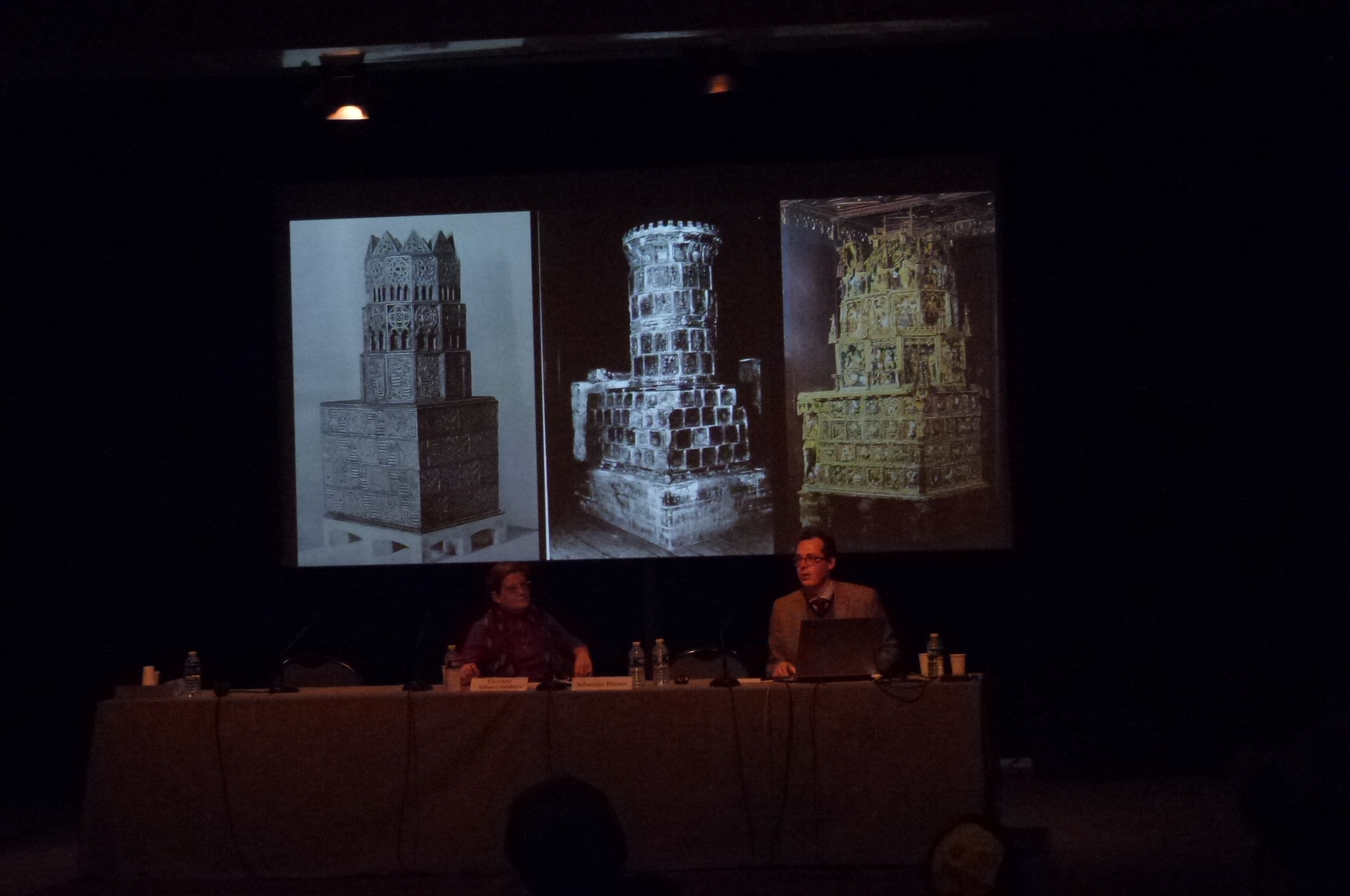
Sebastian Fitzner (Ludwig-Maximilians-Uni-versität München), Tile stoves as buildings and symbolic forms. Remarks on a largerly unexplorated field of microarchitectures in late medieval times


Anita Paolicchi (Università di Pisa), Examples of miniaturized architecture: the chivots at the time of Constantin Brâncoveanu


15h00-15h30          discussion

15h30 – 18h Dany Sandron (Paris-Sorbonne), La châsse de Saint-Marcel et l’architecture de Notre-Dame de Paris: renvoi et emprunts    


Frédéric Tixier (Université de Lorraine), Dextérité de l’orfèvre, symbolisme de la forme: remarques sur quelques crosses “architecturées” médiévales (XIIIe-XVIe siècle)


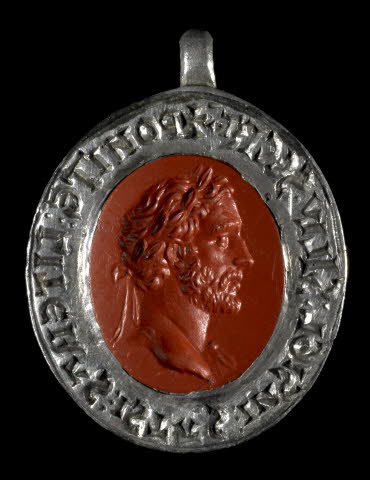
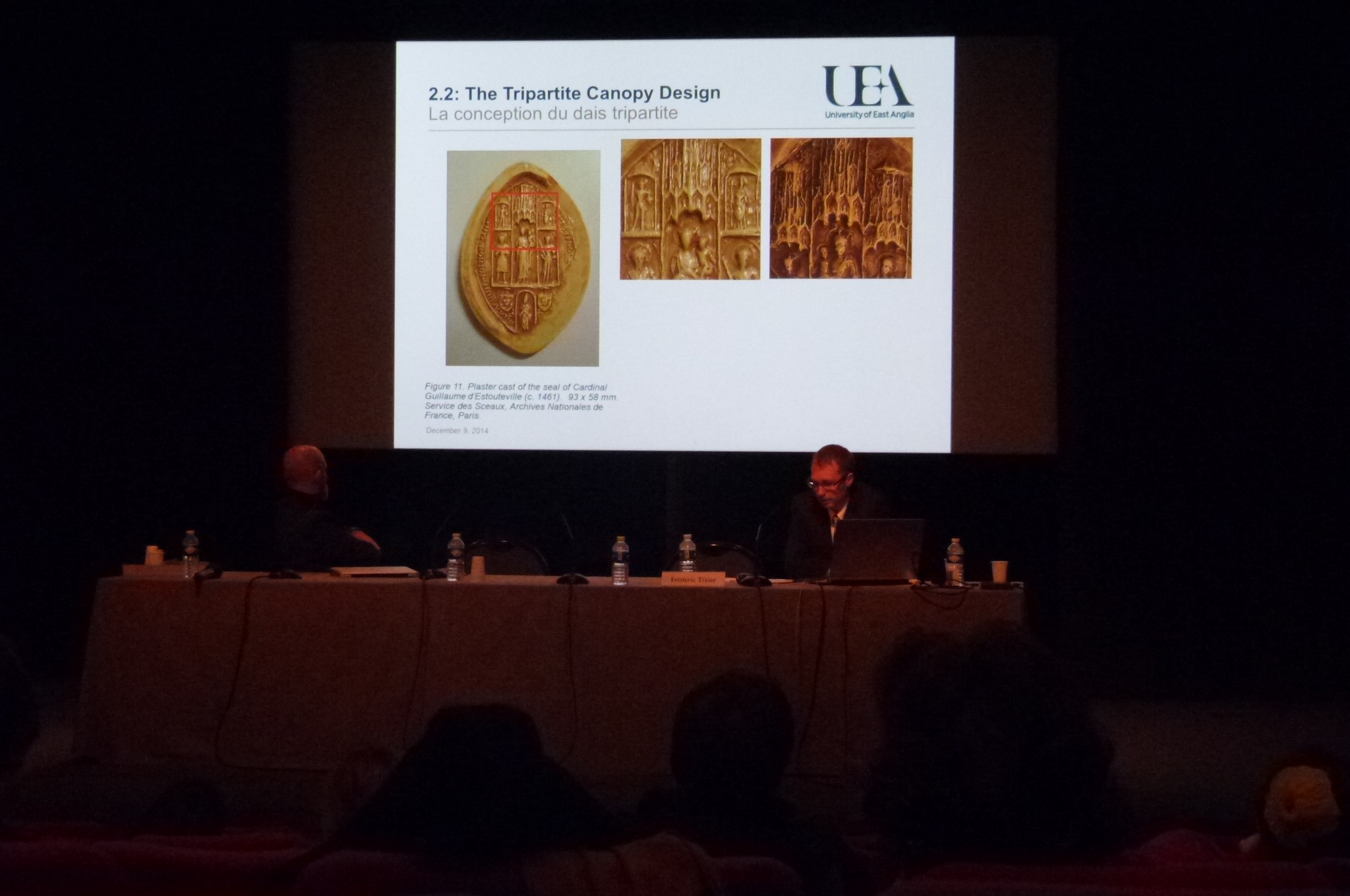
Matthew James Sillence (University of East Anglia, Norwich), Compositions and Associations of Architectural Frameworks on Cardinals’ Seals 1378-1533

17h30-18h00          discussion générale


Mercredi 10 décembre


9h00 – 10h30

Renovatio

Présidence: Peter Kurmann

Anne-Orange Poilpré (Paris I, Panthéon-Sor-bonne), Bâtir et figurer la royauté chrétienne au IXe siècle: les trône architecturés des manuscrits de Charles le Chauve


Matt Ethan Kavaler (University of Toronto), Microarchitecture as the Paradigme of Antique Architecture in the Low Countries: 1515-1540

10h-10h30       discussion et café


10h30 – 12h30

Symbole(s)

Présidence: Roland Recht

Achim Timmermann (University of Michigan, Ann Arbor), City, Cathedral, scopic labyrinth: scalar travels in medieval microarchitecture


Renzo Chiovelli (Università La Sapienza, Roma), Pifferi Sandra (Architecte), Materials, space and time in the microarchitecture of the Holy Sepulchre

12h-12h30       discussion

12h30-14h00     Déjeuner


14h00-17h00

Devotion(s)

Présidence: Danielle Gaborit-Chopin

Sophie Cloart-Pawlak (IRHiS, Lille), Identifica-tion, hiérarchisation et sacralisation des espaces au seuil de l’église. Remarques sur le rôle des décors d’architecture à travers l’exemple de l’ornementation des portails gothique


Alexander Collins (University of Edinburgh), Miniaturising Mary: The Microarchitecture of Embodiment in the Sherborne Missal (British Library, MS. Add. 74236)


Sarah Guérin (University of Montréal), Micro-architecture and memory: a place of devotion

16h30-17h00          discussion générale et conclusions

Official site: http://www.inha.fr/fr/agenda/parcourir-par-annee/en-2014/decembre-2014/micro-architecture-et-figures-du-bati-au-moyen-age.html


Book roundup: Autumn 2014

Bright Lights of the Dark Ages is a major new volume on early Medieval art. It features over two hundred stunning and extremely rare early medieval gold and precious stonework objects, including brooches, buckles, shields, clasps, spoons and other “grave goods”, that were interred as status symbols with their owners in burials mounds across Europe.

The new societies of the early Medieval period which developed on the periphery of the great Roman Empire – Germanic barbarians in western Europe, Sarmatian and later Alanic tribes around the Black Sea, and the eastern frontier cities bordering the Parthian Empire in Iran – were all shaped by interaction with the Roman Empire, and profoundly influenced by its material culture.

Author Noël Adams surveys the magnificent pieces that were made to advertise power and wealth in these new “barbarian” kingdoms which arose after the fall of the Roman Empire, and in doing so shows the dramatic and surprising relationship between these “migration era” objects and later medieval art. In a volume full of wonderful images, highlights include Gothic and Visigothic imperial style brooches from modern-day Slovakia and Crimea, superb Gallo-Roman spoons and enamelled domed brooches and buckles from Northern Europe and Britain.

Photographer John Bigelow Taylor’s images of Thaw Collection works render these archaeological finds in exquisite detail, capturing the intricacies of their materials and craftsmanship.

http://www.themorgan.org/shop/books-and-media/bright-lights-dark-ages-thaw-collection-early-medieval-ornament

9780500517680_27090[1]The Basilica of St Francis in Assisi. Edited by Gianfranco Malafarina, introduction by Chiara Frugoni, Thames and Hudson.

Founded in 1228, the Basilica of St Francis in Assisi is the burial place of the well-known saint and the mother church of the Franciscan order of monks. It is also a treasure house of art, decorated with monumental frescoes by some of the greatest painters of the 13th and 14th centuries.


This book takes its readers on a guided tour of this magnificent complex, aided by a wealth of beautiful photographs. Rarely seen details allow the personal imprints of the artists to shine through, and demonstrate that beyond their diversity of styles, they were all united by a desire to mirror reality while maintaining a sense of the spiritual and the sublime. This unmatched artistic heritage marks a revolutionary era in the flowering of Italian art.

The Upper Church is perhaps most famed for its sequence of frescoes that celebrate the life and teachings of St Francis, attributed to Giotto and his workshop, while Cimabue and his followers were responsible for a series of dramatic scenes from the Old and New Testaments. The Lower Church, meanwhile, has been expanded through the addition of several magnificent chapels; their titular saints are commemorated with great imagination and immediacy in works by artists including Simone Martini and Pietro Lorenzetti.

Gianfranco Malafarina is a noted art historian, and has written widely on Italian art. Among his previous books are volumes on Modena Cathedral and St Peter’s Basilica, Rome. Chiara Frugoni is former Professor of Medieval Art History at the Universities of Pisa and Rome.

http://www.thamesandhudson.com/The_Basilica_of_St_Francis_in_Assisi/9780500517680

An interdisciplinary anthology that explores the role of imagery, both visual and textual, in the construction of episcopal authority from the late-antique period through the fourteenth century.

The bishop wielded significant authority in religious, intellectual, and political spheres during the Middle Ages, but how was this influence articulated, and once articulated, how was it received? The essays in this volume represent a variety of disciplinary perspectives, each tuned to the production of images made by, for, and about the medieval episcopacy. They present the bishop as a model of piety and intellectual life as well as political and religious action.

Considering material from Late Antiquity through the thirteenth century, the essays offer a series of case-studies demonstrating that crafting episcopal imagery was a complicated endeavour employing pictorial, historical, literary, and historiographic devices. Never a static institution, the episcopacy was formed and reformed making it visible to the bishop, to those with whom he interacted, and to broader communities. These efforts at making present the power and authorities of the office asserted the duties, expectations, and ideals of the bishop in ways often specific to time and place.

The diverse perspectives on the episcopal image assembled here reveal the office, not as a singular contour, but as a succession of marks and erasures. Shaped by supporters and detractors alike, medieval images of the bishop engaged with historical models, responded to present realities, and considered the eschatological future.

http://www.brepols.net/pages/ShowProduct.aspx?prod_id=IS-9782503547992-1

9781903153581[1]The Prelate in England and Europe, 1300-1560 edited by Martin Heale, Boydell and Brewer.

High ecclesiastical office in the Middle Ages inevitably brought power, wealth and patronage. The essays in this volume examine how late medieval and Renaissance prelates deployed the income and influence of their offices, how they understood their role, and how they were viewed by others. Focusing primarily on but not exclusively confined to England, this collection explores the considerable common ground between cardinals, bishops and monastic superiors. Leading authorities on the late medieval and sixteenth-century Church analyse the political, cultural and pastoral activities of high-ranking churchmen, and consider how episcopal and abbatial expenditure was directed, justified and perceived. Overall, the collection enhances our understanding of ecclesiastical wealth and power in an era when the concept and role of the prelate were increasingly contested.

Dr Martin Heale is Senior Lecturer in Late Medieval History, University of Liverpool.

Contributors: Martin Heale, Michael Carter, James G. Clark, Gwilym Dodd, Felicity Heal, Anne Hudson, Emilia Jamroziak, Cédric Michon, Elizabeth A. New, Wendy Scase, Benjamin Thompson, C.M. Woolgar

http://www.boydellandbrewer.com/store/viewItem.asp?idProduct=14597

dIS-9782503529776-1[1]Space, Place and Ornament: the Function of Landscape in Medieval Manuscript Illumination by Margaret Goehring. Brepols.

The present volume analyzes the functions of landscape imagery within medieval Northern European manuscript illumination, and also takes into account the ideological and the economic milieus in which they were produced.

This book proposes a new methodological framework for the study of medieval landscape imagery by analyzing the functions of landscape within Northern European manuscript illumination. This study explores landscape imagery within a broad range of specific manuscript contexts, taking into account the ideological and the economic milieus in which they were produced. Organized into four sections, this study looks at how landscape functions as rhetorical device, ornament, didactic tool (Space) and political tool (Place). The first section explores the rhetorical function of landscape as encomium and amplificatio. The second section looks at the role that landscape imagery had in the hierarchy of book decoration, and how it responded to late medieval mnemonic systems and devotional practices. It also addresses the emergence of landscape as a form of ornamental elaboration, sometimes as a means to appeal to specific aesthetic criteria, or as a way to create extra-textual associations to augment the message of the text. The third section is concerned with landscape within encyclopedic and allegorical manuscripts, analyzing how artists constructed space to frame knowledge. Finally, the visualization of the political and economic landscape of late medieval Europe is explored, particularly focusing on how landscape was structured around issues of status, power and identity not only in works created for the landed nobility but within manuscripts made for urban patrons as well. Concentrating on manuscripts from Paris, Northern France and Flanders from the late thirteenth to the early sixteenth centuries, this book offers new insights as it contextualizes the emergence of landscape painting in the late Middle Ages.

http://www.brepols.net/pages/ShowProduct.aspx?prod_id=IS-9782503529776-1

9781472422651[1]Sculpting Simulacra in Medieval Germany, 1250-1380 by Assaf Pinkus, Ashgate.

Engaging with the imaginative, nonreligious response to Gothic sculpture in German-speaking lands and tracing high and late medieval notions of the ‘living statue’ and the simulacrum in religious, lay, and travel literature, this study explores the subjective and intuitive potential inherent in thirteenth- and fourteenth-century sculpture. It addresses a range of works, from the oeuvre of the so-called Naumburg Master through Freiburg-im-Breisgau to the imperial art of Vienna and Prague. As living simulacra, the sculptures offer themselves to the imaginative horizons of their viewers as factual presences that substitute for the real. In perceiving Gothic sculpture as a conscious alternative to the sacred imago, the book offers a new understanding of the function, production, and use of three-dimensional images in late medieval Germany. By blurring the boundaries between viewers and works of art, between the imaginary and the real, the sculptures invite the speculations of their viewers and in this way produce an unstable meaning, perpetually mutable and alive. The book constitutes the first art-historical attempt to theorize the idiosyncratic character of German Gothic sculpture – much of which has never been fully documented – and provides the first English-language survey of the historiography of these works.

http://www.ashgate.com/isbn/9781472422651

9780300203547[1]Romanesque Architecture. The First Style of the European Age by Eric Fernie. Yale University Press.

In a new addition to the Pelican History of Art series, leading architectural historian Eric Fernie presents a fascinating survey of Romanesque architecture and the political systems that gave rise to the style. It is known for its thick walls, round arches, piers, groin vaults, large towers, and decorative arcading, as well as the measured articulation of volumes and surfaces. Romanesque architecture was the first distinctive style to dominate western and central Europe. The book explores the gestation of the style in the ninth and tenth centuries and its survival up to the fourteenth century. Notable structures include Speyer Cathedral, Sant’Ambrogio in Milan, the abbeys of Cluny, and Vézelay, the Church of the Holy Sepulchre in Jerusalem, and Durham Cathedral, as well as the castles of Loches and Dover. A superb teaching tool, close to 400 illustrations pack this seminal text describing the design, function, and iconography of key church, monastic and secular buildings of a formative era.

Eric Fernie was director of the Courtauld Institute of Art between 1995 and 2003 and president of the Society of Antiquaries of London from 2004 until 2007.

http://yalepress.yale.edu/book.asp?isbn=9780300203547

9781851778119[1]Medieval Ivory Carvings, 1200-1550, by Paul Williamson, V & A Publishing.

The Victoria and Albert Museum’s collection of ivory carvings from c. 1200–1550 is one of the most important in the world. Containing 289 entries, this book is the first catalog of the material to be published since 1929. Together with Medieval Ivory Carvings: Early Christian to Romanesque, it makes available more than 400 pieces of the ivory carver’s art. Included here are masterpieces and representative examples from many of the vital centers of ivory carving in the Gothic era. Each entry provides a comprehensive physical and scholarly discussion, synthesizing the existing literature and including much new research. Also included are carvings of dubious authenticity, which are discussed as fully as the genuine pieces.

61YilrwQCXL._SY300_[1]Apocalypse: The Great East Window of York Minster, by Sarah Brown, Third Millennium Information.

Apocalypse – The Great East Window of York Minster by Sarah Brown is a magnificent book to celebrate the conservation of York Minster’s Great East Window.  This volume reproduces the Apocalypse Cycle of the Great East Window of York Minster in full colour for the very first time with stunning photography presenting each panel in detail, accompanied by expert commentary.

The book is a testament to the remarkable combination of skill, scholarship and cutting edge technology that has gone into the conservation of the window and has given the York Glaziers Trust a unique opportunity to analyse the astonishing painting of John Thornton who created the Great East Window between 1405 and 1408.

http://www.york.ac.uk/history-of-art/news-and-events/news/2014/sarah-brown-apocalypse/

9780813151267_p0_v1_s260x420[1]Tilmann Riemenschneider: His Life and Work by Justus Bier, University Press of Kentucky.

In the hauntingly beautiful sculptures of Tilmann Riemenschneider, the Late Gothic art of Germany achieved its highest expression. Now, for the first time in English, the eminent art historian Justus Bier accords Riemenschneider the extended attention he so richly deserves.

Riemenschneider (ca. 1460-1531) holds a pivotal place in the development of German art. Rejecting the anonymous soulfulness of earlier Gothic sculpture, he created a style reflecting the deeply spiritual character of his time, yet one that also anticipated the humanism of the Italian Renaissance so soon to revolutionize European art.

Bier crowns a lifelong study with this reconsideration of Reimenschneider’s life and work, with emphasis on works in North American museums. More than 140 photographs illustrate 46 of the artist’s major sculptures.


Thanks to Publicaciones sobre Arte Medieval for alerting us to many of these books.

CFP: Artists, Avarice and Ambition in Europe, 1300 -1600 (AAH Annual Conference 2015), deadline 10 November 2014

This is a call for presenters in a panel at the Association of Art Historians annual conference, which is taking place at the University of East Anglia, Norwich 9th – 11th April 2015.

Artists, Avarice and Ambition in Europe, 1300 -1600

Co-convenors: Jill Harrison, Open University
jill.harrison@open.ac.uk

Vicky Ley, Open University
v.v.ley@open.ac.uk

 In Trecento Italy Giotto di Bondone was working on major commissions in Florence whilst buying property and conducting complex business transactions in the rural Mugello. Michelangelo, as recently published documents show, also accumulated wealth from a variety of sources in addition to his art. In sixteenth century Northern Europe Dürer exemplified the spirit of commercial enterprise by employing agents to sell his engravings and find new markets for his works all over the Netherlands. Less commonly women artists made economic contributions to family workshops. The commercial astuteness of the engraver and printmaker Diana Scultori, who held a Papal Privilege allowing her to sign and market her work, is a notable example. Artists were ambitious and money mattered. The economic interaction between artists, patrons, institutions and ideologies in Europe 1300 -1600 is the focus of ongoing critical study, including recent exhibitions exploring the influence of bankers, merchants and international trade on art and artists. This session encourages a multidisciplinary approach to debate the idea of the artist as businessman or woman. It will consider the ways in which artists were developing and exploiting networks of wealthy patrons and producing works which engaged with changing and often controversial economic discourse.

Papers will be welcomed which explore any of these issues. There is also the chance the proceedingss will be published.

Abstracts should be no longer than 250 words, and should be sent to the session organizers along with a short CV (max 2 pages) and a biographical note and sent by November 10th 2014.

Twelfth-century Belgian church consumed by serious fire

© André Joose via Twitter.

A fire in the church of Sint-Jan de Doper in Anzegem, Belgian has caused serious damage to the building, some of which is around 800 years old. The cause of the blaze, which broke out on the 16th October was apparently a faulty heating system.

The fire started in the nave (this video captures the collapse of its roof) but unfortunately fire crews could not stop it spreading to the east end of the church (collapse of the spire).

Although many reports have been that the church has been “completely destroyed”, it is clear that this is not the case. The town council are looking for options for its restoration as a centre with more diverse community functions.

Indeed, you can see from the videos that the blaze has completely burnt off the roofs of the building, but the outer aisle walls and arcades are still standing. The biggest concern will be consoldating the most significant part of the building, the twelfth-century Romanesque crossing tower.


Helicopter footage which shows the moment the spire collapses (no audio)


Footage from after the blaze which shows the extent of the damage

Main source: http://www.7sur7.be/7s7/fr/1502/Belgique/article/detail/2093150/2014/10/17/L-incendie-de-l-eglise-d-Anzegem-cause-par-une-installation-de-chauffage.dhtml

Conference: Society, Rule and Their Representation in Medieval Britain (13-14 November 2014)

v0_master[1]13-14 November 2014

German Historical Institute London • 17 Bloomsbury Square • London WC1A 2NJ

ATTENDANCE IS FREE; THERE IS NO NEED TO REGISTER.

Official page

THURSDAY, 13 NOVEMBER

14:00-14:15 WELCOME

14:15-15:45 SESSION 1: IDENTITY (CHAIR: KATHERINE HARVEY, BIRKBECK)

Torben Gebhardt (Münster): Self-Categorisation of Medieval Rulers between 1016-1138 – A Comparison between England and the Holy Roman Empire

Isabelle Chwalka (Mainz): Conception and Perception of England and the Empire in the Twelfth Century

Stephan Bruhn (Kiel): Of Suffering Kings, Unwise Bishops and Violent Abbots – Concepts of Elites in ‘Biographical Writings’

15:45-16:30 COFFEE BREAK

16:30-18:30 SESSION 2: RULE AND KINGSHIP (CHAIR: ALEXANDRA SAPOZNIK, KCL)

Grischa Vercamer (Berlin): Descriptions of Power and Rulers in the High Middle Ages: English Chronicles in European Context

Bastian Walter-Bogedain (Wuppertal): “I ́ve got him, I  ́ve got him!” Or: How to Capture a King on a Battlefield

Ulla Kypta (Frankfurt): The Power of Routines: The Emergence of the English Exchequer during the 12th Century

Martin Stier (Heidelberg): Barons, Lords, Peers. Rank in the English Baronage

in the 14th Century

FRIDAY, 14. NOVEMBER

9:15-10:45 SESSION 3: VISUAL REPRESENTATION (CHAIR: ALIXE BOVEY, UNIVERSITY OF KENT)

Veronika Decker (Vienna): Planting the Vineyard of the Just: The Foundation of New College, Oxford and the Stained Glass of the College Chapel

Julia Crispin (Münster): French Treasures for an English Prince: John of Bedford, Regent of France, and his French Illuminated Books

Antje Fehrmann (Berlin): Courts or Concepts? Cultural Networks and Artistic Exchanges in 15th-Century England and Germany

10:45-11:15 COFFEE BREAK

11:15-12:45 SESSION 4: SOCIETY (CHAIR: IAN FORREST, OXFORD)

Franziska Klein (Duisburg-Essen): The King’s Converts – Caritas, Conversion and Control in Late Medieval England

Tanja Skambraks (Mannheim/Rome): Children, Liturgy and Festive Culture in Medieval London

Ute Kühlmann (Mannheim): Celtic Fosterage

12:45-13:00 CLOSING REMARKS

Some free tickets available for Medieval and Early Modern Engagement day with Miri Rubin and others at Queen Mary, London (18 October 2014)

Research into the Medieval and Early Modern: Navigating Issues of Engagementlogo[1]

Due to some last minute cancellations, there are a few tickets available for this event.

Click here to book for free through eventbrite!

Room 3.20, Arts 2 Building
Queen Mary, University of London
Mile End Road
London
E1 4NS

Saturday, 18 October 2014 from 10:00 to 18:30 (BST)

Schedule:
10.00-10.30: Registration, tea and coffee
10.30-10.45: Welcome and Introduction from Organisers
10.45-12.15: Working with Museums: Cataloguing and Curating
Adrian Armstrong, Centenary Professor of French (QMUL)
Medieval Multiculturalism and Mancunian Monuments: Reviewing the Evolution of
a Library Exhibition
Kate Lowe, Professor of Renaissance History and Culture (QMUL)
Shaking hands with the devil: Reflections on encounters with four museums and
collections
12.15-1.15: Lunch

1.15-2.45: Performative Engagement: Radio, TV and Theatre
Miri Rubin, Professor of Medieval and Early Modern History (QMUL)
The Middle ages: a Challenge to the Friendly Historian
Will Tosh, Post-doctoral Research Fellow, Shakespeare’s Globe
tbc
Respondent: Tamara Atkin, Senior Lecturer in Renaissance Drama and Literature
(QMUL)

2.45-3.15: Coffee break

3.15-5.00: The Media Perspective: Collaborating and Working with
Academics
Clare Whistler, Leverhulme Artist in Residence at QMUL 2013/14
Vessels of Tears
Michael Caines, English Literature and Digital Editor, Times Literary Supplement
tbc
Mukti Jain Campion, independent radio producer and founder of Culture Wise
What’s the Story?

Wine reception and continuing conversations

Call for papers: The Transept and its Upper Levels in the High Medieval Church (Lausanne, 20-21 April 2015)

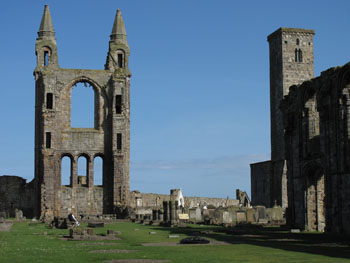
Winchester Cathedral transept

The Transept and its Upper Levels in the High Medieval Church: Towards a New Functional Approach (Architecture, Decor, Liturgy and Sound)

International and Interdisciplinary Conference – Lausanne, 20th-21st of April 2015

 Abstract

This conference is jointly organized by the Catholic University of Angers (Faculty of Humanities) and the University of Lausanne (Department of History of Art). It aims to analyse in greater detail the spaces of the transept and to explore their relation(s) with the choir/heart of the church. This two-day international and interdisciplinary symposium will work towards bringing together and assessing the results, often dispersed, of past and present research, building upon debates involving specialists from multiple backgrounds and finishing with a round table which will propose a summary of the papers and explore further insights into new research directions.

Project

The studies of Carol Heitz on Carolingian westworks have shown that this specific space, the upper level of which communicates with the nave through large tribunes, used to have a liturgical function, generally associated with the feast of Easter. Similarily, from the second quarter of the 10th Century onwards, the Gorze and Fleury reform initiated liturgical innovations necessitating the reconstruction or transformation of churches, which entailed rearranging or enlarging chapels at the eastern or western part of the building.

The fact that, in the reformed churches, these renovated liturgical spaces opened on the nave or the choir from a tribune, allowed for some categories of celebrations – the nature of which is not always clearly identified – to provide the occasion for part of the choir monks to stand in these upper levels and respond by their singing to the rest of the community gathered lower down. This architectural typology was shared by many monastic churches as well as cathedral churches in the wake of the reform, without being ubiquitous: for example, clunisian churches usually lacked tribunes overlooking the transept.

As to the upper levels of the transept, their function is not necessarily cultual (e.g. Cuxà), and if they sometimes communicate with the rest of the church (e.g. Saint-Chef), they are also likely to remain separate (Aoste). In some cases, where these upper levels are especially elaborate and open (e.g. Bayeux), the possibility of their use by the laity for a show of power cannot be discarded.

Throughout the High Middle Ages, the development of the East end of churches – enlarged choir with long transepts and a flowering of lateral chapels, sometimes with matching upper level – coincides with the partial or total abandonment of the West end. Occasionally, as at Saint-Remi of Reims or at the cathedral of Rouen, the East even assumes some of the functions devolved to the West. This reflects a process of hyper-sacralisation of the East end of the church, which was already noticeable in the 10th Century but was encouraged to grow under the Gregorian Reform, because it allowed a unification of the ecclesial space, a valorisation of the eucharistic celebration by concentrating the liturgy around the main altar, as well as a more distinct spatial separation of clergy and laity. A rood screen separates the celebrants in the choir from the assembly in the nave. A barrier or differences in levels may prolong, in the transepts, the limit of the area reserved for the clergy.

In a similar way to the architecture and the liturgy, the painted and/or sculpted decoration of the church reinforces the axial West-East dynamic across the ecclesiastical building, and serves to showcase the most sacred parts of the building: the richly decorated East frequently offers a contrast to the nakedness of the nave. At the same time, the decorative elements of the transept may function as the revealing agent for other paths of circulation, for example a transversal pathway uniting both ends of the transept (e.g. Château-Gontier).

In this spirit, we would like to interrogate the manner in which the transept and its upper levels contribute to the valorisation of the sanctuary, valorisation which can be made apparent by the visual effects of the decor as well as by the sound of singing from the upper levels, and which is embodied in the architecture of the tribunes for all to see.

Frame and directions of research

Papers should deal with the origins of this phenomenon in the Carolingian period and its development throughout the High Middle Ages. No geographical limits have been set for this international conference: if upper levels in the transept appear more frequently in some areas than in others, their absence in some contexts or locations may also be a source of interest.

In order to ensure an interdisciplinary dimension to this conference, we appeal to every domain of Medieval studies: historians, art historians, specialists of liturgy, construction specialists, archæologists, musicologists, etc., are invited to contribute to a better understanding of the function of tribunes, and of the modalities of interaction between central liturgical spaces, peripherical spaces and the ecclesial building.

Papers may deal with this central topic following a wide range of approaches, which may belong, but are not limited, to the following:

  • Typology of building rearrangements in the space of the transept
  • Place of the laity and the clergy in the use of the transept and its upper levels
  • Customary liturgy and ceremonies associated with these spaces
  • Consequences of reform(s) and of their specific liturgy on the architecture of churches
  • Role of the decor in revealing the function of these spaces
  • Decor, ritual and sound as performative factors involved in the defining of relations between spaces within the church on the one hand, and of relations between the coexisting communities, the observing and the observed, on the other hand.

Practical details for paper proposal

Proposals are for 20-minute papers and should not exceed 300 words, either in French or English. They will be accompanied by a short curriculum vitæ. Both documents should be sent jointly to barbara.franze@unil.ch and nathalie.leluel@uco.fr before the 15th of December 2014.

The conference will take place at the University of Lausanne on Monday, the 20th of April and Tuesday, the 21st of April 2015.

Results of the CFP will be announced on the 19th of January 2015 at the latest.

Scientific committee
Barbara Franzé, University of Lausanne (Switzerland)
Nathalie Le Luel, Catholic University of Angers (France)

Study day: A Study Day on Medieval Greek Liturgy and Liturgical Art (British Museum, 31st October 2014)

When:  Friday, October 31, 2014 from 930am until 445pm

Where:  Sackler Room B, British Museum

Programme:  There are six presentations of thirty minutes, each followed by a ten minute questions period, plus an introduction and a handling session of related objects by Museum Curator Chris Entwistle. The presenters are:

Professor Liz James (University of Sussex) – Introduction and Conclusion

Dr. Nadine Schibille (University of Sussex) – Liturgy in Space

Dr. Mary Cunningham (University of Nottingham) – Liturgical celebration of Mary, the Mother of God, in the Middle Byzantine period: the interaction between Church hymnography and devotional art

Arik Avdokhin (PhD Candidate, King’s College London) – Public Involvement in Early Byzantine (Para)Liturgical Practices: Participation in Hymns and Prayers in Churches and Elsewhere

Dr. Heather Hunter-Crawley (University of Bristol) – Mirroring Heaven – The Experience of Eucharistic Silverware in Early Byzantium

Dr. Cecily Hennessy (Christie’s Education) – Monumental decoration in relation to the liturgy

Professor Robin Cormack (University of Cambridge) – The 14th century icon of the Triumph of Orthodoxy and the broader question of how to discover the use of icons in the liturgy

Fees and Reservations:  Reservations are essential because there is limited space.  The fee is £15 for SPBS members and £20 for all others.  Reservations can be made on the following link: http://www.byzantium.ac.uk/events/spbs-study-day.html

Any questions can be directed to: Elizabeth.Buchanan@chch.ox.ac.uk

CFP: Movement in Medieval Art and Architecture, 20th Annual Medieval Postgraduate Student Colloquium  The Courtauld Institute of Art, (7 February 2015), deadline 21 November 2014

Call for Papers:
Movement in Medieval Art and Architecture
20th Annual Medieval Postgraduate Student Colloquium 
London, The Courtauld Institute of Art, 7 February 2015

Pilgrimage, wars and trade are key components of the Middle Ages and all embody movement. This colloquium aims at exploring the importance of movement in the creative processes of medieval art and architecture. Participants are invited to interpret the notion of movement especially in relation to itinerant artists and workshops, the circulation of artworks and the transmission of ideas. Movement will be questioned as a transformative and creative agent in art, in theory as well as in practice. This theme can be expanded to include both local and trans-cultural outcomes of exchanges, ranging from adoption to compromise and rejection. All these encounters show that movement was essential in the creation of art and architecture, whether in Europe, in the Byzantine Empire or beyond, coinciding with the emergence of new artistic trends and reciprocal influences.

Possible topics may include, but are not limited to:

• the circulation of artifacts via diplomatic relations and trade routes
• the spread of new technologies
• the diffusion of iconographical themes
• the dissemination of architectonic vocabulary
• the role played by drawings in the transmission of art and architecture

The Medieval Colloquium offers the opportunity for Research Students at all levels from universities across the UK and abroad to present and promote their research. Unfortunately funding for speakers is not available therefore students from outside London are encouraged to apply to their institutions for subsidies to attend the colloquium.

Please send proposals for 15 to 20-minute papers of no more than 250 words and a CV to mariaalessia.rossi@courtauld.ac.uksophie.dentzer@courtauld.ac.ukmatilde.grimaldi@courtauld.ac.uk no later than Friday 21 November 2014.

Applicants will be notified by the beginning of December.