Lecture: Murray Seminar at Birkbeck: ‘Faith, Race and the ‘Other’ in North Italian Sculpture, c.1480-1700’ with Andrew Horn (6 February 2024, 5pm)

Link to book live-streamed seminar on Eventbrite | Link to book a place at the seminar in person

Northwest Italy in the early modern period witnessed a flourishing of religious sculptural ensembles, rendered in polychrome terracotta and wood, representing scenes from Christ’s Passion and death. Works of this genre range from intimate scenes of the Deposition and Lamentation above altars in churches, to series of elaborate multimedial chapels situated on the ‘Sacri Monti’, pilgrimage sites at the foot of the Italian Alps. In addition to the main protagonists, the dramatic casts of these ensembles often feature characters whose skin colour, costume or physical characteristics identify as non-European, non-Christian or in some way set apart from European Christian society of the time. Examining a selection of these artworks in relation to devotional treatises, religious plays and historical records of public policy from the sixteenth and seventeenth centuries, this paper considers what the representation of these outsiders––these ‘others’––may reveal about faith and society in premodern Europe. What roles do such figures serve within the drama of Christian salvation history?

Andrew Horn is an Associate Lecturer in the School of Art History at the University of St Andrews, where he recently completed a Leverhulme Early Career Fellowship. Andrew’s research, which focuses on Italian religious art of the late fifteenth through seventeenth centuries, is concerned with the theme of performance in early modern religious culture, and how it informs our reading of the period’s works of art, buildings, and spaces. His first monograph, Andrea Pozzo and the Religious Theatre of the Seventeenth Century, was published by Saint Joseph’s University Press (Philadelphia) in late 2019.

His current book project, The Drama of the Passion: Theatre, Sculpture and Society in Northwest Italy, c. 1480-1700, centres on sculptural ensembles in early modern Lombardy and Piedmont and their relationship to religious theatre and devotional practice. In addition to the Leverhulme Trust, his research has been supported by the Association for Art History, the Renaissance Society of America and the Edinburgh College of Art.

Lecture: ‘Chivalry, justice and love: Royal architecture in fourteenth-century Castile’, with Elena Paulino-Montero, Vernon Square Campus, Courtauld Institute of Art, Wednesday 6 March 2024, 5.30-7pm (GMT)

14th-century Castile was characterized by great creativity in the field of architecture, culminating with the construction of the famous Alcazar of Seville and reforms to the Alcazar of Segovia. Those monuments were possible thanks to the previous decade’s artistic experimentation in which cross-cultural exchanges with al-Andalus and the Mamluks played a key role. During this time, the kingdom of Castile was marked by a profound political crisis and architecture, sculpture and literature were crucial in the construction of an ideal image of power, in which queens assumed a leading role.

This talk will analyze the process of codification of royal spaces in Castile in the 14th century. The objective is twofold. On the one hand, it will analyze the development of this architecture in parallel to the development of a courtly and chivalrous image of the Castilian monarchs in which Islamic models played a fundamental role. On the other hand, it will present the active role of the queens in the realm of architecture.

Elena Paulino-Montero is lecturer of Medieval Art at the Universidad Nacional de Educación a Distancia. Previously she was assistant professor at the Complutense and postdoctoral fellow at the UNED. Her research is devoted to patronage and transcultural artistic during the Late Middle Ages in the Iberian Peninsula. She is part of the Cost-Action 18129 “Islamic Legacy. Narratives East, West, South North of the Mediterranean (1350-1750)”. She is also the principal investigator of the project “Women and the Arts in Medieval Castile: Patronage, reception and agency”, funded by the Spanish Ministry of Science and Innovation.

Organised by Dr Tom Nickson (The Courtauld) as part of the Medieval Lecture and Seminar Series. 

Find out more information and book your tickets here.

Scholarship: British Archaeological Association 2024 OCHS Scholarship, deadline 1 February, 2024

The Ochs Scholarships are awarded annually by the British Archaeological Association for research projects which fall within the Association’s fields of interest. These are defined as the study of archaeology, art and architecture from the Roman period until the nineteenth century, principally within Europe, though the core interests of the BAA are Roman to 16th century. We only entertain applications that cover the 17th to 20th centuries that are of an historiographical, conservationist or antiquarian nature. The scholarships are intended to provide post-graduate students striving to write up theses with late-stage funding. Applicants should either be UK citizens, registered at a UK University, or undertaking work on material in the UK. Only one of these criteria is necessary, but there should be a connection with the UK.

Applications are thus invited from students who are completing theses for post-graduate degrees and who are facing financial hardship. It must be demonstrated that the award of an Ochs scholarship will enable a thesis to be completed satisfactorily within the period of the Scholarship. Applications where a substantial amount of fieldwork remains to be done are unlikely to succeed.

Applications for research projects conducted either privately or at post-doctoral level are not eligible for Ochs scholarships. The Association has a separate fund for research awards.

Application process:

  • In preparing the application, all information should be typed.
  • Additional information may be attached on a separate sheet or in a covering letter.
  • Applications should give a detailed account of proposed expenditure, which may include a reasonable level of subsistence. Allowance may not be made for any imputed salary, nor do awards cover the costs of books or equipment such as computers. For post-graduate students allowable expenditure includes supervision and examination fees, as well as thesis-binding costs. While bearing in mind that scholarships up to the value of £5,000 are available, we ask applicants not to ask for more than the minimum they require, as this may enable the Scholarship Committee to make an additional award.
  • Applicants should supply the names and contact details of two referees, one of whom in the case of degree candidates should be the main supervisor and ask their referees to forward references (either by post or as email attachments) to the Hon. Secretary by 21 February.
  • The scholarship is tenable for one year and may be taken up at any time between March and October 2024, so only work which is capable of submission by October 2025 will be considered by the Scholarship Committee.

Scholarships are awarded annually in April on the recommendation of a Scholarship Committee. The committee reach a decision primarily on the basis of the application (plus any supporting documents), though committee members will take account of remarks made by the applicant’s referees.

Members of the Scholarship Committee will not discuss applications with candidates once they have been submitted, nor offer feedback; it is the role of the applicant’s sponsors and supervisors to advise them on the tone and content of applications. However, the Secretary is happy to advise on procedure prior to the submission of an application. While all applications are regarded as confidential, the Association will publish the names of the successful applicants and the title of the work for which their Scholarship was awarded.

The award is payable in three instalments; half on acceptance of the Scholarship, one quarter at the half-way stage, and one quarter on submission (or publication if a non-degree research project). Arrangements will be made to pay the first instalment on a date agreeable to the successful candidate.

Application forms can be downloaded from the BAA website, or obtained by sending a stamped addressed envelope to John McNeill (Secretary, BAA), 18 Stanley Road, Oxford OX4 1QZ. Completed applications, together with any covering letter or enclosures, should be returned to John McNeill not later than 1 February, 2024, either by post – or as email attachments to jsmcneill@btinternet.com

Lecture: ‘The House of Mirth: the ethics of laughter and ridiculous Gothic art’ with Alixe Bovey, Vernon Square Campus, Courtauld Institute of Art, 26 March 2024, 6-8pm (GMT)

Medieval art frequently juxtaposes sacred texts and spaces with witty, satirical, silly, and sometimes arrestingly crude images.  Nuns dance barefoot, fox-bishops preach to their prey, and disembodied bottoms trumpet in stained glass, sculpture, and the margins of books that contain scripture, prayers, and liturgy.

From the time that they were made, such images have provoked amusement and bemusement, ire and iconoclasm. They have found new admirers in the instagram age, harp-playing donkeys and knights riding chickens offering radically-decontextualised micro-jolts of dopamine to doom-scrollers.

Responding to the ideas of other scholars (including Huizinga, Bakhtin, Eco, Randall, Camille, Binski, Sandler and Jones) who have considered seriously the comical medieval image, this lecture surveys the problem of laughter in medieval art. It sets intentionally ridiculous Gothic images in the context of biblical ambivalence about laughter; medieval preachers’ understanding of the rhetorical power of comedy; and Thomas Aquinas’s attempt to reconcile canonical Christian authorities’ views on mirth with Aristotle.

With a particular focus on visual humour in the places where Thomas lived and worked during his lifetime (c.1225-1274), this lecture explores how Thomas’s laughter ethics might relate to the play of images around him. With Aristotelian-Thomistic laughter in mind, it then considers the implications of visual jokes originally conceived by and for small, elite groups in the Middle Ages as they reach a mass audience on social media today.

Find out more information and register here.

British Archaeological Association Study Day at Hexham Abbey (Saturday 9 March 2024), deadline 22 January 2024

The main purpose of this informal event is to give members of the BAA an opportunity to explore the Roman and medieval sculpture, architecture and painting of Hexham Abbey in some detail. Hexham, seat of an Anglo-Saxon bishopric, and an Augustinian priory from the early 12th century until 1537, is unusually well placed to illustrate the chronology of its own development. Its 7th-century crypt, built for St Wilfrid’s monastery, is rich in Roman spolia, and significant Anglo-Saxon sculpture also survives. Much of this material is of national interest. The transepts and eastern arm were magnificently rebuilt c. 1180-1250 in the Early English style. Nave and west front were built later, subsequently destroyed, then replaced in the mid-19th and early 20th centuries (the nave of 1907-9 is by Temple Moore). The church is particularly rich in late medieval woodwork (pulpitum, parcloses, stalls with misericords) and panel painting (approximately 80 separate panels, including two in situ altarpieces).

Hexham also retains an imposing, fortified, moot hall of the 14th century, along with other points of interest, mainly associated with the priory site. The town is compact and charming.

Programme

The timings are intended to be generous enough to encourage on-site discussion.

10:00: Assembly and tea/ coffee in the Allendale Room, Hexham Abbey. The Allendale Room is attached to the refectory for the convenience of anyone arriving betimes.

10:15: Introductions in the Allendale Room, Hexham Abbey.

10:30: Roman sculpture, led by Nick Hodgson. This will include small-group visits to the crypt.

12:00: Lunch (the Abbey has a refectory and there are plenty of options close by in the town)

13:00: Medieval architecture, led by Eric Cambridge. (If there is time, then Eric will also explain something of the nave to us.)

14:30: Comfort break

14:45: Late medieval furnishings, led by Julian Luxford.

16:00: Depart.

Notes on travel and accommodation

For reference, Hexham is 300 miles north of London. To drive from the London area would take about 6 hrs 30 mins via the A1/A69 or M1/A1/A69. Trains run Euston-Carlisle or Kings Cross to Newcastle, changing to a local service (CrossCountry Trains, TransPennine Express, etc.) from either Carlisle or Newcastle. The latter is closer to Hexham (c. 25 miles east as opposed to c. 40 miles west). One may also easily travel to Hexham by train from Durham (c. 40 miles south-east).

Both Carlisle and Newcastle/Gateshead are well provided with accommodation options. Hexham itself has a Travel Lodge and various independent hotels and guesthouses.

The cost of the day will be £25 for members. The event is free for students, for whom travel grants (to a maximum of £100) are also available.

Places are limited to 20, of which up to 10 are reserved for students.

To apply, please e-mail studydays@thebaa.org– by 22 January 2024. Please state in the email whether you are a member of the BAA or a student. All names will be entered into a ballot for the study day, and the successful applicants will be notified by 23 January 2024.

Call for Submissions: Special Issue Miradas Journal: ‘Experience and Reception of Images, Objects, and Spaces in the Iberian Peninsula and the Americas’, deadline 26 January 2024

The next Special Issue of the journal “Miradas. Journal for the Arts and Culture of the Americas and the Iberian Peninsula” (Autumn 2025), published by the University of Heidelberg, will focus on the analysis of the experience and reception of images, objects, and spaces in the territories of the Iberian Peninsula and the Americas.

The proposed issue responds to one of the main paradigm shifts that have taken place in Art History over the last few decades, which has led to placing in the spotlight not only objects, images, and spaces themselves, but also their relationship with their beholders and users. Thus, research focused on topics such as perception, interaction, and how human beings respond to objects and images has reached a great impetus. This new interest in Art History has been developed in parallel to other fields in the Humanities and Social Sciences. Indeed, it can be traced back to the impact that Reception Theory had on the field of Literary Studies and Communication since the 1960s and 70s. As a result of this growing interest, it can be noted, for instance, the development of new fields such as Neuroaesthetics, that is, cognitive neuroscience applied to the aesthetic experience, which focuses on the study of psychological processes and their neural correlates when contemplating or interacting with an image or object.

On this basis, this special issue aims to explore the various nuances of experience and reception from a multi-focal perspective, bringing together contributions with a fundamental theoretical and methodological approach along with others that focus on specific case studies related to the territories of the Iberian Peninsula and the Americas. Considering the aims of the journal Miradas, we especially welcome proposals that deal with transcultural aspects of these globally connected regions, both in past historical periods and in contemporary times, with a particular interest in contemporary reception practices in the Américas.

The main thematic lines are:

– The application of new methodologies, techniques, and technologies for the study of reception and the cognitive and neural processes involved in it (eg. eye-tracking, fMRI, EEG/ERPs), as well as other approaches such as the examination of surfaces using tools such as densitometers or protein analysis used in areas such as biocodicology.

– Studies reflecting on how and to what extent the advances and new techniques developed in areas such as Neuroscience and Psychology during the last decades led to obtaining empirical results that have confirmed, consolidated or contradicted the theoretical contributions on reception posited in the Humanities since the 19th century.

– The analysis of the modes of interaction, attitudes, and psychological and behavioural responses to spaces, objects, and images produced in a time span close to that of their contemplation. In this sense, proposals that analyse the experiences of travellers who contemplate productions in a geographical or cultural context different from their own will be especially welcome. Similarly, it will be relevant to address how different forms of collective or personal identity (such as gender, race, or class) have a defining influence on reception, interaction, and interpretation.

– The analysis of the modes of interaction, attitudes, and psychological and behavioural responses to spaces, objects, and images produced in previous historical times. Here, proposals might deal, for instance, with the variations in the reception of certain objects over time, observing the differences in how productions from past times are perceived and interpreted, whether because they do not conform to the beholder’s aesthetic precepts, because they have undergone processes of resignification, or because they represent values or systems with which the beholder/user no longer identifies (e.g. damnatio memoriae or protest actions).

Proposals may be sent in Spanish, Portuguese, English, and German before January 26, 2024 to the editors of the Special Issue: Alicia Miguélez (Art History Department, NOVA University of Lisbon, alicia.miguelez@fcsh.unl.pt) and Sara Carreño (Art History Department, University of Santiago de Compostela, sara.carreno@usc.es). They will consist of:

  • Title
  • Abstract (max. 300 words)
  • 3-5 key words
  • Short CV (max. 100 words)

In addition to proposals for papers, proposals related to this same theme may also be sent for the sections “Artworks Recalled”, Sources, and Reviews, which form part of the contents that the journal Miradas regularly publishes. In these cases, it will be enough to send the details of the work to be analysed or reviewed, with an image in the case of “Artworks Recalled”.

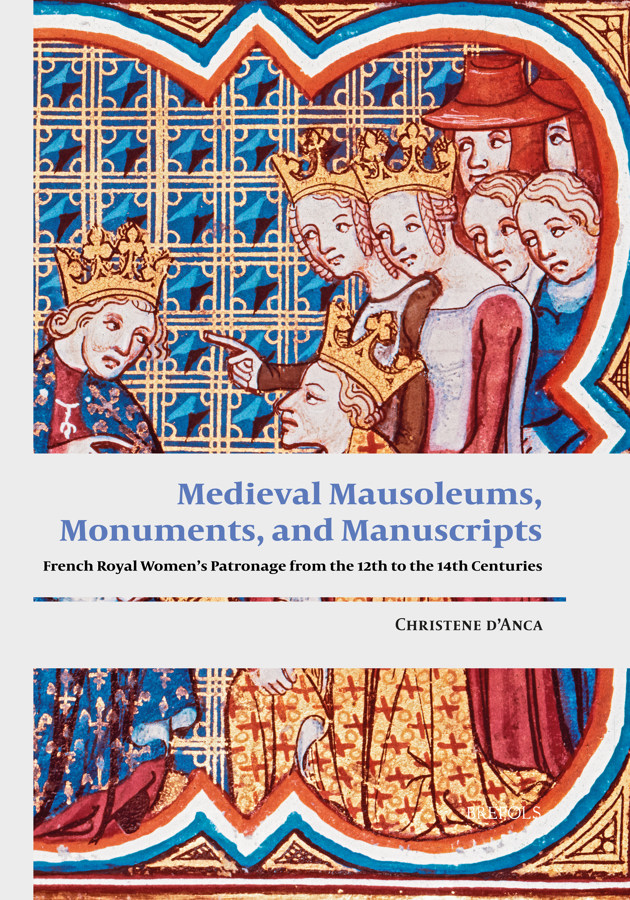
New Publication: ‘The Baptismal Font Canopy of St. Peter Mancroft, Norwich’, edited by Amy Gillette and Zachary Stewart

The early 16th-century baptismal font canopy of the church of St. Peter Mancroft, Norwich, is one of only three such structures to survive anywhere in the British Isles. Inspired by the recent rediscovery of four attributable panels at the Philadelphia Museum of Art, this study offers a trans-temporal account of the canopy’s initial creation and subsequent use, mutilation, and modification. Written by a team of scholars in art/architectural history, art conservation, heritage documentation, literary studies, and museum curation, it explores the installation’s multiple artistic, ritual, and cultural contexts, from late medieval and early modern Europe to modern-day North America.

Find out more and order the book here.

Table of Contents

Introduction: A Meditation on the Art-Historical Fragment, Amy Gillette and Zachary Stewart

Part 1: Settings

Chapter 1: A “Parish Church Par Excellence”: The Architecture and Arts of St. Peter Mancroft, Norwich, from the Conquest to the Reformation, by Zachary Stewart

Chapter 2: The Treasure House of the Church of St. Peter Mancroft, Norwich: What Factors Best Explain Its Position and Design?, by Lesley Milner

Part 2: Analyses

Chapter 3: A Technical Study of the Font and Font Canopy at St. Peter Mancroft, Norwich, in the East Anglian Context, by Lucy Wrapson

Chapter 4: Four English Carved Panels at the Philadelphia Museum of Art Associated with the Church of St. Peter Mancroft, Norwich: A Technical Analysis, by Kate Duffy, Jack Hinton, Peggy Olley, and Behrooz Salimnejad

Chapter 5: The Challenges of Visualizing Fixed Monuments in Medieval Art and Architectural History, by Brent R. Fortenberry and Benjamin Baaske

Chapter 6: Toward a Reconstruction of the Mancroft Font Canopy, by Zachary Stewart

Part 3: Contexts

Chapter 7: English Medieval Timber Church Furniture c.1300–1540, by Charles Tracy

Chapter 8: Thinking with the Font: Ritual and Drama, by Ellen Ketels Rentz

Chapter 9: The Microarchitectural Mise-en-Scène of Baptism, c.1200–c.1700: A Short History, by Achim Timmermann

Chapter 10: Hidden in Plain Sight: How the Complex Iconography of Late-Medieval English Font Covers Saved Some, by Sarah Blick

Chapter 11: “Gloriously Appareled”: The Ornament of the St. Peter Mancroft Canopy, by Amy Gillette

Part 4: Afterlives

Chapter 12: The Afterlife of Late Gothic Furnishings in British Churches and Collections, by Kim Woods

Chapter 13: “A Study Close at Hand of These Fine Examples of Gothic Decoration”: The Collecting of English Medieval Woodcarvings in American Museums, by Jack Hinton

CFP: ‘Authority and Identity in the Middle Ages’, The Courtauld Postgraduate Medieval Colloquium, deadline 31 January 2024

The Courtauld Postgraduate Medieval Colloquium

Friday, March 15, 2024, The Courtauld, Vernon Square campus, London

Studies of medieval art have often focused on works of art featuring, or patronised by, those in positions of authority. More recently, scholars have moved towards a wider understanding of the ways in which works of art established a sense of authority and impacted the identity of the communities who viewed and used them. However, concepts of ‘authority’ and ‘identity’ and their complex interrelationship are rarely interrogated in a holistic way.

The two concepts are often inextricably linked. Identities were shaped by those in positions of authority; images endowed with ‘authority’ could influence how those interacting with them self-identified; patrons claimed authority through images, often forging their public identity as charitable, pious figures. But what did it mean to claim authority in the Middle Ages, and what exactly did it mean to have an identity? Even today, these concepts are complex and multi-faceted – most notably, one’s self-identification can differ dramatically from that imposed by others.

In this colloquium we want to address these topics afresh, exploring how art and material culture reflect and produce concepts of identity and authority. Papers might consider issues such as gender, sexuality, race, religion, and culture more broadly. We will also consider how alternative perspectives could reinforce or subvert ideas of an authoritative figure, voice or image.

The Courtauld Institute’s Annual Postgraduate Medieval Colloquium invites speakers to consider the complex intersections of authority and identity and how these two distinct, but often bound concepts were presented and experienced in the art and material culture of the Middle Ages.

We welcome applications from research students at all levels, in the UK and abroad, though regrettably we cannot cover speakers’ travel or accommodation costs. Papers could embrace a variety of topics including, but in no way limited to:

  • How works of art are mediated through links to religious or secular authority figure(s)
  • The mythologizing of identity by authority figures
  • The ways in which personal or communal identities are reflected or projected
  • The subversion of authority and authority figures
  • Minority versus majority identity and authority
  • Groups and belonging
  • Identity and non-belonging: Ideas of ‘otherness’ or monstrosity
  • Subversion of cultural/religious/personal/communal identity
  • Suppression of identity.
  • Revealing and concealing identities
  • Identity and authority in relation to gender and sexuality
  • Identity and authority of genealogy and lineage
  • The ‘afterlives’ of identities: changes in reception and perception through time

The Medieval Postgraduate Colloquium will take place at the Courtauld’s Vernon Square campus, in person only. To apply, please send a proposal of up to 250 words for a 20-minute paper, together with a CV to Florence.eccleston@courtauld.ac.uk and Jane.stewart@courtauld.ac.uk by the 31st January 2024.

Conference: ‘SUPERFICIES Surfaces, Skins and Textures Sensory Encounters with Books and Related Multi-layered Objects’, University of Zurich, 18-20 January 2024

Textures of Sacred Scripture | Materials and Semantics of Sacred Book Ornament

The research group “Textures of Sacred Scripture. Materials and Semantics of Sacred Book Ornament” and the Chair of Medieval Art History at the University of Zurich are organizing an international conference on “Superficies – Surfaces, Skins, and Textures. Sensory encounters with books and related multi-layered objects”. The conference, funded by the Swiss National Science Foundation, is scheduled to take place at the Institute of Art History of the University of Zurich on 18-20 January 2024.

Surfaces are boundaries that mediate our sensory interactions with objects. Surfaces reveal, but they also conceal. In traditional aesthetic discourse, their multiple tactile and visual qualities are often contrasted with depth, and in a pejorative sense, superficiality is opposed to inner virtue and an intellectual understanding of things. This stark opposition between outer surface and inner core is put to the test by multi-layered objects such as books. Here, surfaces abound. Once opened, books in codex format display a multitude of layered skins and textures that are essential for the visual and haptic experience of the object in space and time. Perhaps more than other objects, books tangibly embody the complex relationship between surface and depth, through their composition and spatial structure as multi-layered objects. While the surfaces of sculpture and architecture have recently come to the attention of art historians, the surfacescapes – to use an expression coined by the art historian Jonathan Hay – of books and other multi-layered objects have been far less examined.

The conference aims to take a fresh look at the diversity of surface landscapes in books and other multi-layered objects. From the highly valuable vestments that clothe the exteriors of precious books to the parchment skins of their interiors, all layers are the product of diverse surface treatments. Techniques such as coating, polishing, tooling, and engraving determine the visual and haptic qualities of bindings and pages, and are reflected in their textures and sensory qualities.

Find out more here.

Conference Programme

N.B.: All times in CET (Central European Time)

18th January 2024, Room KOL-F-101

18:15–19:30: Keynote Lecture
Kathryn Rudy (University of St. Andrews)

19:45: Speakers’ dinner

19th January 2024, Room KOL-G-201

09:00 – 09:30: Introduction
Simon Breitenmoser, David Ganz, Thomas Rainer (University of Zurich)

Imitation and Intermediality

09:30–10:15: Display Script and Surfaces
Hanna Vorholt (University of York)

10:15–11:00:“Shredding it”: Genealogy of Purple Glow
Nicholas Herman (University of Pennsylvania)

11:00–11:30: Coffee break

11:30–12:15: Matters of the Flesh and Polymateriality in the Manuscripts of Antonio da Monza
Elizabeth Doulkaridou (Université Paris 1 Panthéon-Sorbonne)

12:15–13:00: Speaking Surfaces: Framing Pictorial Narrative in Twelfth-century England
Saskia C. Quené (Utrecht University)

13:00–14:00: Lunch break


Multi-layered Surfaces Beyond the Book

14:00–14:45: Gold, Silver, and Copper: The Layers and Textures of the Multimaterial Surface of a 15th Century Triptych
Simon Breitenmoser (University of Zurich)

14:15–15:30: Neglected Surface: The Great Cameo of France, Ornament and Perception
Maximilian Geiger (Bergische Universität Wuppertal)

15:30–16:00: Coffee break

Playing with Surfaces

16:00–16:45 Liber mirabiliter compaginatus: Surfaces of play in puzzle books
Magdalena Herman (University of Warsaw)

16:45–17:30 Altering Surfaces in Islamic Manuscripts
Alya Karame (Collège de France)

19:30 Speakers’ dinner


20th January 2024, Room RAI-F-041

Transparency

09:00–09:45 “Pergamenum diaphanum est”: Parchment as a Transparent Medium
Megan McNamee (University of Edinburgh)

09:45–10:30 Material Metamorphoses – The Black Surfaces of Ms 493 between Transparency and Opacity
Marie Hartmann (Freie Universität Berlin)

10:30–11:00 Coffee break


The Body of the Book

11:00–11:45 Contingent touch and the pleasures of the surface. Sensual encounters in a medieval health manuscript
Tina Bawden (University of Michigan) and Susanne Huber (University of Bremen)

11:45–12:30 Book as Body, Tear as Trauma
Georgios Boudalis (Museum of Byzantine Culture of Thessaloniki)

12:30–13:00 Final Discussion

Lecture: ‘Entanglement in Shared Cultural Spaces: Hebrew Book Art in Iberia, c. 1300’, with Katrin Kogman-Appel, Vernon Square Campus, Courtauld Institute of Art, 17 Jan 2024, 5.30-7pm (GMT)

Several Hebrew Bibles were produced almost simultaneously around the year 1300 in Tudela and Perpignan. By and large all these manuscripts display similar schemes of non-figural, mostly ornamental decoration. And yet, similar as they seem to be, these works diverge in style and the nature of the decoration displays features typical of Islamicate art alongside those that are associated with the Gothic style and techniques, testimony to different cultural encounters that took place in the vicinities of their makers and readers. This paper offers a synchronic look at these dynamics of entanglement and examines how the urban spatial constellations in Tudela and Perpignan determined them and shaped these decoration schemes.

Katrin Kogman-Appel, University of Münster, has published work on Hebrew manuscript painting, Jewish book culture, and the relationship of Jewish visual cultures to Christian and Islamicate arts. Among her books are A Mahzor from Worms. Art and Religion in a Medieval Jewish Community, (Harvard University Press 2012) and Catalan Maps and Jewish Books (Brepols 2020).

Organised by Dr Tom Nickson (The Courtauld) as part of the Medieval Lecture and Seminar Series.

Find out more information and book tickets here.