International Symposium Artista anònim, artista amb signatura. Identitat, estatus i rol de l’artista en l’art medieval Facultat de Filosofia i Lletres de la Universitat Autònoma de Barcelona and the Museu Episcopal de Vic, 7-8 November 2014
The team of the Research Project Magistri Cataloniae is delighted to invite you to attend the International Symposium “Artista anònim, artista amb signatura. Identitat, estatus i rol de l’artista en l’art medieval”, that will be held on 7-8 November 2014 at the Facultat de Filosofia i Lletres de la Universitat Autònoma de Barcelona and the Museu Episcopal de Vic.
This Symposium has been organized by the Research Project “Artistas, patronos y público. Cataluña y el Mediterráneo. Siglos XI-XV. MAGISTRI CATALONIAE” (MICINN HAR2011-23015) of the Universitat Autònoma de Barcelona and the Museu Episcopal de Vic, with the collaboration of the Facultat de Filosofia i Lletres of the UAB.
Registration payment is still unavailable. In order to book a place, fill in the form. Registration will take effect only after the payment. For further information on the Symposium and registration please consult the website: www.simposi-magistricataloniae.org
Call for Session Proposals Mary Jaharis Center for Byzantine Art and Culture Sponsored Session 22 International Medieval Congress, University of Leeds, 6-9 July 2015 Deadline: 31 August 2014
Photo: The Metropolitan Museum of Art, New York
To encourage the integration of Byzantine studies within the scholarly community and medieval studies in particular, the Mary Jaharis Center for Byzantine Art and Culture seeks proposals for a Mary Jaharis Center sponsored session at the 22nd International Medieval Congress, University of Leeds, July 6–9, 2015. We invite session proposals on any topic relevant to Byzantine studies.
The thematic strand for the 2015 IMC is “Reform and Renewal.” See the IMC Call for Papers (http://www.leeds.ac.uk/ims/imc/imc2015_call.html) for additional information about the theme and suggested areas of discussion.
-Title
-100-word session abstract
-Session moderator and academic affiliation
-Information about the three papers to be presented in the session. For each paper: name of presenter and academic affiliation, proposed paper title, and 100-word abstract
-CV
Successful applicants will be notified by mid-September if their proposal has been selected for submission to the International Medieval Congress. The Mary Jaharis Center will submit the session proposal to the International Medieval Congress and will keep the potential organizer informed about the status of the proposal.
If the proposed session is approved, the Mary Jaharis Center will reimburse session participants (presenters and moderator) up to $500 maximum for EU residents and up to $1000 maximum for those coming from outside Europe. Funding is through reimbursement only; advance funding cannot be provided. Eligible expenses include conference registration, transportation, and food and lodging. Receipts are required for reimbursement.
The session organizer may act as the moderator or present a paper. Participants may only present papers in one session.
Please contact Brandie Ratliff (mjcbac@hchc.edu), Director, The Mary Jaharis Center for Byzantine Art and Culture with any questions.
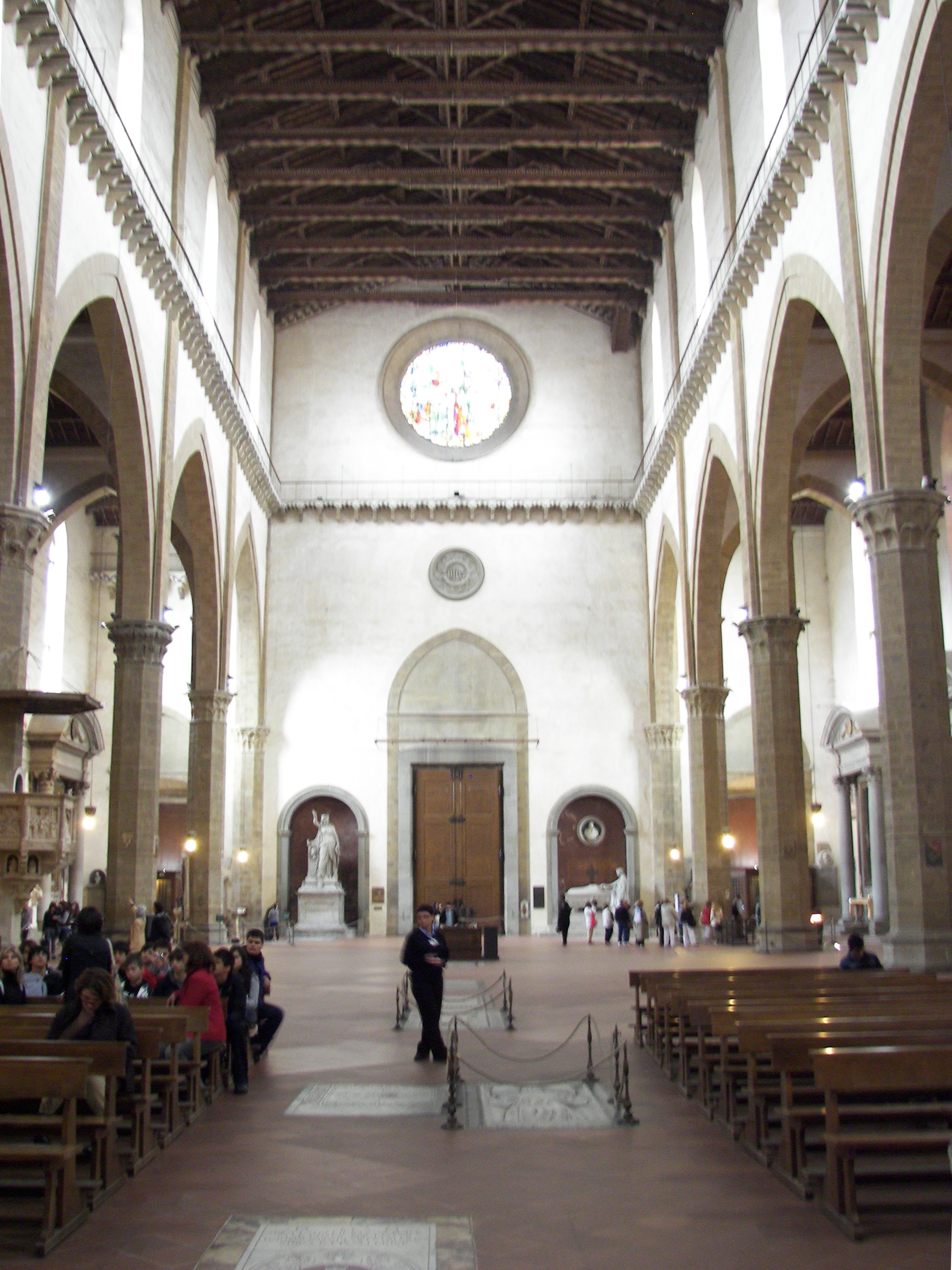
Italian Renaissance churches and the museums connected to them house impressive but often overlooked treasures in a variety of media: paint, stone, textile, glass, parchment, and precious metals and gems. Within the walls of the Museum, Archive, and Church of Santa Croce in Florence is a group of artworks created by Pacino di Bonaguida (about 1303-about 1347) and his workshop. Once one looks past the impressive fresco cycles by Giotto, Taddeo Gaddi, Bernardo Daddi and others, and after using a bit of imagination to envision what the church looked like before Giorgio Vasari’s renovations in the 16th century and the Neoclassical revolution of the 18th and 19th centuries, one finally encounters sets of stained glass windows and a pair of choir books that have survived the Black Death, floods, and a world war. In the…
This Symposium is to be held jointly by the Church Monuments Society and the Centre for Medieval and Modern Studies, University of Kent. The Symposium will focus on the monuments in the cathedral together with related high status tombs. We will begin on Friday afternoon with an optional visit to the cathedral’s mason’s yard and with an evening reception and dinner, followed by the keynote lecture. Lectures will begin on Saturday morning, and after lunch we will take the coach to the cathedral when delegates will have their own free time to look around or visit the cathedral library. After evensong we will have sole access to the cathedral together with talks on the monuments. On Saturday evening there is a drinks reception and dinner, followed by members’ contributions. On Sunday a varied lecture programme will be delivered, and the Symposium will close with afternoon tea at 4.00. The event is also open to those who wish to attend on a daily basis.
List of speakers
Kent Rowland Henry VIII’s influence at Canterbury Cathedral
Tim Tatton Brown The late Medieval monuments and shrines in the eastern arm of Canterbury Cathedral
David Green The Black Prince
Kenneth Fincham & David Shaw The Boys monument
Jessica Barker Margaret Holland and her two husbands
Kim Woods Effigies in alabaster in Canterbury Cathedral
Sophie Oosterwijk Copper-alloy tombs in Medieval Europe
Melanie Caiazza Expeditions and effigies: (re)locating death, burial and family narratives – a closer look at the case of Sir James Hales
Barbara Tomlinson Commemorating Admiral Sir George Rooke (1650-1708) and his naval contemporaries
Jean Wilson Lies, damned lies and monuments: two military memorials in Canterbury Cathedral
Anyone wishing to give a short paper under members’ contributions should contact the organiser, Mark Downing.
The Symposium is to be held at the University of Kent, Canterbury, which is about 20 minutes walk from the city centre. Accommodation is in single en-suite bedrooms. The cost for the full Symposium is £250 (£270 for non-members), full board. Alternatively, delegates may choose to attend on a non-residential basis: Saturday – morning lectures, lunch, coach travel to the cathedral and entry (fee: £60, non-members £70), and/or Sunday – lectures including lunch (fee: £45 non-members £55).
For further information on how to book, visit the Church Monuments Society’s website.
Call for ICMA Sponsored Session Proposals College Art Association, Washington DC, 3-6 February 2016
Deadline: 15 August 2014
The International Center of Medieval Art (ICMA) seeks proposals for sessions to be held under the organization’s sponsorship in 2016 at the annual College Art Association. Session organizers and speakers must be ICMA members. Proposals for ICMA sponsorship should consist of a title, an abstract, and a CV. Thanks to a generous grant from the Kress Foundation, funds may be available to defray travel costs of sponsored session speakers. Please direct all session proposals and inquiries by Aug. 15, 2014 to the Chair of the Programs Committee: Elina Gertsman, Department of Art History and Art, Case Western Reserve University, email: elina.gertsman@case.edu.
Call for Papers: The Cross in Medieval Art International Center of Medieval Art Sponsored Session (Kalamazoo 2015) Deadline: 15 September 2014
Recent art-historical research has brought us new understandings of the central symbol of Christianity, the Cross, in different places, at different times, in different media, and with different theoretical and conceptual foci. The Cross, its representations and significations, and the appearance and materiality of those representations, features in many areas of current research, but not often as a central subject to be dealt with thematically and comparatively. This session invites considerations of images depicting, representing or referring to the Cross in any media, and across the middle ages, from early to late. The aim of the session is to consider what can be gained at this particular moment in scholarship from a common concentration on the theme of the Cross. Therefore, proposers are invited especially to consider their subject matter in light of theoretical perspectives that have been prominent in recent art-historical scholarship, such as (but not limited to) affect, emotion, movement, medium and materiality.
Conference: Invention and Imagination in British Art and Architecture, 600-1500 London, The British Museum, 30 October – 1 November 2014 A collaborative event organised by the Paul Mellon Centre and The British Museum
This conference will explore the ways in which artists and patrons in Britain devised and introduced new or distinctive imagery, styles and techniques, as well as novel approaches to bringing different media together. It is concerned with the mechanisms of innovation, with inventive and imaginative processes, and with the relations between conventions and individual expression. The conversation will therefore also address the very notions of sameness and difference in medieval art and architecture, and how these may be evaluated and explained historically.
Topics for discussion can include authorship, creativity, experimentation, envisaging, representation, and regulation by guilds or patrons, as well as casestudies of particular objects, buildings, commissions or practices.
The conference will take place on 30th October – 1st November at The British Museum; it will include collaborations with the museum’s Department of Prehistory & Europe and opportunities to see works from the collection.
List of participants and speakers’ titles & abstracts (A-Z)
Jessica Barker (PhD Candidate : Courtauld Institute of Art) Effigies of Husband and Wife at Bredon and Lowthorpe: Investigating Unique Iconography on Fourteenth-Century Funerary Sculpture
Paul Binski, Keynote Speaker (Professor of the History of Medieval Art History : University of Cambridge) Medieval Invention and its Potencies
Kerry Paul Boeye (Assistant Professor of Art History : Loyola University Maryland) Iconographic Invention in Thirteenth- and early Fourteenth-Century English Psalters
Alexandrina Buchanan (Lecturer in Archive Studies : University of Liverpool) Gained in Translation: Architectural Drawing and Three-Dimensional Geometry
Andrew Budge (PhD Candidate, Birkbeck College : University of London) The Fourteenth rebuilding of the Collegiate Church of St Mary Warwick: Risk-taking Innovation or Simple Fashion Statement?
James Alexander Cameron (PhD Candidate : Courtauld Institute of Art) The Englishness of English Sedilla
Kristen Collins (Associate Curator, Department of Manuscripts : Getty Museum) Resonance and Reuse: The Reinvention of a Late-Romanesque Vita Christi in Fifteenth-Century East Anglia
Lloyd De Beer (Project Curator, Late Medieval Collections : The British Museum) The Key of David and the Temple of Justice: An Analysis of the Chichester Seal Matrix
Veronica Decker (Art History Department : University of Vienna) The Patronage of William of Wykeham: Imagination and Experimentation in Fourteenth-Century Art and Architecture
Emily Guerry (Junior Research Fellow in History of Art, Merton College : University of Oxford) Picturing the Saints: Relics, Patronage and the “Westminster Court Style” in Gothic Cult Painting
Jack Hartnell (Postdoctoral Fellow, Max Planck Institute for the History of Science, Berlin/ Victoria and Albert Museum) The Wound Man and the English Medical Imagination
James Hillson (PhD Candidate : University of York) Iterative Invention: Delayed Design in Dynastic Gothic at St Stephen’s Chapel Westminster and Norwich Cathedral Cloister
Aden Kumler, Keynote Speaker (Associate Professor of Art History and the College : University of Chicago) Envisioning Art as Process in Medieval Britain
Helen Lunnon (Tutor in Art History : University of East Anglia) Inventio Porticus
Julian Luxford (Reader in Art History : University of St Andrews) Inscribed Churches in Late Medieval England
John Munns (Lecturer in the History of Medieval Art : University of Cambridge) Seeing Things: from Art to Apparition in the High Middle Ages
Laura Slater (Post Doctoral Researcher and Teaching Assistant, Department of Art History : University of York) Inventing and Imagining Place: Jerusalems in England and the Case of Westminster
Roger Stalley (Professor Emeritus of the History of Art : Trinity College) Reason and Imagination in English Gothic Architecture
For further information, see the conference website: http://www.paul-mellon-centre.ac.uk/146/
Autumn School Latin Paleography and Medieval Liturgy University of Ghent, 20 – 22 October 2014 Application deadline: 31 August 2014
This Autumn School is organised for MA and PhD-students in Medieval Studies (art history, history, philosophy, literature, music, etc.) who are required to work with handwritten medieval documents in Latin or with liturgical sources and texts containing liturgical quotations or references.
The Autumn School starts with two days of parallel courses in Latin Paleography and Medieval Liturgy, taught by leading experts in the field.
The sessions about Medieval Liturgy focus, after an elaborate introduction to the various liturgical books, on the liturgical conventions in France and Germany, on liturgy and music, on liturgy and architecture and on books of hours.
The sessions about Latin paleography explain the interactions between paleography, Diplomatics and Codicology, and will then focus ondifferent scripts, the evolution and layout of the page and reading practices, the organisation of the scriptoria and the position of the scribe.
On the third day of the course, workshops are organized for each theme, in which all topics dealt with during the previous days will be brought together in an interactive session.
In the space of three days, students will thus acquire a basic knowledge of either Latin Paleography or Medieval Liturgy as well the skills to implement this knowledge in their own research projects.
For the course on Latin Paleography, students need to have already a basic knowledge of (classical) Latin grammar and vocabulary. For the course in Medieval Liturgy, no previous knowledge is required.
Both courses are delivered in English. Since both courses are taught at the same time, participants can enrol for only one course.
For further information on programme and registration, see here.
I. Conference Reminder Gothic Ivories: Content and Context Saturday 5 July 2014, The Courtauld Institute of Art, London Sunday 6 July 2014, The British Museum, London
Jointly organised by The British Museum and The Courtauld Gothic Ivories Project, this event follows on from the successful 2012 conference Gothic Ivories: Old Questions New Directions (V&A – Courtauld). Celebrating new research on Gothic ivory carving, papers will focus on a wide range of topics arising from the study of Gothic ivory carving and Embriachi pieces, related to the themes of content and context.
Themed sessions will be dedicated to questions of iconography, sources and original use and context, research into provenance, relationships with other media, ivory carving in the 16th century, history of collecting in the 19th and 20th century.
For the full programme, see here. Online booking now availablehere.
II. Special Issue The Sculpture Journal New Work on Old Bones (with papers from the 2012 Gothic ivories conference) For the table of contents, see here.
For further news from the world of Gothic ivories, see the news-section on the website of the Gothic Ivories project.
The Friends of the Warburg Institute have launched the following petition which may be of interest to those who know about the Warburg Institute and have benefited from its wonderful library:
“The Times Higher Education recently reported that the University of London has taken legal action to challenge its own deed of trust concerning the care and integrity of the Warburg Institute. Possible results of this action include the dispersal of the library, or its relocation abroad.
This is not the first timethe Institute has been threatened: it was relocated from Hamburg to London in 1933, endangered by Hitler’s rise to power, and although the University of London accepted the collections in 1944 (the agreement currently under review), similar action was considered in 2010.
We call on the University of London to withdraw their legal action and keep the Warburg Institute just as it is, for three reasons:
1. To keep the Warburg Institute’s collections intact. In over 50 years since the library’s resettlement in London, it has grown from 80,000 to 350,000 volumes, 40% of which are unique and not held in the British Library.
2. To preserve Aby Warburg’s intellectual legacy. The Institute’s collections are organised unlike any other in the world – according to a system developed by Warburg as a product of his own research. Dispersal is tantamount to destroying one of Warburg’s greatest works of scholarship – the library itself.
3. To maintain the vibrant intellectual community the Warburg fosters. A one-of-a-kind collection both in content and form, the Warburg has drawn together a world-class scholarly community for decades. Taking the collections outside of the space of the Institute would displace that community of researchers.”
To sign the petition, please follow this link.
For a statement from the Warburg Institute regarding the High Court proceedings, click here.