Call for Papers: ‘Movement’, Medieval Studies Student Colloquium, Cornell University, 26-27 March 2021 (Deadline 15 January 2021)

The Medieval Studies Program at Cornell University is pleased to announce its thirty-first annual graduate student colloquium (MSSC). The conference will take place on the 26th and the 27th of March, to be held virtually over Zoom.

This year’s colloquium focuses on the theme of movement. Movement denotes the movement of peoples, cultures, thoughts and goods, the migration of plants and of animals. What happens to movement when it is frozen in stone (the swoop of hair across a person’s face in a marble statue)? How does an idea change when it is translated from one language to another? We are interested in movement defined broadly and represented across a range of disciplines.

We invite 20-minute papers that investigate movement in the Middle Ages as defined by/within a range of different disciplines and perspectives. Possible topics may include (but are not limited to):

  • The migration of people, animals, and plants;
  • Cultures of movement;
  • Translation and adaptation (of cultures, languages, etc.);
  • Traditions that involve physical or spiritual movement;
  • Cosmology and the movement of celestial bodies;
  • Trade and movement in economics;
  • The stagnation or absence of “movement;”
  • Detainment;
  • The representation of “movement;”
  • Displacement, dispersal, or diaspora;
  • Moving into the “unknown;”
  • Temporal movement;
  • Effects of movement;
  • Ethics of movement.

Preference will be given to papers from underrepresented backgrounds and disciplines. We strongly encourage submissions that expand these themes and categories of inquiry beyond Christian, Western European contexts. We invite submissions in all disciplines allied to Medieval Studies, including Asian Studies, Africana Studies, Critical Race Studies, Near Eastern Studies, literature, history, the history of art, archaeology, philosophy, classics, theology, and others. The deadline for submission is 15 January 2021.

New Publication: ‘The Medieval Iberian Treasury in the Context of Cultural Interchange (Expanded Edition)’, edited by Therese Martin

The Medieval Iberian Treasury in the Context of Cultural Interchange—expanded beyond the special issue of Medieval Encounters from which it was drawn—centers on the magnificent treasury of San Isidoro de León to address wider questions about the meanings of cross-cultural luxury goods in royal-ecclesiastical settings during the central Middle Ages. Now fully open access and with an updated introduction to ongoing research, an additional chapter, composite bibliographies, and indices, this multidisciplinary volume opens fresh ways into the investigation of medieval objects and textiles through historical, art historical, and technical analyses. Carbon-14 dating, iconography, and social history are among the methods applied to material and textual evidence, together shining new light on the display of rulership in medieval Iberia.

Contributors are Ana Cabrera Lafuente, María Judith Feliciano, Julie A. Harris, Jitske Jasperse, Therese Martin, Pamela A. Patton, Ana Rodríguez, and Nancy L. Wicker.

Table of Contents

1. Beyond the Treasury of San Isidoro: a Tale of Two Projects, Therese Martin

 2. Caskets of Silver and Ivory from Diverse Parts of the World: Strategic Collecting for an Iberian Treasury, Therese Martin

 3. Narrating the Treasury: What Medieval Iberian Chronicles Choose to Recount about Luxury Objects, Ana Rodríguez

 4. Textiles from the Museum of San Isidoro (León): New Evidence for Re-Evaluating Their Chronology and Provenance, Ana Cabrera Lafuente

 5. Sovereign, Saint, and City: Honor and Reuse of Textiles in the Treasury of San Isidoro (Leon), María Judith Feliciano

 6. Between León and the Levant: the Infanta Sancha’s Altar as Material Evidence for Medieval History, Jitske Jasperse

 7. Demons and Diversity in León, Pamela A. Patton

 8. Jews, Real And Imagined, at San Isidoro De León and Beyond, Julie A. Harris

 9. The Scandinavian Container at San Isidoro, León, in the Context of Viking Art and Society, Nancy L. Wicker

Find out more here.

Online Lecture: ‘Three historical oddities, from the fall of the Roman empire to the BC/AC divide & the continent of Europe’ with Eric Fernie, BAA Lecture, 6 January 2021, 5:00 PM (GMT)

The British Archaeological Association’s January Lecture will be by Professor Eric Fernie (Courtauld Institute of Art) who will be presenting ‘Three historical oddities, from the fall of the Roman empire to the BC/AC divide and the continent of Europe’.

The lecture will be taking place on Zoom on 6 January 2021, 5:00 PM (GMT). Register here.

New Publication: ‘Picturing Death 1200–1600’, edited by Stephen Perkinson & Noa Turel

Series: Brill’s Studies in Intellectual History, Volume: 321/50Brill’s Studies on Art, Art History, and Intellectual History, Volume: 321/50

Picturing Death: 1200–1600 explores the visual culture of mortality over the course of four centuries that witnessed a remarkable flourishing of imagery focused on the themes of death, dying, and the afterlife. In doing so, this volume sheds light on issues that unite two periods—the Middle Ages and the Renaissance—that are often understood as diametrically opposed. The studies collected here cover a broad visual terrain, from tomb sculpture to painted altarpieces, from manuscripts to printed books, and from minute carved objects to large-scale architecture. Taken together, they present a picture of the ways that images have helped humans understand their own mortality, and have incorporated the deceased into the communities of the living. 

Contributors: Jessica Barker, Katherine Boivin, Peter Bovenmyer, Xavier Dectot, Maja Dujakovic, Brigit Ferguson, Alison C. Fleming, Fredrika Jacobs, Henrike C. Lange, Robert Marcoux, Walter S. Melion, Stephen Perkinson, Johanna Scheel, Mary Silcox, Judith Steinhoff, and Noa Turel.

Table of Contents

Introduction, Stephen Perkinson and Noa Turel

Part 1: Housing the Dead

Chapter 1: Looking beyond the Face: Tomb Effigies and the Medieval Commemoration of the Dead, by Robert Marcou

Chapter 2: Portraiture, Projection, Perfection: The Multiple Effigies of Enrico Scrovegni, by Henrike Christiane Lange

Chapter 3: Plorans ploravit in nocte: The Birth of the Figure of the Pleurant in Tomb Sculpture, by Xavier Dectot

Chapter 4: Gendering Prayer in Trecento Florence: Tomb Paintings in Santa Croce and San Remigio, by Judith Steinhoff

Chapter 5: Two-Story Charnel-House Chapels and the Space of Death in the Medieval City, by Katherine M. Boivin

Part 2: Mortal Anxieties and Living Paradoxes

Chapter 6: The Living Dead and the Joy of the Crucifixion, by Brigit G. Ferguson

Chapter 7: The Speaking Tomb: Ventriloquizing the Voices of the Dead, by Jessica Barker

Chapter 8: Feeding Worms: The Theological Paradox of the Decaying Body and Its Depictions in the Context of Prayer and Devotion, by Johanna Scheel

Chapter 9: Not Quite Dead: Imaging the Miracle of Infant Resuscitation, by Fredrika H. Jacobs

Part 3: The Macabre, Instrumentalized

Chapter 10: Dissecting for the King: Guido da Vigevano and the Anatomy of Death, by Peter Bovenmyer

Chapter 11: Covert Apotheoses: Archbishop Henry Chichele’s Tomb and the Vocational Logic of Early Transis, by Noa Turel

Chapter 12: Into Print: Early Illustrated Books and the Reframing of the Danse Macabre, by Maja Dujakovic

Chapter 13: Death Commodified: Macabre Imagery on Luxury Objects, c. 1500, by Stephen Perkinson

Part 4: Departure and Persistence

Chapter 14: Coemeterium Schola: The Emblematic Imagery of Death in Jan David’s Veridicus Christianus, by Walter S. Melion

Chapter 15: A Protestant Reconceptualization of Images of Death and the Afterlife in Stephen Bateman’s A Christall Glasse, by Mary V. Silcox

Chapter 16: Shifting Role Models within the Society of Jesus: The Abandonment of Grisly Martyrdom Images c. 1600, by Alison C. Fleming

Find out more here.

Postdoctoral Research Fellowship: Late Antique and/or Medieval Greek and Near Eastern Narrative, Ghent University, deadline 5 January 2021

The Department of Literary Studies at Ghent University (Belgium) is seeking well-qualified applicants for a fully-funded and full-time postdoctoral research fellowship in the European Research Council Consolidator Grant project Novel Echoes. Ancient novelistic receptions and concepts of fiction in late antique and medieval secular narrative from East to West. Its Principal Investigator is Prof Dr Koen De Temmerman, who specializes in ancient fiction and its reception. 

The successful applicant will start employment after 1 March 2021. In order to be eligible, candidates must have obtained their PhD degree at the time of application or demonstrate that they will have that degree in hand by the start of their postdoctoral fellowship. 

Within the ERC project, subprojects are assigned to individual team members. For the current vacancy, this subproject is situated in the following area: GREEK AND NEAR EASTERN STORY-TELLING: CONTACTS AND RECEPTION IN THE EASTERN MEDITERRANEAN IN LATE ANTIQUITY AND THE MIDDLE AGES. The successful candidate will work on receptions of ancient Greek fiction in Near Eastern story-telling, on the importance of rhetorical, hagiographical and/or other narrative traditions therein, and on concepts of fiction in cross-cultural narrative environments of the Eastern Mediterranean (in, for example, Christian, Islamic, Zoroastrian, Jewish, Samaritan, or Manichaean literary corpora). 

The successful candidate will spend at least 70% of their time on academic research, contribute to the strong research tradition of the Department and the University by pursuing excellence in his/her research and by publishing in journals and with publishers that are internationally accepted as being of the highest quality, publish under the parameters of the project in consultation with the Principal Investigator, live in Belgium, and play a leading role in the scholarly activities of the research group (e.g. by organizing events, co-supervizing PhD students, etc.). 

Qualifications

  • Thesis-based doctorate (obtained max. 6 years ago). 
  • Excellent command of (ancient or Byzantine) Greek and/or one or more Near Eastern languages (Arabic, Persian, Syriac, Coptic, Armenian, Georgian). 
  • Expertise in comparative literature and/or literary theory;
  • A demonstrable interest or specialization in intellectual or cultural exchange between the Greek/Byzantine world and Near Eastern cultures;
  • Demonstrable research experience with cross-cultural transmissions, translations or adaptations of narrative (or, more generally, cultural) production.

New Publication: The Interaction of Art and Relics in Late Medieval and Early Modern Art, ed. Livia Stoenescu

The collection of essays gathered in this volume investigates the interaction between art and relics as a distinct historical relevance for devotional art of Early Modernity and the Renaissance. Recent studies in the material culture of artifacts from these periods have drawn increasing attention to a sense of material tangibility derived from relics. Putting that conclusion into perspective, this edited collection focuses on the aesthetic meaning generated by a specific material culture of sanctity – one in which artists based their practice upon the nature, variety, and history of relics. Works of art that contained relics shared in the aura of the relics, defining themselves as non-substitutable signs, or signs that preserved the physical relationship to the immutable nature and origin of relics. As studied in this volume, funerary monuments, chapel decorations, altarpieces, liturgical objects, and sacred sites yielded an unordinary aesthetic meaning, one that captured and at the same time transmitted the histories linked to a relic. Each chapter emphasizes the specific history contained within works of art premised upon relics and thus forever embedded in the relics’ status as sacred originals.

Table of Contents:

I. Relics in the Art, Decoration, and Architectural Memory of Early Modern Chapels

Kristina Keogh, Authenticating the Holy Body: Transitions between Relic and Image in the Early Modern Cults of Caterina de’ Vigri and Maria Maddalena de’ Pazzi

Cloe Cavero de Carondelet, Reframing a Medieval Miracle in Early Modern Spain: The Origins of Our Lady del Sagrario of Toledo

Alison Fleming, Art and the Relics of St. Francis Xavier in Dialogue

II. Relics Integral to Sacred Spaces and Works of Art

Sarah Cadagin, The Interrelation of Curtains, Altarpieces, Relics: Domenico Ghirlandaio’s Response to the Cult of the Volto Santo in Lucca Cathedral

Suzanna Simor, Relics and the Visualization of the Christian Creed

Livia Stoenescu, The Place of Relics in Loca Sancta, Medieval Combinations, and the Catholic Reform

III. Artists Engaging with Relics

Jérémie Koering, Michelangelo’s Relics: Some Aspects of Artistic Devotion in Cinquecento Italy

Sarah Dillon, The Duality of Glass: Revealing and Concealing Holy Relics in Early Modern Italy

For more information, visit the Brepols website: http://www.brepols.net/Pages/ShowProduct.aspx?prod_id=IS-9782503583983-1

New Publication: Art et économie en France et en Italie au XIVe siècle: Prix, valeurs, carrières, ed. Nicolas Bock and Michele Tomasi

From editor Michele Tomasi:

This volume invites us to cross disciplinary boundaries and to venture into a field that is still too little explored for the 14th century, one of the greatest centuries of European art. The contributions gathered here shed light on the relationship between art, economy and society with the help of a few case studies, by adopting different approaches: from the microanalysis of the production of a single artist to the discussion on the organization of the whole chain of value, from manufacturing to trade and exchange networks of artistic goods. From Giotto to the Parisian goldsmith Jean le Braelier, from Avignon to Naples via Mallorca, by approaching paintings, funeral monuments, frescoes, precious wood panelling and even a royal faldistoire, the authors question the impact of economic factors on the artistic creation. These articles thus open the debate by showing the interest of investigations who dare to cross the boundaries between art history, social history, and economic history, in order to better understand the conditions of elaboration and reception of the works.

The list of chapters can be found here: https://www.unil.ch/edl/home/menuinst/table-des-sommaires/2020-2024/314-20204.html

Call for Applications: Mary Jaharis Center Grants 2021-2022, deadline 1 February 2021

The Mary Jaharis Center for Byzantine Art and Culture is pleased to announce its 2021–2022 grant competition. Our grants reflect the Mary Jaharis Center’s commitment to fostering the field of Byzantine studies through the support of graduate students and early career researchers and faculty.

Mary Jaharis Center Dissertation Grants are awarded to advanced graduate students working on Ph.D. dissertations in the field of Byzantine studies broadly conceived. These grants are meant to help defray the costs of research-related expenses, e.g., travel, photography/digital images, microfilm.

Mary Jaharis Center Publication Grants support book-length publications or major articles in the field of Byzantine studies broadly conceived. Grants are aimed at early career academics. Preference will be given to postdocs and assistant professors, though applications from non-tenure track faculty and associate and full professors will be considered. We encourage the submission of first-book projects.

Mary Jaharis Center Project Grants support discrete and highly focused professional projects aimed at the conservation, preservation, and documentation of Byzantine archaeological sites and monuments dated from 300 CE to 1500 CE primarily in Greece and Turkey. Projects may be small stand-alone projects or discrete components of larger projects. Eligible projects might include archeological investigation, excavation, or survey; documentation, recovery, and analysis of at risk materials (e.g., architecture, mosaics, paintings in situ); and preservation (i.e., preventive measures, e.g., shelters, fences, walkways, water management) or conservation (i.e., physical hands-on treatments) of sites, buildings, or objects.

The application deadline for all grants is February 1, 2021. For further information, please see https://maryjahariscenter.org/grants.

Contact Brandie Ratliff (mjcbac@hchc.edu), Director, Mary Jaharis Center, with any questions.

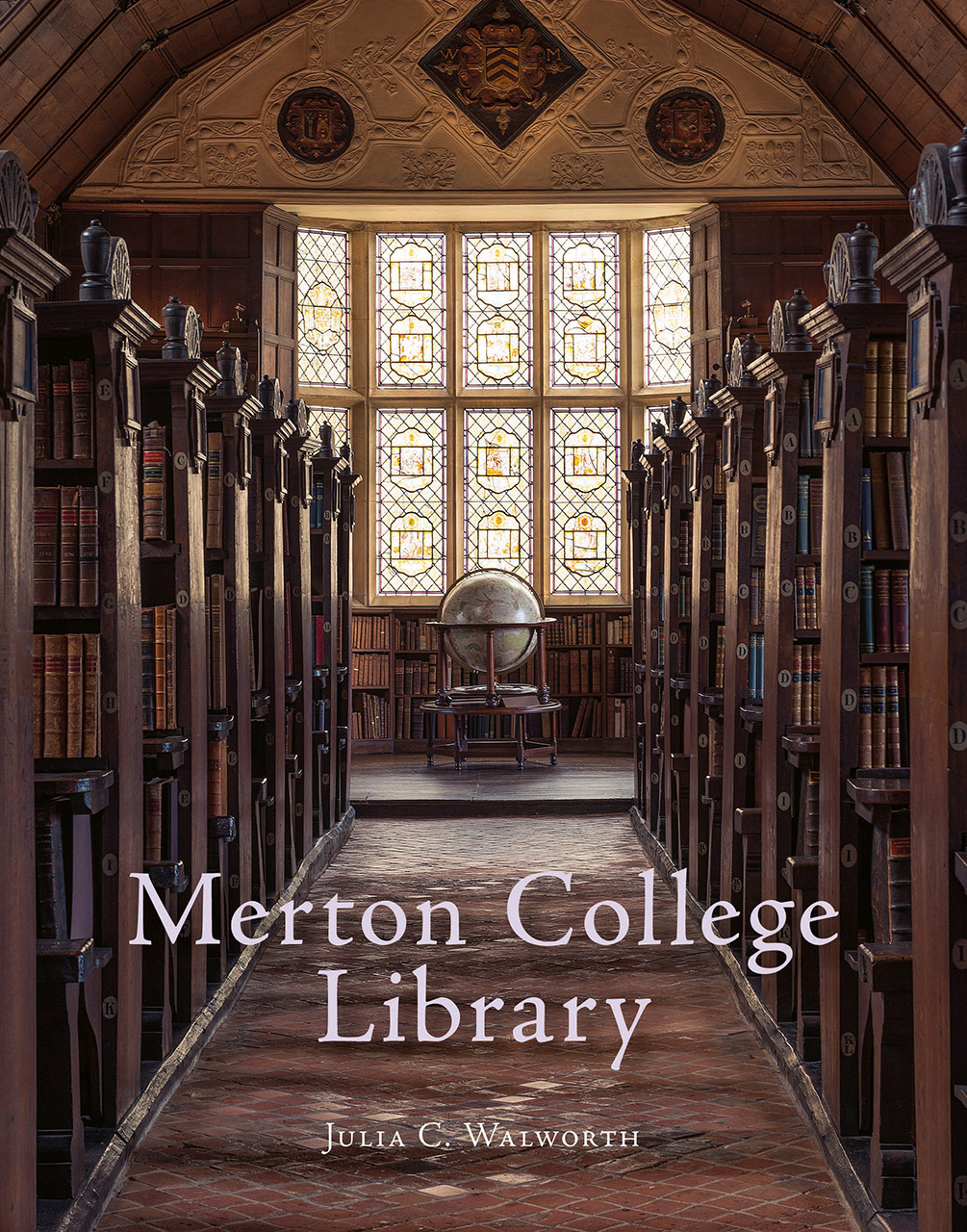
New Publication: Merton College Library: An Illustrated History, by Julia C. Walworth

The Merton library is rightly known for its antiquity, its beautiful medieval and early modern architecture and fittings and for its remarkable and important collection of manuscripts and rare books, yet a nineteenth-century plan to tear the medieval library down and replace it was only narrowly frustrated. This brief history of Europe’s oldest academic library traces its origins in the thirteenth century, when a new type of community of scholars was first being set up, through to the present day and its multiple functions as a working college library, a unique resource for researchers and a delight for curious visitors.

Drawing on the remarkable wealth of documentation in the college’s archives, this is the first history of the library to explore collections, buildings, readers and staff across more than 700 years. The story is told in part through stunning colour images that depict not only exceptional treasures but also the library furnishings and decorations, and which show manuscripts, books, bindings and artefacts of different periods in their changing contexts.

Featuring a timeline and a plan of the college, this book will be of interest to historians, alumni and tourists alike.

Julia C. Walworth is Fellow Librarian at Merton College, Oxford.

  • 144 pp, 220 x 173 mm
  • c. 85 colour illustrations
  • 9781851245390
  • PB with flaps £15.00
  • September 2020

Call for Chapters: ‘Tomb Monuments in Medieval Europe’, deadline 31 January 2021

Editors Paul Cockerham and Christian Steer

Studies on tomb monuments continue to attract international interest. The output from conferences, monographs, edited essays and the promotion of the topic by specialised research groups and societies, have created a healthy environment for the consideration of these remarkable works of art.

The last year – 2020 – has been challenging for all of us with many conferences cancelled or held online, some proceedings remaining unpublished, and research opportunities paused because of lockdowns across the globe. It is the purpose of this new volume to counterbalance this hiatus and to bring together a new collection of essays on tomb monuments from the conferences that never were.

This new volume Tomb Monuments in Medieval Europe will encourage a pan-European approach (focusing on Catholic Christendom), recognising that trade, war, diplomacy, and marriage spanned individual countries and left their mark on material culture, influencing patrons, craftsmen, methods and materials. It will consider all forms of tomb monument – incised slabs, monumental brasses, sculptured effigies, tomb chests, and so on – alongside the funerary inscriptions which accompany them.

The editors of this new volume invite proposals from established authors, early career scholars and Ph.D. students. Proposals might include themes such as the following:

  • Commission and design
  • Gender
  • Regional studies
  • The location of tomb monuments
  • Dynastic strategies
  • Change
  • Influences on chosen texts (inscriptions)
  • Antiquarianism and the written record
  • The transmission of ideas
  • The role of the liturgy
  • Audience

Please send your proposal to Dr Paul Cockerham (pcockerham25@gmail.com) and Dr Christian Steer (christianosteer@yahoo.co.uk) by 31 January 2021 with the following information:

  1. Your name
  2. Institution (where applicable)
  3. Proposed title
  4. Abstract (no more than 300 words)

Proposals will be reviewed by the editors and confirmation sent in Spring 2021 with the style-sheet; in allowing for the current complexities of archival research during the pandemic the deadline for submission of completed essays is 30 September 2022. Essays will not be accepted after this date.

This peer-reviewed volume will be published in English by Shaun Tyas Publications (Donington, U.K.) and printed in colour. Essays are to be between 5,500 and 8,500 words (including footnotes). Authors will receive a complimentary copy of the volume upon publication.