
This one day conference brings together the next generation of art history scholars to present and discuss their ongoing research. Papers will predominately focus on Italian and Northern Renaissance Art (c.1400–1600) and will encompass diverse media including tapestry, painting, engraving and stained glass.
Continue reading “Conference: New Dialogues in Art History, Warburg Institute, 26 September 2018”Symposium: Winchester, Early Medieval Power and Faith
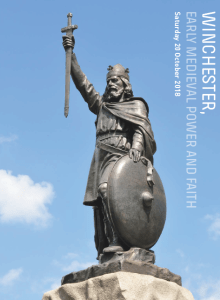 A one-day symposium dedicated to exploring the great churches of Winchester at the time of the Anglo-Saxons and Normans.
Saturday 20 October 2018
9.30am – 5.00pm
The King Alfred Conference Chamber, Guildhall, Winchester, SO23 9GH
Join historians, experts, and enthusiasts at this one day symposium exploring the great churches of Winchester at the time of the Anglo-Saxons and Normans. This symposium will cover everything from grand church architecture, manuscript studies, Anglo-Saxon folklore, and early Norman politics and relationships with Winchester.
Register by 1 October and receive the early bird price of only £55.
For more information, please visit https://www.hampshireculture.org.uk/winchester-early-medieval-power-faith.
Winchester, Early Medieval Power and Faith is the third public event of Winchester, The Royal City, a project which aims to celebrate and promote the ancient city as a centre of key significance to the development of England and English Culture.
CFP: ‘Moving Materials: Medium, Meanings, & Technique in Transit’, ICMA sponsored session, Leeds International Medieval Congress (1–4 July 2019), deadline 21 September 2018
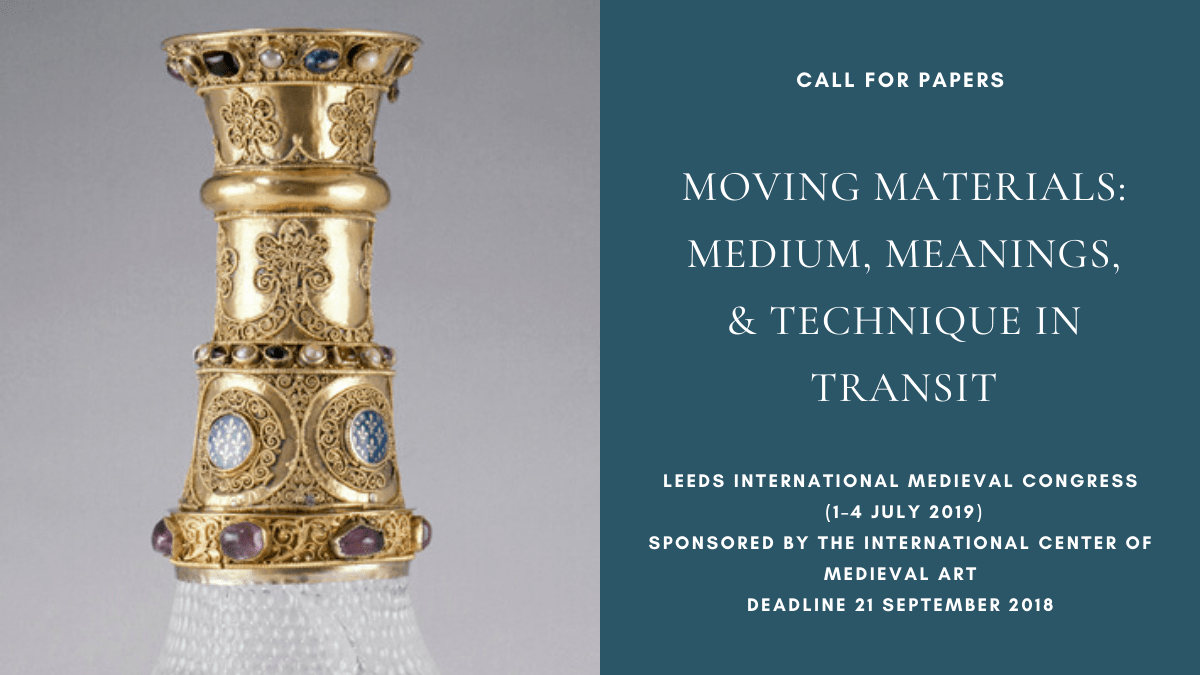
MOVING MATERIALS: Medium, Meanings, and Technique in Transit, Leeds International Medieval Congress (thematic strand: Materialities), University of Leeds, Leeds, United Kingdom, 1-4 July 2019
Sponsored by the International Center of Medieval Art (ICMA) Student Committee
Organized by D. Esther Kim (Toronto), Maggie Crosland (Courtauld), and Xin Yue (Sylvia) Wang (Toronto)
The materials of the medieval artist, artisan, and architect were constantly on the move, travelling from one part of the globe to another through trade, gifting, looting, or theft. Likewise, the localized techniques of working with materials and media could travel near and far, through the movement of artists and objects, as well as written and visual descriptions such as artist manuals and travel guides.
While on the move, travelling materials such as stone and marble, metals, fur, textiles, coral, ivory, and pigment—and techniques of working with these materials—might retain their original meanings and function; or they could be integrated with local media, refined, or even significantly transformed to something drastically different, to suit the ideologies and ambitions of their destination.
This panel aims to engage with materials and techniques in transit, as well as the (trans)regionality of their meanings and significations, by asking: are we still able to trace the ‘origin’ and ‘originality’ of certain materials, techniques, and their meanings? How then would the fluidity and transformation of techniques affect our understanding when we are trying to ascribe a certain technique to a particular culture or region? How are old, new, and combined meanings assessed and understood in the Middle Ages and in scholarship today?
Possible topics of discussion include, but are not limited to: global movements and dissemination of artists and/or their materials and techniques; modes of transmission; regional/transregional meaning and significance of materials and techniques; reuse and repurposing of existing materials and/or artworks; reasons for shifts in meaning and function of materials within and outside particular regions; the integration of materials and medium, and intermediality; trans-temporal/ trans-regional use of spolia, among others.
How to apply: We welcome submissions for 20-minute papers from graduate student ICMA members, and encourage interdisciplinary submissions from students researching all parts of the globe from c.400-c.1500. To propose a paper, please send a title, abstract of up to 250 words, and CV to the organizers (de.kim@mail.utoronto.ca, margaret.crosland@courtauld.ac.uk, xw388@nyu.edu) by 21 September, 2018.
The International Center for Medieval Art Student Committee involves and advocates for all members of the ICMA with student status and facilitates communication and mentorship between student and non-student members.
Conference: New Dialogues in Art History, The Warburg Institute, London, September 26, 2018
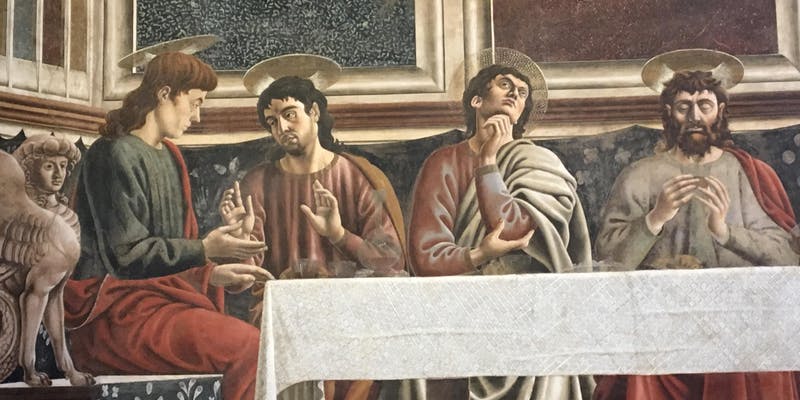 This one day conference brings together the next generation of art history scholars to present and discuss their ongoing research. Papers will predominately focus on Italian and Northern Renaissance Art (c. 1400–1600) and will encompass diverse media including tapestry, painting, engraving and stained glass. The conference will comprise five sessions. In the first four, two PhD students (or recent graduates) will present on topics that are united by common themes such as patronage, attribution and materiality. The final session, entitled ‘Opening New Dialogues’, will feature a paper by Professor Michelle O’Malley (Deputy Director and former PhD student at The Warburg). In order to foster the intellectual exchange central to ‘New Dialogues in Art History’ , the key paper(s) of each session will be followed by 20 minutes discussion.
Organised by Genevieve Verdigel & Lydia Goodson. Please direct any enquiries to the organisers at: NewArtDialogues@gmail.com
Programme
10:00–10:15: Registration
10:15–10:30: Introduction: Lydia Goodson and Genevieve Verdigel
10:30–11:30: Session 1: Making and Materiality
Chair: Alexander Röstel (Courtauld Institute / The National Gallery)
– Ang Li (University of Oxford): ‘The Revival of Gold Ground in Late Fifteenth-Century Italian Paintings.’
– Benedetta Pacini (University of Warwick/ The National Gallery): ‘Making and Moving Venetian Renaissance Paintings: my interviews with chief restorers in Venice and London, and archival records about Tintoretto’s transport strategy.’
11:30–11:45: Break (Tea and Coffee Provided)
11:45–12:45: Session 2: Attribution and Authorship
Chair: Dr Olenka Horbatsch (British Museum; PhD 2017, University of Toronto)
– James Wehn (Case Western Reserve University/ The Cleveland Museum of Art): ‘The Maker’s Image: Israhel van Meckenem, His Name, and His Copies.’
– Catherine Spirit (University of York): ‘Weaving Light: Untangling Authorship in the Windows of All Saints Church, Earsham.’
12:45–13:45: Lunch (Provided for Speakers and Chairs)
13:45–14:45: Session 3: Prestige and Patronage
Chair: Adriana Concin (Courtauld Institute)
– Dr Ilaria Taddeo (PhD 2017, IMT School for Advanced Studies, Lucca): ‘Artistic Patronage, Family Prestige and Religious Politics. The case of the Guidiccioni between Lucca and Rome (c. 1530-1550).’
– Anne-Sophie Laruelle (University of Liège): ‘Reconsidering Tapestry Patronage and Trade in the Renaissance.’
14:45–15:00: Break (Tea and Coffee Provided)
15:00–16:00: Session 4: Itinerancy and Interchange
Chair: Lois Haines (Warburg Institute / The National Gallery)
– Giulio Dalvit (Courtauld Institute): ‘Circulation of Drawings in Castiglione Olona: Masolino, Paolo Schiavo, Vecchietta, Domenico Veneziano and Cyriacus of Ancona.’
– Matthew Whyte (University College, Cork): ‘Stylistic Exchange and Civic Identity in Michelangelo’s work on the Arca di San Domenico in Bologna.’
16:05–16:55: Session 5: Opening New Dialogues
– Professor Michelle O’Malley (Deputy Director, Warburg Institute): ‘The Specifics of Authorship: Attributing Production.’
16:55–17:00: Concluding Remarks
17:00–18:00: Reception
Free and Open to all. Advanced booking required via Eventbrite.
Conference: Heritage Revisited. Rediscovering Objects from Islamic Lands in Enlightenment Europe, Kunsthistorisches Institut, University of Vienna, September 20–21, 2018
 For centuries, objects from Islamic lands were unquestioned parts of the material and visual culture of pre-modern Latinate Europe. A textile from Fatimid Egypt, for instance, the so-called “Veil of Sainte Anne”, was kept in the cathedral treasury of Apt and venerated as a Christian relic.
The workshop “Heritage Revisited. Rediscovering Objects from Islamic Lands in Enlightenment Europe” is dedicated to the long eighteenth century, a period in which, so we believe, an important shift in the perception of such objects took place. Islamic provenances were rediscovered, objects were studied, drawn and discussed. Finally, they were subjected to the classificatory scheme of European modernity, which leaves little space for conceptions of a historically entangled heritage.
Object case-studies shed light on the networks of scholars and institutions involved in the rediscoveries and will be framed in the discussions within broader discourses on (European) cultural heritage. Ultimately, we wish to offer new perspectives on the history of scholarship, notably Islamic art history, but also on perceptions of cultural belonging, of “Europeanness” and “Otherness”, which deeply resonate with current societal concerns.
Registration deadline: Sep 15, 2018. Register by emailing mattia.guidetti@univie.ac.uk
Programme
Thursday, 20th September 2018
Dom Museum Wien
Stephansplatz 6, 1010 Wien
10:00-11:30
Visit to the Dom Museum Wien
With Gregor Pirgie, Universität Wien; Pia Razenberger, Tabadul Project; Markus Ritter, Universität Wien.
Places for the visit are limited. Please register until 15th September 2018 – mattia.guidetti@univie.ac.uk
Universität Wien – Institut für Kunstgeschichte,
Universitätscampus Hof 9, Seminar Room 1
Garnisongasse 13, 1090 Wien
13:30-14:00
Welcome and Introduction
Isabelle Dolezalek, Technische Universität Berlin/SFB “Episteme in Bewegung” Freie Universität Berlin and Mattia Guidetti, Universität Wien.
“Collections”
Chair: Ebba Koch, Universität Wien
14:00-14:40
Elisabeth Rodini, Johns Hopkins University Baltimore: The Redaldi Inventory: a Prologue to Enlightenment Collecting
14:40-15:20
Federica Gigante, Ashmolean Museum Oxford: Objects of a “Certain Antiquity” and the Quest for their Cultural Context
Coffee
“Rediscovering Objects from Islamic Lands”
Chair: Barbara Karl, Textilmuseum St. Gallen
15:50-16:30
Claire Dillon, Columbia University New York: The Many Dimensions of a Work of Art: the Mantle of Roger II as a Case Study in Imperial Representation, Origin Stories, and the Formation of Specific Others
16:30-17:10
Michelina di Cesare, Sapienza Università di Roma: Four Eleventh and Twelfth-century Islamic Tombstones Discovered in Pozzuoli in the Seventeenth Century
Coffee (20 min.)
17:30-18:10
Carine Juvin, Musée du Louvre Paris: The “Baptistère de Saint-Louis” through the Seventeenth and Eighteenth Centuries: the Making of a “Historical Monument”
18:10-18:50
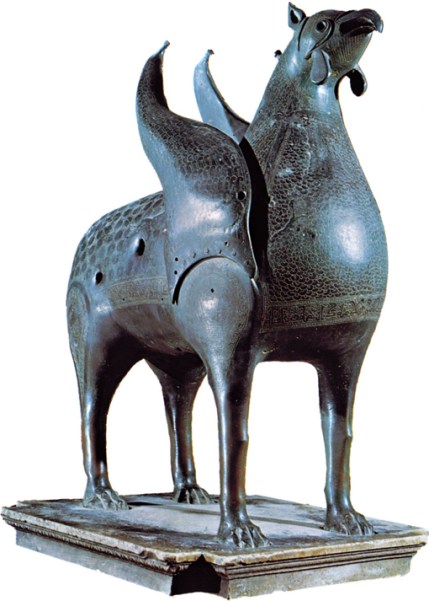
Anna Contadini, School of African and Oriental Studies London: Changing Perceptions of the Pisa Griffin and Other Objects
Dinner
Friday, 21st September 2018
Universität Wien – Institut für Kunstgeschichte,
Universitätscampus Hof 9, Seminar Room 1
Garnisongasse 13, 1090 Wien
“Protagonists of the Rediscoveries”
Chair: Johannes Wieninger, MAK Österreichisches Museum für angewandte Kunst Wien
9:30-10:10
Mattia Guidetti, Universität Wien: Reading Ottoman Flags in the Marches Region, 1684-1838
10:10-10:50
Markus Ritter, Universität Wien: A Documentary Encounter with Medieval (Islamic) Art in Eighteenth-century Vienna
10:50-11:30
Tobias Mörike, Museum für Kunst und Gewerbe Hamburg: Knowledge-brokers and Object-interpreters: Maronite Christians and the Redefinition of “Islamicate Objects” by the 1800s
Coffee
Discussion Tables
Chair: Isabelle Dolezalek, TU / FU, Berlin
12:00-12:40
Table I (Seminar Room 1)
Isabelle Dolezalek, TU / FU, Berlin: On the Concept of Cultural Heritage: what is European and what is not?
Table II (Seminar Room 2)
Tobias Mörike, Museum für Kunst und Gewerbe Hamburg: Art Market Networks and their Role in Constituting “Islamic Art” Objects
Table III (Seminar Room 3)
Barbara Karl, Textilmuseum St. Gallen: Object Biographies and Dynamics of Collecting
12:45-13:30 (Seminar Room 1)
Plenum discussion
Lunch
“Classifiying, Framing, Exhibiting”
Chair: Markus Ritter, Universität Wien
14:30-15:10
Sabine Du Crest, Université de Bordeaux: Islamic Border Objects in Seventeenth-century Europe
15:10-15:50
Gül Kale, Mc Gill University Montreal: Image as Text. Fischer von Erlach’s Take on Guillaume Grelot’s Drawings of Islamic Monuments in the Eighteenth Century
15:50-16:30
Ebba Koch, Universität Wien: Mughal Miniatures at Habsburg Vienna
Final Discussion
—-
Workshop conceived by Dr. Isabelle Dolezalek (Technische Universität Berlin, SFB “Episteme in Bewegung” Freie Universität Berlin) and Dr. Mattia Guidetti (Universität Wien)
Conference: The Right Moment. A Symposium on Kairotic Energies, Brussels, 18-19 October 2018
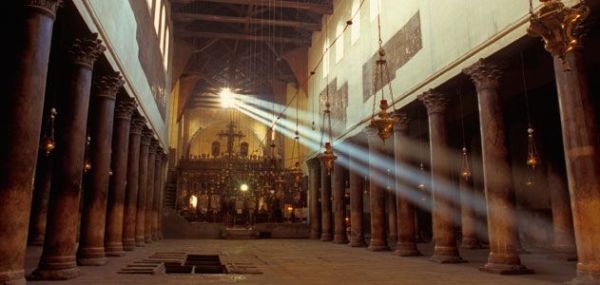 The Greek term kairós expresses an idea of ‘grasping the right moment’, which travelled through art, literature, and philosophy. And even today, it is central to debates over, for example, time management. Combining perspectives from classical reception studies and iconology, this ongoing project at KU Leuven (2017-2021) is about the reception of kairós in the visual medium from antiquity to the Renaissance. How was the notion of kairós visualized in images throughout time, from antiquity to the early modern era? And more specifically, how did text and image work together to transform the notion of kairós in various contexts?
The attending speakers from Belgium, Germany, France, Israel, Croatia, The Netherlands, Romania, The United Kingdom, The United States, and Switzerland have not only been selected on the basis of their interdisciplinary skills in the field; but equally because of their distinctive contribution to the method of iconology and visual anthropology.
Many among them are key influencers on, among other things, the importance of the Humanities in terms of peace process work, ecology, and the relationship between Eastern and Western civilizations.
Barbara Baert – Kunstwetenschappen KU Leuven – www.illuminare.be
PROGRAM
Thursday, 18 October
08.30-09.00 Registration
09.00-09.15 Welcome speech by Pierre Van Moerbeke,
Executive director of Francqui Foundation
09.15-09.30 Welcome speech by Luc Sels, Rector of KU
Leuven
09.30-10.00 Introduction by Barbara Baert
10.00-10.30 Coffee break
Part I
10.30-11.30 Giotto, the Eye and the Gaze – Victor Stoichita
Respondent: Herman Parret
11.30-12.30 Time in the Context of Ecclesia/Synagoga – Miri Rubin
Respondent: Inigo Bocken
12.30-14.00 Lunch
Part II
14.00-15.00 Epochal Madness: Notes on the Present Moment – W. J. T. Mitchell
Respondent: Stéphane Symons
15.00-16.00 The Manic Moment – Davide Stimilli
Respondent: Hedwig Schwall
16.00-16.30 Coffee break
16.30-17.30 The Silence of Lifta – Avinoam Shalem
Respondent: Amr Ryad
17.30-18.15 Presentation of the new series Recollection: Experimental Reflections on Texts, Images and Ideas – Veerle De Laet (Leuven University Press) & Ellen Harlizius-Klück
Friday 19 October
08.30-09.00 Welcome & coffee
Part III
09.00-10.00 The Nativity Church in Bethlehem as Kairotic
Space – Bianca Kühnel
Respondent: Marina Vicelja-Matijašic
10.00-11.00 L’occasion de la grâce dans le martyre – Pierre Antoine Fabre
Respondent: Ralph Dekoninck
11.00-11.30 Coffee break
11.30-12.30 A Dialogue of Early Buddhism, Hinduism and
Jainism on the Varieties of Auspicious Moments – Eugen Ciurtin
Respondent: Reimund Bieringer
12.30-14.00 Lunch
Part IV
14.00-15.00 Generating Synchronicity: Bodily and Affective
Techniques – Elisabeth Hsu
Respondent: Philippe Van Cauteren
15.00-16.00 The Moment of the Dangerous Women – Catherine Harper
Respondent: Ann-Sophie Lehmann
16.00-16.30 Coffee break
16.30-17.30 Concluding remarks – Han Lamers & Bart Verschaffel
17.30-18.00 Book presentations: Paul Peeters (Peeters Publishers) & Illuminare – Centre for the Study of Medieval Art
18.00-19.30 Farewell drinks
Contact and registration: stephanie.heremans@kuleuven.be
Registration deadline: 30 September 2018
CFP: Gender and Medieval Studies Conference 2019: GENDER AND ALIENS, Durham University, 7th–10th January 2019


In recent years discourse around ‘aliens’, as migrants living in modern nation-states, has been highly polarised, and the status of people who are technically termed legal or illegal aliens by the governments of those states has often been hotly contested. It is evident from studies of the past, however, that the movement of people is not a recent phenomenon: in the medieval west, one of the Latin terms applied to such people was alieni (‘foreigners’, or ‘strangers’), and it is clear from the surviving evidence that there were many people in the Middle Ages who could be, and indeed were, identified as aliens.
This conference aims to stimulate debate about the ways in which gender intersected with and related to the idea of such aliens – and, more broadly, alienation – in the medieval world. Social, political and religious attitudes to aliens and the alienated were not constant over the centuries from c. 400 to c. 1500, and nor were they uniform across the whole world. Some foreigners, as aliens, might end up integrated into the societies they entered; others might find themselves marginalised, lonely or alone; or oppressed, as outlaws, outcasts, or slaves. Gender might exacerbate or mitigate this, depending on time, place and context. Authors or artists depicting parts of the world far from and alien to their own often filled them with people or beings not like them, demonstrating the imaginative power of alterity, while the reactions of those who encountered people from distant places and observed or participated in their customs could include recognition of similarity as well as difference. Foreigners were also not the only people who might find themselves alienated from, or within, certain societies or cultures: the medieval world included many marginalised groups. The issues of aliens and alienation may be differently construed in the modern world, but they are certainly not new. The relationship of gender to these topics is complex, variable and significant.
The conference aims to enable discussion of these issues as they relate to the whole medieval world from c. 400 to c. 1500. The organisers welcome proposals for papers on any topic related to gender and aliens or alienation, broadly construed, and encourage submissions relating to the world beyond Europe. Papers might consider issues such as:
- refugees, immigrants, emigrants
- inclusion and exclusion
- alterity and difference
- outlaws, the law, legality
- marginalised or disenfranchised groups
- non-normative bodies, illness, disability
- acculturation
- imagined geographies
- borders and frontiers
- ethnicity and identity
- slavery and slaves
In addition to sessions of papers, the conference will also include a poster session. Proposals for a 20-minute paper or for a poster can be submitted at https://tinyurl.com/gms2019submit by September 30th 2018. The conference organisers are also happy to consider proposals for other kinds of presentation: please contact the organisers at gmsconference2019@gmail.com to discuss these. Some travel bursaries will be available for students and unwaged delegates to attend this conference: please see http://medievalgender.co.uk/ for details.
Images: The Emperor and the Court Lady, from ‘Nüshi zhen’ (Admonitions of the Instructress to the Court Ladies), text composed by Zhang Hua (c.AD 232-300); 6th-8th century. (C) The Trustees of the British Museum
God casts out Adam and Eve from the Garden of Eden, in the ‘Old English Hexateuch,’ London, British Library, Cotton Claudius B.iv, f. 6v, 11th century. (C) British Library
#OTD: St Gregory the Great is Elected as Pope
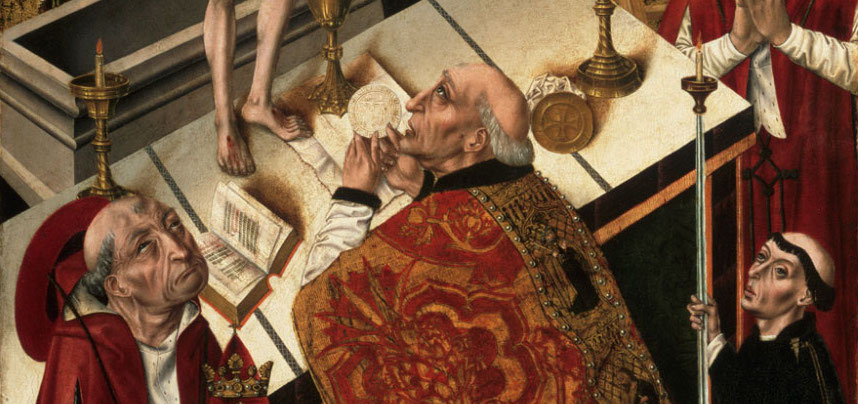
#OTD: St Gregory the Great is Elected as Pope
St Gregory, Miracles Stories, and the Circulation of Late Medieval Imagery
On this day in 590, Gregory, the son of a Roman senator, was elected as Pope at St Peter’s Basilica in Rome. Often called Gregory the Great because of his many influential writings and liturgical reforms of the Mass, Gregory is often considered to be the first medieval pope. The last of the Latin Fathers, he was responsible for sending St Augustine of Canterbury to England in 597. Upon his death in 604, he was almost immediately made a saint of the Church. Up until 1969, his feast day was celebrated on 12 March (the day of his death). Due to scheduling issues with the Lenten liturgy, his feast day was moved to 3 September, the day it is said he was elected pope.
Continue reading “#OTD: St Gregory the Great is Elected as Pope”
CFP: 3 Sessions at ICMS, Kalamazoo 2019 (Deadline 15 September 2018)
The Restoration of the 14th-century Painted Ceiling of the Sala Magna in Palazzo Chiaromonte-Steri in Palermo, 3 linked sessions
Organizers: Licia Buttà (Universitat Rovira I Virgili, Tarragona) Costanza Conti (Università di Palermo) and Antonio Sorce (Università di Palermo)
Sponsored by the Italian Art Society
The restoration of the 14th-century wooden ceiling of the Sala Magna in Palazzo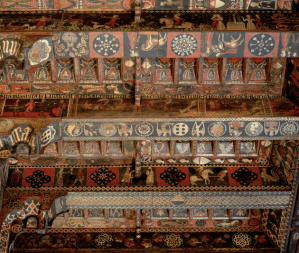 Chiaromonte—known as Steri—began in September 2017. The ceiling was crafted between 1377 and 1380, as attested by the inscription that runs along two sides of the ceiling between beams and lacunars, in which the name of the patron is also mentioned: the powerful and noble ruler of Palermo—Manfredi Chiaromonte (d. November 1391). The surface area of the wooden ceiling measures 23 x 8 meters. The iconography is displayed uninterrupted on the three sides of the 24 beams and on the 100 coffered lacunars. After the fall of the Chiaromonte family, the palace was first occupied by King Martin I, the Humane (29 July 1356 – 31 May 1410), then by the Viceroys of Aragon, and the House of Bourbon. Between 1601 and 1782 it became the Palace of the Inquisition and later the halls of the palace were used as the Court of Appeal. Today the building is home to the rectorate of the University of Palermo. The three linked sessions seek to be a fruitful occasion to study the ceiling of the Sala Magna in Palazzo Chiaromonte-Steri and medieval painted ceilings in the Mediterranean in general, in terms of conservation as well as visual culture through a multidisciplinary perspective.
Continue reading “CFP: 3 Sessions at ICMS, Kalamazoo 2019 (Deadline 15 September 2018)”
CFP: “A Global Trecento: Objects, Artist, and Ideas Across Europe, the Mediterranean, and Beyond,” IMC Leeds, 2019 (Deadline 15 September 2018)
Looking at the Trecento through the lens of current global paradigms and concerns in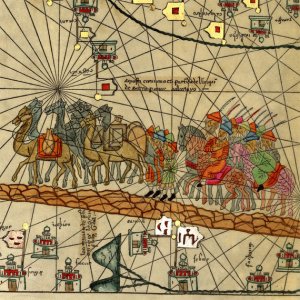 historical and art historical studies might seem hazardous, or even paradoxical and provocative at best. Very few other labels have the power to evoke both the glories, achievements and limitations of traditional ‘Western’, and namely Eurocentric, art history. As a matter of fact, using the Italian word Trecento to mean the ‘Fourteenth Century’ in the visual arts, music and potentially any area of human endeavour adumbrates a clear hierarchy–with Italy at its top. It is meaningful, and perhaps no coincidence, that the term Trecento came into use in English in the same years that mark the tumultuous expansion of the new discipline of art history in the late nineteenth and early twentieth centuries and its usage has grown exponentially ever since. While much has been done in recent decades to broaden our understanding of the period both geographically and philosophically, the Trecento remains primarily the century of Giotto and of the great Tuscan painters and sculptors. At this time of building national ‘walls’, it seems particularly appropriate to think that the seminal and transformative character of the Trecento owes much to artistic and cultural exchanges, movement of artists and patrons, circulation of models and ideas across Italy, Europe, the Mediterranean and beyond. Our aim is to bring into conversation recent research on these issues.
 Medieval Art Research