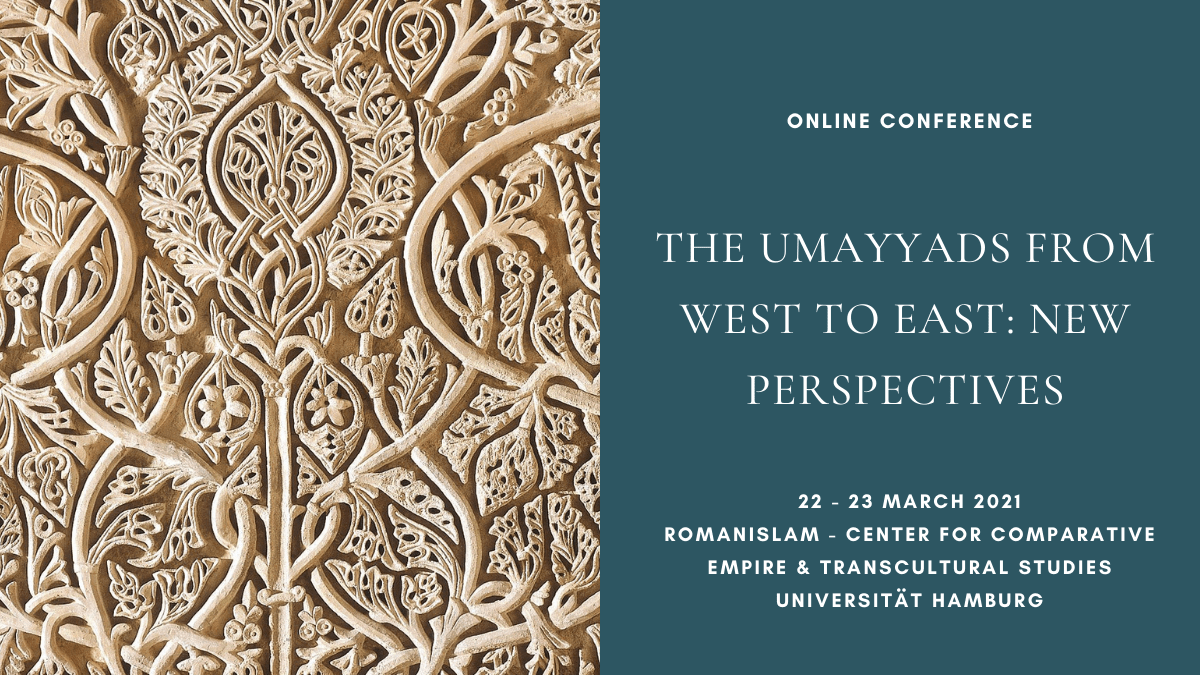
Online Conference: ‘The Umayyads from West to East: New Perspectives’, 22 – 23 March 2021 (CEST)

Organiser: RomanIslam – Center for Comparative Empire & Transcultural Studies Universität Hamburg

The conference will be transmitted online via ZOOM and external participants are welcome. Please contact Laura Donath (laura.donath@studium.uni-hamburg.de) by March 18th 2021 to gain access to the link.


Conference programme

Monday 22 March 2021

15.00-15.10pm – Opening words by Isabel Toral (Freie Universitat Berlin) and Antonia Bosanquet (Romanlslam, Universitat Hamburg)

15.10-15.20pm – Welcome speech by Sabine Panzram and Stefan Heidemann (Directors of Romanlslam, Universitat Hamburg)

15.20-16.00pmEduardo Manzano (Consejo Superior de Investigaciones Cientificas, Madrid), From the Jjijaz to a/Anda/us: The rawcja of the Umayyad rulers in the Alcazar of Cordoba

Moderator: Stefan Heidemann

16.00-16.15pm – Coffee break

16.15-17.45pm – Panel 1: Imperial heritage and legitimation

Arietta Papaconstantinou (University of Reading), Reconfiguring Rome: Umayyad engagement with the imperial heritage

Jorge Elices (Universidade Federal de Sao Paulo), Between East and West: Objects of sovereignty and Umayyad discourses of Legitimation

Aurelien Montel (Universite Lyon), “When the Umayyad caliphate fell, people of the Maghrib acted like the Anda/usians”. Can the Maghrebi princes of the 11th century be considered as “party-kings”?

Discussant: Georg Leube (Universität Bayreuth / Universität Hamburg)

17.45-18.00pm – Coffee break

18.00-19.30pm – Panel 2: Ideology, legitimacy and rhetoric

Sebastian Bitsch (Georg-August-Universität Gottingen), The Rhetoric of Caliphal Legitimacy. On the use of alqab by the Umayyad rulers in East and West

Isabel Toral (Freie Universität Berlin), ‘Abd al-Raf:iman al-Dakhi/, the “Falcon of Quraysh “. The chain of legitimacy between the Umayyads in East and West

Elsa Cardoso (Universidade de Lisboa), ‘Syria rises to receive the Caliph’: Umayyad legitimacy from Damascus to Cordoba

Discussant: Antoine Borrut (University of Maryland)


Tuesday 23 March 2021

15.00-16.30pm – Panel 3: Rebellion, conflict and Islamication

Antonia Bosanquet (Romanlslam, Universität Hamburg), How the Umayyads lost the Maghrib: Presentations of the Berber revolt in Arab historical texts

Javier Albarran (Romanlslam, Universität Hamburg/ Universidad Aut6noma de Madrid), The Battles of the Umayyads. Remembering War from West to East

Hannah-Lena Hagemann (Universität Hamburg), Talking about a Revolution – The Rhetoric of Rebellion against Umayyad rule

Discussant: Jens Scheiner (Georg-August-Universität Göttingen)

16.30-16.45pm – Coffee break

16.45-18.15pm – Panel 4: Cities and material culture

Eneko Lopez (Universidad del Pafs Vasco), An authority from Damascus or Baghdad? Origin and consolidation of the political conception of the Umayyad tfraz of Cordoba

Antonio Vallejo (Conjunto Arqueol6gico Madinat al-Zahra, Cordoba), Between East and West: the ceremonial center of the Umayyad Caliphate

Stefan Heidemann (Romanlslam, Universität Hamburg), The Umayyad Visual Language of Power

Discussant: Isabel Toral

18.15-18.30 – Coffee break

18.30-19.10pm – Maribel Fierro (Consejo Superior de lnvestigaciones Cientificas, Madrid), Final remarks

Moderator: Sabine Panzram

19.10-19.20pm – Closing words by Javier Albarran and Elsa Cardoso

Online Conference: ‘Reviving the Trinity: New Perspectives on 15th-Century Scottish Culture’, University of Edinburgh, 27 March 2021

This Virtual Symposium comprises a full day of papers presenting new research on all aspects of the Trinity Altarpiece and Collegiate Church.

This collaborative, interdisciplinary project looks again at the Trinity Altarpiece by Hugo van der Goes, Trinity Collegiate Church, and Trinity Hospital as emblems of Scotland’s inventive and ambitious cultural milieu, and its active, outward looking engagement with Europe and beyond. The network will re-examine the Trinity, and establish its cultural relevance today. Taking innovative approaches to materialities, geographies, and the wider artistic, intellectual, and cultural networks that connect them during the reigns of James II, III and IV, and the regency of Queen Mary of Guelders, it seeks to identify contemporary networks and reassess the significance of knowledge exchange.

Get your tickets here.

Please note that the times are in GMT. Registration closes 36 hours before the symposium.

For further information see: https://blogs.ed.ac.uk/trinitynetwork/ or email trinitynetwork1460@gmail.com

Conference Programme

9.30am – Welcome

9.40am – Keynote:

Lorne Campbell (formerly Senior Research Curator at the National Gallery, London): The Trinity Panels: History and Subject-Matter

10.30 – 11.30am – Session 1

Lizzie Swarbrick (University of Edinburgh): A “magnificent and sumptuous work, [Queen Mary of Guelders] intends as soon as possible to finish it”: an Architectural Tour of Trinity College

Rachel Delman (University of York): A Queen and her Chapel: Mary of Guelders and the Architecture of Commemoration

11.45am – 12.45pm – Session 2

Bryony Coombs (University of Edinburgh): Artistic Continuity in Late Medieval Scotland: James III, James IV, and the Artists of Ghent Morvern French, Historic Environment Scotland: The Customer is King: Late Medieval Scoto-Flemish Consumer Culture

12.45pm – Lunch

1.30 – 2.30pm – Session 3

Patricia Allerston (Deputy Director & Chief Curator, European & Scottish Art, National Galleries of Scotland): A Moveable Feast – Displaying the Trinity panels at the Scottish National Gallery

Nicola Christie (Head of Paintings Conservation, Royal Collections Trust): The Trinity Panels: Initial observations on Materials and Technique

2.45 – 3.45pm – Session 4

Emily Wingfield (University of Birmingham): Margaret of Denmark and Networks of European (Literary) Culture

Catherine Reynolds (Independent scholar and Consultant on manuscripts to Christie’s): The Books in the Trinity Panels and the Text before the Queen

4.00pm – Session 5

James Cook (University of Edinburgh): Sarum in Bruges: Exploring the liturgical context for the chant in the Trinity Altarpiece

Jill Harrison (Open University): Interrogating St George: Scoto-Burgundian encounters in the Trinity Altarpiece and William Schmenner, Kostas Daniilidis and Yufu Wang, GRASP laboratory, University of Pennsylvania: Looking for Anselm Adornes

5.00pm – Conclusion

CFP: Modelling Medieval Vaults Second Symposium, University of Liverpool (19 August 2021), deadline 30 April 2021

This symposium is a follow up to that held in July 2016, which began to explore shared interests in gothic vaults, particularly research aided by digital methods. Our second event aims to take the conversations further and share findings from our ‘Tracing the Past’ research project investigating the design and construction of English medieval vaults.

The use of digital surveying and analysis techniques, such as laser scanning, photogrammetry, 3D reconstructions or reverse engineering offers the opportunity to re-examine historic works of architecture. In the context of medieval vaults, this has enabled research into three-dimensional design processes, construction methods, structural engineering, building archaeology and relationships between buildings.

To date much of this research, including our own, has focussed on individual sites or regions. The aim of our second event is to support discussion of the international and cross-temporal dimensions of this research and foster potential collaboration.

Abstracts (500 words maximum and one optional image) are invited for twenty-minute presentations on the following subjects:

  • Representation and analysis of medieval vaults using digital technologies.
  • Investigations of tierceron, lierne or fan vaults.
  • Digital techniques used for the analysis of historic works of architecture applicable to gothic vaulted buildings.

Deadline for abstracts: 30 April 2021

Enquiries and abstracts to be addressed alexb@liverpool.ac.uk

Symposium date: 19 August 2021
Location: Online via Zoom, hosted by the University of Liverpool
Conference organisers: Dr Alex Buchanan and Dr Nick Webb

Sign up for our biannual newsletter here:
http://www.tracingthepast.org.uk/subscribe

Medieval vaults research:
www.tracingthepast.org.uk

Keynote speakers:

  • Professor Santiago Huerta (Universidad Politécnica de Madrid)
  • Professor José Calvo-López (Universidad Politécnica de Cartagena)
  • Professor Robert Bork (University of Iowa)

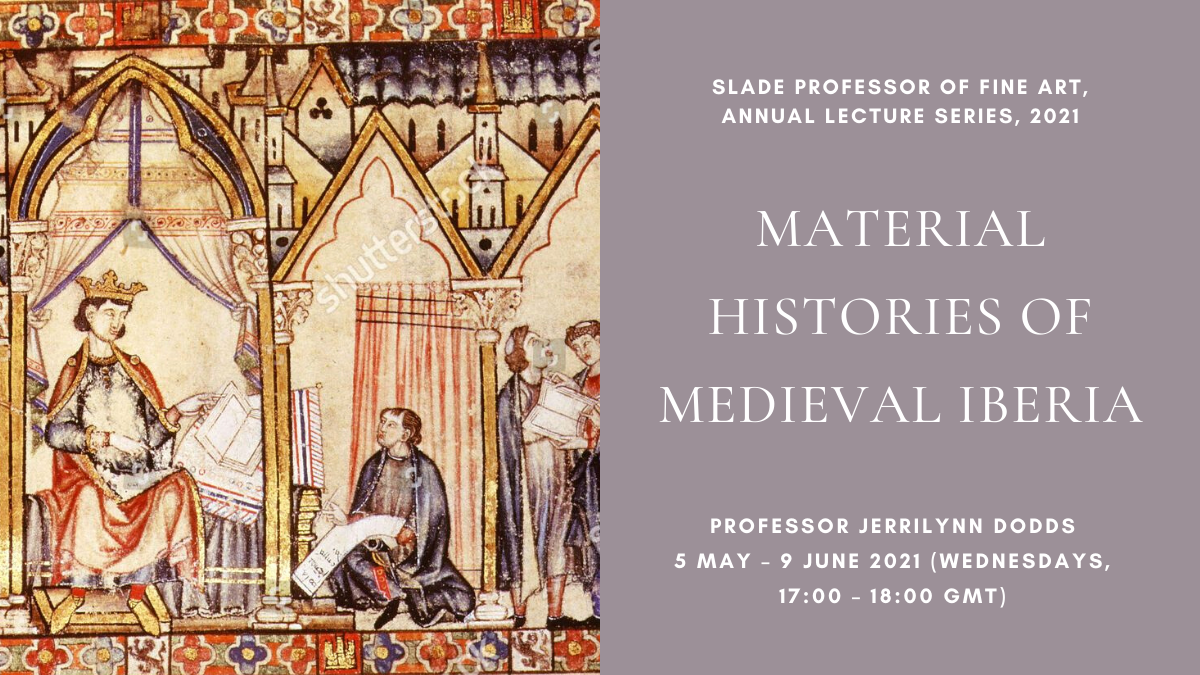
Slade Professor of Fine Art, Annual Lecture Series 2021: ‘Material Histories of Medieval Iberia’ with Professor Jerrilynn Dodds, 5 May – 9 June 2021 (Wednesdays, 17:00 – 18:00 GMT)

Jerrilynn Dodds is Harlequin Adair Dammann Chair in the History of Art at Sarah Lawrence College. Prof. Dodds’ scholarly work has centered on issues of transculturation, and how groups form identities through art and architecture. Among her publications are: Arts of Intimacy: Christians, Jews and Muslims in the Making of Castilian Culture, co-authored with Prof. Mara Menocal and Abigail Krasner Balbale; Architecture and Ideology of Early Medieval Spain; and New York Masjid, the Mosques of New York City.  She was editor of the catalogue  Al Andalus:  The Arts of Islamic Spain (Metropolitan Museum of Art) and served as curator of the exhibition of the same name, at the Alhambra in Granada and in New York;  co-editor and curatorial consultant of The Arts of Medieval Spain (with Little, Moralejo and Williams, Metropolitan Museum of Art); co-editor and consulting curator for Convivencia. The Arts of Jews, Christians and Muslims in Medieval Iberia (ed., with Glick and Mann, 1992); and, with Edward Sullivan, co-editor and curator for Crowning Glory, Images of the Virgin in the Arts of Portugal( Newark Museum). She has written and directed films in conjunction with museum exhibitions (Journey to St. James (MMA); An Imaginary East (MMA); NY Masjid (Storefront) and for wider audiences (Hearts and Stones: The Bridge at Mostar). Professor Dodds was the recipient of the Cruz de la Orden de Mérito Civil (Cross of the Order of Civil Merit) from the Government of Spain (2018).

Material Histories of Medieval Iberia lecture dates (Wednesdays, 17:00 – 18:00 GMT)

5 May 2021 – An Agonistic History of Art

12 May 2021 – The Great Mosque of Cordoba as Center and Periphery

19 May 2021 – Babylon in Flames

26 May 2021 – Mudejar and Romanesque. Romanesque and Islam

2 June 2021 – The Virgin as Colonial Agent

9 June 2021 – Hunting in the Borderlands: Conversions and Translations 

Online Lecture: ‘Eagles, dragons, griffins, and angels: Netherlandish brass lecterns in context’ with Dr Douglas Brine, Courtauld Institute of Fine Art, 10 March 2021, 17:00-18:00 (GMT)

Register and find out more here.

Please register for more details. The platform and log in details will be sent to attendees at least 48 hours before the event. Please note that registration closes 30 minutes before the event start time. If you have not received the log in details or have any further queries, please contact researchforum@courtauld.ac.uk

One of the most common types of ecclesiastical furniture from the Burgundian Netherlands that survive today is the brass eagle-lectern. Many remain in churches and continue to function much as originally intended, as supports for the books used during services. Indeed, there is perhaps no other medieval artwork still in active use that exists in such numbers as the brass lectern. Most extant examples feature eagles clutching dragons in their talons, but there is clear evidence that lecterns also took the form of pelicans, griffins, or standing figures of angels, saints, or even Moses. This paper considers Netherlandish brass lecterns, in their various guises, from various perspectives – as metal sculptures, as liturgical fixtures, and as vehicles for private commemoration – and argues that they constitute a significant, if overlooked, category of early Netherlandish art.

Dr Douglas Brine completed his BA, MA, and PhD at The Courtauld and was the Research Forum Postdoctoral Fellow in 2006. He is now Associate Professor of Art History at Trinity University in San Antonio, Texas. His research focuses on the visual arts in northern Europe during the late Middle Ages and Renaissance with a particular emphasis on sculpture, painting, and metalwork in the Low Countries. His book Pious memories: The wall-mounted memorial in the Burgundian Netherlands was published by Brill in 2015.

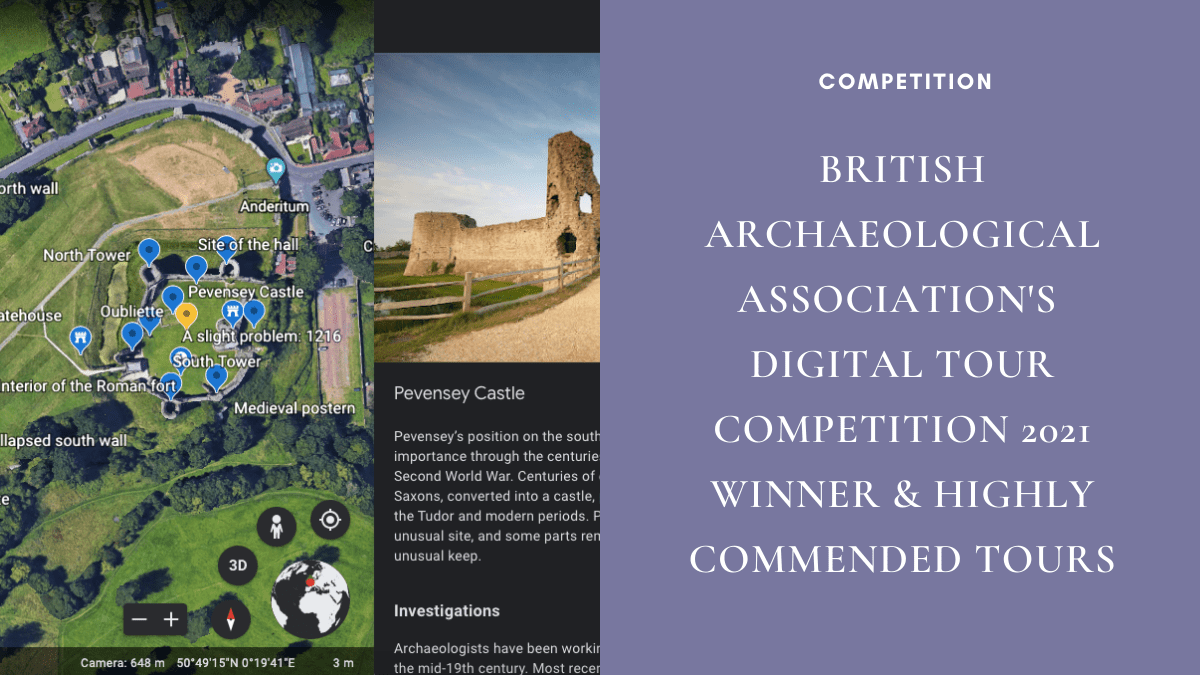
British Archaeological Association’s Digital Tour Competition 2021 Winner & Highly Commended Tours

Inspired by the difficulties in visiting churches and other historic sites during the Coronavirus pandemic, The British Archaeological Association is looking at ways of promoting the use of digital technology to allow them to be seen even during a lockdown, or for those far distant. The Association held a competition to produce a short video/photographic presentation of a Roman or medieval site (a building, ruin, even a town) using remote mapping and imaging systems such as Google Earth, or Google Earth Studio.

Winner

Pevensey Castle and Roman Fort in Sussex

By Dr Richard Nevell

Pevensey is the kind of site you can lose yourself in; the ruins are wonderful to explore and there are so many stories to be told about its past. In creating the tour, I tried to make the most of that sweep of history, from the 3rd to the 20th century. It explores key events that shaped the physical remains of the fort and castle, and links to further digital resources such as articles and 3D models of objects discovered during excavations at Pevensey. I’ve been researching the site over the last few years – first for English Heritage and later independently. There are seemingly endless lines of inquiry but what has occupied me most recently is trying to work out whether King John slighted the castle in 1216. Reaching an answer has involved disentangling the history of the site – working out which bits fell down when – and creating a tour followed on quite naturally. Most importantly, it was an opportunity to (digitally) revisit one of my favourite castles!


Highly Commended Tours

Abergavenny Castle: A Tale of Conquest, Betrayal, and Resilience

By Megan Kirkpatrick and Jonathan Lim

We explore the fascinating and turbulent history of Abergavenny Castle – one of the most important strongholds built by the Norman invaders in south Wales. From its foundation in c.1087, through to the present-day, Abergavenny Castle has had an important role to play. Inspired by the potential of digital media and the increased functionality of certain platforms, we made use of ESRI’s Storymap service to take visitors on a virtual tour of this medieval monument. This not only increases the accessibility of the Castle (especially in the Covid-19 context), it highlights the historical and archaeological relevance of the surrounding landscape, something which is overlooked (often for practical reasons) when ‘real life’ visits are made to heritage sites. Exploring the relationship between landscapes and castles in Wales is the subject of Meg’s DPhil research and the integrated use of spatial analysis techniques underpins both authors’ research projects.


Bellapais Abbey in Cyprus

By Azra Say-Otun

The Bellapais Abbey is a Medieval monastery complex on the north coast of Cyprus. Its architecture is generally considered exemplary of Lusignan Gothic design; yet with the tour I wanted to trace as much of the life history of the site beyond this as I could, since all its experiences are a palimpsest in its current state. Having lived near the Abbey, and seen it from various angles, I wanted to bring forward its idiosyncrasies as well, be it the view of the Taurus mountains across the sea on a clear day, the stories told by the corbels in the chapter house, or mysterious artefacts repurposed from surrounding ancient sites. I hope those who take the tour will also be amused by the way curious physical aspects of the Bellapais Abbey connect to its history, and think about them if they one day amble through the cloister or listen to music recitals within the refectory.


The Tower Houses of Lecale

By Dr Duncan Berryman

Tower houses are small, fortified residences of the later Middle Ages. They were the centres of manorial holdings, lordly residences with associated agricultural complexes. However, today they generally stand isolated in fields, having lost their surrounding buildings. County Down’s tower houses, and particularly those in Lecale, form an interesting collection of monuments. They are almost entirely found close to the coast, with very few inland. There is an especially dense group in the Lecale region of County Down. This area also has a unique group of gatehouse style tower houses, these tower houses had two turrets on their front joined by a large arch machicolation at roof level. Their location by the coast suggests that the tower houses of County Down were involved in trading produce from the countryside with ships arriving in Ulster.


Vicars’ Hall and Vicars’ Close at Wells

By Philip Hickman

As a Wells Cathedral Guide, Philip Hickman has a particular interest in Vicars’ Close. With relevant views as are available in Google Earth and those supplemented by his own photographs, this project briefly outlines the history of the Wells Cathedral Vicars Choral: their college (1348 – 1936), their hall, and their purpose-built dwellings  and chapel as laid out in Vicars’ Close.

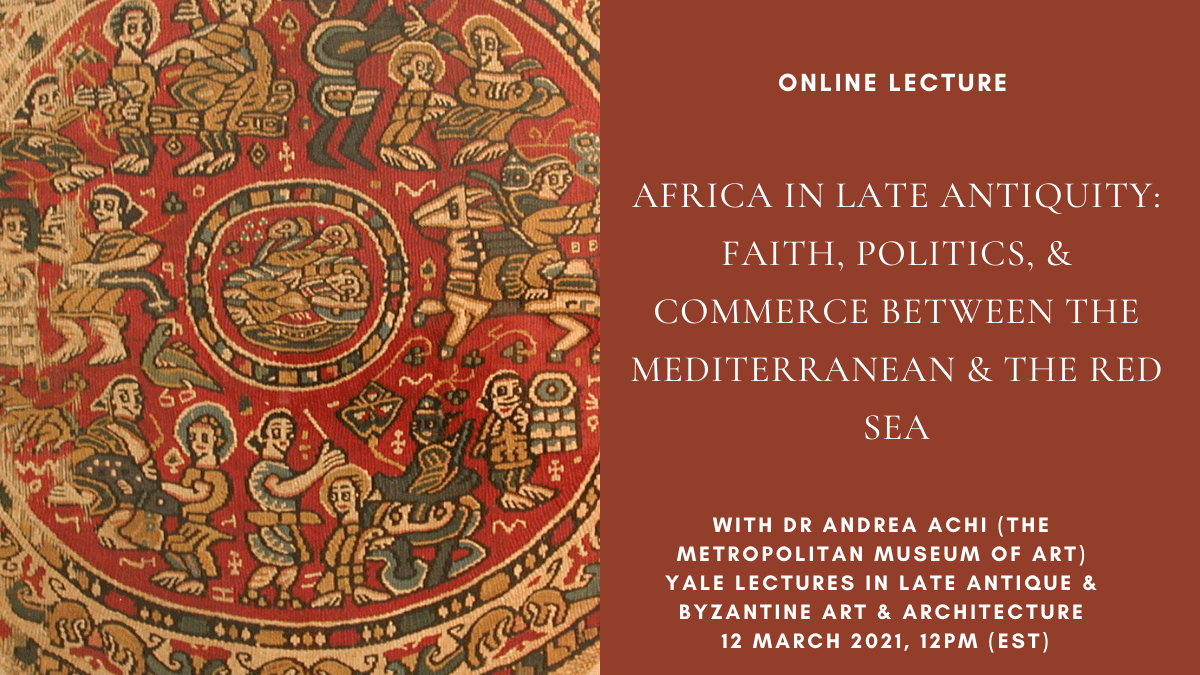
Online Lecture: ‘Africa in Late Antiquity: Faith, Politics, & Commerce between the Mediterranean & the Red Sea’ with Dr Andrea Achi, 12 March 2021, 12pm (EST)

Join Yale for their up-coming Lectures in Late Antique and Byzantine Art and Architecture series. In this online lecture, Dr Andrea Achi (The Metropolitan Museum of Art) will present ‘Africa in Late Antiquity: Faith, Politics, and Commerce between the Mediterranean and the Red Sea’

Respondent: Felicity Harley, Yale

This event is free, but you must register in advance here.

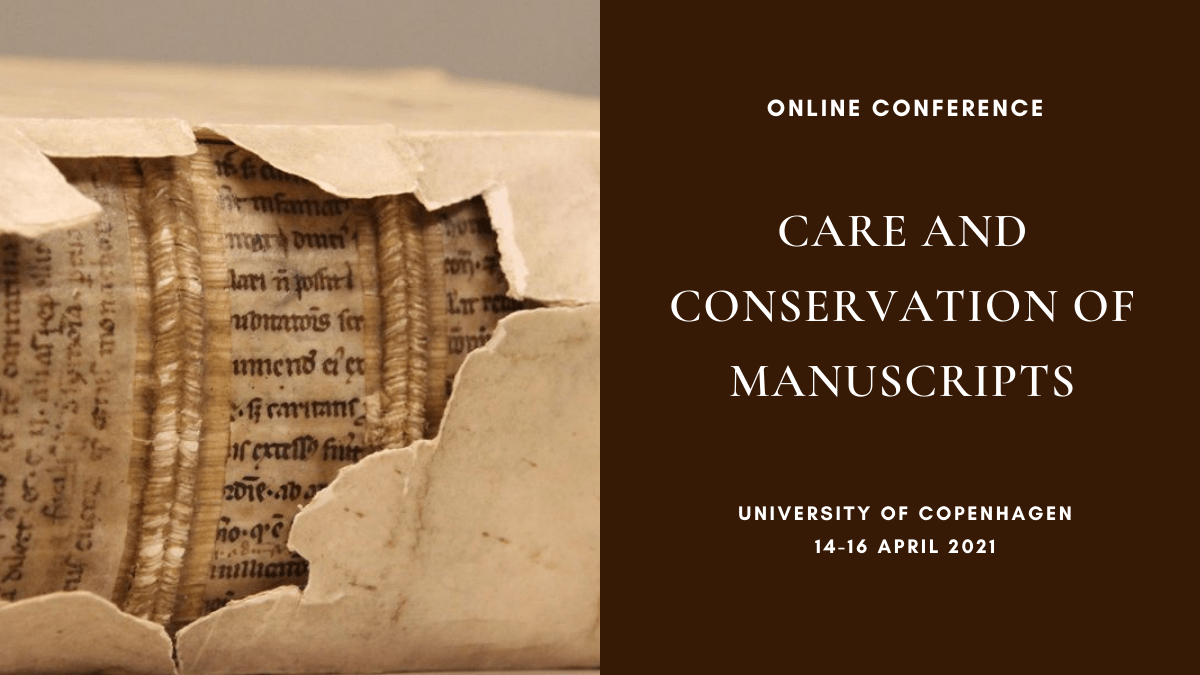
Online Conference: Care and conservation of manuscripts, University of Copenhagen, 14-16 April 2021

The 18th seminar on the Care and conservation of manuscripts will be held virtually from the 14th to the 16th of April 2021. Please note all times are in Copenhagen Time (CET).

The seminar is an international, interdisciplinary seminar which aim is to bring together conservators, librarians, archivists, scholar, curators and others who work with manuscripts and early printed books in any capacity.

Registration for the seminar is now open – please follow this link 

For further information, please contact Ragnheiður Mósesdóttir the seminar co-ordinator.

Participation is free of charge.

Find out more information here.

Conference Programme

Wednesday 14 April 2021

Opening of the conference (10:45–10:55)

Session 1 (11:00-12:30)

  • Vasarė Rastonis, Svanhildur Óskarsdóttir and Jiří Vnouček: The conservation of Flateyjarbók
  • Silvia Hufnagel, Vasarė Rastonis and Robert Fuchs: Paper trails in Iceland: Taking hyperspectral images of watermarks in paper in Icelandic collections
  • Élodie Lévêque, Matthew David Teasdale, Morten Tange Olsen, Sarah Fiddyment, Maiken Hemme Bro-Jørgensen, Claire Chahine and Matthew Collins: Biocodicology as an aid to locating the origin of materials: Investigation into the use of sealskins on manuscripts in the 12th and 13th centuries

Session 2A (12:45-14:15)

  • Katarzyna Schirmacher, Julia BispinckRossbacher and Christine Theuerkauf-Rietz: Precious and brittle: Conservation and research on the late medieval prayer book of Mary of Guelders
  • Ariane Langreder: The challenges of a Romanesque re-binding: The Psalter of St. Paul’s Cathedral
  • Andrew Honey: Winchester’s binder: Beatrice Forder at work 1947-1948

Session 2B (12:45-14:15)

  • Ekaterina Nosova, Ilona Teplouhova, Elena Shepilova, Julia Baskakova and Dmitriy Weber: Pigments of Western European wax seals: Norms and exceptions
  • Alessandro Scola: Conserving and preserving a 15th-century Italian antiphonary: Nontraditional binding conservation techniques and an innovative all-in-one housing, display and moving device
  • Athanasios Velios: St. Catherine’s conditionsurvey: Considerations for linked data

Session 3A (14:30-16:00)

  • Sarah Fiddyment and Matthew Teasdale: Biocodicology by numbers: How to? How many? How much?
  • Laura Viñas Caron, Ismael Rodríguez, Vladimir Vilde, Natasha Fazlic, Jiri Vnoucek, Matthew Collins: (Bio)codicological investigation of a medieval palimpsest: The Arnamagnæan manuscript AM 795 4to.
  • Tuuli Kasso and Matthew Collins: ArcHives: Biomolecular record of bees in medieval sealing wax

Session 3B (14:30-16:00)

  • Marlen Börngen, Bert Jacek, Maike Linden and Andrea Pataki-Hundt: Naumburger choir books: Oversized wooden-board conservation
  • Katherine Beaty and Kelli Piotrowski: From Florence to Rome: Conserving Italian stationery bindings at Harvard University
  • Patricia Engel and Andreas Gamerith: Care and conservation in Zwetti Cistercian monastery

Session 4A (16:15-17:45)

  • José María Pérez Fernández: Colombina 5-3-25, or how Hernando Colón processed information for his catalogues
  • Guy Lazure: Before Denmark: The Sevillian roots of the Arnamagnæan collection of Spanish manuscripts
  • Edward Wilson-Lee: Dehydrate, duplicate, distil: Preserving the Universal Library

Session 4B (16:15-17:45)

  • Nurçin Kural Özgörüş and Başak Emir: Recovery and conservation of the library collection in Virgin Mary Church of the Syriac community in Mardin, Turkey
  • Claudia Benvestito, Alberto Campagnolo and Stefanos Kaklamais: Archaelogical investigations into Code Marcianus Gr. VII, 22: Reconstruction its manufacture and structure
  • Tamar Abuladze: Georgian manuscripts on parchment from the Korneli Kekelidze Georgian National Centre of Manuscripts: Perspectives of interdisciplinary study

Session 5 (18:00-19:00)

  • N. Kıvılcım Yavuz: The missing piece of Hernando Colón’s library: Copenhagen, Den Arnamagnæanske Samling, AM 377 fol.
  • Matthew Driscoll, Matilde Malaspina, Alessandro Gnasso and Joana-Isabel Duyster Borredà: The Book of books: Hernando Colón’s Libro de los epitomes

Thursday 15 April 2021

Session 6A (11:00-12:30)

  • Per Cullhed: B68: Riddles and revelations
  • Lieve Watteeuw and Marina Van Bos: A manuscript for the head: The 13th-century illuminated parchment mitre of Jacques de Vitry
  • Morgane Plateau: Conservation treatment of the illuminated ancestor-table of “Josse de Lalaing”, knight of the Golden Fleece

Session 6B (11:00-12:30)

  • Gaia Petrella: ESTENSE Digital Library: Preparing materials for digitisation
  • Aida Nunes: Storing an oversized Museau de Lisboa textile banner collection
  • Silvia Pugliese, Sara Gottoli, Michael B. Toth and William Christens-Barry: The 3½ foot Marciana celestial globe of Coronelli, 1689: Scientific investigation and conservation

Session 7A (12:45-14:15)

  • Amélie Courvrat Desvergnes: Book culture in North-western India: An insight into the production of handwritten and graphic documents in the 19th century
  • Ina Fröhlich: An illuminated Egyptian manuscript from the 17th century: Codicology, ink and copper corrosion, conservation
  • Marleena Vihakara and Anna Aaltonen: Conservation of Coptic parchment fragments and a bifolium from a private collection

Session 7B (12:45-14:15)

  • Penelope Banou and Angeliki Stassinou: Letters Patent for the establishment of Roman Catholic Church confraternities in 17th-century Greece: Typology, materials and aspects of preservation
  • Paul Hepworth: An Islamic treasure binding and its conservation
  • Cécile Brossard: Original decorated remnants under a 16th-century Syriac re-binding

Session 8A (14:30-16:00)

  • Christa Hofmann, Sophie Rabitsch, Maurizio Aceto, Antonia Malissa, Katharina Uhlir and Martina Griesser: The miniatures of the manuscript The Vienna Genesis: A study of pigments and painters
  • Dan Paterson and Alan Haley: The conservation and digitization of 41 volumes of the Yongle Dadian, a Ming Dynasty era encylopedia at the Library of Congress
  • J.D. Sargan, Aleandra Gillespie and Jessica Lockhart: Manuscript ghosts: Uncovering early manuscript structures via MicroCT

Session 8B (14:30-16:00)

  • Mary French: Honouring the past while preparing for the future: Conservation of a 15thcentury manuscript on the life on St. Augustine
  • Grace Touzel: Lepidochromy at the Natural History Museum (London): Butterfly wings as a printing medium
  • Chantal Kobel: Revisiting the codicology of the Book of Ballycummin (RIA MS 23 N 10), a medieval Irish manuscript

Session 9 (16:15-18:00)

  • Aniko Bezur, Richard Hark, Marie-France Lemay, Pablo Londero, Marcie Wiggins, Paula Zyats, Sarah Fiddyment and Matthew Teasdale: The Ongoing Story of the Vinland Map and related manuscripts: New Analyses, New Evidence, Part I and Part II
  • Laurianne Robinet, Lucie Arberet, Stéphane Lecouteu, Anne Michelin, Véronique Rouchon, Sylvie Heu-Thao and Oulfa Belhadj: Mont Saint-Michel manuscripts: Focus on the scriptorium practices in the 11th century
  • Abigail Quandt: Real or fake? Conservators, scientists and scholars join forces in debunking manuscript forgeries.

Friday 16 April 2021

Session 10A (11:00-12:30)

  • Ana Tourais, Conceição Casanova, Catarina Barreira, Catarina Gonçalves and Catarina Pinheiro: Alcobaça bookbinding as a hidden treasure: The case study of an Expositio in Evangelium Matthei
  • Lisa Camilleri: Fantastic features and where to find them: Title-tabs and other unique features of the Notarial Bindings in Malta
  • Amy Baldwin: Risen from the ashes: Balancing the historic and archival in the conservation of Charlotte Canning’s Indian Journals

Session 10B (11:00-12:30)

  • Ilse Korthagen, Femke Prinsen and Lieve Watteeuw: Checklist for the digitisation of manuscripts
  • Gayane Eliazyn and Artur Petrosyan: Medieval Armenian miniature: Research and conservation of the paint-layer on the example of the Matenadran manuscripts
  • Michael Maggen: The renovated Israel Museum in Jerusalem

Session 11A (12:45-14:15)

  • Sam Foley and Shaun Thompson: A collaborative digitization project in progress: The Polonsky Foundation Greek Manuscripts Project
  • Alberto Campagnolo and Rachel Di Cresce: Recording bookbinding structures and their visualizations as communication tools
  • Heather Marshall: The conservation of an 11thcentury Greek binding: Its role as an artefact and a functioning binding

Session 11B (12:45-14:15)

  • Ekaterina Pasnak: 16th–century German-style bindings from the Special Collections of the University Library in Bergen
  • Fenella France and Andrew Forsberg: Accessible linked scholarly and scientific datavisualisation for manuscripts

Session 12A (14:30-16:00)

  • Guðvarður Már Gunnlaugsson: On lost manuscripts from the Arnamagnæan Collection Katarzyna
  • Anna Kapitan: Reconstructing the dispersed collection of manuscripts owned by the Danish royal historiographer Thormodus Torfæus
  • Seán Vrieland: How to count a manuscript: Cataloguing the Faroese manuscript material in the Arnamagnæan Collection

Session 12B (14:30–16:00)

  • Zinaida Vakhovskaya and Tolganay Egorova: Examination of the manuscript “Alexandria and the Legend of the Mamai Battle”
  • Valentina Yañez Langner: Inter-agency collaborations for the preservation of choir books at the National Museum of Viceroyalty, Mexico
  • Fezeh Rahimi: Conservation measurements on papers works of the National Museum of the Holy Qur’an, Tehran

Session 13 (16:15–17:15)

  • Toby Burrows: Tracing the histories of medieval manuscripts: A new digital environment for provenance research
  • Jiří Vnouček: Late Antique parchment: Basic characteristics, methods of preparation and conservation problems

Session 14 (17:15-??)

Closing of the conference and virtual drinks in the Monks’ Cellar

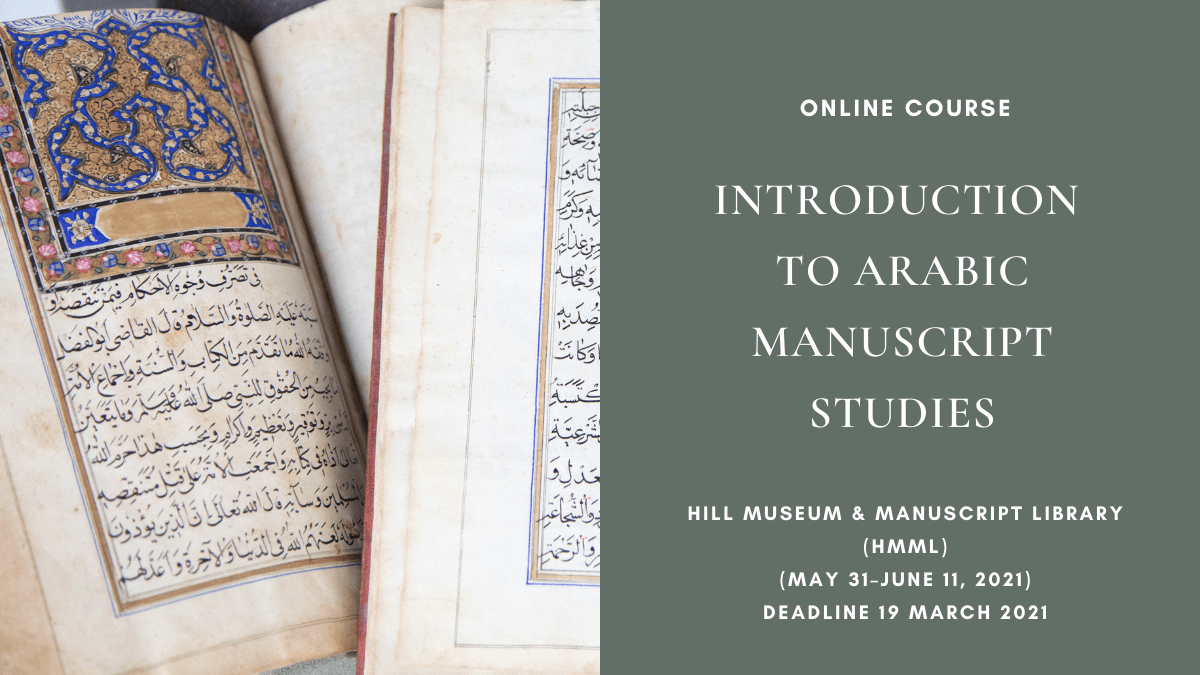
Online Course: Introduction to Arabic Manuscript Studies, Hill Museum & Manuscript Library (HMML), (May 31–June 11, 2021), deadline 19 March 2021

This two-week introductory course is open to graduate students, advanced undergraduates, faculty, and independent scholars with a research interest in Arabic manuscripts. The course will introduce students to the study of Arabic manuscripts in their historical, cultural, and material dimensions and to a diversity of Arabic manuscript traditions from West Africa and the Middle East, both Islamic and Christian; provide basic introduction to paleography, codicology, and philological practices, with a special focus on the application of these skills in a digital context; and highlight a wide range of scholarly reference tools for the study of Arabic manuscripts. By the end of the course, students will be able to contribute to the scholarly description of a previously uncataloged manuscript of their choice from the HMML collection.

Sessions will be held Monday-Friday from 9 a.m. to 11 a.m. CST.

Eligibility

  • Basic understanding of the classical Arabic language
  • Professional and scholarly interest in manuscripts 

Costs: $250 (U.S.)

Find out more information here.

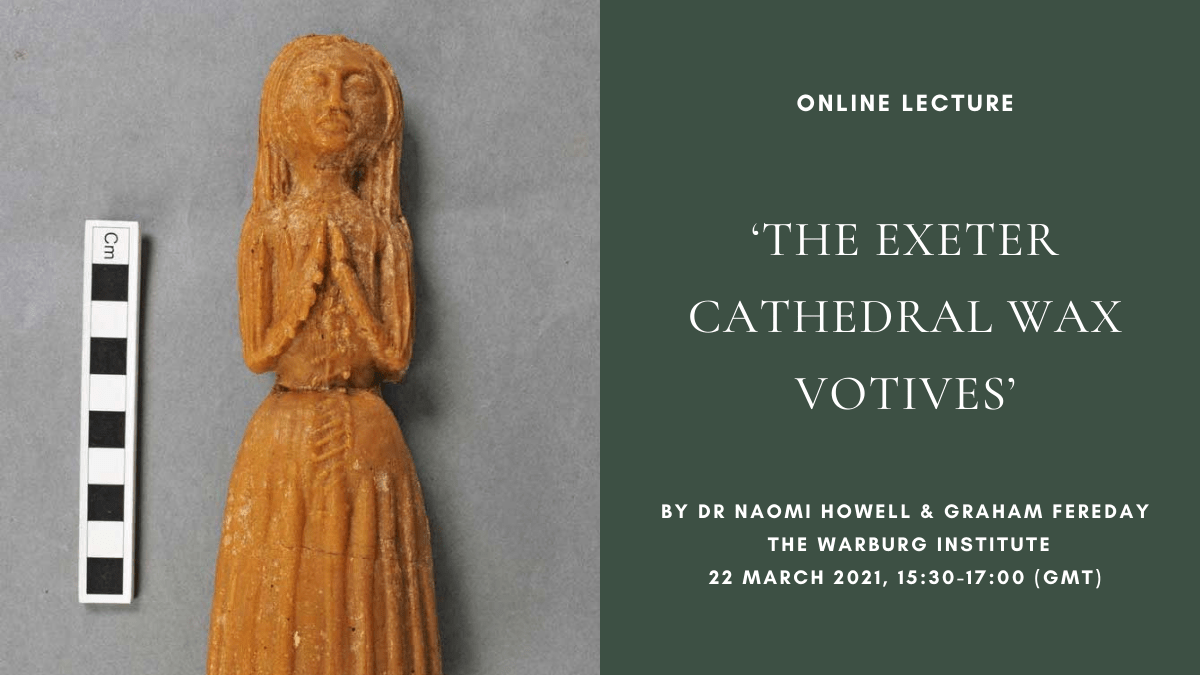
Online Lecture: ‘The Exeter Cathedral Wax Votives’ by Dr Naomi Howell and Graham Fereday, The Warburg Institute, 22 March 2021, 15:30-17:00 (GMT)

In 1943, following the bombing of Exeter Cathedral, a trove of wax votive objects was found at the tomb of Bishop Edmund Lacey. Many were in small fragments, but one whole figure remained – a unique survival of what was once a vibrant religious practice. In this seminar, Dr Naomi Howell and Graham Fereday from Exeter University will discuss the history, study and ongoing conservation of these extremely rare, fragile objects using a combination of high-definition photography, 360-degree videos and 3D-printed models. Combining medieval history and digital humanities, this seminar offers students and others who are interested an opportunity to discover more about this important archaeological find. Presented in conjunction with Exeter Cathedral Library and Archives.  

This event is part of the A Material World: Devotion events series, which brings together academics and heritage professionals from a wide range of disciplines to discuss issues concerning historical devotional materials, their conservation, presentation, display, and reconstruction.

Organisers: Rembrandt Duits (Acting Curator, The Photographic Collection, The Warburg Institute) and Louisa McKenzie (PhD student, The Warburg Institute).

Register here. Find out more information here.