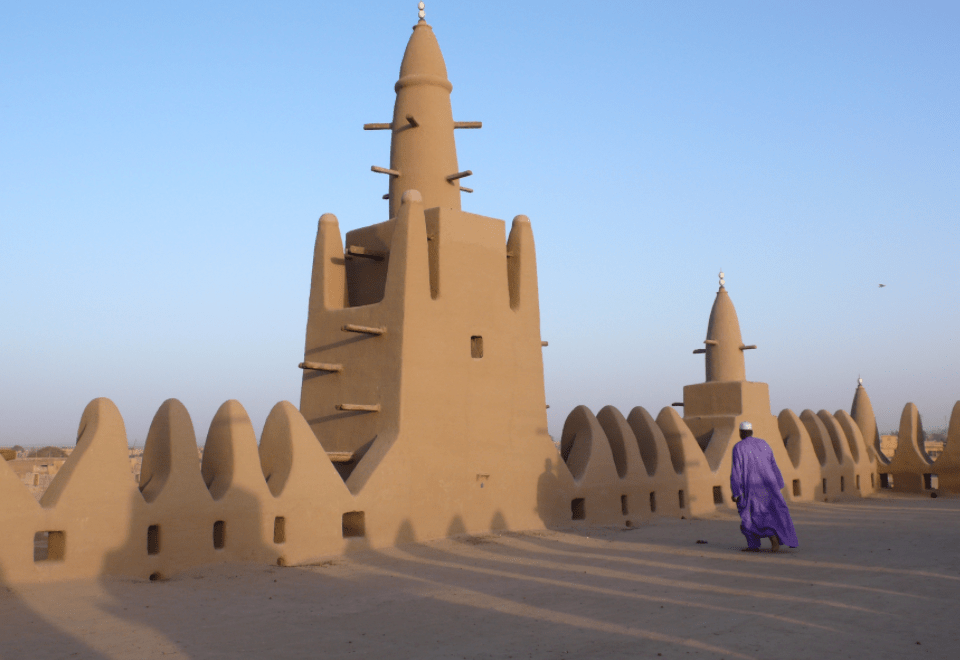
New Publication: ‘Visual Culture and Indigenous Agency in the Early Americas’ edited by Alessia Frassani

This volume explores how visual arts functioned in the indigenous pre- and post-conquest New World as vehicles of social, religious, and political identity. Twelve scholars in the eld of visual arts examine indigenous artistic expressions in the American continent from the pre-Hispanic age to the present. The contributions ofer new interpretations of materials, objects, and techniques based on a critical analysis of historical and iconographic sources and argue that indigenous agency in the continent has been primarily conceived and expressed in visual forms in spite of the textual epistemology imposed since the conquest.

Contributors are: Miguel Arisa, Mary Brown, Ananda Cohen- Aponte, Elena FitzPatrick Siford, Alessia Frassani, Jeremy James George, Orlando Hernández Ying, Angela Herren Rajagopalan, Keith Jordan, Lorena Tezanos Toral, Marcus B. Burke, and Lawrence Waldron.

Readership

Archaeologists, art historians, and researchers in culture area studies related to Latin America and the Caribbean. Research institutes, libraries, and universities with both undergraduate and post-graduate students and faculty with interests in these areas.

Alessia Frassani, Ph.D. (2009), City University of New York, has published books and articles on Mesoamerican pictography and colonial Latin American art, including Building Yanhuitlan: Art, politics, and religion in the Mixteca Alta since 1500(University of Oklahoma Press, 2017). 

Online Lecture: The History and Significance of the Byzantine Prothesis Ritual, Nina Glibetić, Zoom, 17th February 2022, 17:00 (EST)

The Mary Jaharis Center is pleased to announce our next lecture: The History and Significance of the Byzantine Prothesis Ritual. In this lecture, Nina Glibetić, University of Notre Dame, discusses the history and development of Byzantine Prothesis ritual. This talk brings together manuscripts in several languages in order to trace the shifts and expansions of the Prothesis over time. It also nuances previous scholarly narratives by pointing to early Byzantine antecedents to this ritual and highlighting the diversity in local practices that characterized this rite prior to the emergence of its definitive form in Late Byzantium.

This lecture will take place live on Zoom, followed by a question and answer period. Please register to receive the Zoom link. REGISTER HERE.

Sponsored by the Mary Jaharis Center for Byzantine Art and Culture and Harvard University Standing Committee on Medieval Studies.

Online Lecture: ‘The Guest of the Body – Visualising Souls in Medieval Europe, 1100-1200’, Shirin Fozi, 27th April 2022, 17:00-18:30 (BST)

The art of medieval Europe emphasizes the eschatological future in terms that can often surprise contemporary viewers.  Christian anxieties about the apocalypse – the longing for resurrection, the fear of eternal damnation, the hopes of attaining a place in paradise – hinged on the desire for a successful reunification of the bodies and souls of the dead.  These two aspects of the self were seen as diametrically opposed in many ways; the flawed, mortal, ephemeral reality of the body could not be more different than the abstract and ineffable qualities of its invisible pendant.  In order to represent these contrasts, however, medieval artists visualized the soul in forms that would be recognizable for their audiences, favoring the anthropomorphic soul that could take flight with the assistance of angels.  This talk looks at a series of medieval images, particularly funerary monuments, that reflect on the departure of the soul and emphasize its fraught relationship to the body that is left behind, and to which it shall return.  Even as bodies were present throughout medieval Christian spaces – buried in chapels and crypts, or raised as relics in altars and shrines – souls occupied a strange position in between presence and absence, dissolving deep divides between heaven and earth, or between the mundane experience of daily life and the end of days, that distant and yet rapidly approaching frontier of Christian time.

Shirin Fozi is Associate Professor in History of Art and Architecture at the University of Pittsburgh.  She is the author of a monograph titled Romanesque Tomb Effigies: Death and Redemption in Medieval Europe, 1000-1200 (2021), which received a Millard Meiss Grant from the College Art Association, and co-editor of Christ on the Cross: The Boston Crucifix and the Rise of Medieval Wood Sculpture (2020).  Fozi has also published several articles on modern collections of medieval art, and her most recent Museum Studies seminar culminated in a student-curated online exhibition called A Nostalgic Filter: Medieval Manuscripts in the Digital Age (2020).

Organised by Dr Tom Nickson (The Courtauld) and Dr Jessica Barker (The Courtauld) 

Booking will open shortly via this link.

Online Lecture: ‘The Psycho-Architectonics of the Imżā Inscriptions – Denotations and Connotations of Text in the Arts of the Safavids’, Dr Mahroo Moosavi, 3rd March 2022, 18:00-19:30 (GMT)

By working between the two media of art and literature, this paper challenges some manners by which the textually infused arts of the early modern Iran have been conventionally perceived. While through the inherited discourse of Western art history, the inscription or epigraph is an appurtenance of the object’s visual and thematic language or is, on some occasions, reduced to a purely scientific and palaeographic element, this paper suggests an alternate discourse that extends the significance of such texts, especially the imżā [signature] inscriptions, beyond the normative, emphasising their particular agency as possible strategic ‘interventions’ envisioned and adopted by the artist, architect, or the patron.

Tracing its earlier roots in the increasing use and thematic specificities of text in the artistic productions of the Persianate societies from the thirteenth and fourteenth centuries onwards, this paper aims to open the current methodologies and understandings of the arts of the Safavids (1501-1722 AD) to a rereading. It does so by engaging with the ‘signature inscriptions’ as systematic architectonic design strategies that constantly de and re construct the object/space and the inter-woven micro politico-cultural context around it through activating the emotive-cognitive recipients of the user. By focusing on a number of cases such as the early seventeenth century mosque of Luṭfullāh in Isfahan and the mid-sixteenth century Sultan Ibrāhīm Mīrzā’s manuscript of Haft Awrang of Jāmī, this study shows how the application of text in the arts of early modern Iran operates as a mechanism through which the boundaries between different branches of art and knowledge may blur, making space for the reception and perception of art as an abstruse apparatus that functions through the layers of connotations of Persian psyche, language and literature.

Dr Mahroo Moosavi is Bahari Fellow in the Persian Arts of the Book at University of Oxford, Oliver Smithies Lecturer at Balliol College, University of Oxford, and Lecturer in architectural history, theory, and design at the University of Sydney. Her research is concerned with the intertext of art/architecture and poetry/prose, with a particular focus on the early modern Iran, through an interdisciplinary study of art/architectural history, literature, and post-structuralist philosophy. Her current project analyses the interpretations of form and structure of rhetorical devices in the chancellery writings of the sixteenth and seventeenth centuries Iran to discern possible resonances within the artistic and urban system of the new city of Isfahan.

Iran Re-search / The Bahari Foundation Lectures on Art and Culture is an annual lecture series inviting practicing artists, curators and scholars to think afresh about the trajectories of knowledge production on material and visual cultures of Iran. The Iran Re-search Bahari Lecture Series aims to foreground transdisciplinary and cross-temporal approaches, considering as wide a range as contemporary arts and the antiquities of Iran.

Organised by Professor Sussan Babaie (The Courtauld) 

Hybrid Lecture: ‘The Concealment of Sacred Objects during The English Reformation: Evidence of Piety or Protest’, Bruce Watson FSA,1st March 2022, 13:00-14:00 (GMT)

One aspect of the English Reformation (1533-53) was a dramatic change of doctrine from Roman Catholic to the Protestant, which involved an attack on ‘traditional religion’, statues were forbidden, the celebration of Mass was banned and finally, all the redundant liturgical goods and vestments were confiscated by the Crown. To what degree were these changes of doctrine welcomed or opposed by the clergy and general population? One overlooked source of information is the evidence for the deliberate concealment of banned goods including censers, crucifixions, saints’ relics and statues. Often these objects were concealed within or adjoining the churches where they had probably been used, but sometimes material was concealed further afield. We only know of this practice due to a handful of historical references and the accidental rediscovery of this material centuries later often during church restoration. Objects were buried under church floors, outside in burial grounds, or walled up inside internal cavities like redundant niches for statues. I started to research this topic some years ago and quickly realised that the concealment of religious objects during the Reformation was an overlooked phenomenon.

The late Margaret Aston in Broken Idols of the English Reformation (2016, p.219) wrote that: ‘the archaeology of concealment [during the Reformation] is a subject that awaits proper investigation’. Often examples of the concealment of objects has not been recognised or properly documented. What interests me is the motivation of those involved, they were disobeying the Crown and risked punishment. Were they pious individuals who that hoped if doctrine changed (as it did the Marian Catholic revival of 1553-58, then this material could be retrieved and reused – this did happen) or were they simply protesting against the theft of their parish’s property by the avaricious, but cash-strapped Crown? Remember these people had recently witnessed the state-sponsored looting of the monasteries and the chantries, so in 1552 when the Crown ordered the compilation of a second inventory of English parish church goods, there was good reason to be concerned.

A short article on this subject entitled: ‘How a passion for toppling statues was subverted’ was published by the author in British Archaeol (no 177, p.10-11) in 2021.

Attendance at Burlington House:

  • Open to anyone to join, Fellows and Non-Fellows.
  • Registration is essential.
  • Places in person will be allocated on a first-come, first-served basis.
  • The event will begin at 13.00 GMT. Please arrive in plenty of time.
  • All attendees should scan the NHS QR code available at the entrance. For further details on the Government guidelines regarding COVID-19 and track and trace please visit their website here.

Attendance by Live Stream:

  • Open to anyone to join, Fellows and Non-Fellows.
  • The event will be live-streamed to YouTube here
  • The event will begin at 13.00 GMT.
  • You will receive an email reminder with the link to join the day before the lecture.

Please help the Society continue to deliver our FREE online Lecture Programme by making a donation to cover the cost of upgraded IT and software. We would really appreciate your support. Thank you! 

If you have any questions please contact us on communications@sal.org.uk

Book your tickets here.

Lecture: ‘Dead Reckoning: The Material Legacy of Eudes of Nevers (d.1266)’, Anne Lester, UCL and Online, 17th March 2022, 17:30-19:00 (GMT)

IHR European History 1100-1550 Lecture Series: Hybrid Meeting – UCL, Cruciform Lecture Theatre 2 & Online via zoom 

On 7 August 1266 the crusading Count Eudes of Nevers died in Acre.  Eudes had come to Outremer in 1265 to aid the permanent French garrison maintained in the city, known as the stependarii.  At the time of his death and in the months that followed three knights who served as his legal executors drew up a detailed inventory of his personal and household goods, tallied his accounts, and paid off his final debts. No doubt such accounting was routine for men like Eudes who lived and died in the east, away from home and family. The survival of such records, however, is rare if unprecedented. Five parchments rolls, now in the Archives nationales in Paris, shed light the contents of his wardrobe, kitchens, pantry, stables, and chapel, and list the pay he owed to over three dozen men in his employ, the value of the clothes and textiles he possessed and the jewels, relics, and personal items he treasured. My talk begins with an introduction to these texts and offers a close reading of the material world of an aristocratic crusader in the mid-thirteenth century. Reconstructing Eudes’s material life also means reckoning with the extravagant wealth a crusader of his stature carried into the east and thus considering the function of objects: their role as stores of wealth, mechanisms of patronage, affectations of masculinity, performances of power, and markers of piety. My remarks also address the potentials and limitations of a material methodology and our discipline’s current reckonings with ‘materiality’.

Please note that there is a limited capacity on campus. If you have not selected an ‘in-person ticket’ please do not go to UCL, but join online. Click here to book.

You are requested to wear masks at UCL(Opens in new window).


All welcome– this seminar is free to attend but booking in advance is required.

Lecture: ‘The Crivelli Conversation’, Dr Caroline Campbell, Jonathan Watkins and Amanda Hilliam, National Gallery, London and Online, 22nd February 2022, 13:00-13:45 (GMT)

It is possible to book to attend this lecture in person in the Sainsbury Wing at the National Gallery, London, or to watch via live stream.

Caroline Campbell discusses Crivelli’s illusionism with Jonathan Watkins and Amanda Hilliam, co-curators of an exciting new exhibition at the Ikon Gallery

The 15th-century Italian Renaissance painter, Carlo Crivelli, was a master of illusion and perspective. His remarkable tricks of the eye seem to point towards a post-modern art historical future, as radical in its own way as modern artists such as Magritte, and his work remains a recurring source of artistic inspiration.  

Caroline Campbell, Director of Collections and Research joins Jonathan Watkins, Director of Ikon Gallery and co-curator Amanda Hilliam to discuss an exciting new exhibition, ‘Carlo Crivelli: Shadows on the Sky’, opening at the Ikon Gallery, Birmingham (23 February to 29 May 2022), to which the National Gallery is delighted to lend four of Crivelli’s masterpieces. 

To coincide with this important exhibition, a display of works will also be on show in Room 54. 

To book tickets for the live stream of the talk taking place in the Sainsbury Wing Theatre please click here. If you would prefer to book to attend in person, please click here.

Dr Caroline Campbell is our Director of Collections and Research. A specialist in Italian Renaissance painting, her interests range from the Middle Ages to the contemporary world. At the Gallery, she has curated ‘Mantegna and Bellini’ (2018), ‘Building the Picture’ (2014), and ‘Duccio | Caro’ (2015) among other exhibitions.

Jonathan Watkins is Director of Ikon Gallery. He has curated international exhibitions including Biennales in Sydney (1998), Sharjah (2007) and Quebec (2019), Triennials at Tate (2003) and Guangzhou (2012) as well as ‘Facts of Life: Contemporary Japanese Art’ (Hayward Gallery, 2001) and ‘Floating World’, Bahrain (2017). In 2019 he won the Ampersand Award to realise the exhibition of his dreams (Carlo Crivelli, 2022). 

Amanda Hilliam is co-curator of ‘Carlo Crivelli: Shadows on the Sky’ at Ikon Gallery. She is an Associate Lecturer at the Courtauld and previously held the David and Julie Tobey fellowship at Villa I Tatti, the Harvard University Center for Italian Renaissance Studies, and the Joseph F. McCrindle Foundation curatorial fellowship at the National Gallery of Art. Her monograph on Carlo Crivelli is forthcoming with Reaktion Books.

Online Lecture: ‘Imagining Microplaces: From Medieval into the Present’, Professor Catherine Clarke, Zoom, 16th March 2022, 5:30pm (GMT)

The Spring term York Medieval Lecture with Professor Catherine Clarke (Director of the Centre for the History of People, Place and Community at the Institute of Historical Research) has been postponed to Wednesday 16 March (5.30pm in K/133). Catherine will be speaking on:

Imagining Microplaces: From Medieval into the Present

Placing our histories is always key to understanding the past. But what happens if we focus in at the smallest scale: on a specific street or square, a doorway, tree or vantage-point – a microplace? The recent AHRC-funded project ‘Towns and the Cultural Economies of Recovery’ (on which Catherine was Co-Investigator) highlighted the importance of ‘microplace’ and the ‘hyper-local’ to understanding our towns and cities – and to sustaining their futures. This lecture will draw on a range of Catherine’s place-based projects to explore how thinking through microplace might open up new possibilities for historians, bringing together research, imagination, and varied tools for immersive, experiential analysis and interpretation. This lecture will be of interest to anyone working on place, heritage and regeneration, resonating with the work of York’s own brilliant new project on Coney Street and its stories.

Public registration to attend via Zoom is available on Eventbrite.

Call for Submissions: Annual Book Prize of the Center of Early Medieval Studies in Brno, Deadline – 15th March 2022

In the aim to promote excellence and international multilingual research, the Association of Friends of the Center for Early Medieval Studies of the Department of Art History, Masaryk University, Brno (AFCEMS) decided to establish a yearly prize for the Best Book in Medieval Art (all pre-modern world cultures included). 

The prize will be awarded annually during the AFCEMS meeting in October 2022. Books published in 2018 or later will be considered. The submissions should be works published in English, French, Italian, German, Spanish, Portuguese, Greek or Russian. The publication’s author or authors are expected to be current members of the AFCEMS (to join the AFCEMS, visit earlymedievalstudies.com/EN/membership.html). 

The author of the selected book will receive a cash prize of 1000€

Selection committee
Directors: Michele Bacci (Université de Fribourg); Ivan Foletti (Masaryk University, Brno)
Members: Anna Adashinskaya (Higher School of Economics, Brno); Alejandro García Avilés (Universidad de Murcia); Meekyung MacMurdie (The University of Utah); Erik Thunø (Rutgers University); Cécile Voyer (Université de Poitiers)

Submit your book or your intention to submit the book to the address: Center for Early Medieval Studies, MU, Faculty of Arts, Arna Nováka 1, 60200 Brno, Czech Republic. 
For any queries, please contact: natalia.gachallova@phil.muni.cz

You can find more information here.

CFP: Book Ornament and Luxury Critique, University of Zurich, Deadline: 15th April 2022

The research group “Textures of Sacred Scripture. Materials and Semantics of Sacred Book Ornament” (https://textures-of-scripture.ch) invites paper proposals for a three-day international conference on “Book Ornament and Luxury Critique”. The conference, funded by the Swiss National Science Foundation, is scheduled to take place at the Institute of Art History at the University of Zurich from 15 to 17 September 2022. 

In his famous preface to Job, Jerome severely criticizes sumptuous luxury in the ornamentation of books: “Let those who will keep the old books with their gold and silver letters on purple skins (…) if only they will leave for me and mine, our poor pages and copies which are less remarkable for beauty than for accuracy” (Praefatio in librum Hiob, ed. Schaff/Wace 1890, 492). While this source is often cited as proof of the availability of luxurious copies of sacred scriptures in Late Antiquity, and the continuation of such splendor – despite clerical opposition – throughout the Middle Ages, the tradition of luxury critique it documents, and its further development, has received far less attention. When, how, and under what circumstances might book ornament be understood as offensive, and which strategies were employed to avoid such critique or to create books that are ostentatiously ascetic? 

Since antiquity, philological correctness was opposed to ornament in the rhetorical discourse, which associated an overtly rich language with overblown luxury and female adornment. Already in Roman literature, this gendered discourse was projected onto the material artifacts of writing, a tradition that influenced the varied discussions about the materiality of sacred books and their status in Christian, Islamic and Jewish book cultures from Late Antiquity until the end of the Middle Ages and beyond. In all three religious traditions, the discourse concerning the ornamentation of scripture established connections “between ornamenting bodies, buildings and language, in which fancy forms are rejected in favor of plain, and embellishment opposed to simplicity in a dialect of truth and falsity” (F. B. Flood, in: Clothing Sacred Scriptures, ed. D. Ganz/B. Schellewald, Berlin/Boston 2019, 52). 

The conference welcomes proposals that consider the entire range of such critique of book ornament in Christian, Islamic and Jewish book cultures, and that analyze their specific contexts and semantics, as well as “the spaces of negotiation, in which artists, commissioners and users could react to critical allegations without simply obeying them” (D. Ganz, as above, 34). The time range for proposed papers is from antiquity through the Middle Ages and beyond; early modern and Reformation studies as well as broader theoretical approaches are also welcome. Discussions across disciplinary boundaries are encouraged. Topics of particular interest are:

– material semantics of luxury and its opposites (especially the role of color, layout and format)
– critique of gilded script and the clothing of scriptures in gold, jewelry and textiles
– self-commenting books (e. g. Richard de Bury’s Philobiblon) and self-legitimation of ornament
– the ornament critique of the monastic orders
– the economics of luxury and its critique
– the rhetoric of luxury critique 
– luxury critique and gender discourses
– luxury critique in an interreligious perspective

Speaking time for each paper should not exceed 30 minutes and will be followed by a discussion. The conference languages are English, German, French and Italian. Submissions should include the title and an abstract (max. 300 words) as well as the name, contact information and a short CV of the speaker. Proposals should be submitted to thomas.rainer@uzh.ch by 15 April 2022. Acceptance of papers will be confirmed at the beginning of May 2022. The conference is currently planned as an in-person meeting. Travel expenses and on-site accommodation of all speakers will be covered.

For more information, please click here.

Image: Monochrome initial in the “Grande Bible de Clairvaux”, Troyes, Bibl. mun., ms. 27, t. II, f. 99v. showing the ascetic ornament of sacred scriptures in the milieu of Cistercian monasteries in the mid-12th century.