
The Klesch Collection offers grants towards the yearly cost of university fees to graduate students who have been accepted into a full-time Art History MA or PhD course of study worldwide, beginning the next academic year. PhD students are welcome to apply for any year in their programme.
Applications will be considered from students who will focus/are focusing their studies on European and British painting of the Renaissance and Baroque periods (c. 1400-1700).
The deadline to apply is 20th of June 2023.
More details on how to apply can be found through this link.
Fellowships: Call for Expressions of Interest from Postdoctoral Scholars, British School at Athens (Deadline 9th June 2023)
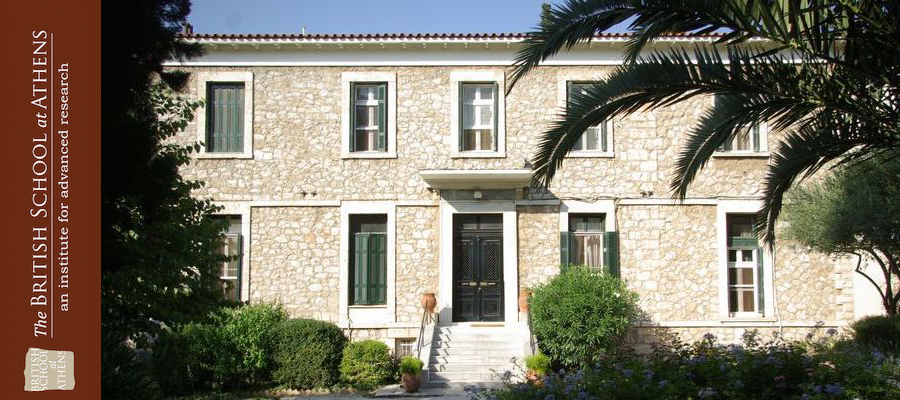
The British School at Athens invites expressions of interest from postdoctoral scholars who wish to apply for a range of fellowships schemes:
The British Academy Postdoctoral Fellowships
The Marie Skłodowska-Curie Postdoctoral Fellowships
The Leverhulme Trust international Fellowships
The deadline for the submission of expressions of interest to the School is Friday 9 June 2023.
Potential candidates are asked to check the eligibility requirements of the scheme they are interested in. Those interested should send a CV, a list of publications and an outline of the proposed research (no more than 2 pages) to the BSA Assistant Director at assistant.director@bsa.ac.uk. When appropriate, potential candidates are welcome to send a separate statement of any circumstances that may have impacted their research.
Candidates selected by the School will be contacted directly by the Research committee.
For any information please contact assistant.director@bsa.ac.uk
British Academy Postdoctoral Fellowships 2024
The British Academy Postdoctoral Fellowships offers outstanding early career researchers the opportunity to pursue an independent research project at a host institution, towards completion of a significant piece of publishable research, for a period of 3 years. More information about the scheme is available on the British Academy website (https://www.thebritishacademy.ac.uk/funding/postdoctoral-fellowships/)
The Marie Skłodowska-Curie Postdoctoral Fellowships 2024
These fellowships are open to excellent researchers of any nationality, who wish to carry out their research activities abroad, acquire new skills and develop their careers undertaking international mobility either to or between EU Member States or Horizon Europe Associated Countries or in a non-associated Third Country. The objective is to support researchers’ careers and foster excellence in research. These fellowships can last 1 or 2 years (European fellowship) or 2 or 3 years (Global fellowship).
More information about the scheme is available at https://marie-sklodowska-curie-actions.ec.europa.eu/actions/postdoctoral-fellowships
The Leverhulme Trust international Fellowships
The fellowship is open to researchers established in the UK to develop new knowledge, skills and ideas outside the UK. The scheme may be used for developing new lines of research through overseas collaboration, making ‘discipline-hopping excursions’ into new areas of research, developing
innovations in teaching, preparing for collaborative grant applications, or observing and sharing ground-breaking techniques or practices. Fellowships are tenable for between 3 and 24 months. More information: https://www.leverhulme.ac.uk/international_fellowships
PhD Funding: “Dynamics of Conventionality (400-1550)”, University of Cologne (Deadline 3rd July 2023)
The Faculty of Arts and Humanities of the University of Cologne has the following positions available:
4 doctoral positions for a period of three years starting on 1st October 2023 within the framework of the Research Training Group 2212 “Dynamics of Conventionality (400–1550)”. The monthly remuneration for the doctoral positions amounts to 65 % TV-L 13.
The Cologne research training group engages in a reorientation of interdisciplinary research regarding the Middle Ages both in terms of content and methodology. Using ‘conventionality’ as our key concept, we aim at reconstructing the dynamics of European societies and cultures for the time period between 400 and 1550. The hitherto neglected concept of conventionality will enable us to reframe the dynamics of change in medieval history, art, architecture, music, philosophy, and literature. Methodologically, we distance ourselves from the narrative of modernization that – operating with key words such as ‘revolution’ and ‘innovation’ – entails describing the Middle Ages as a deficient preliminary stage of modernity. Such narratives preserve rather static conceptions of an era and tend to justify them in alluding to the specific traditionalism and conventionality of the Middle Ages and its societal and cultural manifestations. In contrast, the Cologne research training group aims at reconstructing their complexity and variety by adopting the concept of conventionality that has been theoretically and philosophically developed within the field of cultural studies. Conventionality signifies all rule-based forms of common actions and practical knowledge that are based on social agreement and guarantee cultural and societal stability and are yet intrinsically apt to various forms of modification and adaptation. Thus, conventions are crucial to facilitate processes of transformation whose effects transcend the great narratives of modernization.
For the time period between 400 and 1550, the significance of conventionality is manifest in the pivotal and ubiquitous concept of consuetudo (custom, habit). Based on this concept, reasoning on social change and persistence was carried out, and a corpus of accepted social and artistic rules was developed. Even though these rules claimed to be normative, they were subject to a constant process of negotiation, modification, reformulation and fictionalization—or they could even be dismissed as bad habits. The Cologne research training group plans to investigate the dynamics of conventionality in different spheres of medieval society. It traces a type of practical knowledge that is not based on rational and controlled methods of the production of knowledge, but on rule-based forms of social agreement. Taking three sets of terms contrary to conventionality – norm, science, and originality – as a foil for comparison, we intend to explore a cluster of thematically differentiated configurations of conventionality in an interdisciplinary context.
The research training group conducts research from an interdisciplinary perspective into the dynamics of conventionality from late antiquity to the early modern era. Under the overarching motto of convention, phenomena such as custom, regularity, tradition, and habitualisation are examined in order to understand their inner dynamics. The disciplines involved are history, German philology, philosophy, art and history, medieval Latin philology, Byzantine studies and musicology. The research training group offers a structured doctoral programme that is integrated interdisciplinarily and internationally. More information on the thematic orientation: https://grk2212.uni-koeln.de
An excellent university degree in one of the subjects covered by the research training group and a clearly recognisable focus on medieval studies are prerequisite for applicants for the doctoral positions. Please submit the following documents in one pdf-file as part of your application:
– Curriculum Vitae and certificates
– a 4-page exposé on the planned doctoral project
– a 1-page letter of motivation
– a letter of recommondation by a professor
The University of Cologne actively supports equal opportunities and the research institute particularily welcomes applications from female candidates.
Please send your written application by email as one pdf-file by July 3, 2023 to:
Universität zu Köln
GRK 2212
Dr. Anica Schumann
anica.schumann@uni-koeln.de
Fellowship: Research Fellowship, DFK Paris and INHA (Deadline 30th June 2023)
The DFK Paris and the Institut national d’histoire de l’art (INHA) jointly offer a one-year fellowship, effective 1 October 2023. The fellowship is intended for outstanding art historians from France, Germany, or abroad who are at the beginning of their careers (doctoral candidates and postdoctoral researchers). The goal of this funding opportunity is to support scholarly work with innovative research approaches that open up new perspectives in art history. Not only should the theme and methodology of the project connect to the operative research orientations of each institute, but the fellow’s presence in Paris must also be necessary to the execution of the work. It is a condition of the fellowship that the selected candidate remains in close contact and exchange with both institutes during the funding period and resides predominantly in Paris.
The fellow conducts research for six months at the DFK Paris and six months at the INHA. The selected candidate can expect a stimulating working environment that will faciliate both archival access and the exchange of ideas with international experts.
The amount of the fellowship is 1,750 euros per month for a period of 12 months (plus a monthly allowance of 250 euros for material costs and, if applicable, a child supplement). The recipient will be funded as a scholar for six months at the DFK Paris and six months at the INHA. The award also includes a workspace and use of the infrastructural resources of both institutes.
Applications for the 2023 cycle must be submitted no later than 30 June 2023 to: stipendien@dfk-paris.org
Only applications received in this way will be considered in the selection process. The selection committee, consisting of Peter Geimer, Julia Drost, Éric de Chassey, and France Nerlich, will meet in July 2023.
Composition of the application dossier:
The application may be written in English, French, or German.
– a letter of application addressed to the director of the DFK Paris and the director of the INHA’s Département des études et de la recherche
– a CV
– a project description (max. 3 pages), supplemented by a bibliography with details on the sources to be consulted, as well as a schedule
The selection committee convenes once a year.
Further information and contact:
Secretary to the director of the Département des études et de la recherche
Institut national d’histoire de l’art (INHA)
Tel.: +33 (0)1 47 03 85 81
Email: der-dir@inha.fr
German Center for Art History Paris (DFK Paris)
Department for Grants, Internships, and Support
Tel.: + 33 (0)1 42 60 68 23
Email: stipendien@dfk-paris.org
Seminar: “‘Look er thin herte be set’: Courtship, Emotion and Gender in Late Medieval England” by Bronach Kane, 25th May 2023 17:30 GMT

This seminar is part of the ongoing IHR European History 1150-1550 seminar series. For complete information and to register, click here.
Job Opportunity: Assistant Professor in Spatial Approaches to Digital Humanities, Vrije Universiteit (Deadline 9th June 2023)

The Department of Art & Culture, History, and Antiquity at the Vrije Universiteit, Amsterdam, is looking for a specialist who combines expertise in the spatial digital methods and techniques with the historical sciences, in particular archaeology, heritage studies, history, or art history. The department is interested both in the representation of the past in the present and the use of spatial digital methods and techniques in research into and management of the past. The successful candidate will contribute to the broadening and strengthening of the department’s profile in digital humanities by develop their own line of teaching and research in the spatial approaches to the past.
The appointee will contribute to shaping research and teaching in the field of Digital Archaeology and Heritage. They will incorporate digital spatial analysis such as GIS and/or network analysis into teaching within the history, archaeology, heritage studies and/or art history programs. In addition, the appointee is expected to reflect critically on the representations of the past and on the use of spatial digital methods and techniques in the historical sciences and to cooperate with colleagues in teaching and research. They will help train a new generation of students competent in digital spatial analysis who can contribute to digital heritage management, co-design, predictive modelling, or digital science communication in the field of historical sciences.
For complete information and to apply, click here.
Conference: “Ethiopians Abroad in the Middle Ages”, Ecole francaise de Rome, 23rd-26th May 2023

The international conference of the ERC project HornEast (Horn & Crescent. Connections, Mobility and Exchange between the Horn of Africa and the Middle East in the Middle Ages). The project offers the first comprehensive study of medieval connections between the Horn of Africa and the Middle East in both Christian and Islamic contexts.
For more information, click here.
Programme
23 May 2023
Pontificio Istituto Orientale
15.00 Visit of the Pontificio Istituto Orientale
16.45 Key note lecture by Alessandro Bausi
24 May 2023
École française de Rome, piazza Navona 62
9.00 Welcome of the participants
9.30 Introduction of the conference
10.00 Session 1. Slaves and Freed Men and Women
14h Opening of the exhibition Four Campaigns of Archaeological Survey and Excavations in Eastern Tigray, Ethiopia
14.40 Session 2. Cultural Brokers
25 May 2023
École française de Rome, piazza Navona 62
9.00 Session 3. Jerusalem
11.20 Session 4. Networks I. Materiality
14.00 Session 5. Networks II. Monasteries and Tariqas
16.20 Session 6. Networks III. Embassies
26 May 2023
École française de Rome, piazza Navona 62
9.00 Session 7. Ethiopian Cairo
12.40 Conclusions
15.00 Visit of the Biblioteca Apostolica Vaticana and of the Church of Santo Stefano dei Mori
Members of the ERC project HornEast:
- Simon Dorso, Aix-Marseille Université
- Julien Loiseau, Aix-Marseille Université
- Shahista Mohamed, Aix-Marseille Université
Speakers:
- Olivia Adankpo, Université Grenoble Alpes
- Mathilde Alain, Centre for the Study of the Renaissance (University of Warwick) – Centre d’Études Supérieures de la Renaissance (Université de Tours)
- Martina Ambu, LabEx Hastec – EPHE (Paris)
- Deresse Ayenachew, I Tatti – The Harvard University Center for Italian Renaissance Studies (Florence)
- Alessandro Bausi, Universität Hamburg
- Iskandar Bcheiry, American Theological Library Association
- Sobhi Bouderbala, ERC HornEast – Faculté des Sciences Humaines et Sociales de Tunis
- Giuseppe Cecere, Università di Bologna – Alma Mater Studiorum
- Alice Croq, ANR ChrIs-cross
- Sophia Dege-Müller, Universität Hamburg
- Alessandro Gori, Københavns Universitet
- Magdi Guirguis, Kafrelsheikh University et IFAO (Égypte)
- Bertrand Hirsch, Université Paris-1 Panthéon Sorbonne
- Timothy Insoll, University of Exeter
- Verena Krebs, Ruhr-Universität Bochum
- Zacharie Mochtari, Université de Liège
- Mikael Muehlbauer, Columbia University
- Craig Perry, Emory University
- Perrine Pilette, CNRS – UMR Orient et Méditerranée (Paris)
- Zaroui Pogossian, Università degli Studi di Firenze
- Camille Rouxpetel, Université de Nantes
- Awet Teklehimanot Araya, University of Exeter
- Anaïs Wion, CNRS – Institut des Mondes Africains (Paris)
Hybrid Lecture: Images of the Gospels through Ethiopian and European Eyes, Dr Dorothea McEwan, 23 May 2023, 5:30 – 7:30PM BST

Images of the Gospels, through Ethiopian and European Eyes – the Evangelium arabicumas vorlage for an Ethiopian tetraevangelium. An example of the new Gondärine style of painting in Ethiopia in the 17th century
Dr Dorothea McEwan (Honorary Fellow, Warburg Institute, and Associate Fellow of the Ethiopian Academy of Sciences)
A John Coffin Memorial Lecture
Illuminated gospel books such as Or 510 in the British Library, 1664-65, and the Märtula Maryam gospel book, kept in Märtula Maryam, also called Ǝnnäbǝse, in Gojjam, Central Ethiopia, c. 1650s, are examples of precious gospel books of the middle of the 17th century. The gospel stories are richly illuminated, the paintings skilfully executed by more than one painter, the colours still vivid and well-preserved.
Dr McEwan chose the Märtula Maryam tetraevangelium to explain its European source or vorlage, the so-called Evangelium arabicum of 1591. What makes the illuminations in the Ethiopian manuscript book so extraordinarily important is the adoption of painting methods such as the nascent use of perspective and the borrowing of visual props from its European vorlage. Dr McEwan’s presentation into the origins and sources of the Ethiopian images is centred on parallel examples from the Ethiopian and European books. She will show pictures selected from the gospel according to Luke and explain their adaptation to the Ethiopian painting milieu, throwing up idiosyncrasies in the Ethiopian illuminations, triggered by transposing European images in to the Ethiopian milieu.
Dorothea McEwan studied History at the University of Vienna where she was awarded her PhD. After having moved to London she worked in the British Library cataloguing the John Churchill, First Duke of Marlborough papers. She was the Archivist in The Warburg Institute, University of London, until her retirement and has devoted her time since to researching illuminated Ethiopian manuscripts. She has published widely on historical and theological topics. In 2008 she was awarded the Cross of Honour in Art and Sciences from the President of the Republic of Austria, in 2021 the Grand Decoration for Services to the Republic of Austria from the President of the Republic of Austria, and in 2017 she was elected Associate Fellow of the Ethiopian Academy of Sciences.
This lecture follows a paper by Dr McEwan at the British Library in May 2019, an online international conference on Ethiopian art and architecture, hosted by Complutense University, Madrid, in November 2021, and an online seminar on recent studies in Ethiopian art and architecture held at the Warburg Institute in May 2022.
ATTENDANCE FREE IN PERSON OR ONLINE (VIA ZOOM) WITH ADVANCE BOOKING
The lecture will be followed by a drinks reception.
A full text of the lecture with accompanying images will be available online after the event.
Please book here.
Call for Papers: Late Medieval Stencil Painting, Saxon State Office for the Protection of Monuments, Dresden, 26th-28th October 2023 (Deadline 30th June 2023)

Late medieval stencil painting of the 15th and 16th centuries on wooden supports in Central Europe
Interdisciplinary conference of the Saxon State Office for the Protection of Monuments
Stencil painting was a common and widespread decorative technique in both sacred and profane interior design at the end of the Middle Ages and in the early modern period (until 1550). As far as we know today, its area of distribution extended over the entire Central European region. Of the once extensive and sometimes very elaborately decorated objects, only a few have survived in their entirety. Their design ideas, which are often room-related, can still be experienced today, for example in the wooden church in Dębno Podhalańskie, Poland, which is included in the UNESCO World Heritage List.
International research has been concerned with this type of stencil painting for about 100 years. In addition to art-technological aspects, cultural-historical questions about the origin and distribution of the decorative style have been raised. Approaches to the derivation and formation of groups of works on the basis of stencil similarities also offer suggestions for dealing with this design technique in a classical comparison of styles, as is common in art history.
The aim of the interdisciplinary conference is to bring together the results of current and past research, to place them in an international context and, if necessary, to re-evaluate them. Questions concerning the origin, development and dissemination of the technique will be discussed, as well as problems of conservation, restoration history and heritage preservation. At the same time, the aim is to compile a catalogue of stencil motifs used on the basis of the objects presented.
Contributions can include aspects of the following thematic sections:
1. Contributions on the cultural-historical background:
Aspects of regional, supra-regional and international political, ecclesiastical-political and economic circumstances are to be discussed and the decorative style placed in its contemporary context.
2. Contributions to art history:
In addition to individual case studies or discussions of regional and supra-regional object studies, this category includes contributions on the emergence, dissemination and development of the decorative style as well as stylistic-critical and iconographic considerations. Promising comparative approaches to the technique in the reflection of other art genres, such as textile art, are also given equal space here.
3. Contributions to the art technology of stencil painting:
This section focuses on the entire process of producing stencil painting in connection with both building- bound and non-building-bound objects with regard to material properties, material procurement, preparation, processing, scientific analysis procedures or historical tools.
4. Contributions to stencilled furniture of the period:
Late medieval stencilled furniture represents a special genre in furniture history. Both profane furniture and sacred furniture will be discussed here with regard to their typology, joining and decoration techniques and functionality.
5. Contributions to stencil painting in the context of interior design:
Stencil paintings on furniture and building-related furnishings are today often regarded as a singular object- specific phenomenon due to their state of preservation. Other examples show that they were conceived at the time of their creation in the context of interior design, especially wall painting. This section explores questions about the complexity of interior design.
6. Contributions to the conservation and care of objects with stencil painting:
In addition to individual examples of conservation and restoration, questions of current and historical conservation concepts and conservation problems in the context of cultural heritage preservation will be discussed. Examples of building climate problems in times of climate change and questions of museum conservation and presentation will be discussed.
If your contribution relates to the topic of the conference but is not assigned to one of these sections, your submission or submission is not one of these sections. Your suggestion still welcome.
Organization: Organizer:
Saxon State Office for the Protection of Monuments in Dresden, Schloßplatz 1, 01067 Dresden
Contact:
Christine Kelm, LfD Sachsen, christine.kelm@lfd.sachsen.de, Tel.: +49 351 48430 416 Jörg Kestel, LfD, joerg.kestel@lfd.sachsen.de, Tel.: +49 351 48430 405
Gerald Grajcarek M.A., veranstaltung@lfd.sachsen.de, Tel.: +49 173 4060 787
The conference including excursion will take place from 26 until 28 October 2023 in Dresden and will be organised by Saxon State Office for the Protection of Monuments. Details of the programme will be published after the closing date for contributions.
Contributions of 20 minutes are requested. To ensure the smooth running of the programme and the mutual consideration of all speakers, please keep to the speaking time. Each contribution will be allowed 5 minutes for discussion.
There is also the possibility of submitting poster contributions. The posters submitted in DIN A1 format will be printed by the Saxon State Office for the Protection of Monuments prepared for the exhibition and included in the planned conference proceedings.
The conference language is English and German.
Proposals for papers with the title of the presentation and an abstract of max. 10 lines in German and English as well as a short CV with complete postal address are requested to be sent
by 30 June 2023 to:
Landesamt für Denkmalpflege Sachsen Schloßplatz 1
01067, Dresden
Stichwort »Schablonenmalerei«
E-Mail: veranstaltung@lfd.sachsen.de
The technical equipment for a digital image presentation (PowerPoint) is available to the speakers. It
is planned to stream the lectures online during the conference as a hybrid conference.
All conference contributions will subsequently be published in the series »Arbeitshefte« of the Saxon State Office for the Protection of Monuments. The manuscripts of the contributions should be completed by the time of the event and can be sent to the organisers on site.
For all submissions of stencilled objects, please include the stencil motifs to scale (as a rectified, scaled, digital photo or as a 1:1 tracing) with the papers and posters. The organisers will also accept independent submissions of original stencil motifs to scale, with the aim of publishing all collected stencils in a catalogue. The images should be compiled with the location and, if applicable, dating as well as the contact details of the collector.
Funding Opportunity: The Murray Research Studentship in European Art or Architecture of the Middle Ages and Renaissance, Birkbeck, University of London, Deadline: 12th June 2023
Outstanding candidates for part-time postgraduate research in the field of European Art or Architecture of the Middle Ages and Renaissance are invited to apply for The Murray Research Studentship. This PhD studentship, based in the School of Historical Studies at Birkbeck and supported by the Murray Bequest, covers part-time home fees and offers a bursary of £5,000 per annum for a period of five years. Please note: this studentship is not available for full-time/overseas students.
ABOUT THE MURRAY BEQUEST
Peter Murray was Professor of History of Art at Birkbeck from 1967 to 1980. On his death in 1992, his widow, Linda Murray, established a Bequest which supports a range of activities in History of Art.
FACT FILE
Qualification type: MPhil/PhD
Length: up to seven years part time
Location: London
Funding for: Home current students and applicants
Murray fee waiver: Home part-time fee waiver and bursary of £5,000 for five years. Please note current students award will be reduced by number of years already studied.
Hours: part-time only
SUPERVISORS
The School of Historical Studies has a number of members of staff who work in the field covered by the studentship, and are potential supervisors for the successful applicant:
ELIGIBILITY
Applications are welcomed from:
• Part-time Home applicants to the History of Art MPhil/PhD programme
• Part-time History of Art students currently in the first or second year of study
HOW TO APPLY
APPLICANTS
Programme application
• All applications are made via the Birkbeck application portal to the MPhil/PhD History of Art programme.
• The application will prompt you to confirm details of any scholarships or grants (for your proposed study at Birkbeck). Please ensure you respond with: MURRAY 2023. If this section is not clearly marked, your application may not be picked up for assessment.
Supporting documents
• A research proposal of up to 2,000 words.
• Transcripts of relevant studies and, where appropriate, a letter from your course coordinator predicting the expected degree result (for those who still have to complete their current Master’s-level programme).
• A sample of writing such as your MA dissertation, or similar.
References
• Referees will be automatically prompted to upload their references when you submit your application.
• We strongly encourage you to contact referees as early as possible to ensure they are prepared to upload their reference by the referee deadline (see below).
CURRENT STUDENTS
Please email the Postgraduate Research administrator, Laurie McRae Andrew (artsresearchstudent@bbk.ac.uk) with the following documents:
• An updated copy of your research proposal
• A 500 word summary of work undertaken to date
• The name of your supervisor (who will be contacted to provide a supporting statement instead of references)
CLOSING DATE FOR APPLICATIONS
• Closing date for applications: Monday 12 June 2023, 5pm
• Deadline for references/supporting statement: Monday 19 June 2023, 5pm
• Interview date: Monday 26 June 2023
Only complete and timely applications received, with both references/supporting statement, can be considered.
FURTHER INFORMATION
• For informal queries, please contact Dr Robert Maniura
 Medieval Art Research