The Journal of Islamic Manuscripts explores the crucial importance of the handwritten book in the Muslim world. It is concerned with the written transmission of knowledge, the numerous varieties of Islamic book culture and the materials and techniques of bookmaking, namely codicology. It also considers activities related to the care and management of Islamic manuscript collections, including cataloguing, conservation and digitization. It is the journal’s ambition to provide students and scholars, librarians and collectors – in short, everyone who is interested in Islamic manuscripts – with a professional journal and functional platform of their own.
The Journal of Islamic Manuscripts is published on behalf of the Islamic Manuscript Association Limited, an international non-profit organization dedicated to protecting Islamic manuscripts and supporting those who work with them.
Table of Contents:
The Qurʾān Encrypted: A Unique Qurʾānic Manuscript in Cipher, by Arianna D’Ottone Rambach
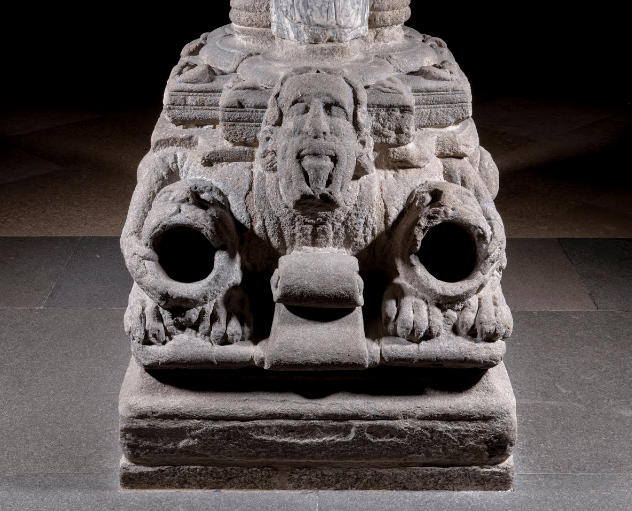
Whilst we would love to hop on a plane and head to Galicia for a holiday, we’re being responsible art historians! With this in mind, the Cathedral of Santiago de Compostela have created a wide range of online exhibitions on Google Arts & Culture for us to enjoy without leaving the comforts of our home! Learn more about the Master Mateo who sculptor and architect who worked on the Cathedral’s Pórtico de la Gloria, or explore the museum’s collections of fascinating artworks, as well as learning about the legendary origin of the Camino de Santiago (Way of Saint James). Below are some of our favourites.
Discover the story of revelation and salvation, starting in the crypt and developing through the statues and reliefs of an artistic masterpiece of the Middle Ages.
(The Cathedral de Santiago, Left columns of the central arch of the Portico of Glory, Master Mateo, ca. 1188-1211)
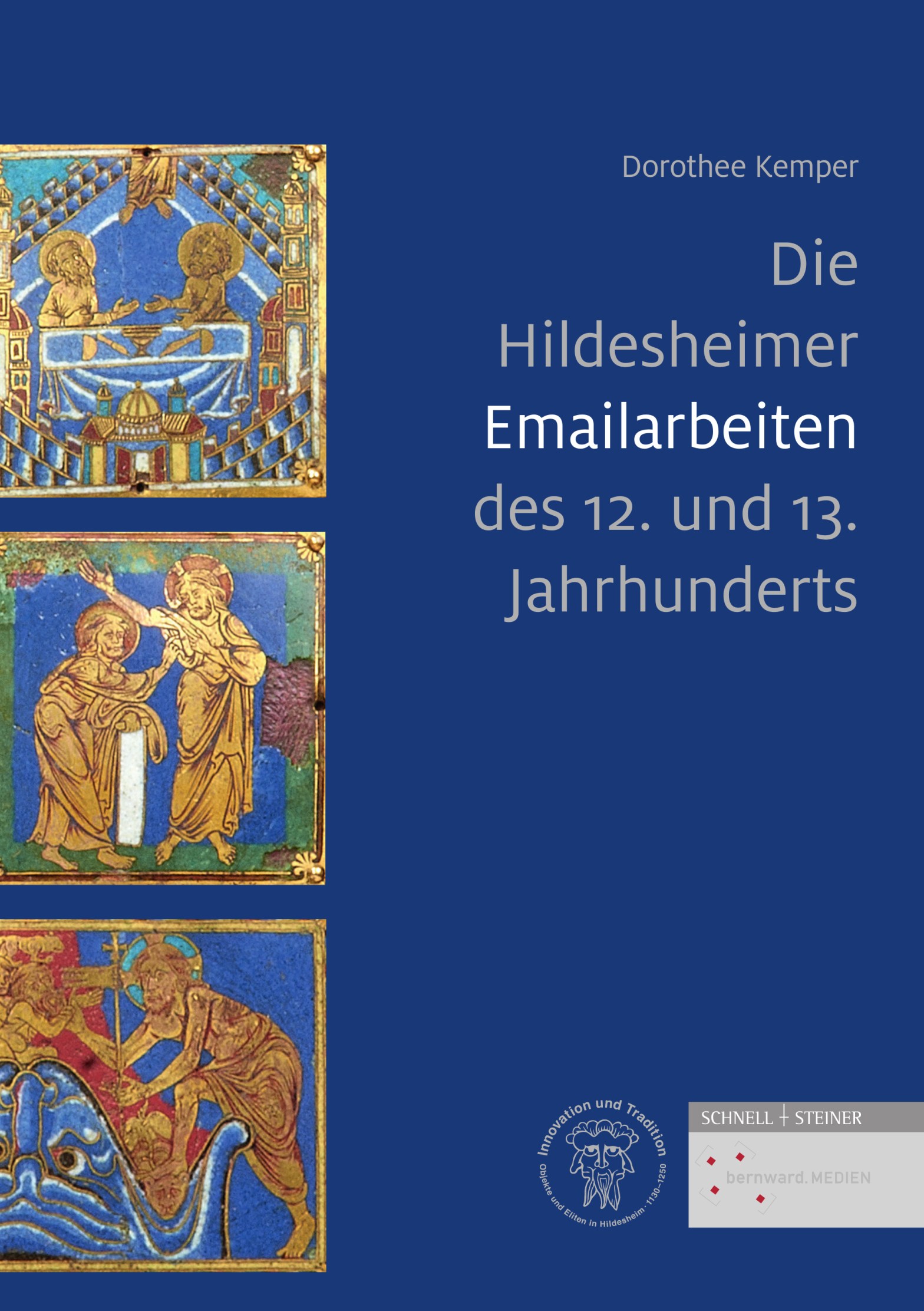
This volume for the first time systematically catalogs medieval Hildesheim champlevé scattered in collections around the world. The products from these local workshops differ from those in large centers for enamel production on the Rhine and Meuse in that they reflect the upholding of local historical tradition by religious elites in the 12th century, as well as the beginnings of mass production for export.
Der Band stellt erstmals die heute weltweit in Sammlungen verstreuten mittelalterlichen Hildesheimer Grubenschmelze (email champlevé) systematisch katalogartig zusammen. Die Produkte dieser lokalen Werkstätten unterscheiden sich von denen der grossen Emailzentren an Rhein und Maas; sie spiegeln die ortshistorische Traditionspflege der religiösen Eliten im 12. Jh. sowie eine einsetzende Serienfabrikation für den Export.
Dorothee Kemper hat Kunstgeschichte, Philosophie und Germanistik in Bonn und Heidelberg studiert. Seit 2006 arbeitet sie in diversen Forschungsprojekten zu mittelalterlichen Goldschmiedearbeiten, zuletzt 2015-2018 am Kunsthistorischen Institut Kiel (BMBF-Verbundforschungsprojekt), seit 2017 ist sie Geschäftsführerin des Deutschen Vereins für Kunstwissenschaft e.V.
From February 1st until March 12th 2020, the MSK hosted the largest Jan van Eyck exhibition in history. During these weeks, nearly 130,000 visitors came closer to Van Eyck than was ever possible before, but unfortunately the COVID-19 crisis forced us to close the exhibition earlier. You can find a retrospective on the Van Eyck website.
Visit Flanders and the MSK joined forces with Belgian virtual reality company Poppr, to develop an online 360° virtual tour of the Van Eyck galleries. Enter the largest Van Eyck exhibition ever directly from the comfort of your home! While scrolling through the 360° images, discover 13 museum galleries with over 120 masterpieces. The audio guide for adults or children is your personal guide through the exhibition.
VISIT FLANDERS also filmed a guided visit with Till-Holger Borchert, Director of the Museums Bruges and one of the curators of the exhibition. Discover with him some of the masterpieces on display in Ghent. Take the virtual tour here!
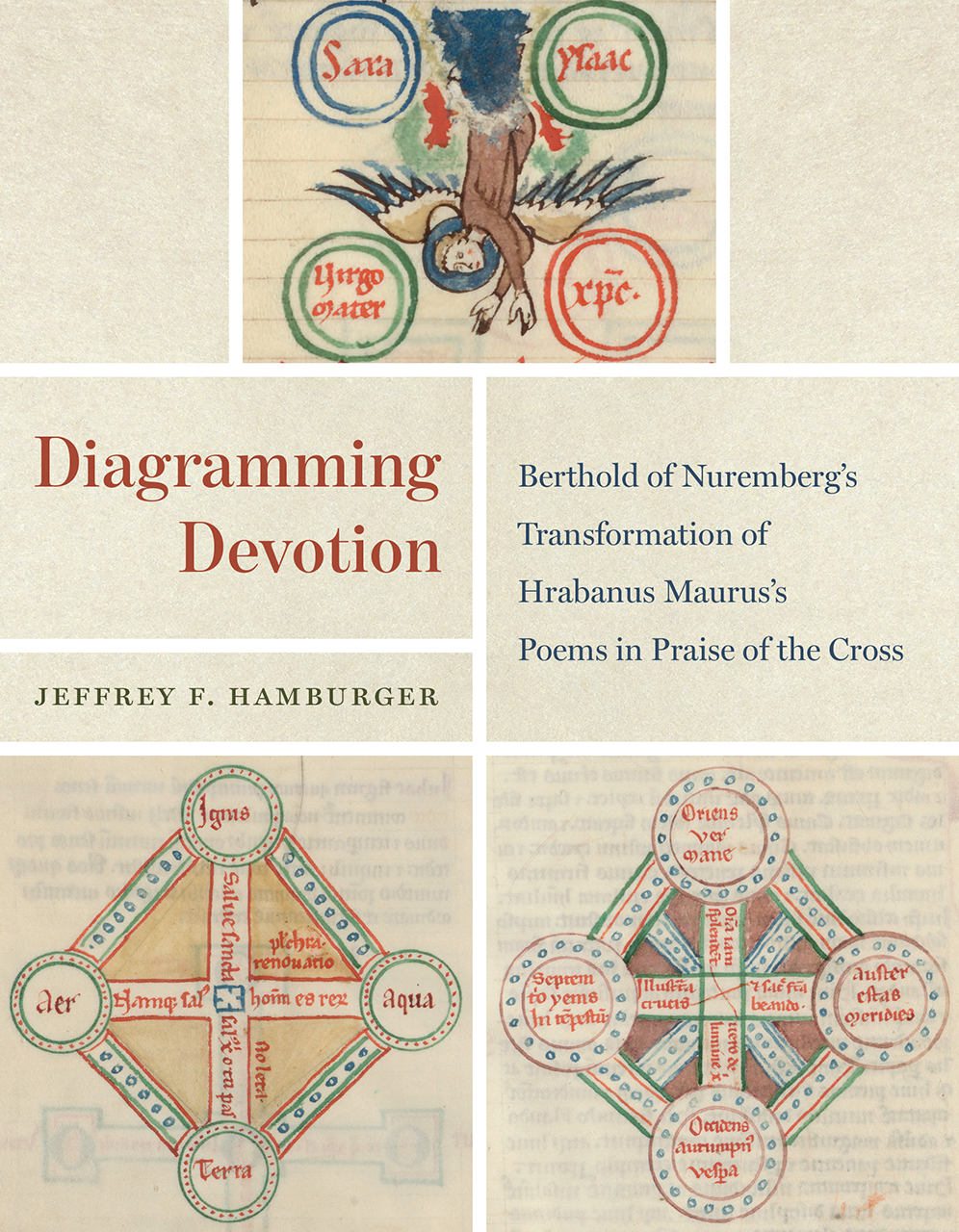
During the European Middle Ages, diagrams provided a critical tool of analysis in cosmological and theological debates. In addition to drawing relationships among diverse areas of human knowledge and experience, diagrams themselves generated such knowledge in the first place. In Diagramming Devotion, Jeffrey F. Hamburger examines two monumental works that are diagrammatic to their core: a famous set of picture poems of unrivaled complexity by the Carolingian monk Hrabanus Maurus, devoted to the praise of the cross, and a virtually unknown commentary on Hrabanus’s work composed almost five hundred years later by the Dominican friar Berthold of Nuremberg. Berthold’s profusely illustrated elaboration of Hrabnus translated his predecessor’s poems into a series of almost one hundred diagrams. By examining Berthold of Nuremberg’s transformation of a Carolingian classic, Hamburger brings modern and medieval visual culture into dialogue, traces important changes in medieval visual culture, and introduces new ways of thinking about diagrams as an enduring visual and conceptual model.
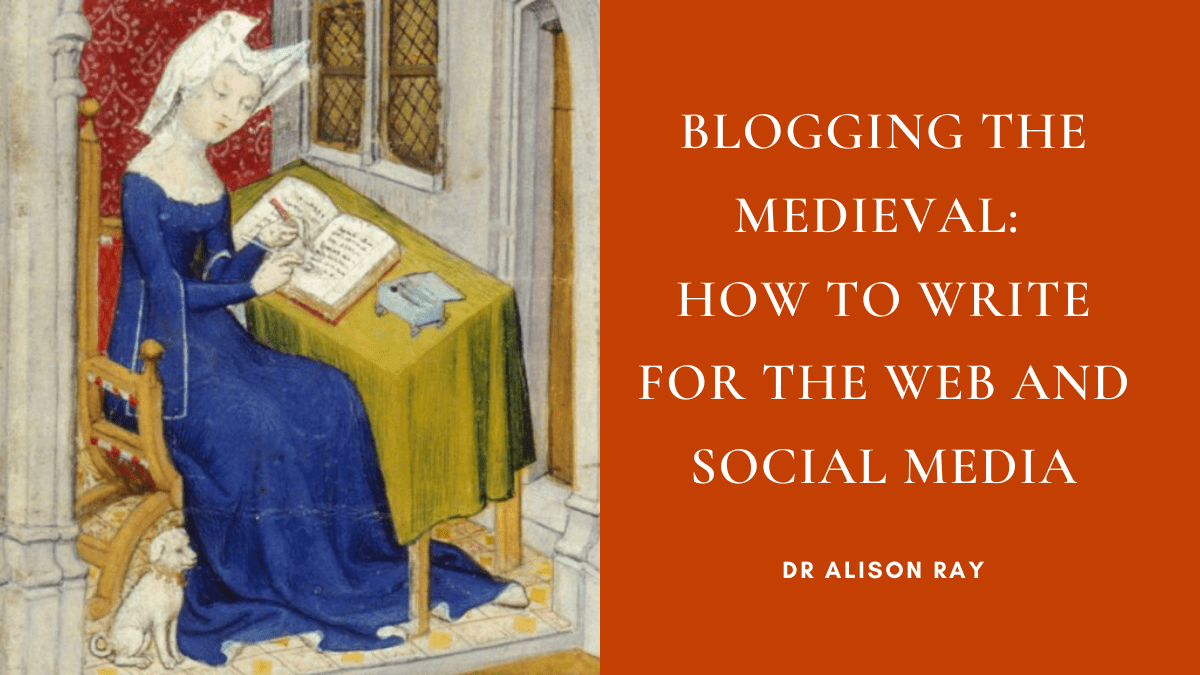
Academics and heritage professionals working with medieval collections are increasingly encouraged to disseminate their research to public audiences through blogging and social media, but many are new to writing inclusively to engage with non-specialist readers. The following guidelines provide helpful advice on writing blogs, using more accessible language, describing medieval objects, finding images to include in posts, and tips for using Twitter and Instagram.
Writing and Tone
While articles are lengthy pieces aimed towards academic readers, blogs are intended for broad audiences and are ideally 500-750 words in length. Be concise in your writing, explaining what the material is that you are discussing, why it is important to you, and what makes your topic relevant to current readers. Hook the reader by presenting your message in the opening paragraph rather than summing up in your conclusion. If you are writing on behalf of your institution, check whether they provide writing guidelines for you to follow. Your tone of voice should be a balance between your academic authority as an expert on the material and light-heartedness to reflect the joy the object brings to you and your readers.
Accessible Language
Accessibility does not mean dumbing down! Instead, you are providing contextual information for non-specialists of your topic. For example, manuscript classmarks are only meaningful to a small number of researchers, so refer to works by their title or form in the body of the post with the classmark in brackets: This illuminated Bible (CCA-DCc-AddMs/392) was produced in Paris. Explain specialist terms when first used, such as Psalter (the book of the Psalms). Take a look at the glossary of the British Library’s Medieval England and France website for further terms relating to medieval art and culture. Similarly, provide epithets and known dates for historical figures when first mentioned, for example: St Thomas Becket, the archbishop of Canterbury (r. 1162-1170). When referring to a medieval centre that is not a well-known location such as London or Paris, include a reference to the centre’s modern location: Echternach, in modern-day Luxemburg. Finally, language is a barrier in medieval studies, so it is important to include English translations of Latin titles of works and quotations. These small additions to your post will allow much wider audiences to access and enjoy your research.
Describing Images
The public does not know how to ‘read’ medieval art, so you must be clear in your written descriptions of the images you discuss. Explain what the image depicts as well as if the work is shown in full or a detail of a larger programme. Be mindful that many medieval works used as sources of historical research continue to function as sacred objects, including Bibles, relics, and other religious items. Your tone should be mindful of the image’s present status to faith audiences. Do not attempt to interpret articles of faith like the Holy Trinity or the Crucifixion, as doctrine of the medieval Church is not accepted across all Christian faiths today. However, provide summaries of common medieval scenes that public readers may be encountering for the first time, for example: The Evangelist St Mark with his symbol of a lion. The British Library’s Discovering Sacred Texts website provides expert guidance on the teaching and description of faith texts and their imagery from Buddhism, Christianity, Hinduism, Islam, Judaism, Sikhism and the Baha’i Faith, Jainism and Zoroastrianism.
Image Credits
Before you include an image in your blog post, ensure you have the permission of the item’s holding institution to use it as reproductions come under copyright law. Most museums and libraries outline how images can be used online their website, but if in doubt get in touch by email to find out their policy. Caption the image with the item’s location and holding institution. For manuscripts, include the library classmark and folio number, as below. Also state the permission or credit line provided by the institution. This applies also to images available to download through digitisation projects.
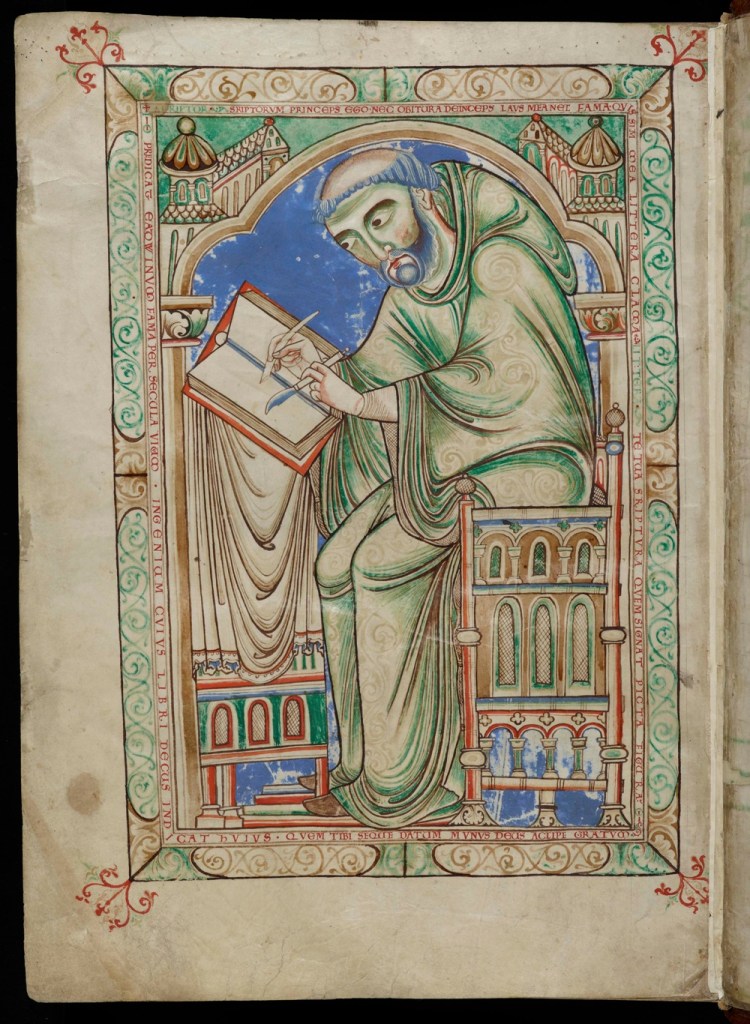
Portrait of Eadwine the scribe, from The Eadwine Psalter, dated c. 1150, Cambridge, Trinity College MS R.17.1, f. 283v.This work is copyright the Master and Fellows of Trinity College, Cambridge and is licensed under a Creative Commons Attribution-NonCommercial 4.0 International License
Twitter and Instagram
Social media is used to promote museum and library collections, highlight upcoming events and exhibitions, drive traffic to project websites, and engage with researchers and the interested public in online communities. You can use social media to attract readers to your blog by sharing several tweets or posts over time with fun facts and images from the blog. Your post or Instagram bio should contain a website link to enable access for readers. Medieval manuscripts are not memes, include the classmark and folio number of the image shared to promote good practice online! Use any relevant hashtags, such as #MedievalTwitter, #nuntastic, #InternationalCatDay- follow the Twitter accounts of the British Library’s medieval curators @BLMedieval and the Bodleian Digital Library @BDLSS for great hashtag ideas. Most importantly, tag in the museum or library you are sharing from! Institutions can share your post on their social media feeds and staff love to see how researchers engage with the collections.
Happy writing!
About the Author
Dr Alison Ray has worked since 2018 as Assistant Archivist at Canterbury Cathedral Archives and Library, having previously worked at the British Library as Digitisation and Web Curatorial Officer with The Polonsky Foundation England and France, 700-1200 digitisation project. Follow Dr Ray on Twitter.
Wolfson College invites applications for up to ten non-stipendiary Junior Research Fellowships under Title BI.
The non-stipendiary Fellowships with enhanced dining rights and annual research allowance are in any subject and tenable for one year from 1 April or 1 October 2021 (dependent upon funding), renewable for a further two years.
The Fellowships are open to graduates of any university, employed within Cambridge University or its allied institutions for the duration of their tenure. There is no age limit, but the Fellowships are designed to support those who are at an early stage in their academic careers, and will normally be awarded to candidates who have recently completed a PhD degree (or equivalent qualification), or is close to completing by the start date.
Candidates must produce satisfactory evidence that they have adequate funds to support their Fellowship. The Fellowships do not cover the cost of bench fees or other University fees or laboratory charges.
Cambridge University Library has a fantastic ‘online exhibition’ space, where you can virtually explore a number of their previous exhibitions. We’ve made a shortlist of those exhibitions that we think Medieval Art lovers will find most interesting! Let us know which one is your favourite (if you’re able to choose!).
In 1216 St Dominic settled a religious community of preachers at Saint-Romain in Toulouse. In 2016 the Order of Preachers (Dominicans) celebrates its 800th anniversary. This exhibition marks the central role that books have played in the work of the Order over eight centuries.
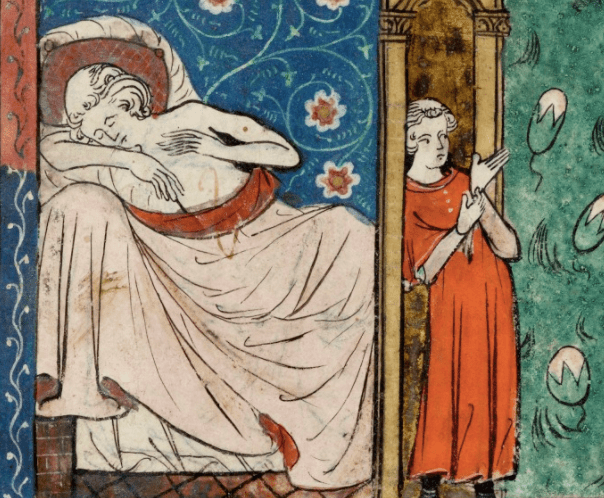
An exhibition tracing the development of medieval literature in French, and the manuscript culture through which it was conveyed across Europe and beyond.
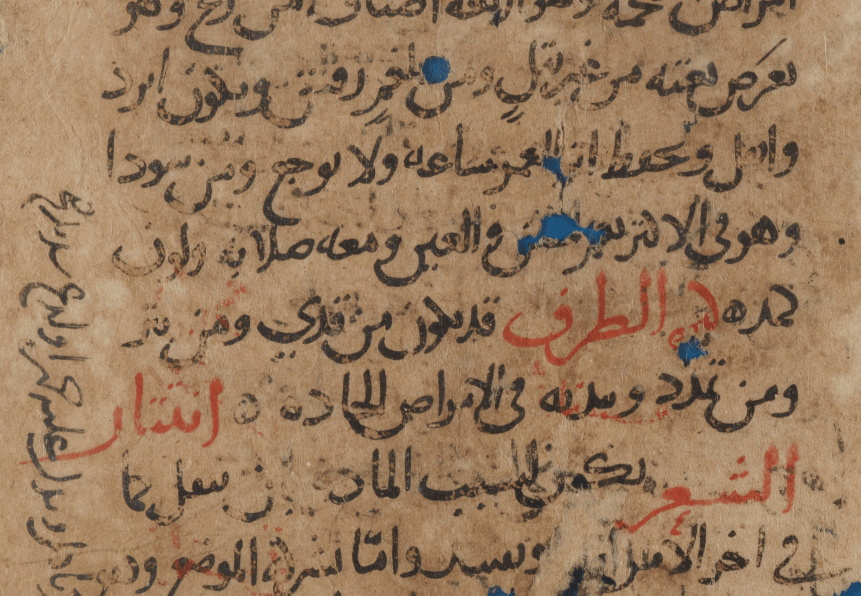
The Canon of Medicine (Al-Qānūn fī al-ṭibb) of the Persian polymath Avicenna (980–1037) was one of the most influential medical texts in both the medieval Arabo-Islamic world and in pre-modern Europe, and it is no surprise that such a pervasive treatise should be found among the 200,000 fragments of manuscripts of the Cambridge Genizah Collections. This exhibition presents a sample.
For a thousand years the Jewish community of Old Cairo put their worn-out writings into a synagogue storage room, a genizah. Explore one of the greatest collections of Cambridge University Library and a remarkable survival of the medieval past. Discarded History: The Genizah of Medieval Cairo provides a window on the life of a community a thousand years ago – a Jewish community in the centre of a thriving Islamic empire, international in outlook, multicultural in make up, devout to its core.
Among the 350,000 fragments of medieval manuscripts retrieved from the Genizah of the Ben Ezra synagogue in Fustat (Old Cairo) we find almost 2,000 leaves dealing with medicine, the medical profession and health problems. They are written in Hebrew, Arabic and Judaeo-Arabic and are an amazing source for studying the transmission of medical knowledge and the actual practice of medicine in the Middle Ages. This exhibition presents a sample.
2017 is the 500th anniversary of the events that brought about a permanent religious schism within Western Christendom. This digital exhibition explores how Europe’s multiple and competing Reformations have been remembered, forgotten, contested, and re-invented since the sixteenth century.
A major exhibition giving insights into the ways early books were decorated, annotated, bound, used and abused by their owners in the first hundred years after the development of the printing press by Johann Gutenberg.
While this year’s ICMA lecture at The Courtauld Institute of Art was unfortunately cancelled due to the COVID-19 crisis, recordings of past events (from 2014-2019) can be found here or below.
This lecture series, established in 1999, is sponsored by the International Center of Medieval Art, New York. ICMA promotes the study of the visual arts of the Middle Ages. Its worldwide membership includes academics, museum professionals, students, and other enthusiasts. ICMA publishes a scholarly journal Gesta, a newsletter, sponsors lectures and conference sessions and maintains the website www.medievalart.org
Previous lecturers and their topics (which can be viewed on YouTube)
2018/19, Dr Elizabeth Morrison (Senior Curator of Manuscripts, J. Paul Getty Museum)
A Beast of a Project: Curating an Exhibition on Bestiaries at the Getty
The prospect of curating a major international loan exhibition is equal parts thrilling and intimidating. After eight years of intense research, loan negotiation, design development, and thousands of emails, Book of Beasts: The Bestiary in the Medieval World will open at the J. Paul Getty Museum in Los Angeles on May 14, 2019. This presentation will look at the behind-the-scenes planning necessary by the lead curator, from the intellectual origins of the concept to some of the major challenges faced along the way. It will explore the exhibition’s major themes, including how the vivid images of the bestiary created an influential visual language that endured for centuries and became so popular that the animals escaped from the pages of books into other types of art objects ranging from massive tapestries to diminutive ivories. The exhibition will feature 115 objects from 45 lenders across the United States and Europe, including one third of the world’s surviving Latin illuminated bestiaries.
Elizabeth Morrison is Senior Curator of Manuscripts at the J. Paul Getty Museum. She received her PhD in the History of Art from Cornell University and began work at the Getty in 1996. During her tenure there, she has curated numerous exhibitions including the 2010 co-curated exhibition Imagining the Past in France, 1250-1500, which was a finalist for the College Arts Association award for outstanding exhibition catalogue. She has published on both Flemish and French illumination and has served on the boards of the International Center of Medieval Art and the Medieval Academy of America.
2017/18, Professor Nancy Sevcenko (Visiting Scholar, Dumbarton Oaks, Washington DC)
All in the Family: The Byzantine imperial family of the Comnenians as patrons in the first half of the 12th century
The Comnenian imperial family dominated the later 11th and 12th centuries in Byzantium: Emperor Alexios I, and his son and successor John II, ruled for a combined total of 62 years (1081-1143). And the family was large: Alexios had nine children and John had eight, and most of these children were adults, with children of their own, by the death of John II in 1143. Given that the administration of the empire in this period centered around membership in the imperial family, the relative proximity of each family member to the emperor himself, whether by blood or by marriage, became key.
The works of art associated with this famille nombreuse consist of everything from grand monastic foundations to illuminated manuscripts to small metal reliquary crosses. Some of these works, large and small, have survived; for others, there is ample written evidence. This paper will look at the many works of art and literature commissioned by, or associated with, specific members of the family in these decades, tracking issues such as how proximity to the throne of the individual may have affected the nature and general perception of the work and its place on a spectrum between public and private.
Nancy Patterson Ševčenko is a Byzantine art historian whose work has focused primarily on illustrated lives of the saints, and on the intersection of art and liturgy. She is the author of The Life of Saint Nicholas in Byzantine Art (1983), of Illustrated Manuscripts of the Metaphrastian Menologion (1990), and of Greek Manuscripts at Princeton, Sixth to Nineteenth Century: A Descriptive Catalogue (2010) with S. Kotzabassi and D. Skemer); she is currently preparing a catalogue of the Byzantine illuminated manuscripts of the monastery of St. John on Patmos. A selection of her articles have been reprinted in her Variorum volume, The Celebration of the Saints in Byzantine Art and Liturgy (2013). She recently completed a term as the President of the International Center of Medieval Art, and is currently Visiting Scholar at Dumbarton Oaks in Washington, DC. She lives in South Woodstock, Vermont.
2016/17, Dr Adam Cohen (University of Toronto)
Local and Global: Medieval Art in an Age of New Nationalisms
In light of recent world events, this talk addresses some of the disciplinary questions about methodology and classification that underlie the study and teaching of medieval art today. It focuses on the tension between working intellectually and practically in an ever-expanding global environment and attending at the same time to the particulars of specific historical contexts.
The consideration of borders ranges from the geographic to the temporal and from cultural to confessional. Among the specific topics to be treated are the role and implications of Jewish art, both in the medieval world and in modern scholarship; the practice of art history in the European and Chinese academies; and the challenges of writing a new survey of medieval art.
2015/6, Professor Lawrence Nees (Professor of Medieval Art & Department Chair, Department of Art History, University of Delaware)
Reading and Seeing: the beginnings of book illumination and the modern discourse on ethnicity
Much attention has been paid to the change of books from roll to codex form, largely accomplished by the fourth and fifth centuries, and the impact of this change on the illustration of books. However, for some centuries the form of writing in the new codex format changed relatively little, and another change, arguably as significant, is associated with the seventh and eighth centuries, with books beginning to adopt multiple scripts displaying a hierarchy, spaces between words, punctuation, and decorative embellishment with illuminations of various sorts. The new kind of books, and readers, are strongly associated with monasticism, as has of course been noted before, but for a variety of reasons scholars have not explored the interactions between writing, illumination, and reading in depth. Instead, a powerful strand of scholarly tradition, especially in the Anglophone world, has linked illumination with “barbarian” traditions, an approach that deserves challenge and reconsideration.
2014/2015, Professor Holger A Klein (Professor of Art History and Archaeology & Department Chair, Department of Art History and Archaeology, Columbia University)
Art, Faith, and Politics in Late Medieval Venice
Following the Crusader conquest of Constantinople in 1204 and the subsequent looting of its churches, chapels and palaces, Venice became a key repository of sacred relics imported from Byzantium and the Eastern Mediterranean. Some of the most treasured relics were soon incorporated into the liturgical and ceremonial rituals of the city and its most distinguished churches. While Venetian efforts to acquire new relics slowed down considerably after the end of the Latin domination of Constantinople in 1261, several prominent Eastern relics entered the city during the fourteenth and fifteenth centuries and enriched the city with their spiritual and miracle-working power. This lecture will explore how two prominent donations of relics of the True Cross, one to the confraternity of San Giovanni Evangelista the other to the Scuola di Santa Maria della Carità, impacted religious, public, and artistic life in Venice from the mid-fourteenth through the early sixteenth century.
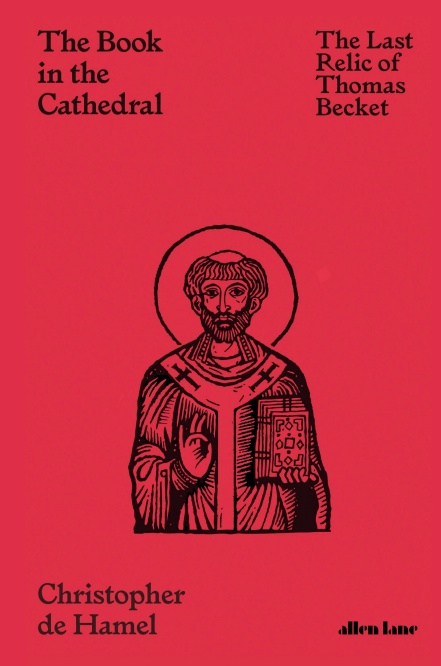
From the bestselling author of Meetings With Remarkable Manuscripts, a captivating account of the last surviving relic of Thomas Becket
The assassination of Thomas Becket in Canterbury Cathedral on 29 December 1170 is one of the most famous events in European history. It inspired the largest pilgrim site in medieval Europe and many works of literature from Chaucer’s Canterbury Tales to T. S. Eliot’s Murder in the Cathedral and Anouilh’s Becket.
In a brilliant piece of historical detective work, Christopher de Hamel here identifies the only surviving relic from Becket’s shrine: the Anglo-Saxon Psalter which he cherished throughout his time as Archbishop of Canterbury, and which he may even have been holding when he was murdered.
Beautifully illustrated and published to coincide with the 850th anniversary of the death of Thomas Becket, this is an exciting rediscovery of one of the most evocative artefacts of medieval England.
Christopher de Hamel: In the course of a long career at Sotheby’s Christopher de Hamel probably handled and catalogued more illuminated manuscripts and over a wider range than anyone else alive. He is a Fellow of Corpus Christi College, Cambridge, and was Librarian of the Parker Library from 2000 to 2016, which holds many of the earliest manuscripts in English language and history, including the Psalter of Becket. Christopher de Hamel is the author of A History of Illuminated Manuscripts and Meetings with Remarkable Manuscripts, which won the Wolfson History Prize and the Duff Cooper Prize in 2016. He is a Fellow of the Society of Antiquaries and the Royal Historical Society.








 Medieval Art Research