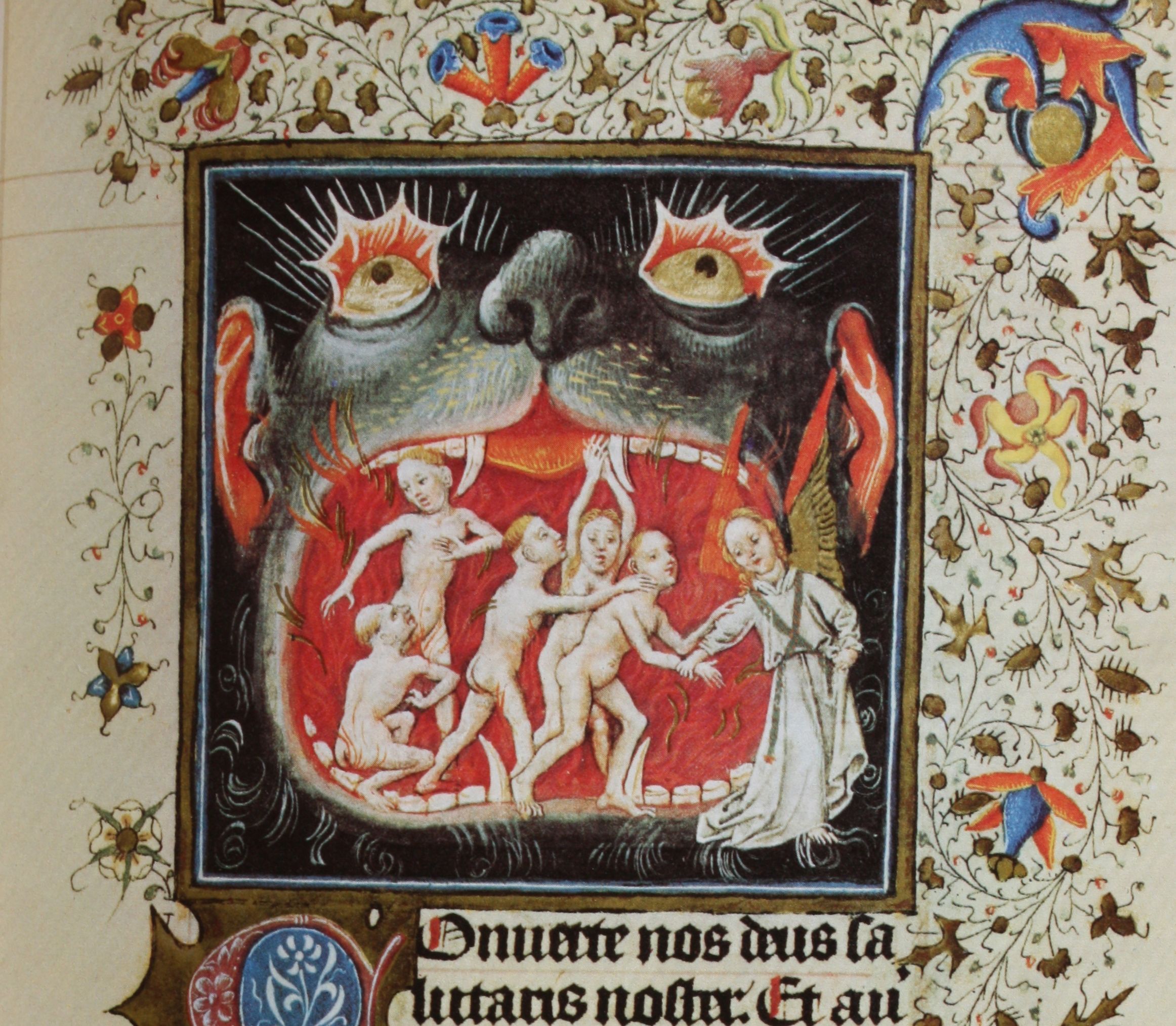
Centre for Late Antique & Medieval Studies Lecture: thirteenth-century Scotland

OLYMPUS DIGITAL CAMERA

The next event with the Centre for Late Antique & Medieval Studies takes place next week, Tuesday 25 February 2014, 18.00-20.00.

Alice Taylor (History, KCL) will be giving a lecture on ‘Disputes and legal procedure in thirteenth-century Scotland’​.  The lecture will take place in the Council Room (K2.29), King’s Building, Strand Campus (map: http://www.kcl.ac.uk/campuslife/campuses/download/KBLevel2forweb.pdf).

All welcome!

If you wish to receive notice of events with the Centre our mailing list can be joined online: https://mailman.kcl.ac.uk/mailman/listinfo/clams-kcl.

Bard Graduate Center: The Material Text in Pre-Modern and Early Modern Europe

160700588_640

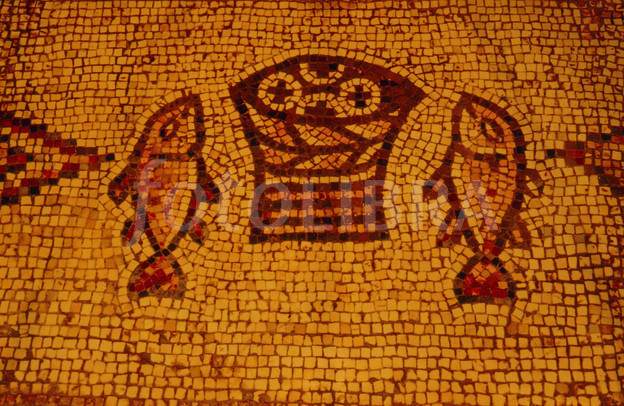
Upcoming symposium at the Bard Graduate Center (BGC) that might be of interest, The Material Text in Pre-Modern and Early Modern Europe, to take place on March 5. This symposium will consider inscribed texts from antiquity to the modern period with the aim of articulating shared problems or issues related to materiality, legibility, and literacy and forging connections between readership in different cultures and contexts. In three sessions, scholars from the BGC, Columbia, NYU, Rutgers, and Brooklyn College will consider the problematic of the “speaking object,” from Greek vases to early modern dinnerware, visual and conceptual reactions to pages and books, and the material and visual properties of inscriptions in the ancient, medieval, and early modern Mediterranean.

Please do join us in person in New York or watch the papers live via the BGC website (the video of the day will also be available on the website at a later date). Please find the program and instructions as to how to livestream the symposium at the BGC website: http://www.bgc.bard.edu/news/upcoming-events/symposium-material.html. To join the discussion remotely via twitter, either with questions or comments, you may use the twitter hashtag #bgctv.

Graduate Workshop: Cappadocia in Context (16 June-4 July 2014)

Intensive Graduate Summer Workshop by Koç University RCAC
16 JUNE – 04 JULY 2014

Do you want to explore the rich artistic and cultural heritage of Byzantine and Post-Byzantine?  Within the region’s spectacular volcanic landscape are dozens of rock-cut settlements, including hundreds of painted, rock-cut churches, chapels, monasteries, houses, villages, towns, fortresses and underground cities.

The program will start in Istanbul, with lectures and field trips.  After three days in Istanbul, the group will travel to Cappadocia.  Through a program in Cappadocia that combines lectures, guided site visits, thematic explorations and seminar presentations, the workshop will explore ways to read the landscapes and its monuments, as well as ways to write a regional history based on the close analysis of sites and monuments.

Prof. Robert Ousterhout (University of Pennsylvania) and Dr. Tolga Uyar (PhD. University of Paris I), with the contribution of some esteemed faculty members from Koç University, will present Cappadocia through a combination of lectures, seminar discussions, site visits and field trips.  A camera, sturdy walking shoes and a taste of exploration are essential!

In order to maintain an intimate setting and provide maximum exposure opportunities, the program has a limited capacity of 14 students.

Scholarships and financial aid are available.
Application deadline 30 April 2014.
All instructions will be in English; reading skills in French highly recommended.
This program is only open to graduate level students in appropriate fields of study.

For more information see: http://rcac.ku.edu.tr/cappadocia

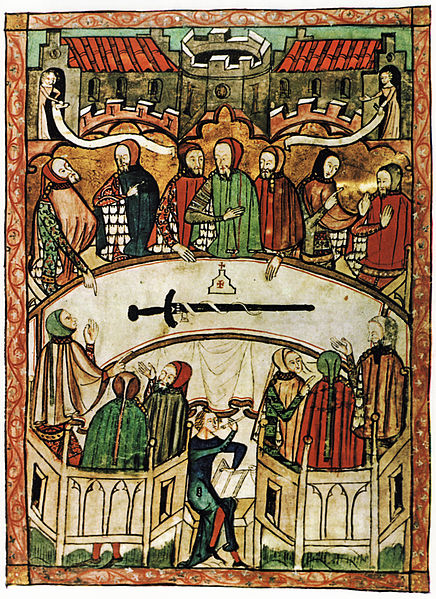
Radio: BBC Radio 4 In Our Time: Chivalry

http://www.bbc.co.uk/programmes/b03tt7kn

Melvyn Bragg and his guests discuss chivalry, the moral code observed by knights of the Middle Ages. Chivalry originated in the military practices of aristocratic French and German soldiers, but developed into an elaborate system governing many different aspects of knightly behaviour. It influenced the conduct of medieval military campaigns and also had important religious and literary dimensions. It gave rise to the phenomenon of courtly love, the subject of much romance literature, as well as to the practice of heraldry. The remnants of the chivalric tradition linger in European culture even today.

Miri Rubin
Professor of Medieval and Early Modern History and Head of the School of History at Queen Mary, University of London

Matthew Strickland
Professor of Medieval History at the University of Glasgow

Laura Ashe
Associate Professor in English at the University of Oxford and Fellow of Worcester College

Byzantine Studies Conference Proposals Vancouver

hagia-sophia-510

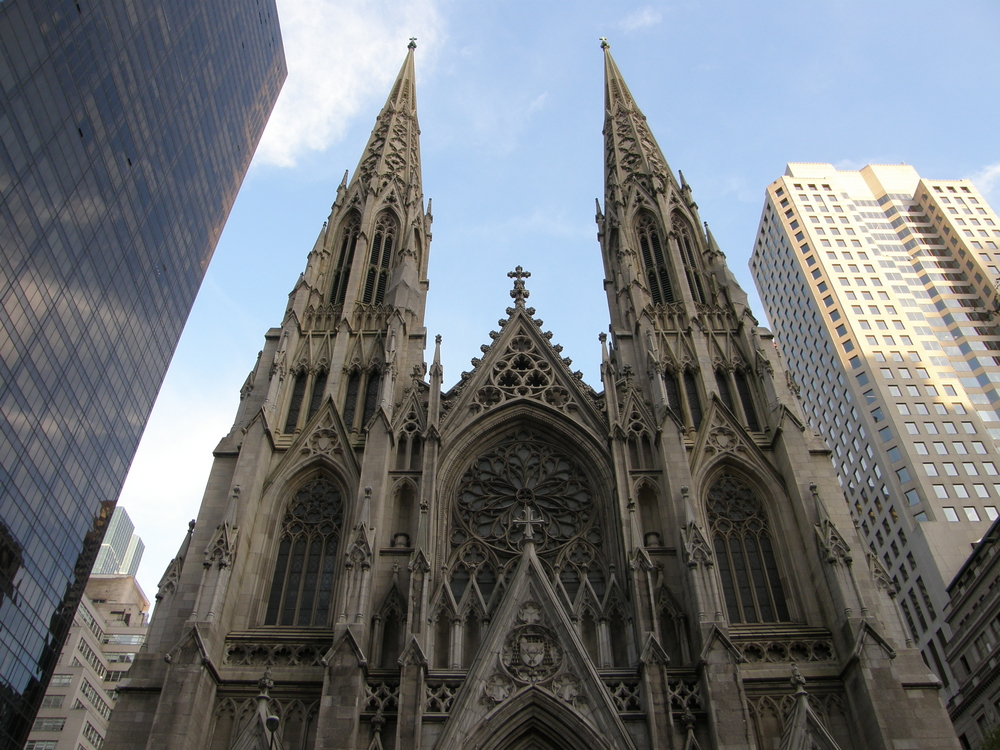
Propose a session for the upcoming BSC in Vancouver this fall (November 6-9, 2014), and, with ICMA sponsorship, be able to pay travel expenses for your speakers, even if they come from abroad!

Thanks to the generosity of the Kress Foundation, the International Center of Medieval Art (ICMA: medievalart.org) is able to provide travel and hotel funds for the speakers at such a session up to a maximum of $500 for US residents, and up to $1000 for speakers coming from abroad.  Every speaker must be an ICMA member at the time of application.

To be properly considered, the proposed session should relate to both art history and Byzantine studies. The BSC warmly welcomes the participation of western and Islamic art historians.

The proposed session will need to pass two hurdles. The procedure is the following:

  1. Submit a proposal for an organized session, with a title, an abstract, a CV of the organizer and the names of 4-5 speakers, to the Programs and Lectures Committee of the ICMA for its approval.
  2. The ICMA committee will decide whether to sponsor the proposed session.  It will notify the organizer, who will then submit the approved proposal to the Program Committee of the BSC, which will make the final decision.

The deadlines are these:

1 March

Submit the session proposal to the ICMA by sending it to Prof. Elina Gertsman at Case Western Reserve University, Chair, ICMA Programs and Lectures Committee (exg152@case.edu). Guidelines are available on the ICMA website, under Membership/Kress Research and Travel Awards. Please note that speakers ALONE are eligible for these funds: session organizers, chairs or discussants are not. Successful applicants will be notified in mid March.

1 April

Submit the approved session proposal to the BSC, following the guidelines that are posted on the Byzantine Studies Association of North America website: bsana.net. An abstract for each of the individual papers will be required at this time. Abstracts are reviewed blindly; speakers and session organizers are usually notified by mid May.

NEW PERSPECTIVES ON LATE MEDIEVAL AND RENAISSANCE CYPRUS

Location: Council Room King’s building Strand campus, King’s College
When: 28/02/2014 (10:00-18:00)
Contact
This event is open to everyone and free to attend. Registration is not required.

Please direct enquiries to Thomas Kaffenberger or Tassos Papacostas.

A Graduate workshop on History and Visual Culture.

The complex society of late medieval Cyprus has been attracting scholarly interest for some time, and in recent years international conferences and publications by established scholars have proliferated. This trend is also reflected in the numerous doctoral and postdoctoral research projects currently under way in universities throughout Europe. This workshop, convened by Thomas Kaffenberger and Tassos Papacostas, will bring together doctoral candidates from across the UK and beyond, to present and discuss the results of current research taking place on various aspects of the history, art and architecture and visual culture of Cyprus. One of the common key aspects will be the investigation of neglected sources and monuments as well as the implementation of new methodologies in order to gain knowledge about processes of social interaction and of artistic transfer in the multicultural environment of the island.

47th Spring Symposium of Byzantine Studies: The Emperor in the Byzantine World

images

 Cardiff University, 25-27 April 2014

Programme

Friday 25th April

2.00-3.00 Registration, John Percival Building, Café (Ground Floor)

3.00-3.15: Welcome and Introduction (John Percival Building, Lecture Theatre 2.01)

3.15-5.15 Session 1 (John Percival Building, 2.01)

Dynasty: Imperial Families

3.15-3.45: Mark Humphries (Swansea), Family, Dynasty, and the Construction of Legitimacy: The Roman Background

3.45-4.15: Mike Humphreys (Cambridge), The Heraclians: Family or Dynasty?

4.15-4.45: Mark Masterson (Victoria University of Wellington), Symeon’s Suggestive Evidence? Revisiting the Celibacy of Basil II

4.45-5.15 Discussion

5.15-6.00 Tea and Coffee

6.30-7.30 Public Lecture (National Museum Cardiff): Mark Redknap, Byzantium and Wales

7.30 Reception, National Museum Cardiff

Saturday 26th April

9.00-11.00 Session 2 (John Percival Building, 2.01)

Imperial Literature: The Emperor as Subject and Author

9.00-9.30: John Vanderspoel (Calgary), Imperial Panegyric as Hortatory (?or Deliberative?) Oratory

9.30-10.00: Prerona Prasad (Oxford), Splendour, Vigour, and Legitimacy: The Prefaces of theDe Cerimoniis and Byzantine Imperial Theory

10.00-10.30: Savvas Kyriakidis (Johannesburg), The Emperor in Historiography – The Historyof John Kantakouzenos

10.30-11.00 Discussion

11.00-11.45 Tea and Coffee (John Percival Building, Café)

11.45-1.00 Communications (John Percival Building, 2.01 and 0.31)

1.00-2.15 Buffet Lunch (John Percival Building, Café)

2.15-4.15 Session 3 (John Percival Building, 2.01)

The Imperial Court: The Emperor’s Men

2.15-2.45 Meaghan McEvoy (Frankfurt), Dangerous Liaisons: Military and Civilian Advisers at the East Roman Court from Theodosius II to Leo I

2.45-3.15 Jonathan Shepard (Oxford), The Emperor’s ‘Significant Others’

3.15-3.45 Jonathan Harris (Royal Holloway), Who was Who at the Court of Constantine XI, 1449-1453

3.45-4.15 Discussion

4.15-5.00 Tea and Coffee (John Percival Building, Café)

(4.15-6.15 SPBS Executive Committee Meeting)

5.00-6.15 Communications (John Percival Building, 2.01 and 0.31)

7.00 Conference Dinner (Aberdare Hall) 

Sunday 27th April

9.30-11.30 Session 4 (John Percival Building, 2.01)

Imperial Duties: The Emperor as Ruler

9.30-10.00 Bernard Stolte (University of Groningen), ‘Law is King of All Things’?
The Emperor and the Law

10.00-10.30 Michael Grünbart (Münster), The Emperor and the Patriarch

10.30-11.00 Frank Trombley (Cardiff), The Emperor as Military Administrator and War Leader

11.00-11.30 Discussion

11.30-12.00 Tea and Coffee (John Percival Building, Café)

12.00-1.00 AGM (John Percival Building, 2.01).

1.00-2.15 Buffet Lunch (John Percival Building, Café)

2.15-4.15 Session 5 (John Percival Building, 2.01)

The Material Emperor: Imperial Images and Spaces

2.15-2.45 Alicia Walker (Bryn Mawr), Imperial Image and Imperial Presence at Hagia Sophia

2.45-3.15 Eurydice Georganteli (Birmingham), The Omnipresent Emperor: Money and Authority in the Byzantine World

3.15-3.45 Lynn Jones (Florida State University), Taking it on the Road: The Palace on the Move

3.45-4.15 Discussion


Booking form available at http://www.cardiff.ac.uk/share/research/centres/clarc/newsandevents/47th-byzantine-spring-symposium.html

Seminar: Sedilia in English Churches at the Mellon

James Alexander Cameron (Courtauld Institute of Art)

Sedilia in English Churches: Challenges and Discoveries in the Study of Parish Church Architecture

James will be talking about his PhD on medieval sedilia at the Mellon Institute at Bedford Square (Russell Square/Holborn tube) at 12:30 on Friday 22nd February.

mellonseminarThe spring programme of research lunches is geared to doctoral students and junior scholars working on the history of British art and architecture. They are intended to be informal events in which individual doctoral students and scholars talk for half-an-hour about their projects, and engage in animated discussion with their peers. A sandwich lunch, will be provided by the Centre. We hope that this series will help foster a sense of community amongst PhD students and junior colleagues from a wide range of institutions, and bring researchers together in a collegial and friendly atmosphere.

All are welcome. However, places are limited, so if you would like to attend please contact our Events Co-ordinator, Ella Fleming on efleming@paul-mellon-centre.ac.uk

‘A World Full of Talk: Religious Debate and Discussion in the Sixth Century’

Lecture by Professor Dame Averil Cameron (Oxford)

‘A World Full of Talk: Religious Debate and Discussion in the Sixth Century’

Strand Campus — Nash Lecture Theatre (K2.31)

Thursday 20 February, 18:00-19:30

Contact:  All welcome, no need to book.

Averil Cameron was Warden of Keble College from 1994-2010, and before that Professor of Late Antique and Byzantine History at King’s College London where she was also the first Director of the Centre for Hellenic Studies. She held a Leverhulme Emeritus Fellowship in the Faculty of Theology 2011-13, and is chair of the Oxford Centre for Byzantine Research. Averil is also President of FIEC (Fédération internationale des associations d’études classiques), and also President of CBRL (Council for British Research in the Levant).

After several recent contributions on the general history of late antiquity and Byzantium Averil Cameron is now returning to her earlier interest in Christian literature. Her Leverhulme project is focused on the large corpus of prose dialogues written by Christians, mainly in Greek, from the second century AD to the end of Byzantium. Some works exist about the earlier material, but there is no existing study which looks at the phenomenon as a whole, or relates the dialogues to other forms of Christian and non-Christian writing.

Professor Cameron’s lecture forms the opening event of the DEBIDEM Workshop

‘Patterns of Argumentation in Late Antique and Early Islamic Interreligious Debates’.

http://www.kcl.ac.uk/artshums/depts/chs/eventrecords/2013-14/debidem2.aspx

For more information:

http://www.kcl.ac.uk/artshums/depts/chs/eventrecords/2013-14/world-of-talk.aspx

For queries please contact:

chsevents@kcl.ac.uk King’s College London

Resources: Images of English Cathedrals before 1850

I have been recently working on sedilia in cathedrals and as an art historian, I enjoy little more than a game of spot-the-difference. Here are some resources I have found very useful for a glimpse of that state of our greatest medieval buildings before the Gilbert Scott-led frenzy of restoration mania. They are available copyright-free on archive.org so I could not help sharing them.

Browne Willis – A survey of the cathedrals of York, Durham, Carlisle, Chester, Man, Litchfield, Hereford, Worcester, Gloucester, Bristol, Lincoln, Ely, Oxford, Peterborough, Canterbury, Rochester, London, Winchester, Chichester, Norwich, Salisbury, Wells, Exeter, St. Davids, Landaff, Bangor, and St. Asaph : containing an history of their foundations, builders, antient monuments, and inscriptions, endowments, alienations, sales of lands, patronages … : with an exact account of all the churches and chapels in each diocese, distinguished under their proper archdeaconries and deanries, to what saints dedicated, who patrons of them, and to what religious houses appropriated : the whole extracted from numerous collections out of the registers of every particular see … : and illustrated with thirty-two curious draughts … : in three volumes (1742)

Browne Willis YorkBrowne Willis is the sort of Antiquarian mega-achievement that puts the fear of death into you. The title alone is long enough. It is mostly the names of every holder of every stall in the Cathedral, but there are also short descriptions of the fabric, monuments, as well as a plan and at least a side view of every cathedral. A few have extra views, such as the now sadly collapsed west front of Hereford. They are remarkably detailed for their time.

Volume 1 York, Durham, Carlisle, Chester, Isle of Man (!), Lichfield, Hereford
Volume 2 Worcester, Gloucester, Bristol, Lincoln
Volume 3: Ely, Oxford, Peterborough

James Storer – History and antiquities of the cathedral churches of Great Britain : illustrated with a series of highly-finished engravings, exhibiting general and particular views, ground plans, and all the architectural features and ornaments in the various styles of building used in our ecclesiastical edifices (1814)

Storer Lincoln RemingusWith Storer we are in a different world. The interior views are much more picturesque, and one might assume, cleared of excess clutter. Except, unlike modern-day photographers, antiquarian engravers actually prefered people in their images, to give a sense of scale, grandeur, and also perhaps, a Romantic sense of audience and perception. The accounts of the buildings now attempt to place the structure more firmly in a historical framework, and its construction history, rather than the more topographical and ancestral approach of the antiquarians. archive.org has all the cathedrals in alphabetical order in its descriptive contents, but such is the inconvenience of using this resource. The actual contents of the volumes are as shown below.
v. 1: Canterbury, Chichester, Lincoln, Oxford, Peterborough, Winchester
v. 2: Chester, Gloucester, Hereford, Salisbury, Lichfield, Rochester, Worcester
v. 3: St David’s, London, Ely, Llandaff, Bath, Bristol, Carlisle
v. 4: Wells, Norwich, Durham, Bangor, Exeter, St Asaph, York

John Britton – Cathedral antiquities (1821)

Britton canterburyBritton again, gives us a whole different view on the cathedral – measured cross-sections, details, specimens and elevations, startlingly accurate and rather ahead of their time. There is also a suitably more rigid text, a historical account followed by a topographical tour of the major features.

v. 1. Canterbury. 1821. York. 1819
v. 2. Salisbury. 1814. Norwich. 1816. Oxford. 1821
v. 3. Winchester. 1817. Litchfield. 1820. Hereford. 1831
v. 4. Wells. 1824. Exeter. 1826. Worcester. 1835
v. 5. Peterborough. 1828. Gloucester. 1829. Bristol. 1830
v. 6. Bath, St Mary Redcliffe Bristol.

Winkles’s Architectural and picturesque illustrations of the cathedral churches of England and Wales (1851)
Lincoln - Judgement porchWinkles is full of uncomprimisingly Romantic views: many so distant to be completely useless for assessing the fabric. However, the interiors are full of charming incident and also a more palpable sense of decay, as well as the sense of the grand vistas into which these buildings had been often opened up to, to the expense of medieval screens and furnishings. The text is also has rather more of a tendency to dwell on his own aesthetic opinion than the others and submit us to rather purple passages at times: not always a bad thing.

Vol. 1: Salisbury, Canterbury, York, St. Paul’s, Wells, Rochester, Winchester

Vol. 2: Lincoln, Chichester, Ely, Peterborough, Norwich, Exeter, Bristol, Oxford

Vol. 3: Lichfield, Gloucester, Hereford, Worcester, Durham, Carlisle, Manchester

The great thing about archive.org is that you can download and save individual images as well as full PDFs as much as you wish, and the text is even OCR’d so you can search it. Marvellous.