Upcoming Event: Prof. Joan Breton Connelly (NYU), Acropolis and Parthenon: Genealogical Myth, Boundary Catastrophes and Local Memory *TOMORROW*

Special Guest Lecture being held in the Senate House *tomorrow* (in collaboration with UCL and KCL
Prof. Joan Breton Connelly (New York University) Acropolis and Parthenon: Genealogical Myth, Boundary Catastrophes and Local Memory
When: Wednesday 19th March 2014, 17:15 – 18:45
Where: Senate House (WC1E 7HU ), South Block, Room G22/26

The_Parthenon_in_AthensThe Parthenon’s sculptural program is steeped in genealogical myth beckoning ever backward across imagined aeons. Cosmic and epic narratives, and the great boundary catastrophes that separated the ages, established temporal and topographic frameworks through which Athenians understood who they were and where they came from. By taking the long view from the Archaic Acropolis through to the fifth century, the power of architectural sculpture in creating and communicating a shared memory of Athenian origins and identity is revealed.  For a culture without media, and without a sacred text, the centrality of great architectural sculptures in forging this solidarity cannot be overstated.

The event will be followed by a reception sponsored by Head of Zeus publications.
This is an open and public event: all are very warmly invited.

For more information, please visit http://events.sas.ac.uk/icls/events/view/16003 .


Programme: Study Day on Pseudo-Dionysius, Florence

Programma ps.-Dionigi / Programme ps.-DionysiusSOCIETÀ INTERNAZIONALE PER LO STUDIO DEL MEDIOEVO LATINO – SISMEL 
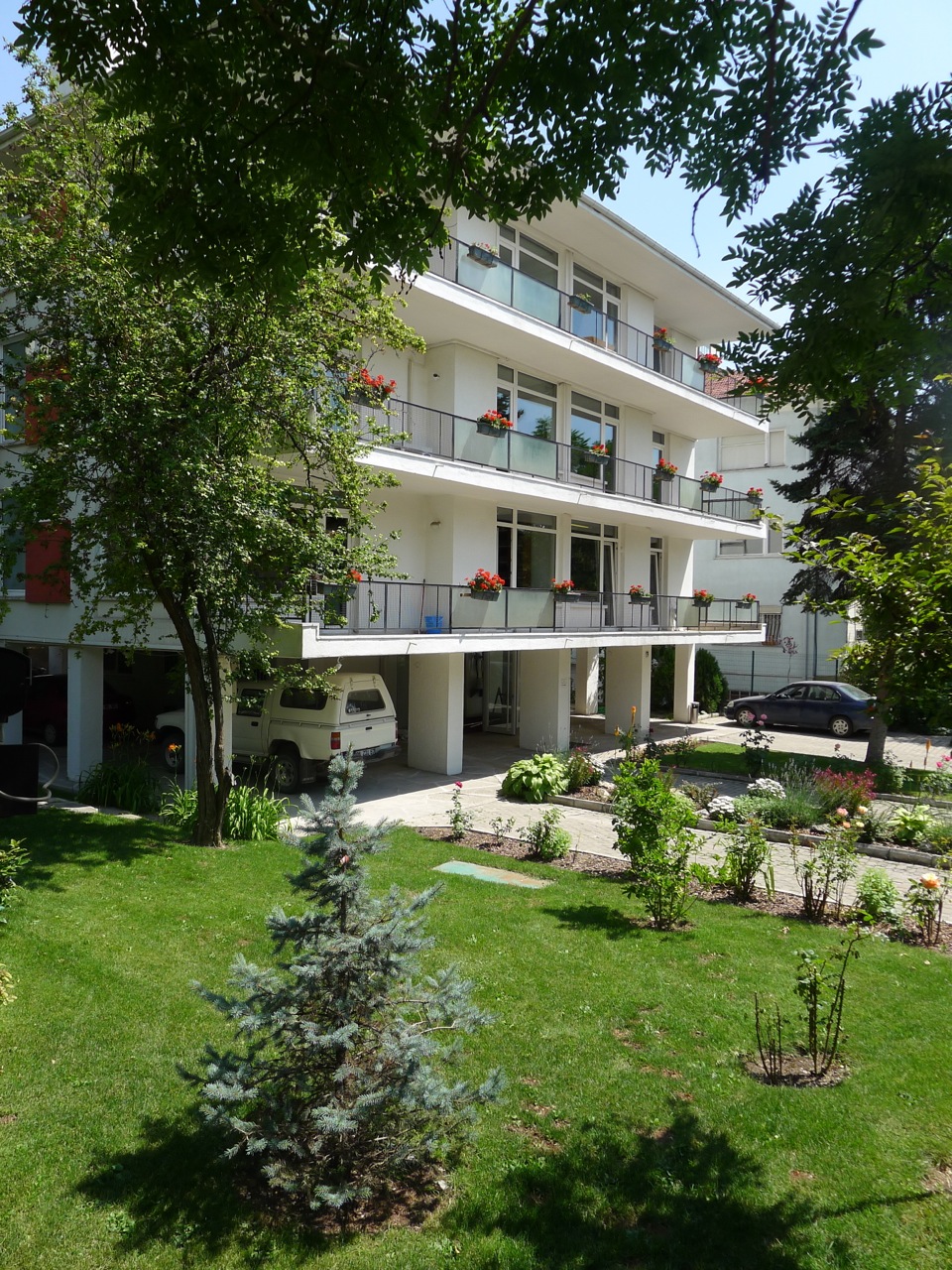
Florenz-pano
 
Via Montebello 7, Firenze 
9 aprile 2014 
 
Seminario 
 
LA CONOSCENZA DELLO PS. DIONIGI IN OCCIDENTE FINO ALL’ETÀ CAROLINGIA/THE KNOWLEDGE OF THE PS.-DIONYSIUS IN THE WEST UNTIL THE CAROLINGIAN TRANSLATIONS 
 
 
10.30 – 10.45 Agostino Paravicini Bagliani, Introduzione 
 
10.45 – 11.15 Ernesto Sergio Mainoldi, The Ps.-Dionysius from Constantinople to Rome. Earliest Evidences of a Planned Wide-Spreading of the Corpus Dionysiacum in the West 
 
11.15 – 11.45 Alexandros Alexakis, The Ps.-Dionysius between Rome and Constantinople in the period of Iconoclasm 
 
11.45 – 12.45 Discussione 
 
13.00 – 14.30 Pranzo 
 
 14.30 – 15.00 Francesca Dell’Acqua, À rebours: from Ambrosius Autpertus to the Ps.-Dionysius? 
 
 15.00 – 15.30 Réka Forrai, The Papacy and the Corpus Dionysiacum in the Ninth Century 
 
 15.30 – 16.30 Discussione 
 
 16.30 – 17.00 Francesco Santi, Conclusioni 

Medieval Art and Architecture on TV

Currently, there are a number of shows airing on television and available online that feature medieval art and architecture:

  • How to Get Ahead: At Medieval Court: ‘Writer and broadcaster Stephen Smith finds out what it took to get ahead at the court of Richard II, who presided over the first truly sophisticated and artistic court in England.’ Features Paul Binski and Nigel Saul in the credits.
  • The Culture Show Special: Viking Art. On the occasion of the opening of the BM’s blockbuster exhibition on Viking Art, Andrew Graham-Dixon explores the splendours of Viking art which is defined by intricate artistic styles – distinctly Scandinavian yet influenced by interaction with other cultures.

b03yr973_366_206

  • The Plantagenets: Professor Robert Bartlett tells the story of England’s longest-ruling royal dynasty. Henry II forges a mighty empire encompassing England and much of France.

Call for Papers: Medieval Manuscripts in Motion (Lisbon, March 2015)

The 2nd edition of the International Conference “Medieval Europe in Motion” will take place in Lisbon, 4-6th March 2015.

The conference’s main scientific goal is to analyse the phenomenon of circulation, motion and mobility of people, forms and ideas during the Middle Ages.

This time the focus will be on the illuminated manuscripts. This three-day Conference aims thus to conduct a critical and constructive revision of research on Iberian Book Illumination in the Middle Ages, proposing new questions to be discussed. manu

The organisers invite abstracts for papers (20-minutes in length) along the following themes:

  1. The phenomenon of mobility in Medieval times
  2. Clients and promoters, both individual and institutional
  3. Material authors
  4. Models
  5. Image performance
  6. Manuscript Acquisition: Luxury Market, Collecting

Proposals in English, Spanish, Portuguese, French and Italian are welcome. Please, send a 300-word abstract and a short CV to medinmotion2015@gmail.com by June 30th, 2014. Accepted proposals will be confirmed by September 15th, 2014.

Fees:
Participation with paper: 50 €
Attendance: 30 €

Lecture: ‘Script Imitation: The Shock of the Old’, Julia Crick, London Society for Medieval Studies, IHR London, 18 March 2014

  The London Society for Medieval Studies is hosting a lecture on Tuesday evening, March 18th, at 7.00 in the Torrington Room (104), First Floor, Senate House (located on Malet Street, London WC1E 7HU) by:
Professor Julia Crick (King’s College London) who will be speaking on ‘Script Imitation: the Shock of the Old’.

All those who are interested in Medieval Studies are very welcome to attend the lecture. All attendees are also invited to join the Committee and the Speaker for dinner directly after the lecture and questions.

The Society is entirely funded by its members and support from the Institute for Historical Research. We suggest a small donation of £6.00 per year if you would like to become a member or, alternatively, £2.00 per lecture. Please contact Sarah (sw544@cam.ac.uk) if you would like more information.

Wiley Companion to the Mediterranean – Electronic Access

wileyWiley-Blackwell is offering unlimited concurrent electronic access to Peregrine Horden and Sharon Kinoshita’s A Companion to Mediterranean History for those institutions that purchase a hard copy for their library collection.

For product details, see http://www.wiley.com/WileyCDA/WileyTitle/productCd-0470659017.html

Call for Papers: The Art of Ritual

The Art of Ritual: Object, Image and Space in Medieval and Early Modern Europe

Saturday 17 May 2014, Senate House, London, UK

This conference is organized by three Junior Fellows of the Institute of Historical Research from diverse scholarly backgrounds: Dhwani Patel (KCL), Wendy Sepponen (University of Michigan) and Jo Edge (RHUL). It will bring together two fields of research – the material and the ceremonial – that are intimately connected but rarely explored together in a conference setting.

The Art of Ritual aims to bring focus to how material culture and art (broadly defined) fits into and shapes ritual, and will be organized into three principal thematic strands. The first is art that influenced ritual, for example space and site specificity, or the importance and history of a particular place, site or space in connection with ritual. The second is art that reflected ritual, for example representations of processions. The final strand concerns objects and images that functioned as an integral part of ritual, for example relics and magical diagrams.

This conference will have a broad chronological, disciplinary and geographic scope, drawing from art historians, historians, and archaeologists from the late antique to early modern periods. Speakers including Achim Timmermann (University of Michigan), Sophie Page (UCL), Zoe Opacic (Birkbeck), Tom Nickson (The Courtauld Institute) and Natalia Petrovskaia (University of Cambridge) are already confirmed to speak. They will share approaches and experiences that will allow postgraduates in attendance to develop skills in the examination of a wide range of evidence relating to material culture and ritual practice.

There is space for two PhD presenters to give 30 minute papers on any aspect of art, in its broadest definition, and its connection to ritual in the medieval or early modern period. An abstract of no more than 200 words should be sent to artofritualconference@gmail.com by31 March 2014.

‘Goitein in Perspective’ (31 March, Brandeis University)

The Tauber Institute presents: “Goitein in Perspective,” an International Symposium, March 31, 2014 – April 1, 2014 at Brandeis University in the Mandel Center for the Humanities, Room 303.
This symposium seeks to understand the life and work of the towering figure S.D. Goitein—scholar of Islamic Studies, Jewish Social History, the Cairo Geniza, and the medieval Mediterranean—from intellectual and biographical perspectives.

Program:
Monday, March 31, 2014
9:30 am – 12:00 noon
Introductory Remarks
Jonathan Decter, Brandeis University • “Toward a Scholarly Biography of S.D. Goitein”

I. German Beginnings and the Study of Islam • Chair: Eugene Sheppard, Brandeis University
Dirk Hartwig, Freie Universität Berlin  • “Goitein’s First Love: Qur’anic Studies”
Yehoshua Frenkel, University of Haifa • “Goitein on the Life of Muhammad”
Sabine Schmidtke, Freie Universität Berlin  •” Intellectual History of the Islamicate World beyond Denominational Borders: Challenges and Perspectives for a Comprehensive Approach”

1:30 pm – 4:00 pm
II:  Goitein in Palestine and Israel • Chair: ChaeRan Freeze, Brandeis University
Miriam Frenkel, Hebrew University of Jerusalem •” The Magic Carpet: Goitein’s Yemenite Mission”
Walid Saleh, University of Toronto • “Goitein on Jews and Arabs”
Phillip Ackerman-Lieberman, Vanderbilt University • “Goitein as a Scholar of Jewish Studies”

Tuesday, April 1, 2014
9:30 am – 12:00 noon
III: Goitein within the Academic Disciplines • Chair: Jonathan Decter, Brandeis University
Marina Rustow, John Hopkins University • “Goitein as a Social Historian”
Aaron Hughes, University of Rochester • “Goitein as a Scholar of Religion”
Peter Miller, Bard Graduate Center • “Goitein as a Scholar of the Mediterranean”

1:00 pm – 3:00 pm
IV:  Goitein in America • Chair: Susannah Heschel, Dartmouth College
Jessica Goldberg, University of California, Los Angeles • “Goitein in America”
Abraham Udovitch, Princeton University • Commentator

Closing Remarks • Susannah Heschel, Dartmouth College

Conveners: Jonathan Decter, Brandeis University, and Susannah Heschel, Dartmouth College
Sponsored in part by the Valya and Robert Shapiro Endowment. For further information, see:http://www.brandeis.edu/tauber/events/conferences.html

Call for Papers: Artists’ homes in the Middle Ages and the Early Modern Era (11-14 June 15)

“Visual artists must live like kings or gods” – artists’ homes in the Middle Ages and the Early Modern Era
International Conference, Nuremberg 11-14 June 2015

Conference languages: German, English
Organisers: Dr. Thomas Schauerte, Dr. Andreas Tacke, University Professor
Contact / applications: Danica Brenner M.A., University of Trier, TAK –artifex, Im Treff 23, D-54286 Trier; email: brenner@uni-trier.de

“Plastic artists should dwell like kings and gods: how else are they to build for kings and gods?”(trans. Thomas Carlyle; Goethe, Wilhelm Meister’s Journeyman Years II, 8). – What pertained to Goethe in a figurative sense is our question from varying perspectives in respect to the real visual artist in Europe up to 1800: Exceptional artists such as Goethe but also Mantegna, Dürer, Michelangelo, Rubens, Rembrandt or the Asam Brothers sometimes lived almost princely. But does this apply in general to the European artist of the pre-modern era?

The conference will take a look at the artist’s home and initially examine his status from the perspective of social topography. What factors influenced this status? To be considered are, for example, the neighbourhood, the proximity to possible clients or to prestigious
places for sales such as centrally located squares, prominent streets or significant churches. The conference will investigate architecture and furnishings, the iconography and iconology of an iconographical program of artists’ homes from the perspective of art history and cultural history. Finally, the conference will also examine an early nascent conservation of the artist’s home or the dwelling as a place of remembrance in the period before 1800 and thus explore questions of the history of discourse or perception.

But we also expressly request papers deviating from the idea of the artist’s home à la Goethe, rather talks considering those visual artists who rented or who frequently moved and therefore acquired no property, also talks on artists who found accommodations with their clients. What do we know about these artists’ flats or their homes?

Where and in what cities did artists’ quarters, artists’ streets or blocks of flats evolve, places where artists lived over a longer period?

Who lived with the artist? How were the studios situated? Were there sales rooms in the house, in the flat? Were they also used for art instruction, to hold “academies” (Joachim von Sandrart)? Is there a difference between the artists bound to guilds and those who worked at
court?

The conference will examine text and picture sources to determine the image of artistic self-portrayal at the time via the medium “artist’s house”. The latter is primarily to be viewed from the standpoint of the visual artist’s strategies to rise to a higher stratum in a hierarchical society where he was relegated to the status of craftsman. What was the role of the sometimes extensive art collections for which rooms were often exclusively built or reserved?

Using case studies, overview representations and comparative examinations, the conference will approach the topic from the perspective of different disciplines, primarily, however, from the perspective of art history, cultural history, and social history.

Abstracts for as yet unpublished articles (a maximum of 2,000 characters, including spaces) with a brief CV and a possible selection of relevant publications may be submitted in German or English by 31 August 2014 to Danica Brenner M.A., email: brenner@uni-trier.de

Publication of the articles is planned for 2016 in the series “artifex – Sources and Studies on the Social History of the Artist” (Michael Imhof Verlag, Petersberg).

The conference is held in cooperation with the Albrecht-Dürer-Haus, curated by Dr. Thomas Schauerte (the Nuremberg Museums) and the Social History of the Artist Research Centre (SHARC), principally the EU project “artifex”, directed by Dr. Dr. Andreas Tacke, Professor
(University of Trier, Chair, Art History).

Seminar: “IMAGENS E LITURGIA EM PORTUGAL NA IDADE MÉDIA”

Seminário Internacional | International Seminar

Imagens e Liturgia em Portugal na Idade Média

Images and Liturgy in Portugal in the Middle Age


29 Março – 2014| March 29 – 2014

14h00 / 2pm

Museu Arquelógico do Carmo |Carmo Archaeological Museum, Lisbon

ENTRADA LIVRE* | FREE ADMISSION*

Official languages: portuguese, spanish, french and english

O Seminário Imagens e Liturgia em Portugal na Idade Média, organizado pelo Grupo de Estudos Multidisciplinares em Artes do CEAACP (Universidade de Coimbra), em parceria com a Associação dos Arqueólogos Portugueses/Museu Arqueológico do Carmo, integra-se no conjunto de iniciativas do projecto de Pós-Doutoramento de Carla Varela Fernandes (Esculturas dos séculos XIII e XIV em colecções de museus portugueses. Uma abordagem necessária para um conhecimento mais amplo da realidade científica).

Tem como objectivo a apresentação e a discussão de recentes estudos e reflexões sobre obras de arte românicas e góticas existentes em Portugal. Pretende-se abordar as imagens medievais como partes integrantes dos rituais litúrgicos e dos edifícios para onde foram destinadas e, por outro lado, tentar avançar no conhecimento sobre os meios como uma inovação iconográfica ou estética gerada num determinado local se “desloca” e surge noutras geografias, servindo objectivos similares.

The seminar Images and Liturgy in Portugal in the Middle Age, organized by the CEAACP Multidisciplinary Group Study in Arts (University of Coimbra), in partnership with the Association of Portuguese Archaeologists / Carmo Archaeological Museum, is part of the set of project initiatives of Carla Varela Fernandes’ Postdoc (Sculptures of the thirteenth and fourteenth centuries in collections of Portuguese museums. An imperative approach to a broader knowledge of the scientific reality).

It aims the presentation and discussion of recent studies and reflections on works of Romanic and Gothic art existing in Portugal. It is intended to address the medieval images as part of the liturgical rituals and the buildings they were designed for. On the other hand, we’ll try to provide advances in the knowledge on the means as an iconographic innovation or aesthetic generated at a given location “moves” and appears in other geographies, serving similar purposes.