
This conference seeks to explore the ways in which women patronised and interacted with monasteries and religious houses during the late Middle Ages, how they commissioned devotional and commemorative art for monastic settings, and the ways in which these donations were received and understood by their intended audiences.
Category Archives: Call for Papers
CFP: ‘Display and Displacement in Medieval Art and Architecture’, 26th Annual Medieval Postgraduate Colloquium (online), The Courtauld Institute of Art, deadline 27 November 2020
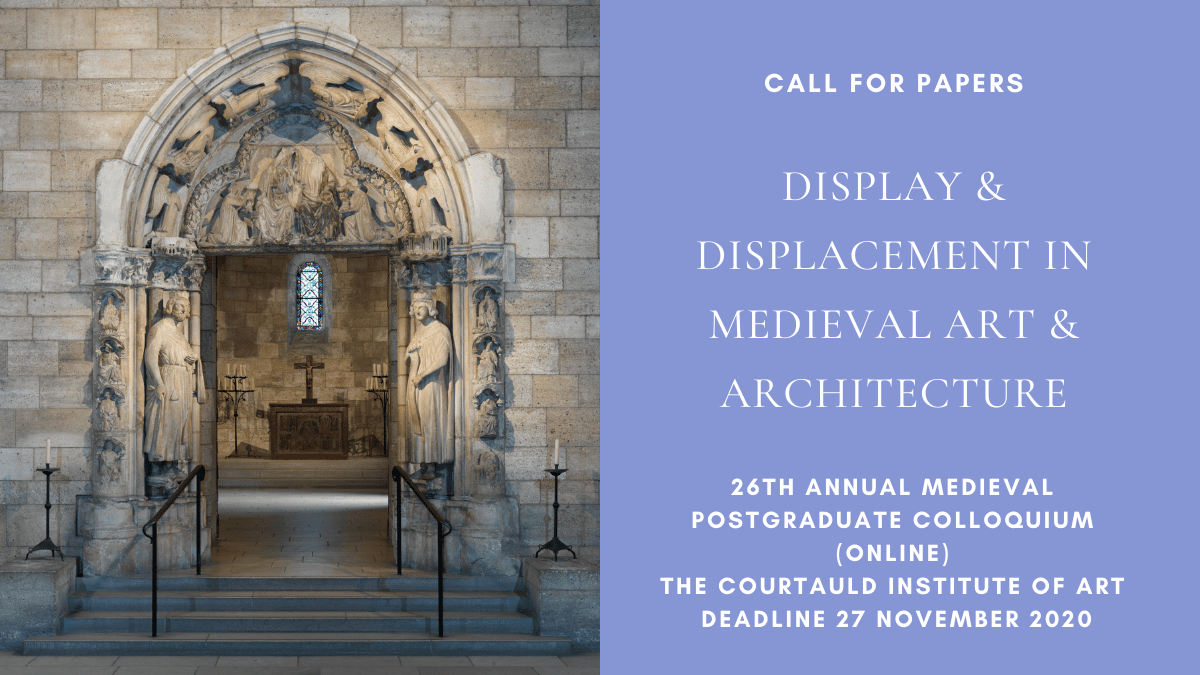
From the chalices that glisten behind glass museum cases to the ritual staging of powerful relics, from the architectural fragments of once towering cathedrals to fresco schemes designed to envelope the senses of the viewer, the display and location of medieval art and architecture matter.
CFP: ‘Questioning the Crime of Witchcraft’, International Conference at the EHESS Paris, Deadline: 30 November 2020
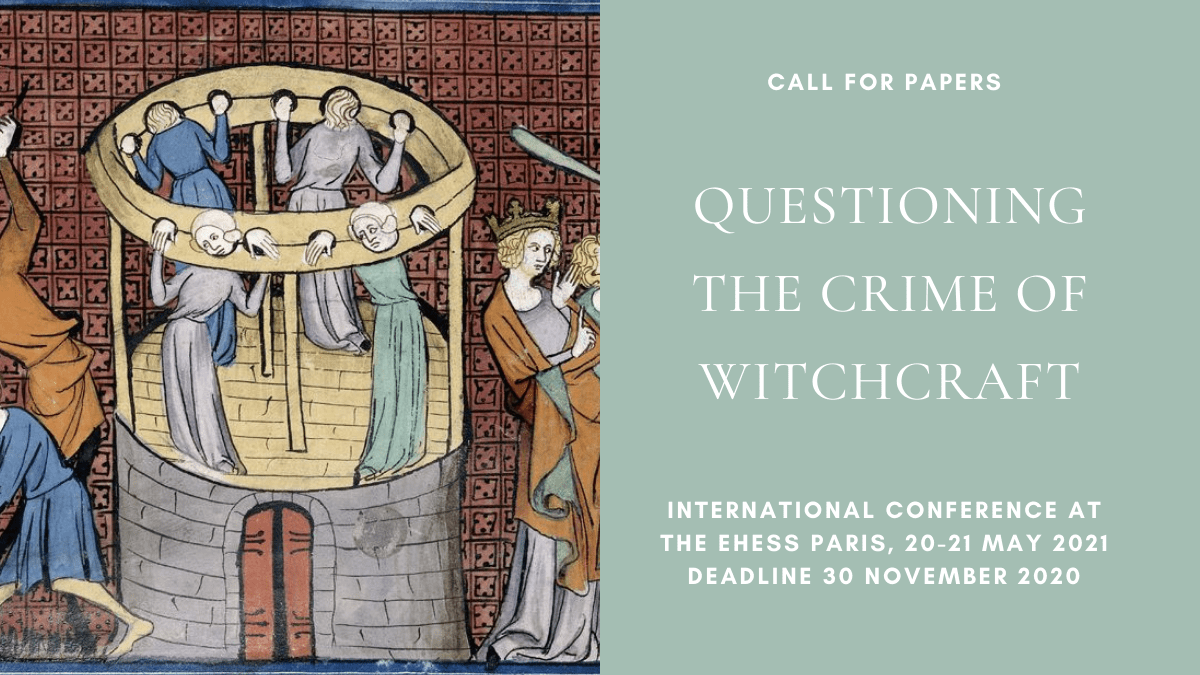
In the last decades, the multiplications of works in the field of Witchcraft Studies made it possible to profoundly renew the approaches and the study designs of the repression of witchcraft in the late Middle Ages and in the beginning of the Early Modern Era.
CFP: Fifteenth Conference of Iconographic Studies “Iconography and Religious Otherness”, Deadline: January 15 2021

The creation of Otherness is a process by which a dominant group (Self, Us) constructs one or more outer groups (Them, Others) by assigning them different features and attributes, real or imagined. This continuous process was not only directed towards the outside, but also towards the inside, that is, towards dissident groups.
Call for Papers: International Conference – Handbook on the Later Crusades, deadline: 1 November 2020

In the last decades, research on the “Later Crusades” has increased significantly. As a result of this a new consensus among researchers has been reached which considers that the crusading movement did not stop after the year 1400.
CFP: 20th Vagantes Conference on Medieval Studies (University of Wisconsin-Madison 18-20 March 2021) Deadline for Submissions 30 November 2020

The Vagantes Conference on Medieval Studies invites abstracts from graduate students and recently graduated Masters students from all disciplines on any topic that is related to the Middle Ages.
CFP: ‘Sacred Scripted Images – The Iconic Presence of Script in Medieval Liturgical Space’ (Heidelberg, 20-22 Jan 2022), Deadline 13 November 2020

Inscribed artefacts in liturgical space, from apse mosaics to liturgical vessels, are not only evidence of the wide range of the use of script within the context of mass, but also testify to the presence of something written at a sacred place.
CFP: ‘What does Animation mean in the Middle Ages? Theoretical and Historical Approaches’ (Bialystok, Poland, September 16 – 19 2021), Deadline April 1 2021

This conference is concerned with the agency and life of material objects and evolves around the investigation of two interlaced objectives.
CFP: Ninth Annual Symposium on Medieval and Renaissance Studies (June 21-23, 2021 Saint Louis University Saint Louis, Missouri), Deadline December 31, 2020

The Ninth Annual Symposium on Medieval and Renaissance Studies (June 21-23, 2021) is a convenient summer venue in North America for scholars to present papers, organize sessions, participate in roundtables, and engage in interdisciplinary discussion. The goal of the Symposium is to promote serious scholarly investigation into all topics and in all disciplines of medieval and early modern studies.
CFP: The Visual Culture of Mosques, Dhahran, Saudi Arabia (November 23 – 25, 2021), deadline 28 December 2020
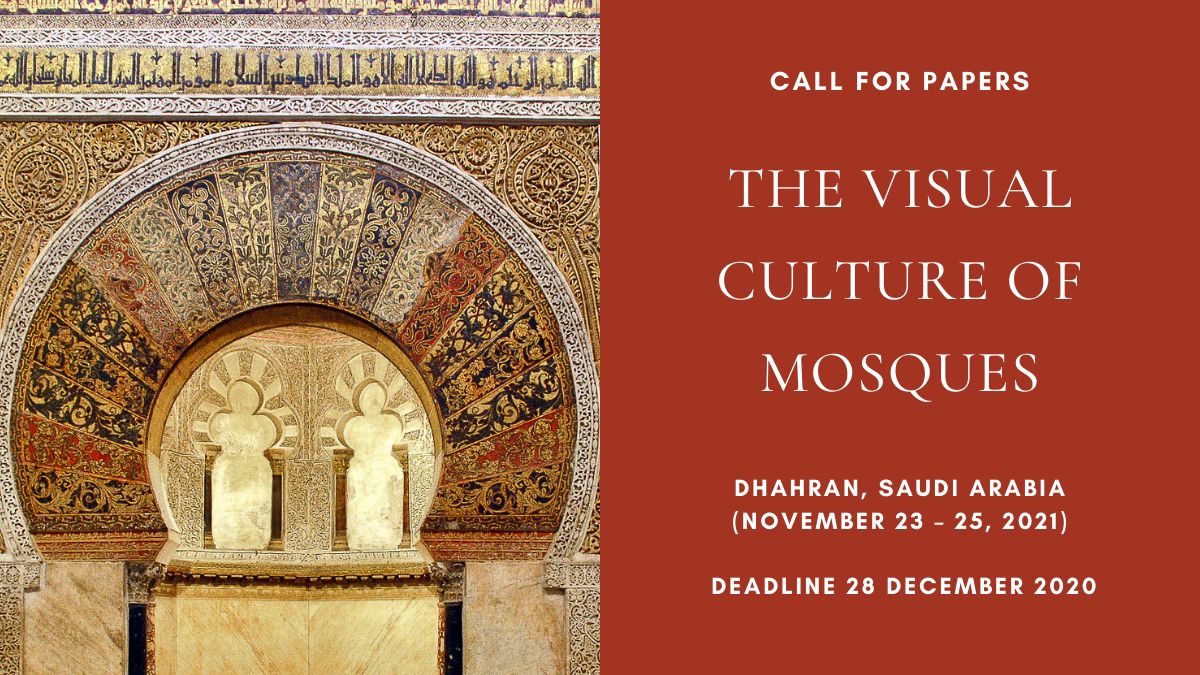
In conjunction with the forthcoming exhibition Shatr AlMasjid: the Art of Orientation, the King Abdulaziz Center for World Culture (Ithra) is collaborating with the Abdullatif Al Fozan Award for Mosque Architecture to host a three-day conference to address the historical meaning, culture, evolution and functions of the mosque.
 Medieval Art Research